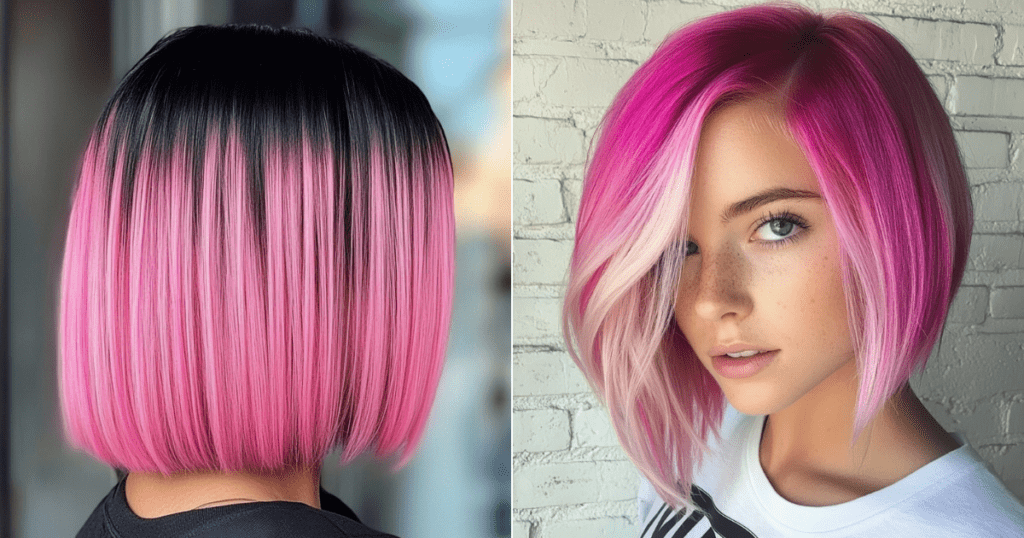
Pink is the fashion color people talk themselves out of most often, usually because they picture bleached roots and a monthly salon habit. Pink ombré gets around both. Your own color, or something close to it, stays at the scalp, and the pink builds slowly toward the ends, so regrowth blends in and you decide how loud the finish gets. It can be a dusty rose that passes at the office or a raspberry that glows under streetlights.
We gathered 31 pink ombré looks and sorted them by color story: dark roots melting into bright pink, warm coral and peach blends, soft rose and pastel shades, blonde-to-pink tips, and pink paired with purple or blue. If you’d rather wear pink from root to tip, our pink hair color ideas go all in. Every look below comes with who it suits, what to ask your colorist for, how to style it and how often it needs a top-up.
How to choose a pink ombré
Two choices matter most: how light the ends have to be lifted, and which pink sits on top. Pastel and baby pinks need hair lifted to a pale yellow first, while deep raspberry and magenta can show up on hair that is only lightened to a mid-tone. If a painted, less graduated finish appeals more, compare these pink balayage ideas, where the pink is placed in ribbons instead of a fade.
| Hair type | Pink ombré that works best | What to avoid |
|---|---|---|
| Dark brown or black | Black to hot pink, raspberry or magenta; a soft root melt | Pastel ends in one session, which means heavy bleaching |
| Light brown or dark blonde | Rose, coral and dusty pink blends | Very cool, icy pinks that can look muddy over warm undertones |
| Blonde or pre-lightened | Baby pink, pastel and blonde-to-pink tips | Dark magenta that stains and is hard to remove later |
| Fine or fragile | Deeper pinks that need less lightening; ombré placed on the ends only | Bleaching high up toward the roots |
| Curly or wavy | Coral, rose and bright pink with a long, blended transition | Hard dip-dye lines, which show more as curls shrink |
Placement: a high transition that starts around the cheekbones gives more pink and needs more lightening; a low one that starts below the shoulders is softer and grows out longer. Maintenance: pink is one of the fastest-fading colors, so expect a gloss every four to six weeks, or top it up at home with a pink color-depositing conditioner.
Dark roots to bright pink
Brunettes, this is your section. The root stays dark, the pink hits its brightest at the ends, and nobody has to bleach a scalp. The same idea on near-black bases is covered in our black ombre hairstyles.
1. The midnight raspberry fade
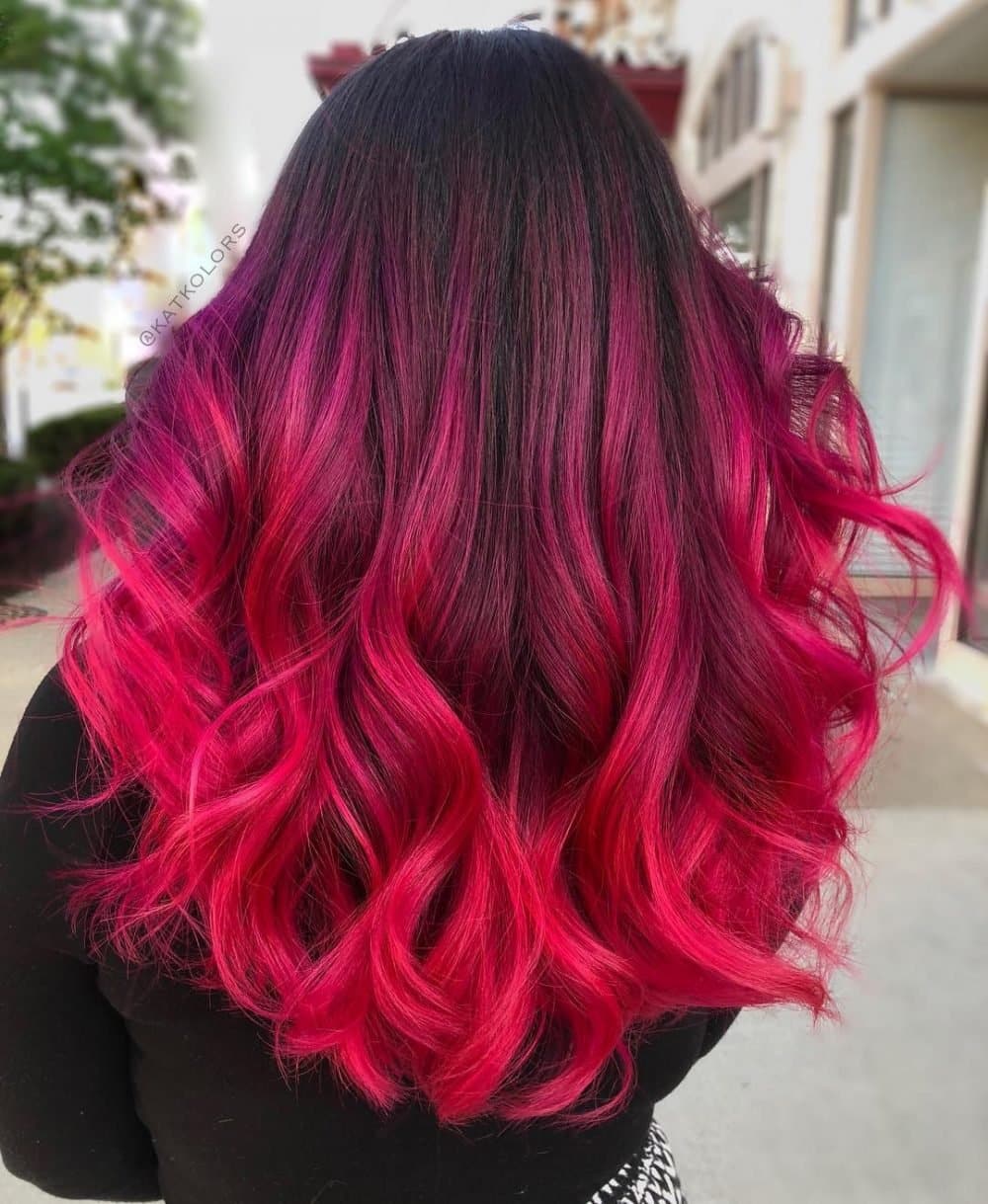
Walk away and let the back do the talking. This mid-back cut is close to black at the crown, then slides through deep berry into bright raspberry at the ends. Loose, slightly piecey waves let each depth of pink catch the light separately, so the color looks layered rather than painted on. Keeping the root dark means your regrowth simply joins in. Bold at the bottom, easy at the top.
- Best for: Dark brown or black hair, medium to thick density; anyone who wants vivid color with low root upkeep.
- Ask your stylist for: A dark root melt into a raspberry pink ombré, lightened only through the mid-lengths and ends, with a long, diffused transition.
- How to style it: Wrap large sections around a 1.25-inch wand, leaving the ends out, then rake the waves apart with your fingers.
- Upkeep: Pink gloss every 4 to 6 weeks; trim every 10 to 12 weeks.
2. The cherry-dipped barrel curls
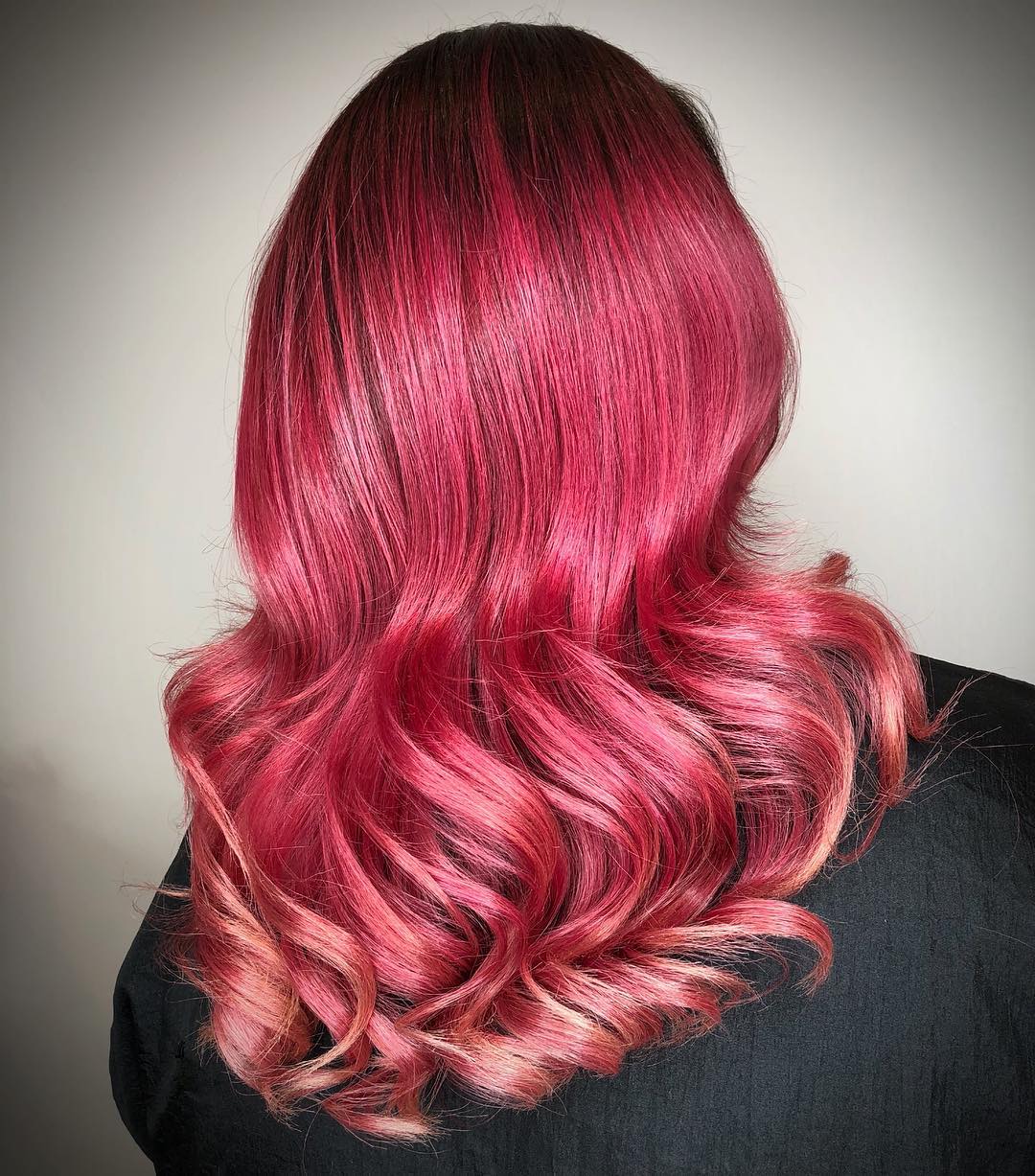
Shine first, color second. A dark cherry root flows into rose-raspberry on this glossy, just-past-the-shoulder cut, and only the bottom few inches are curled into soft, bouncy barrels. That’s the clever part: the brightest pink sits exactly where the curls flip, so movement shows off the color. A fresh gloss gives it that mirror finish. Ideal if you like polished hair with a little attitude.
- Best for: Straight to slightly wavy hair; brunettes and dark redheads.
- Ask your stylist for: A cherry or burgundy base with a rose-pink ombré from the chin down, finished with a clear or pink gloss for shine.
- How to style it: Blow-dry with a round brush, then curl just the last 3 to 4 inches with a large iron and brush out gently.
- Upkeep: Gloss every 4 to 6 weeks; trim every 8 to 10 weeks to keep the curled ends healthy.
3. The long burgundy-to-fuchsia glide
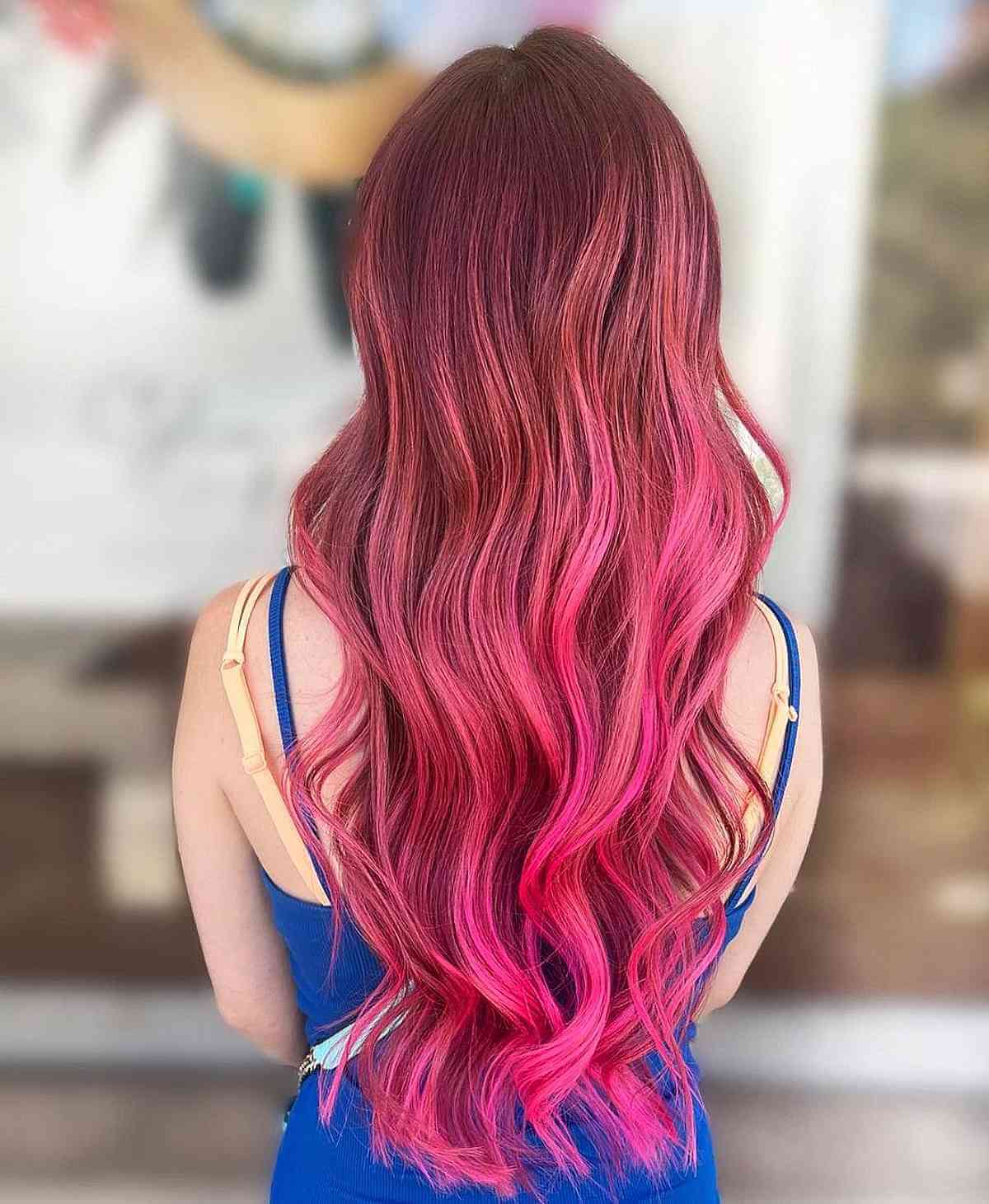
Very long hair gives pink room to change its mind slowly, and this look uses every inch. A burgundy root, warmer than black, glides into fuchsia through the bottom half, with the switch happening around the shoulder blades. From the front it reads as rich red-brown hair; turn around and the fuchsia waves take over. Loose, brushed-out waves keep the blend seamless.
- Best for: Long, healthy hair; medium to dark brunettes with warm undertones.
- Ask your stylist for: A burgundy root shade blended into a fuchsia ombré starting around the shoulder blades, with soft hand-painted pieces so there is no hard line.
- How to style it: Use a large-barrel curling iron on alternating sections and finish with a lightweight shine spray.
- Upkeep: Fuchsia top-up every 4 to 6 weeks; dust the ends every 10 to 12 weeks.
4. The waist-length magenta wash
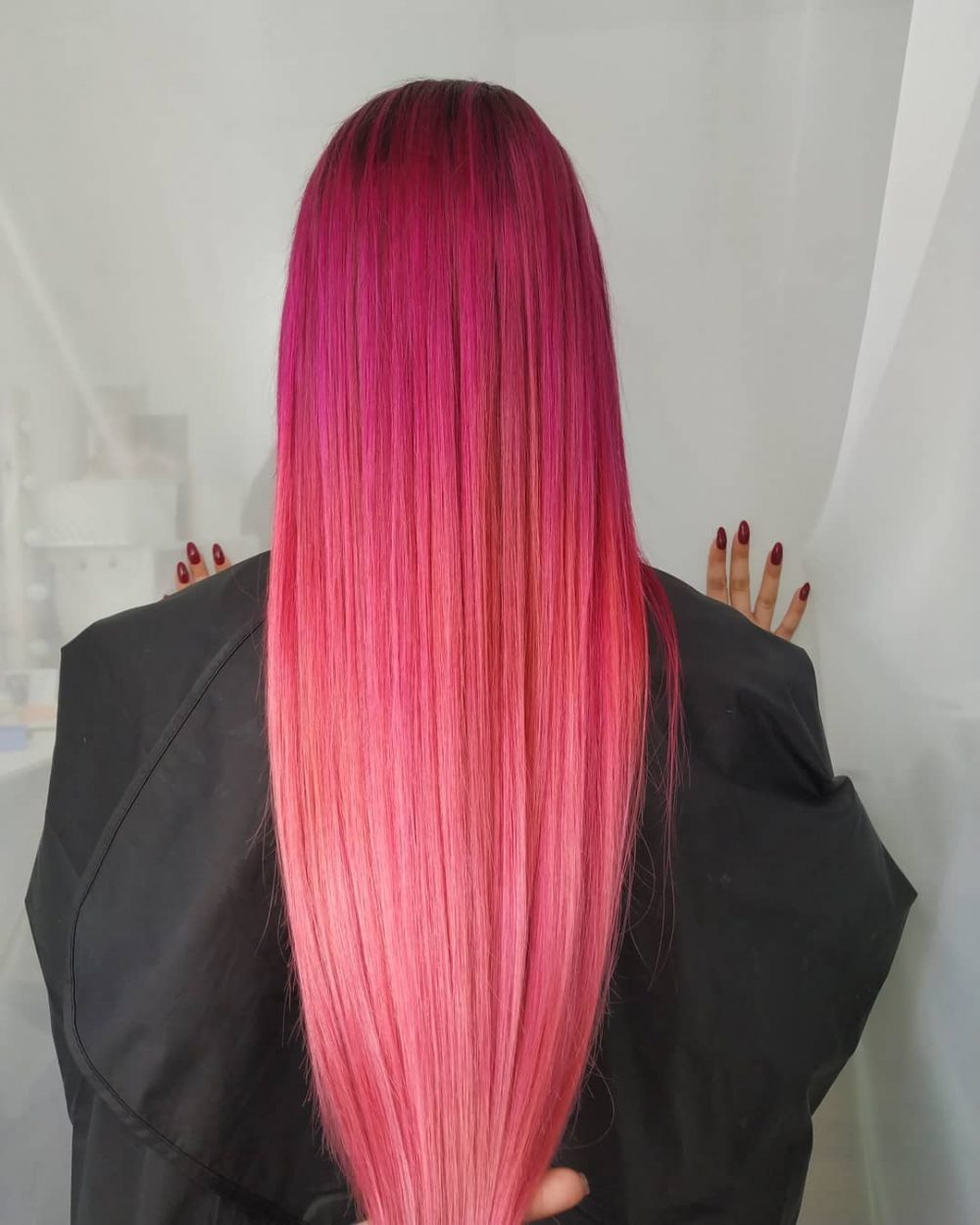
No waves, no distractions, just a clean wash of color. This pin-straight, almost waist-length hair starts magenta at the scalp and fades evenly into coral pink at the ends. Blunt ends sit in a neat line across the back, which keeps all that length looking thick. Because there is nothing to break the gradient, you see the whole color story in one look. Sleek and very graphic.
- Best for: Naturally straight, long hair; anyone who likes a polished finish.
- Ask your stylist for: An all-over vivid pink with a magenta root and coral ends, applied as a seamless gradient, and a blunt perimeter.
- How to style it: Blow-dry straight with a paddle brush, then smooth with a flat iron and a drop of serum.
- Upkeep: Color refresh every 4 to 6 weeks; blunt trim every 8 to 10 weeks.
5. The low-slung magenta waves
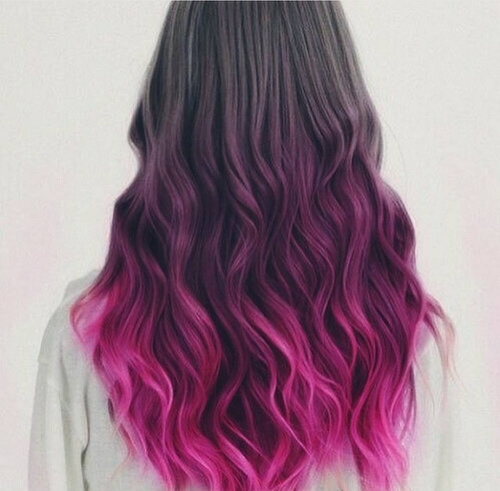
Is this your first try at pink? This is the gentlest way in. The dark brunette color holds through the top two thirds, and magenta only arrives near the bottom of the shoulder blades. Relaxed, uneven waves with a little natural frizz keep it easygoing rather than salon-perfect. Because so little hair is lightened, you can trim the pink away later in a cut or two.
- Best for: Dark brown hair; first-timers who want pink without lightening near the face.
- Ask your stylist for: A low magenta ombré on the bottom third only, blended upward with a few painted pieces.
- How to style it: Braid damp hair loosely, let it dry, then shake out the waves.
- Upkeep: Magenta top-up every 6 weeks; trim every 10 to 12 weeks.
6. The neon stripe drop
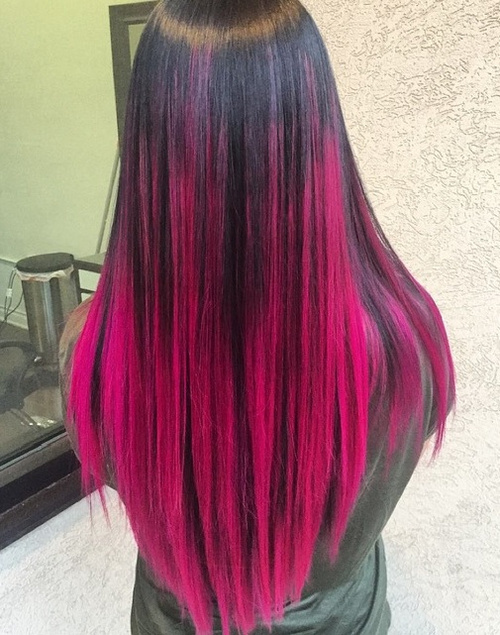
Black and neon pink don’t blend so much as collide here, and that’s the point. Wide sections of hot pink run down from the mid-lengths through long, straight black hair, getting brighter toward the ends. The color sits in vertical panels instead of a horizontal band, so it flashes as you move. A glassy, flat-ironed finish makes the contrast look sharp and deliberate. Not for the shy.
- Best for: Long, straight black or very dark hair.
- Ask your stylist for: Vertical hot pink panels on black hair, lightened from the mid-lengths down, with the deepest color at the ends.
- How to style it: Flat iron in small sections and finish with a shine serum to show the stripes.
- Upkeep: Pink refresh every 4 weeks, as neon fades quickly; trim every 8 to 10 weeks.
7. The coral-ended black curls
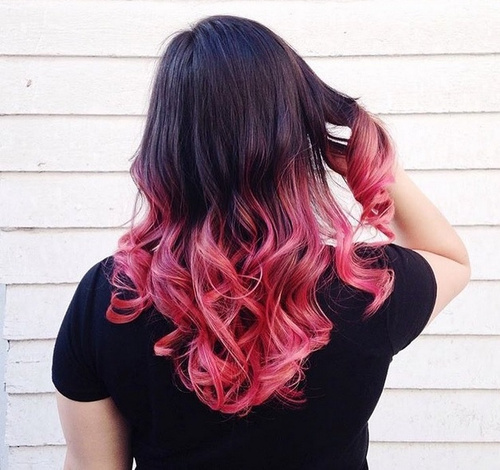
Shorter hair puts the color right by your face, which is why this one feels so bright. Black roots drop into coral-pink curls that start just above the shoulders, and the pink lightens further at the tips. The curls are big and springy, finger-styled rather than brushed, so each one shows a different shade. It’s warm, playful and very easy to wear casually.
- Best for: Medium-length, dark hair with some natural wave.
- Ask your stylist for: A black root with a coral-pink ombré from the chin down and a few lighter pieces at the very ends.
- How to style it: Curl with a 1-inch iron in alternating directions and scrunch in a little texture spray.
- Upkeep: Coral gloss every 4 to 6 weeks; trim every 8 weeks.
8. The space-bun candy fade
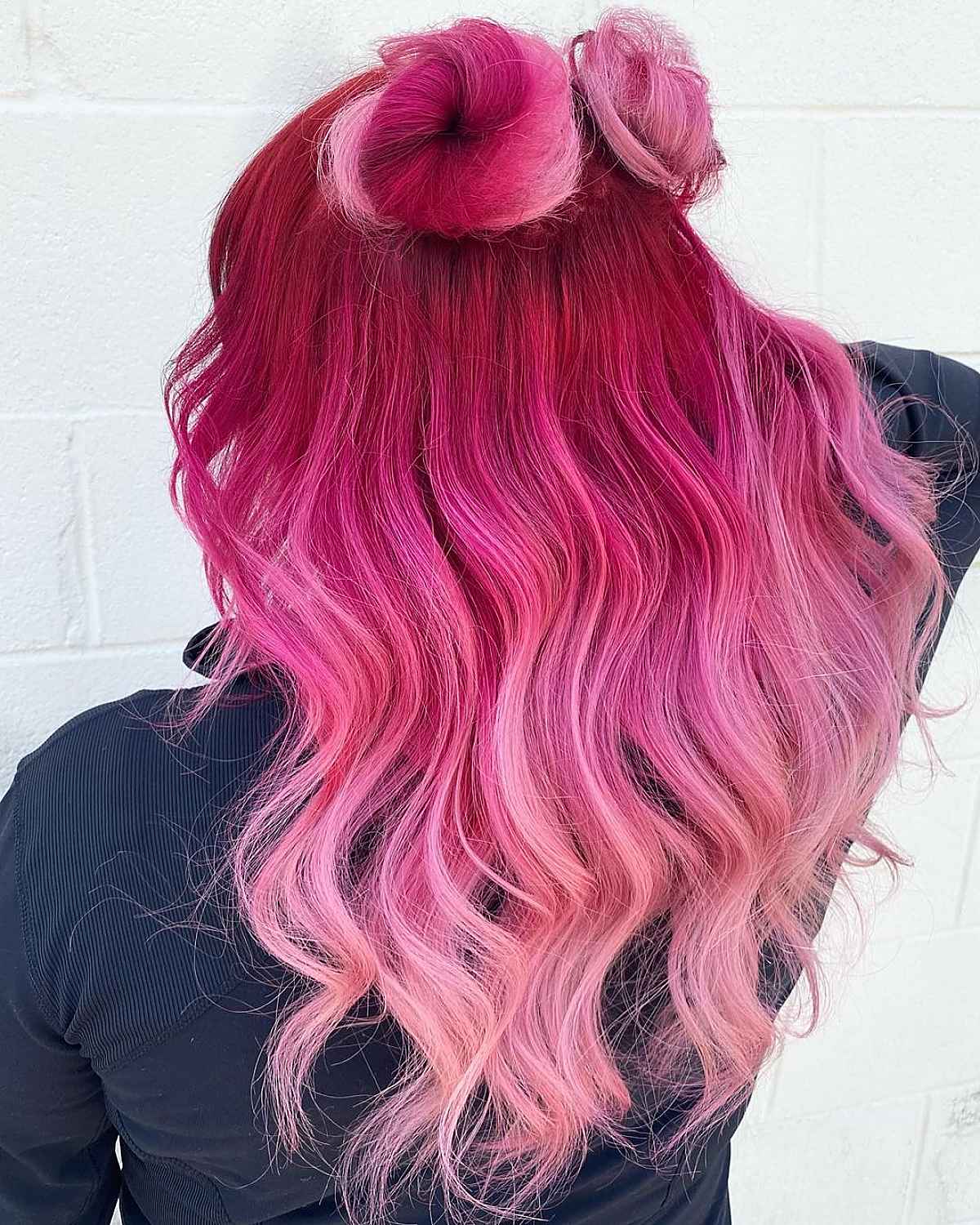
Twist the top into two little space buns and suddenly the whole ombré is on show. A bright magenta root sits up in the buns, while the hair below falls in loose, defined waves that lighten into candy pink past the shoulders. The half-up shape works because the brightest pink hangs free at the bottom. Festival-ready, but just as fun on a Saturday.
- Best for: Medium to long hair with some body; anyone who likes playful updos.
- Ask your stylist for: A magenta root with a candy-pink ombré through the lengths, blended with no visible line.
- How to style it: Curl the lengths, then twist two small top sections into buns and secure with pins.
- Upkeep: Pink top-up every 4 to 6 weeks; trim every 10 weeks.
Coral, peach and warm pinks
Coral, peach and strawberry pinks lean warm, so they sit easily next to golden or olive skin and fade into a soft apricot rather than a dull beige. For the softer end of this palette, see our peach hair color ideas.
9. The coral spiral cascade
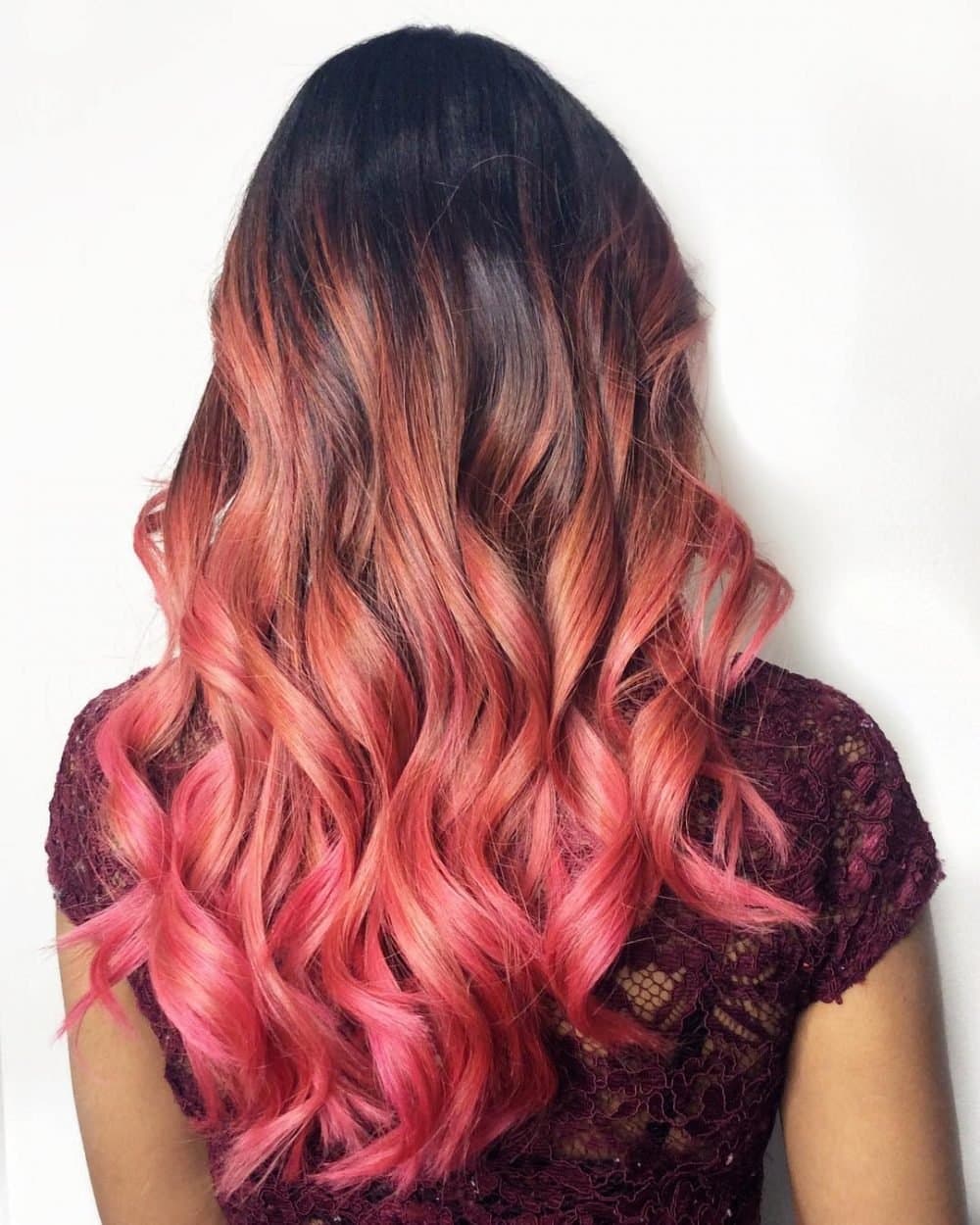
Curls and coral are a happy match, and this back view shows why. Dark brown roots give way to a soft coral pink across most of the curled length, and the brightest color lands on the outer layer of tight, defined spirals. Because the coral is warm, it sits naturally next to brown and olive skin. As it fades, it softens into apricot rather than turning dull. Friendly, warm and full of bounce.
- Best for: Medium to dark brown hair, long length; warm and olive skin tones.
- Ask your stylist for: A coral-pink ombré from the cheekbones down on a brown base, with painted highlights so the color looks dimensional.
- How to style it: Set in small sections with a 1-inch wand and leave the curls unbrushed.
- Upkeep: Coral gloss every 6 weeks; trim every 10 to 12 weeks.
10. The auburn peach melt
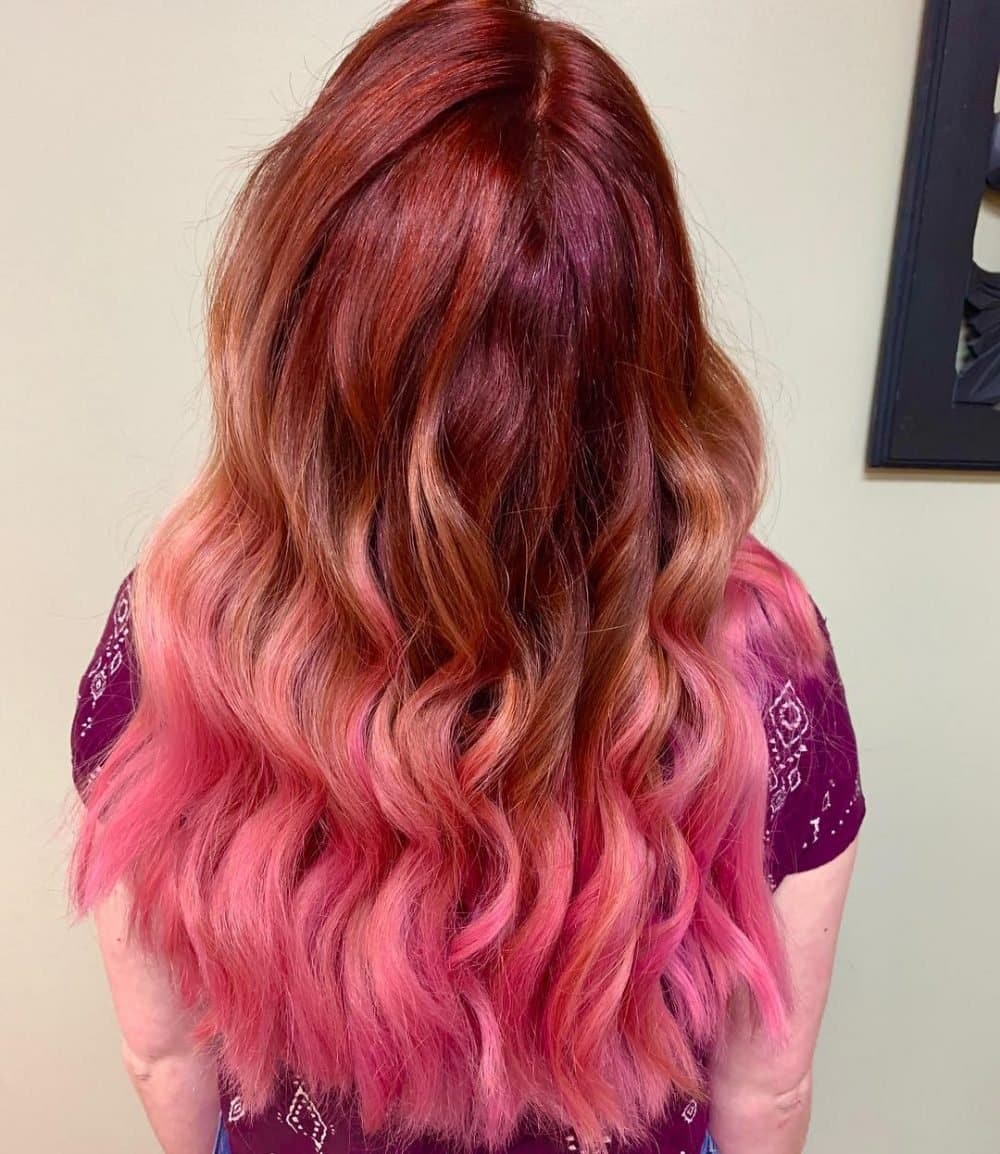
Start with a warm auburn root and pink has an easy path to follow. Here the red fades into a peachy coral from the shoulders down, and because both shades share the same warmth, the change looks natural rather than dramatic. Loose, brushed-out waves blur the two together. If you already have red or copper hair, this is a smooth next step into pink.
- Best for: Natural redheads and auburn hair; warm skin tones.
- Ask your stylist for: An auburn base with a coral-pink ombré on the lower half, blended with soft balayage pieces.
- How to style it: Curl with a large wand and brush out with a wide paddle brush for a soft wave.
- Upkeep: Gloss every 6 weeks; trim every 10 weeks.