Black hair is the hardest base to lighten and the most rewarding one to paint. Because the root is so deep, any color placed through the lengths shows up with real contrast, whether it is a cool silver, a warm honey or a shot of neon. The catch is that black hair travels through red, orange and yellow on its way up, so the shade you pick decides how many sessions it takes and how much toning you will need.
This guide is sorted by color family rather than by subtlety: silver and gray, blonde and caramel, reds and rose gold, vivid shades, and finally a short set of soft brown finishes. If you want only low-contrast, natural browns, our balayage ideas for dark hair focus on exactly that. Each look below comes with who it suits, what to ask for, how to style it and how often you will be back in the chair.
How to choose a balayage color for black hair
Start with how many levels you are willing to lift. Natural black sits at level 1 or 2. Warm browns and auburn need only a few levels of lift; honey and caramel need more; silver, platinum and pastels need the hair lifted to pale yellow before toning. The further you go, the more appointments and aftercare it takes.
| Hair type | Balayage colors that work best | What to avoid |
|---|---|---|
| Fine black hair | Auburn, chestnut, rose gold or burgundy that need little lift; fine, face-framing placement | Platinum or silver in one session, which can leave the ends fragile |
| Thick or coarse black hair | Honey, caramel, ash blonde and silver on wide, hand-painted sections | Very fine babylights, which disappear in dense hair |
| Wavy or curly | Color painted on the outer curl or wave where light hits it | Heavy foils near the root that create a stripe as curls shrink |
| Straight | A soft root melt into the color, so there is no visible line on sleek hair | A hard horizontal ombré line |
| Previously box-dyed | Red, burgundy or blue tones that work with leftover warmth | Icy blondes, which need box dye removed first |
Warm or cool: warm golds, coppers and reds fight brassiness less, because black hair naturally lifts warm. Cool silvers, ash blondes and blues need regular toning; see our gray balayage ideas for how far that can go. Placement: brightness around the face gives the most impact for the least lightening.
Silver and gray balayage on black hair
The highest-contrast option on the list. A black root against silver ends looks deliberate and modern, and it can also blend early grays.
1. The silver-framed waves
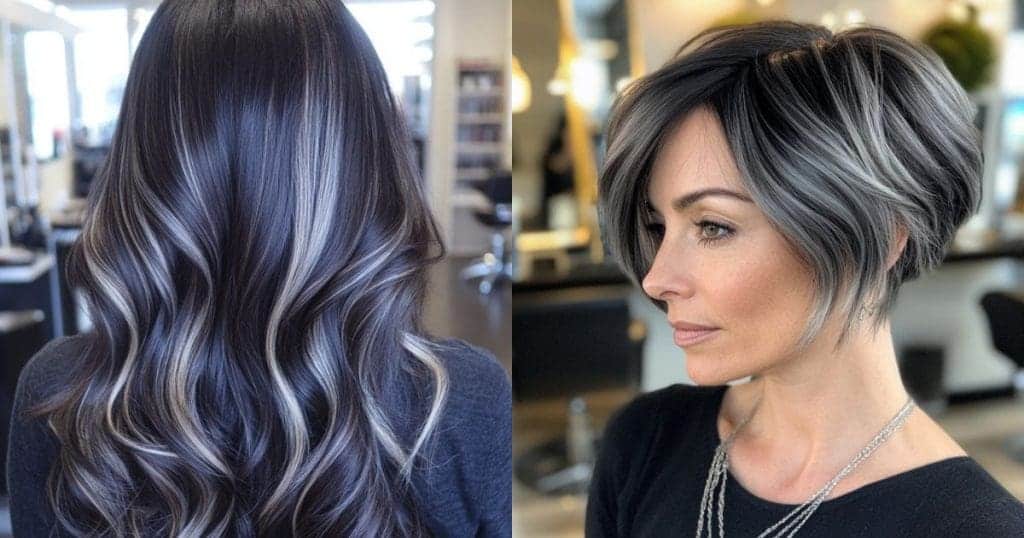
If you’re starting to see a few grays, this is a smart way to make them look intentional. The root stays dark, while pewter and silver ribbons are painted around the face and through the long waves, brightest at the front. The color is smoky rather than white, so it blends into the black without a harsh edge. Loose, glossy waves spread the silver across the lengths. Cool, polished and grown-up.
- Best for: Black or dark brown hair with early grays; medium to thick density.
- Ask your stylist for: Silver-gray hand-painted balayage with face-framing pieces and a natural dark root.
- How to style it: Wave with a 1.25-inch iron and finish with a light shine spray to keep the silver reflective.
- Upkeep: Toner every 6 to 8 weeks; balayage every 12 to 16 weeks; purple shampoo weekly.
2. The silver-white long melt
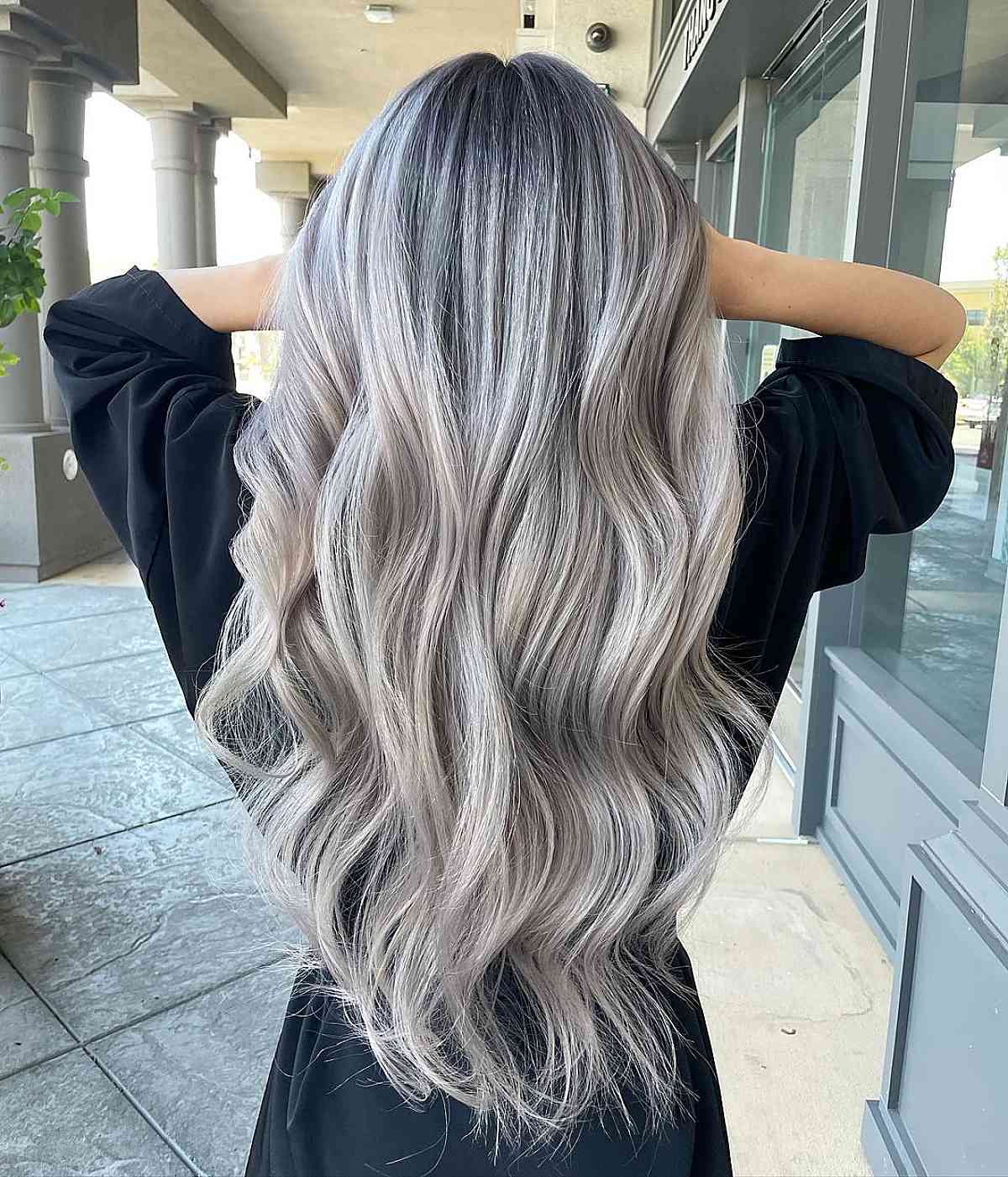
Turn around: this one is all about the back view. A smoky dark root melts into long, silver-white waves that reach well past the shoulder blades, with soft gray lowlights left in so the lengths don’t look flat. The waves are wide and loose. On black hair, getting this pale takes patience and a colorist who uses bond protection, but the contrast between the root and the icy ends is worth the work.
- Best for: Long, healthy black hair that has not been box-dyed; anyone committed to toner upkeep.
- Ask your stylist for: A smoky root melt into silver-white balayage, keeping some gray lowlights for depth.
- How to style it: Use a bond-building cream, then wave with a 1.5-inch iron and brush through.
- Upkeep: Toner every 4 to 6 weeks; lightening every 12 weeks; bond treatment monthly.
3. The charcoal-to-pewter wave
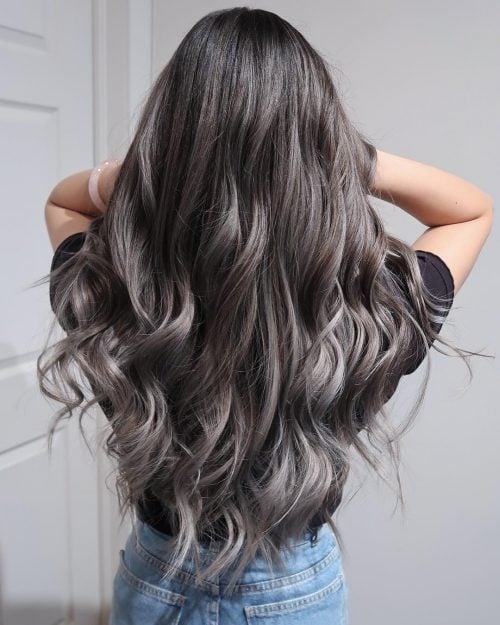
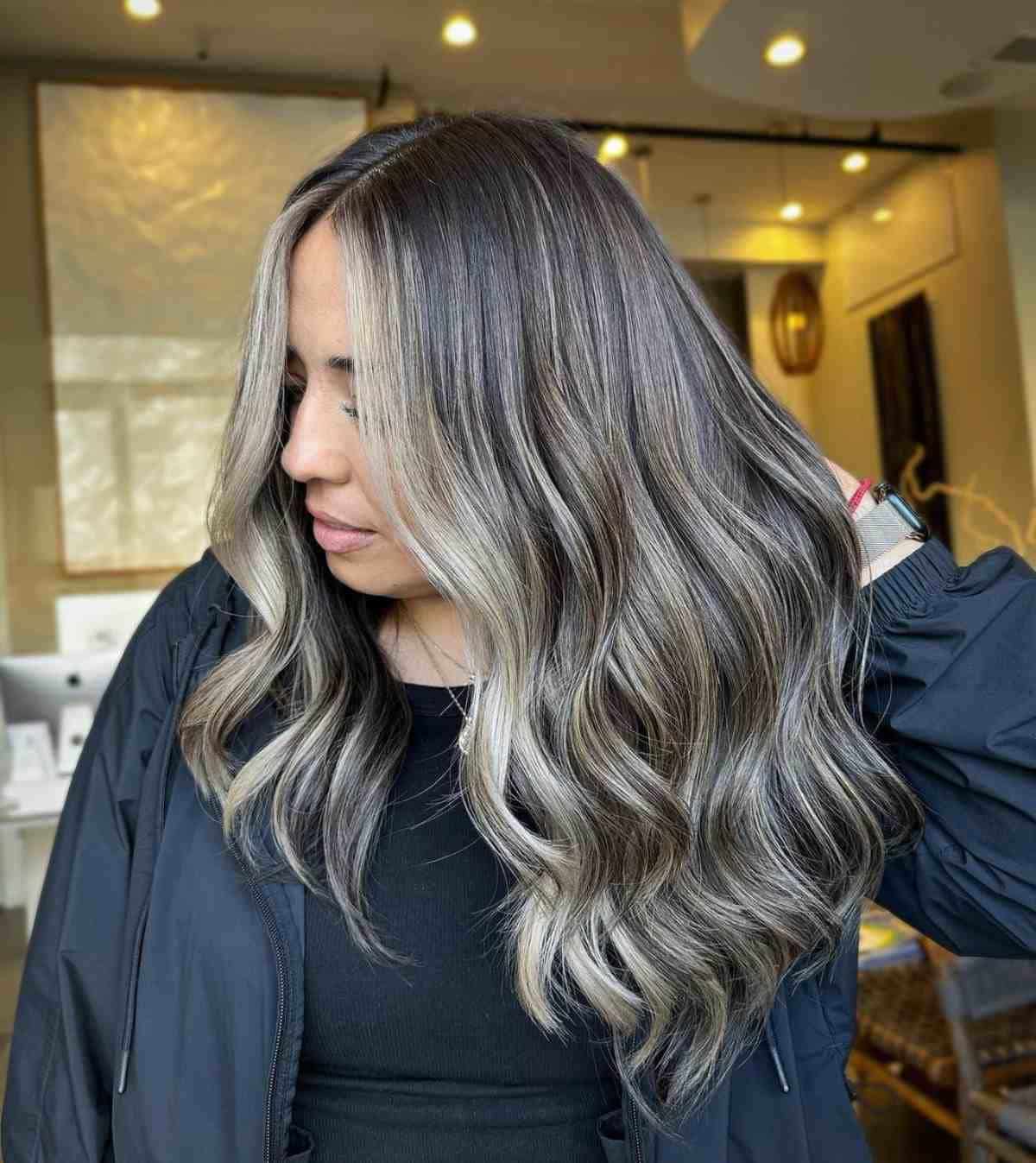
Not ready for white? Go pewter. This long cut keeps a charcoal root and moves into soft gray and pewter through the waves, with the lightest pieces on the ends. Because the gray is mid-toned, it needs less lift than silver, which is kinder to black hair. The deep, loose waves fall to the middle of the back and show off the smoky transition. Moody, in the best way.
- Best for: Medium to thick black hair; anyone wanting a cool tone with less lightening.
- Ask your stylist for: A charcoal root melted into pewter gray balayage on the mid-lengths and ends.
- How to style it: Set waves with a 1.25-inch wand and rake them out with your fingers.
- Upkeep: Toner every 6 weeks; balayage every 12 to 14 weeks.
Blonde, honey and caramel balayage
Warm and cool blondes both look brighter against a black root. If you’re drawn to the high-contrast end, our black and blonde hair ideas take it further.
4. The black-to-beige melt
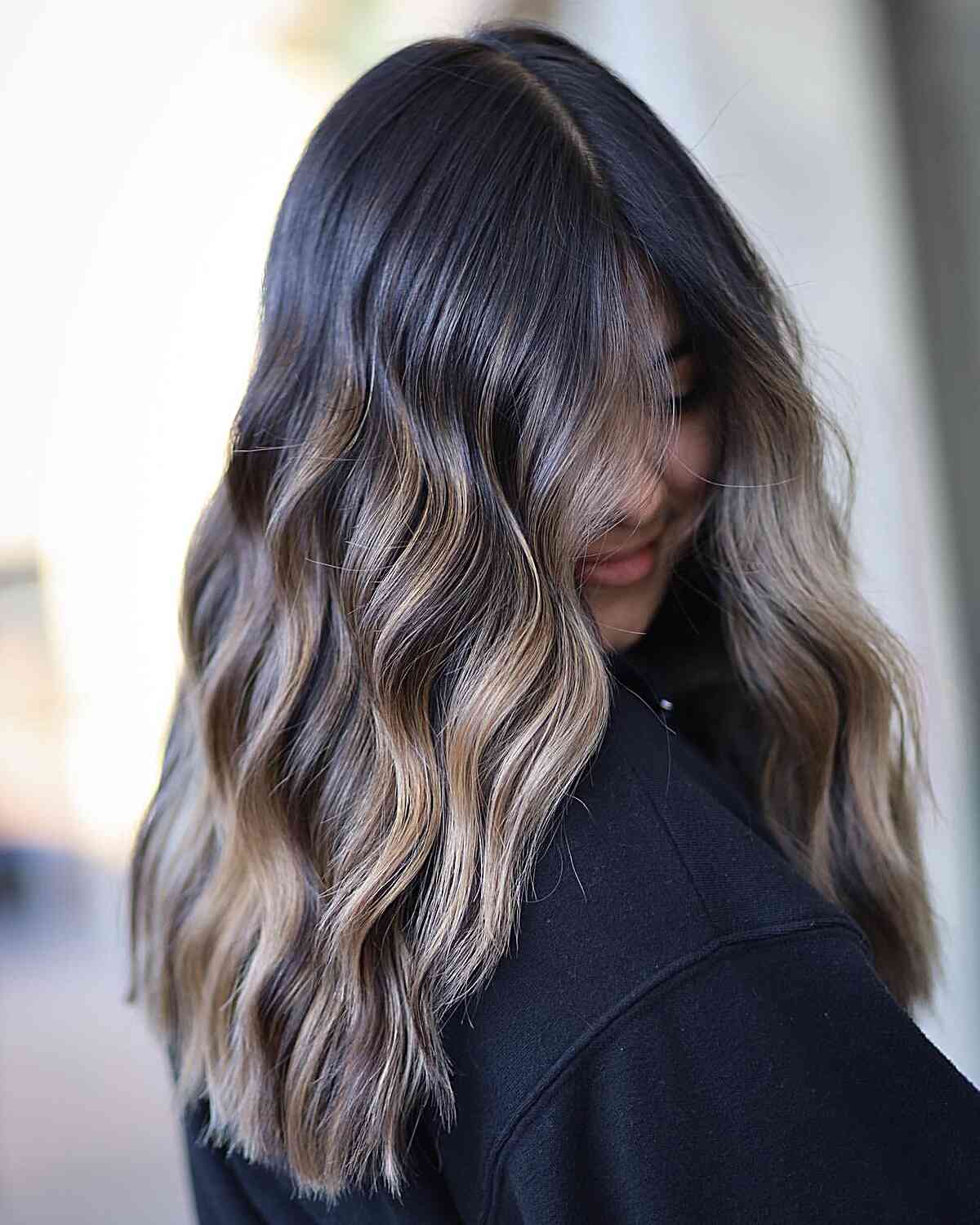
Here’s how to go light without a single visible line. A true black root fades slowly through mushroom brown into beige blonde, with the brightest color on the bottom third of these long waves. The beige tone sits between warm and ash, so it doesn’t turn orange as it fades. Loose waves blur the transition even more. It’s a strong blonde that still grows out softly.
- Best for: Black or very dark brown hair, medium to long; anyone who wants blonde without root touch-ups.
- Ask your stylist for: A black root melt into beige blonde, placed heaviest on the ends, with a neutral toner.
- How to style it: Wave loosely with a 1.25-inch iron, leaving the ends out so they look softer.
- Upkeep: Toner every 6 to 8 weeks; balayage every 12 to 16 weeks.
5. The golden blonde sweep
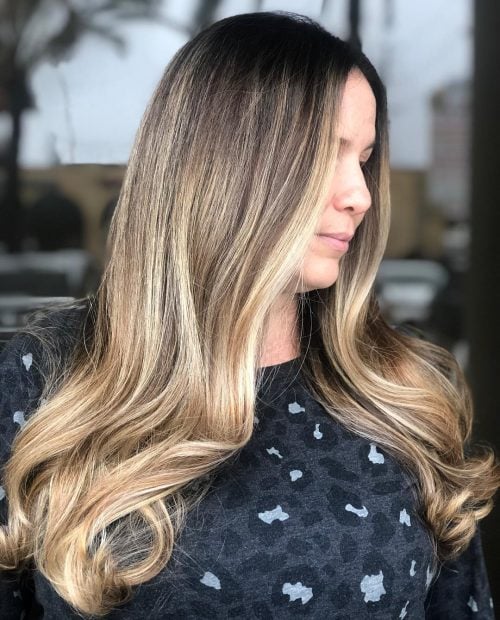
Golden blonde is the friendliest blonde for black hair, because it works with the warmth that comes up as you lighten. On this long cut, the dark root drops into honey and golden blonde lengths, smoothed straight through the middle and curled under at the ends. Seen in profile, the color is brightest around the face. Smooth and sunny.
- Best for: Long black or dark brown hair; warm and olive skin tones.
- Ask your stylist for: Golden blonde balayage with a dark root and brighter face-framing pieces; golden toner.
- How to style it: Blow-dry smooth with a round brush and curl the last few inches under.
- Upkeep: Toner every 8 weeks; balayage every 12 to 14 weeks.
6. The ash blonde tousle
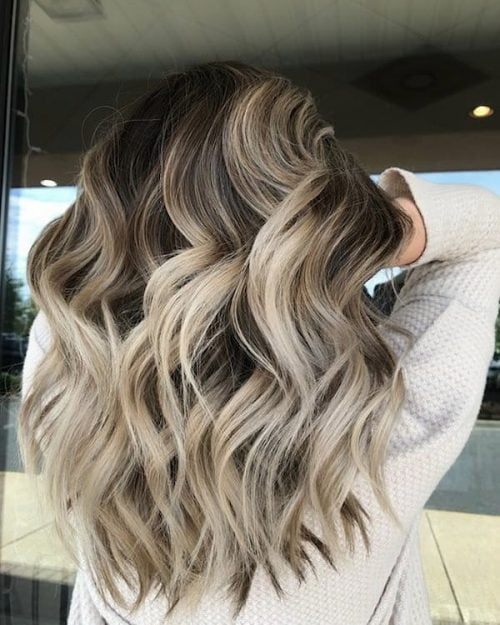
Want blonde that reads cool, not warm? This mid-length cut moves from a dark root into ash and beige blonde, painted so densely that most of the lengths look light. The waves are tousled and full, with darker strands left underneath to add depth. Getting black hair this ashy takes careful toning, so plan for a gloss between visits. The payoff is a soft, smoky blonde.
- Best for: Medium to thick black hair in good condition; cool or neutral skin tones.
- Ask your stylist for: Dense ash blonde balayage with a dark root and darker lowlights left underneath.
- How to style it: Wave with a 1-inch wand, alternating directions, and break up with texture spray.
- Upkeep: Toner every 4 to 6 weeks; balayage every 12 weeks; purple shampoo weekly.
7. The rooted platinum wave
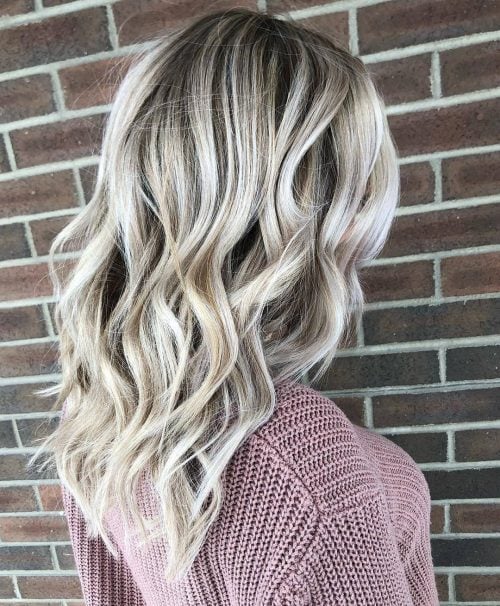
The boldest blonde you can wear over black hair. A narrow dark root gives way almost immediately to icy platinum, worn in shoulder-length waves with a side part. The waves are bouncy and slightly uneven, which keeps the white blonde looking soft instead of brittle. That dark root is what makes it wearable: it frames the face and grows out without a stark line.
- Best for: Healthy black hair and a patient approach; cool skin tones.
- Ask your stylist for: Platinum balayage with a tight shadow root, built over two or more sessions with bond protection.
- How to style it: Use a heat protectant, wave with a 1-inch iron and finish with a light oil on the ends.
- Upkeep: Toner every 4 weeks; lightening every 8 to 10 weeks; weekly bond mask.
8. The honey caramel waves
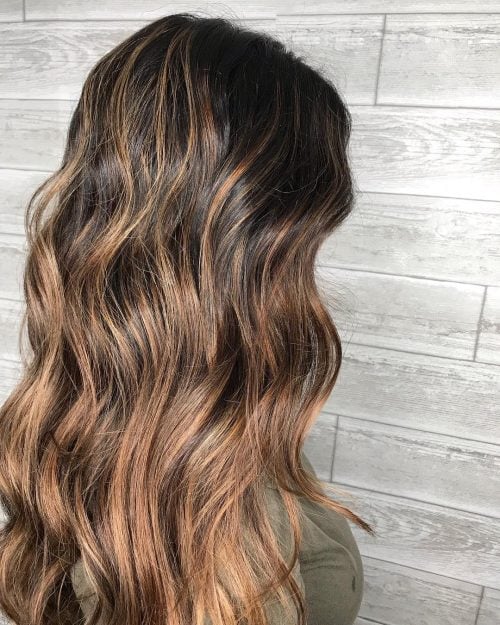
There’s a reason caramel is the classic first balayage for dark hair. These long waves keep a deep root and move into honey and caramel pieces that are painted wide, so the color looks blended rather than striped. The tone is warm and golden, which flatters black hair as it fades. From the back, the waves show a gentle shift from dark to light.
- Best for: Black or dark brown hair of any density; anyone trying balayage for the first time.
- Ask your stylist for: Hand-painted honey caramel balayage with a dark root, placed in wide sections.
- How to style it: Wave with a 1.25-inch iron and finish with a lightweight oil for shine.
- Upkeep: Gloss every 8 to 10 weeks; balayage every 12 to 16 weeks.
9. The caramel-framed face
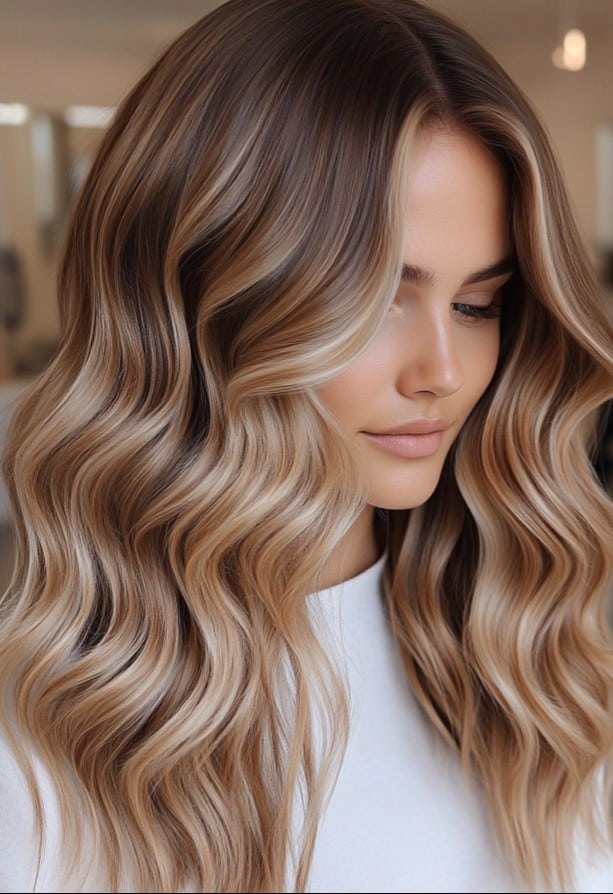
Brightness right where you need it. A chocolate root leads into caramel and beige through long, smooth waves, and the lightest pieces sit beside the face, so the glow reaches the cheekbones first. The waves are wide and polished. Because most of the lightening is at the front, this one needs fewer foils than a full balayage. Soft, bright and easy to grow.
- Best for: Dark hair, medium to long; anyone who wants maximum impact with less lightening.
- Ask your stylist for: A chocolate root with caramel balayage and brighter beige face-framing pieces.
- How to style it: Curl wide sections away from the face with a 1.25-inch wand and brush lightly.
- Upkeep: Gloss every 8 weeks; face-framing refresh every 10 to 12 weeks.
Auburn, burgundy and rose gold balayage
Red tones need less lightening on black hair and fade into warmth rather than brass. For deeper shades, look at our burgundy balayage ideas.
10. The sleek auburn ombré
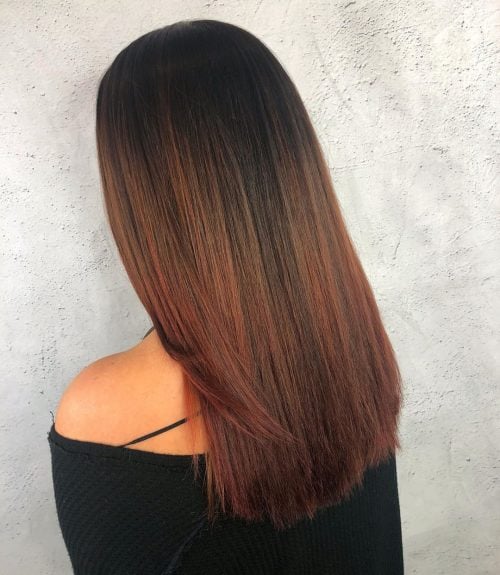
Proof that balayage works on straight hair too. This mid-back cut is sleek and glassy, with a black root that fades into auburn and copper-red through the lower half. There are no waves to hide the transition, so the color has to be blended with care, and here it is. The blunt ends show off the warm red tone. Simple shape, strong color.
- Best for: Straight black hair; anyone who prefers sleek styling.
- Ask your stylist for: A soft melt from black into auburn and copper-red ends, with a blunt perimeter.
- How to style it: Blow-dry straight with a paddle brush and flat-iron the ends for shine.
- Upkeep: Red refresh every 6 weeks; trim every 8 weeks.