Black and blonde is the highest-contrast pairing in hair color, which is exactly why placement matters more than shade. Put the blonde in a wide stripe at the part and it reads graphic and loud. Tuck it under the top layer and it only shows when you move. Melt it in from a dark root and the same two colors look soft and sunlit. The decision you make in the chair is less about which blonde and more about where it goes.
So that is how we have sorted these 23 looks: straight-down-the-middle splits, panels that frame the face, blonde hidden underneath, and blended melts and ribbons. Each one comes with who it suits, what to ask for, how to style it and how often you will be back for a lightener touch-up. If you are curious about other two-tone pairings, our split dye hair ideas cover the full range beyond black and blonde.
How to choose black and blonde hair
Start with how much blonde you can maintain. Lifting dark hair to pale blonde takes time and care, so a small panel or a hidden underlayer is far easier to live with than a full half-head of platinum. Then think about how you wear your hair most days, because a part that moves will move the blonde with it.
| Hair type | Black and blonde placements that work best | What to avoid |
|---|---|---|
| Fine or thin | Face-framing panels or fine ribbons from a dark root, which keep most hair at full strength | Lifting large sections to platinum, which can leave the ends see-through and fragile |
| Thick | Bold half-and-half splits, wide panels and underlayers that show through the bulk | Tiny babylights, which disappear in dense hair |
| Wavy | Ribbons and balayage that catch on each bend of the wave | Hard horizontal lines, which look patchy once waves break them up |
| Curly | Blonde ends or curl-by-curl pieces painted where the curls fall naturally | Foiled stripes that ignore the curl pattern |
| Straight | Sharp vertical splits, money pieces and color-block bangs | Soft ombre on very sleek hair, where uneven blending shows clearly |
Natural black or box dye: virgin dark hair lifts more evenly than hair with old black dye, which can turn orange and patchy. Tell your colorist about any home color in the last few years. Tone: icy and platinum blondes give the sharpest contrast, while honey and golden blondes soften the jump. For ideas that keep most of your hair dark, browse our black hair with highlights.
Half-and-half splits and color blocks
Here the blonde and the black are given equal billing. These are the most graphic looks in the gallery, and they depend on a clean section and a confident part.
1. The two-sided mermaid waves
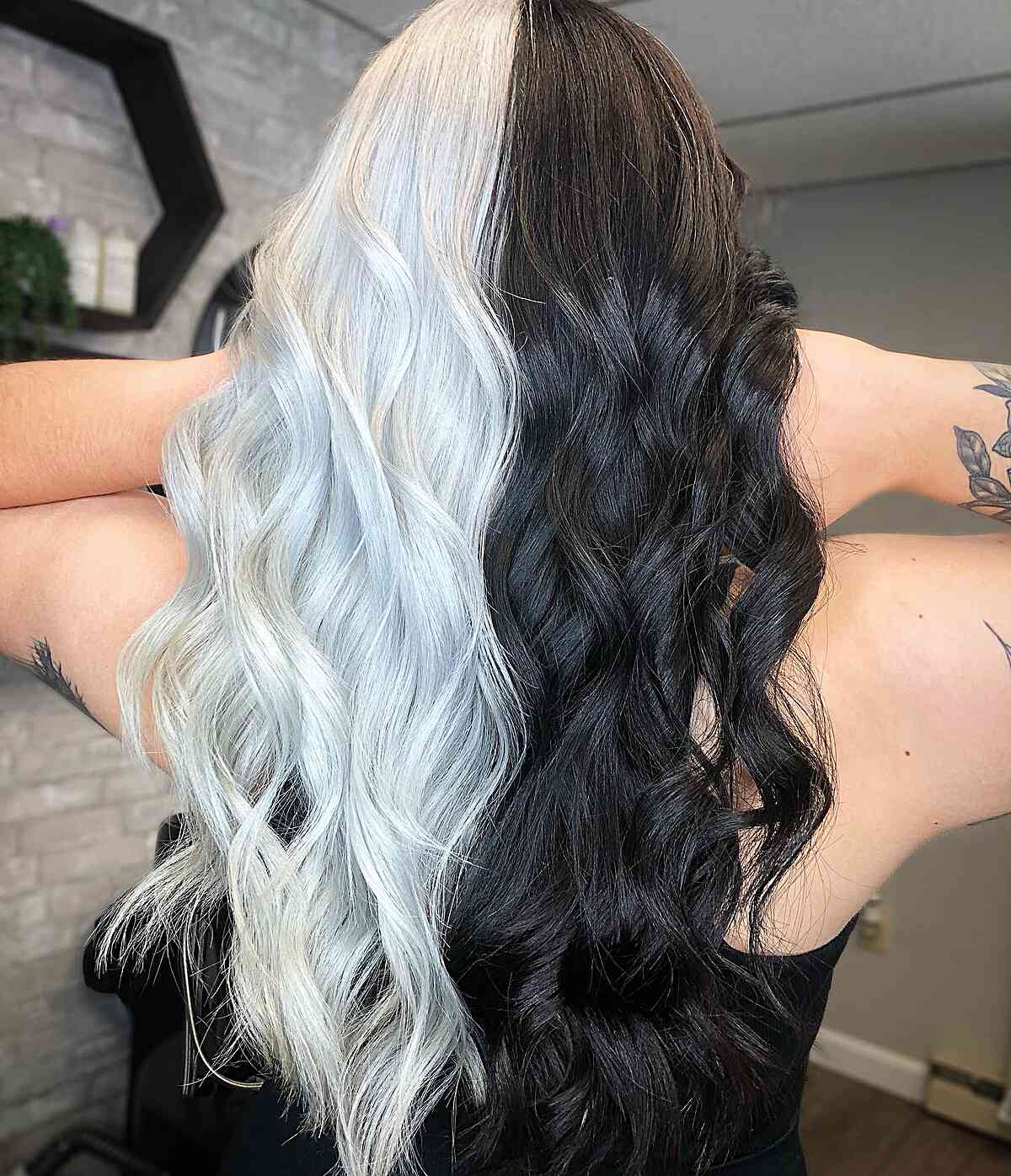
Seen from behind, the whole idea is laid out in one shot: a clean vertical line runs down the center of the head, with white-blonde waves on one side and glossy black curls on the other. The texture differs slightly too: the blonde half falls in looser waves while the black stays springy and full. Because the split follows the natural part straight down to the nape, the color reads as one deliberate design rather than two colors fighting. No half measures here.
- Best for: Thick, long hair with a natural wave; anyone after maximum contrast.
- Ask your stylist for: A vertical split dye from front hairline to nape, with one side lifted to a white-blonde toned with violet and the other kept or colored jet black.
- How to style it: Wear a center part every day so the line stays straight, and wave both sides with the same wand so the textures match.
- Upkeep: Root touch-up on the blonde side every 6 to 8 weeks; purple shampoo once a week.
2. The razor-straight color block
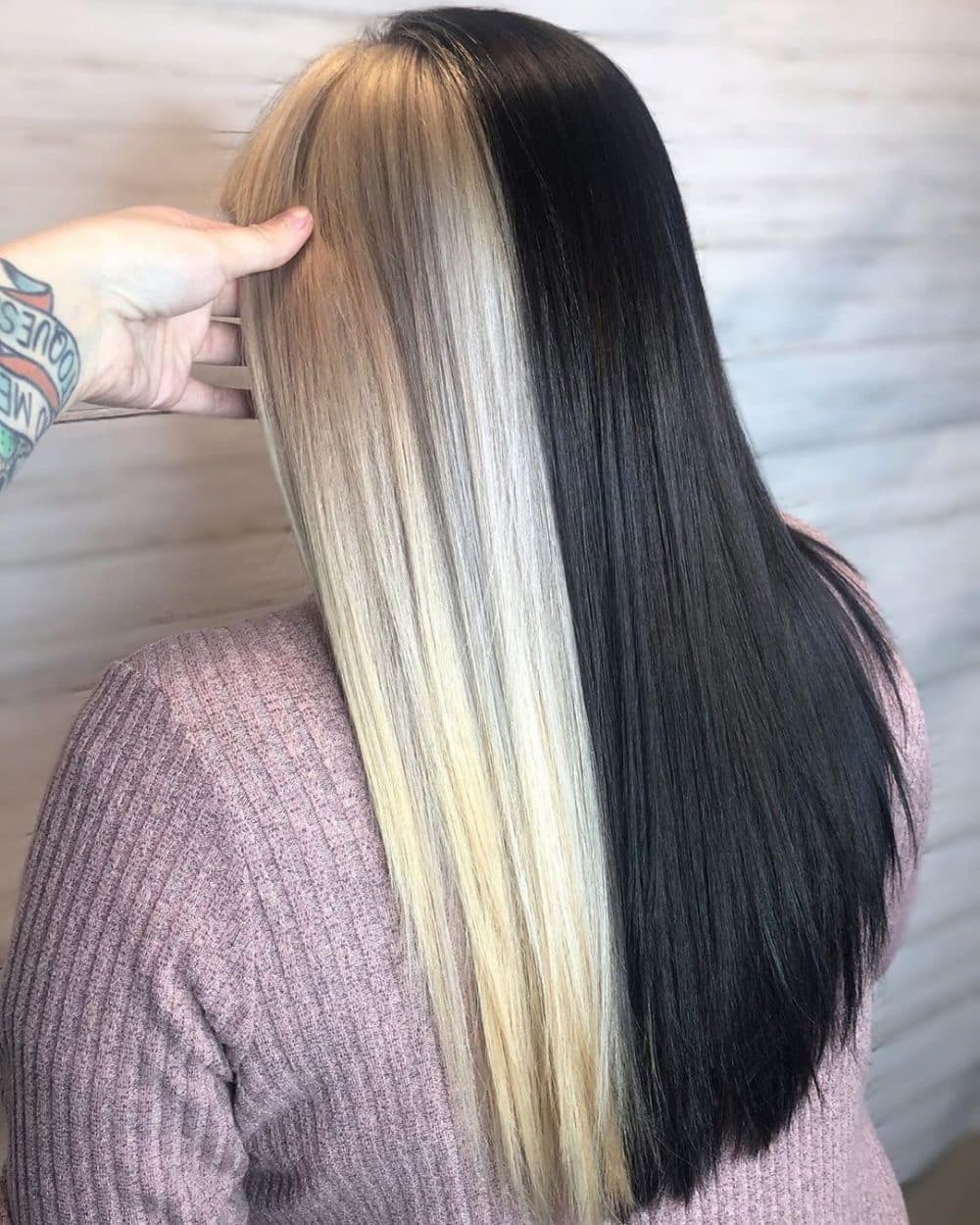
Prefer your contrast sharp enough to cut paper? This version keeps the hair poker straight so the meeting point of platinum and black is visible from top to bottom. The blonde half is a cool, almost white shade with no warmth left in it, and the black side is shiny and solid. Held apart at the part, the two colors look like separate swatches, which is the point. Sleek hair shows every line, so the sectioning has to be exact.
- Best for: Straight, healthy hair at least shoulder length; anyone who flat-irons most days.
- Ask your stylist for: A sharp split dye along a center part, platinum on one side with a cool toner and glossy black on the other.
- How to style it: Flat-iron in thin sections with heat protectant and finish with a drop of shine serum through the mid-lengths.
- Upkeep: Blonde regrowth every 6 weeks; gloss the black side every 8 to 10 weeks to keep it reflective.
3. The cookies-and-cream panel
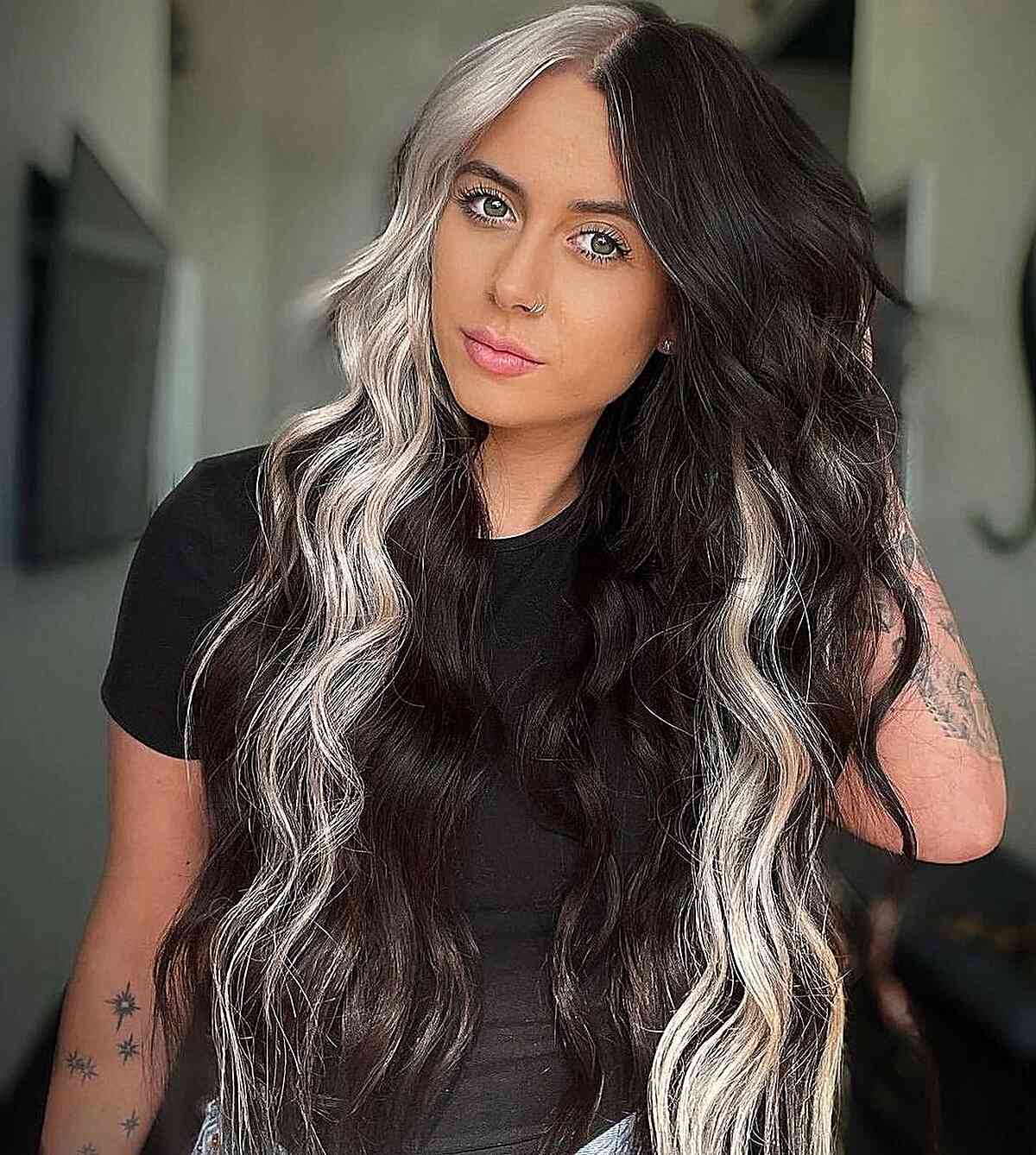
If a full half-head feels like too much, slide the split off center. Here a wide platinum section starts right at the part and runs the full length on one side, while the rest of the hair stays a deep, near-black brown. Loose beach waves twist the two colors around each other below the shoulders, so streaks of blonde appear inside the dark side as well. The extra length helps: on hair this long, the panel reads as a dramatic sweep instead of a stripe.
- Best for: Long, medium to thick hair; anyone who wants a bold look without lightening half the head.
- Ask your stylist for: A wide platinum panel from one side of the part through the ends, around a third of the hair, toned to a soft white.
- How to style it: Curl with a 1.25-inch wand, alternating directions, and leave the last two inches straight for a lived-in finish.
- Upkeep: Panel retouch every 8 weeks; bond-building treatment at each lightening appointment.
4. The black and ice wavy lob
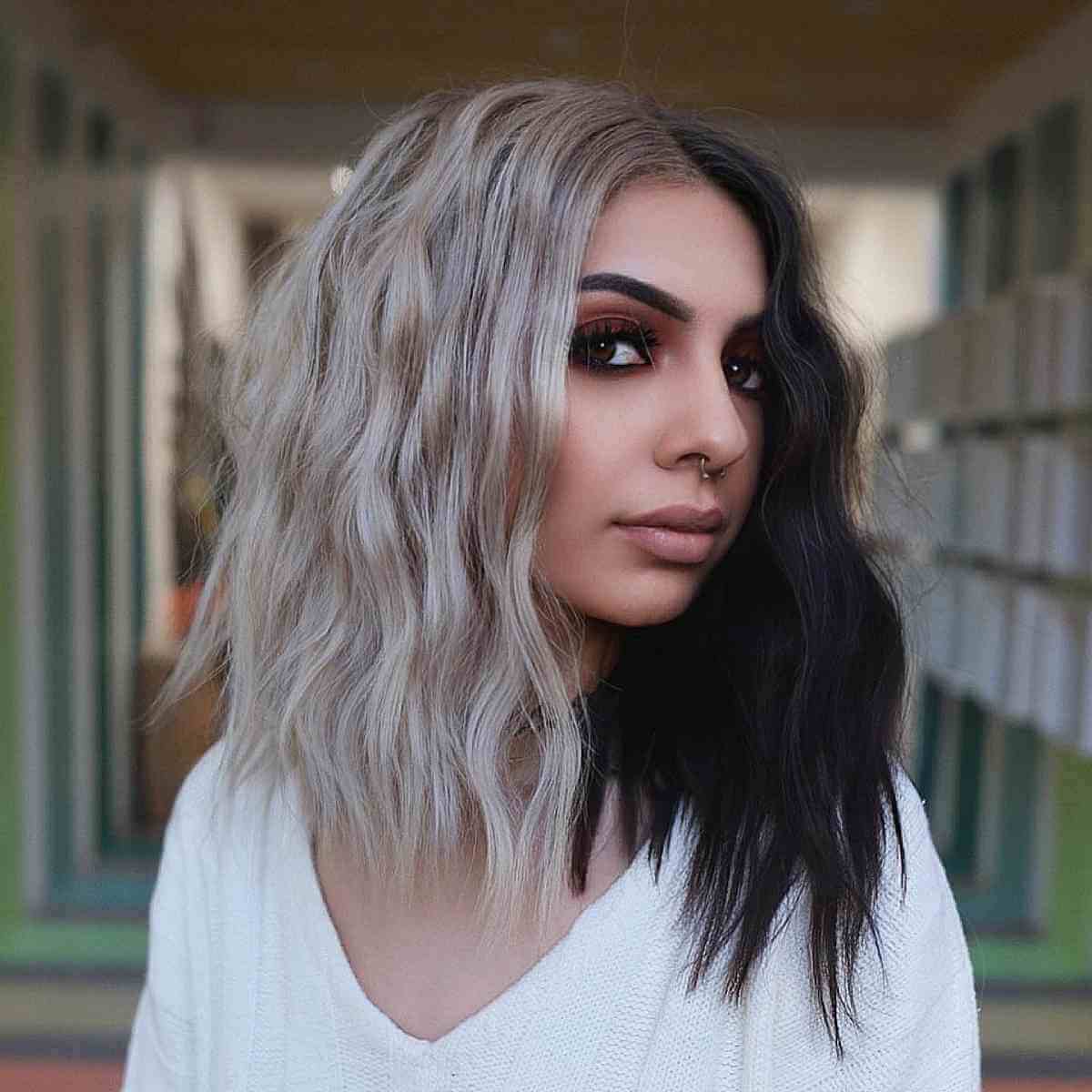
A lob gives split color a sharper, more editorial edge. This one stops at the collarbone, with ash-platinum waves falling on one side of the face and black lengths on the other, so each profile shows a different color. The waves are tight and crimped through the blonde, which adds volume where lightened hair can otherwise look flat. Paired with dark brows and strong makeup, the contrast feels intentional. It’s also the most practical split here, since shorter hair takes less lightener.
- Best for: Medium-density hair with a natural wave; anyone growing out a bob.
- Ask your stylist for: A collarbone lob with long layers and a vertical split dye, ash platinum on one side and soft black on the other.
- How to style it: Crimp or wave with a small-barrel iron through the blonde side, then scrunch a little texture spray through both sides.
- Upkeep: Trim every 8 weeks; blonde root touch-up every 6 to 8 weeks.
Face-framing panels and money pieces
Blonde placed around the face does most of the visual work with the least lightening. Every look in this group keeps the bulk of the hair black. For more placements like these, see our money piece highlight ideas.
5. The shag with a blonde streak
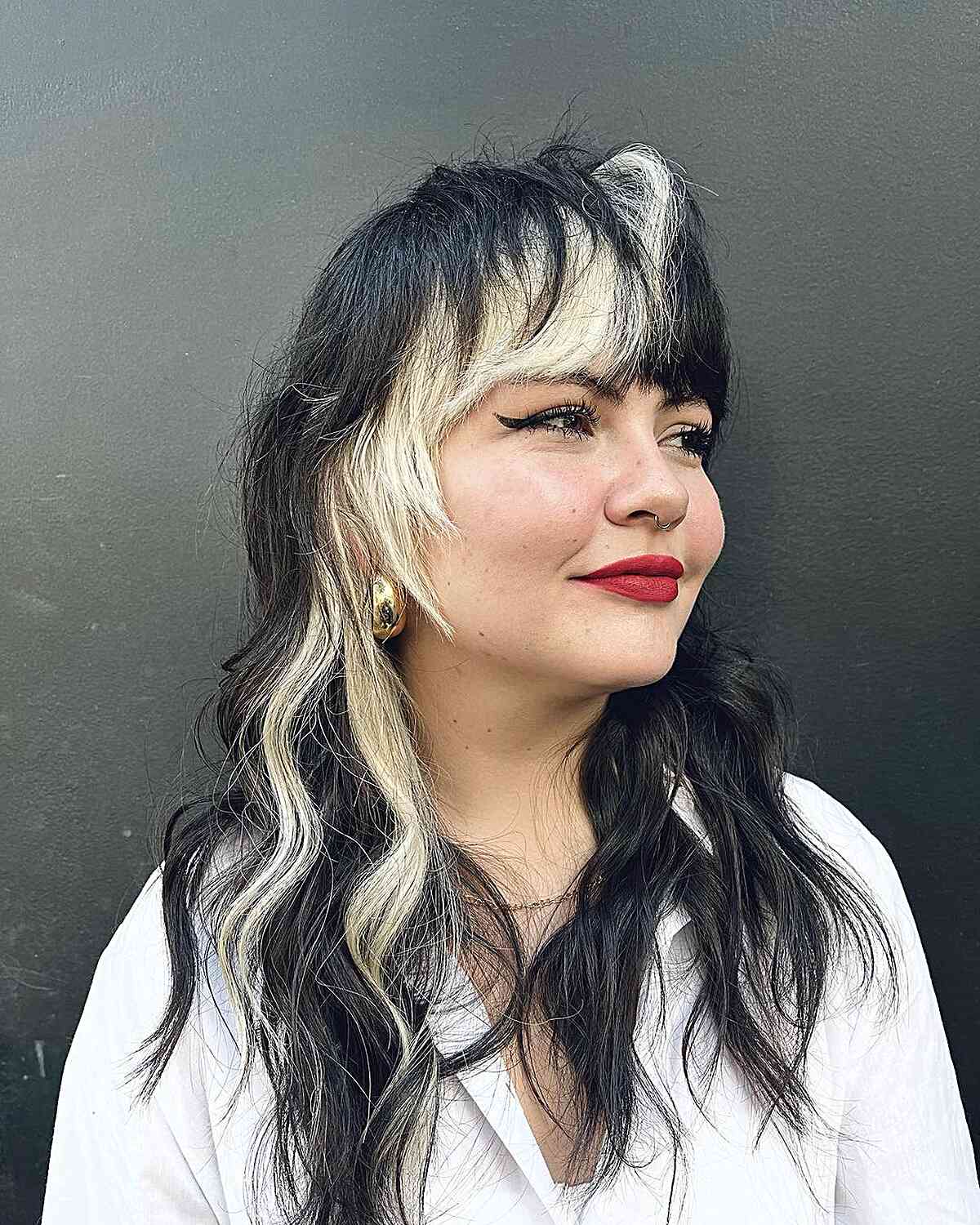
A heavy shag needs one interruption to stop it from looking like a solid block, and here the job goes to a single creamy blonde section. It starts at the side of the part, drops through the bangs and keeps going down the front lengths, so the light piece frames the cheek. The rest of the cut is black, with choppy layers and wispy ends that flick outward. Thanks to the textured fringe, the blonde scatters across the forehead rather than sitting as a stripe.
- Best for: Thick, wavy hair; anyone who likes a shag with a little rock edge.
- Ask your stylist for: A long layered shag with full curtain-style bangs and one creamy blonde section from the part through the fringe.
- How to style it: Blow-dry the bangs with a round brush, then scrunch texture cream through the layers and let them air-dry.
- Upkeep: Bang trims every 4 weeks; blonde section retouched every 8 weeks.
6. The platinum front panel

Think of this as a highlight with the volume turned all the way up. One wide platinum section sits right at the front on one side, from the root to the ends, while everything else is soft black. The cut is long and layered with a curtain-style front, so the blonde curves around the cheekbone and the black falls behind it. It photographs bright even in low light. Because only one section is lightened, the commitment is smaller than it looks.
- Best for: Medium to thick hair, straight or wavy; anyone trying high contrast for the first time.
- Ask your stylist for: One wide platinum panel at the front of the part, lifted and toned to white, with long face-framing layers.
- How to style it: Blow-dry the front section away from the face with a round brush, then let the lengths fall in a loose bend.
- Upkeep: Panel retouch every 6 to 8 weeks; purple shampoo weekly to keep yellow out.
7. The glass-black curtain with icy ends
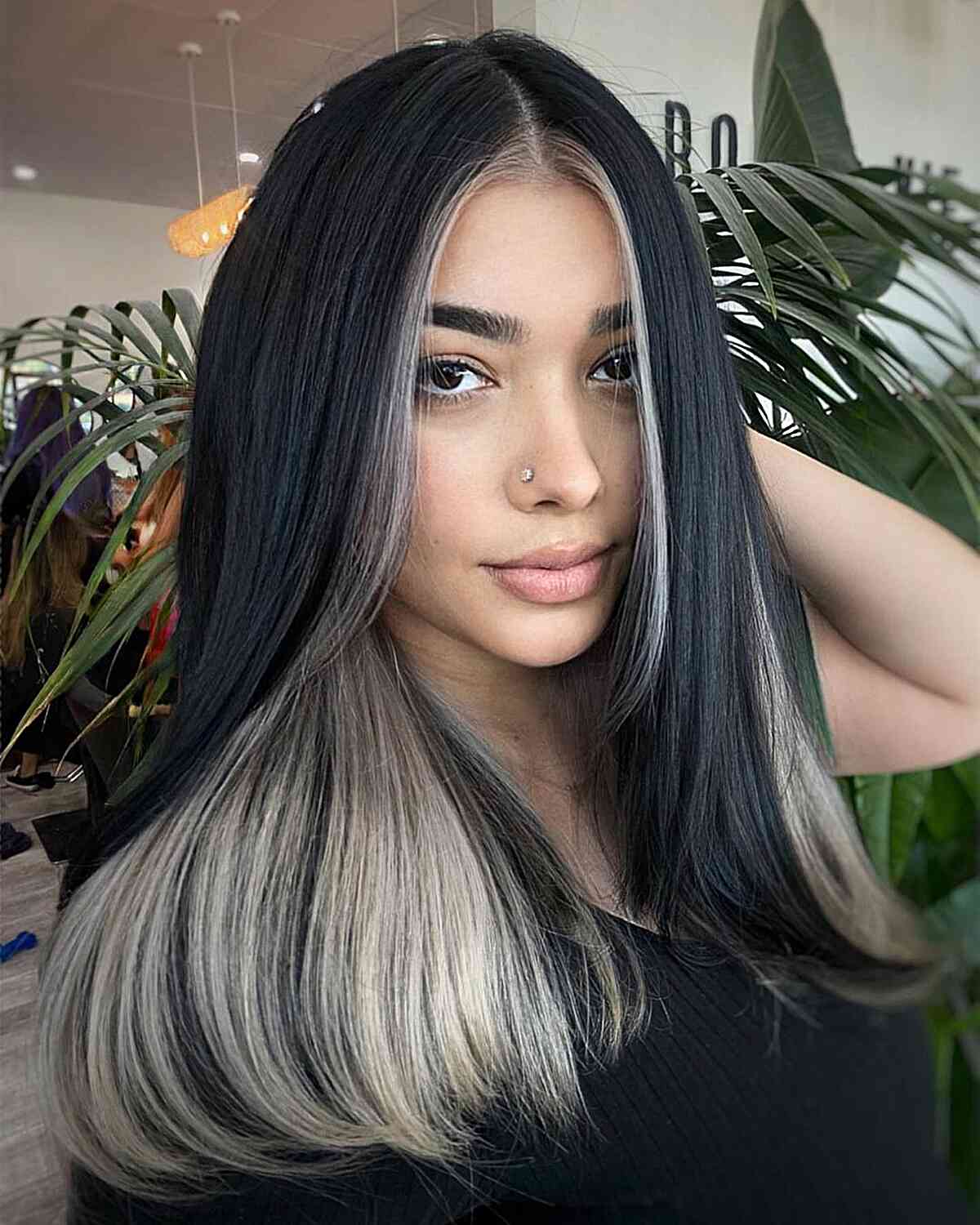
Sleek, long and very deliberate. The hair is glass-straight black parted in the center, with fine platinum strands placed only at the very front so they trace the cheekbones. Lower down, the front sections turn a soft ash blonde, so the light color appears in a V around the face while the back stays dark. Fine strands are the key here: they soften the jump from black to blonde instead of drawing hard stripes. Polished, with a sly edge.
- Best for: Long, straight, healthy hair; anyone who straightens daily.
- Ask your stylist for: Fine platinum face-framing pieces at the front hairline and ash blonde through the lower front lengths, kept off the back.
- How to style it: Flat-iron and finish with a lightweight shine spray, keeping the part sharp and centered.
- Upkeep: Face-framing pieces every 8 weeks; toner every 6 weeks.
8. The oversized ash money piece
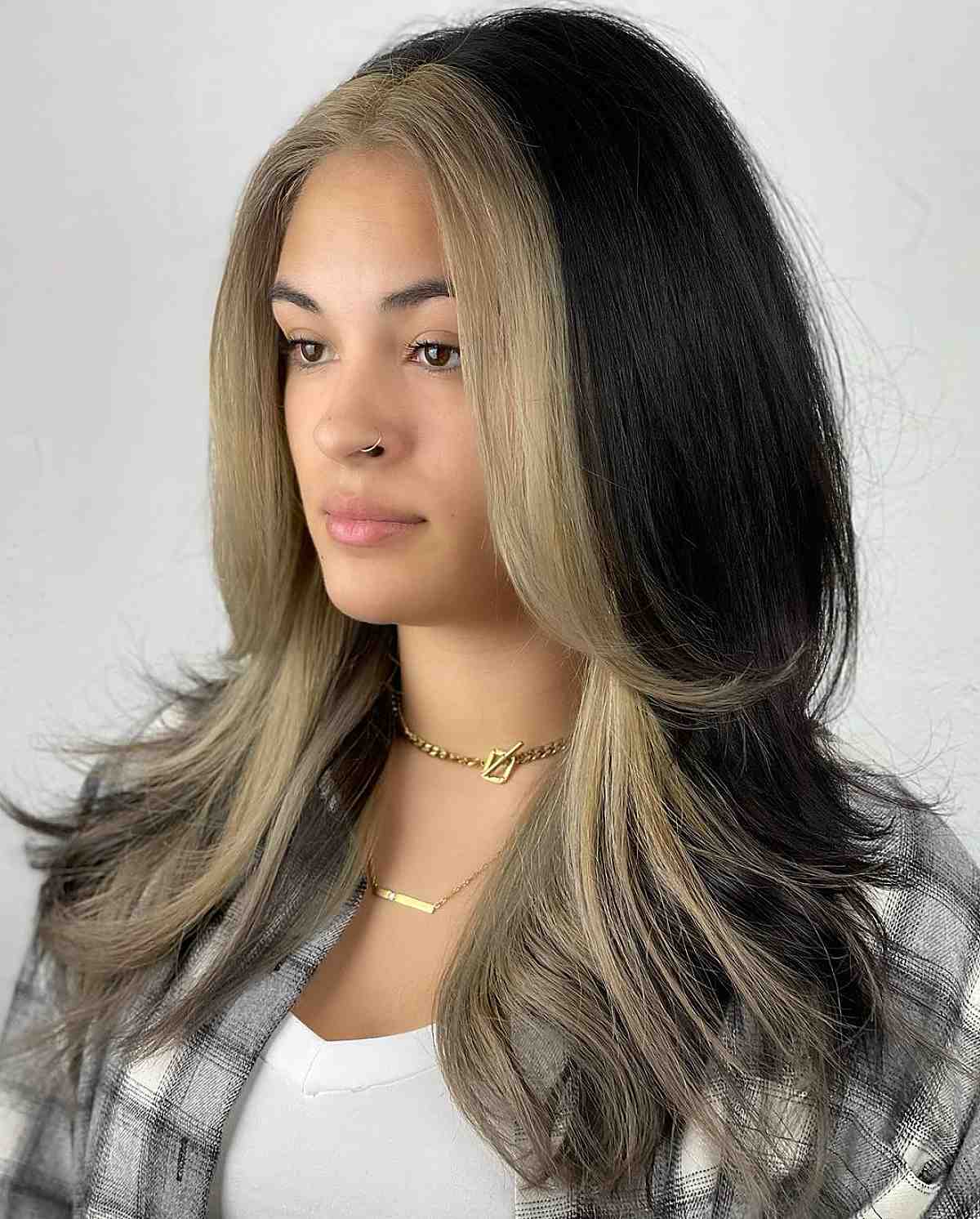
Want the money piece without the stripy look? Go thick and soft. This ash-blonde section is wide enough to cover one side of the face, and it fades into the lengths rather than stopping in a neat line. The black hair behind it is cut in long feathered layers that flick out at the ends, so the blonde pieces scatter over the shoulder. Muted ash keeps it cool against the black rather than brassy. Bold, but not shouty.
- Best for: Medium to thick hair with some natural movement; anyone with olive or neutral skin who likes cool tones.
- Ask your stylist for: A thick ash blonde money piece blended into long feathered layers, with the rest kept natural black.
- How to style it: Round-brush the front away from the face and flip the ends outward with a large barrel.
- Upkeep: Money piece every 8 to 10 weeks; ash toner every 6 weeks.
9. The golden face-framer

Warm skin tones often look best with a golden blonde rather than an icy one, and this is a good example. The roots stay dark and the blonde starts close to the face, with bright golden pieces framing both sides of a center part. Through the lengths, more blonde winds through loose waves, but the dark base still shows between them. The overall effect is sun-warmed rather than stark. It is a softer entry into black and blonde.
- Best for: Medium hair with a wave; warm or olive skin tones.
- Ask your stylist for: Golden blonde face-framing pieces on both sides of the part, plus blended balayage through the lengths over a dark base.
- How to style it: Wave with a 1.25-inch wand away from the face and brush out lightly with your fingers.
- Upkeep: Balayage every 12 to 14 weeks; gloss between visits to keep the gold even.
Hidden blonde: underlayers and peekaboos
If you want the contrast on your own terms, hide it. These looks keep one color on top and the other underneath, so the result changes with how you part and tie your hair. Our peekaboo highlight ideas show more ways to place a hidden layer.
10. The underlit black waves
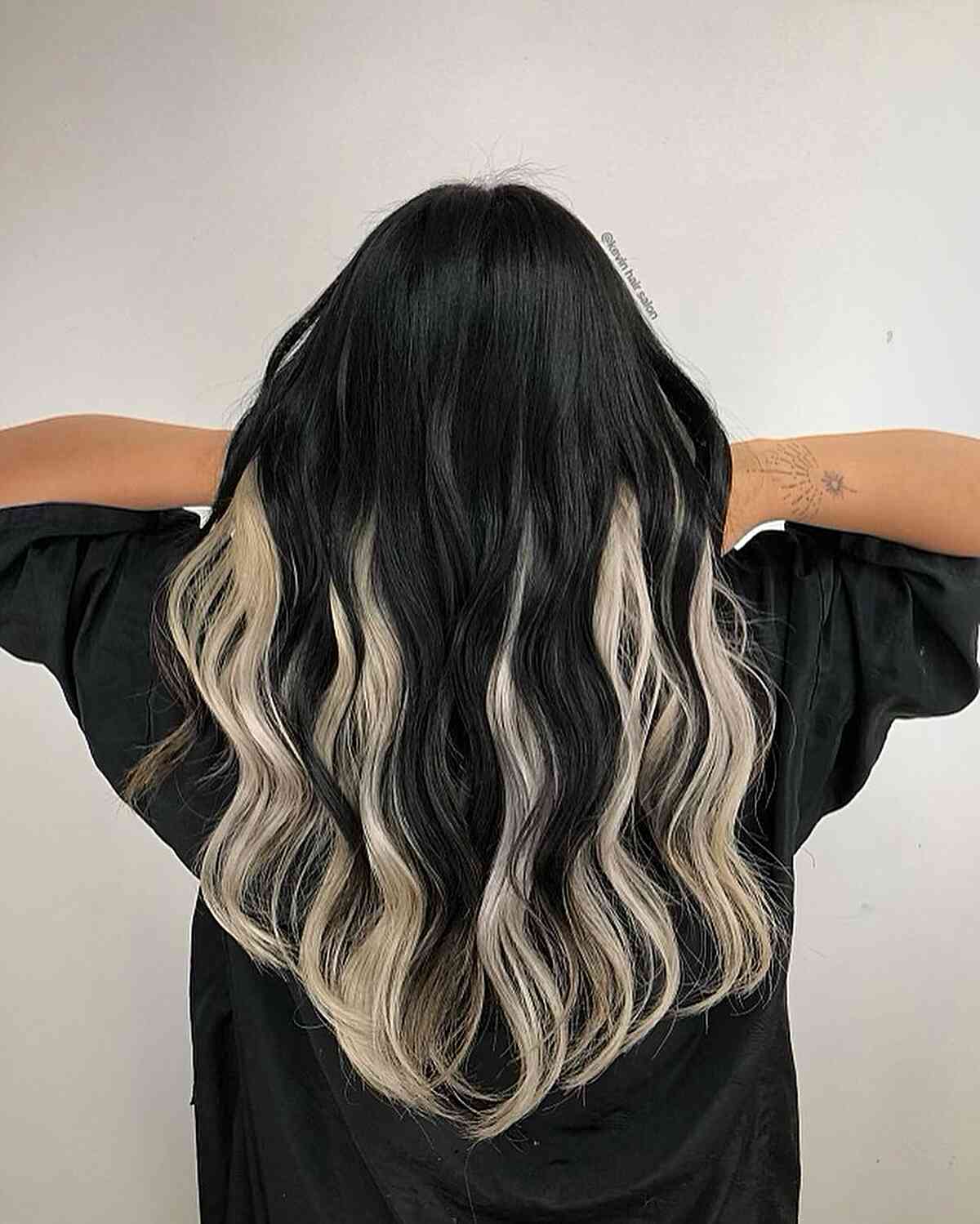
At first glance it is just a long run of black waves, until the ends start to flash blonde. The light shade is painted only on the underlayer, so it shows through the bottom of each wave and around the nape, while the top section hides it completely. Lift the hair into a ponytail and the blonde becomes the main event. For workplaces that prefer quiet color, this offers a real choice every morning.
- Best for: Long, thick hair; anyone who wants bright color that can be hidden.
- Ask your stylist for: Blonde underlights on the bottom third of the head, with the top layer left natural black.
- How to style it: Wave with a large wand to bring the underlayer through, or tie a high ponytail to show it off.
- Upkeep: Retouch every 10 to 12 weeks; the hidden placement grows out discreetly.