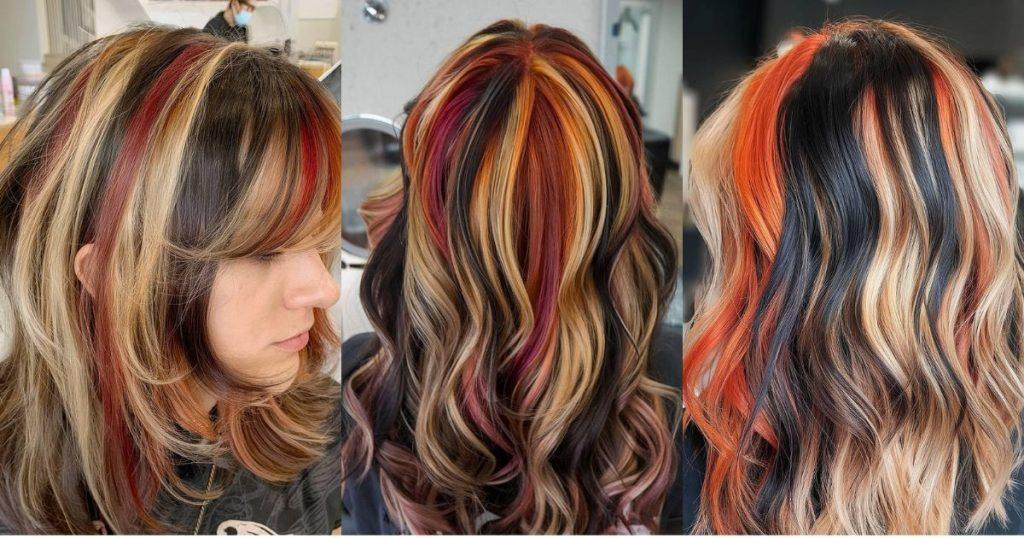
Calico hair borrows its palette from the cat of the same name: patches of black, orange and blonde sitting side by side instead of blending into one shade. Done well, it looks deliberate and graphic rather than accidental. The trick is in the placement. Chunky sections, clean panels or ribbons that run root to tip keep each color readable, and a dark base gives the orange and blonde something to pop against.
We gathered 18 versions that show how wide the idea can stretch, from loud block color with blunt bangs to softer streaks through brunette waves, rooted blonde melts with a flash of copper, and calico on curls and locs. If you like the high-contrast pieces but want fewer shades, our guides to black and blonde hair colors and skunk stripe hair cover the two-tone side. For each look below you’ll find who it suits, what to ask for and how much upkeep to expect.
How to choose a calico hair color
Start with how much of your hair you want lightened. Blonde and bright orange both need bleach on dark hair, so the more of those two shades you add, the longer the appointment and the more aftercare you take on. Leaving a generous amount of your natural dark color in the mix is the easiest way to keep the hair healthy.
| Hair type | Calico placement that works best | What to avoid |
|---|---|---|
| Fine or thin | Fewer, wider sections around the face and part line, with the dark base left underneath | Dozens of fine bleached streaks, which can leave the ends fragile and see-through |
| Thick | Chunky panels and block sections that read clearly through the density | Very fine babylights, which disappear in thick hair |
| Wavy | Ribbons running root to tip so each wave shows a different color | Hard horizontal color lines that break up the wave pattern |
| Curly or coily | Color placed on whole curl clumps, often heavier on top and at the front | All-over lightening, which dries out curls fast |
| Locs | Dyeing individual locs or the ends only, so the color stays separate | Repeated bleaching of the same locs, which weakens them |
Orange or red: bright orange gives the classic calico look; red and burgundy feel moodier and fade a little more gracefully. Dark base: natural black or deep brown works best, because it gives the contrast without extra dye. If you love the orange but want it softer, see our copper balayage ideas.
Block and panel calico
This is calico at full volume. Each color gets its own territory, often split around the bangs or front sections, so the pattern reads clearly from across the room.
1. The Y2K calico pigtails
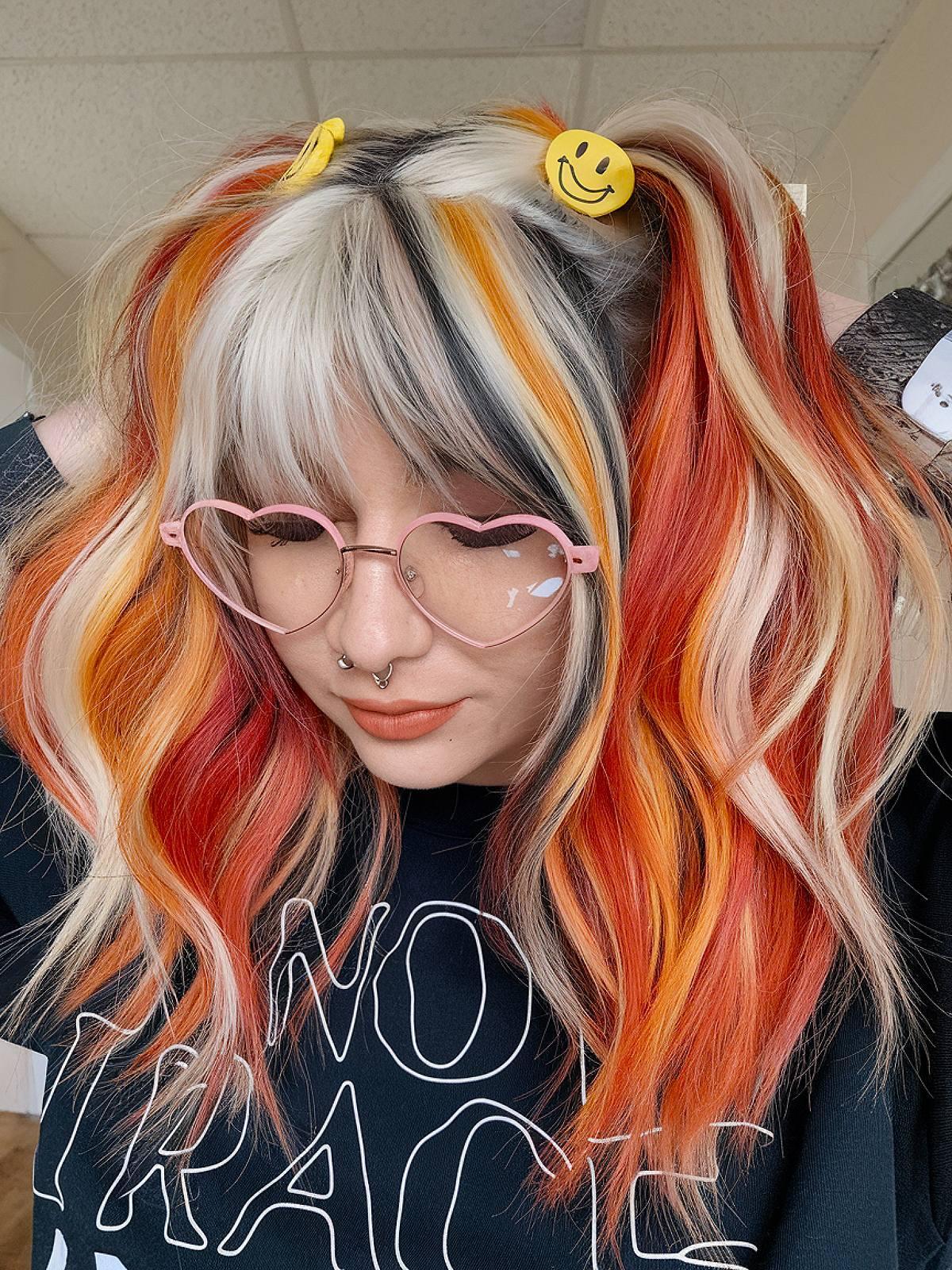
Playful is the whole point here. Platinum bangs and a white-blonde front give way to wide streaks of bright orange and red, with black pieces tucked between them, and the wavy lengths are pulled into two high pigtails held with yellow smiley clips. Pink heart-shaped glasses finish the throwback mood. The color works because the brightest shades sit right at the front, so even tied up, every section stays on show.
- Best for: Medium to thick wavy hair that has already been lightened; anyone who likes a bold, fun look.
- Ask your stylist for: Platinum bangs and front sections, with chunky orange and red streaks and black lowlights through the lengths.
- How to style it: Wave the lengths with a 1-inch wand, then tie two high pigtails and add clips at the base.
- Upkeep: Refresh orange and red every 4 to 6 weeks; tone the platinum every 6 weeks; root touch-ups every 8 to 10 weeks.
2. The long calico cat wave
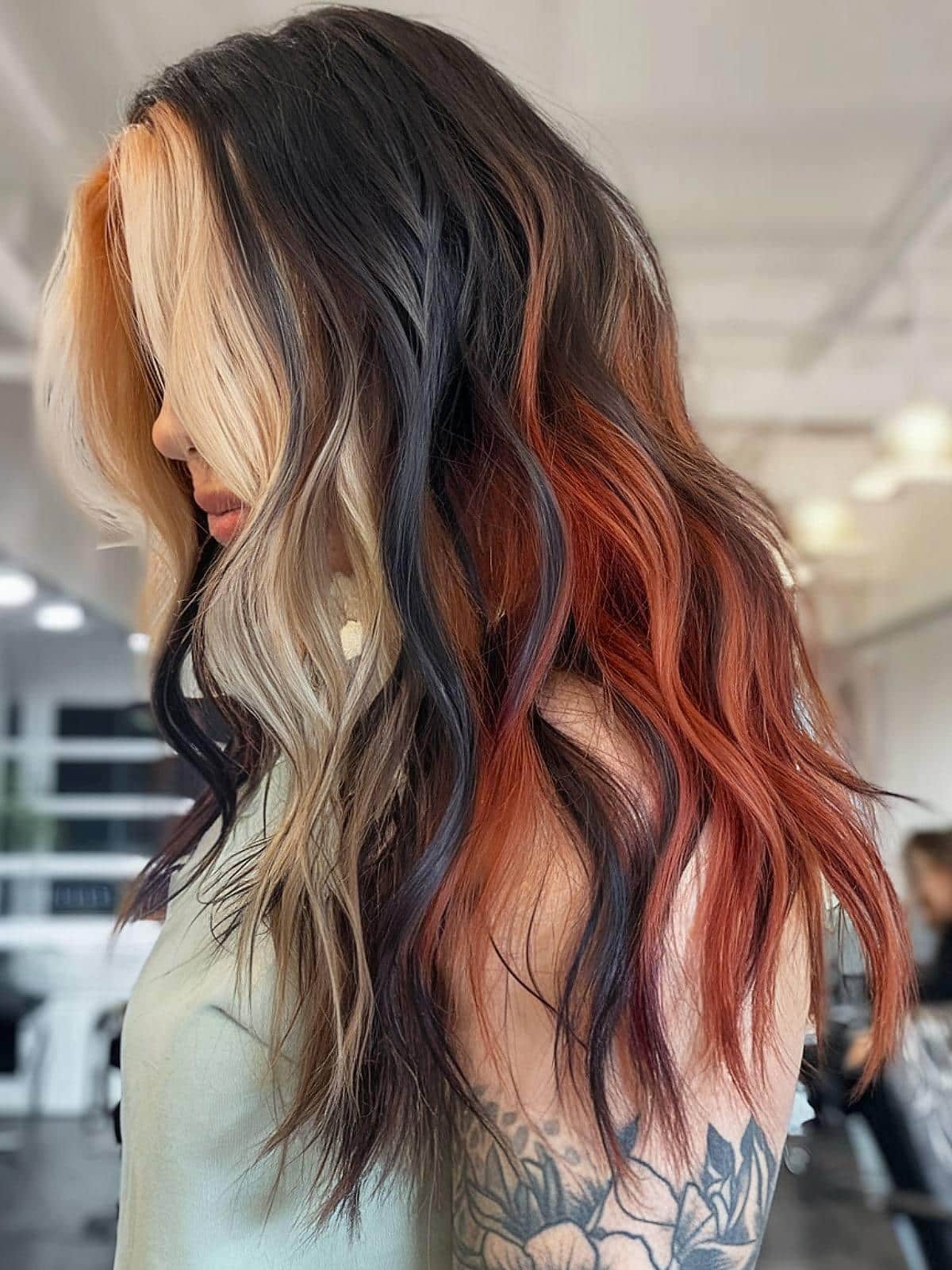
Seen from the side, this one looks the most like the cat it is named after. Long, loose waves start black at the root, then a pale blonde section frames the face while copper and red panels sit behind it, separated by bands of black. Nothing is blended, yet nothing looks harsh, because the waves soften every edge. Wear it down and let the colors shift as you move.
- Best for: Long, thick hair with a natural wave; anyone happy to keep a lot of dark base.
- Ask your stylist for: A blonde face-framing panel and separate copper and red sections, leaving black between each one.
- How to style it: Wave with a 1.25-inch iron, alternating direction, and brush through gently.
- Upkeep: Gloss the copper every 6 weeks; tone the blonde every 6 to 8 weeks; trim every 10 weeks.
3. The raccoon-tail shag
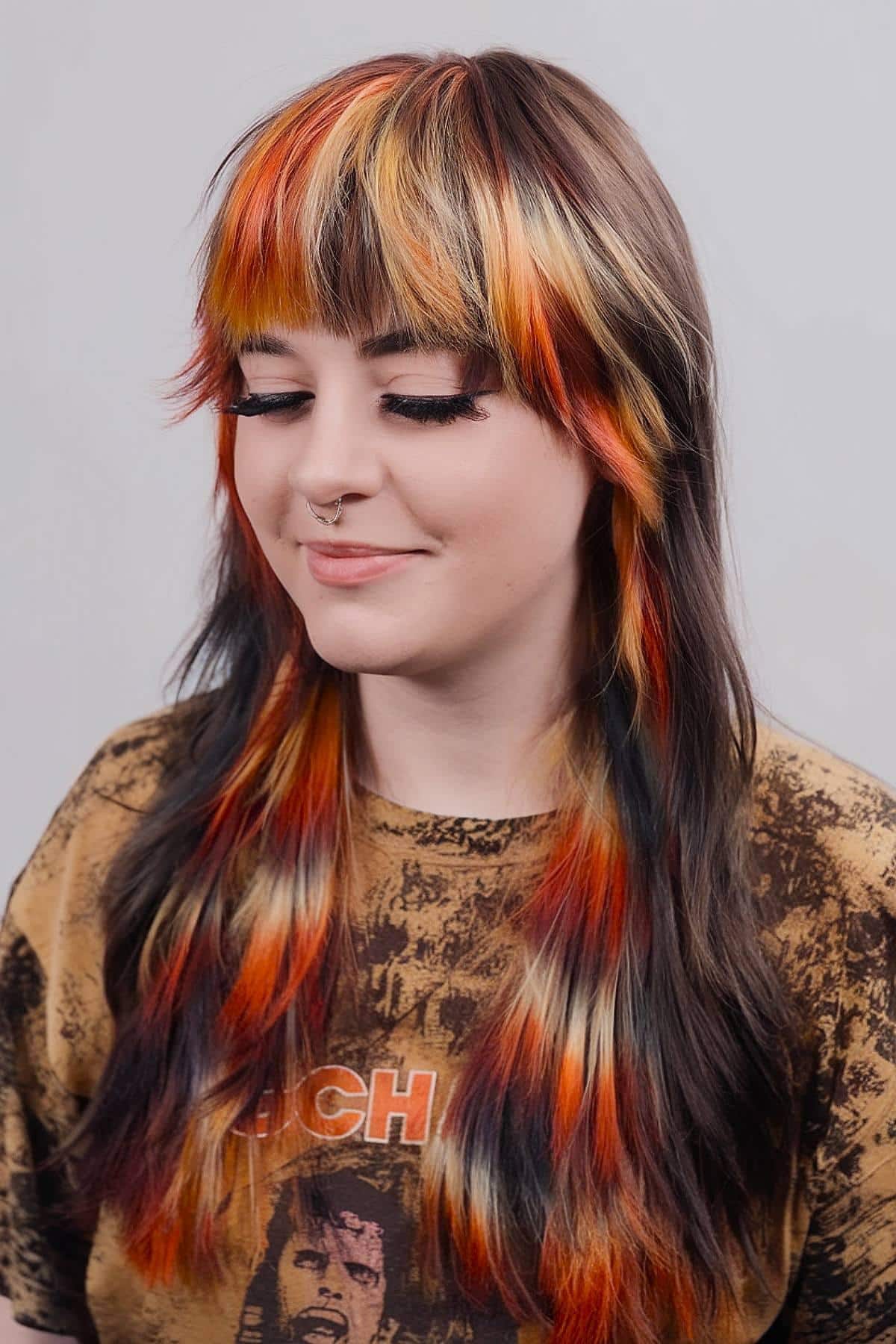
Look down to the ends: they are banded in orange, black and blonde like a striped tail, which is where this look gets its raccoon-tail nickname. Up top, the long black shag carries blunt bangs streaked with orange and pale blonde, and longer face-framing layers keep the stripes visible from the front. Because the stripes sit low, regrowth barely shows. It’s a clever way to wear loud color with a dark, low-maintenance root.
- Best for: Long, straight to slightly wavy hair; anyone wanting bright color with easy regrowth.
- Ask your stylist for: A long shag with blunt bangs, orange and blonde streaks in the fringe and horizontal orange, black and blonde bands on the ends.
- How to style it: Blow-dry the bangs straight with a small round brush and leave the lengths smooth so the stripes stay crisp.
- Upkeep: Bang trims every 4 weeks; refresh orange every 4 to 6 weeks; full trim every 8 weeks.
4. The split-block mullet shag
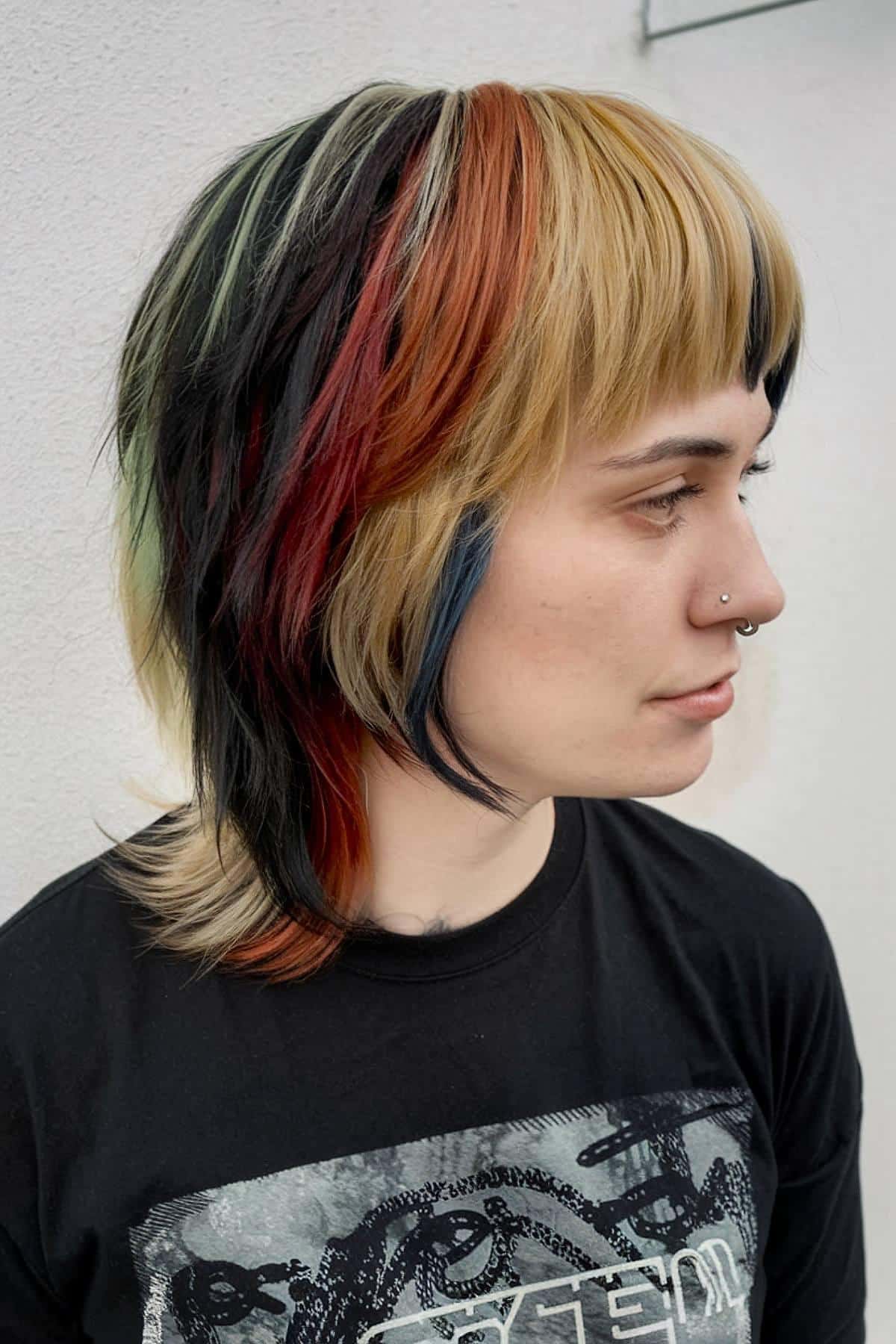
If you want calico to look graphic rather than streaky, this is how. The color is laid down in clean blocks: black on one side and underneath, a solid orange-red section across the top and short honey-blonde bangs cut straight across the brow. The shag mullet shape, longer at the back and choppy around the face, makes each block shift as the layers fall. Sharp, cool and very intentional.
- Best for: Straight to slightly wavy hair; anyone comfortable with a strong, editorial look.
- Ask your stylist for: A shag mullet with short blunt bangs, with the color sectioned into black, orange-red and blonde blocks.
- How to style it: Rough-dry with texture spray and point the short bangs straight down with a flat brush.
- Upkeep: Trim every 6 weeks to keep the mullet shape; refresh the orange-red every 4 to 6 weeks.
5. The platinum and tangerine curtain
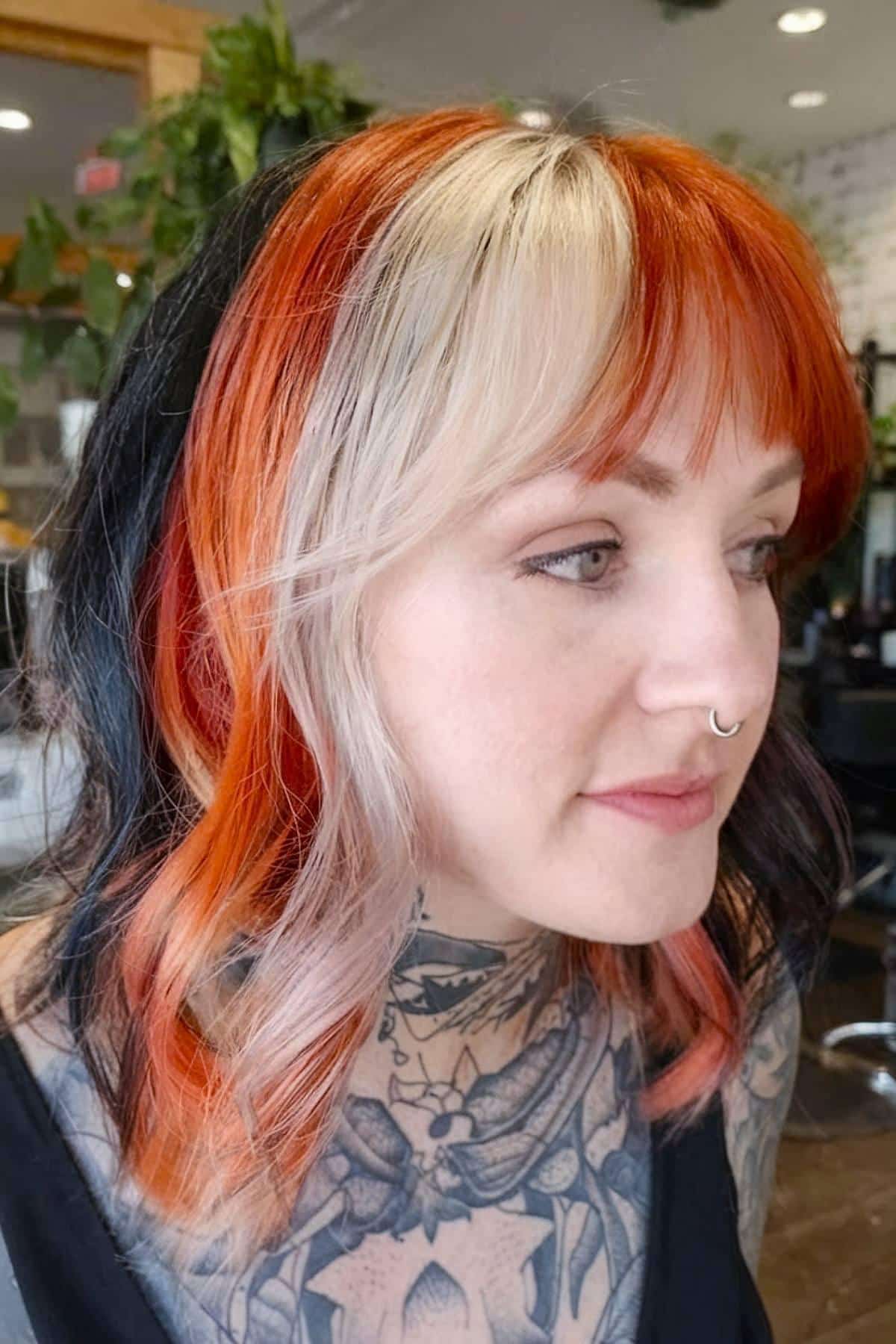
Two bright shades right at the hairline do most of the work in this shoulder-length cut. Bright tangerine bangs sweep to the side, a wide platinum panel drops beside the face, and black underneath frames both. Small orange pieces repeat through the lower lengths so the front doesn’t look stuck on. It’s the version to choose if you want calico you can see in every selfie without bleaching your whole head.
- Best for: Medium-density straight hair; anyone who wants maximum impact with less lightening.
- Ask your stylist for: A platinum face-framing panel with orange bangs and a few orange pieces in the lengths, black everywhere else.
- How to style it: Blow-dry the bangs to the side over a round brush and smooth the rest with a flat iron.
- Upkeep: Refresh the orange every 3 to 5 weeks; tone the platinum every 6 weeks; bang trims monthly.
6. The tucked calico bob
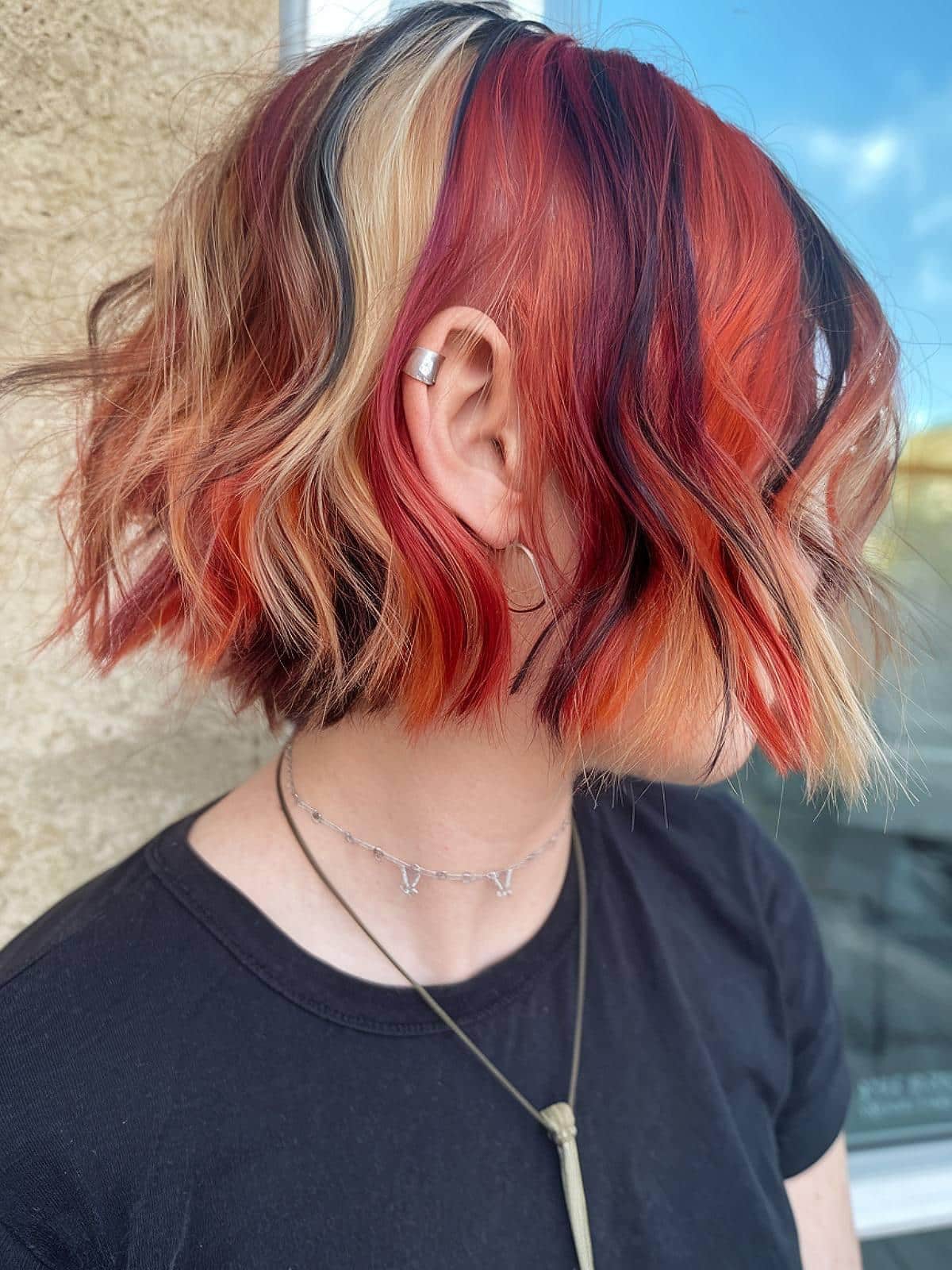
Short hair shows calico in a tighter, punchier way. This chin-length bob is cut with soft, bent waves, and wide streaks of red, copper and pale blonde sit next to black sections all the way around. Tucking one side behind the ear reveals more of the red underneath and stops the color from crowding the face. Because the cut is short, you can refresh the whole thing quickly.
- Best for: Fine to medium hair; anyone who wants bright color in a short cut.
- Ask your stylist for: A chin-length bob with chunky red, copper and blonde sections and black left between them.
- How to style it: Bend the lengths with a flat iron, leave the ends straight and tuck one side behind the ear.
- Upkeep: Trim every 6 to 8 weeks; refresh red and copper every 4 to 6 weeks.
Calico streaks on brunette hair
On a brown base, calico turns into a ribboned, lived-in color. The streaks are still chunky enough to read, but brown in between softens the contrast for everyday wear.
7. The classic tri-tone wave
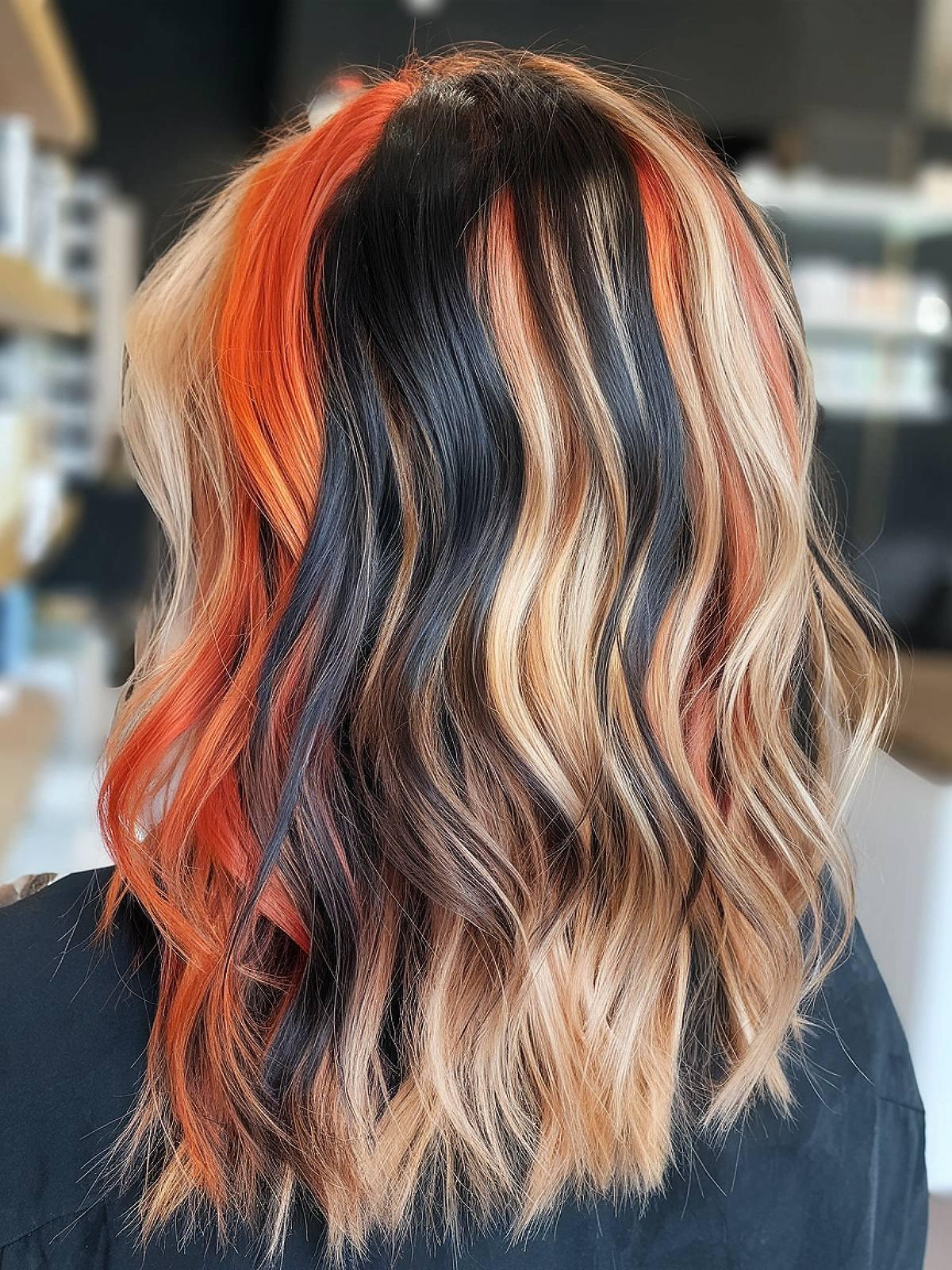
Black, orange and blonde in roughly equal measure: this is the textbook calico palette. A center part splits shoulder-grazing waves, and the three shades run in vertical ribbons from root to tip, so each wave flips between color as it turns. The pale blonde gathers at the ends, which brightens the bottom half. If you want the original version of the trend, take this photo to the salon.
- Best for: Medium to thick wavy hair; anyone ready for full calico contrast.
- Ask your stylist for: Vertical root-to-tip ribbons of bright orange and pale blonde on a black base, with brighter ends.
- How to style it: Wave with a 1.25-inch wand, leaving the ends out, then shake the waves apart with your fingers.
- Upkeep: Refresh orange every 4 to 6 weeks; tone blonde every 6 to 8 weeks; full touch-up every 10 to 12 weeks.
8. The curtain-bang calico shag
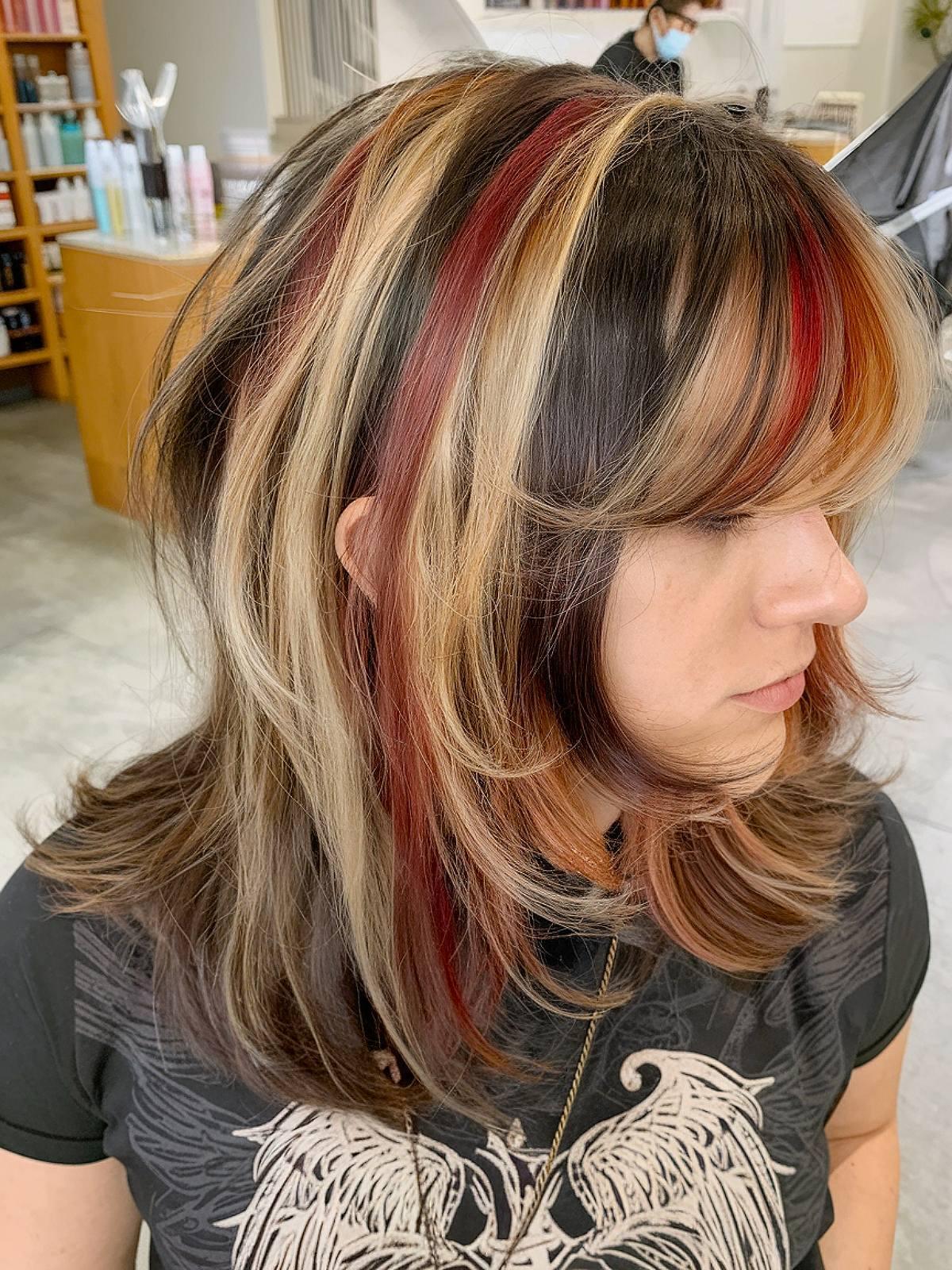
Curtain bangs and calico streaks turn out to be a natural pair. On this layered shag, chunky blonde, cherry red and copper pieces are woven through a medium brown base, with the brightest blonde sitting in the bangs where it frames the eyes. Feathered layers flip outward at the collarbone. The brown in between is what keeps it grown-up; the color reads rock-and-roll rather than costume.
- Best for: Medium to thick hair with some bend; anyone who likes a seventies shag.
- Ask your stylist for: A layered shag with curtain bangs, chunky blonde streaks in the fringe and red and copper pieces through the lengths.
- How to style it: Blow-dry the bangs out with a round brush and flick the layers away from the face.
- Upkeep: Bang trims every 4 to 5 weeks; refresh red and copper every 6 weeks; highlights every 10 to 12 weeks.
9. The smoky calico with silver
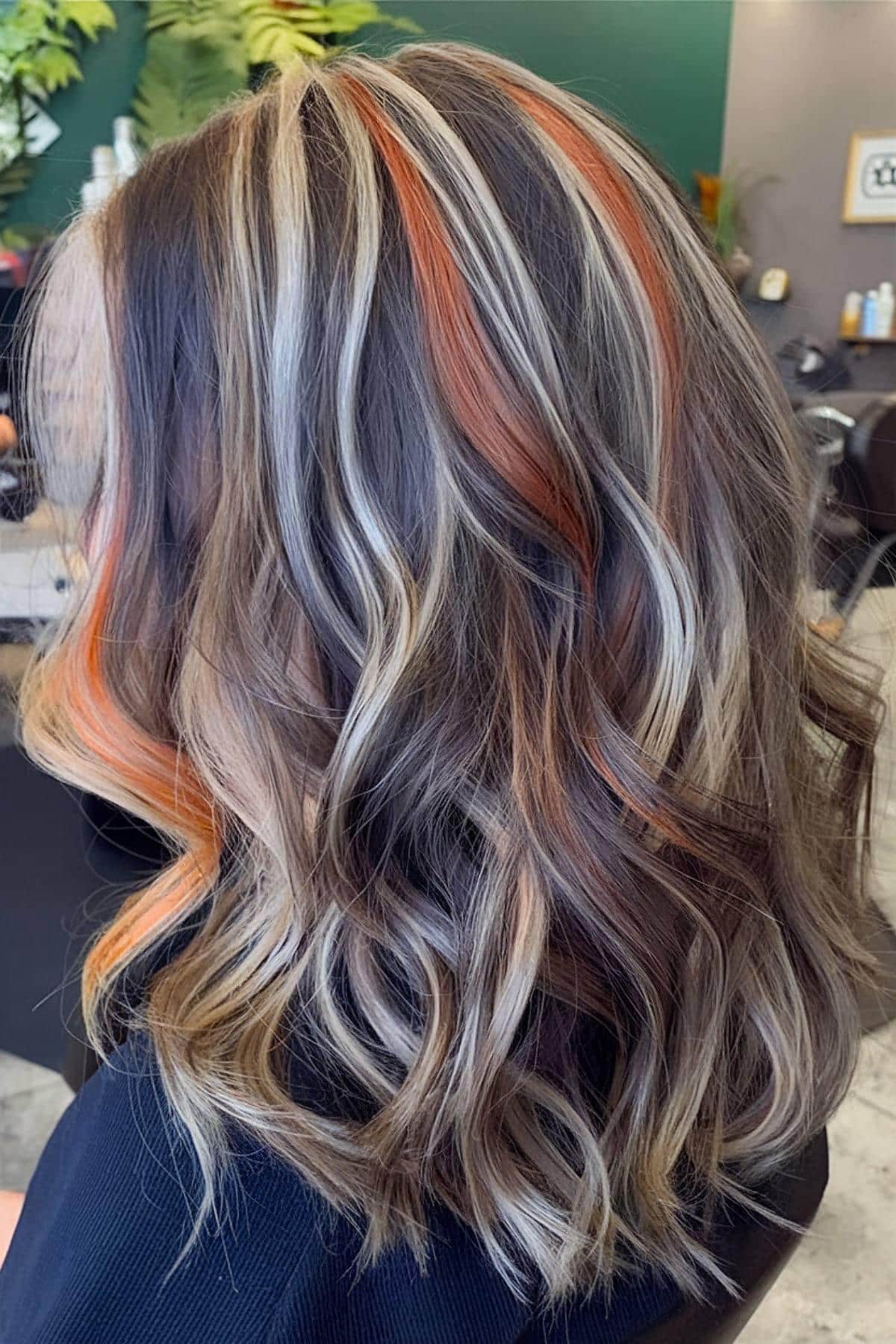
Prefer something cooler? Here the blonde is pushed toward ash and silver, so the dark brown base and the streaks look smoky instead of sunny. A single orange piece curls around the face at the front, with thinner orange strands hidden through the crown. Loose waves past the shoulders mix everything together. That one warm ribbon against all the cool tones is what keeps the calico idea alive.
- Best for: Medium to thick hair; cool skin tones; anyone who wants calico with less warmth.
- Ask your stylist for: Ash blonde and silver streaks on a dark brown base, with one bright orange face-framing piece.
- How to style it: Wave with a 1.25-inch iron, then use a purple shampoo weekly to keep the silver cool.
- Upkeep: Toner every 4 to 6 weeks; refresh the orange every 4 weeks; highlights every 10 to 12 weeks.
10. The sunset ribbon curls
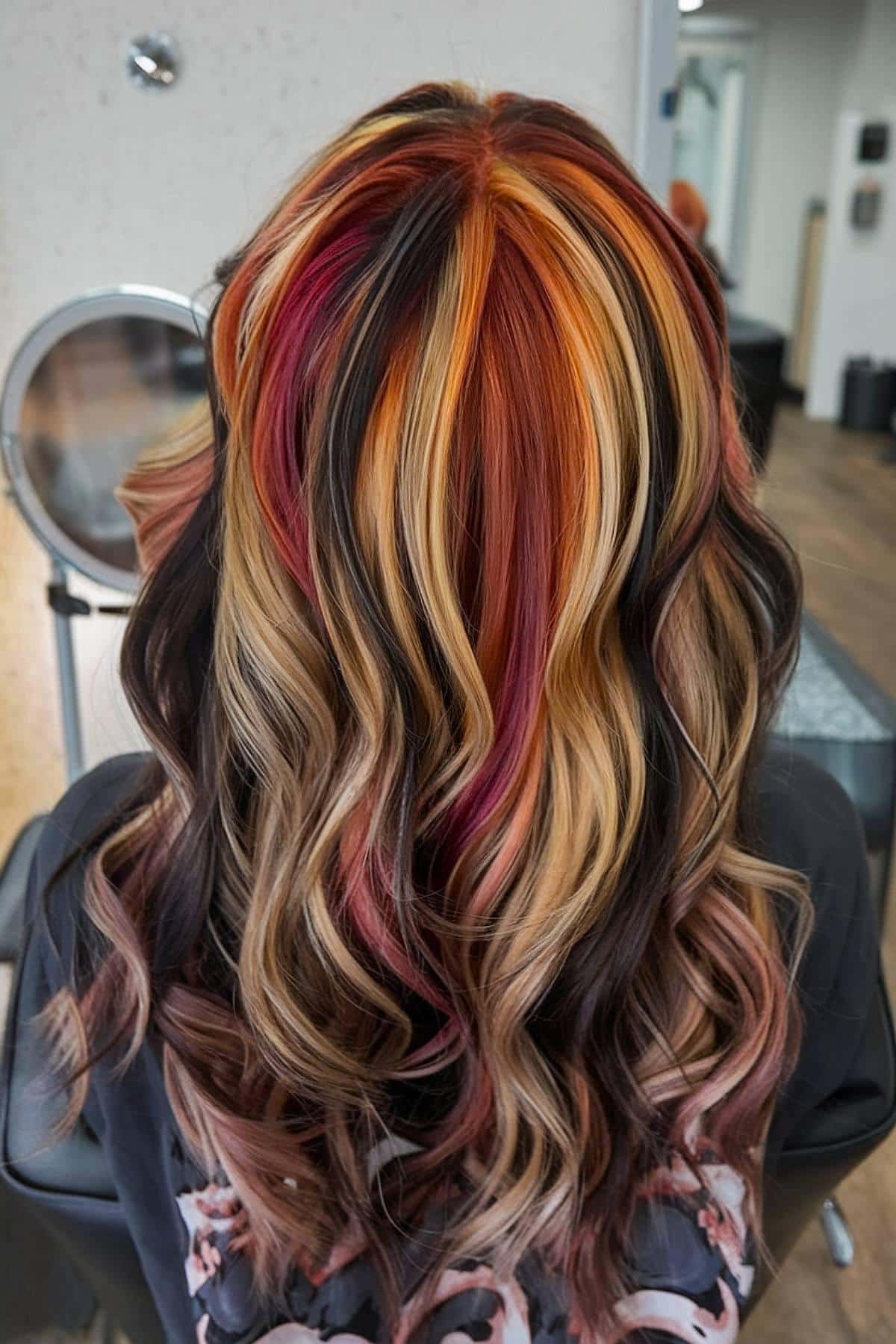
Long, bouncy curls carry this version, which swaps strict blocks for ribbons of red, magenta, orange and golden blonde. From the back, a center part splits the colors almost symmetrically, and the dark base peeks through between each ribbon. The curls are set loose and open, so the bright shades catch light on every bend. It’s warmer and more blended than classic calico, and a little more romantic too.
- Best for: Long hair that holds a curl; warm skin tones.
- Ask your stylist for: Root-to-tip ribbons of red, magenta, orange and golden blonde on a dark brown base.
- How to style it: Set with a 1.25-inch curling iron or hot rollers and break the curls apart with your fingers.
- Upkeep: Refresh reds every 4 to 6 weeks; tone blonde every 8 weeks; trim every 10 weeks.