Ask ten people to picture gray hair and you will get ten different colors. Gray runs from charcoal so deep it is nearly black, through steel and pewter, to pearl, white silver and grays with a whisper of lilac. Each one sits differently against your skin, takes a different amount of lightening if you are dyeing, and shows regrowth in its own way if you are growing out your natural gray.
So this guide is organized by shade, not by haircut. The 30 looks run from the darkest charcoal through mid-tone steel and pewter, to pale pearl and silver, then natural gray on mature hair, and finally lavender gray. Find the exact tone you want, screenshot it and you will have a far clearer brief for your colorist than the word gray could ever give.
How to choose a gray hair shade
Two factors decide which gray will suit you: your skin undertone and your starting color. Cooler, brighter grays flatter cool and neutral skin; softer pewter and taupe grays are kinder to warm and olive complexions. Dark hair can reach charcoal and steel with less lightening than a pale silver needs.
| Gray shade | Who it suits best | What to consider |
|---|---|---|
| Charcoal and graphite | Dark brown or black hair; olive and deeper skin tones | The least lightening; fades toward brown without a gray gloss |
| Steel and pewter | Most skin tones; good for blending early gray | Needs toner every 4 to 6 weeks to stay cool |
| Taupe or mushroom gray | Warm and neutral skin; anyone avoiding stark silver | A soft bridge between brunette and gray |
| Pearl and white silver | Cool and fair skin; natural grays that are already light | Requires heavy lightening on dark hair; purple shampoo weekly |
| Lavender gray | Cool skin tones; anyone wanting a hint of color | Fades fast; refresh the tint every 2 to 4 weeks |
Natural gray: if you are growing out dye, a stylist can add lowlights and highlights to blend the line, then let your own gray take over; our salt and pepper hair ideas show what that mix can look like. Condition: very light grays show yellowing and damage easily, so a bond-building treatment and gentle heat styling help keep them clean and shiny.
Charcoal and graphite gray
The darkest grays sit close to black and need the least lightening. They look sleek and a little moody, and they suit dark natural bases. If you would rather add gray in fine pieces, our silver and gray highlights on black hair go even subtler.
1. The graphite drop
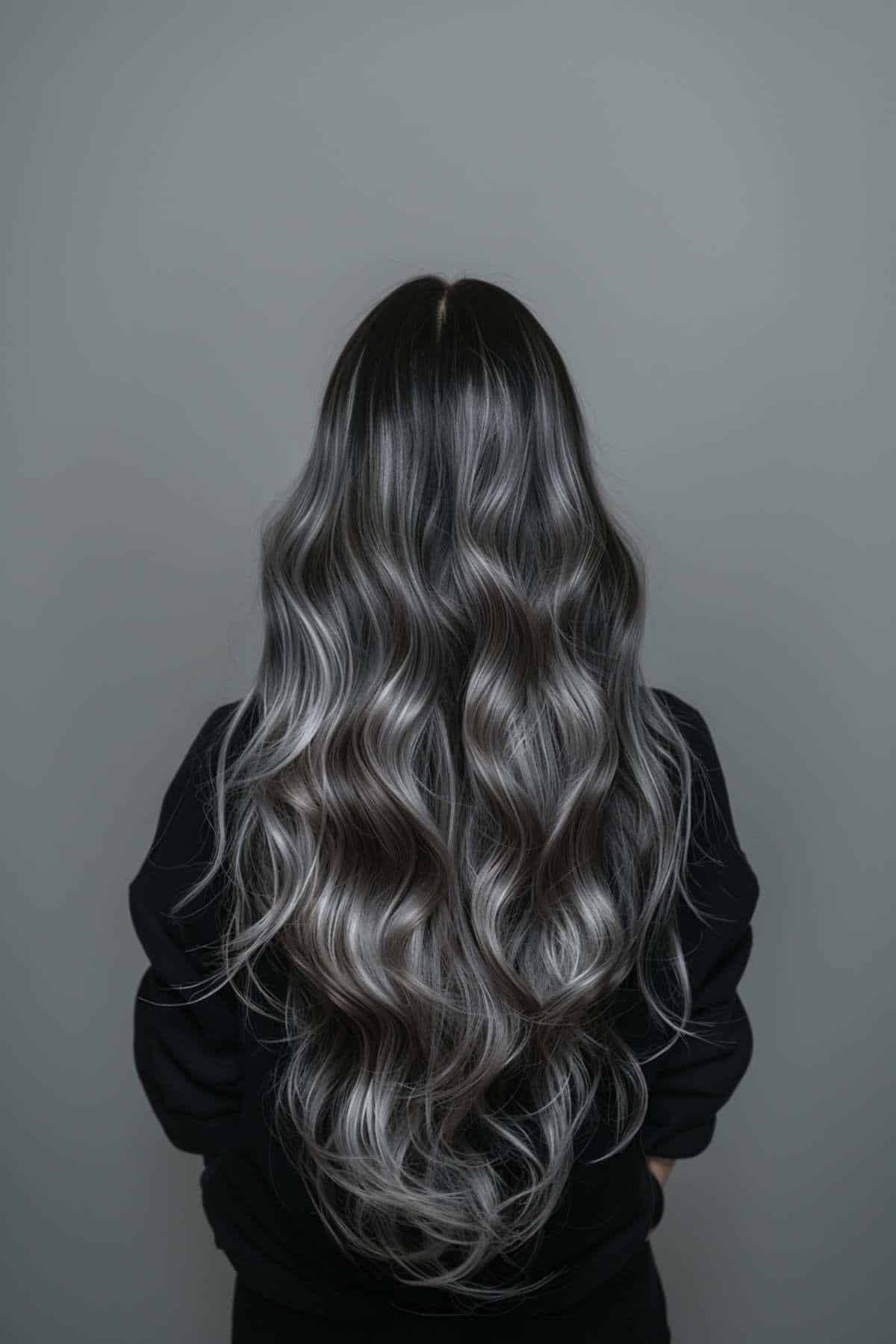
Want gray without giving up your dark hair? Start at the ends. This very long hair begins almost black at the crown and turns graphite through the waves, with the palest silver saved for the tips. Glossy, even waves show the fade clearly from root to end. Keeping the top dark is what makes it easy to grow out, and the cool, smoky finish gives brunette hair a completely new mood.
- Best for: Dark brown or black hair; long lengths.
- Ask your stylist for: A dark root melt into graphite gray through the mid-lengths and silver ends, toned cool.
- How to style it: Set glossy waves with a 1.25-inch iron and finish with a shine spray.
- Upkeep: Gray toner every 4 to 6 weeks; root melt every 3 to 4 months.
2. The charcoal shadow
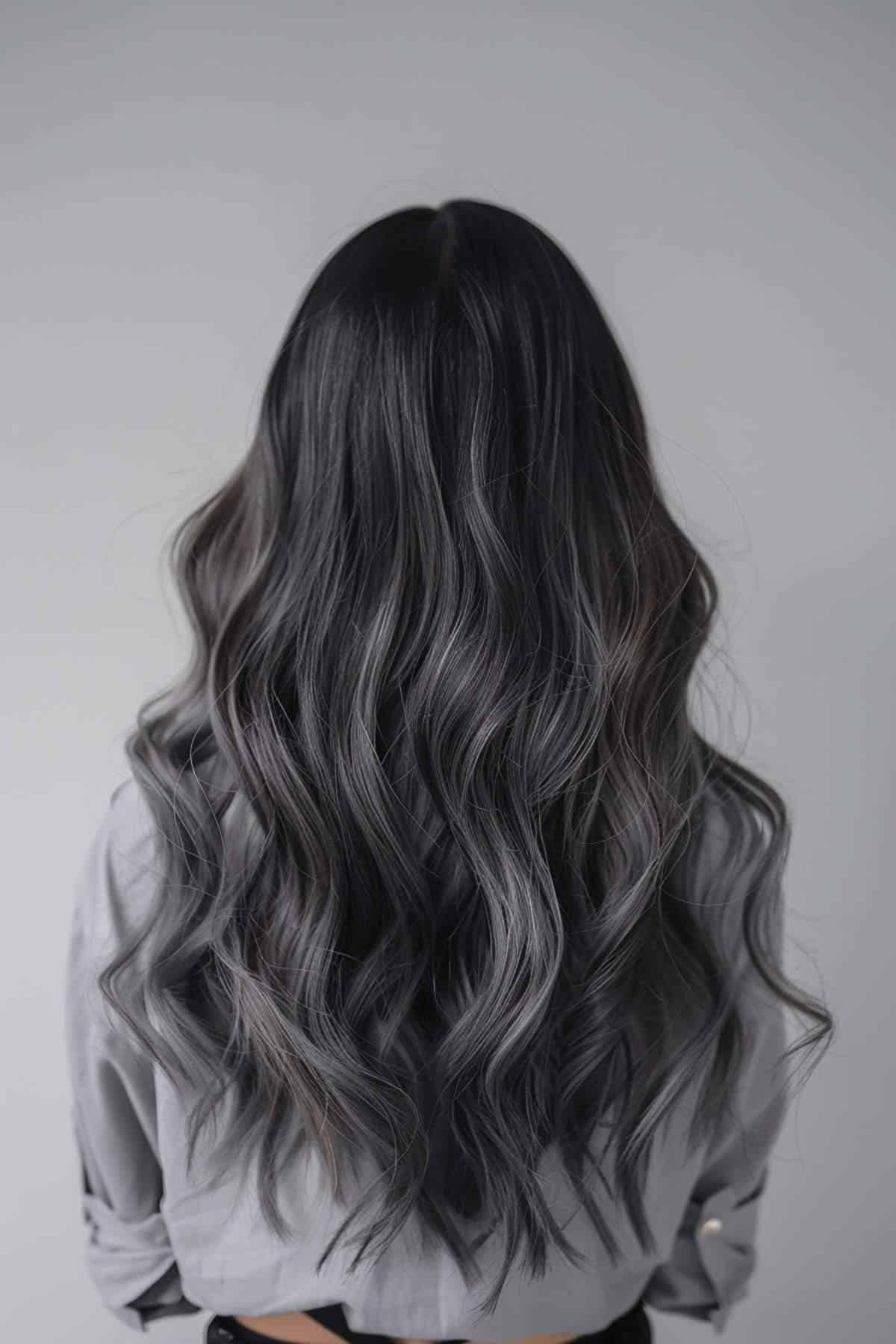
Gray as a shadow, not a highlight. Long black hair has smoky charcoal woven softly through the lower half, so it shows only when the loose waves turn. There is no visible contrast line at all. This is the gentlest way to try gray on dark hair, and a good first step if you want dimension without anyone noticing a big change. Quiet color, with a cool edge.
- Best for: Black or very dark brown hair; first-time gray color.
- Ask your stylist for: Fine charcoal gray pieces through the lower half of black hair, toned smoky and blended softly.
- How to style it: Loose waves with a large barrel, brushed out with fingers.
- Upkeep: Gray gloss every 6 weeks.
3. The charcoal brunette
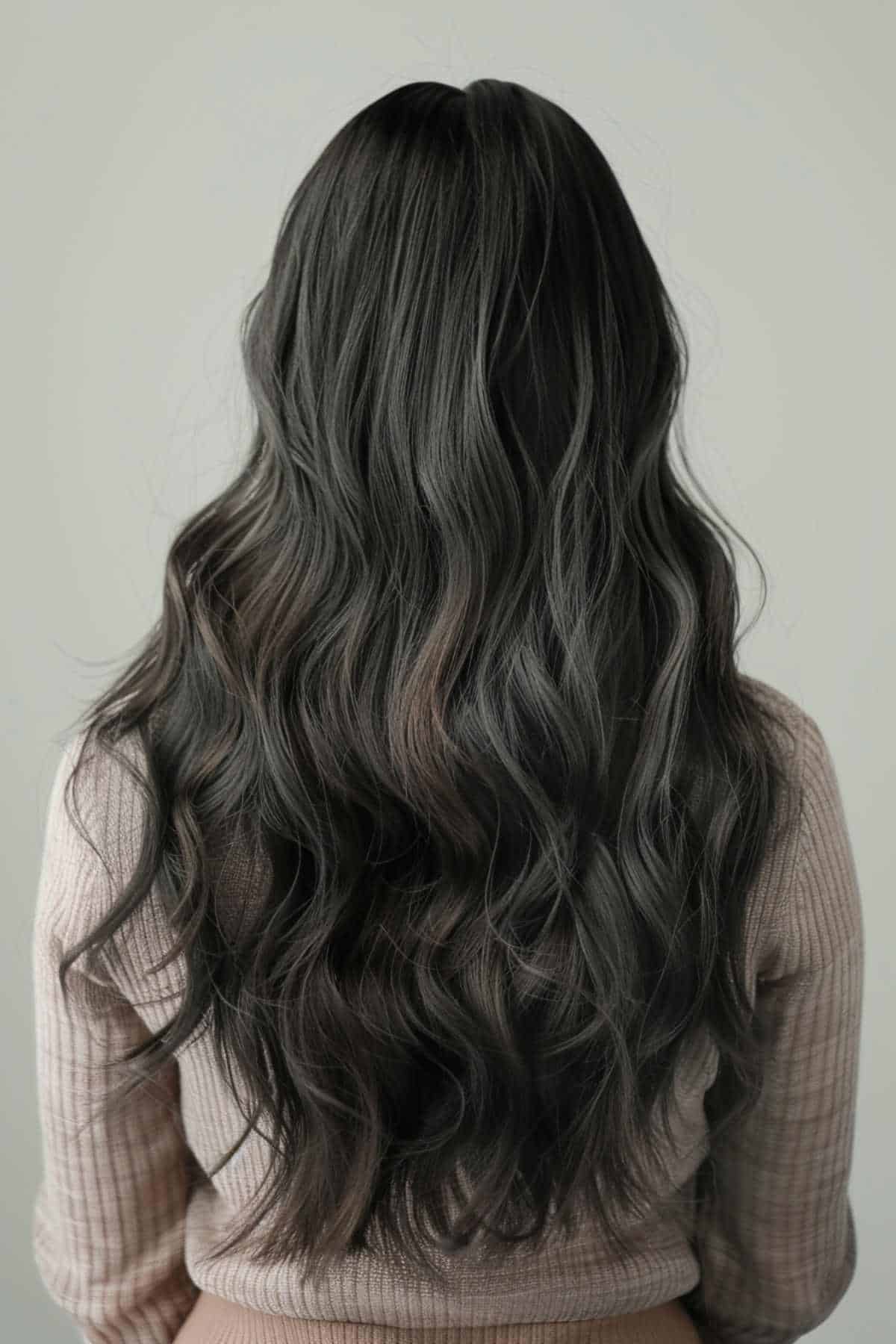
Not quite brown, not quite gray, and that is the appeal. This charcoal shade keeps a brown undertone, so it sits between a deep brunette and true gray. Long, loose waves show dark roots and slightly lighter, smoky lengths. If you love ashy tones but are not ready for silver, it is the most wearable entry point, and it fades back toward brown gracefully.
- Best for: Dark brown hair; warm or olive skin tones.
- Ask your stylist for: A charcoal brown-gray gloss over dark brown hair, with slightly lighter lengths.
- How to style it: Loose waves with a 1.5-inch iron and a light shine oil.
- Upkeep: Ash gloss every 6 to 8 weeks.
4. The black-and-gray ribbon
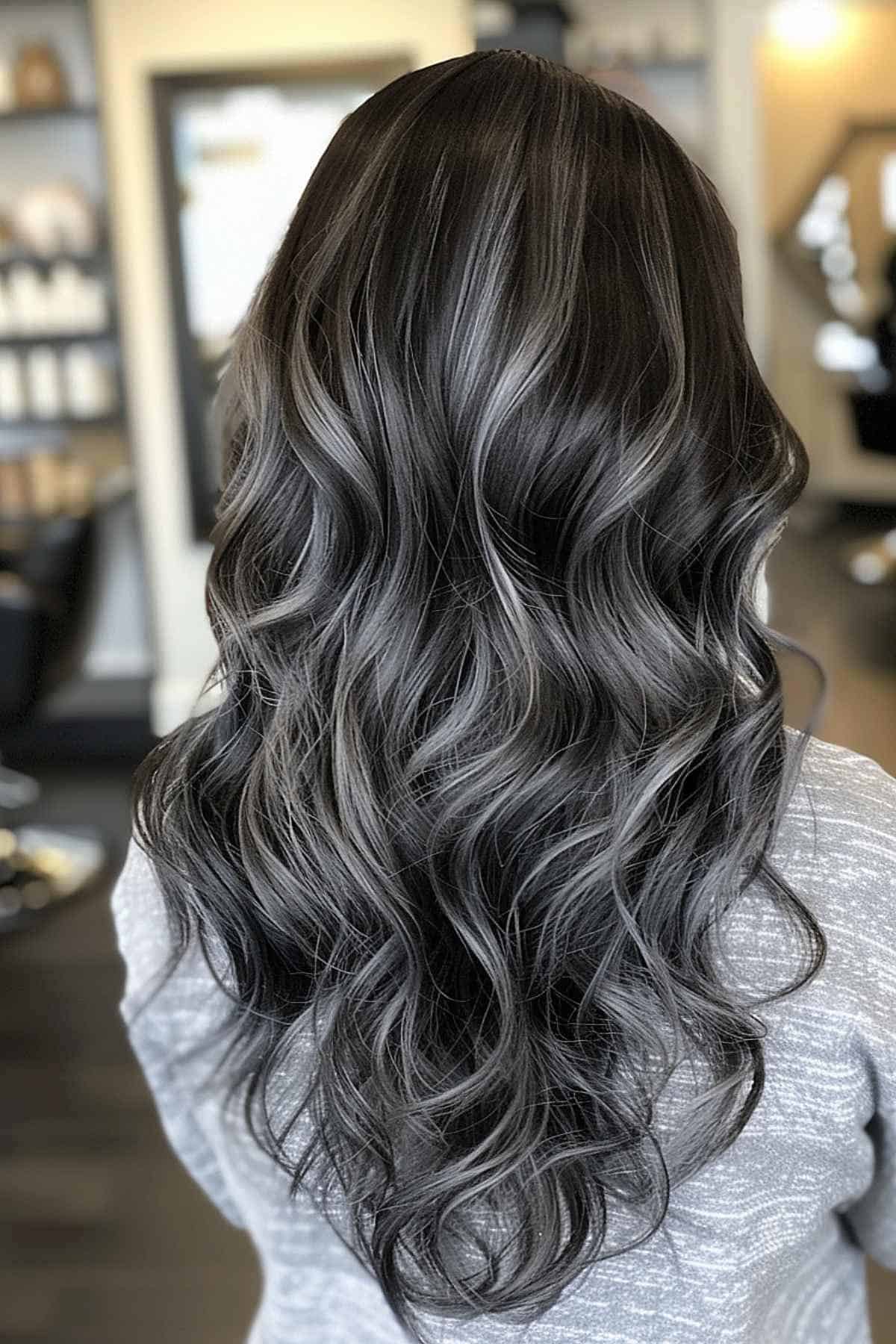
Bolder than a melt, still easy to live with. Thick ribbons of mid-gray are painted through long black hair, with plenty of dark left between them, and defined, bouncy waves twist the two shades together. The contrast is strong, but the dark root keeps the whole look grounded. Growing out is soft, too, because there is never a solid band of color at the scalp.
- Best for: Thick, dark hair; anyone who wants high-contrast gray.
- Ask your stylist for: Bold gray balayage ribbons painted through black hair, with dark sections left between.
- How to style it: Defined waves with a 1-inch iron, finished with a light texture spray.
- Upkeep: Toner every 4 to 6 weeks; repaint every 3 months.
5. The smoky matte wave
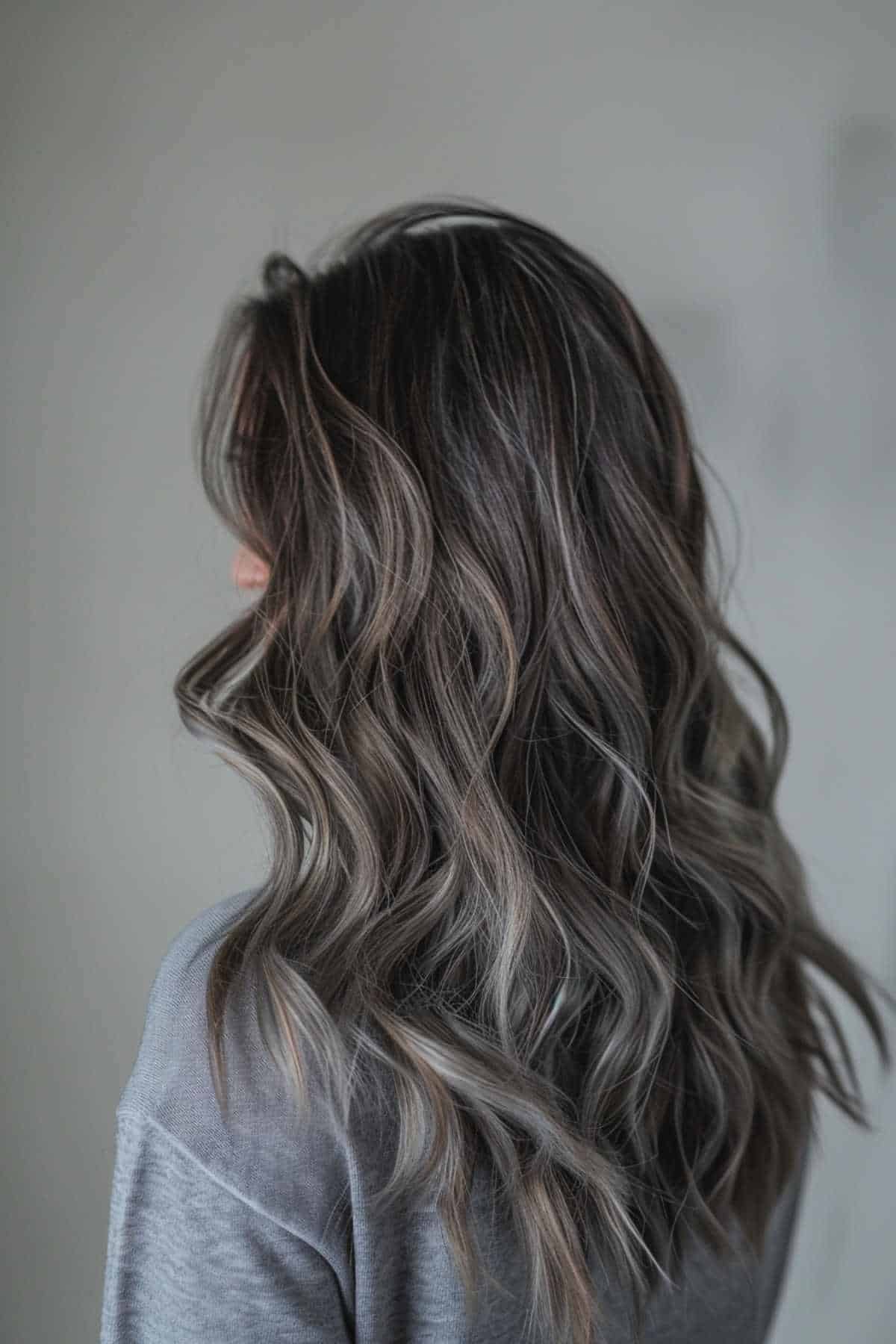
Some grays shine. This one smolders. A deep, nearly black root fades into a dark smoky gray through soft waves, and a few lighter pieces catch the light near the face. The finish is matte rather than metallic, which keeps it soft and moody instead of icy. If you like the idea of gray but find silver too bright against your skin, this deeper tone is a calmer choice.
- Best for: Dark brown hair; cool and neutral skin tones.
- Ask your stylist for: A dark root fading into smoky gray, with a few lighter pieces around the face.
- How to style it: Soft waves with a flat iron, brushed out lightly.
- Upkeep: Gray toner every 6 weeks.
6. The black-to-white flip
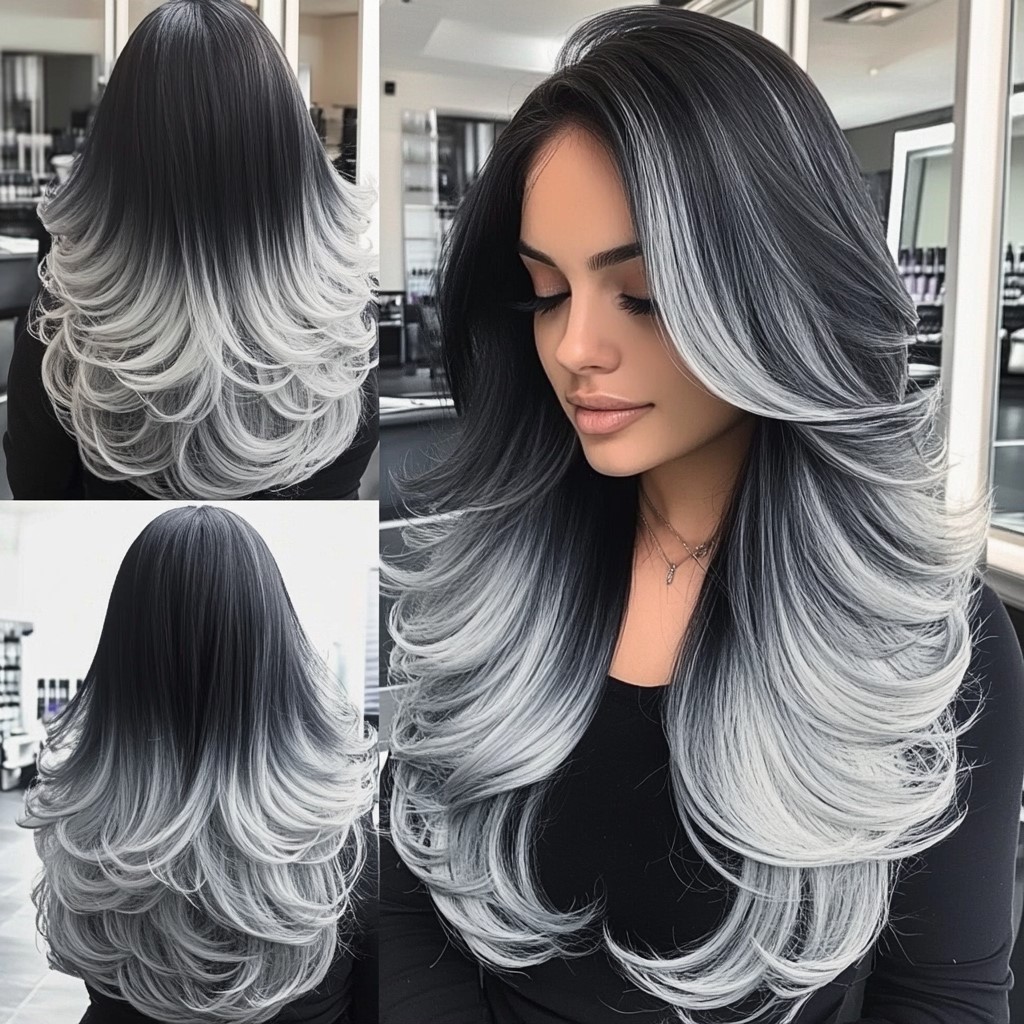
For maximum contrast, this is the look. A long, layered cut starts jet black at the root and drops into bright white-gray on the ends, with face-framing layers carrying the pale color forward. The ends are blow-dried into soft, flipped curls that show off every layer. The front and back views make the point: it is dramatic from every direction. It needs healthy hair and regular toning.
- Best for: Long, thick hair; people ready for bold color.
- Ask your stylist for: A black root with a strong ombre into white-gray ends, and long face-framing layers.
- How to style it: Blow-dry with a large round brush, curling the ends out.
- Upkeep: Toner every 4 weeks; deep condition weekly.
Steel, pewter and taupe gray
Mid-tone grays are the most versatile shades here. They blend early gray naturally, suit most skin tones and look good straight or waved. For painted versions of these tones, see our gray balayage ideas.
7. The mushroom gray with a silver streak
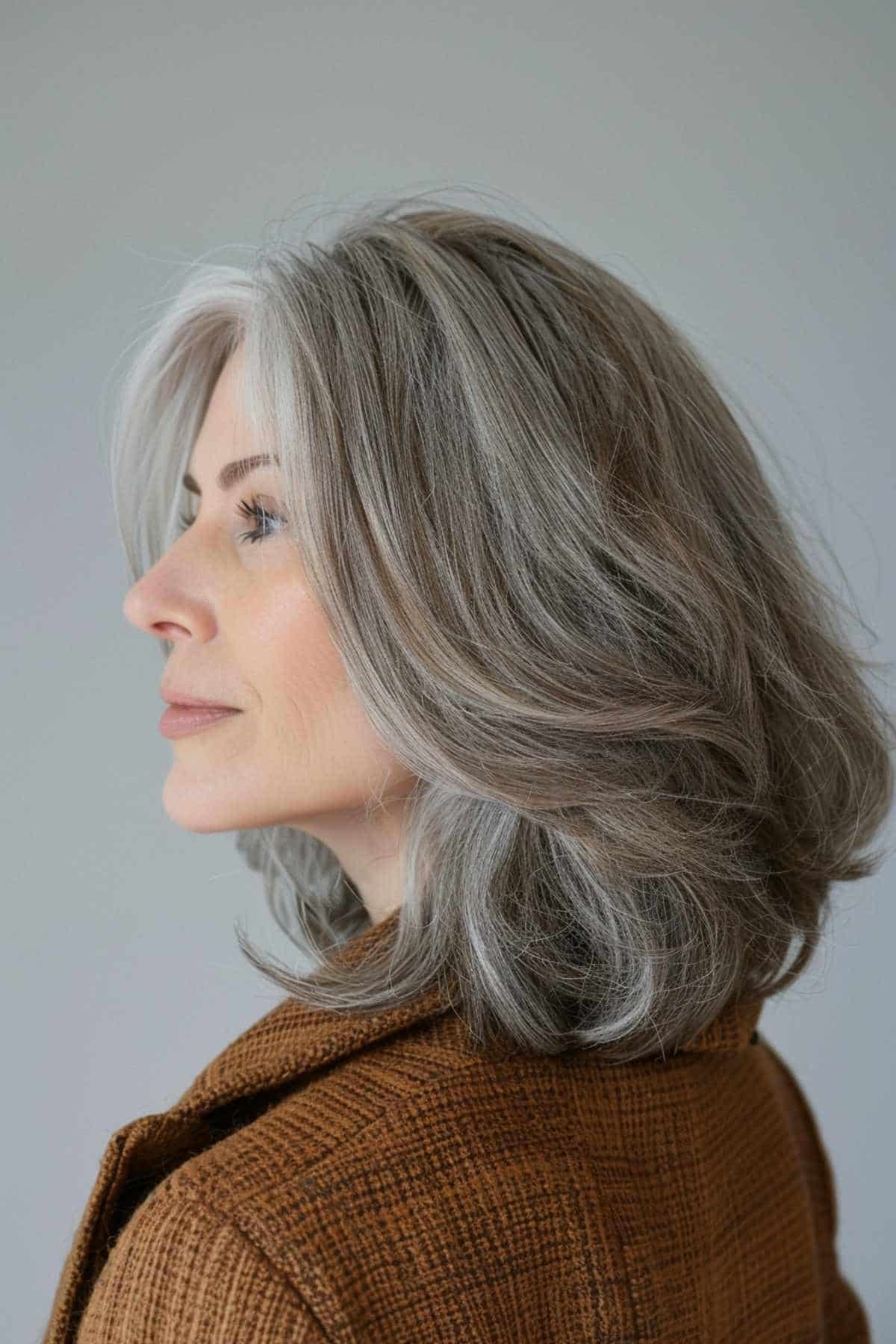
Going gray at the front first? Make it a feature. Shoulder-length hair has a soft mushroom gray base, with a brighter silver streak right at the hairline. The layers curve gently at the ends, and the profile shows how the lighter front frames the face. This taupe-leaning gray is a natural bridge between brunette and gray, and it is kinder to warm skin than a stark silver.
- Best for: Mature hair; warm and neutral skin tones; anyone going gray.
- Ask your stylist for: A mushroom gray gloss with a brighter silver face-framing streak, and soft layers.
- How to style it: Round-brush blow-dry, curling the ends under.
- Upkeep: Gloss every 6 to 8 weeks.
8. The salt-and-pepper wave
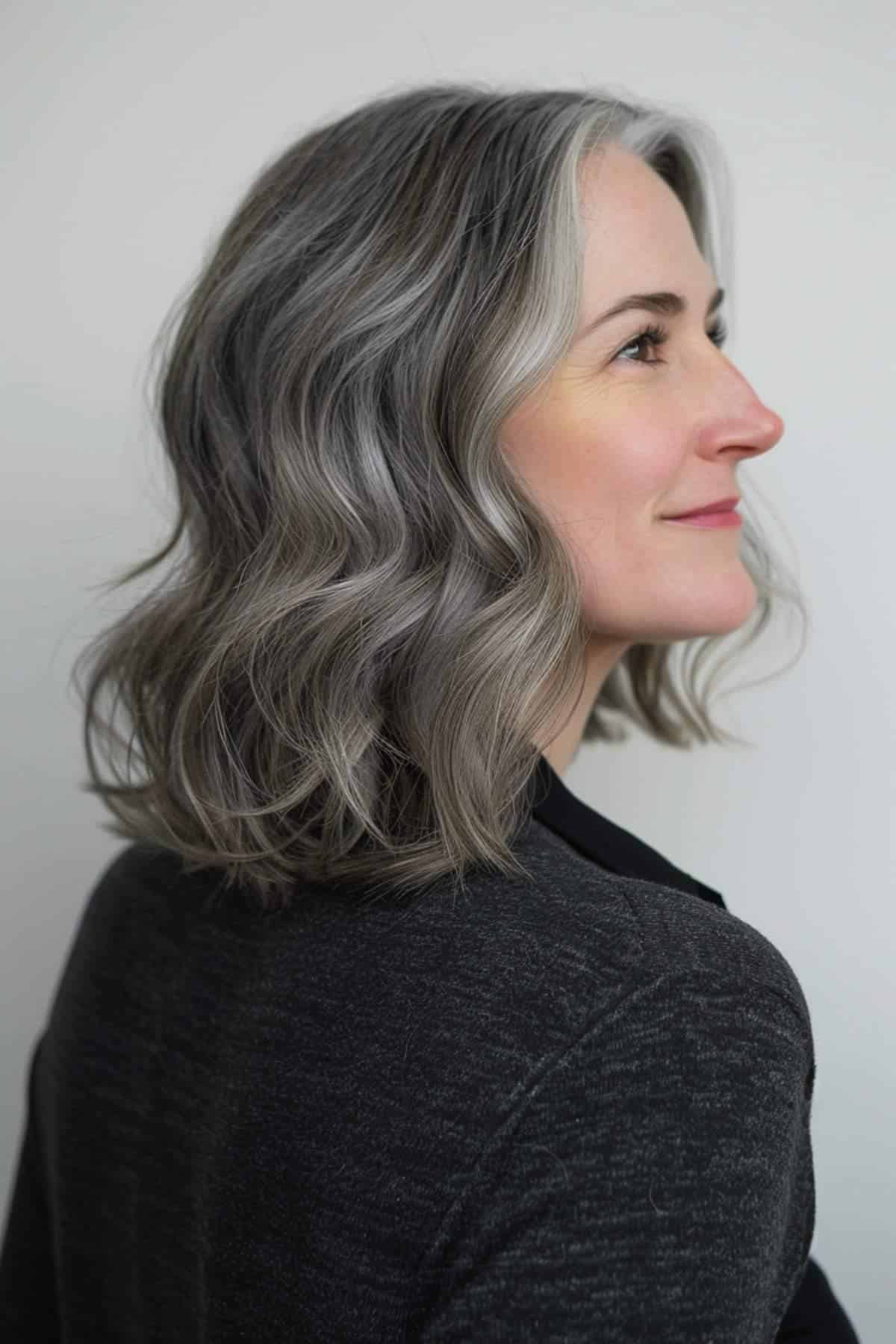
This is how gray often grows in naturally, and the cut makes it look deliberate. A wavy lob just above the shoulders mixes dark and silver strands, with the silver brightest around the face. Loose waves add movement and break up the pattern so it reads as texture rather than regrowth. Low effort, soft and very modern. Scrunch, air-dry, done.
- Best for: Natural salt-and-pepper hair; medium texture.
- Ask your stylist for: A wavy lob just above the shoulders, cut to show off natural silver around the face.
- How to style it: Scrunch in a wave cream and air-dry.
- Upkeep: Trim every 8 weeks; purple shampoo every other week.
9. The pewter melt
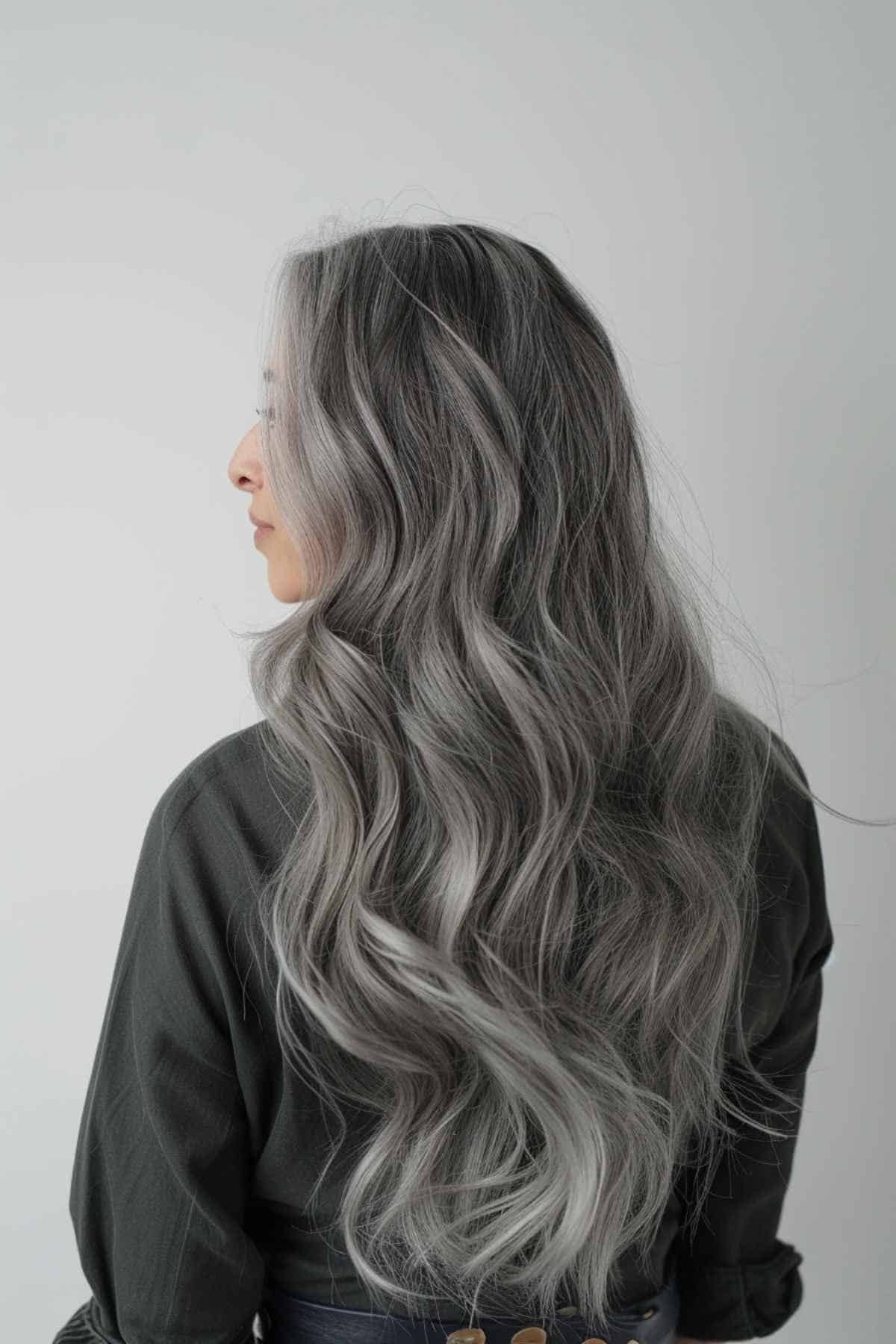
Pewter is the in-between gray: softer than charcoal, deeper than silver. Here long waves move from a dark root into that soft metallic tone, painted in broad sections so the transition stays smooth. It is a good middle ground if you want obvious gray without lifting all the way to pale. The darker top also means fewer toner appointments, and the glossy, loose waves show off the metallic sheen.
- Best for: Medium to dark hair; most skin tones.
- Ask your stylist for: A pewter gray balayage from a dark root, painted in broad sections through the lengths.
- How to style it: Loose waves with a large iron and a shine spray.
- Upkeep: Toner every 4 to 6 weeks.
10. The straight steel blend
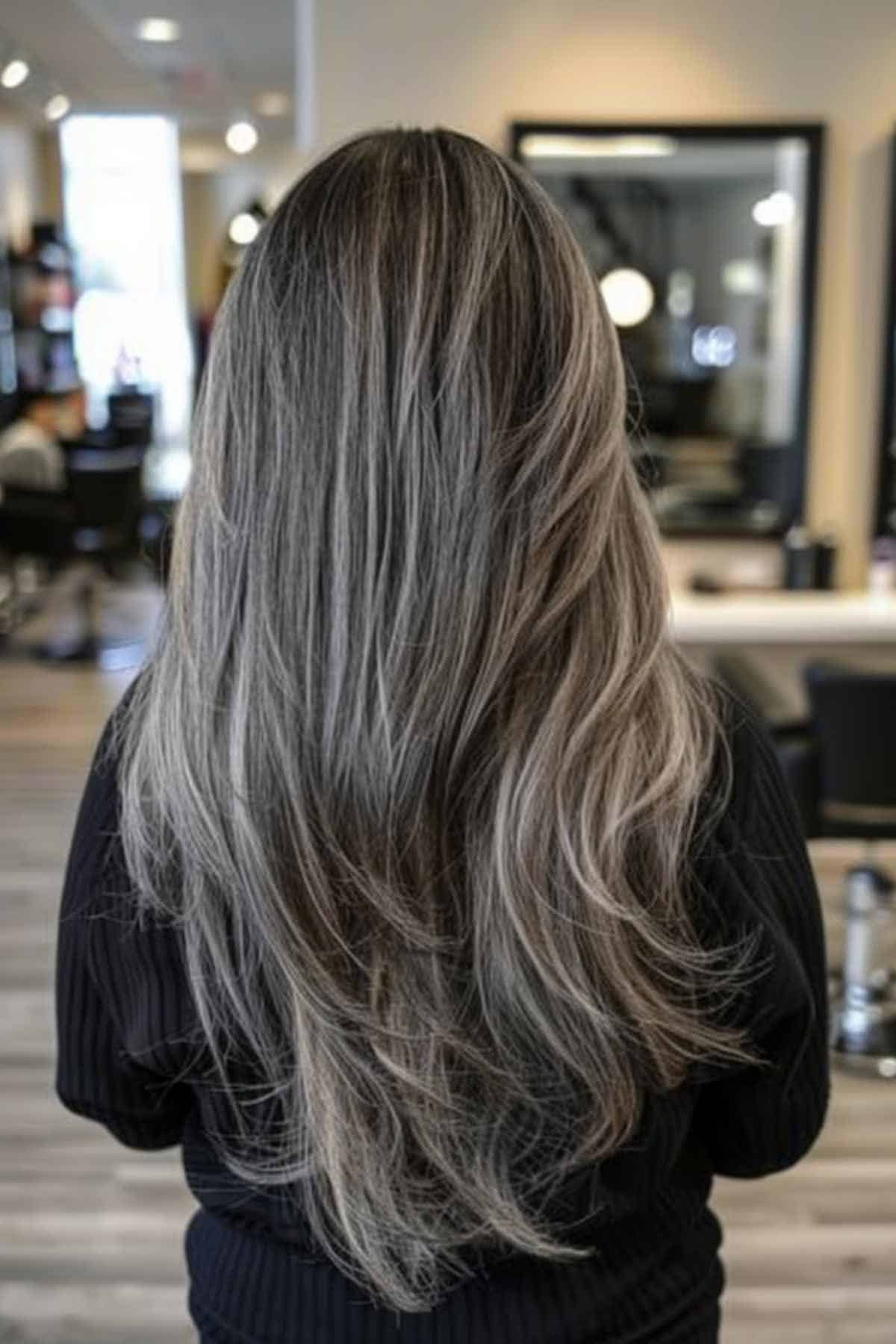
Wearing gray straight shows every single tone, so the mix matters. This long hair blends steel gray with darker lowlights, giving it natural salt-and-pepper depth, and long layers fall in a soft V down the back. The lowlights are what keep it from looking flat. If you are blending natural gray, ask for this combination rather than an all-over color.
- Best for: Straight hair; anyone blending natural gray.
- Ask your stylist for: Steel gray with darker lowlights for depth, and long V-shaped layers.
- How to style it: Blow-dry straight with a paddle brush and a smoothing serum.
- Upkeep: Gloss every 6 to 8 weeks; trim every 10 weeks.