11. The bright lavender lob
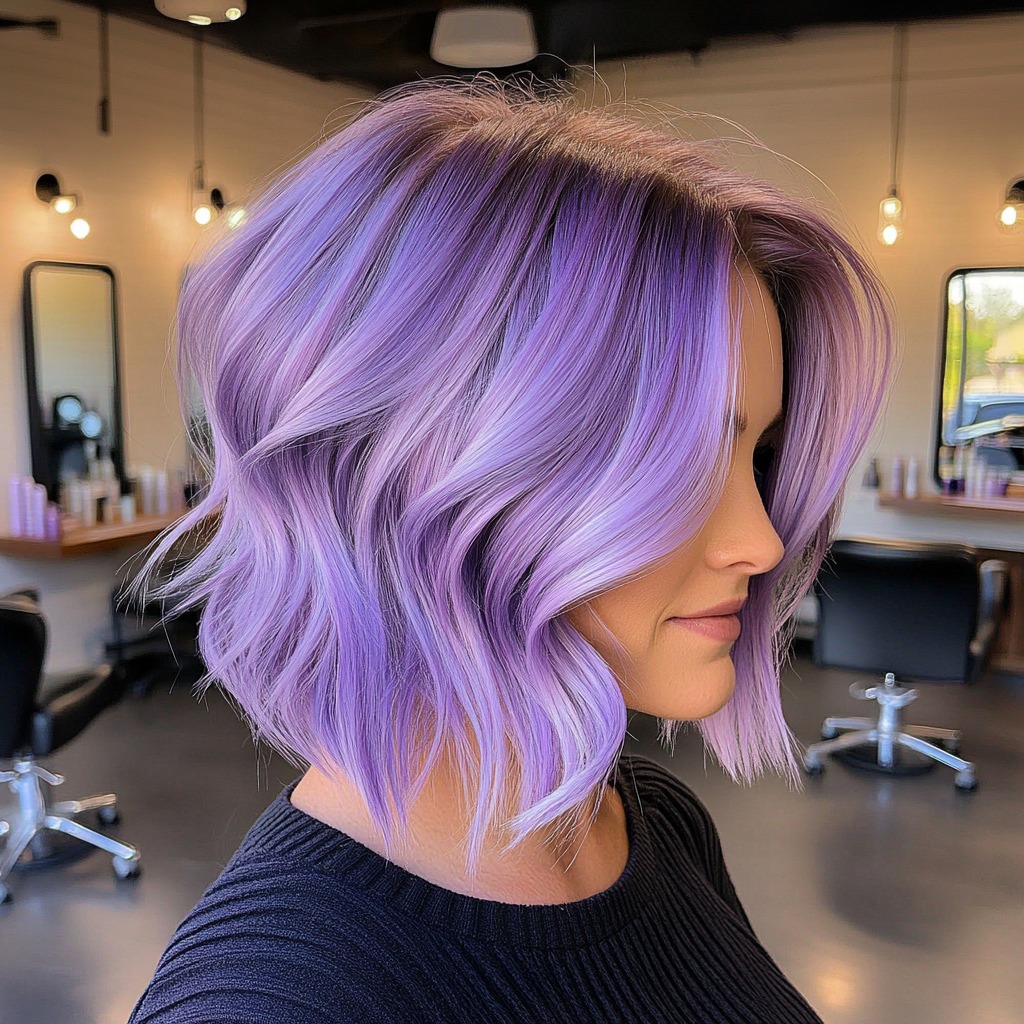
Short on patience for long-hair styling? A lob halves the work. This one is bright lavender with a darker root, angled so the front falls longer than the back and swings toward the jaw. Smooth, polished bends turn under at the ends, and the brightest lilac sits at the front where it frames the face. The angle gives the color a sharp outline, so it never looks fluffy.
- Best for: Fine to medium straight hair; anyone switching from long to shorter at the same time as going pastel.
- Ask your stylist for: An angled lob with a longer front, a soft dark root and bright lavender through the lengths.
- How to style it: Blow-dry with a round brush, then bend the ends under with a flat iron.
- Upkeep: Toner every 4 to 5 weeks; trim every 6 to 8 weeks to keep the angle sharp.
12. The violet-root lilac spiral
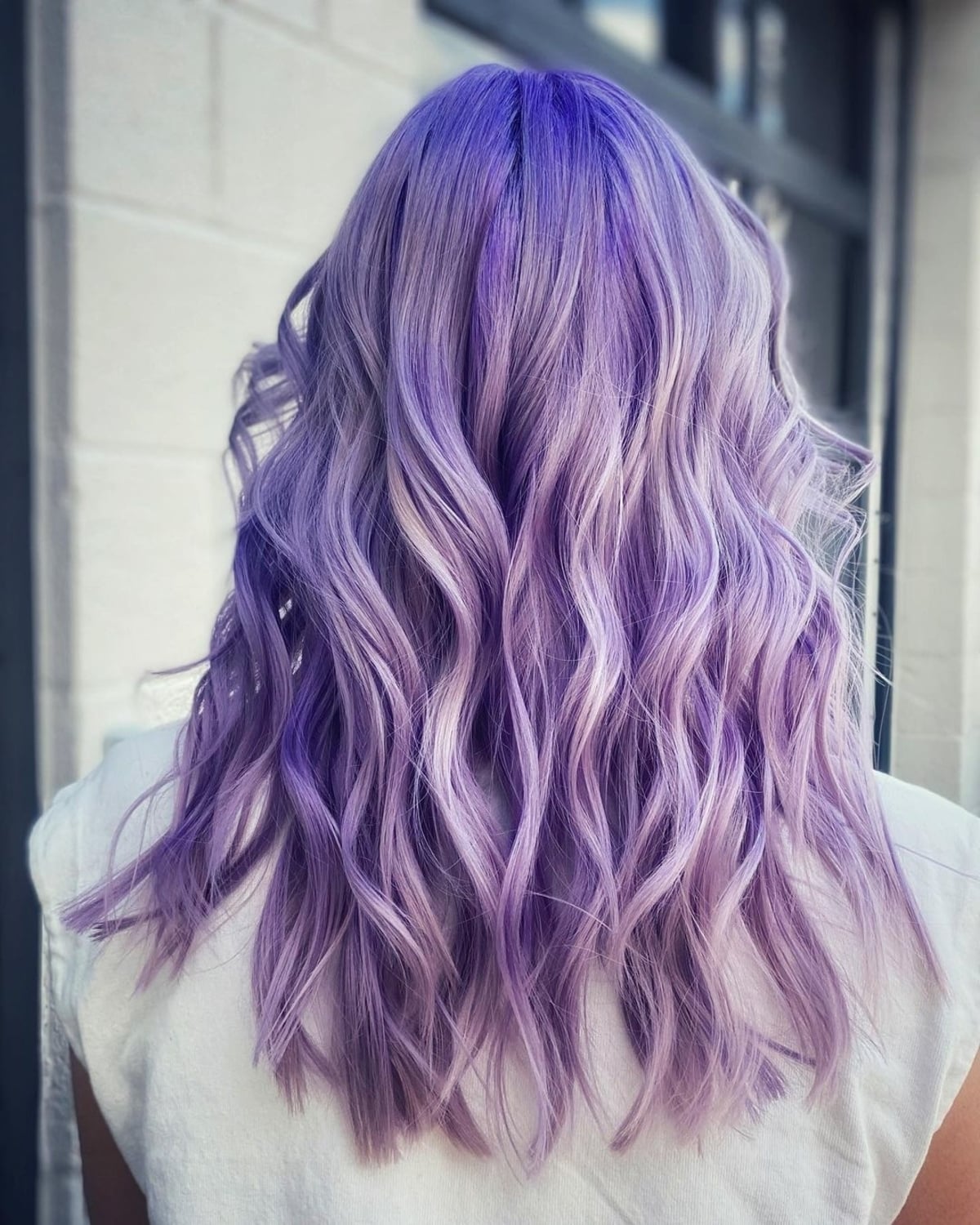
Where most lilacs hide their roots, this one turns them into the feature. A strong blue-violet root sits at the scalp, then the color lightens into bright lilac and lavender pieces through long spiral waves. The contrast between root and ends makes the waves look deeper and more defined. Paler lavender sits on the outermost pieces, and the underneath stays a shade deeper, so the curls look layered even from behind. Bold, but still unmistakably pastel.
- Best for: Long, wavy or curled hair; anyone who likes a bit of drama.
- Ask your stylist for: A deep blue-violet root tap with lilac and lavender through the lengths, blended by hand.
- How to style it: Wrap 1-inch sections around a curling wand, alternating direction, and leave the ends out.
- Upkeep: Root color every 6 to 8 weeks; color-depositing conditioner weekly.
13. The mermaid blue-lilac curls
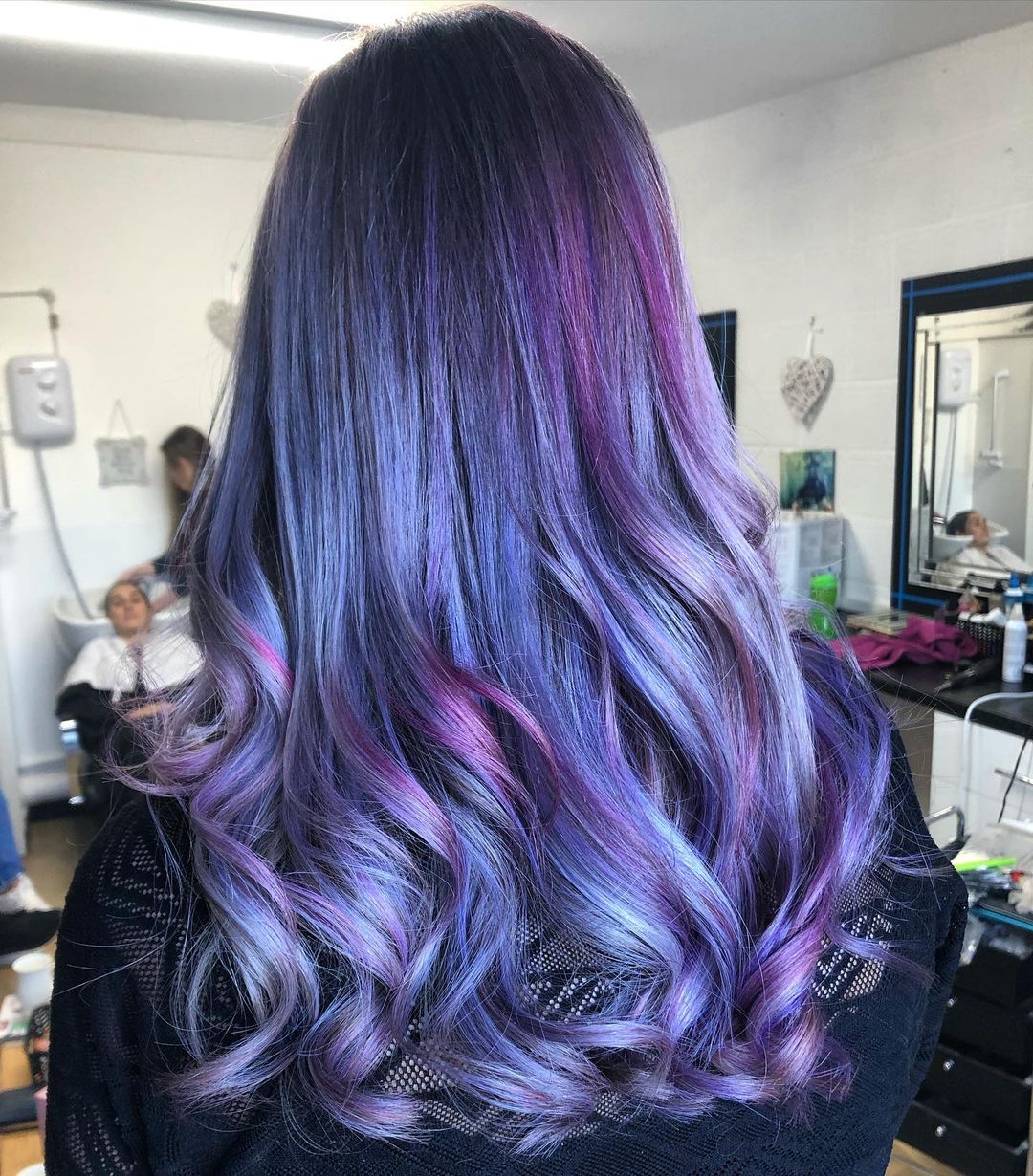
For anyone who never wanted to choose just one pastel. A near-black root fades into periwinkle blue, with violet and hot magenta ribbons woven through so each curl turns a different shade. The length falls well past the shoulders, smooth at the top and finished with big, bouncy curls at the ends. Keeping the root dark ties the colors together.
- Best for: Long, thick hair; dark bases that can be lightened through the lengths.
- Ask your stylist for: A dark shadow root with periwinkle, violet and magenta ribbons painted through lightened mid-lengths and ends.
- How to style it: Smooth the top with a paddle brush, then curl the bottom half with a large-barrel iron.
- Upkeep: Refresh pastels every 4 to 6 weeks; sulfate-free shampoo only.
Pink lilac and lilac-rose blends
Add warmth and lilac moves toward rose. These blends sit more easily on warm skin tones and look softer as they fade; for more of the pink end, see our pink ombre hair ideas.
14. The dark-rooted rose lilac
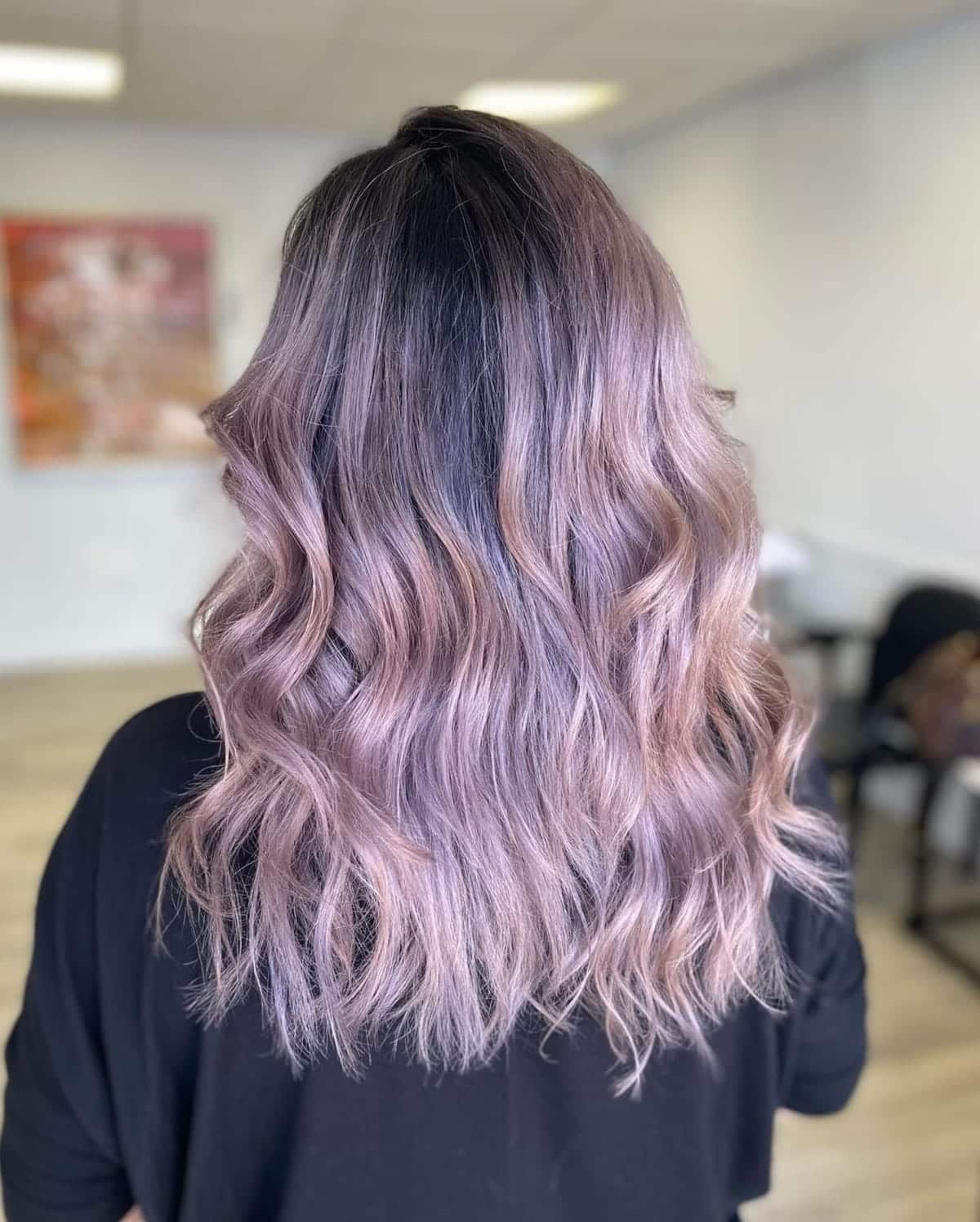
Brunette and not ready to bleach all the way to the scalp? This is your blueprint. A deep brown root drops into a rose-lilac ombre that starts around the ears and brightens toward the shoulder blades. Loose, open waves blend the transition so there is no obvious line. Growing out simply lengthens the root, which this look already wears with pride.
- Best for: Dark brown hair; anyone who wants pastel without root maintenance.
- Ask your stylist for: A rose-lilac ombre beginning at ear level, with a long, blended brunette root.
- How to style it: Loose waves with a 1.5-inch iron, finished with a lightweight oil on the ends.
- Upkeep: Toner every 5 to 6 weeks; lightening only every 4 to 6 months.
15. The pink lilac over blonde
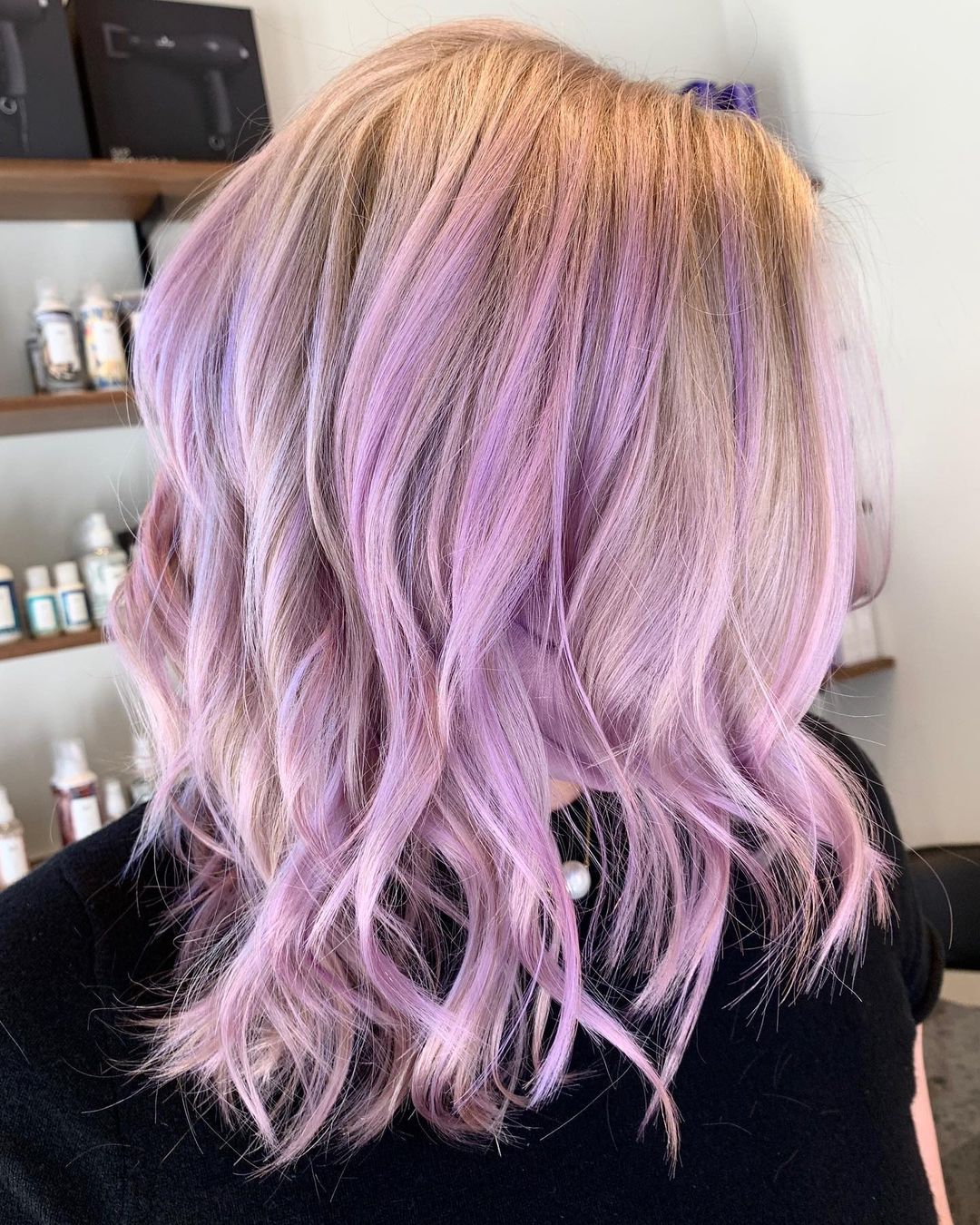
Here is pastel that looks like it happened naturally on vacation. Golden blonde roots blend into pink-lilac lengths, with brighter candy-pink pieces near the ends. The cut is a shoulder-length style with soft, piecey layers, and the waves are tousled rather than polished. Because the root is warm blonde, the pink side of the lilac looks deliberate rather than faded.
- Best for: Natural or highlighted blondes with warm undertones.
- Ask your stylist for: Pink-lilac color melted down from a natural blonde root, brightest at the ends.
- How to style it: Scrunch damp hair with mousse and air-dry, or diffuse on low.
- Upkeep: Color-depositing pink-lilac conditioner every wash or two; gloss every 4 weeks.
16. The violet root, pink lilac lengths
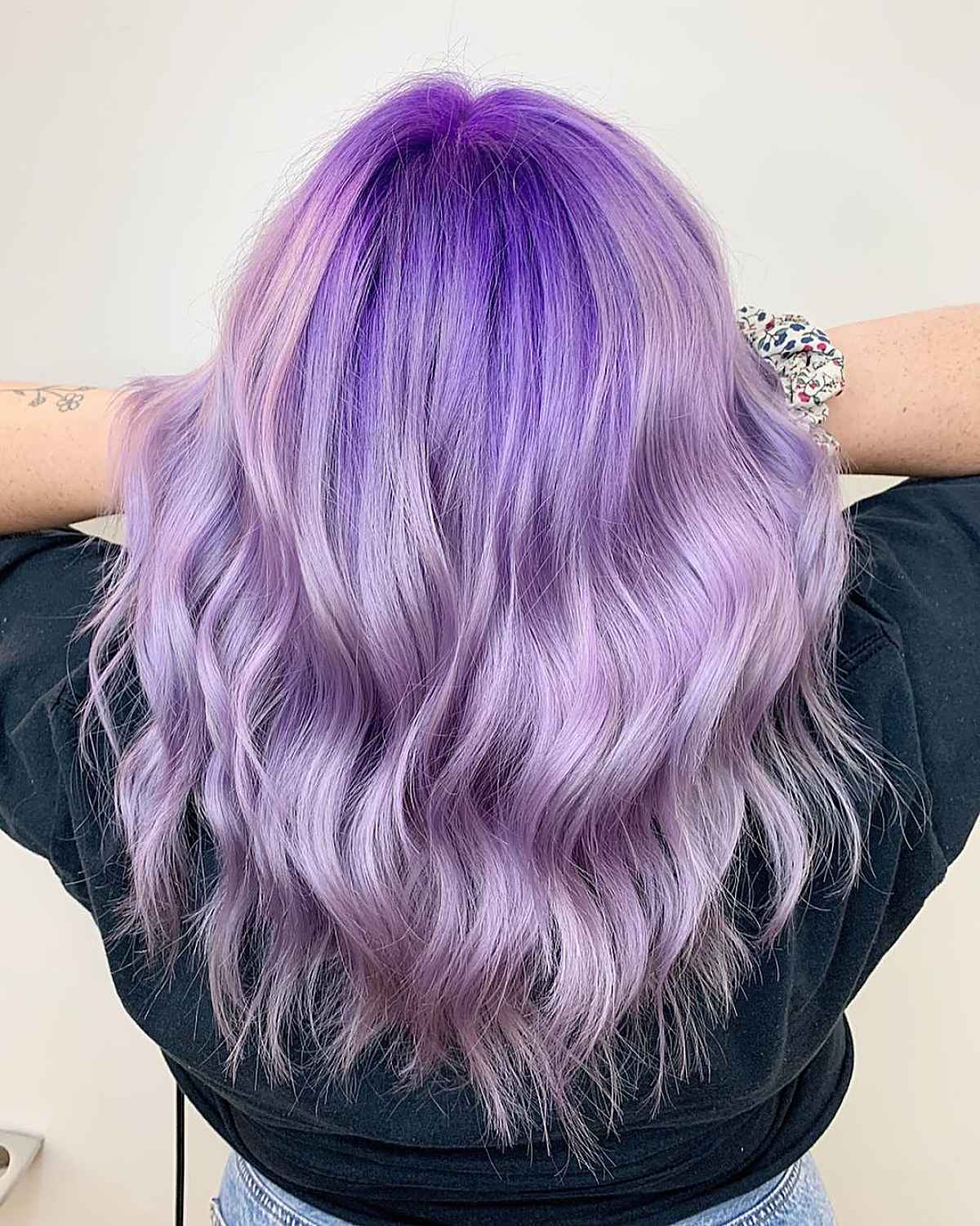
Turn around: the back view is where this one shines. A vivid violet root bleeds into pastel pink-lilac through long, loose waves, with paler pieces throughout so the lengths look almost iridescent. There is no harsh line between root and ends, just a slow fade from deep to light. The saturated root also makes regrowth look intentional, and the soft, open waves fall past the shoulder blades without a single blunt line.
- Best for: Blonde or pre-lightened long hair; anyone who likes color with depth.
- Ask your stylist for: A vivid violet root melt into pastel pink-lilac, hand-blended with no visible line.
- How to style it: Loose waves with a large-barrel wand, then brush through for a softer finish.
- Upkeep: Root color every 6 weeks; pastel lengths refreshed every 4 weeks.
17. The lilac-to-pink waterfall braid
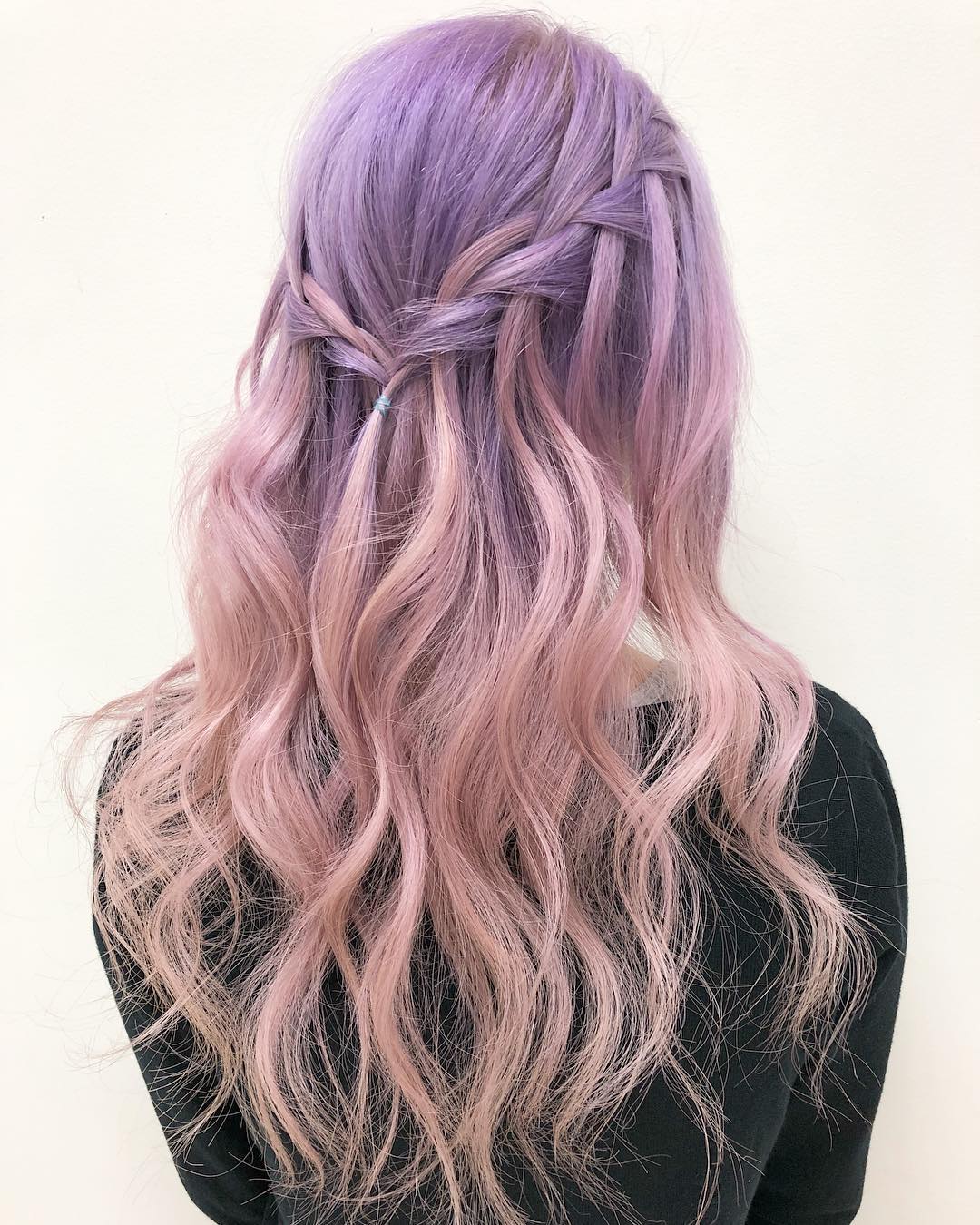
Lilac at the top, pink at the bottom, and a waterfall braid to show off where they meet. The crown is a soft lilac, then the color shifts into pastel pink through long, loose waves. A braid running across the back of the head pulls the top layer aside, exposing the transition. It is an easy way to make a two-tone color look styled for a wedding or a party.
- Best for: Long hair with some natural wave; anyone with an event coming up.
- Ask your stylist for: A lilac root zone fading into pastel pink lengths, keeping the blend soft at mid-height.
- How to style it: Waterfall braid from temple to temple, pinned at the back, with loose waves underneath.
- Upkeep: Toner every 4 to 6 weeks; trim every 10 weeks.
18. The mauve lilac on brunette
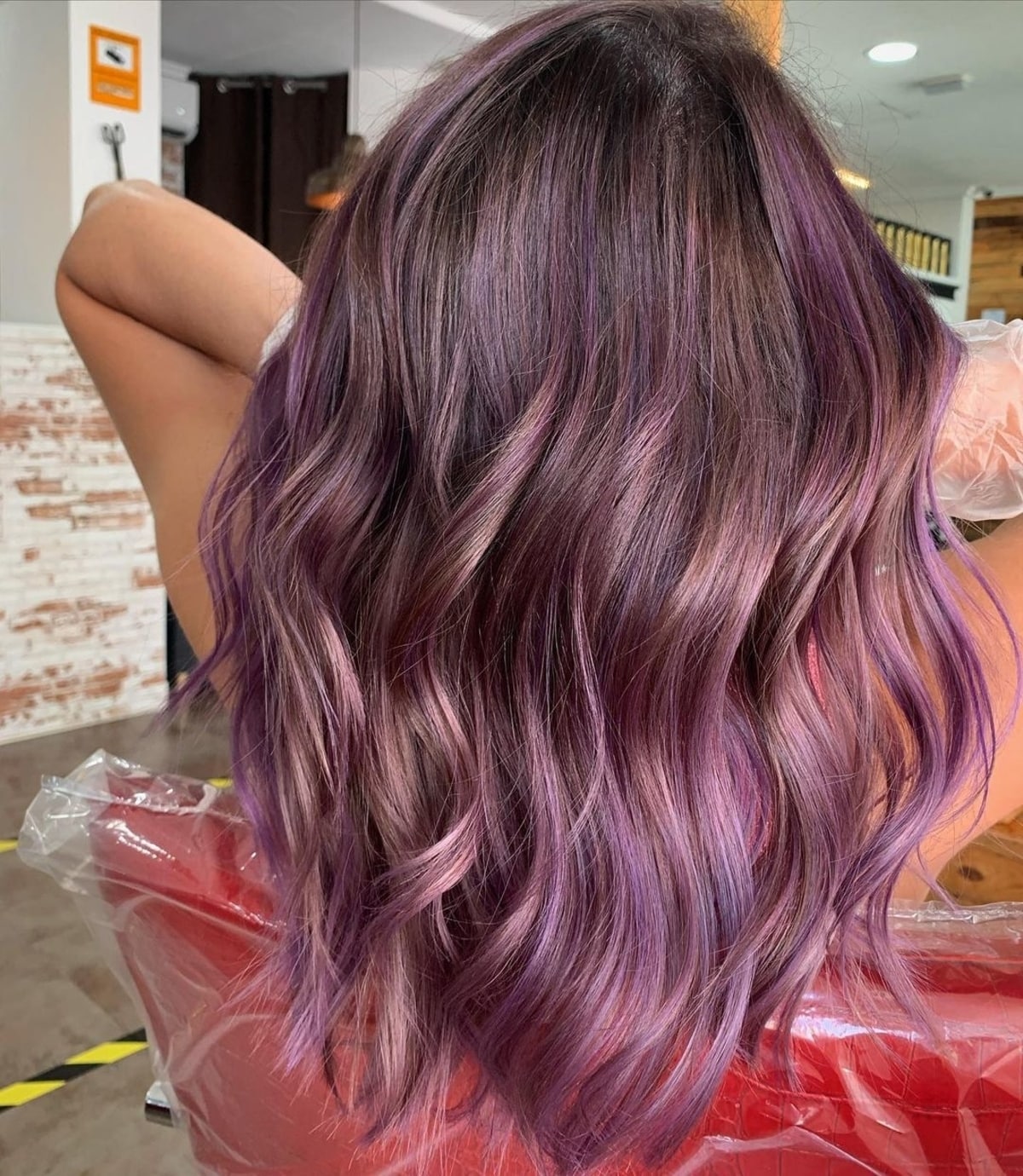
Lilac does not have to be pale to belong in this list. On this long brunette base, mauve, violet and rose-lilac are painted in soft panels through the mid-lengths and ends, so the color reads like a jewel tone rather than a pastel. Loose waves move the shades around, and the dark root keeps it wearable for office life. Rich, but never loud.
- Best for: Dark brown hair that can lift to around level 7 to 8.
- Ask your stylist for: Hand-painted mauve and rose-lilac balayage on a natural brunette root.
- How to style it: Big loose waves with a 1.5-inch curling iron; finish with a shine spray.
- Upkeep: Gloss every 6 to 8 weeks; balayage refresh every 3 to 4 months.
19. The long-layered pink lilac
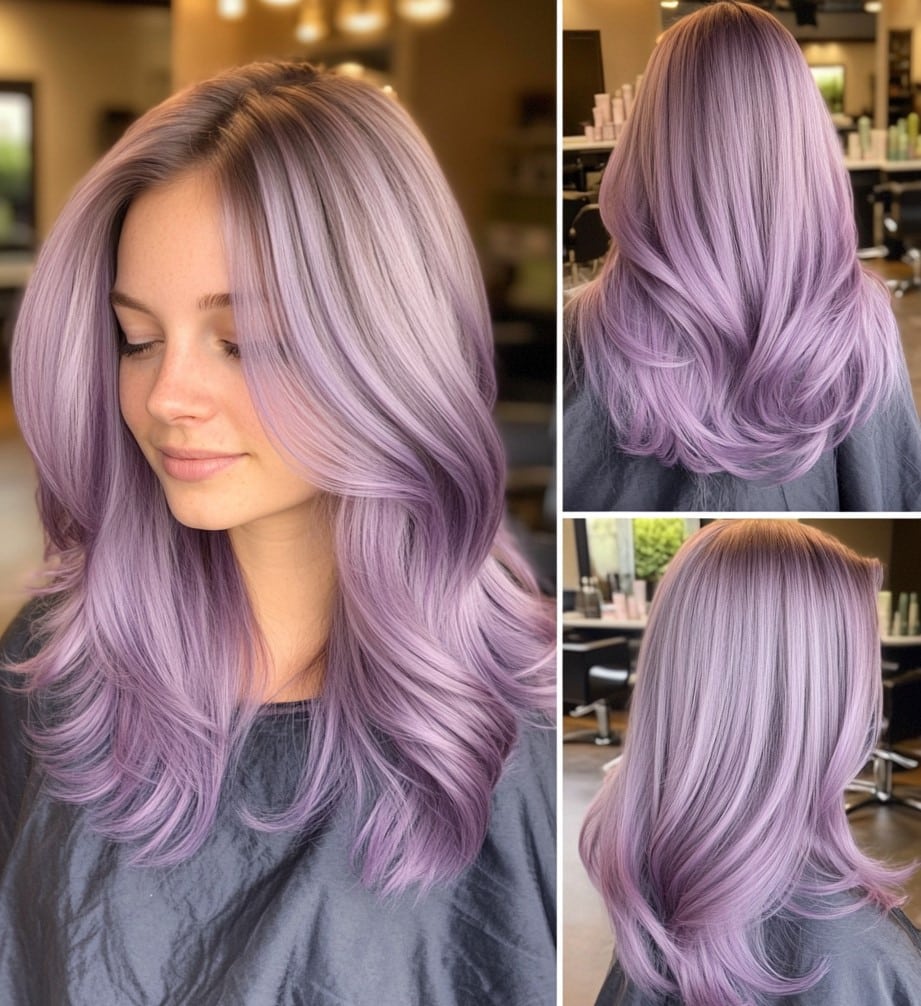
If face-framing layers are your thing, this shows how much they add to a pastel. Long pink-lilac lengths have a soft, slightly darker root, and layers start around the cheekbones, curving away from the face. The ends flip out gently, and the back is cut in a soft V. All that movement breaks the color up, so it looks layered and light rather than one solid block.
- Best for: Long, medium-density hair; anyone who wears their hair down most days.
- Ask your stylist for: Long face-framing layers starting at the cheekbones, a soft root and a pink-lilac toner through the lengths.
- How to style it: Blow-dry with a large round brush, rolling the front layers away from the face.
- Upkeep: Toner every 4 to 6 weeks; trim every 8 to 10 weeks.
Lilac ombre, dip-dye and short cuts
Lilac does not have to cover your whole head. These looks use it at the ends, as a reverse fade or on short crops where a quick re-tone takes minutes.
20. The silver-to-plum reverse fade
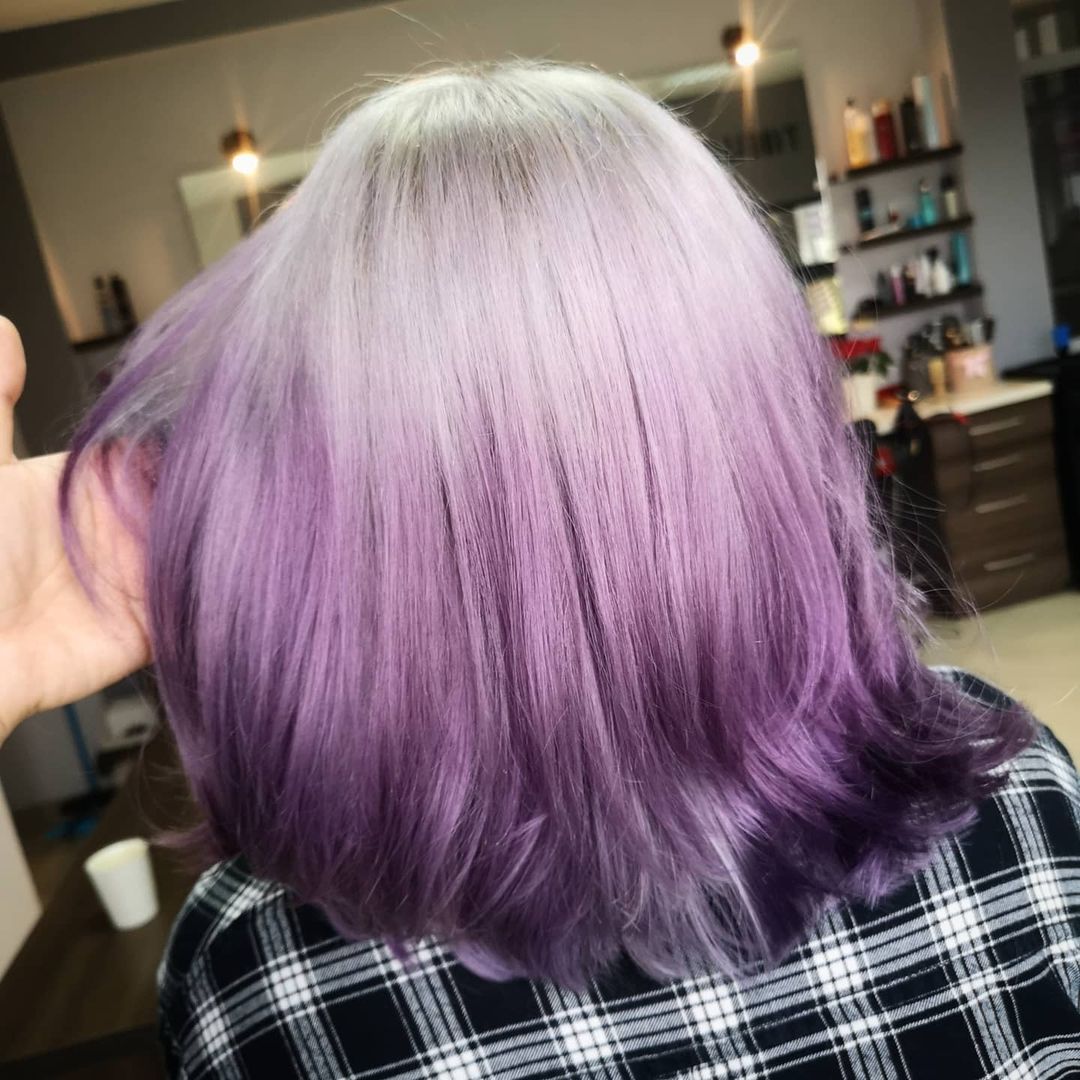
Why fade from dark to light when you can flip it? This straight, shoulder-length cut starts silvery lilac at the top and deepens through lavender into rich purple at the ends. The blunt hemline gives the dark tips a solid edge, so the fade looks graphic rather than accidental. Straight styling keeps every band of color clearly visible, and the deepest plum sits right along the hem, where it brushes the shoulders.
- Best for: Light blonde or silver hair, straight texture.
- Ask your stylist for: A reverse ombre: silver-lilac toner at the top, graduating into deep purple ends, with a blunt shoulder-length cut.
- How to style it: Flat-iron straight and smooth with a drop of serum.
- Upkeep: Refresh the purple ends every 6 weeks; purple shampoo on the silver top.