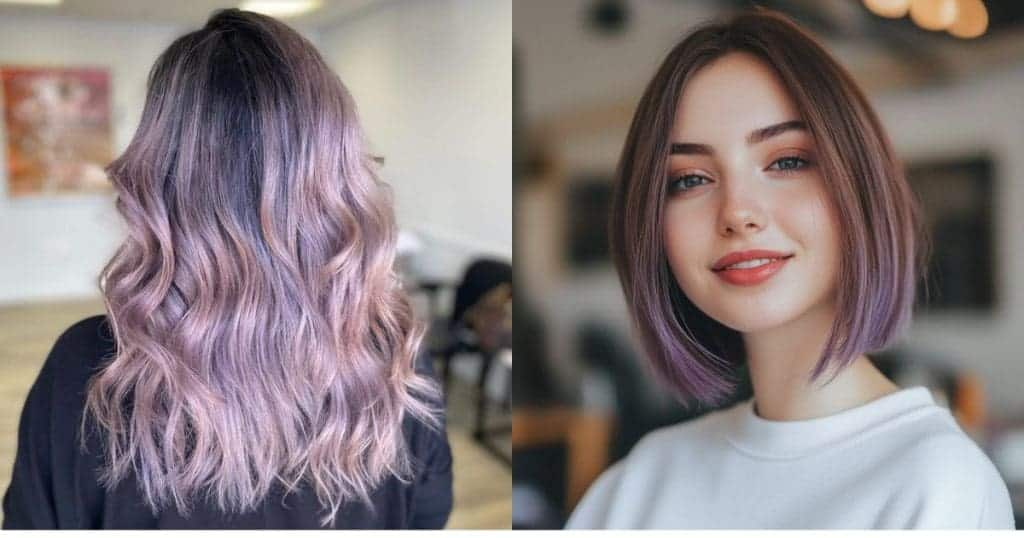
Lilac is the shade people ask for when they want purple without the volume turned all the way up. It sits at the palest, softest end of the violet family, and the way it reads depends almost entirely on its undertone: add gray and it turns smoky and grown-up, lean blue and it becomes periwinkle, warm it with pink and it drifts toward rose. Pick the undertone first and the rest of the decisions get much easier.
So that is how we have sorted these 24 looks: smoky and silver lilacs, cool periwinkle and lavender, pink-leaning lilac blends, and finally the ombres, dip-dyes and short cuts that use lilac as an accent. If you want the whole purple spectrum, including deep plum and electric violet, our purple hair color ideas cover the darker end. Here, every look stays pale, and each comes with what to ask your colorist, how to style it and how often it needs a refresh.
How to choose a lilac hair color
Lilac is a pastel, and pastels only show up on hair that has been lightened to a pale yellow first. The lighter and more even your base, the truer the lilac. On darker hair, a colorist will usually keep a shadow root and lighten only the lengths or a few ribbons, which also makes the grow-out far kinder.
| Starting point | Lilac that works best | What to avoid |
|---|---|---|
| Natural blonde or already highlighted | All-over pastel lilac, pink lilac or periwinkle glaze | Heavy violet toner on porous ends, which can grab too dark |
| Light to medium brown | Shadow root with lilac lengths, or lilac-gray balayage | All-over lilac from root to tip, which needs bleaching every few weeks |
| Dark brown or black | Lilac ribbons, money-piece panels or lilac ends only | Expecting a pale pastel in one session |
| Gray or silver | Silver lilac or lavender gray gloss over natural white | Strong pigments that stain coarse gray strands unevenly |
| Fine or damaged | Lilac toner on a few lightened pieces, with a bond-building treatment | Bleaching every strand to platinum for full coverage |
Warm or cool: if gold jewelry and peachy blush suit you, a pink-leaning lilac usually sits more easily; if you reach for silver and cool tones, periwinkle and ash lilac are the safer bet. Fade: every lilac fades, usually toward silver or pale blonde within four to six weeks, so plan on a toning gloss or a color-depositing conditioner. If you prefer to start small, our purple highlight ideas show how to work in violet a few strands at a time.
Smoky, ash and silver lilac
These are the quietest lilacs, cut with gray so the violet reads more like a tint than a color. They suit anyone who wants something unusual that still looks polished at work, and they fade gracefully toward silver.
1. The dusty mauve collarbone cut
Not sure you are a pastel person? Start with this one. The shade is so muted it hovers between lilac, mauve and beige, and in daylight it reads almost like a pink-tinged ash blonde. Loose crimped bends run through the mid-lengths, then the hair falls straight into a blunt collarbone edge. That contrast, texture up top and a clean line at the bottom, keeps the soft color from looking washed out.
- Best for: Light blonde or pre-lightened hair; anyone trying lilac for the first time.
- Ask your stylist for: An all-over dusty lilac-mauve gloss on a level 9 to 10 base, with a blunt collarbone-length cut.
- How to style it: Use a wide-barrel waver or flat iron through the mid-lengths only and leave the last two inches straight.
- Upkeep: Toning gloss every 5 to 6 weeks; trim every 8 to 10 weeks.
2. The barely-there lilac veil
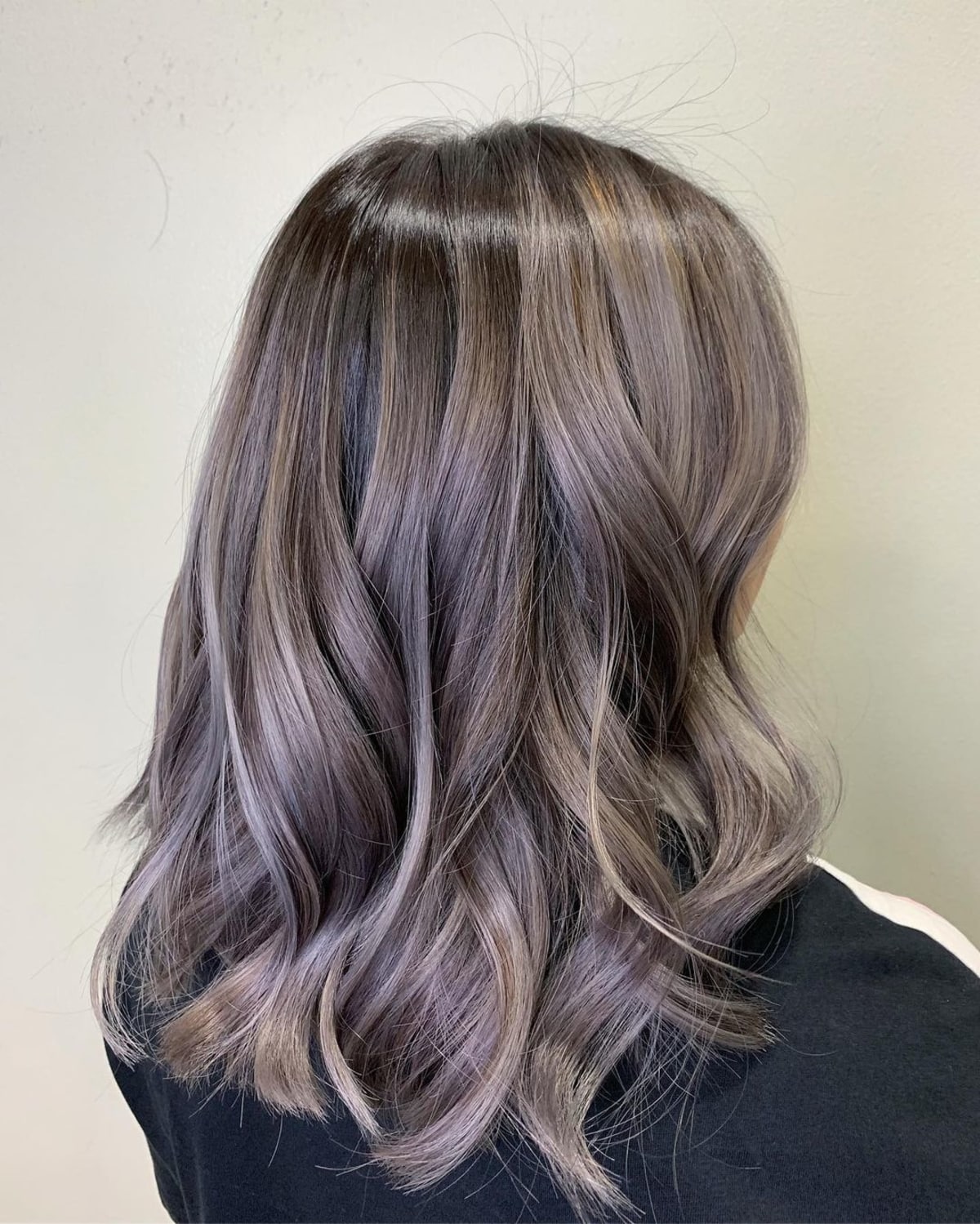
For the color-shy, here is lilac at a whisper. The base is a cool ash brown, and a gray-lilac glaze sits over pale ribbons through the lengths so the violet only shows when light hits the waves. Soft, shoulder-length bends keep the effect diffused rather than striped. The face-framing pieces are a touch brighter than the back, which lifts the color around the face.
- Best for: Medium ash brown or bronde hair; anyone who wants a subtle shift rather than a statement.
- Ask your stylist for: Fine babylights through the mid-lengths and ends, toned with a smoky lilac-gray gloss, keeping your natural root.
- How to style it: Curl alternating sections away from the face with a 1.25-inch iron, then brush through with your fingers.
- Upkeep: Gloss every 6 to 8 weeks; highlights every 3 to 4 months.
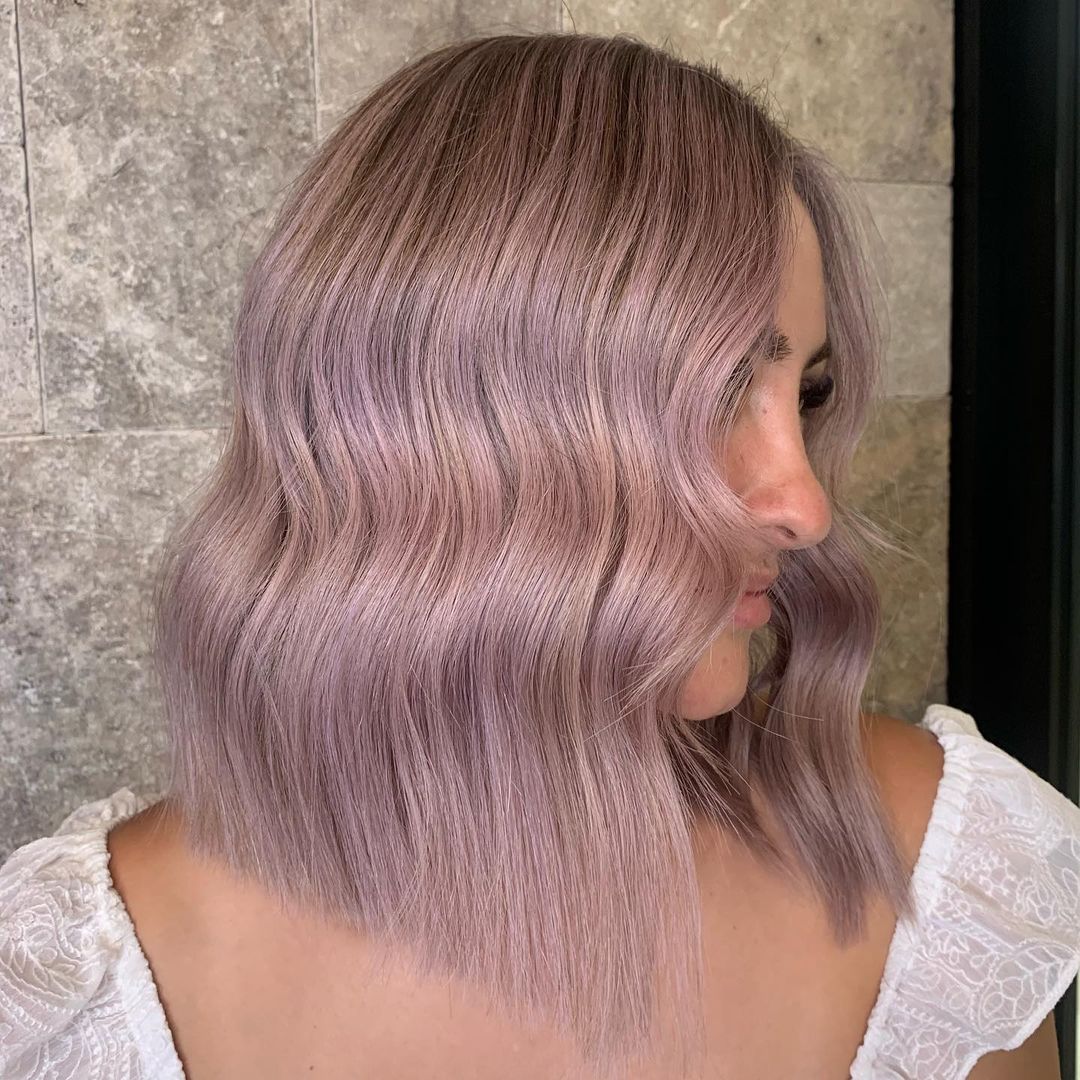
3. The lilac-gray grown-out balayage
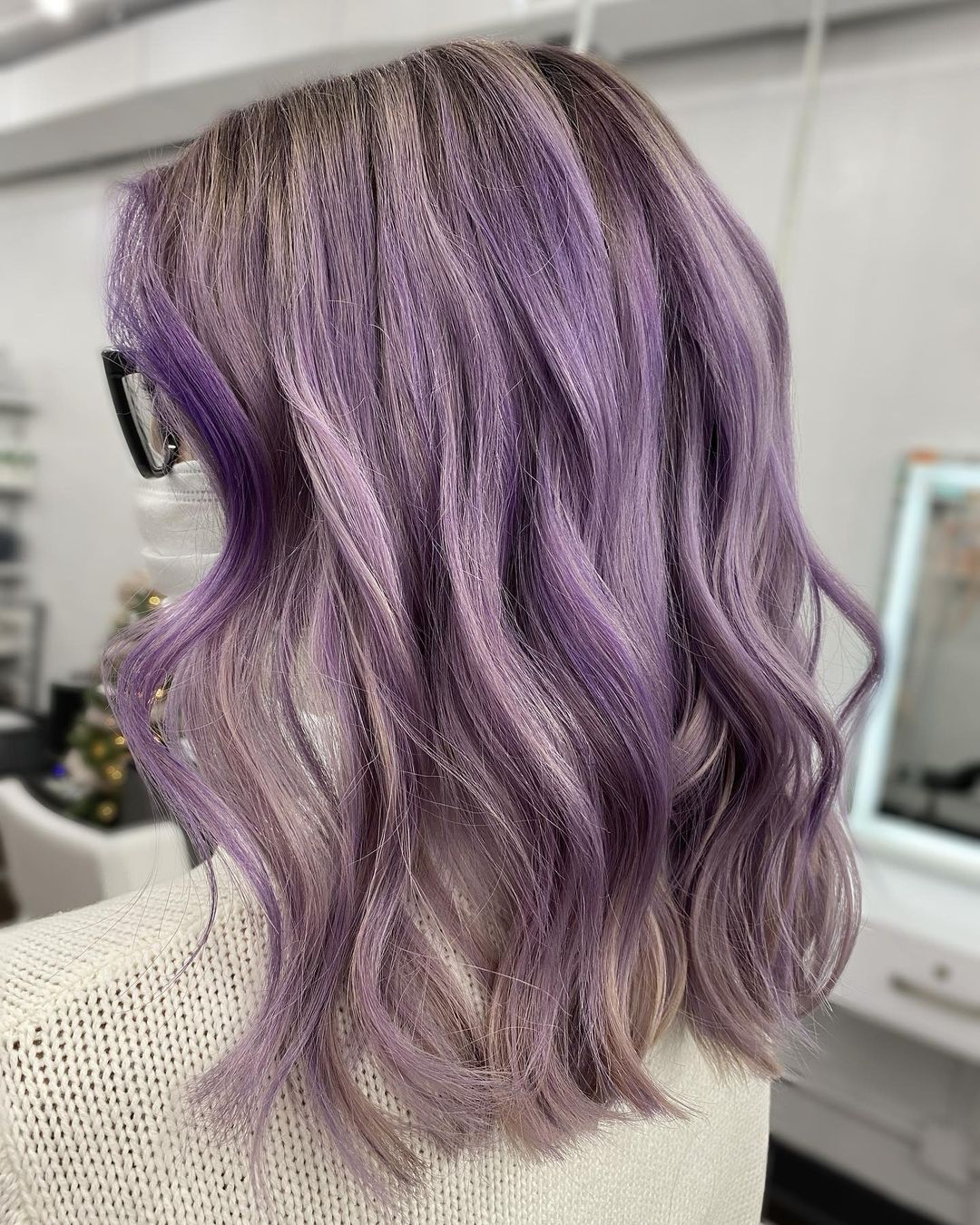
Seen from the side, this balayage shows its full range: ash brown at the roots, then lilac-gray ribbons that brighten toward the ends. The waves are loose and slightly uneven, which suits the hand-painted placement and hides where one ribbon stops and the next begins. Because the root is left natural, it grows out without a hard line. Low-key, but never flat.
- Best for: Light brown to dark blonde hair; anyone who wants months between appointments.
- Ask your stylist for: Hand-painted balayage from just below the root, toned smoky lilac, with a soft root smudge to blend.
- How to style it: Rough-dry, then add loose waves with a curling wand and finish with a light texture spray.
- Upkeep: Lilac gloss every 6 weeks; balayage refresh every 3 to 4 months.
4. The smoky lilac bob
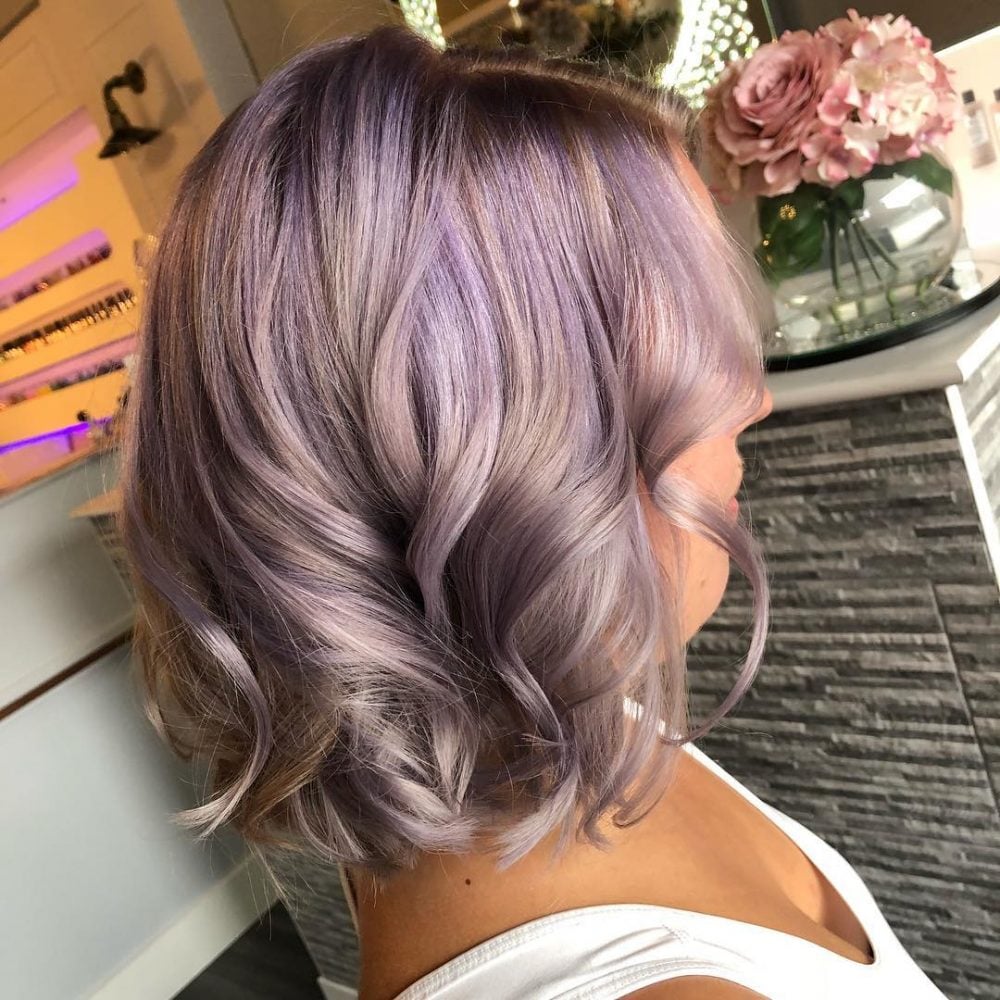
A bob is a smart canvas for pastel because there is less length to fade. Here, a deep smoky root melts into lilac-gray, with brighter pieces around the face and at the curled ends. The cut sits between chin and shoulder, and the ends are bent in loose, uneven curls that let the lighter tones catch the light. The dark root anchors it, so the lilac reads moody rather than sweet.
- Best for: Fine to medium hair; anyone wanting a pastel bob that looks good with regrowth.
- Ask your stylist for: A shadow root, lilac-gray toner on lightened mid-lengths and ends, and a chin-to-shoulder bob with soft layers.
- How to style it: Wrap random sections around a 1-inch wand, leave the ends out, and shake the curls loose.
- Upkeep: Toner every 4 to 6 weeks; trim every 6 to 8 weeks.
5. The pearl lilac blonde
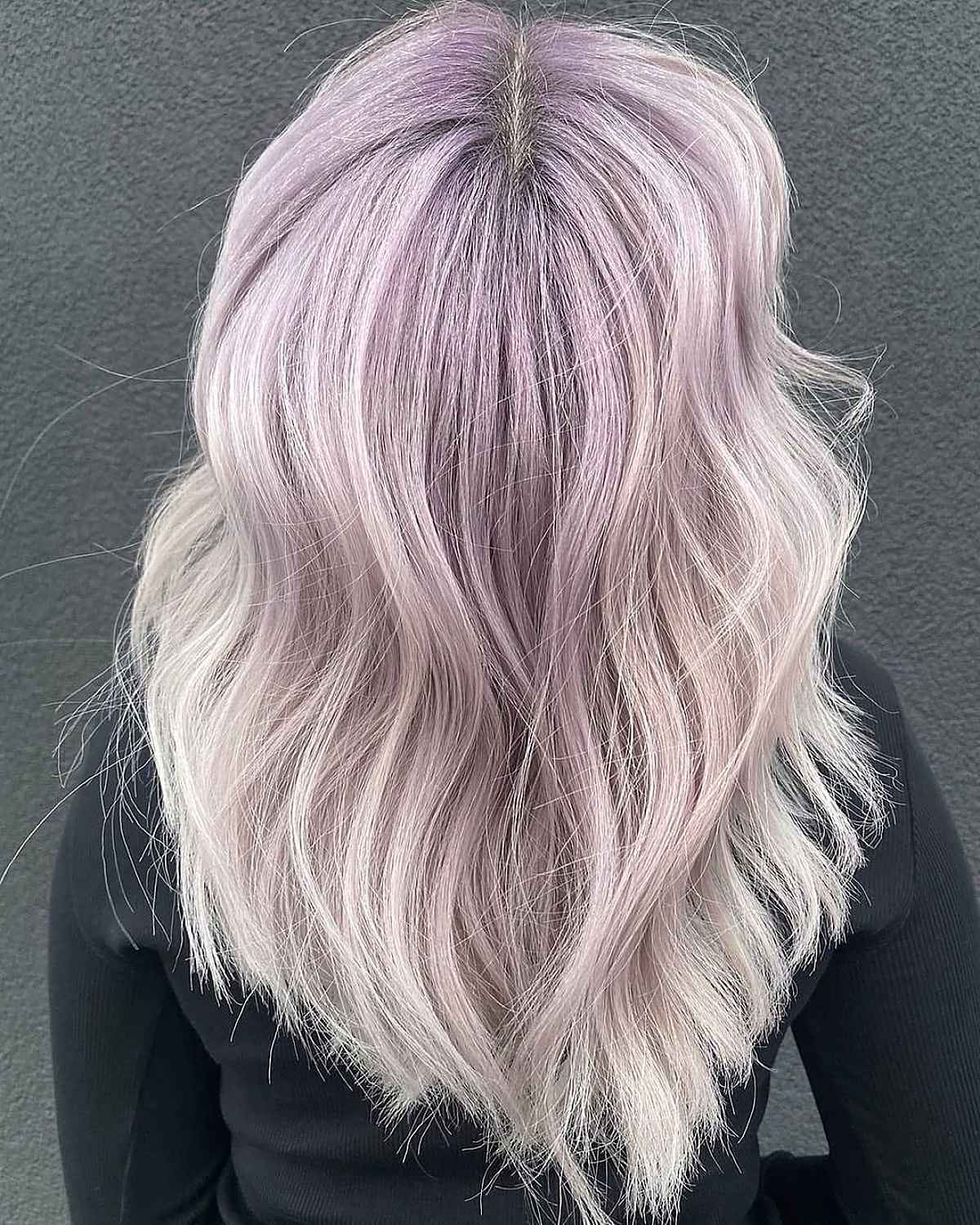
Imagine platinum blonde dipped in the faintest violet and you have this pearl lilac. The crown keeps a soft, slightly darker root, then the color lightens to a near-white silver-lilac through layered, shattered ends that fall just past the shoulders. The violet is what keeps the blonde from turning yellow. A few longer pieces at the back hold the palest tone, so the ends look almost white. Think of it as cool blonde with a secret.
- Best for: Very light blonde hair already lifted to level 10; anyone who loves icy tones.
- Ask your stylist for: A rooted platinum with a pearl lilac toner and long, choppy layers to break up the ends.
- How to style it: Blow-dry with a large round brush, then wave the lengths loosely and finish with a shine spray.
- Upkeep: Purple shampoo once a week; toner every 4 to 6 weeks; root touch-up every 8 to 10 weeks.
6. The shaggy lilac ribbon cut
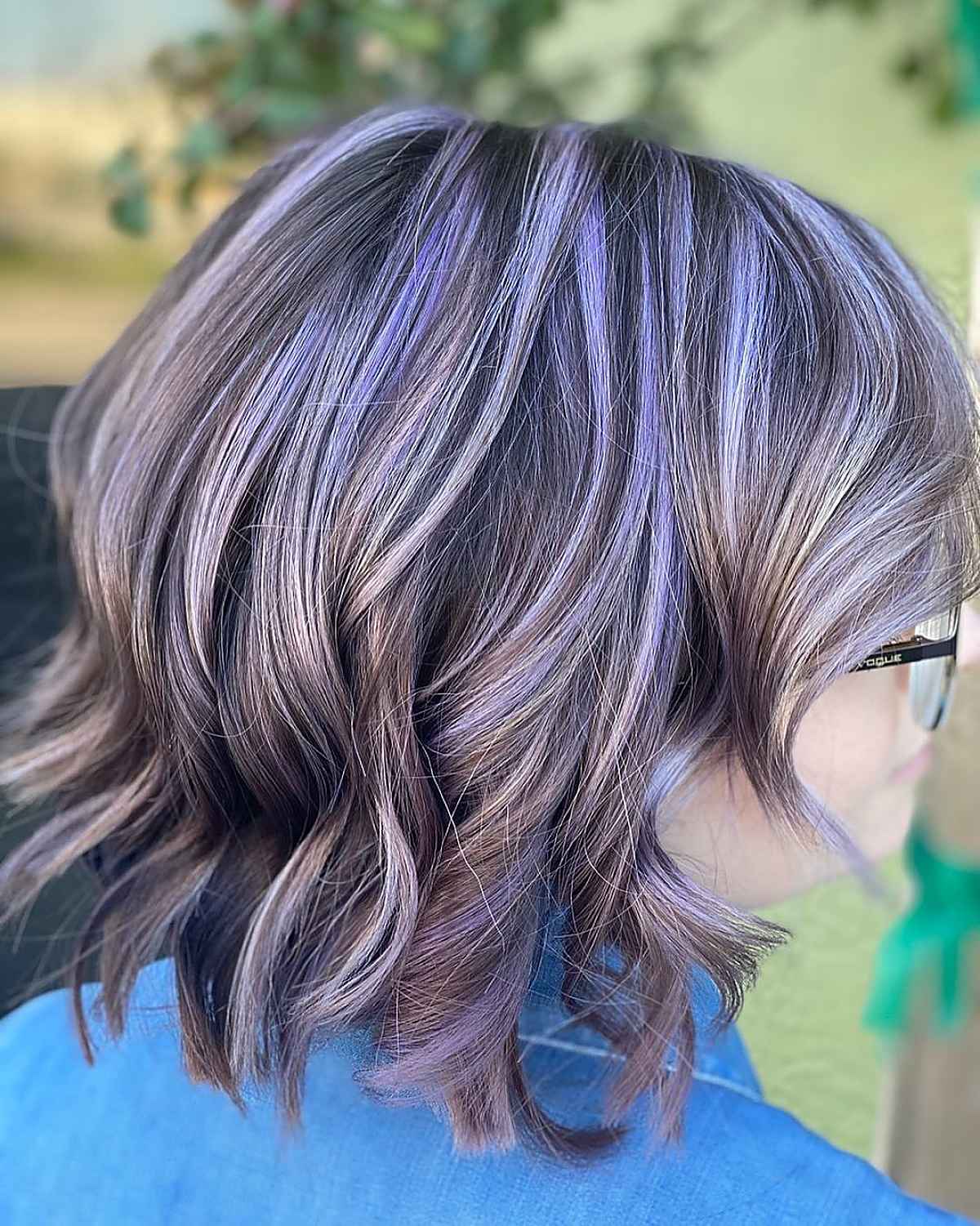
If you like your color with a bit of grit, look closely at this one. A dark ash base is threaded with bold lilac and periwinkle ribbons, mostly through the top layer, so the color flashes as the shaggy layers move. The cut is choppy and shoulder-skimming, with flicked-out ends around the jaw. It works because the dark base frames the pastel, making each ribbon look brighter than it really is.
- Best for: Medium to dark brown hair with natural wave; anyone who wears glasses or bold accessories.
- Ask your stylist for: Chunky lilac and periwinkle foils on the top and front sections, with a shoulder-length shag and choppy ends.
- How to style it: Scrunch in a sea salt spray, diffuse, then twist a few front pieces with a flat iron.
- Upkeep: Color-depositing conditioner weekly; refresh ribbons every 8 to 10 weeks; trim every 8 weeks.
7. The long smoky lilac waves
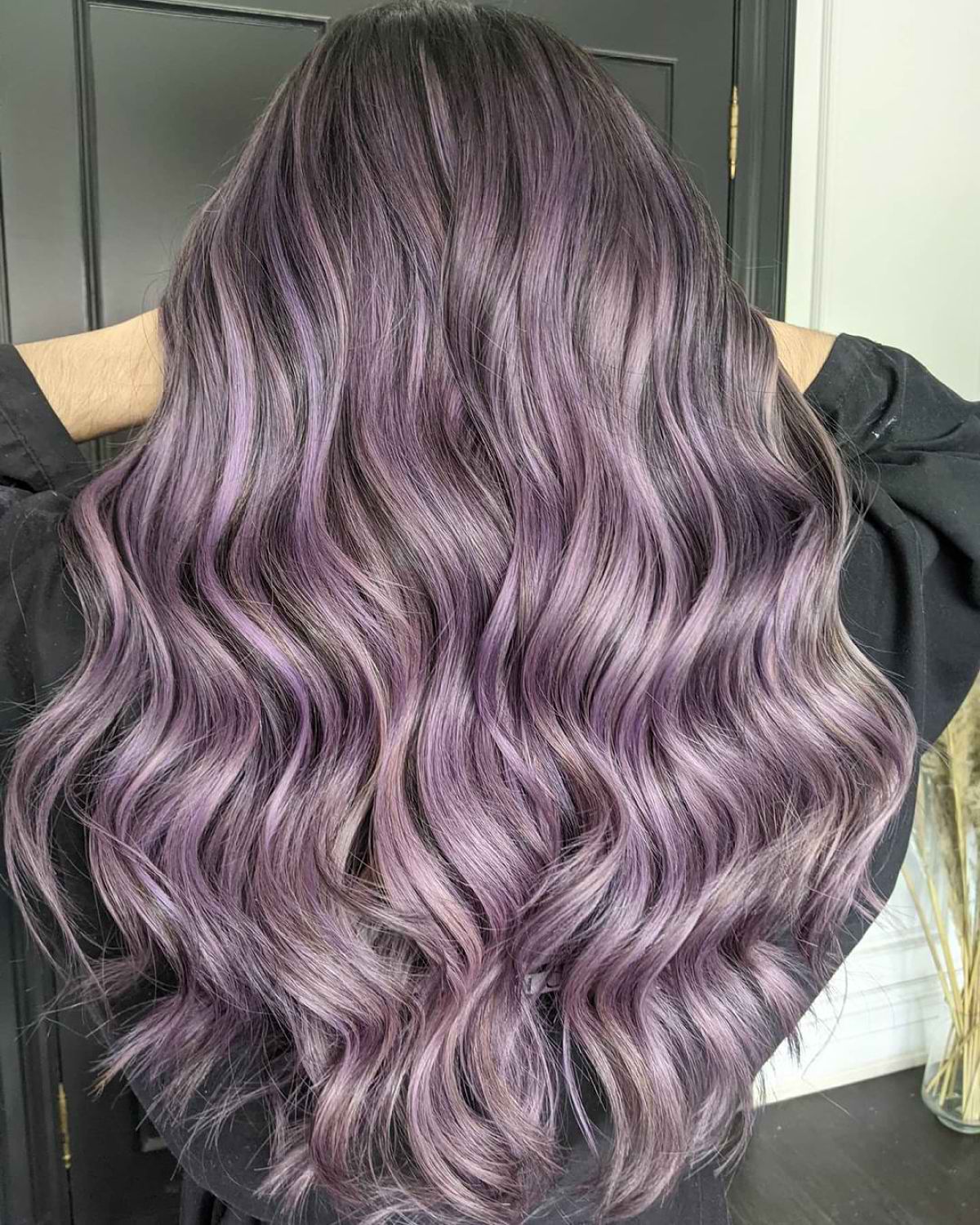
Long hair and lilac can look costume-like when the color is too flat. This one avoids that with a deep root that melts into smoky mauve-lilac and lots of tight, uniform waves running from the ears to the mid-back. Each wave breaks the color into light and shadow, so the shade looks dimensional even though it is mostly one tone. Wear it down and let the waves do the work.
- Best for: Long, healthy, pre-lightened hair; anyone happy to spend time on styling.
- Ask your stylist for: A long shadow root melted into smoky lilac-mauve through the lengths, with long layers to keep weight off the ends.
- How to style it: Use a three-barrel waver in small sections, then break the waves apart with your fingers.
- Upkeep: Gloss every 5 to 6 weeks; deep conditioning mask weekly; trim every 10 weeks.
Periwinkle, blue lilac and lavender
Push lilac toward blue and you land on periwinkle and lavender, the coolest pastels in the family. These shades look especially clean against cool skin tones and silver jewelry.
8. The periwinkle shoulder waves
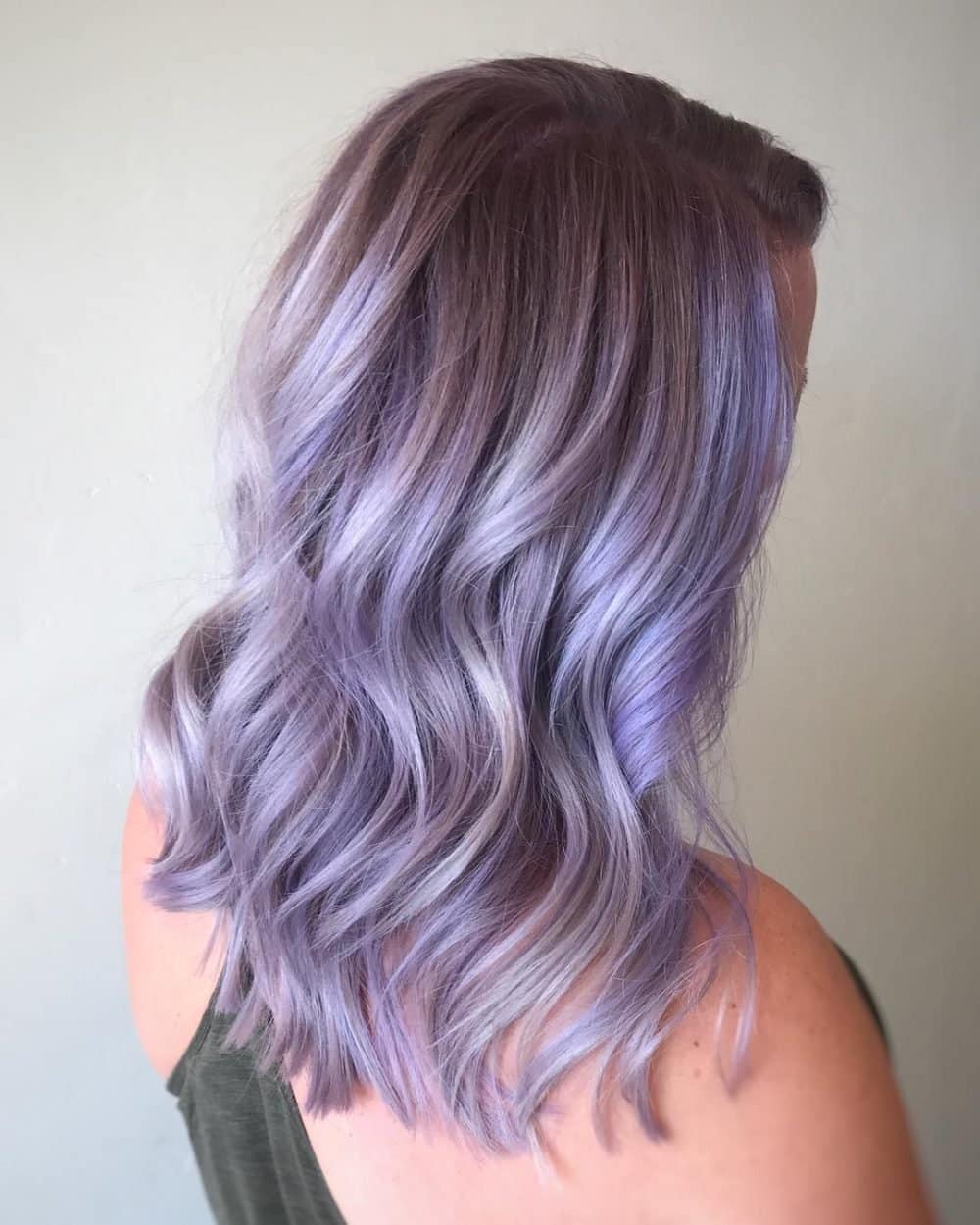
Some lilacs whisper; this one hums. A smoky ash root slides into periwinkle lavender, with paler ribbons on the surface that look almost silver when they catch the light. The waves are loose and glossy, and the cut sits just past the shoulders with soft layers at the ends. Keeping the root dark is what stops the blue from looking harsh near the face.
- Best for: Light brown to blonde hair; cool skin tones.
- Ask your stylist for: A root melt with periwinkle-lavender through lightened mid-lengths and ends, plus a few brighter surface ribbons.
- How to style it: Curl in alternating directions with a 1.25-inch wand and finish with a glossing serum.
- Upkeep: Color-depositing conditioner weekly; toner every 4 to 6 weeks.
9. The deep lavender melt
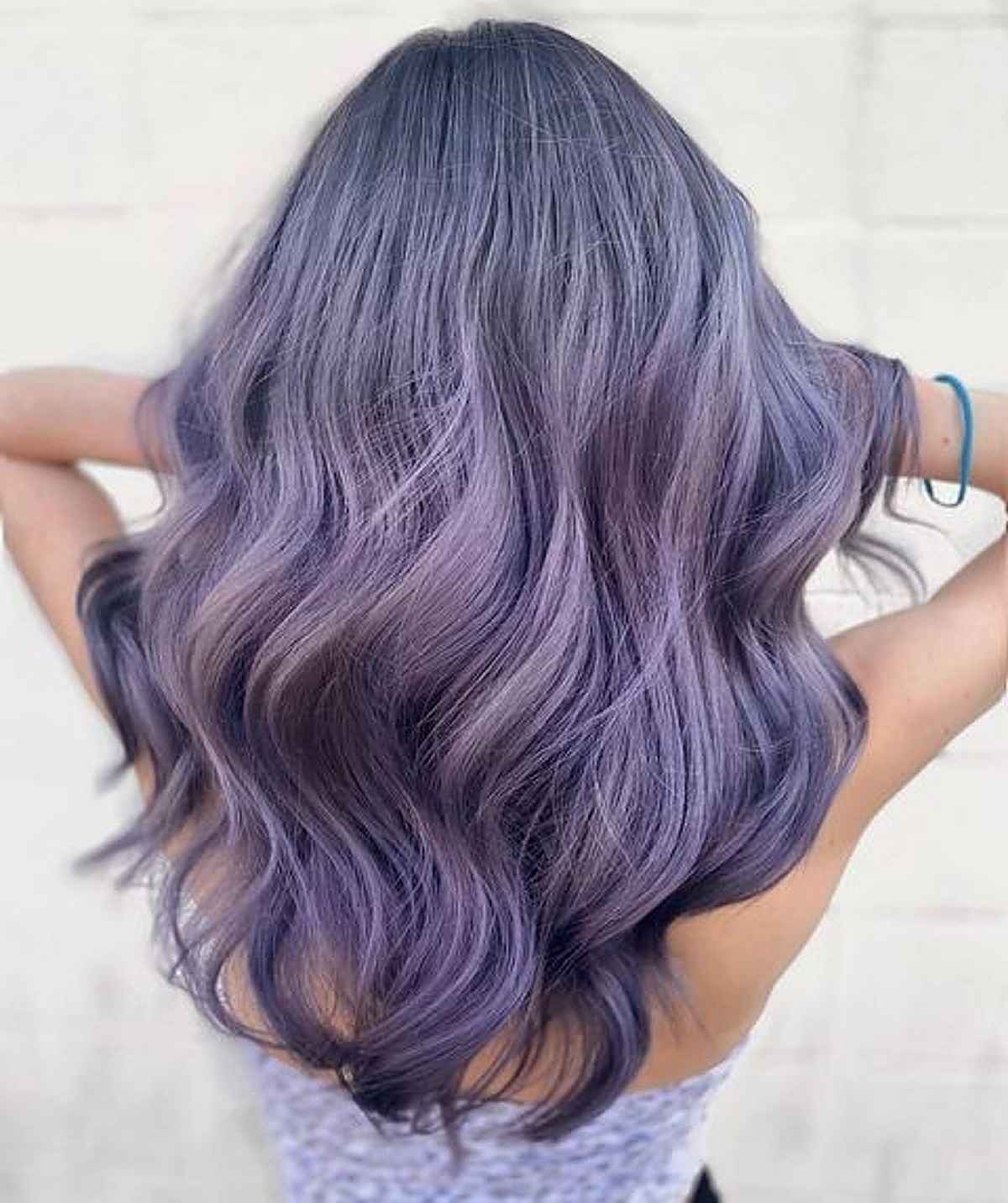
Want lilac that looks richer on day thirty than most pastels do on day five? Choose a deeper lavender. Here a blue-gray root fades into a saturated lavender that turns almost violet at the ends of long, loose waves. The deeper pigment fades slowly, softening into pastel rather than vanishing. It is the most forgiving shade in this list for anyone who washes their hair often.
- Best for: Medium to long hair; anyone who wants lilac that lasts.
- Ask your stylist for: A blue-gray shadow root with deep lavender on the lengths, saturating toward the ends.
- How to style it: Loose waves with a large-barrel curling iron, then a light hold spray.
- Upkeep: Wash in cool water; refresh lavender every 6 to 8 weeks.
10. The all-over periwinkle
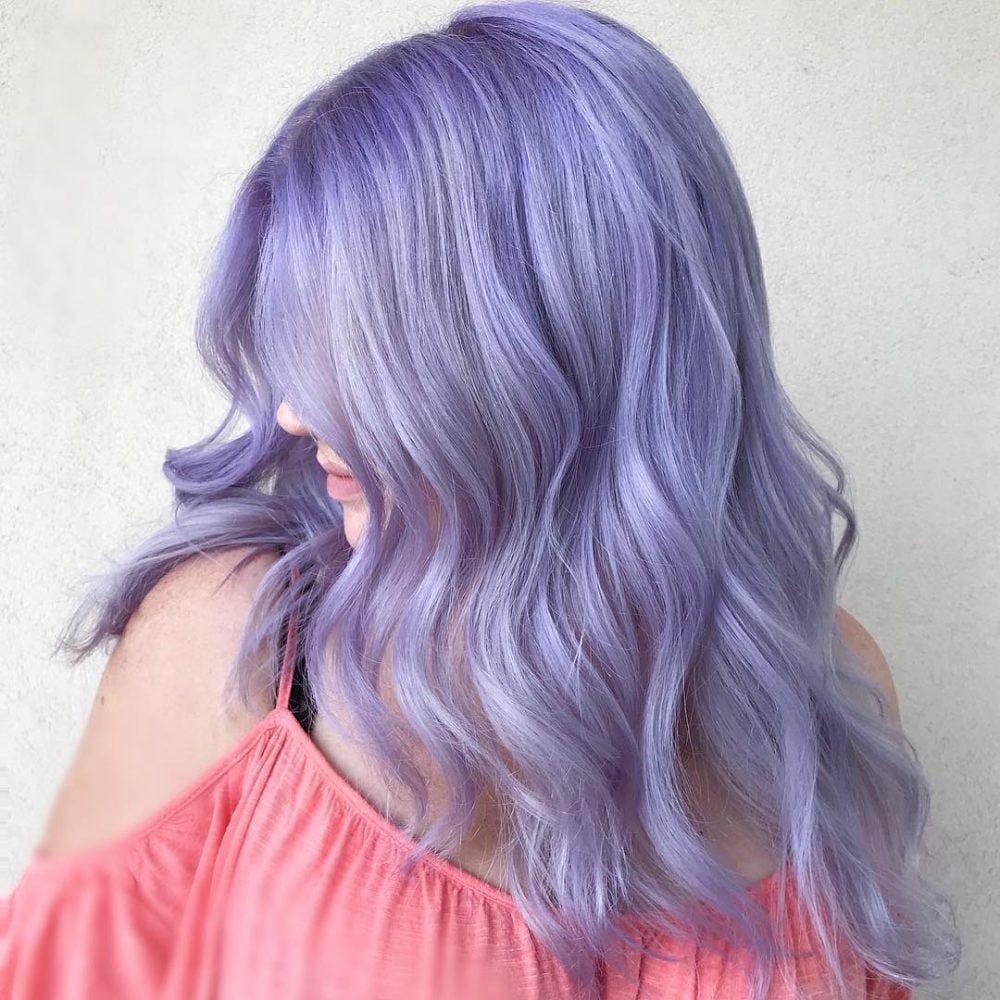
Go all in and this is the result: periwinkle lilac from root to tip, with no shadow root or dark base to soften it. Long layers are curled into loose waves that swing forward around the face, and the color’s slight unevenness, paler at the ends and richer near the scalp, keeps it from looking like a wig. It is a commitment, and it looks like one, in the best way.
- Best for: Natural or pre-lightened very pale blonde; anyone who loves bold pastel.
- Ask your stylist for: All-over lightening to a pale level 10, then a periwinkle lilac toner, with long face-framing layers.
- How to style it: Wave the lengths away from the face with a 1.25-inch iron; use heat protectant every time.
- Upkeep: Root touch-up every 5 to 6 weeks; toner every 4 weeks; bond treatment at every visit.