Gray ombre is all about the fade. Instead of committing your whole head to silver, the color starts dark at the root and drifts into smoke, pewter or near-white by the ends, so regrowth simply becomes part of the gradient. Done well, it looks cool and deliberate rather than washed out, and it suits dark hair especially, because the deep root gives the gray something to play against.
These 28 looks are sorted by how the fade behaves: classic dark-to-silver melts, short cuts where the transition happens fast, reverse and two-tone versions, and gray that fades into blue, teal, lilac, pink or copper. If you are after a single all-over shade rather than a gradient, our guide to gray hair shades covers charcoal to pearl. For each look below you’ll find who it suits, what to ask for, how to style it and how often to tone.
How to choose a gray ombre
Two choices shape every gray ombre: where the fade starts and how light the ends go. A high fade that starts near the crown gives a mostly silver look; a low fade that begins at the jaw keeps most of your natural color. The lighter the ends, the more lightening and toning they need.
| Hair type | Gray ombre that works best | What to avoid |
|---|---|---|
| Fine or thin | A low fade with smoky ash ends, toned rather than lifted to white | Lifting most of the length to icy white, which can leave fine hair fragile |
| Thick | Long, gradual melts and silver ribbons that show through the bulk | Very subtle smoky ends, which get lost in dense hair |
| Wavy | Balayage-style gray ombre that catches the light on each wave | A hard horizontal line, which waves make look patchy |
| Curly | Gray painted on the outer curls and ends, refreshed with a toning mask | All-over high lift, which dries out curls quickly |
| Straight | Smooth vertical melts or a sharp reverse ombre on a sleek cut | Uneven blending, which straight hair shows clearly |
Starting color matters: dark brown and black hair must be lifted to a pale yellow before gray toner will show, so a dramatic silver fade may take two sessions. Tone: blue-based grays look icy, violet-based grays look soft and pearly, and smoky ash grays are easiest to keep. If you would rather keep most of the hair dark, our gray balayage ideas use the same tones in smaller pieces.
Smoky root to silver melts
The classic version: a dark root that blends slowly into silver, ash or pewter. These are the easiest gray ombres to grow out because the root is meant to be there.
1. The long silver drift
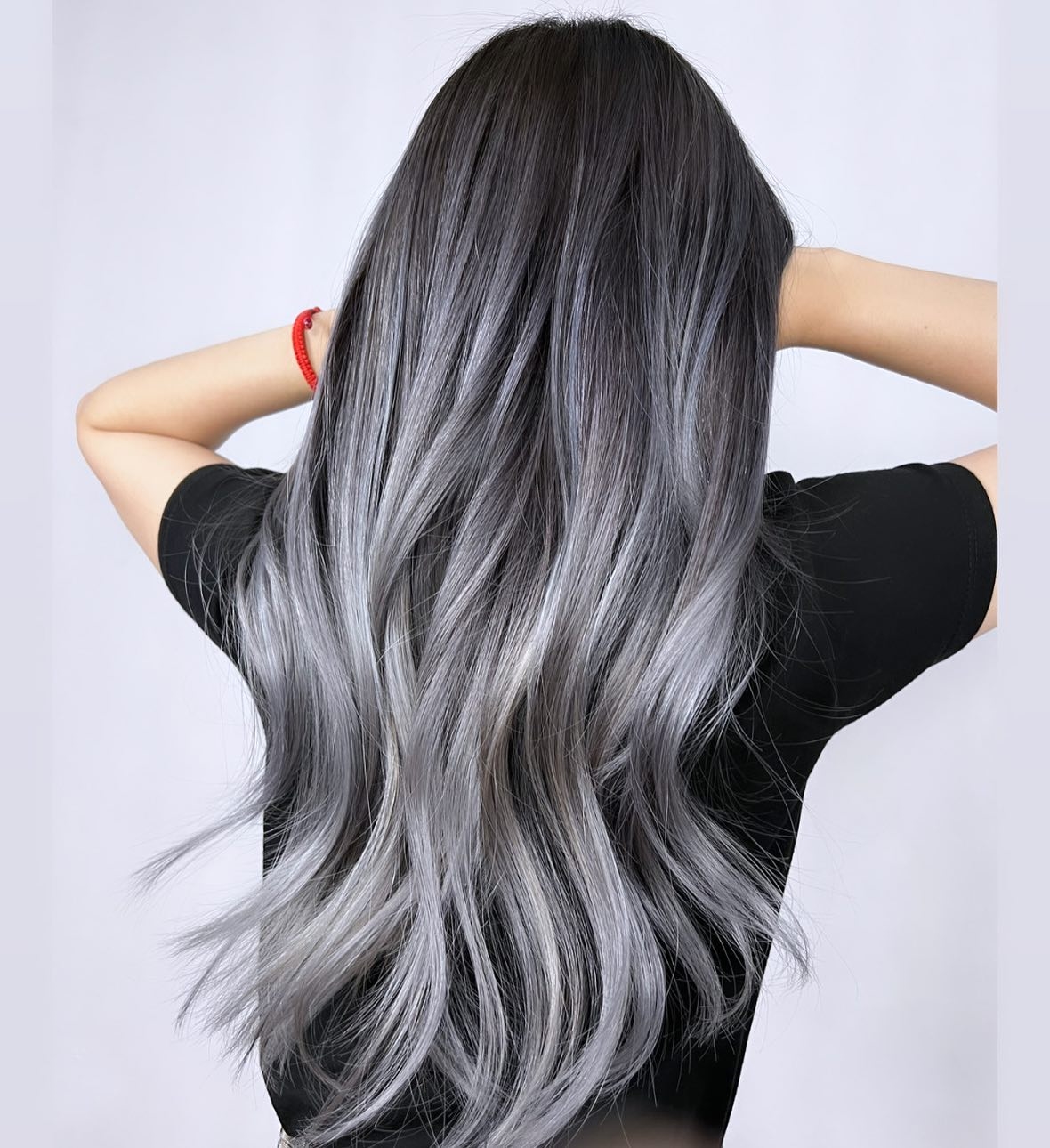
Here’s the textbook gray ombre, and it earns its place at the top. A dark root sits close to the scalp, then the color softens into smoky ash at the shoulder blades and finishes in clean silver at the tips. Long, loose waves stretch the blend out so there is no obvious starting line. Arms raised in the photo, you can see how evenly the gray is placed all around the head. Slow, smooth and very wearable.
- Best for: Long, medium to thick hair; dark brunettes who want regrowth to look intentional.
- Ask your stylist for: A long dark-to-silver ombre with a soft shadow root and a cool silver toner on the ends.
- How to style it: Curl in large sections with a 1.25-inch iron and brush through gently for open waves.
- Upkeep: Silver toner every 5 to 6 weeks; ombre refresh every 3 to 4 months.
2. The ash-gray waterfall
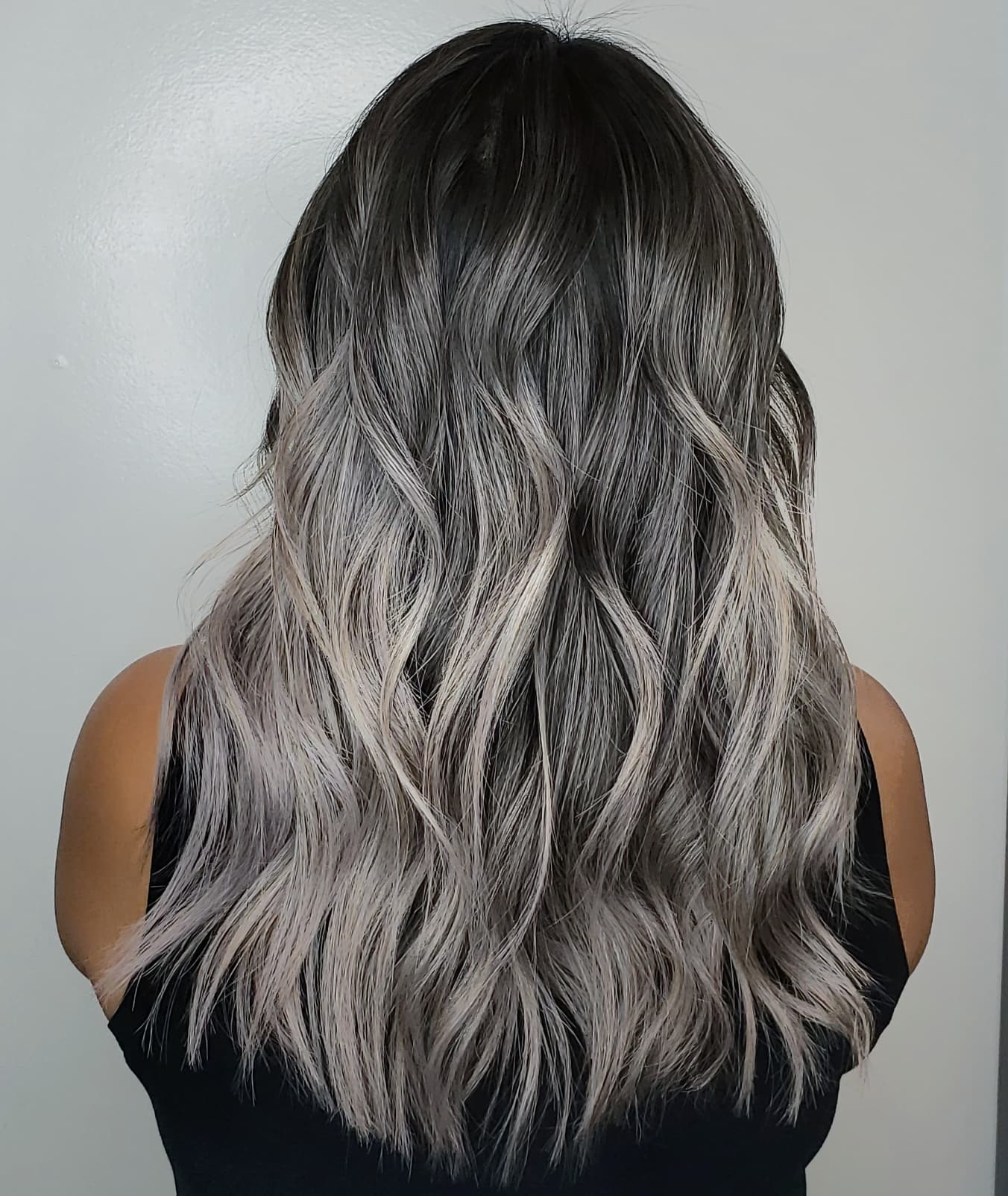
If bright silver feels too bold, start with ash. This long cut moves from a deep brown root to a smoky, mushroom-toned gray through the lengths, with waves adding soft highlights where the hair bends. The color never gets close to white, so it reads moody and muted. Because the gray is darker, it hides yellow tones better than icy silver does. A good first step into gray.
- Best for: Medium to thick hair; anyone nervous about very light ends.
- Ask your stylist for: A smoky ash-gray ombre starting below the ears, with a medium-depth gray toner rather than silver.
- How to style it: Wave with a 1-inch wand, alternating direction, and finish with a light shine spray.
- Upkeep: Toner every 6 to 8 weeks; ombre refresh every 4 months.
3. The charcoal with silver ribbons
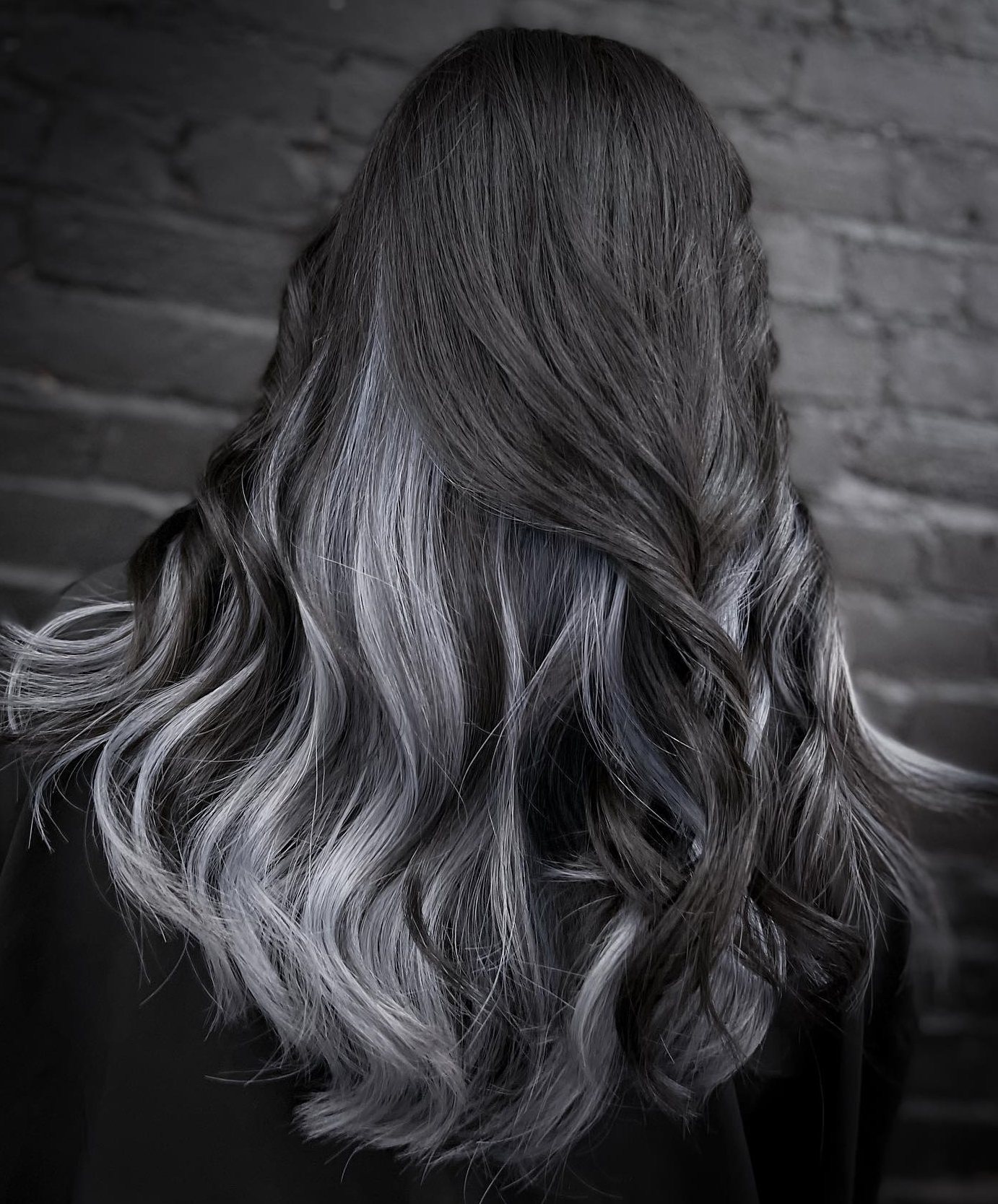
Not every gray ombre needs to go light. Here the base stays charcoal almost to the ends, and silver ribbons swirl through the lengths, picked out by glossy curls. The darker overall result suits anyone who wants gray as an accent rather than the main color. Against the deep base, the silver pieces read as sharp light reflections. Dark, glossy and quietly dramatic.
- Best for: Dark hair, medium to thick; anyone keeping most of their natural color.
- Ask your stylist for: Silver ribbons painted from the mid-lengths on a charcoal base, with a smoky toner to link them.
- How to style it: Curl in medium sections with a 1-inch iron and let the curls drop for a few minutes before brushing.
- Upkeep: Gloss every 6 weeks; ribbons refreshed every 12 to 14 weeks.
4. The ash-tipped side-part lob
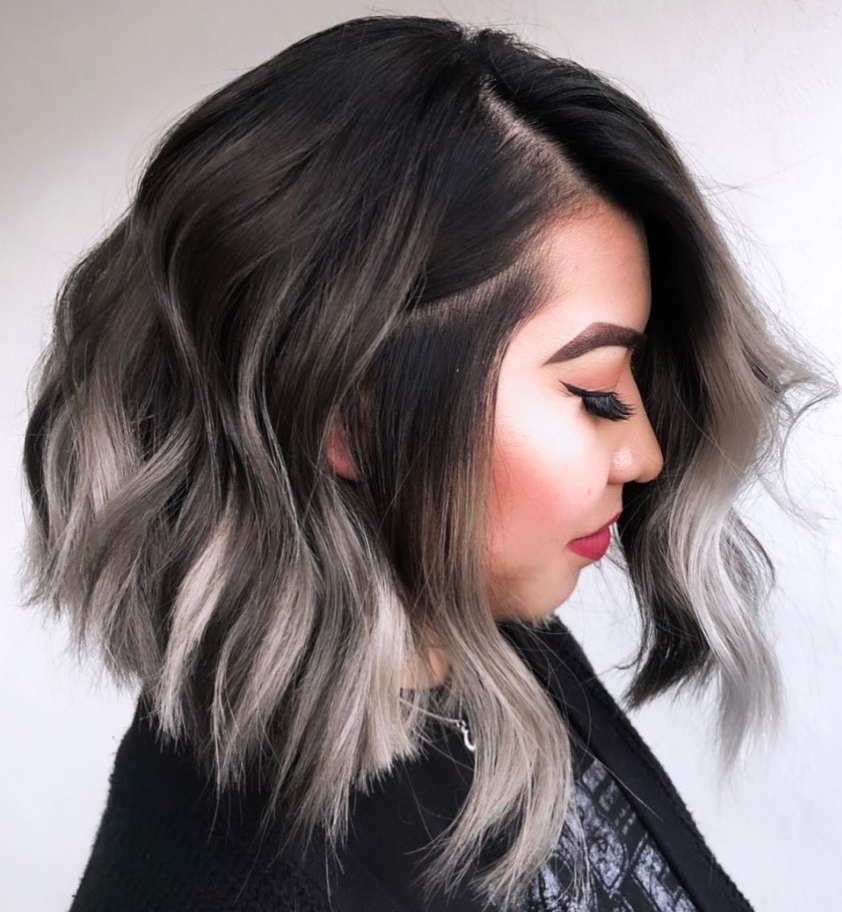
A deep side part and a wavy lob can carry a strong fade beautifully. The roots and top section are near-black, and the color changes quickly to ash-silver around the jaw, so the light ends flip out against the dark top. Seen in profile, the contrast lines up with the cut’s shape and outlines it. A short fade like this also keeps most of the lightening on hair that will be trimmed off soon.
- Best for: Medium hair with a natural wave; anyone growing out a bob.
- Ask your stylist for: A collarbone lob with long layers and an ash-silver ombre starting at the jaw.
- How to style it: Use a flat iron to create loose S-waves and leave the ends straight.
- Upkeep: Trim every 8 weeks; toner every 6 weeks.
5. The black-to-platinum flip
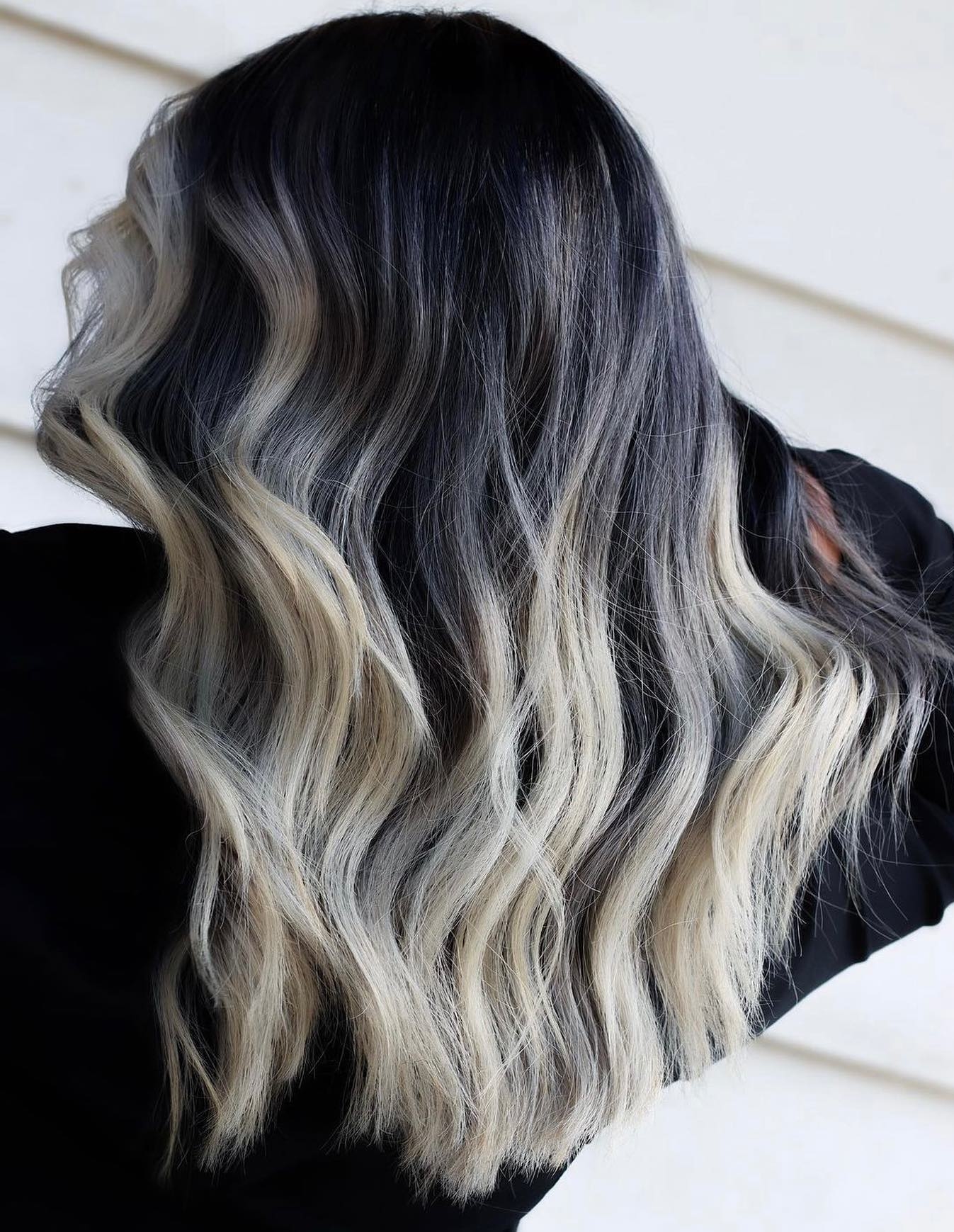
Prefer your contrast at full volume? This is about as sharp as a gray ombre gets. The top is solid black and the ends are a pale platinum-silver, with only a short, smudged transition between them. Loose waves twist the two colors together, so the light shows up in streaks rather than a single line. It shows best on dark hair and loose, piecey waves.
- Best for: Dark, thick hair; anyone who likes strong contrast.
- Ask your stylist for: A black-to-platinum ombre with a short blend, ends lifted and toned to a silver white.
- How to style it: Wave with a flat iron, twisting away from the face, and finish with a dry texture spray.
- Upkeep: Toner every 4 to 6 weeks; bond treatment at each lightening session.
6. The face-framed smoky melt
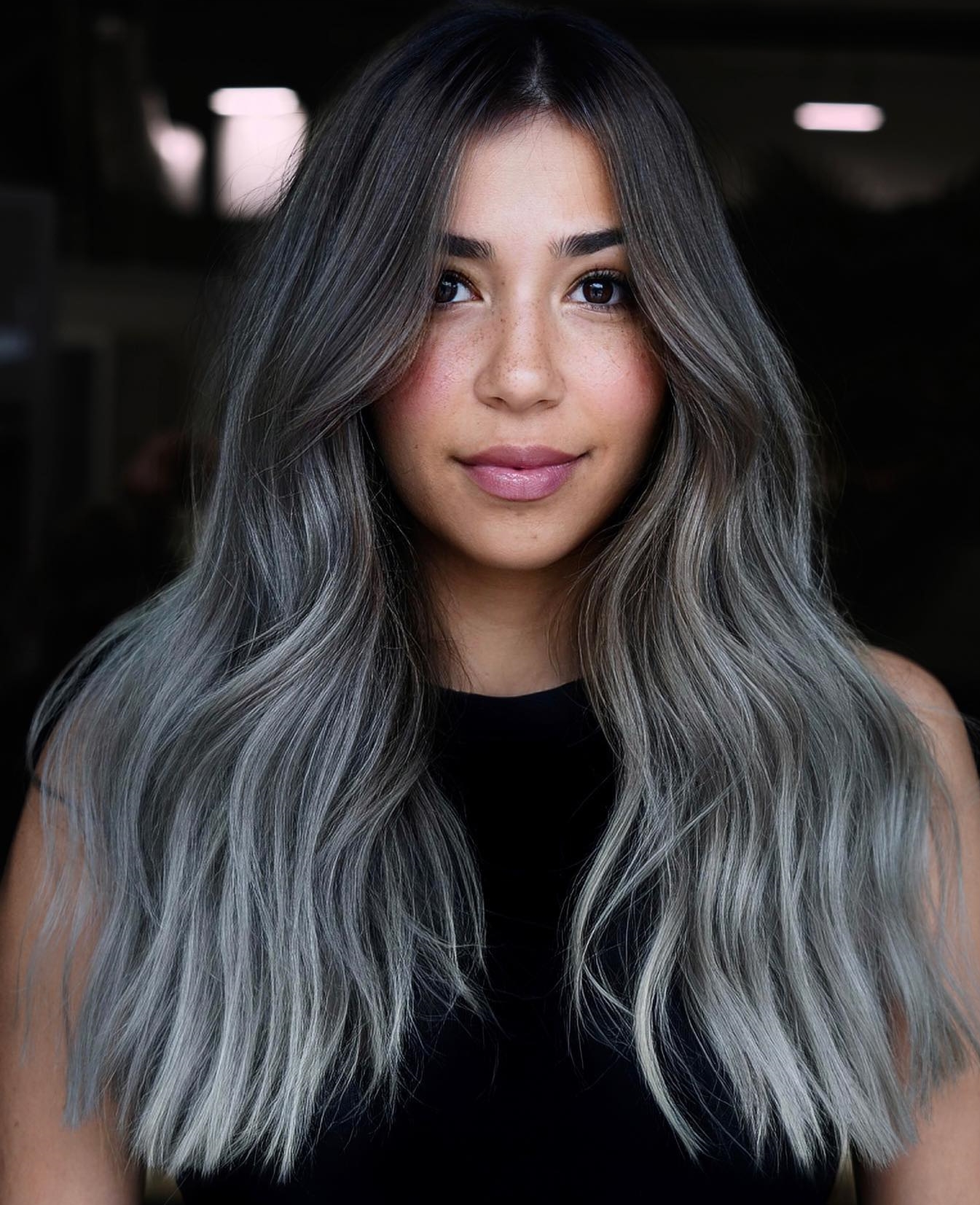
Seen from the front, a gray ombre lives or dies by the pieces around the face. Here the roots are dark and the gray starts at cheekbone level, with lighter ash pieces around the face and darker strands left in between for depth. Long waves fall from a center part, so the fade frames the face evenly on both sides. It softens the overall look without washing out the complexion.
- Best for: Long hair with waves; neutral to cool skin tones.
- Ask your stylist for: An ash-gray ombre from cheekbone level with brighter face-framing pieces and darker lowlights in between.
- How to style it: Use a 1.25-inch wand on the front pieces first, curling away from the face, then the back.
- Upkeep: Toner every 6 weeks; face-framing refresh every 10 weeks.
7. The shaggy silver with curtain bangs

Shags and gray ombre suit each other. This long layered cut has curtain bangs that start smoky at the root, and the layers grow paler toward the ends until they finish in icy silver. Each choppy layer ends at a different height, so the light color appears in flicks all over the head instead of a single band. It’s a fun, lived-in look that grows out easily.
- Best for: Thick, wavy hair; anyone who loves curtain bangs.
- Ask your stylist for: A long shag with curtain bangs and a smoky-to-icy-silver ombre that follows the layers.
- How to style it: Rough-dry, round-brush the bangs, and twist a few layers around a wand.
- Upkeep: Bang trims every 4 to 5 weeks; toner every 5 to 6 weeks.
8. The all-over pewter wave
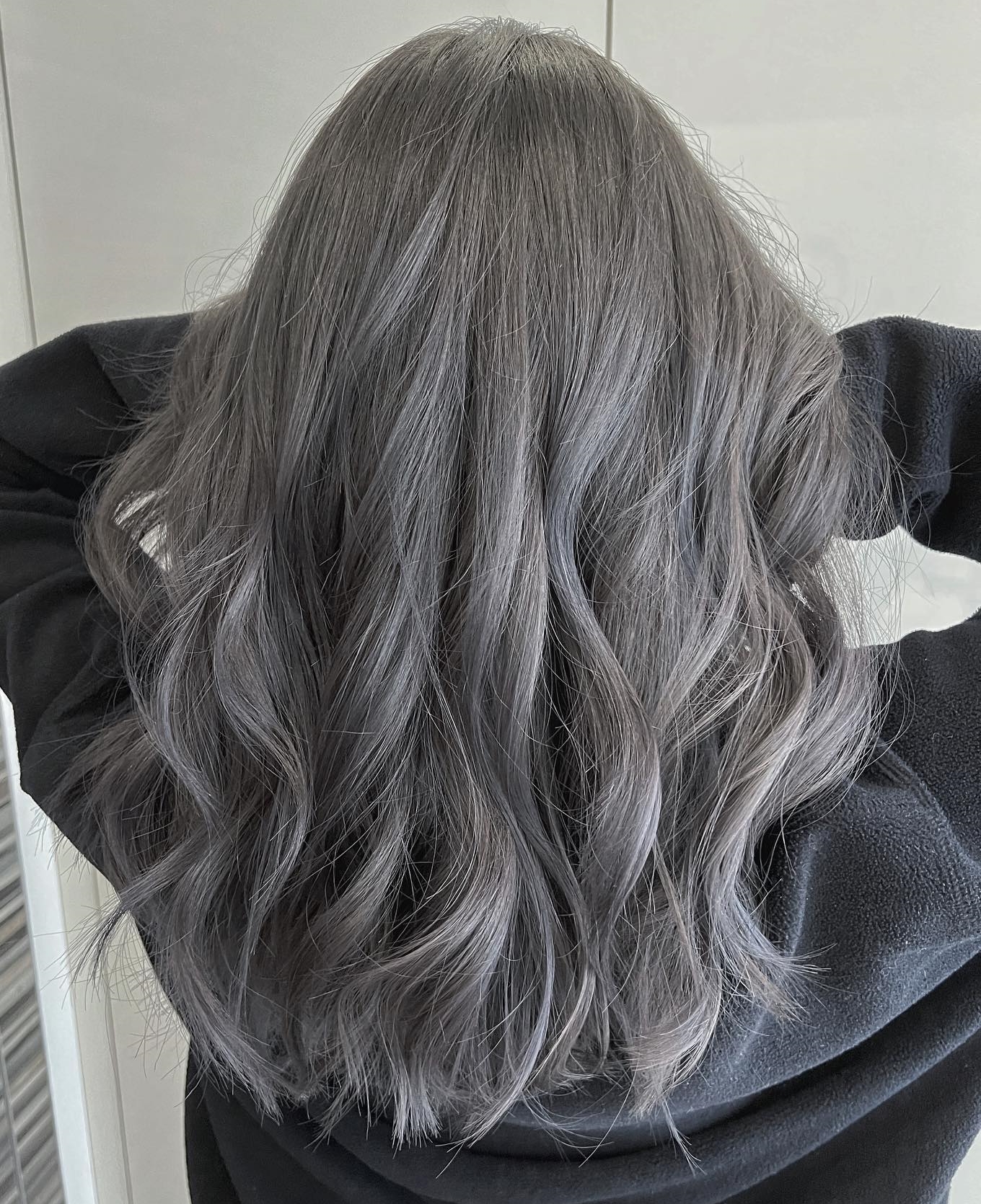
Sometimes the best fade is barely there. This long cut is a soft pewter gray almost from the root, deepening only slightly at the top, so the ombre is more of a gentle shading than a strong change. Loose waves keep it from looking flat. It sits halfway between an ombre and an all-over gray, which makes it a smart choice if you’re blending natural gray.
- Best for: Hair with some natural gray; anyone wanting a soft, even finish.
- Ask your stylist for: An all-over pewter gray toner with a slightly deeper root for a subtle shading effect.
- How to style it: Wave with a 1.25-inch wand and finish with a violet-tinted shine spray.
- Upkeep: Toner every 6 weeks; root touch-up every 8 weeks.
9. The soft ash balayage fade

Want gray that only shows in the right light? Try this. The hair is dark brown through most of the length, and soft ash gray pieces are painted into the lower half, getting denser near the ends. In loose waves, the gray reads as a cool glint rather than a solid color. It is the most low-key look in this group and grows out almost invisibly.
- Best for: Dark brunettes; anyone with limited time for salon visits.
- Ask your stylist for: Soft ash-gray balayage on the bottom half, densest at the ends, on a natural dark brown base.
- How to style it: Air-dry with a light cream or set loose waves with a 1.25-inch iron.
- Upkeep: Toner every 8 weeks; balayage every 4 to 5 months.
Short gray ombre cuts
On bobs and lobs the fade happens over a few inches, so placement needs to be precise. These short looks show how a quick transition can sharpen a cut. Our short ombre hair ideas have more fades for shorter lengths.
10. The streaked silver bob
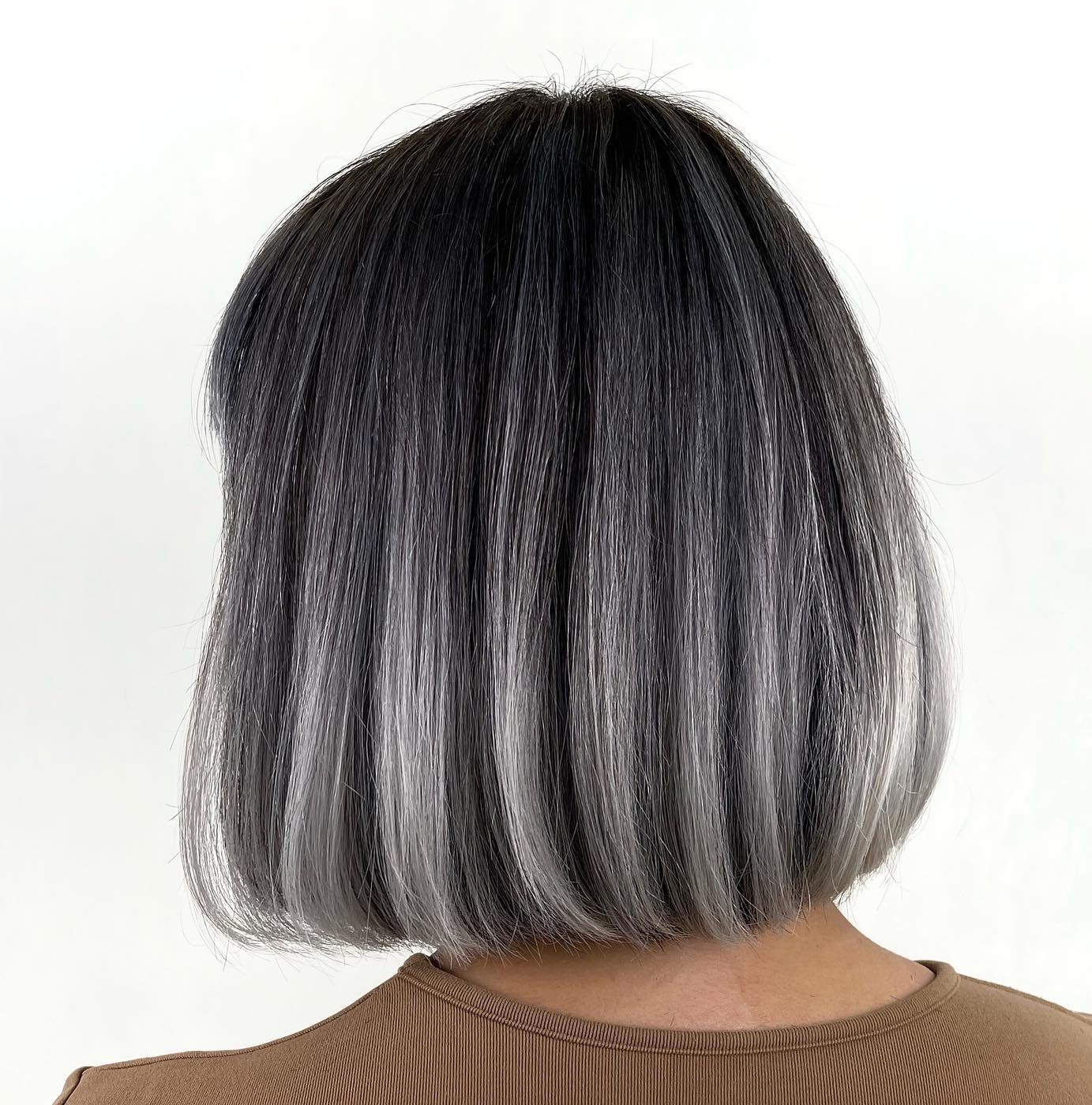
This blunt bob shows how vertical streaks can build an ombre. The root is dark charcoal, and fine silver streaks run down through the cut, growing denser and brighter toward the hem until the bottom inch is mostly silver. Because the hair is straight and the bob is one length, the stripes stay clean and graphic. Sharp cut, sharp color.
- Best for: Straight, medium-density hair; anyone who likes a polished bob.
- Ask your stylist for: A blunt chin-to-jaw bob with fine silver highlights that grow denser toward the ends on a charcoal base.
- How to style it: Blow-dry with a paddle brush and flat-iron the ends straight.
- Upkeep: Trim every 6 weeks; highlights every 10 weeks; toner every 5 weeks.