Purple highlights are the gentlest way into a bold color. You keep your own shade as the base and add violet only where you want it: a few ribbons through the lengths, a panel hidden underneath, or a bright piece by the face. Grow it out and it fades back into your natural color instead of leaving a hard line, which is why so many people start here before going all-over purple.
This edit is organized by the hair you start with, because the base changes everything. On brown, purple reads deep and jewel-toned; on blonde it turns soft and pastel; on gray and silver it looks cool and metallic; on copper it becomes a warm berry. For each of the 24 looks you’ll find who it suits, what to ask your colorist, how to style it and how often you’ll be back in the chair. If you already have black hair, our guide to purple highlights on black hair goes deeper on dark bases.
How to choose purple highlights for your base color
Start with two questions: how light is your hair now, and how much purple do you want to see? Brown hair usually needs lightening before violet will show brightly, while blonde and gray take pastel purple almost straight away. Placement then decides whether the color is a quiet surprise or the first thing people notice.
| Starting color | Purple highlights that work best | What to avoid |
|---|---|---|
| Dark brown | Plum or electric violet ribbons on pre-lightened sections, or a hidden underneath panel | Pastel lilac straight over unlightened brown, which barely shows |
| Light or medium brown | Mauve, orchid or ultraviolet balayage through the mid-lengths and ends | Very fine babylights, which blur into a muddy tone |
| Blonde | Lavender, lilac or plum ribbons, purple lowlights or a violet ombre on the ends | Deep purple over very porous blonde, which can stain unevenly |
| Gray or silver | Soft violet or metallic lilac panels that blend with the natural silver | Warm purples with a red base, which can look pink against gray |
| Red or copper | Magenta or berry-violet pieces on the ends where the copper is lightest | Cool blue-violet, which can turn murky over orange tones |
Placement: peekaboo and underneath panels are the easiest to hide for work and the easiest to grow out; face-framing pieces give the most impact for the least color. See our peekaboo highlights for more hidden-panel ideas. Fading: purple is a semi-permanent shade on most bases, so plan for refreshes every four to six weeks, or choose a softer mauve that fades gracefully.
Purple highlights on brown and brunette hair
Brunette is where purple looks most like a jewel. A dark base gives the violet something to glow against, and because the brown stays in place, regrowth is far softer than with an all-over color.
1. The electric violet side sweep
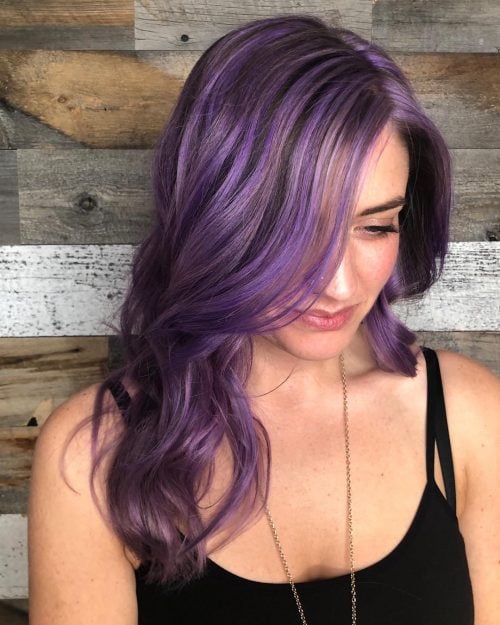
If you want purple to be the first thing people notice, this is the brightness to ask for. Bright violet ribbons are woven so densely through long, loose waves that the brown base only peeks out near the roots. A deep side part throws the color across the face, and the soft curls catch the light on every bend. Because the darker root stays visible, the regrowth line arrives late and soft. Bold, but still wearable on a Monday.
- Best for: Medium to thick brown hair, shoulder length or longer; anyone ready for strong color.
- Ask your stylist for: Dense violet highlights on pre-lightened sections through the mid-lengths and ends, keeping a natural brown root.
- How to style it: Wave with a 1.25-inch wand, leaving the ends out, then brush through gently with your fingers.
- Upkeep: Refresh the violet every 4 to 6 weeks; re-lighten new sections every 10 to 12 weeks.
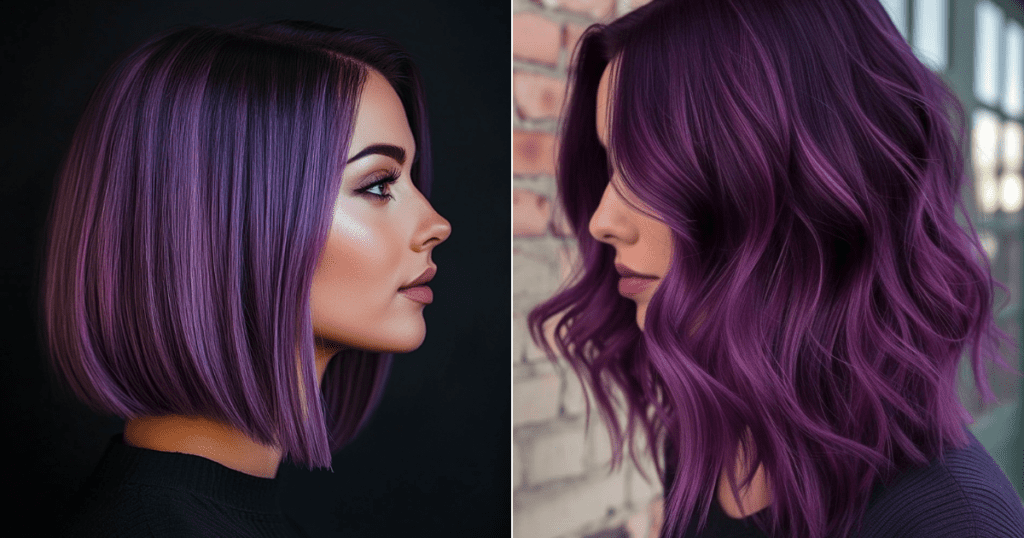
2. The plum-streaked V-cut
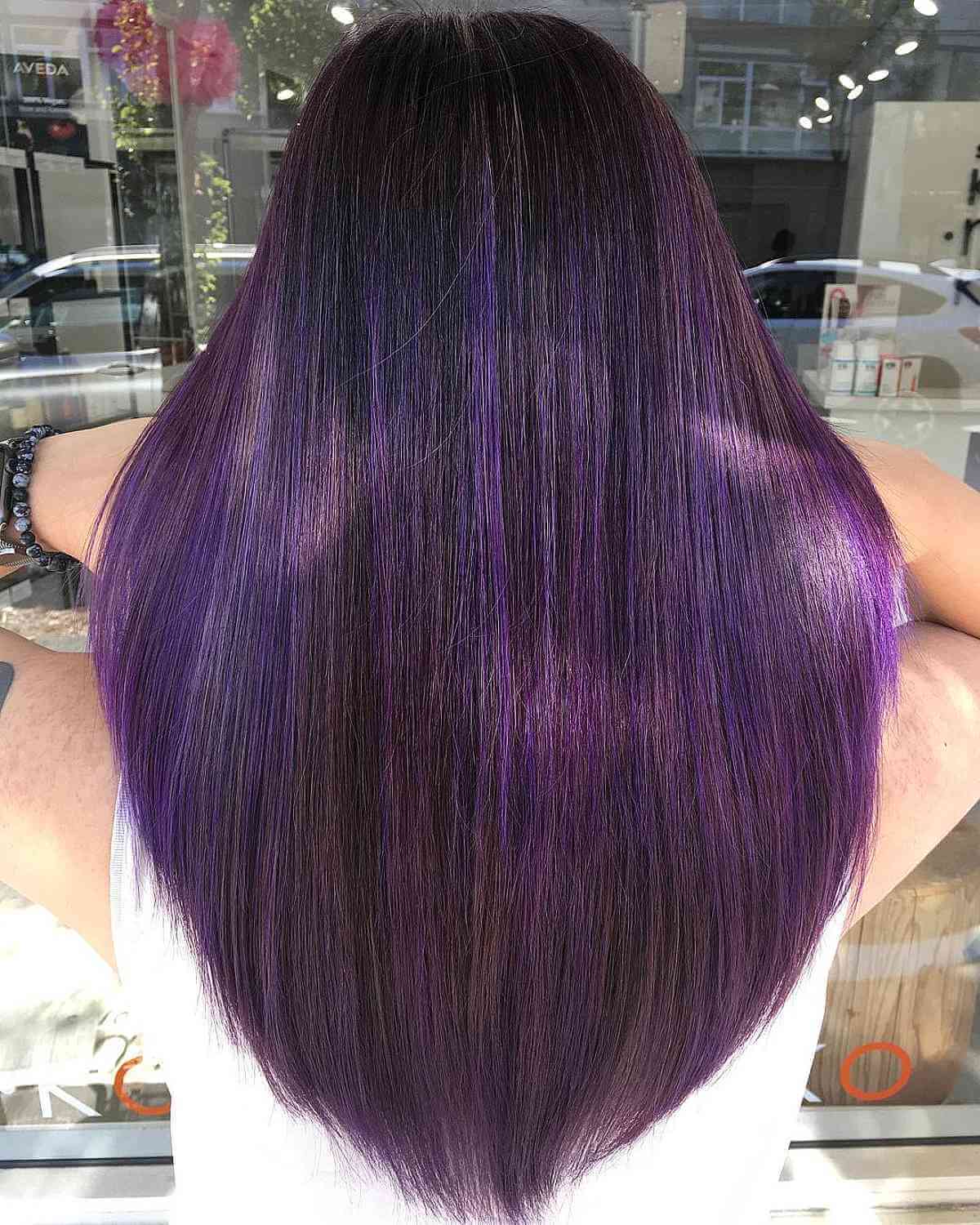
Turn around and the shape does half the work. Very long, glass-straight dark hair is cut into a sharp V at the back, and fine plum and violet streaks run from the crown right down to the point. The color is dark enough to look almost black in shade, then flashes purple when the light hits it. Smooth styling keeps the streaks crisp and the V clean. Quietly dramatic, from behind most of all.
- Best for: Long, straight, thick hair; anyone who prefers a subtle purple that shows in the light.
- Ask your stylist for: Fine plum and violet highlights through the lengths on a dark base, with a V-shaped perimeter.
- How to style it: Blow-dry with a paddle brush and finish with a flat iron and a drop of shine serum.
- Upkeep: Trim the V every 8 weeks; refresh plum gloss every 6 weeks.
3. The violet-paneled A-line bob
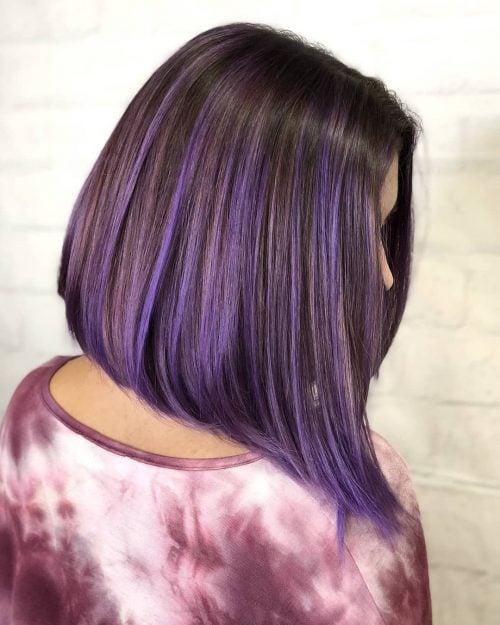
Short hair shows color placement like nothing else, and this angled bob proves it. The back sits higher, the front slopes down past the jaw, and wide violet panels sit on top of a dark brown base so they follow the line of the cut. You can see a bright purple tip at the longest front point. The finish is straight and swingy. Every movement flashes a different stripe.
- Best for: Straight, medium-density hair; anyone wanting bold color in a short cut.
- Ask your stylist for: An A-line bob with a longer front and chunky violet highlight panels placed on the top layer.
- How to style it: Blow-dry smooth with a round brush, curving the front pieces slightly under.
- Upkeep: Trim every 6 weeks to keep the angle sharp; refresh purple every 4 to 5 weeks.
4. The smoky lavender bob
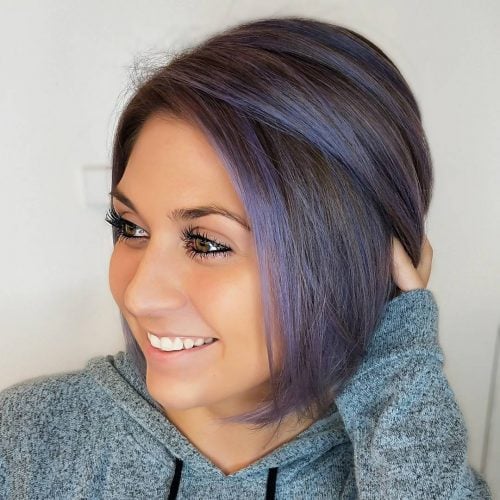
Not every purple has to shout. On this short bob, dusky lavender and blue-violet tones are melted through a brown base, so the color looks like a soft smoke rather than stripes. The hair is swept across the forehead in a side part, and the back is tucked behind the ear. The ends curve gently under at the jaw. It reads as purple in daylight and soft brunette indoors, which makes it an easy first step.
- Best for: Fine to medium straight hair; anyone easing into fashion color.
- Ask your stylist for: A jaw-length bob with soft lavender and blue-violet balayage melted through a brown base.
- How to style it: Blow-dry with a medium round brush and smooth the ends under.
- Upkeep: Trim every 6 to 8 weeks; refresh with a lavender color-depositing conditioner weekly.
5. The orchid ribbon shag
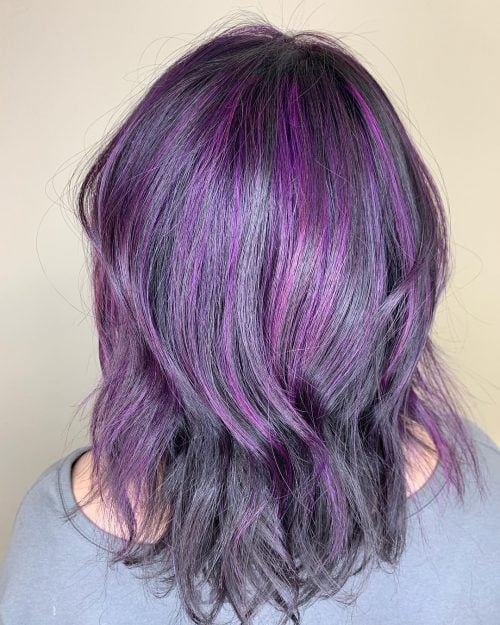
Dark roots, silvery ash lengths and bright orchid ribbons give this shoulder-length cut its moody, layered look. From behind you can see magenta-leaning streaks around the crown fading into softer violet toward the ends. Choppy layers flip out at the bottom, so the color moves in different directions as the hair swings. The ashy base is what keeps the purple cool rather than pink. Moody in the best way.
- Best for: Medium to thick hair, wavy or straight; anyone who likes an edgier color mix.
- Ask your stylist for: A shoulder-length layered cut with orchid and magenta highlights over an ash base and a dark root.
- How to style it: Rough-dry, then flip the ends outward with a flat iron and finish with texture spray.
- Upkeep: Trim every 7 to 8 weeks; refresh orchid tones every 4 to 6 weeks.
6. The mushroom-mauve lob
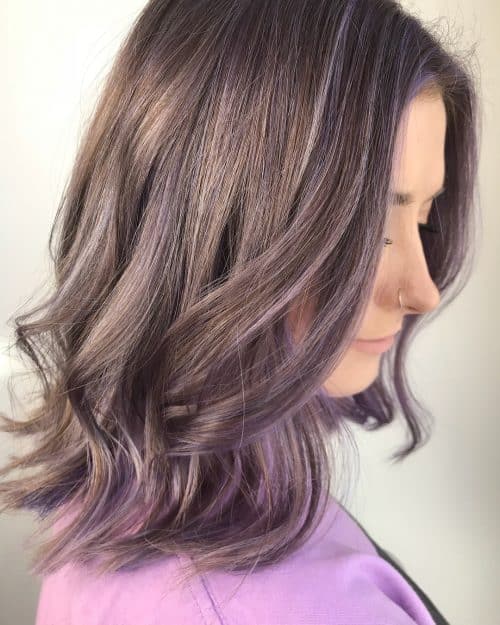
For anyone who wants purple at a whisper, start with this soft lilac-on-brown blend. A cool mushroom brown lob grazes the shoulders, with fine lilac highlights woven through and a slightly brighter violet glow on the very ends. Seen in profile, the layers flip gently outward. The purple is so blended that it looks like a tint in the light rather than a dye job. Office-friendly, and still clearly purple up close.
- Best for: Light to medium brown hair; anyone wanting a subtle, grown-up purple.
- Ask your stylist for: A shoulder-length lob with soft layers and fine lilac highlights through a cool mushroom brown base.
- How to style it: Blow-dry with a large round brush and flick the ends out slightly.
- Upkeep: Trim every 8 weeks; gloss every 6 to 8 weeks to keep the brown cool.
7. The ultraviolet dusk wave
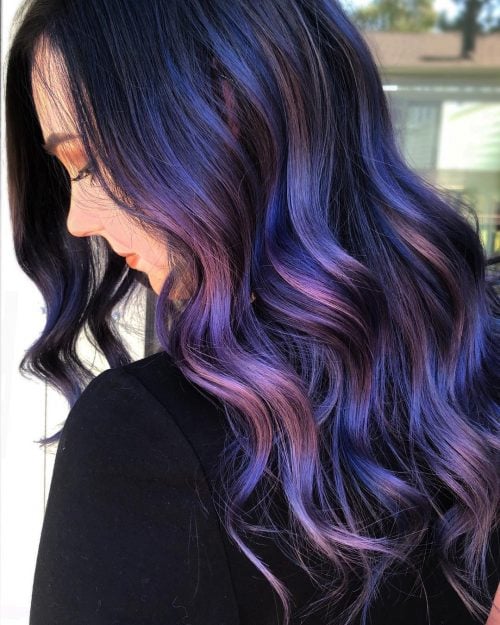
Picture the sky just after sunset and you have this color. Deep, almost black roots melt into blue-violet and periwinkle through long, loose waves, with pinker violet tips catching the light at the ends. The side view shows how the brightest color sits on the outer curve of each wave. Since the darker shade stays at the top, the purple seems to glow from underneath. Cool-toned, saturated and full of movement.
- Best for: Long, medium to thick hair; cool or neutral skin tones.
- Ask your stylist for: Blue-violet balayage on pre-lightened mid-lengths and ends, keeping a deep shadow root.
- How to style it: Curl large sections with a 1.25-inch wand and brush out for soft waves.
- Upkeep: Refresh the violet every 4 weeks; root and lightening every 12 weeks.
8. The peacock blue-violet blend
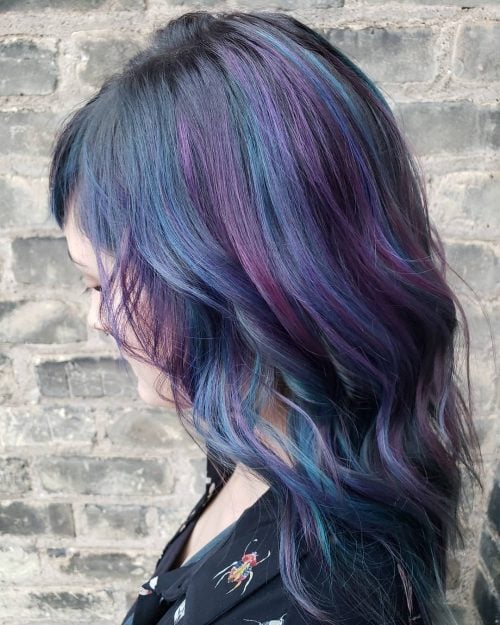
Can’t choose between blue and purple? You don’t have to. Teal, cobalt and violet streaks are woven together on a dark base, with side-swept bangs falling over the forehead and soft waves through the lengths. In profile, the shades blend like the feathers of a peacock rather than sitting in neat stripes. The dark root grounds all that color so it looks rich instead of cartoonish.
- Best for: Dark, medium to thick hair; anyone who loves multi-tonal fashion color.
- Ask your stylist for: Mixed teal, blue and violet highlights on pre-lightened sections, blended so the shades overlap.
- How to style it: Wave loosely with a 1-inch wand and leave the bangs smooth and swept to the side.
- Upkeep: Refresh color every 4 weeks; wash in cool water with sulfate-free shampoo.
Purple highlights on blonde hair
Blonde takes purple almost instantly, which means you can go pastel without bleaching further. The trick is controlling where it sits, from hidden lowlights to a full violet dip on the ends. For more pale shades, see our lavender hair colors.
9. The lavender ribbon curls
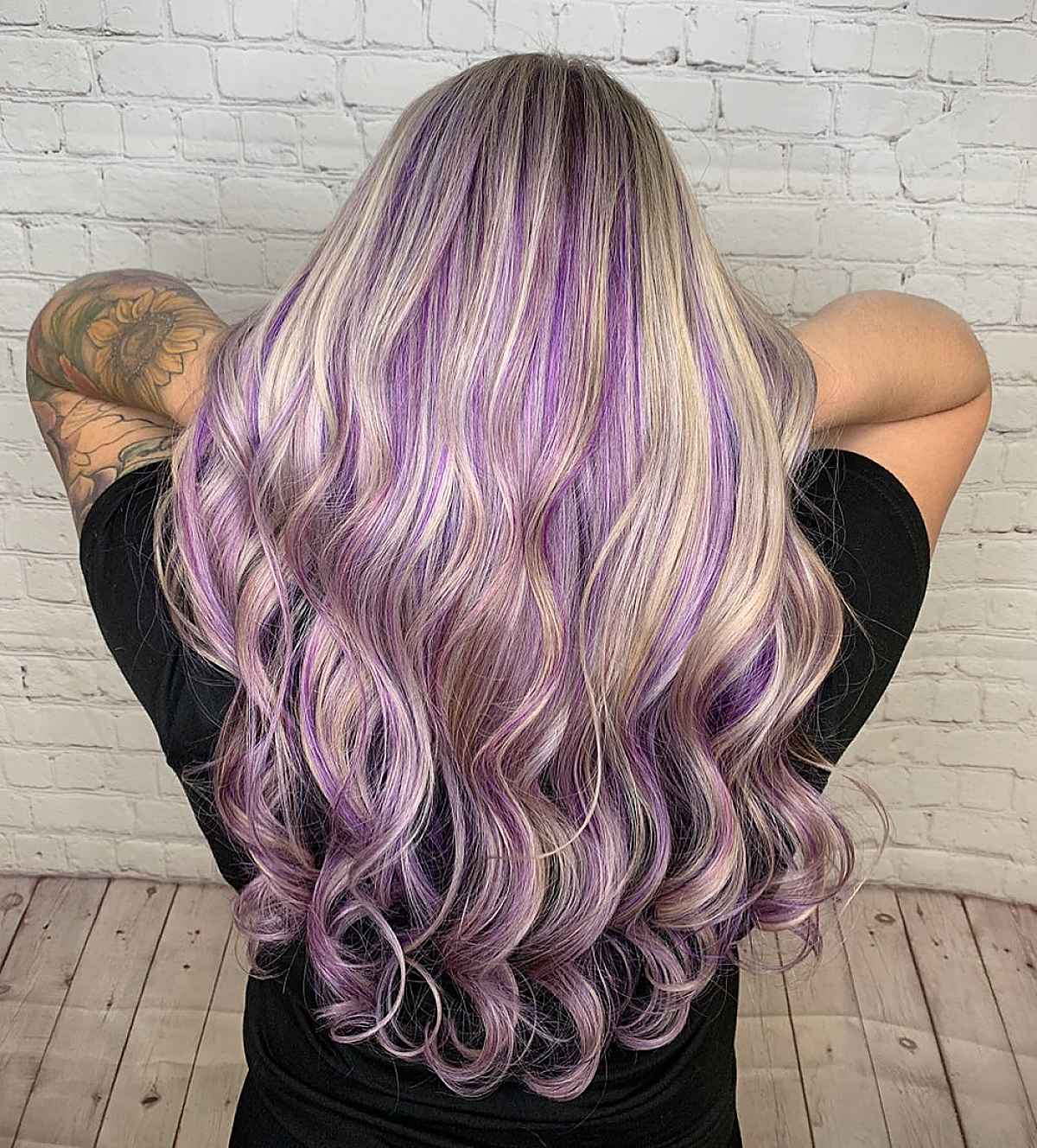
This is what happens when pastel meets volume. Long platinum curls are threaded with lavender ribbons that run from the roots to the ends, and the bouncy spiral curls show off both shades at once. From behind, the purple sits in clear stripes rather than a wash, so it still reads as highlights. The cool platinum base keeps the lavender clean and bright. Pretty, playful and soft.
- Best for: Light blonde hair, long; anyone who already lightens and wants a pastel twist.
- Ask your stylist for: Lavender ribbon highlights over platinum blonde, placed from root to end.
- How to style it: Set curls with a 1-inch iron, then shake them out with your fingers for volume.
- Upkeep: Refresh lavender every 3 to 4 weeks; tone the blonde every 6 to 8 weeks.
10. The hidden lilac lowlight
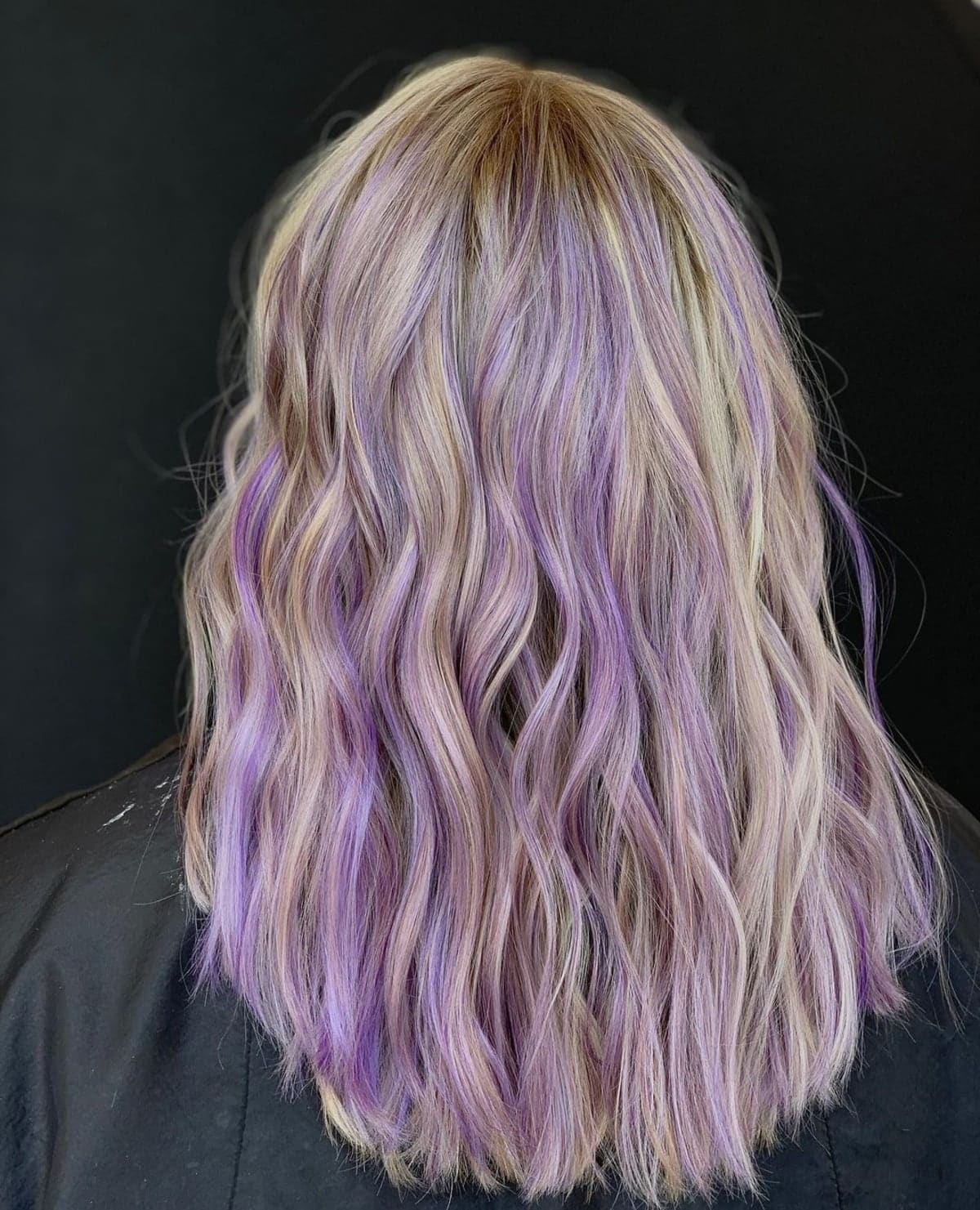
Lowlights are usually about adding depth, but here they add a secret. Soft lilac strands are woven underneath ash blonde waves, so the purple peeks through only where the hair parts or moves. The mid-length hair is styled in loose, beachy waves from root to tip. A darker root keeps it grounded. It’s a smart choice if your workplace is conservative but your weekends aren’t.
- Best for: Ash or light blonde hair, medium length; anyone who wants purple they can play down.
- Ask your stylist for: Lilac lowlights placed through the underlayers of ash blonde hair, with a soft root.
- How to style it: Use a flat iron in S-bends or a wave iron, then break up the waves with your fingers.
- Upkeep: Refresh lilac every 4 to 6 weeks; tone the blonde every 8 weeks.