Long straight hair has nowhere to hide. Every split end, every uneven line and every patchy highlight shows, because there is no wave or curl to blur it. The upside is just as plain: when the cut is right, straight lengths catch light like nothing else, and a single well-placed layer or fringe changes the whole picture. If you want the wider view of cuts for every texture, start with our long hairstyles and haircuts guide.
Here are 21 long straight looks we chose for how differently they handle the same raw material: glass-straight one-lengths, soft V shapes seen from the back, feathered layers with real swing, blunt and wispy bangs, and color that moves down the lengths instead of sitting in stripes. For each you’ll find who it suits, what to say in the chair, how to style it at home and how often you’ll need a trim.
How to choose a long straight haircut
Start with density, not length. Straight hair shows its thickness at the ends, so the same waist-length cut can look lush on thick hair and stringy on fine hair. Decide how much weight you want to keep at the hem, then pick the layering to match. Fine hair in particular does best with a strong perimeter, as our guide to long haircuts for fine hair shows.
| Hair type | Long straight cuts that work best | What to avoid |
|---|---|---|
| Fine or thin | Blunt or softly V-shaped hem, few or no layers, length at or above the bra strap | Heavy layering and razored ends, which leave the bottom see-through |
| Medium density | Long layers starting below the chin, a soft V at the back, curtain or wispy bangs | Very short top layers that separate from the lengths |
| Thick | Internal layers or feathered face-framing pieces to remove bulk, blunt or V-shaped hem | A one-length cut with no weight removal, which sits flat on top and wide at the ends |
| Naturally straight and silky | Glass-straight one-length, center part, blunt bangs | Choppy texturizing, which can look unfinished on very sleek hair |
| Straightened (relaxed or smoothed) | Long layers that fall forward, regular dusting of ends | Daily high heat on already processed lengths |
Shape at the back: a straight-across hem looks heavier and more graphic; a U or V shape tapers the ends so the hair looks longer and moves more. Face frame: if you only want one change, ask for front pieces or bangs. They update the look without costing you length.
Glass-straight and one-length cuts
These cuts keep the length almost in one piece, so the shine and the line do the work. Most are cut to a blunt or softly tapered hem and worn with a center part.
1. The platinum glass sheet
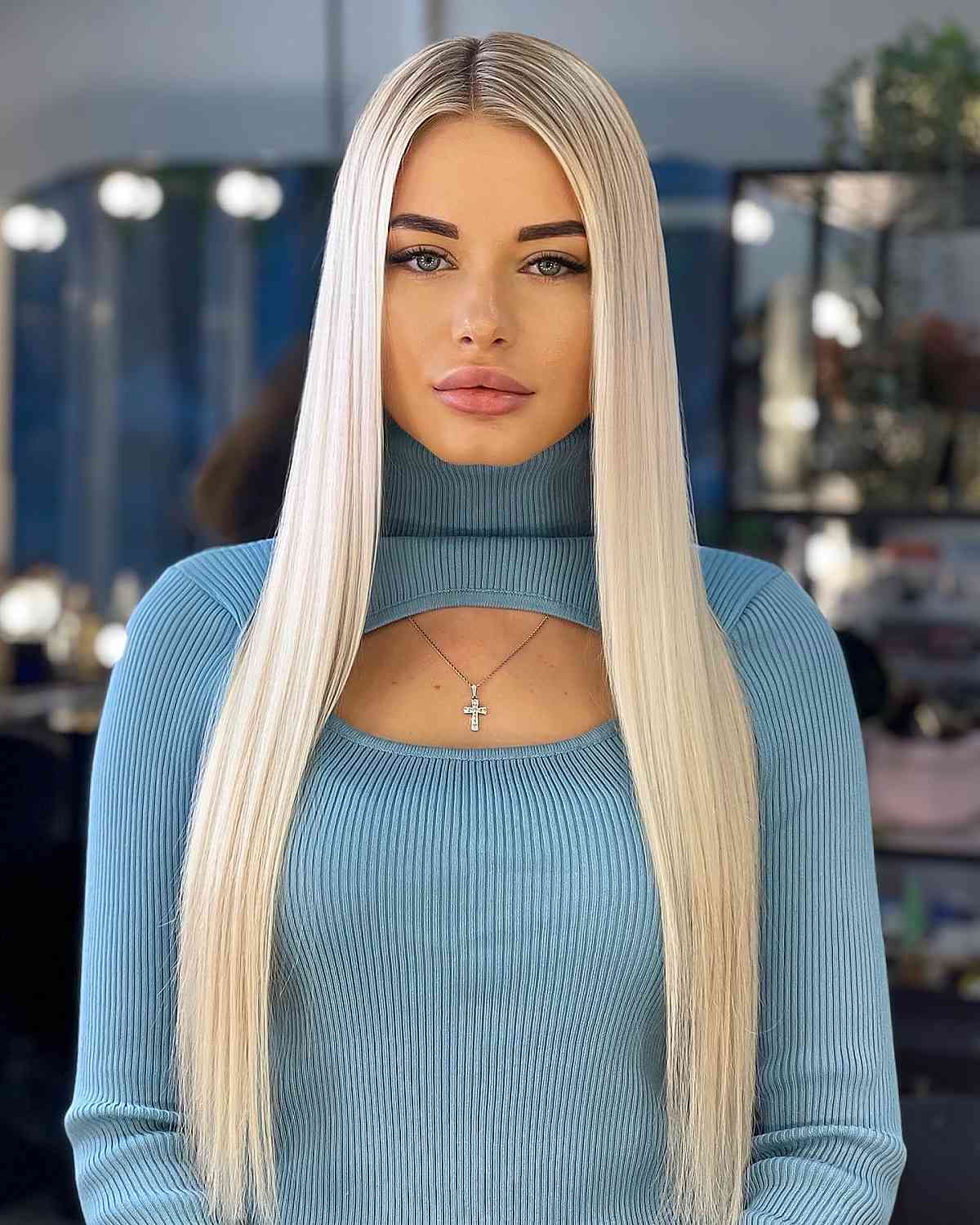
Picture hair so smooth it looks poured. Platinum lengths fall well past the chest with a crisp center part and barely a flyaway in sight, and the hem stops in one clean line rather than a taper. That blunt edge is what keeps very pale, very long hair from looking thin at the bottom. A pale blue knit underneath only makes the color look icier. It is a high-maintenance color with a low-effort cut.
- Best for: Healthy, medium to thick straight hair that can handle bleach; anyone who loves a sleek, graphic finish.
- Ask your stylist for: A one-length cut with a blunt hem, no layers, and a precise center part; platinum lift with a cool toner.
- How to style it: Blow-dry with a paddle brush in downward sections, then a fast pass with a flat iron and a drop of shine serum on the ends.
- Upkeep: Dust the ends every 8 weeks; root touch-up and toner every 5 to 6 weeks; weekly bond-repair mask.
2. The beige blonde long front
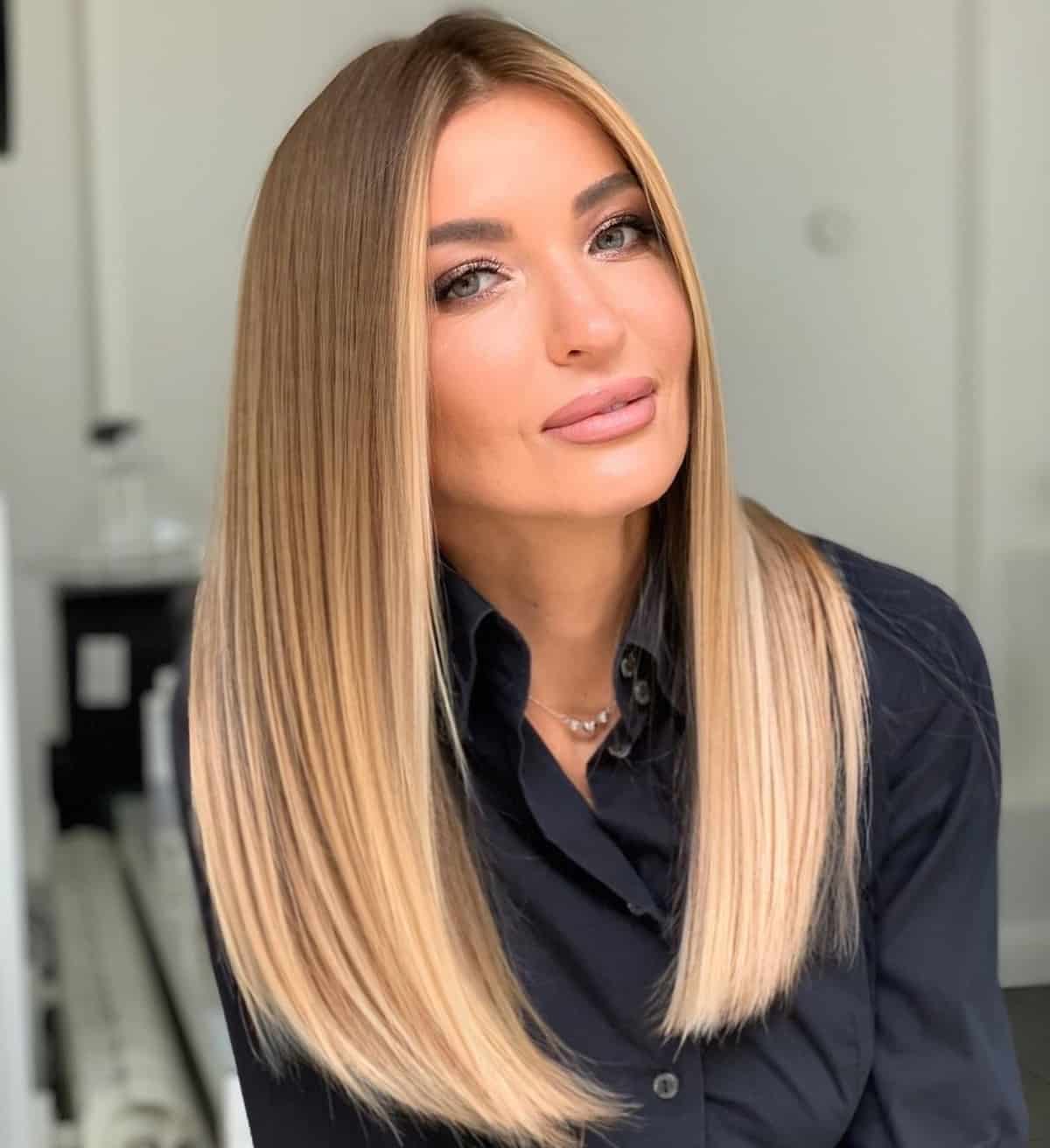
Want a cut that looks sharp from across the room? This one is carved with intent. Soft brown roots slide into beige blonde through the mid-lengths, and the pieces at the front fall slightly longer than the back so the outline angles toward the collarbone. The ends are blunt and heavy, which is why they sit flat against the dark shirt instead of flicking out. It reads polished and grown-up without a single layer.
- Best for: Straight hair of medium to thick density; anyone growing out a lob who wants a defined shape.
- Ask your stylist for: A long one-length cut with the front left slightly longer, blunt ends, and a root melt from brown to beige blonde.
- How to style it: Smooth with a round brush at the roots for a little lift, then flat-iron the lengths straight down.
- Upkeep: Trim every 8 to 10 weeks to keep the line crisp; gloss every 8 weeks.
3. The icy blonde waterfall
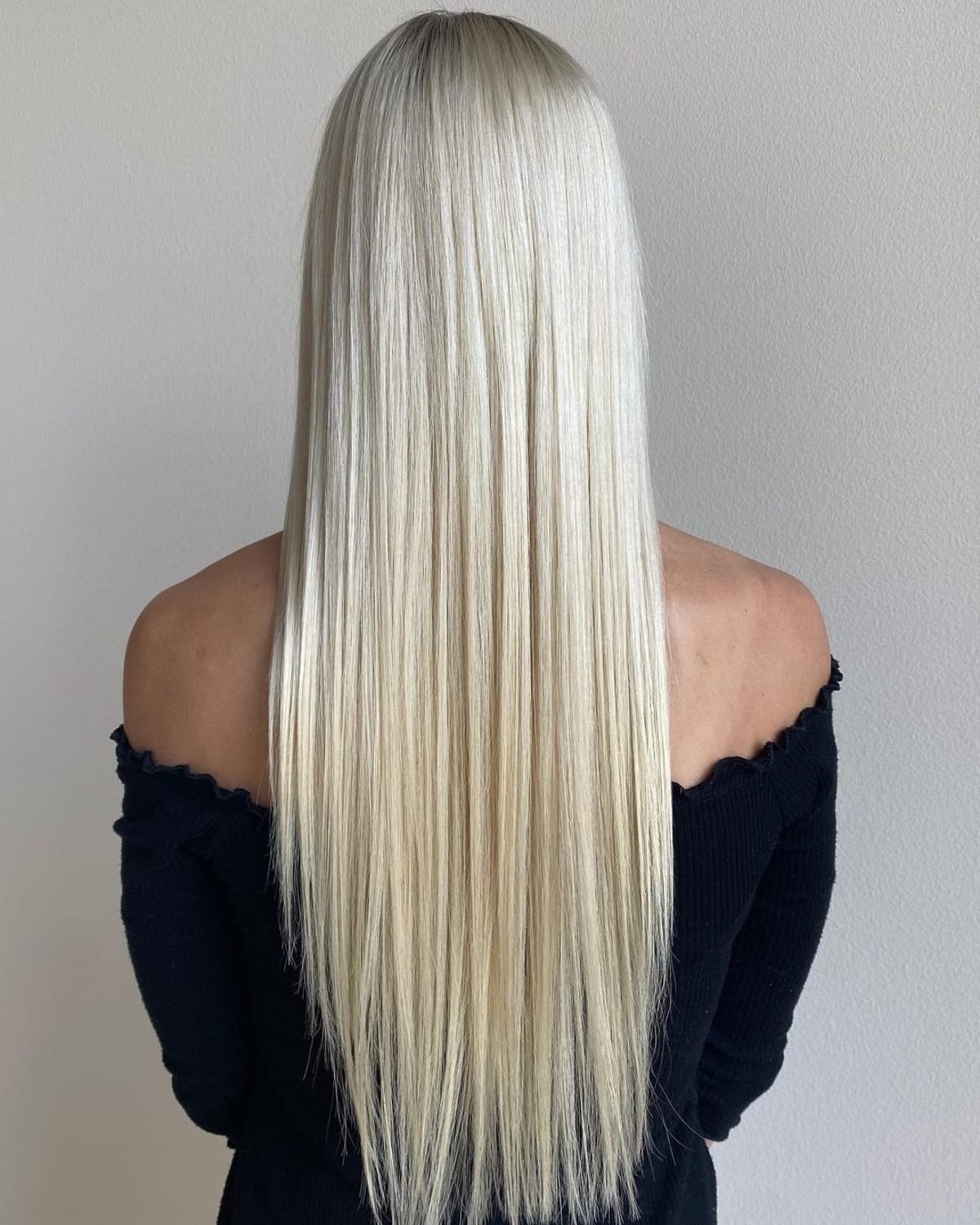
Turn around: from the back, this is pure line and light. Ice blonde hair hangs dead straight past the shoulder blades, and the hem narrows into a very soft V, so the center falls a touch lower than the sides. The taper keeps the length from looking boxy across the back. Even the color is precise, with no visible root or banding anywhere down the lengths.
- Best for: Fine to medium straight hair; anyone who wants maximum length to show.
- Ask your stylist for: A long cut with a soft V-shaped hem, minimal layering and an even, cool blonde all over.
- How to style it: Blow-dry straight, then finish with a lightweight oil mist to keep pale ends from looking dry.
- Upkeep: Trim every 8 weeks; toner every 6 weeks; use a purple shampoo once a week.
4. The chocolate-to-bronde sweep
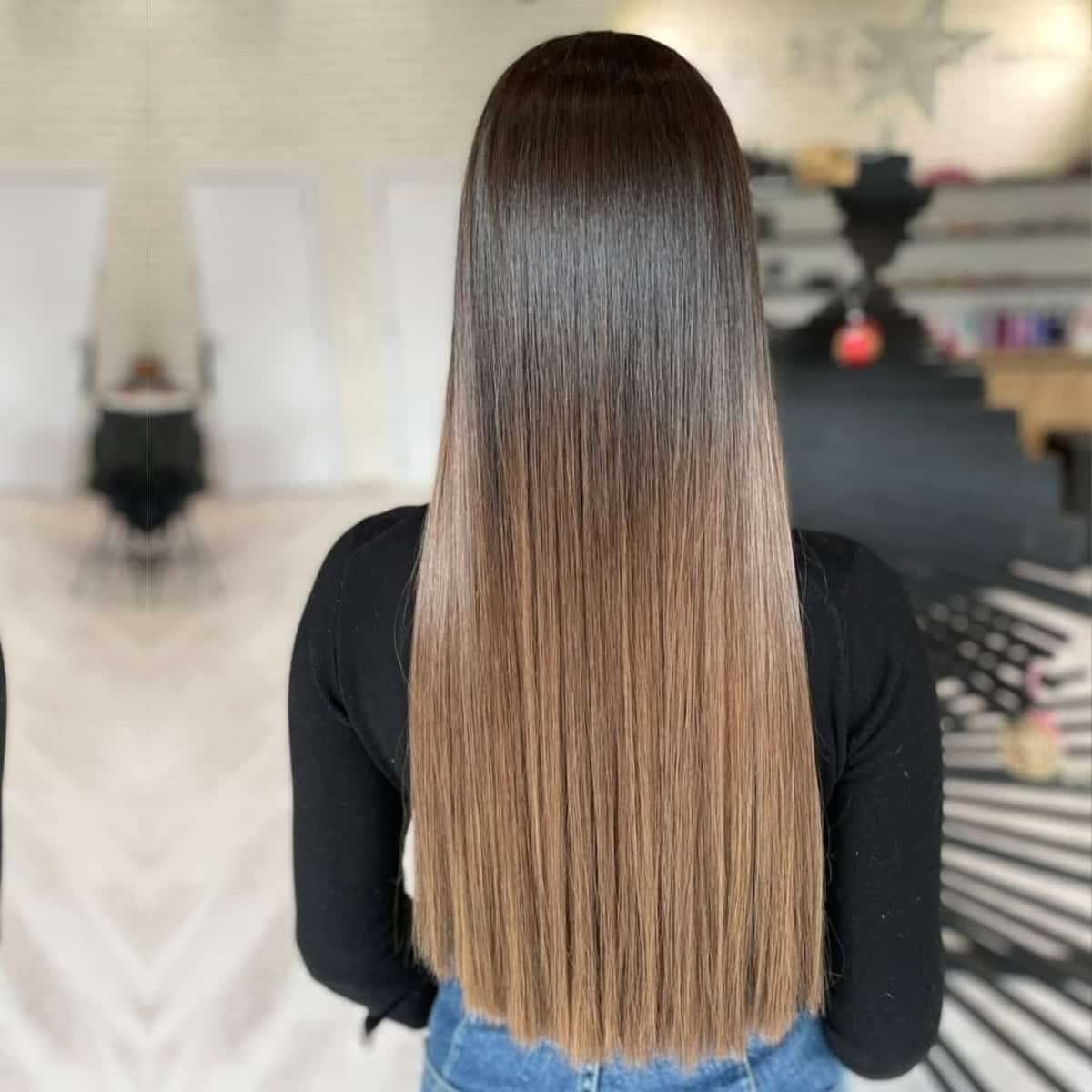
Prefer your color to grow out without a hard line? Here deep chocolate brown at the crown fades so slowly into light bronde that you can’t point to where it changes. The cut is straight across with just a whisper of curve at the corners, so the hair hangs like a curtain down the back. Because the ends are the lightest part, the blunt hem looks even sharper. Smart, quiet and very low on regrowth stress.
- Best for: Brunettes who want to go lighter gradually; straight hair of any density.
- Ask your stylist for: A blunt long cut with slightly rounded corners and a soft ombre from natural brown into bronde ends.
- How to style it: Blow-dry with a large paddle brush and finish with a smoothing serum through the lightest section.
- Upkeep: Trim every 10 weeks; refresh the ombre every 3 to 4 months.
5. The pearl blonde V
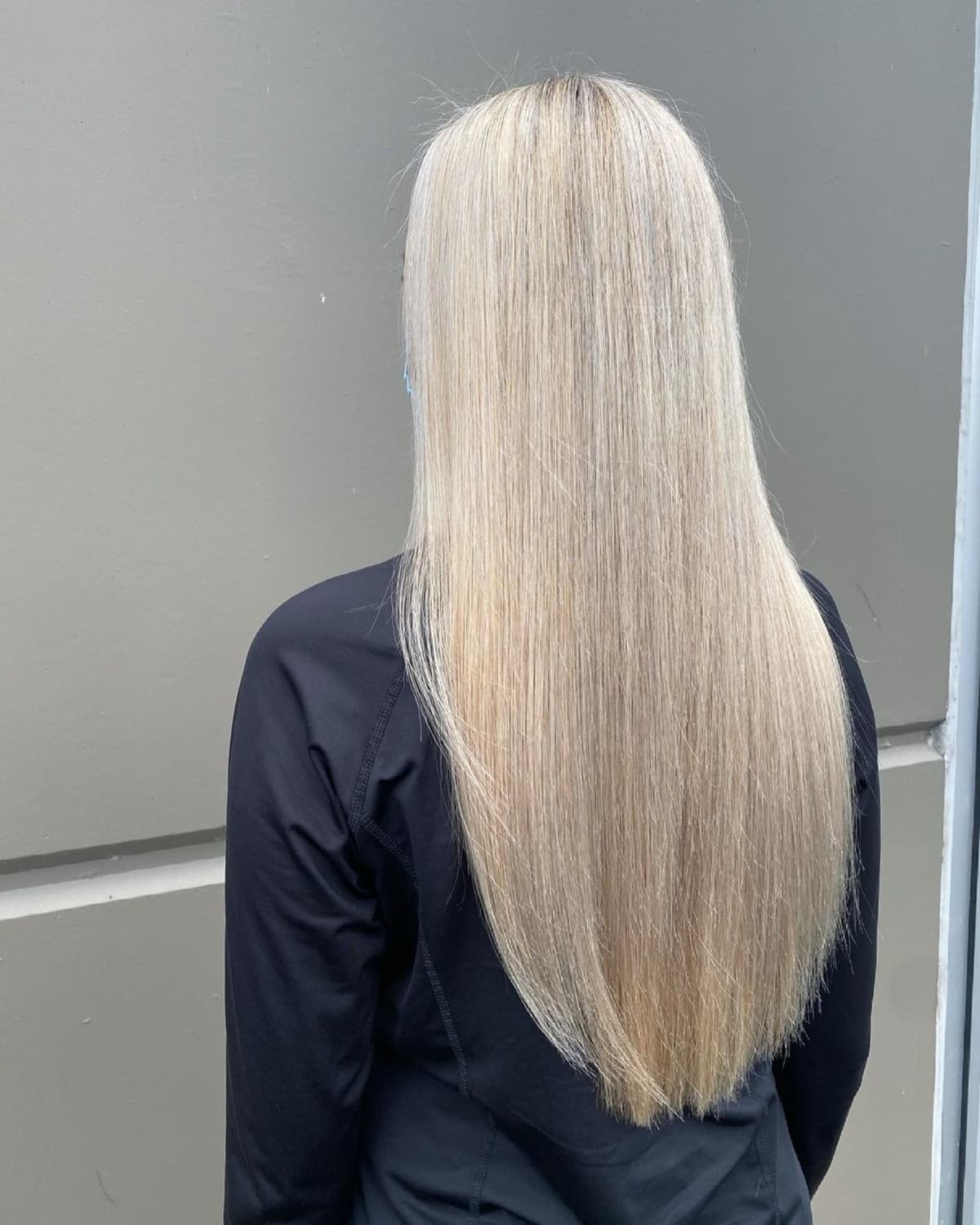
If you like your length with a bit of drama, look at that hem. Pearl blonde hair narrows into a defined V that points down the middle of the back, giving straight hair a shape you notice even when it’s not moving. The sides are shorter than the center, so the hair wraps around the shoulders rather than sitting on them. The tone is soft and creamy rather than stark white.
- Best for: Medium-density straight hair; anyone who wants length without bulk at the corners.
- Ask your stylist for: A long cut with a pronounced V at the back and long layers through the sides, with a creamy, beige-leaning blonde.
- How to style it: Air-dry with a smoothing cream, then press the ends with a flat iron to sharpen the point.
- Upkeep: Reshape the V every 8 weeks; tone every 6 to 8 weeks.
6. The rooted ash center part
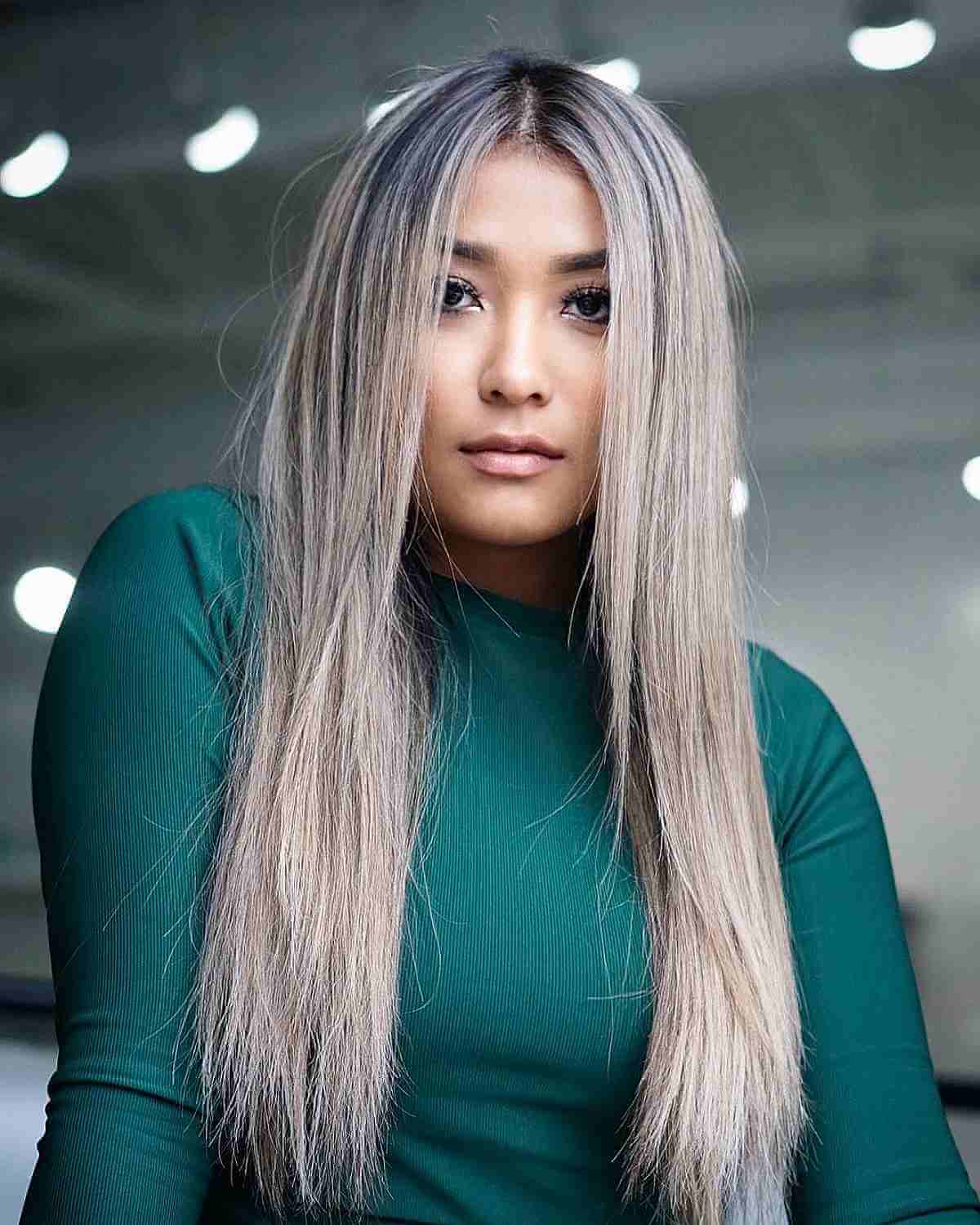
Cool tones, zero fuss. A dark root sits right at the center part and melts into smoky ash blonde, so the color looks intentional while it grows. The hair is cut long and nearly one-length, with the front pieces falling straight down past the chest and framing the face like two panels. Ash on straight hair shows every bit of tone, so the even, slightly silvery finish here is the result of careful toning.
- Best for: Dark-haired clients going lighter; straight hair from fine to medium.
- Ask your stylist for: A long, nearly one-length cut with a center part, a shadow root and ash blonde lengths toned cool.
- How to style it: Rough-dry, then flat-iron in sections, keeping the part sharp with a fine-tooth comb.
- Upkeep: Trim every 10 weeks; ash toner every 5 to 6 weeks, since ash fades warm.
Long layers and feathered shapes
Layers give straight hair movement and keep long lengths from hanging flat. For layering that starts higher up the head, browse our long hair with short layers ideas.
7. The honey feathered blowout
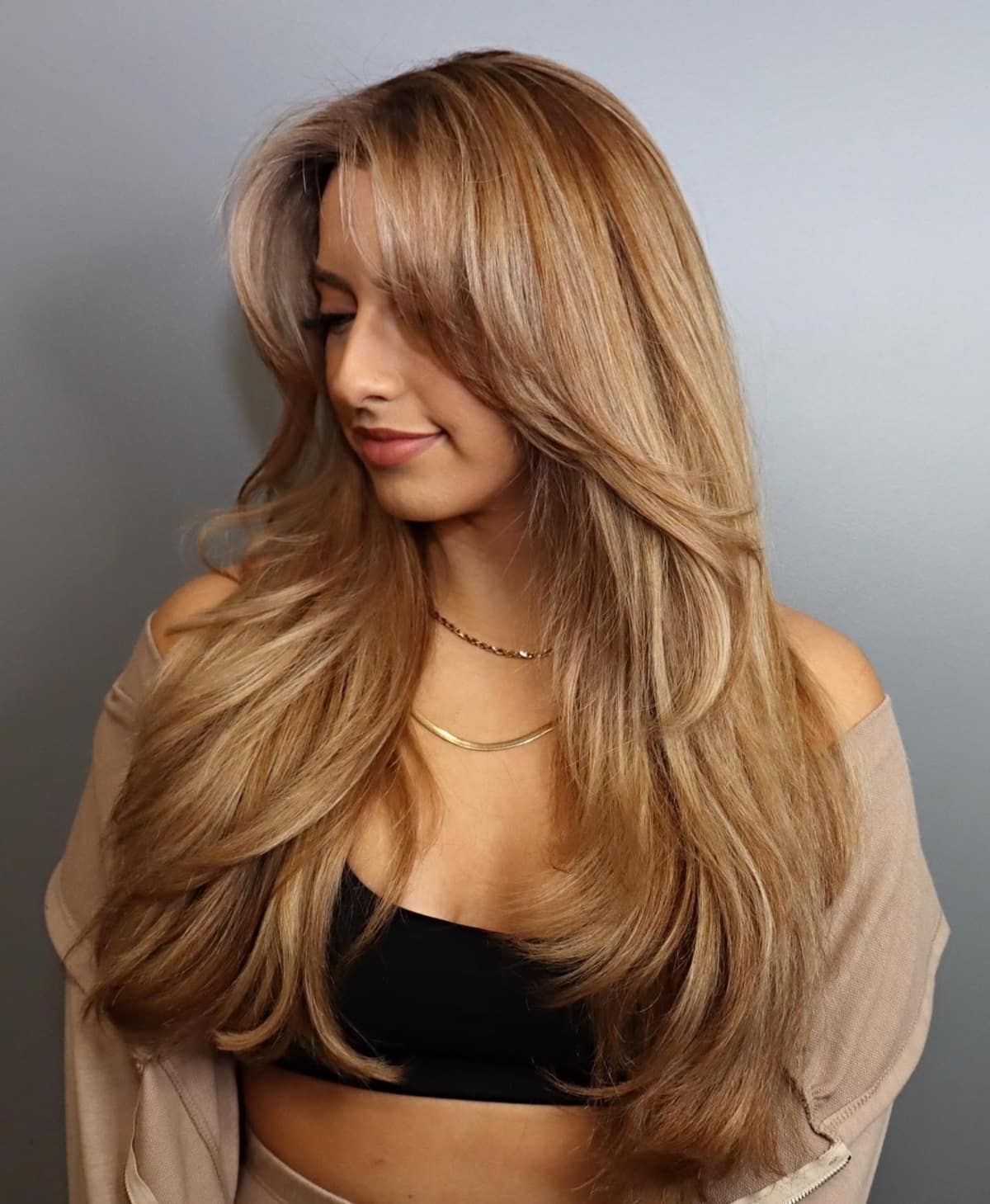
Some cuts are made to be blown out, and this is one. Honey and caramel lengths are cut with long feathered layers that start around the cheekbone and sweep back from the face in soft curves. Volume sits at the roots and through the front, while the ends turn under and out in alternating pieces. It’s a straight cut styled with a big round brush, and it shows what layering can do for flat lengths.
- Best for: Medium to thick straight hair that holds a blow-dry; fans of a bouncy, polished finish.
- Ask your stylist for: Long feathered layers starting at the cheekbone, face-framing pieces that sweep back, and a warm honey blonde.
- How to style it: Blow-dry each section over a large round brush, rolling the front pieces away from the face, then set with large Velcro rollers for ten minutes.
- Upkeep: Trim every 8 weeks so the layers keep their shape; gloss every 8 to 10 weeks.
8. The soft V balayage, seen from behind
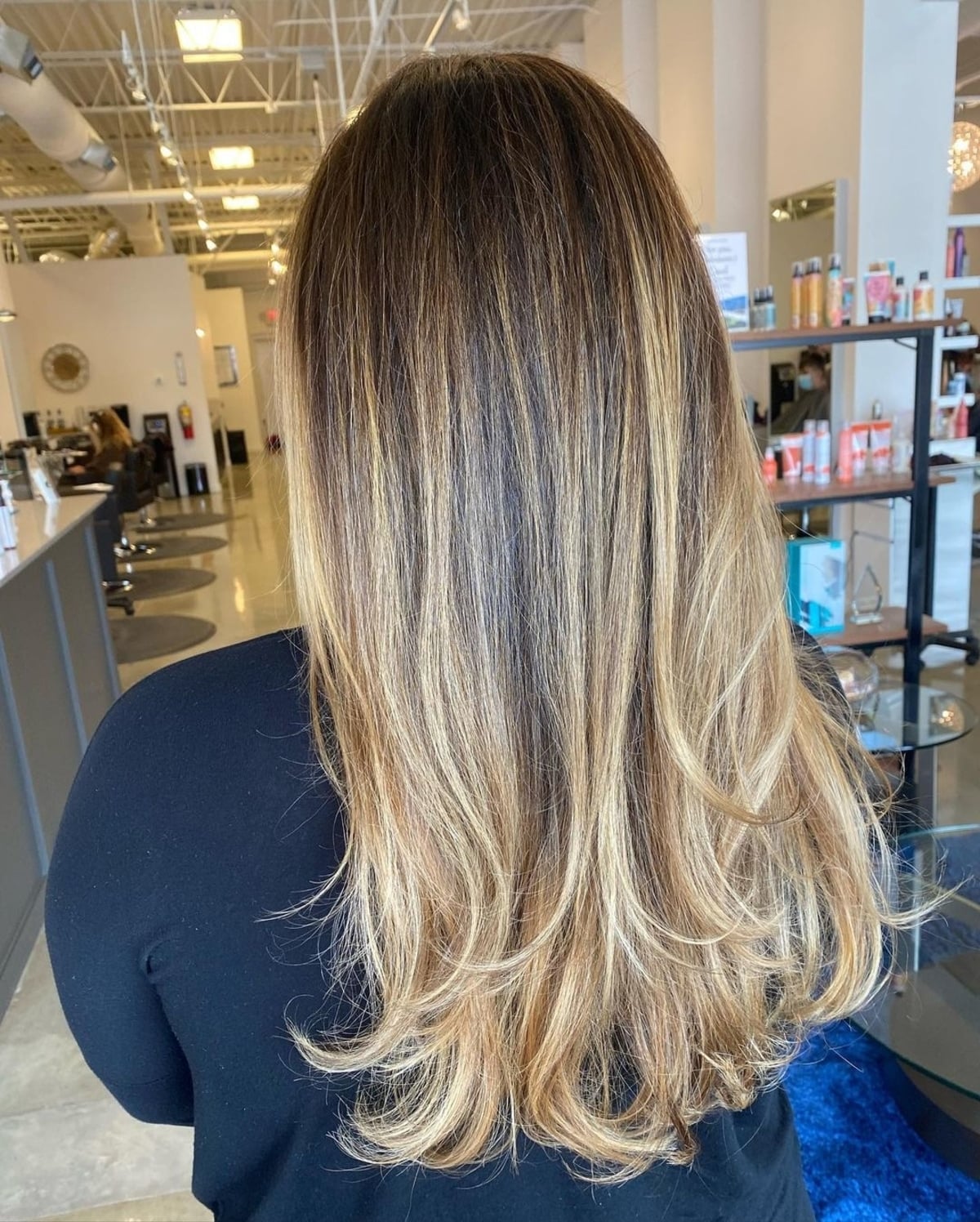
Ever wonder what long layers look like from the back? Brown roots give way to blonde balayage through the lower half, and the layers taper into a soft V so the ends separate and flip slightly outward. The lighter pieces sit exactly where the layers end, which makes the movement easier to see. It is a quiet way to make straight hair look fuller at the bottom.
- Best for: Medium-density straight hair; anyone who wants movement without a choppy look.
- Ask your stylist for: Long layers tapering into a soft V at the back, with hand-painted balayage concentrated on the ends.
- How to style it: Blow-dry straight, then bend the last inch outward with a large round brush.
- Upkeep: Trim every 8 to 10 weeks; balayage refresh every 3 to 4 months.
9. The copper layers with a flick
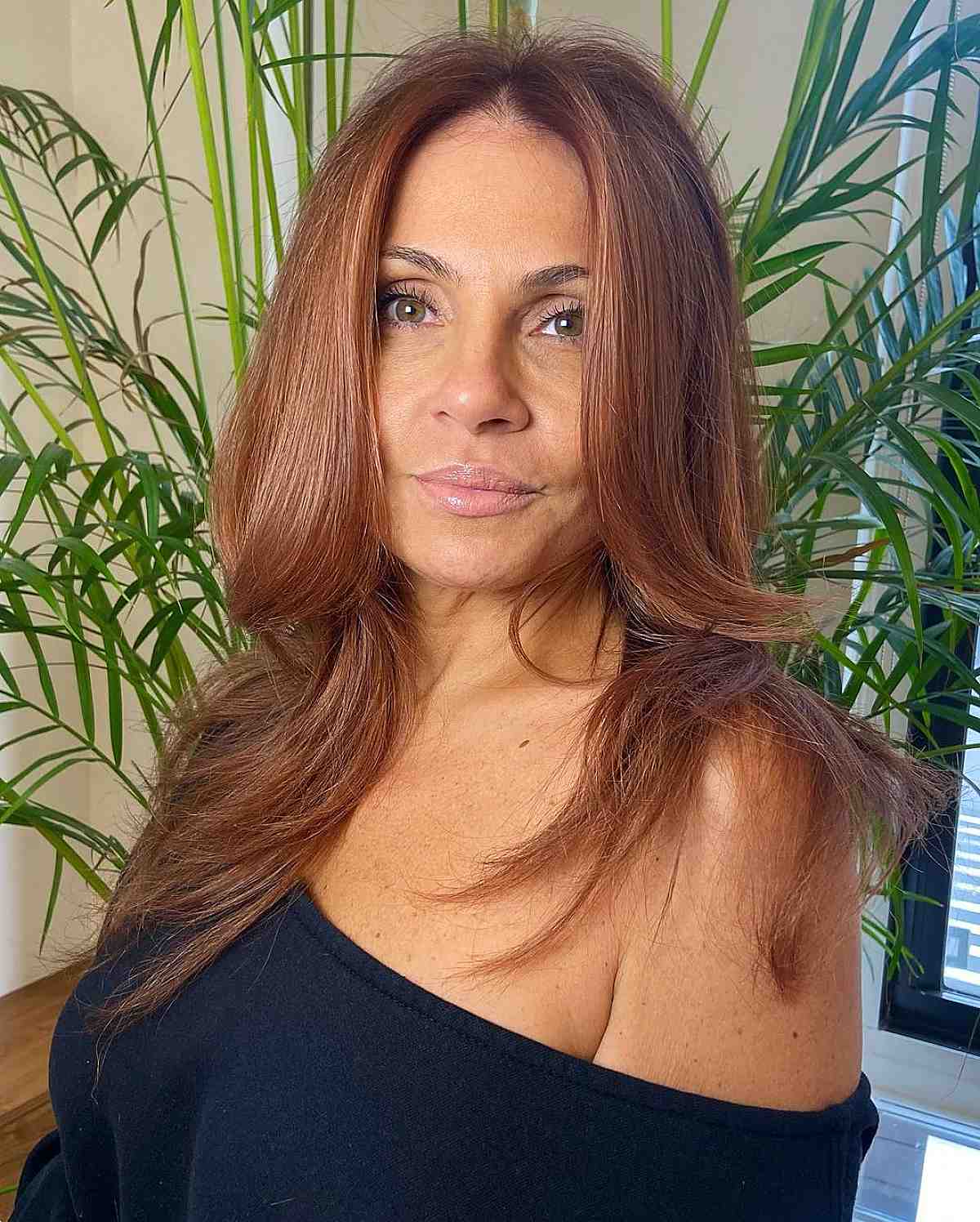
Proof that long hair isn’t only for the young: rich copper-brown lengths are cut in layers that begin at the jaw and flick outward around the shoulders. A side-leaning part lifts the crown, and the face-framing pieces open up the cheeks instead of hiding them. Warm copper adds brightness to the skin, and the layers keep the length from dragging the face down. Easy to wear, easy to love.
- Best for: Medium to thick straight or slightly wavy hair; anyone who wants length with lift around the face.
- Ask your stylist for: Long layers starting at the jaw, face-framing pieces, and a warm copper-brown gloss.
- How to style it: Blow-dry with a round brush, turning the ends outward; finish with a light hold spray.
- Upkeep: Trim every 8 weeks; copper gloss every 6 weeks, as red tones fade fastest.
10. The jet black butterfly layers
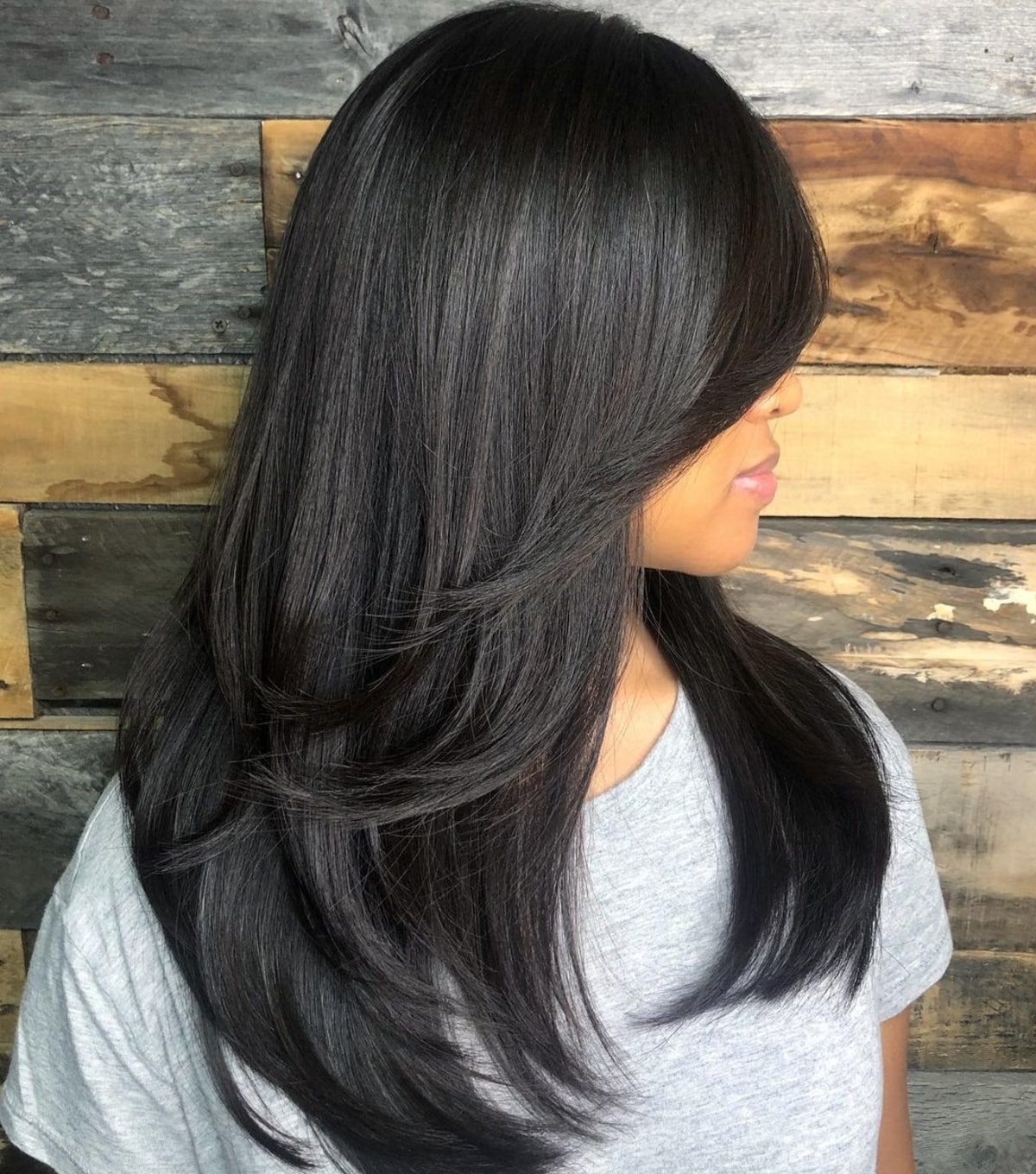
Black hair and layers are a strong pairing, because every cut line shows against the shine. In this side view, short face-framing pieces curve under at the cheekbone, and long layers cascade below them toward the chest. The effect is a stacked, butterfly-like shape that adds movement to heavy, straight hair. Notice how the layers end at different heights so the outline looks soft rather than stepped.
- Best for: Thick, straight dark hair that tends to fall flat and heavy.
- Ask your stylist for: Butterfly layers with short face-framing pieces at cheekbone level and long layers through the back.
- How to style it: Blow-dry with a round brush, curving the front pieces under and the rest away from the face.
- Upkeep: Trim every 6 to 8 weeks to keep the face-framing pieces from growing out.