21. The copper-tipped angled bob
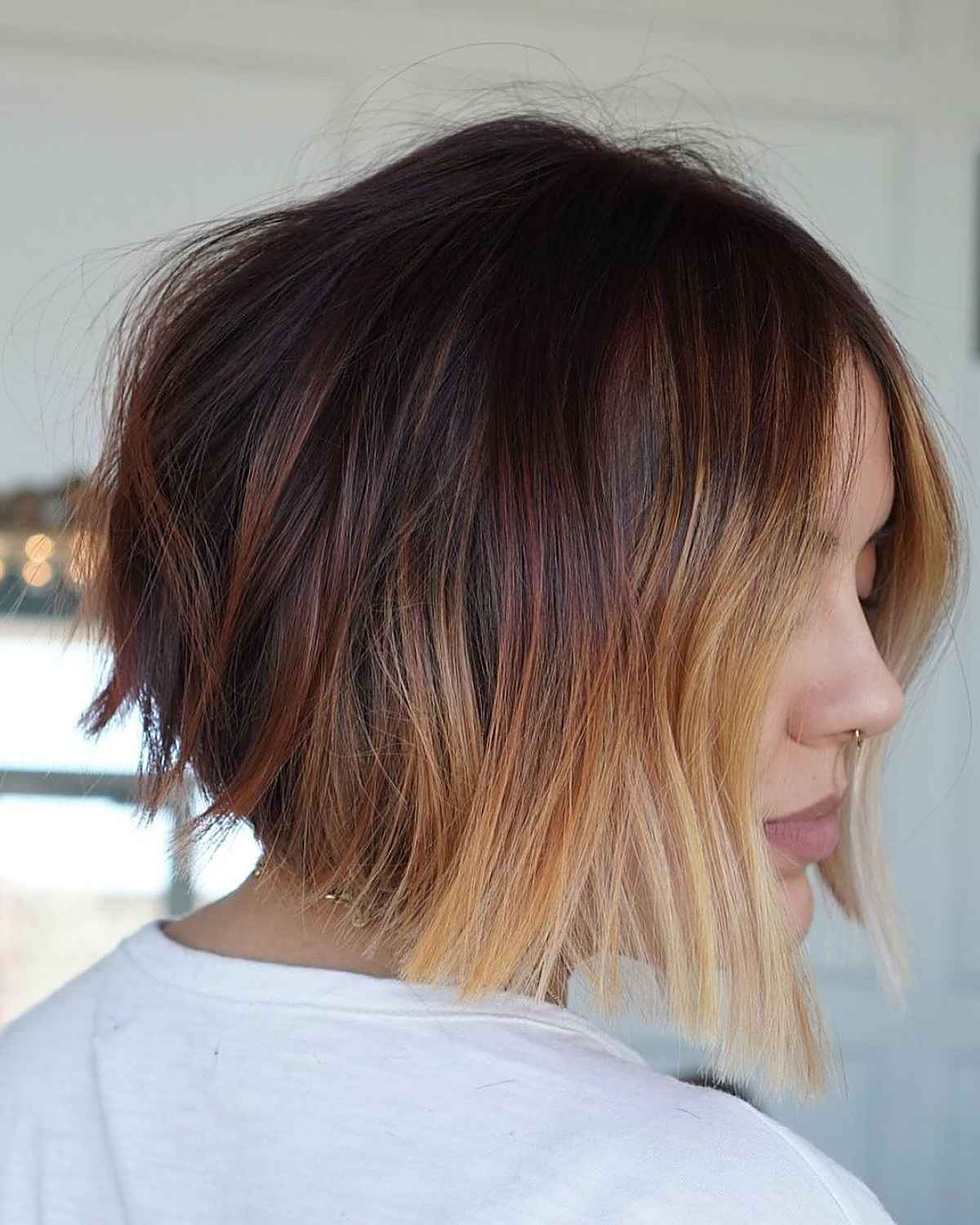
The color hides until you move, then it flashes. A short angled bob is dark brown on top, with golden copper and caramel showing through the longer front pieces. The cut is stacked shorter at the back, and the front falls past the chin. Keeping the brightness on the ends means the copper only appears when the hair swings. Subtle at rest, bold in motion.
- Best for: Straight to slightly wavy hair; those who like a bold short cut.
- Ask your stylist for: An angled bob, short at the nape and longer in front, with dark roots fading to copper and caramel ends.
- How to style it: Blow-dry with a round brush, turning the front pieces forward.
- Upkeep: Trim every 6 weeks; refresh the ends every 10 to 12 weeks.
Vivid and pastel ombre
Fashion shades work beautifully as ombres because the darker root hides regrowth. All of these need pre-lightened ends.
22. The magenta-to-yellow sunset bob
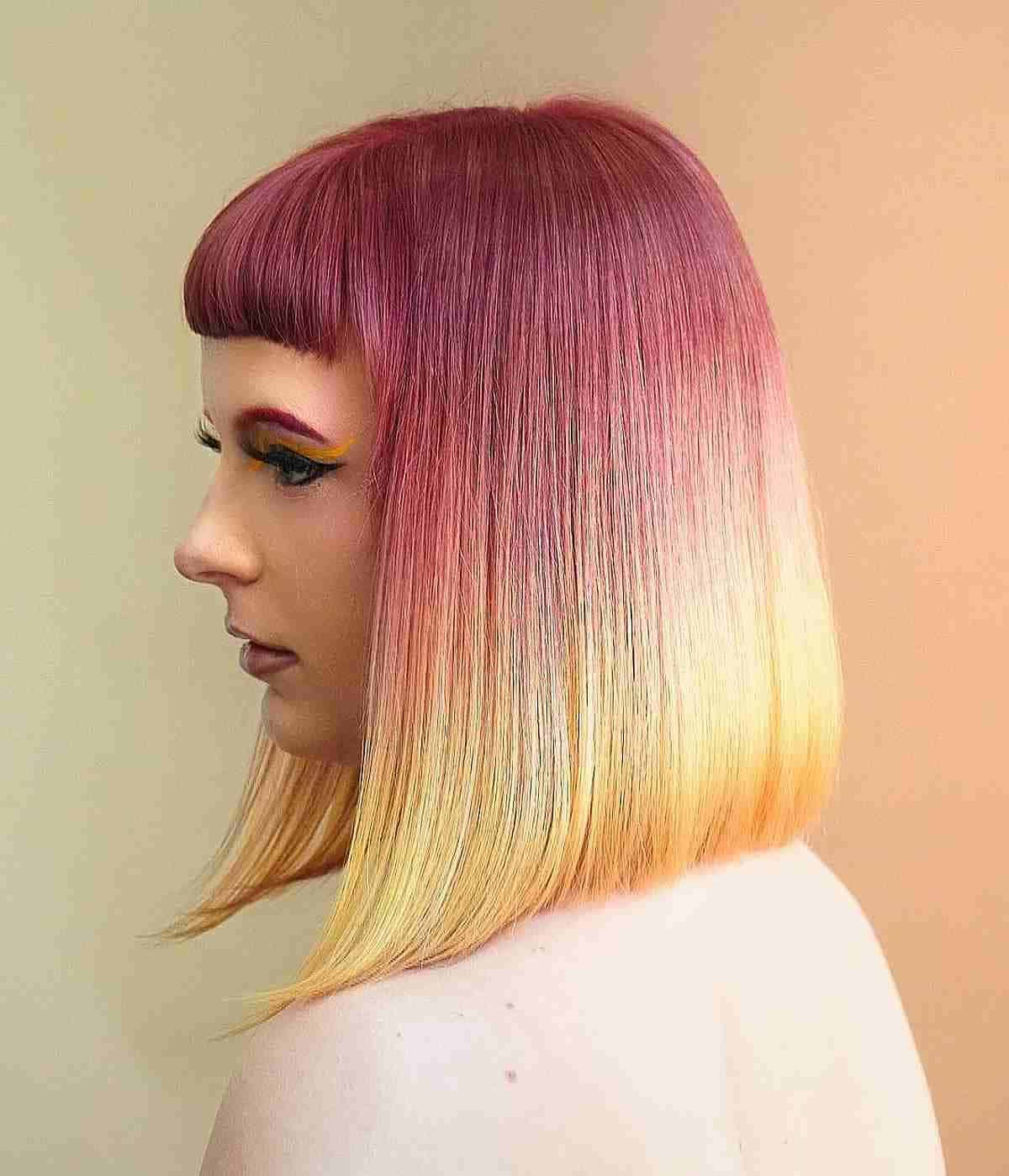
Pure pop art, cut with precision. A sleek, blunt bob with micro bangs moves from magenta at the crown through coral to bright yellow at the ends. The cut falls just below the jaw, and the tiny bangs echo the graphic color. Pressing the hair completely straight lets the gradient show as one smooth wash. This is a bob for people who like to be noticed.
- Best for: Straight hair; confident wearers of vivid color.
- Ask your stylist for: A blunt bob with micro bangs and a magenta-to-yellow ombre over pre-lightened hair.
- How to style it: Flat-iron straight and wash in cold water.
- Upkeep: Color refresh every 3 to 4 weeks; trim every 6 weeks.
23. The orchid A-line fade
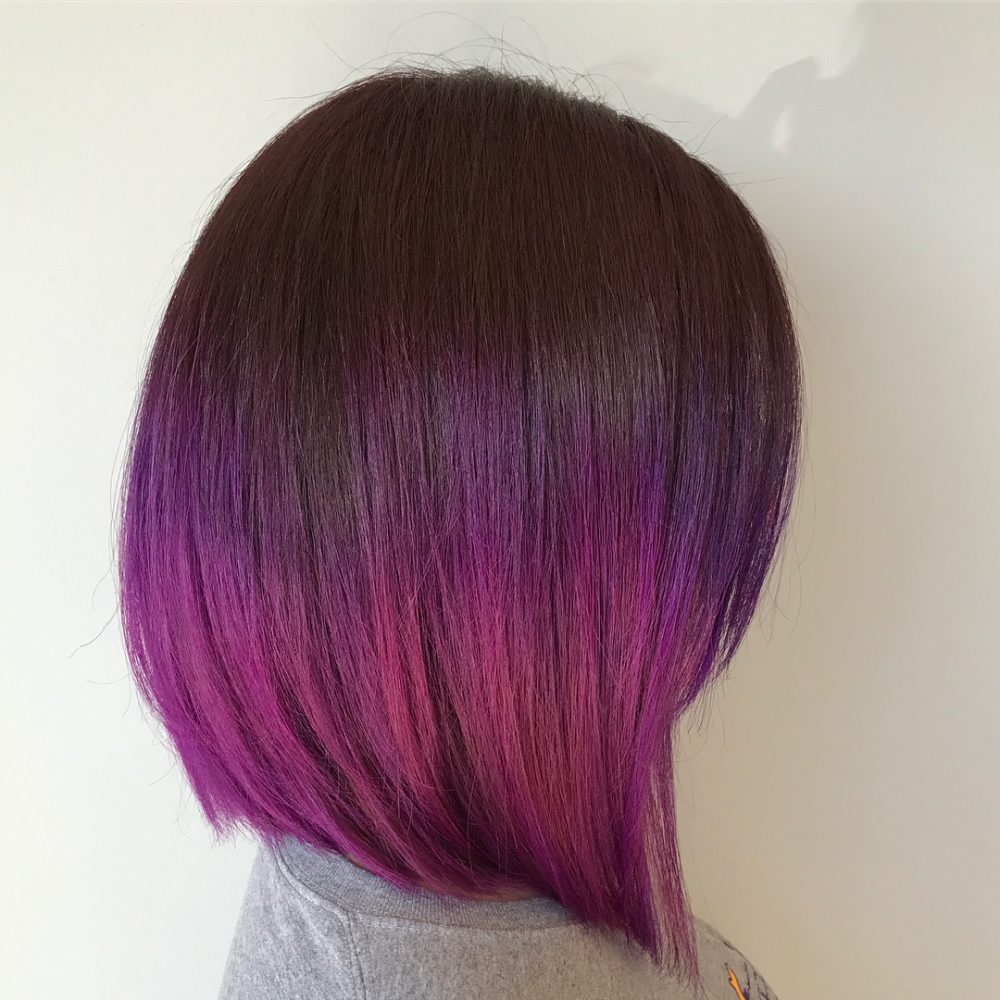
Turn around: the brightest purple sits right along the angle. From behind, a sharp A-line bob shows dark brown roots fading into deep magenta and orchid on the lengths. The back is shorter, and the color starts around the ears. Because the edge is cut blunt, the vivid ends look even sharper. A great choice if you want bold color on a structured shape.
- Best for: Straight hair with medium density.
- Ask your stylist for: A sharp A-line bob with dark roots and a magenta purple ombre starting at ear level.
- How to style it: Blow-dry smooth with a round brush, curving the ends under.
- Upkeep: Trim every 6 weeks; color refresh every 4 weeks.
24. The rose pink uniform waves
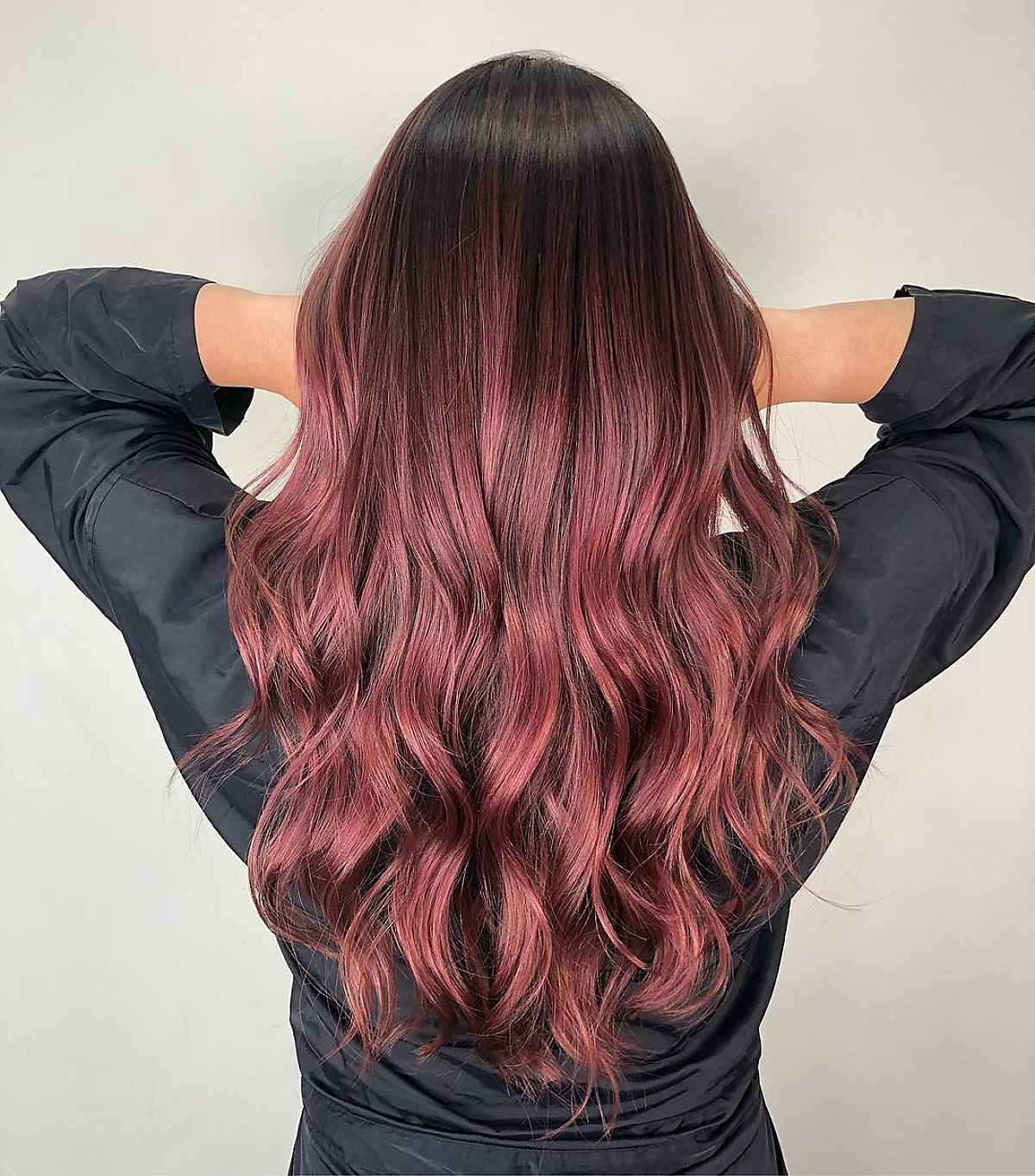
Pink, but grown-up. Long, even waves start with a dark brown root and turn dusty rose from the mid-lengths down. The pink is muted and slightly mauve, which keeps it wearable for work as well as weekends. The waves are curled evenly from top to bottom, so the color looks consistent and rich all over. A soft first step into fashion color.
- Best for: Medium to thick hair; cool and neutral skin tones.
- Ask your stylist for: A dark root melting into dusty rose pink from the mid-lengths, with blended placement.
- How to style it: Curl in uniform sections with a 25 mm wand and brush out lightly.
- Upkeep: Pink refresh every 3 to 4 weeks.
25. The raspberry-tipped brunette
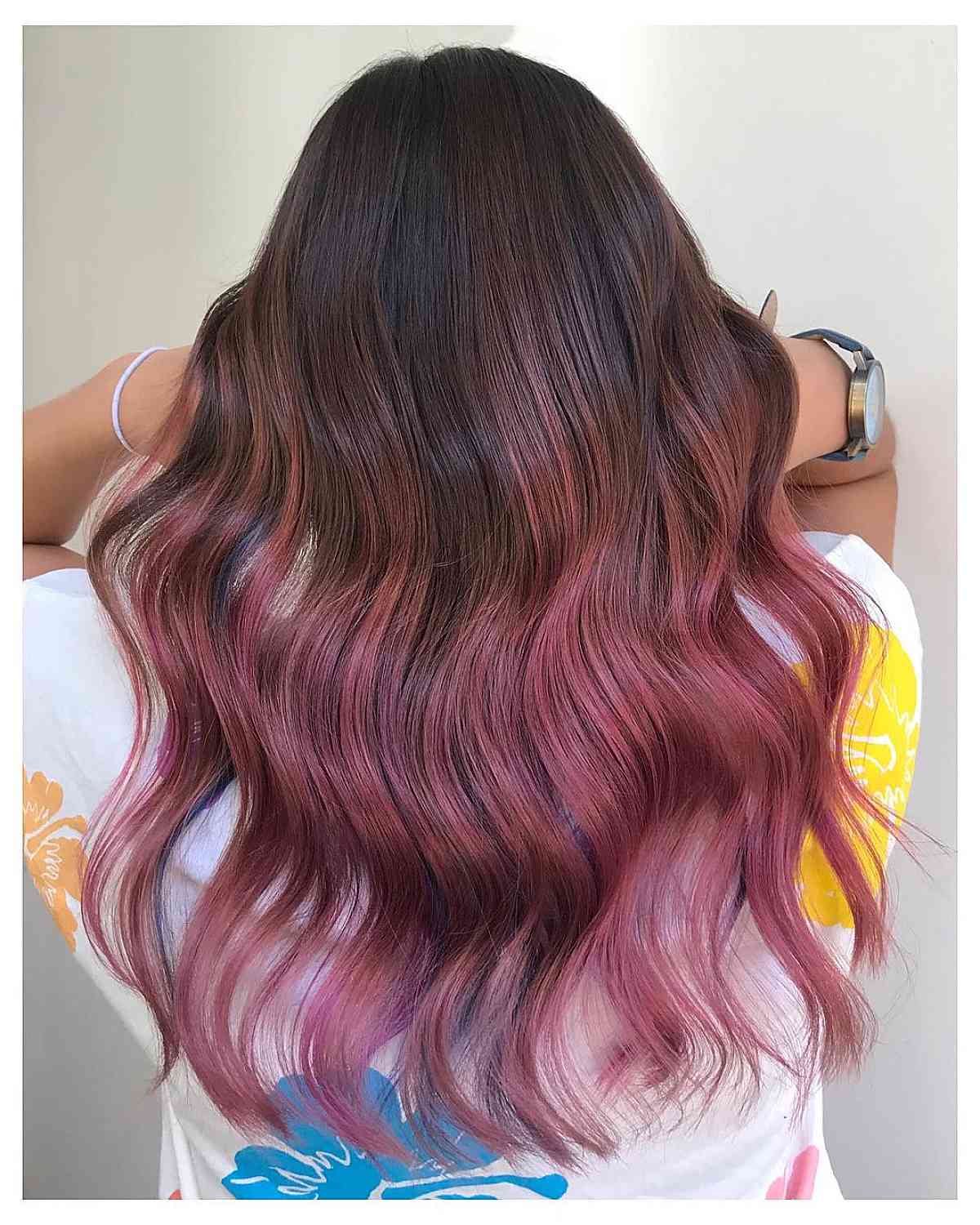
Not ready to go fully pink? Keep the top brown. Here brown roots fade into raspberry and dusty pink on long waves, with the brightest shade saved for the very tips. The color begins around the shoulders, leaving plenty of natural brown above. That makes it easy to grow out, refresh or simply trim away when you want a change.
- Best for: Brunettes wanting a soft pop of color.
- Ask your stylist for: A brunette-to-pink ombre starting at shoulder level, with the ends pre-lightened just enough to hold pink.
- How to style it: Loose waves with a 32 mm iron; use a pink color-depositing conditioner.
- Upkeep: Refresh every 4 weeks.
26. The plum-to-petal waves
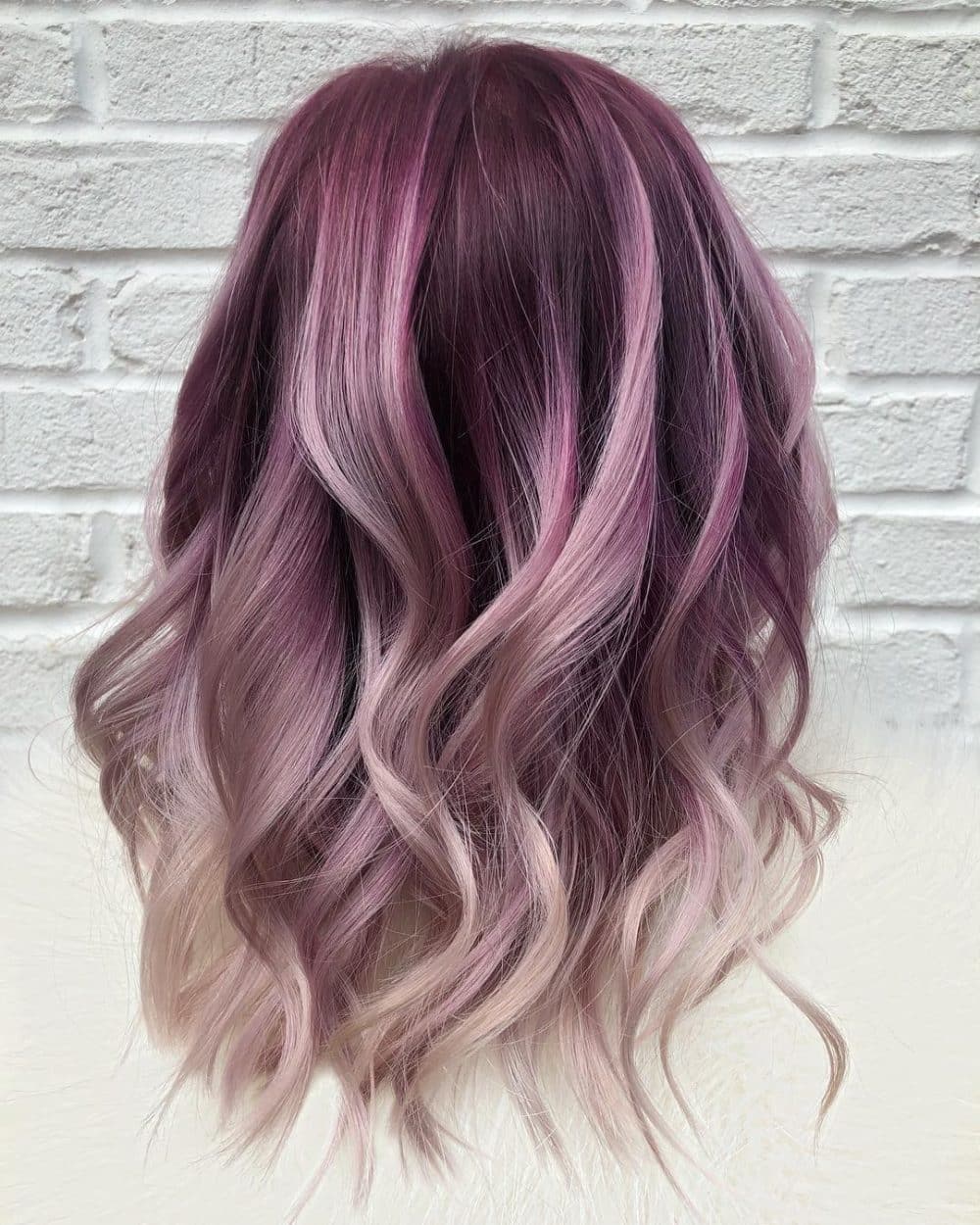
Lighter streaks running up into dark plum are what make this melt so soft. Plum purple at the crown fades through mauve to pale pastel pink at the tips on shoulder-length waves. The defined wave pattern means the hair falls in ribbons of different shades. Romantic, a little dreamy, and easier to maintain than an all-over pastel because the root is deep.
- Best for: Pre-lightened hair; cool skin tones.
- Ask your stylist for: A plum-to-pastel-pink ombre with soft streaks blended upward into the root color.
- How to style it: Curl with a 25 mm wand, alternating direction, and finish with shine spray.
- Upkeep: Refresh every 3 to 4 weeks.
27. The black-to-lavender curls
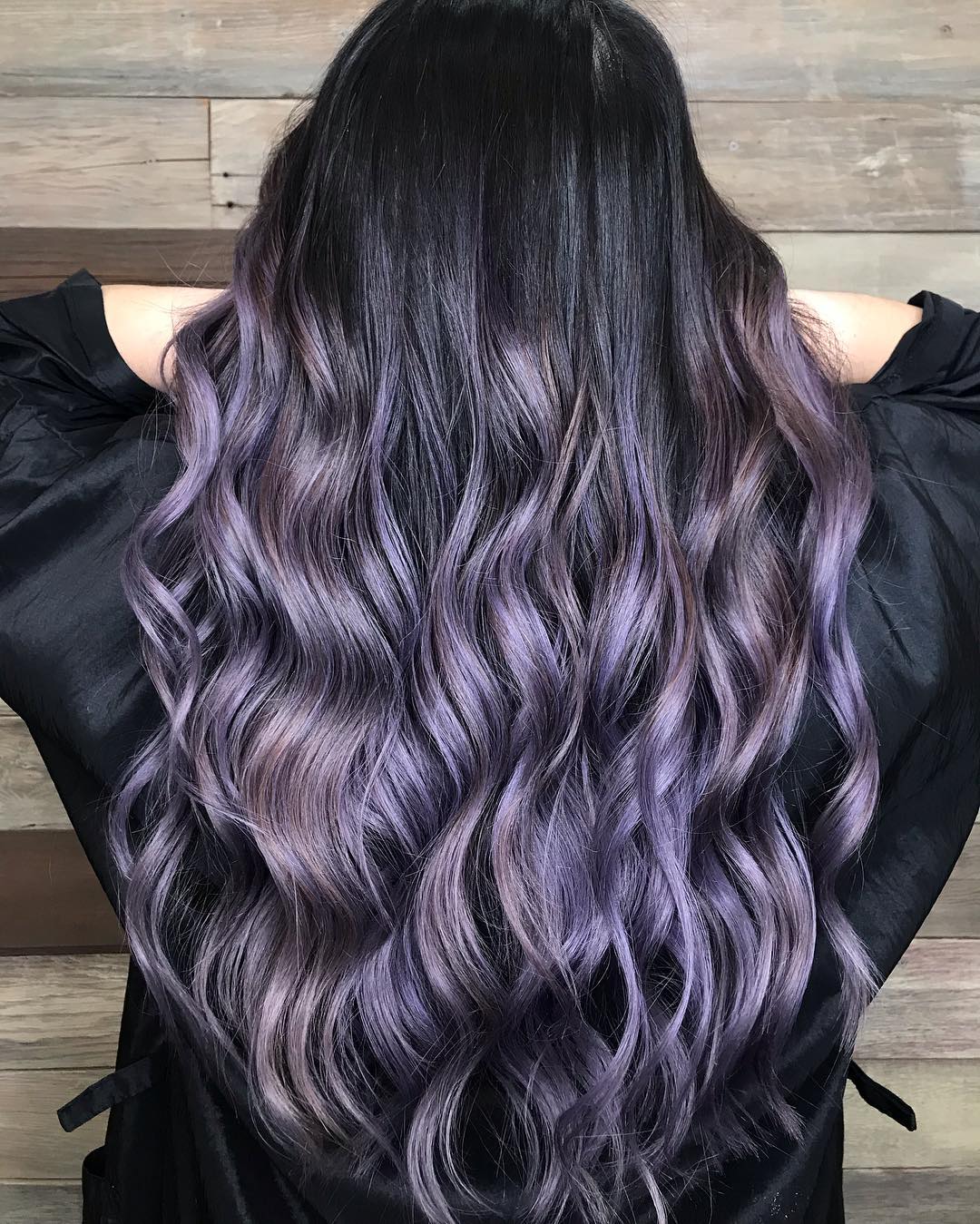
Lavender looks brighter next to black, and this ombre uses that contrast well. Long hair is black at the roots and turns lilac from the shoulders down, styled in tight, bouncy curls. The curls blur the line between the two colors. It works best on very dark hair with healthy ends, because the lengths need careful lightening before the pastel goes on.
- Best for: Dark hair in good condition; cool skin tones.
- Ask your stylist for: A black-to-lavender ombre with ends lifted to pale blonde before the pastel is applied.
- How to style it: Curl with a 25 mm wand; use purple shampoo to keep the lavender bright.
- Upkeep: Refresh every 3 to 4 weeks.
28. The emerald mermaid waves
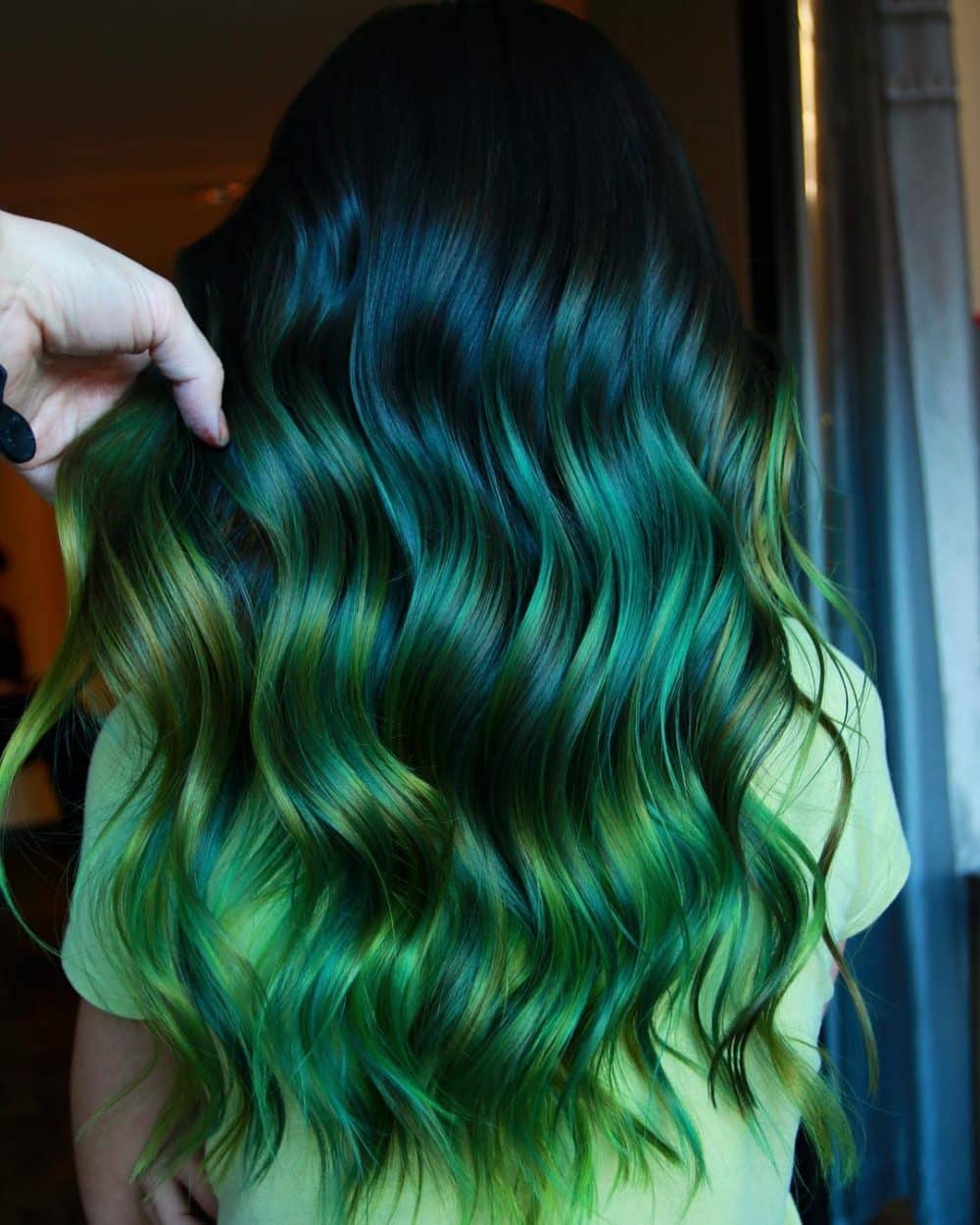
Jewel tones age better than pastels, and this green proves it. Black roots move into deep teal, then emerald and bright green on the lower half of long, glossy waves. Each wave catches a different green, so the color looks almost metallic. Deep shades like these hold up well between appointments and fade gracefully toward softer green rather than turning muddy.
- Best for: Dark hair; anyone wanting a bold jewel-tone look.
- Ask your stylist for: A black-to-teal-to-emerald ombre over pre-lightened mid-lengths and ends.
- How to style it: Curl loosely and finish with shine spray; wash in cold water.
- Upkeep: Refresh every 4 to 6 weeks.
How to style ombre hair at home
To show off the gradient
- Apply heat protectant to damp hair.
- Blow-dry smooth with a large round brush.
- Curl two-inch sections with a 25 to 32 mm iron, starting at the mid-lengths so the transition sits in the curl.
- Brush through gently and finish with shine spray.
For a sleek finish
- Use a smoothing cream and heat protectant on towel-dried hair.
- Blow-dry with a paddle brush, pointing the airflow down.
- Flat-iron in thin sections to make the color gradient look seamless.
- Finish with a drop of serum on the lightened ends.
Caring for ombre hair
Lightened ends are the most fragile part of an ombre. Use a sulfate-free shampoo, a weekly bond-building or deep-conditioning mask, and a heat protectant every time you style. Blonde and silver ends need a purple shampoo once a week; reds, pinks and vivid shades last longer with cool water and a color-depositing conditioner.
Because the root is your natural color, regrowth is barely visible. Most people relighten every three to four months and book a toner or gloss in between. Trim the ends every eight to ten weeks to remove dryness, and if you want to grow out of ombre, simply keep trimming the lighter ends until they are gone.
What to tell your colorist
- Bring photos of the ombre you want, and say whether you prefer a soft or high-contrast fade.
- Point to where you want the transition to begin: cheekbones, jaw or shoulders.
- Say how often you can come back for toning or color refreshes.
- Mention any previous color, box dye or henna, which affects how the ends lift.
- Ask about a bond-building treatment during lightening.
Frequently asked questions
What is the difference between ombre and balayage?
Ombre is a gradient from a darker root to lighter ends, with most of the lower lengths lightened. Balayage is hand-painted highlights placed throughout the hair, so the result is more scattered. If you want something in between, a softer sombre keeps the gradient but blends it more gently.
Does ombre damage your hair?
Only the lightened ends are bleached, so it is gentler than all-over color. Using a bond builder and regular conditioning keeps the ends healthy.
How long does ombre hair last?
The gradient itself lasts until you cut it off, but toners fade in four to eight weeks and vivid colors in three to six.
Can you do ombre on short hair?
Yes. On a bob or lob the transition simply starts higher, around the cheekbones, so there is enough length for the colors to blend.
Looking for more color ideas? Browse our sombre hair ideas, black ombre hairstyles, purple ombre hair ideas and ombre ideas for curly hair.