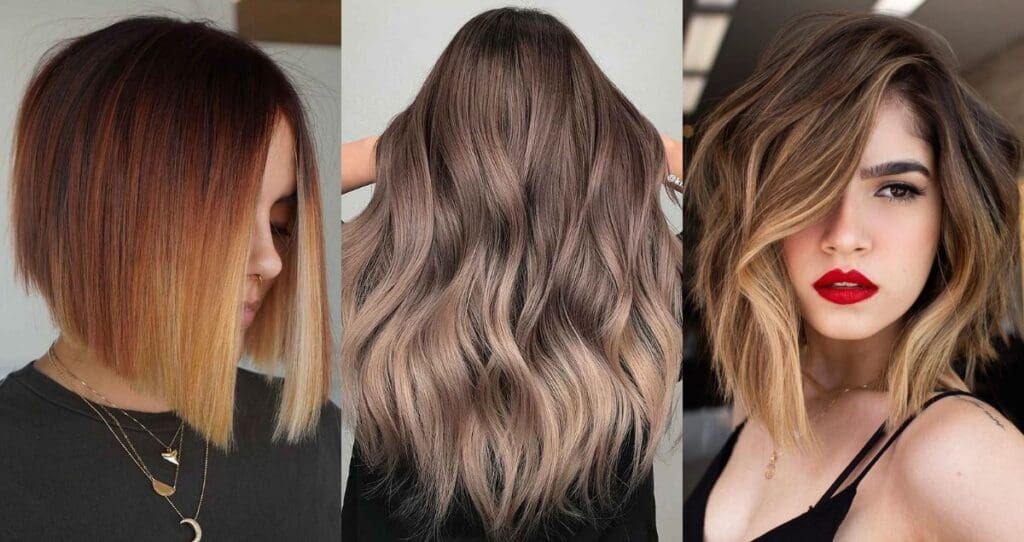
Ombre is the color for people who hate root appointments. It moves from one shade at the root to another at the ends, usually dark to light, and unlike scattered highlights it works as a gradient: the root stays close to your natural color, the change happens somewhere around the cheekbones or jaw, and the brightest shade is saved for the lengths. Done well, you cannot see where one color stops and the next begins.
We picked 28 ombre ideas, grouped by color family: natural browns and caramels, blondes and silvers, reds and coppers, and vivid fashion shades from sunset bobs to emerald waves. Each one comes with who it suits, what to ask your colorist, how to style it and how often it needs a refresh. Wearing your hair short? Our short ombre hair ideas show how to fit a fade into a bob or pixie.
How to choose an ombre hair color
Three things decide how an ombre will look: your starting color, how far the ends are lifted, and where the transition begins. A small jump, such as dark brown to caramel, looks soft and natural; a big jump, such as black to platinum or to a pastel, is dramatic and needs more bleach and more care.
| Hair type | Ombre that works best | What to avoid |
|---|---|---|
| Fine or thin | Soft two- or three-level fade, such as brown to caramel or beige | Bleaching very fine ends to platinum, which can break |
| Thick | High-contrast fades, vivid shades, longer transitions | A fade that starts too low, which looks like grown-out color |
| Wavy | Almost any ombre; waves blur the transition beautifully | Very sharp, horizontal color lines |
| Curly | Ombre painted curl by curl, lighter on the ends | Heavy all-over bleaching that dries curls out |
| Straight | Smooth, carefully blended fades and color melts | Patchy placement, which shows clearly on straight hair |
Length: an ombre needs room to fade, so it shows best on hair from the jaw down. On a bob, start the transition higher, around the cheekbones. Maintenance: because the root stays natural, most ombres need lightening only every three to four months, but blonde, silver and vivid ends need toning or a color refresh every four to eight weeks.
Brown and caramel ombre
These keep a natural brown root and lift the ends a few shades to caramel, honey or golden blonde, which makes them the easiest ombres to live with. Our brown ombre hair ideas have many more variations.
1. The golden swoop lob
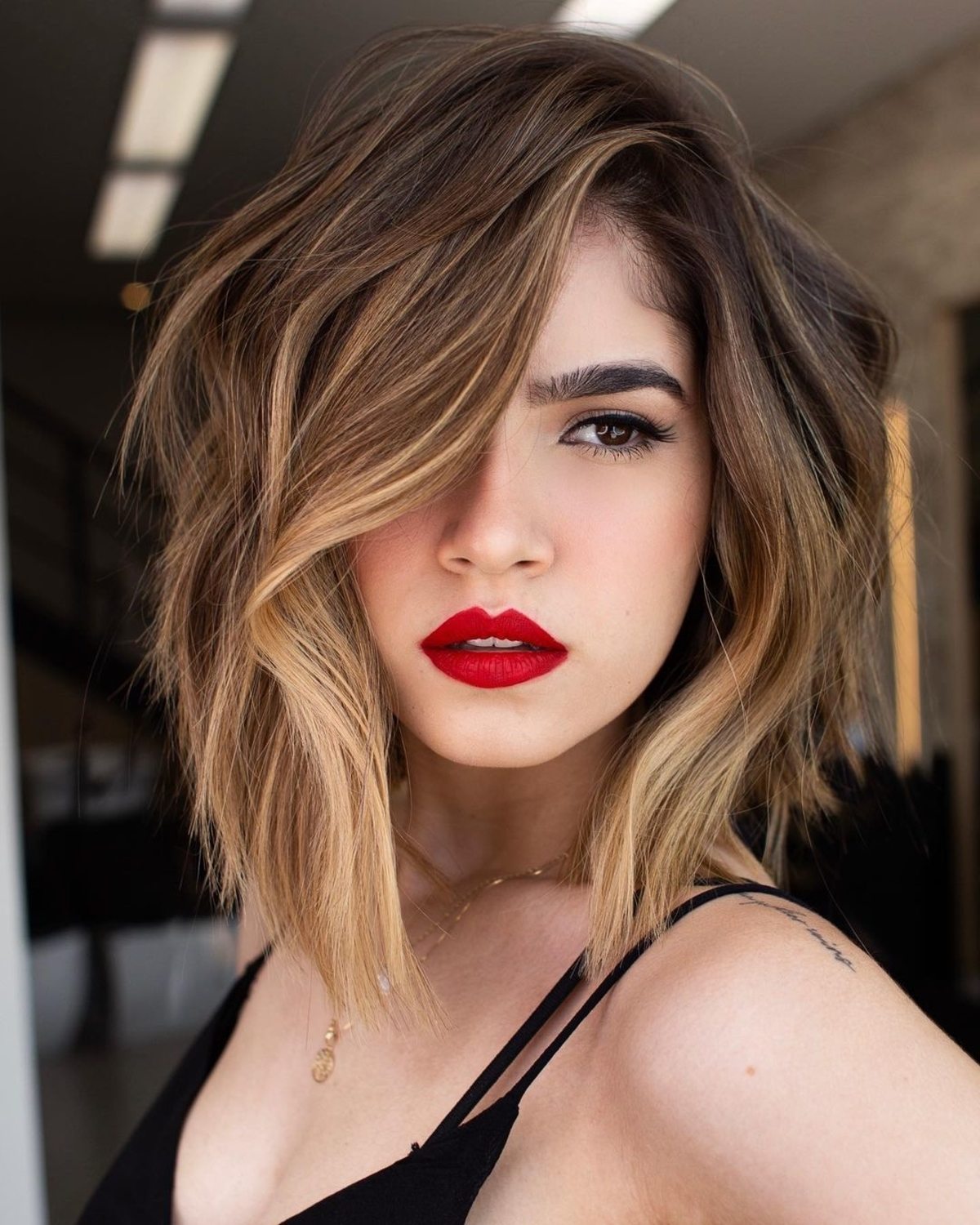
Red lipstick, one eye hidden, a wave of gold: this ombre knows how to pose. Deep brown roots melt into golden and honey blonde through the lengths of a wavy lob, swept to one side so a heavy wave falls across the face. The brightest pieces sit right around your cheekbones. Loose, piecey waves break up the transition, which is why you cannot spot where brown stops and gold begins.
- Best for: Medium to thick brunette hair; warm and olive skin tones.
- Ask your stylist for: A brown-to-golden-blonde ombre starting around the cheekbones, with the brightest pieces framing the face.
- How to style it: Curl large sections with a 32 mm iron, flip the hair to one side and finish with texture spray.
- Upkeep: Toner every 6 to 8 weeks; relighten ends every 12 to 16 weeks.
2. The high-fade honey bob
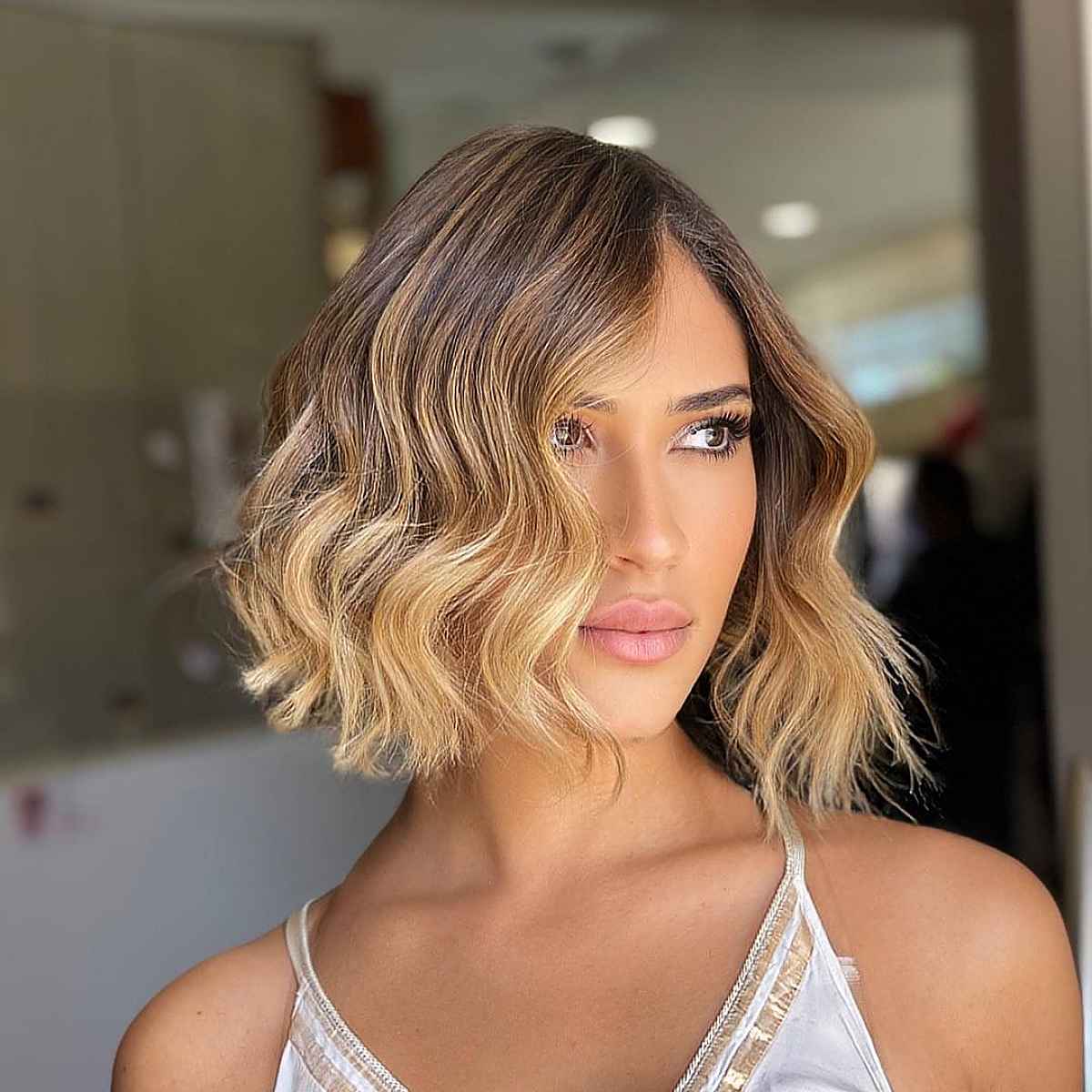
Think ombre needs long hair? This chin-length bob says otherwise. Mid-brown at the crown fades to bright honey blonde at the ends, with waves that bend outward. A deep side part leaves one side fuller, and a long front piece is tucked behind the ear. On short hair the trick is to start the fade higher, around eye level, so both colors get enough room to show.
- Best for: Fine to medium hair; anyone wanting a sunny color on short hair.
- Ask your stylist for: A wavy bob to the chin and an ombre that starts near eye level, moving from soft brown to honey blonde.
- How to style it: Wave with a 25 mm wand, leaving the ends straight, and finish with a light oil.
- Upkeep: Trim every 6 to 8 weeks; tone every 6 to 8 weeks.
3. The espresso glow with copper ends
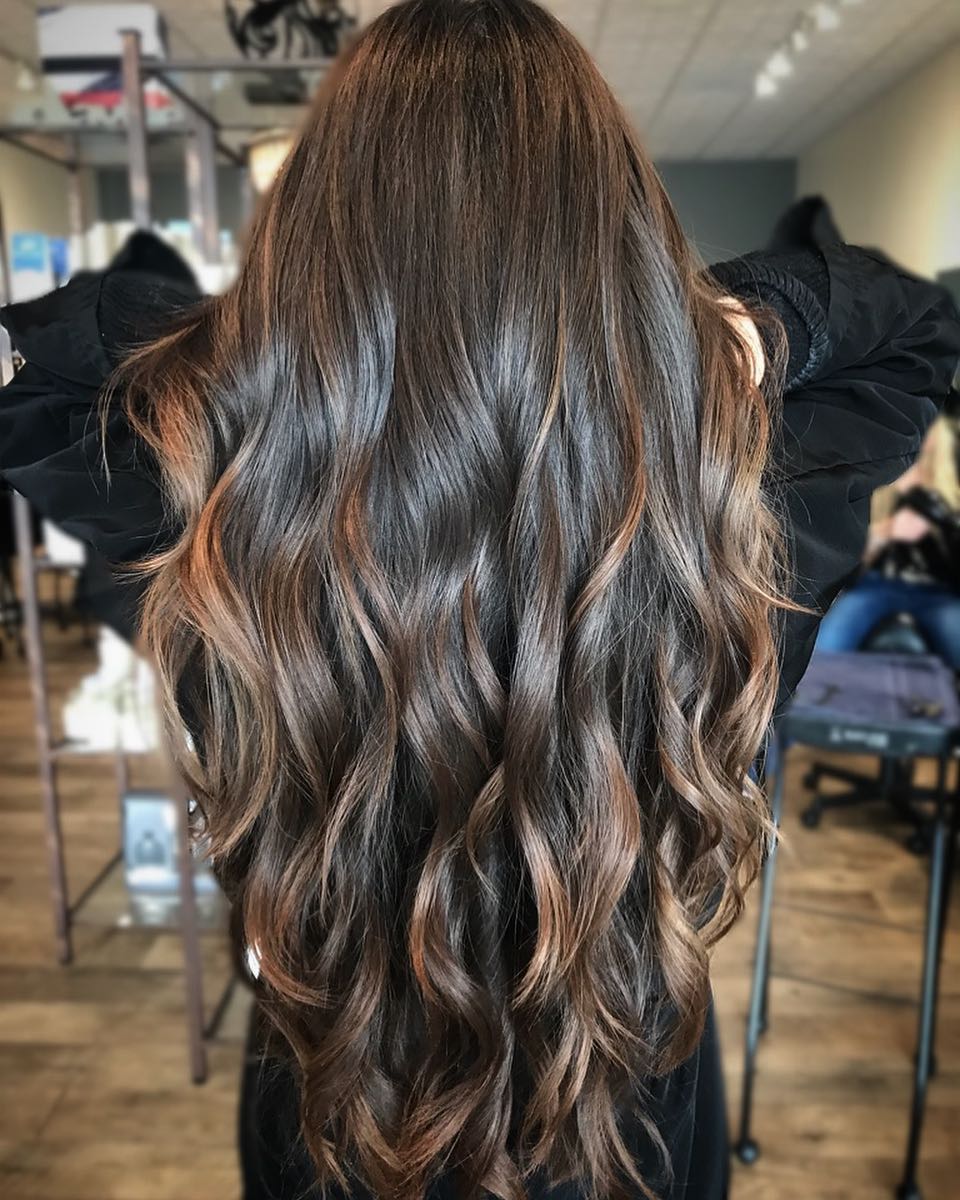
Sometimes the best ombre is the one people cannot quite name. Long, glossy waves start almost black at the roots and warm gradually into copper brown through the lower third. It reads more like a glow than a fade, with ribbons of warmth appearing where each wave turns. Because it needs only a few levels of lift, it is a gentle option for very dark hair.
- Best for: Dark brown to black hair; anyone wanting a low-key ombre.
- Ask your stylist for: A soft ombre from a natural dark root to copper brown ends, hand-painted on the lower third.
- How to style it: Curl in large sections with a 32 mm iron and brush out for soft, glossy waves.
- Upkeep: Gloss every 8 weeks; relighten every 12 to 16 weeks.
4. The classic caramel fade
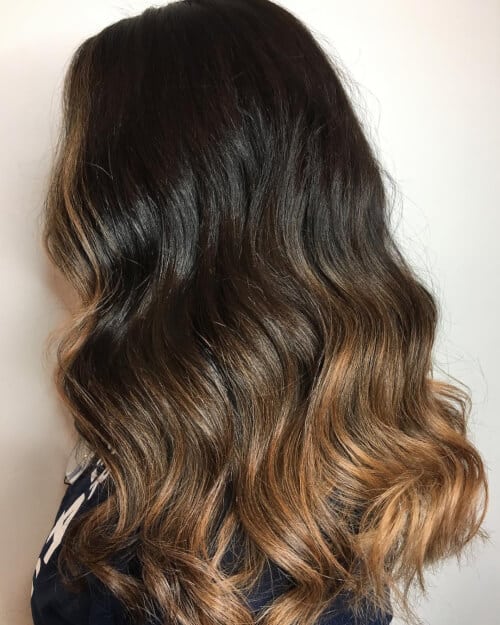
If you picture ombre, you probably picture this, and it has stayed popular for good reason. A deep brown root runs about halfway down before softening into caramel and toffee. Long hair is styled in loose waves, and the brightest strands sit on the outer curls, so the color looks lifted by the sun rather than painted on. It flatters almost any dark base and grows out with zero drama.
- Best for: Dark brown hair with medium to thick density.
- Ask your stylist for: A classic brown-to-caramel ombre starting around the jaw, with a soft, blended transition.
- How to style it: Curl the lengths loosely and finish with a shine spray to make the caramel glow.
- Upkeep: Toner every 8 weeks; ends refreshed every 12 to 16 weeks.
5. The chocolate-to-chestnut bounce
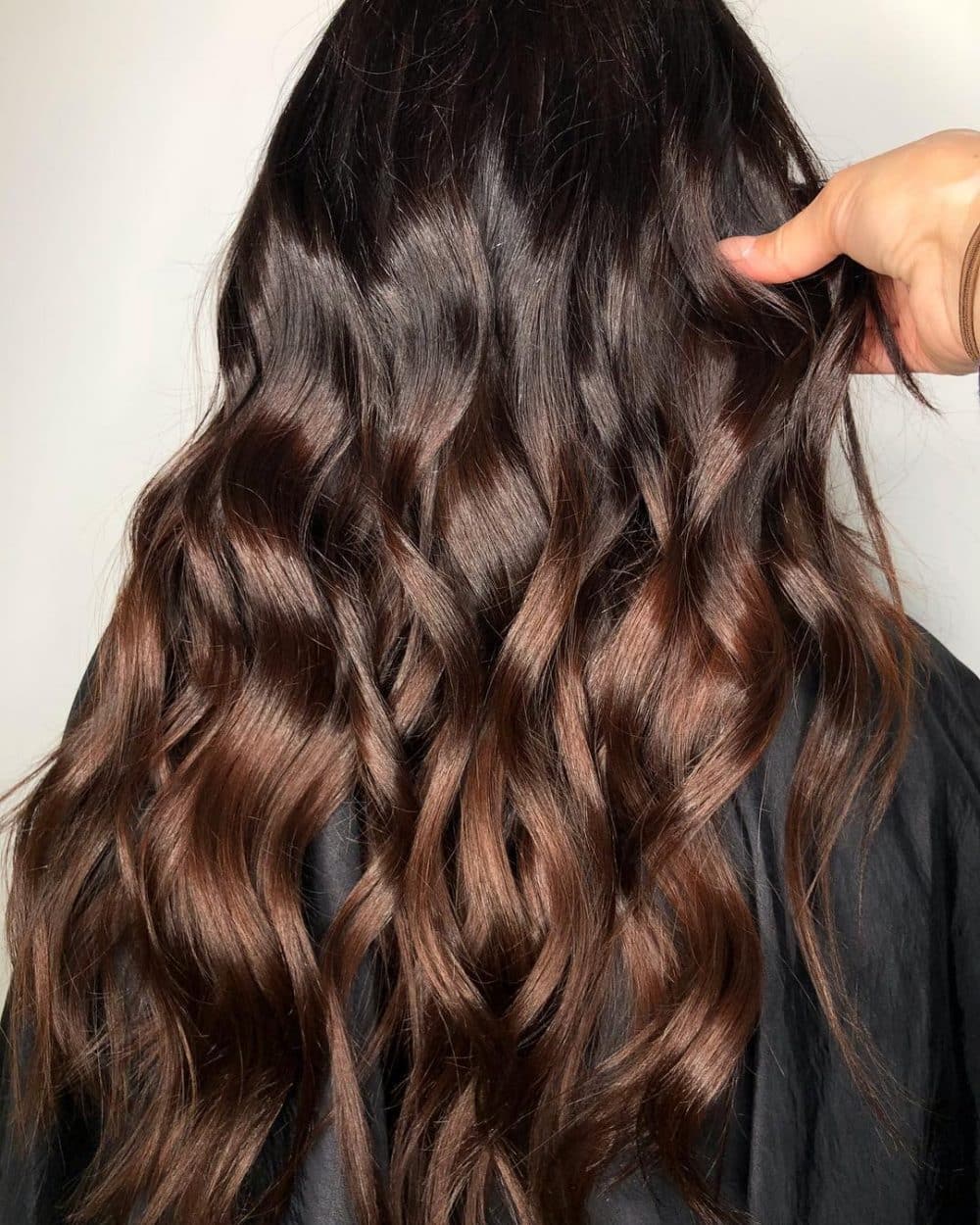
Rich, not obvious, and that is the whole point. Big, bouncy waves move from a deep chocolate root into warmer chestnut and milk chocolate at the ends. The lift is only a couple of shades, so the effect is dimensional instead of two-toned. A glossy finish brings out the reddish warmth in every curl. Ask for this if you want your brown to look richer, not lighter.
- Best for: Dark hair; anyone wanting depth without going blonde.
- Ask your stylist for: A subtle ombre from a dark chocolate root to chestnut brown ends, with no more than two to three levels of lift.
- How to style it: Use hot rollers or a large barrel, then brush out and smooth with serum.
- Upkeep: Gloss every 6 to 8 weeks; touch up every 12 to 16 weeks.
Blonde, ash and silver ombre
Lifting the ends to blonde, beige or silver gives the brightest contrast, and a cool toner keeps them clean. For more pale fades, browse our blonde ombre hair ideas.
6. The beachy beige-to-platinum lengths
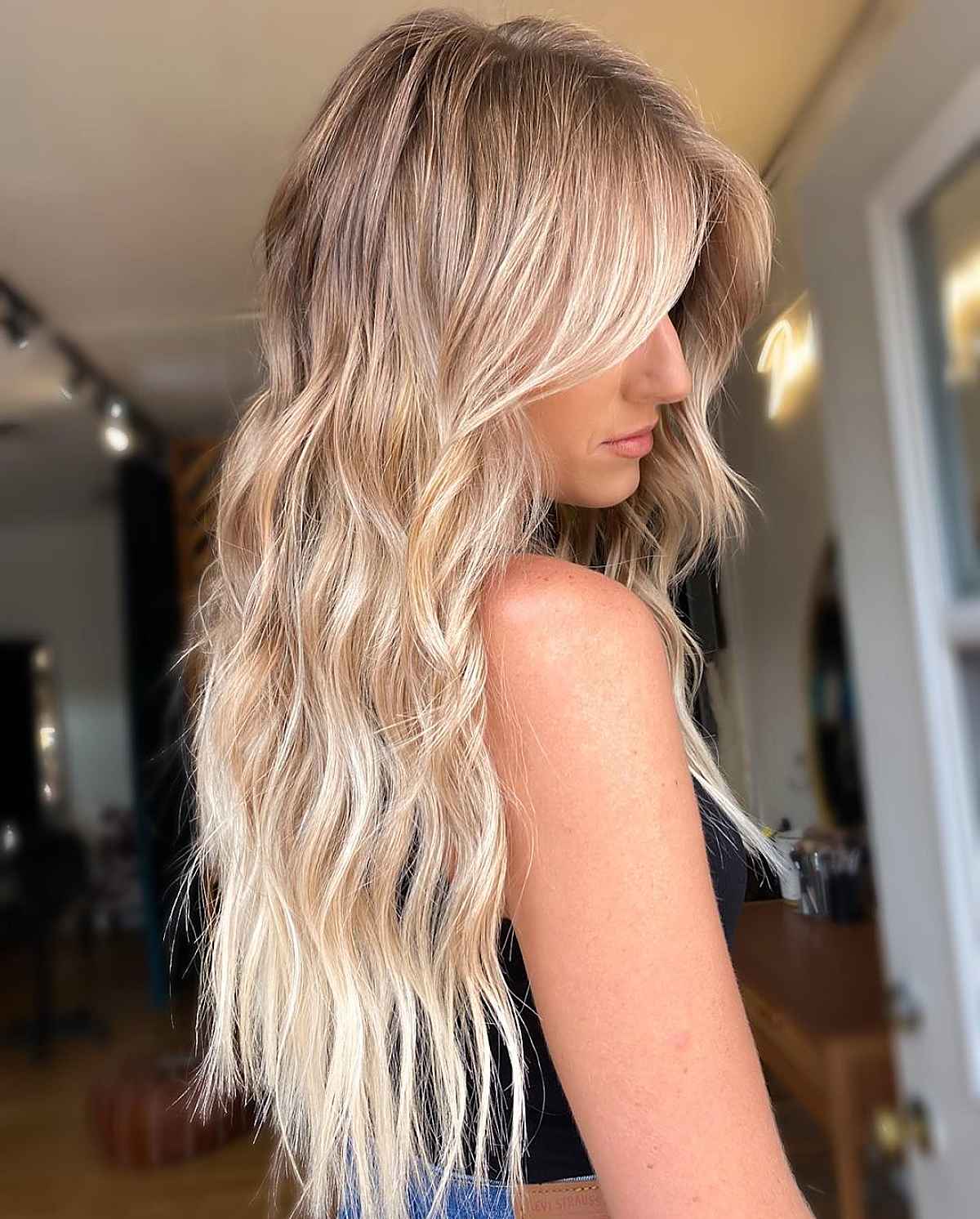
Long, blonde and deliberately undone. Soft beige roots brighten to almost white at the ends of long, beachy waves. Lighter strands around the face and through the top add dimension, so the color never looks flat or solid. The crimped, tousled texture blurs the transition even further. It is a smart way to wear very pale blonde without a harsh regrowth line every few weeks.
- Best for: Light brown or dark blonde hair; anyone after a beachy blonde.
- Ask your stylist for: A beige root melting into platinum ends, with face-framing brightness and a cool toner.
- How to style it: Braid damp hair loosely or use a waver iron, then shake out with texture spray.
- Upkeep: Tone every 4 to 6 weeks; lighten every 12 weeks.
7. The smoky-root sand blonde
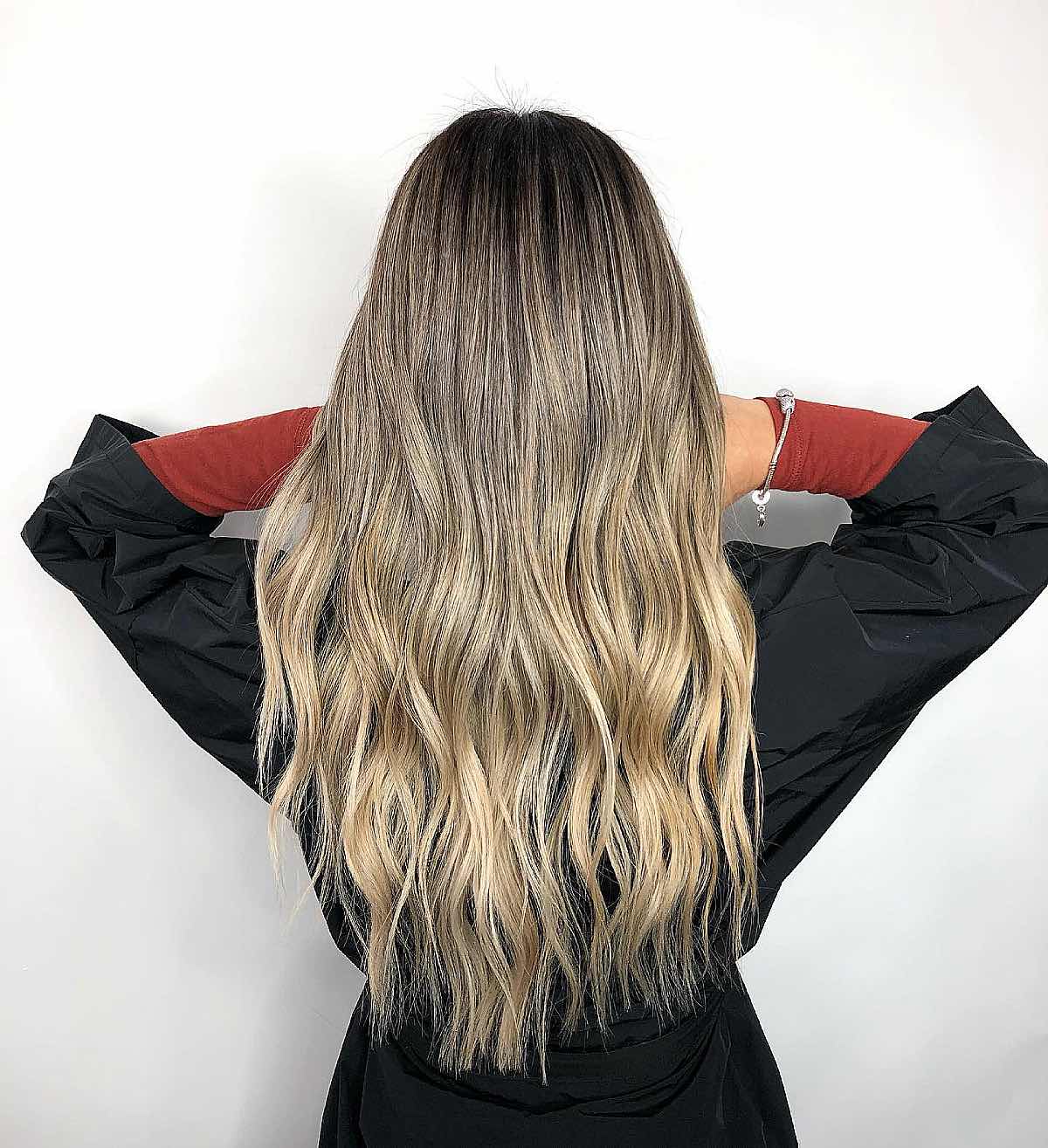
Hate brassiness? Stay on the cool side. From behind, a smoky dark root fades into ash and beige blonde over very long hair. The transition starts around ear level and gets brightest at the bottom, where the waves loosen. Sandy, cool blonde like this sidesteps orange tones completely, and the dark root means you can stretch appointments much further than with all-over blonde.
- Best for: Long, medium-density hair; cool and neutral skin tones.
- Ask your stylist for: A shadow root fading into cool beige blonde from ear level down, blended with a root smudge.
- How to style it: Wave the lengths with a 32 mm iron and use purple shampoo weekly.
- Upkeep: Toner every 6 weeks; lighten every 12 to 16 weeks.
8. The bronde striped-bend lob
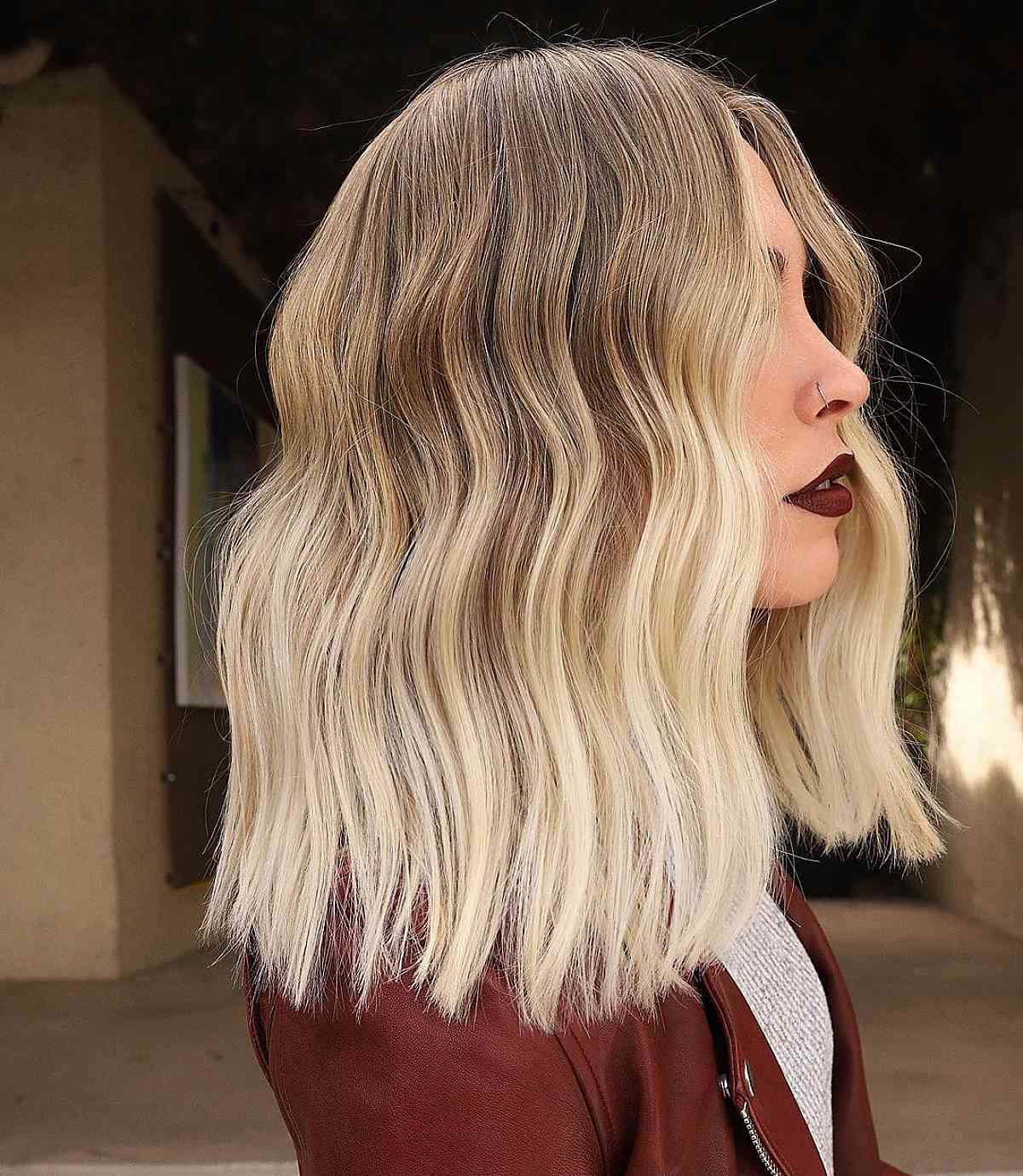
Uniform waves turn an ombre into stripes of light. A light brown root shifts gradually into creamy blonde on a shoulder-length lob styled in even S-shaped bends. As light hits each bend, the color looks softly striped. The ends are cut blunt, so the brightest blonde gathers into a clean line at the bottom. Polished, modern and very easy to recreate with a flat iron.
- Best for: Fine to medium straight hair.
- Ask your stylist for: A blunt lob at the shoulders and a bronde-to-blonde melt beginning around the cheekbones.
- How to style it: Create flat S-waves with a flat iron, leaving the last inch straight.
- Upkeep: Trim every 8 weeks; tone every 6 to 8 weeks.
9. The grunge-root ash bob

A visible root is not a mistake here; it is the look. A short, choppy bob carries about two inches of dark brown root that fades fairly sharply into ash blonde. The ends fall just below the chin with a blunt but slightly broken edge, and soft bends run through the lengths. That obvious contrast gives it a modern, slightly grunge mood instead of a polished salon finish.
- Best for: Fine to medium hair; anyone wanting low-maintenance blonde.
- Ask your stylist for: A choppy chin-length bob with a deliberate dark root and ash blonde lengths.
- How to style it: Rough-dry with texture spray and bend random pieces with a flat iron.
- Upkeep: Trim every 6 to 8 weeks; tone every 6 weeks.
10. The creamy stacked bob with a shadow root
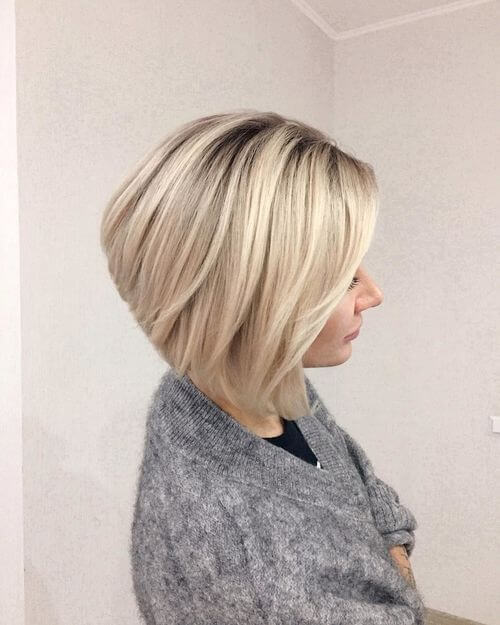
Short, stacked and bright, with a little depth built in. This inverted bob is rounded and short at the back, angling toward a longer front. Pale, creamy blonde fills the lengths, while a soft brown root shows at the crown. The stacked nape gives the back its lift, and that darker root adds shape to the rounded outline so it never looks flat from the side.
- Best for: Fine to medium straight hair; those who want a polished short cut.
- Ask your stylist for: A stacked inverted bob with a graduated nape and longer front, and a pale blonde with a soft, blended root.
- How to style it: Blow-dry with a round brush, lifting the back and turning the front under.
- Upkeep: Trim every 5 to 6 weeks; tone every 6 weeks.