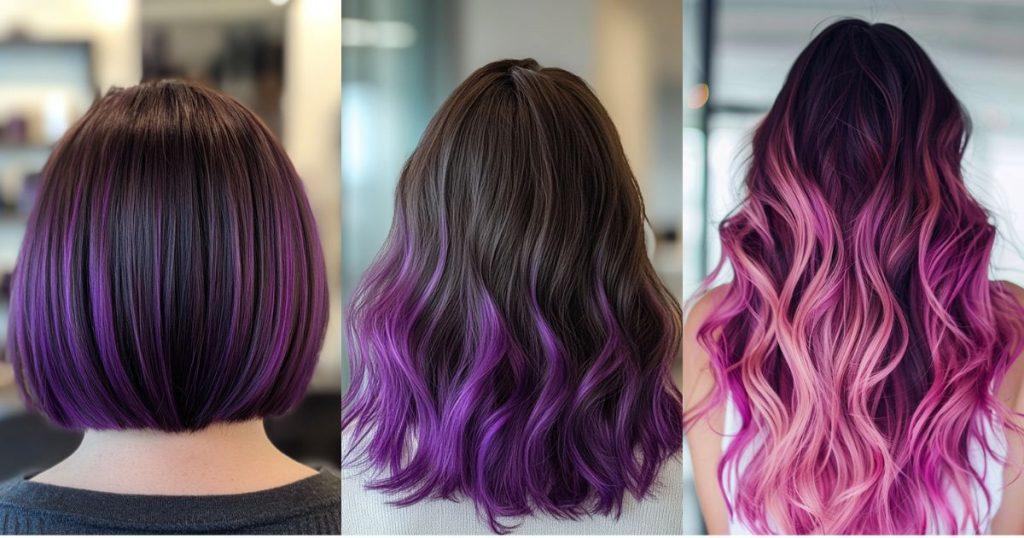
Purple is one of the fastest-fading colors in the salon, which is exactly why ombre suits it so well. Your natural root stays put, the color builds as it moves down the lengths, and when the brightest ends start to soften, the whole look still makes sense. Dark brunettes can go straight to violet with a little lightening; blondes can wear lilac with almost none.
Below are 28 purple ombre ideas, from inky roots dissolving into electric violet to dreamy lavender fades and purple blended with pink, blue or red. If you want the color all over instead, browse our purple hair color ideas. For every look here you’ll get who it suits, what to say in the chair and how to stop the shade from washing out too soon.
How to choose a purple ombre
Your starting color decides which purples are realistic. Deep violet, plum and berry show up on dark hair with light pre-lightening. Lilac, lavender and pastel purple need the ends lifted to pale blonde first, because a pastel tint can’t brighten dark hair on its own.
| Hair type | Purple ombre that works best | What to avoid |
|---|---|---|
| Fine or thin | Deep violet or plum ends on a dark base, which needs little lightening | Pastel lilac on bleached fine ends, which can turn fragile |
| Thick | A long, blended fade with brighter violet hand-painted through the lengths | A narrow band of color on the bottom inch, which looks dipped |
| Wavy | A soft melt starting around the cheekbones so waves mix the shades | A sharp horizontal line where the purple begins |
| Curly | Purple painted curl by curl with a conditioning semi-permanent dye | Heavy bleaching on dry curls; ask for a bond builder |
| Straight | A seamless root melt; straight hair shows every step of the gradient | Patchy application, which reads as stripes on sleek hair |
Depth of color: a lilac or lavender ombre fades in two to four weeks, while violet and plum last longer. If you love the paler end of the range, see our lilac hair color ideas. Placement: ombre puts most of the color on the ends; for streaks of purple through the whole head, try purple highlights instead.
Dark roots fading to violet
Black and dark brown bases make violet look richer. These fades keep the natural color at the top and let bright purple take over through the mid-lengths and ends.
1. The secret violet brunette
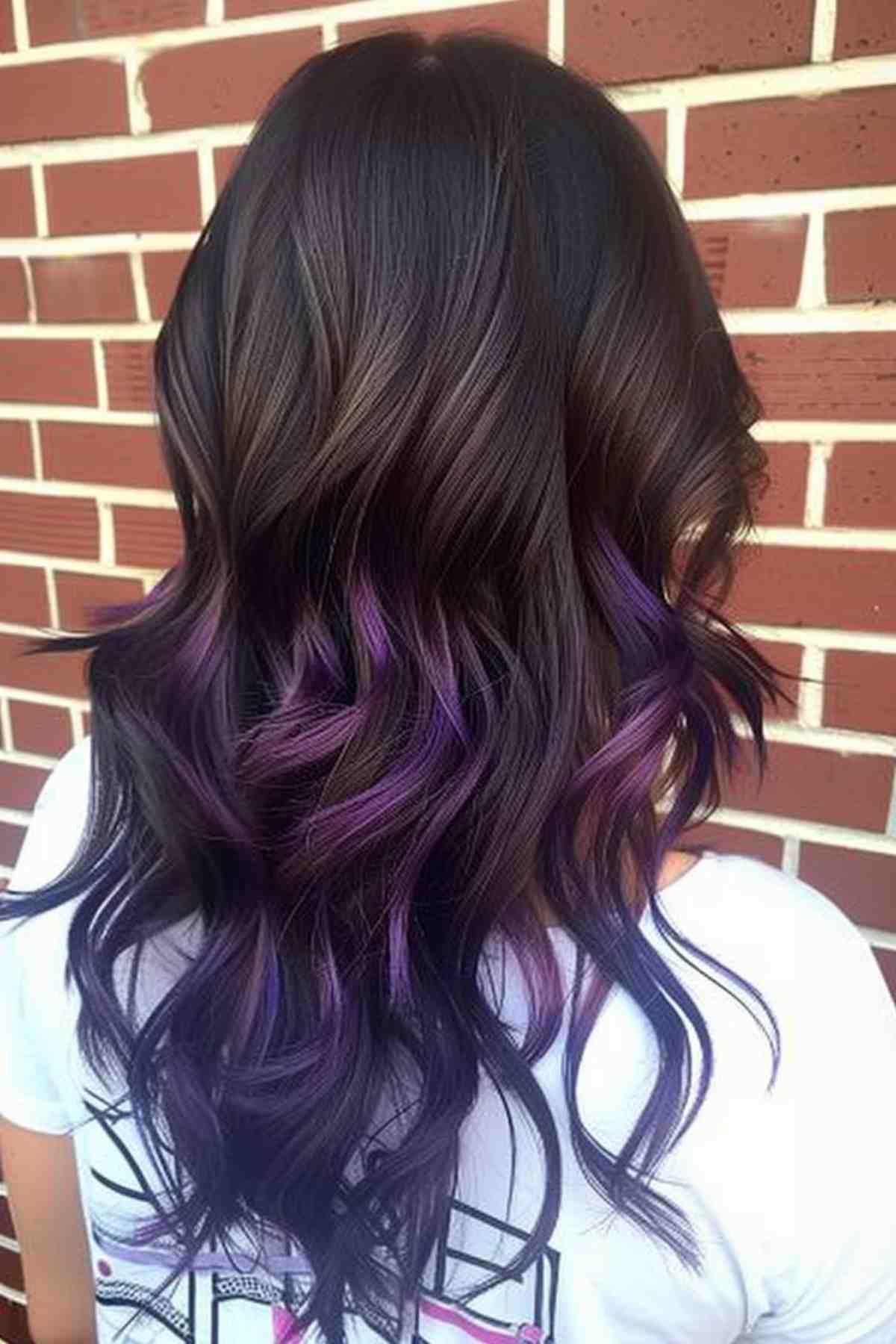
If you want purple that only shows up when the light catches it, start here. From behind, long dark brown hair stays natural down to the shoulder blades, then deep violet seeps into the bottom of each wave. The purple sits underneath and at the tips, so at a glance it reads brunette. In sunlight, it turns jewel-toned. A good first step for anyone nervous about bright color.
- Best for: Dark brown hair; anyone who needs a subtle look for work but wants color off-duty.
- Ask your stylist for: A purple ombre on the last third only, with deep violet painted heavier underneath and on the ends.
- How to style it: Curl loosely with a 1.25-inch iron and let the waves fall to show the color underneath.
- Upkeep: Color-depositing conditioner weekly; refresh violet every 6 to 8 weeks.
2. The plum-black melt
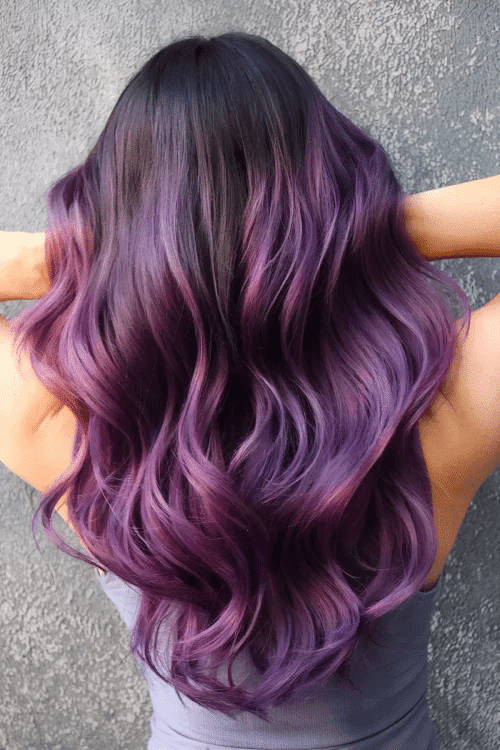
Hands in the air, color on display: this back view shows how far a dark base can carry purple. Black roots soften into plum and then a brighter red-violet through big, glossy waves. Because the shades are close in depth, the blend is smooth, with no hard stop. The result looks rich rather than neon. Moody, polished and very wearable.
- Best for: Black or very dark brown hair with natural body.
- Ask your stylist for: A black-to-plum purple ombre starting below the ears, blended with a root melt and finished with a red-violet gloss.
- How to style it: Blow-dry with a round brush, then wave in large sections and brush through for volume.
- Upkeep: Gloss every 6 weeks; wash in cool water to slow fading.
3. The indigo violet sweep
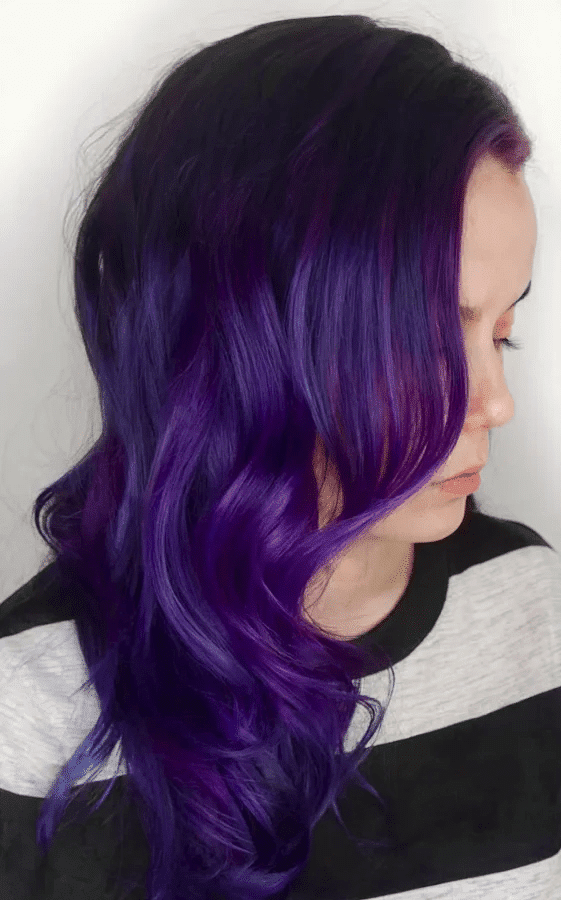
Deep, inky and glossy, this is purple ombre at its most saturated. Dark indigo roots move into rich violet lengths swept forward over one shoulder, with a slight bend at the ends adding shine. The shift between shades is narrow, which gives a jewel-toned depth rather than an obvious fade, and the side-swept front shows a brighter violet strand near the face. It looks almost blue-black indoors. Expect it to glow in daylight.
- Best for: Dark hair; anyone who wants an intense color without pastel upkeep.
- Ask your stylist for: A violet ombre with an indigo root, keeping the transition short and the lengths fully saturated.
- How to style it: Smooth with a flat iron and twist loose bends into the ends.
- Upkeep: Refresh every 4 to 6 weeks; sulfate-free shampoo only.
4. The electric orchid waves
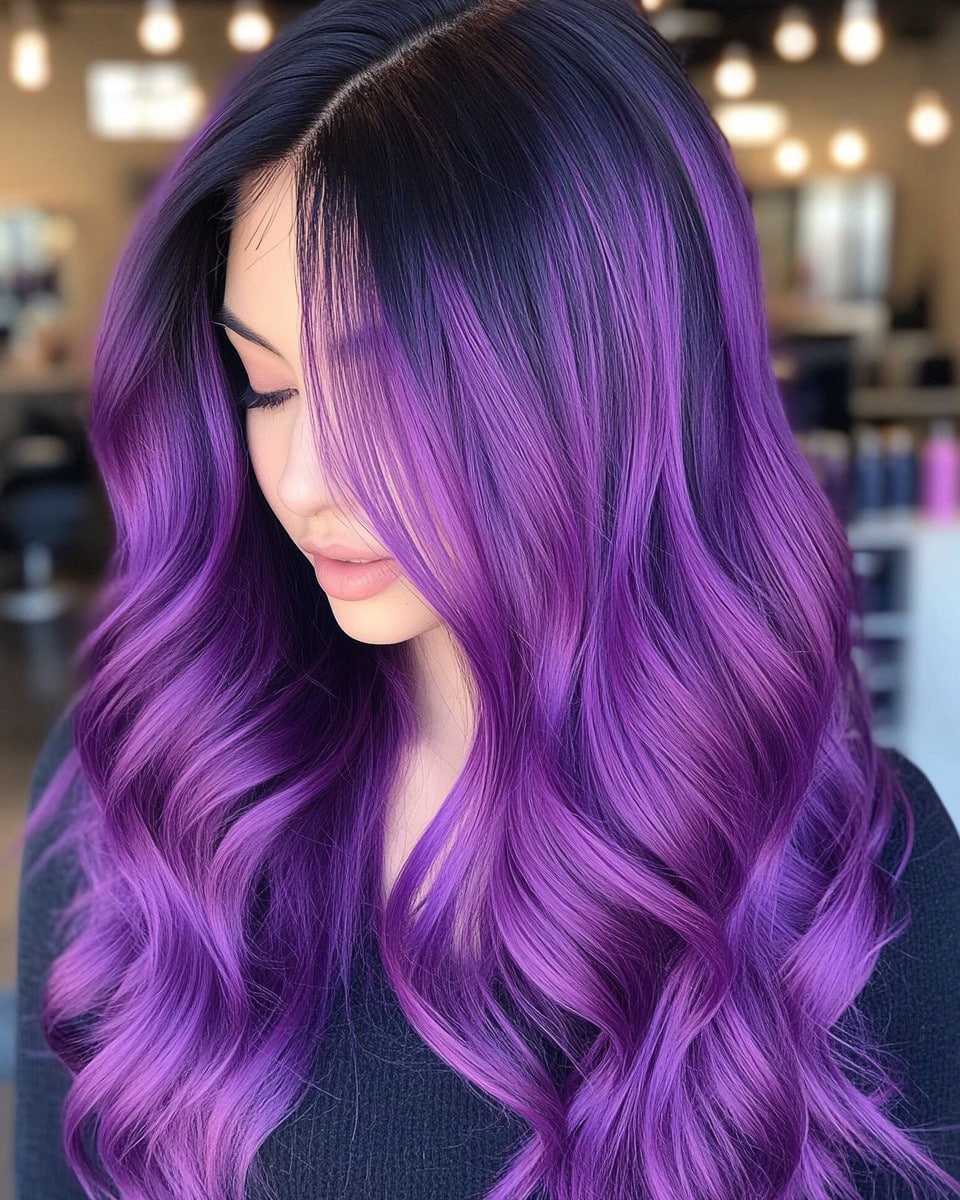
Some looks are meant to be noticed, and this one does it without trying. A center part reveals near-black roots that drop quickly into bright orchid purple, carried through long, face-framing waves. The front pieces are the lightest, so the color sits right around the face. Lifting the ends evenly is the hard part. Get it right and the effect is luminous.
- Best for: Long, healthy hair that can be pre-lightened; confident color lovers.
- Ask your stylist for: A black-rooted purple ombre with bright orchid ends and face-framing pieces lifted a shade lighter.
- How to style it: Curl away from the face with a large barrel and finish with a shine spray.
- Upkeep: Toner or color refresh every 4 weeks; bond treatment every lightening session.
5. The bright violet back panel
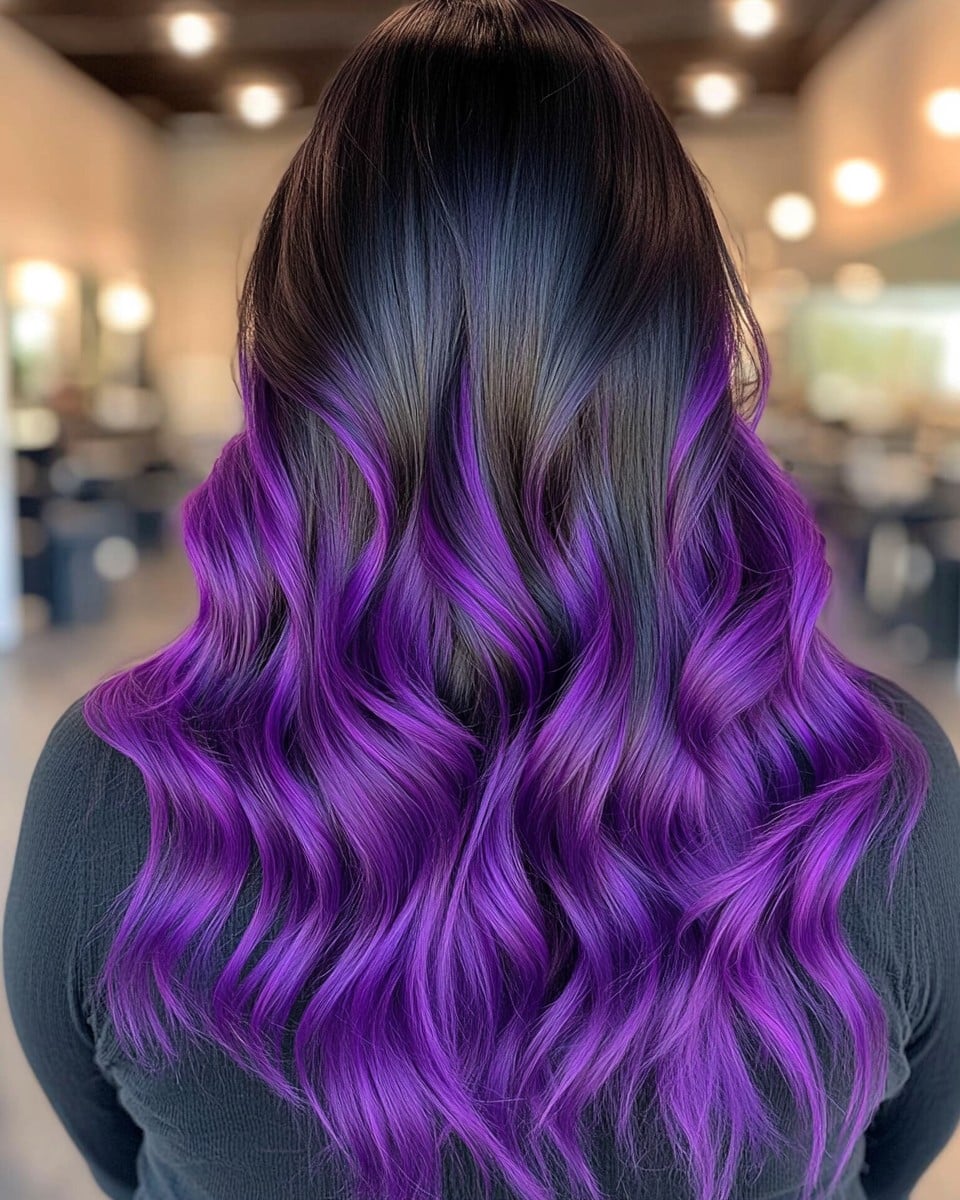
Turn around: this is the view people get behind you in the coffee line. Black roots take up the top few inches, then bright, even violet fills the rest of the long, waved lengths. Every wave catches a different shade of purple, which keeps the color from looking flat. The root works as a grow-out buffer. It’s bold, but surprisingly low maintenance at the scalp.
- Best for: Dark hair; anyone who wants a vivid look but hates frequent root touch-ups.
- Ask your stylist for: A high-contrast purple ombre with a deep root, lightened evenly through the lengths and colored vivid violet.
- How to style it: Wave in large sections and leave the ends straight for a modern finish.
- Upkeep: Color refresh every 4 to 6 weeks; root work only every few months.
6. The black-to-lavender cascade
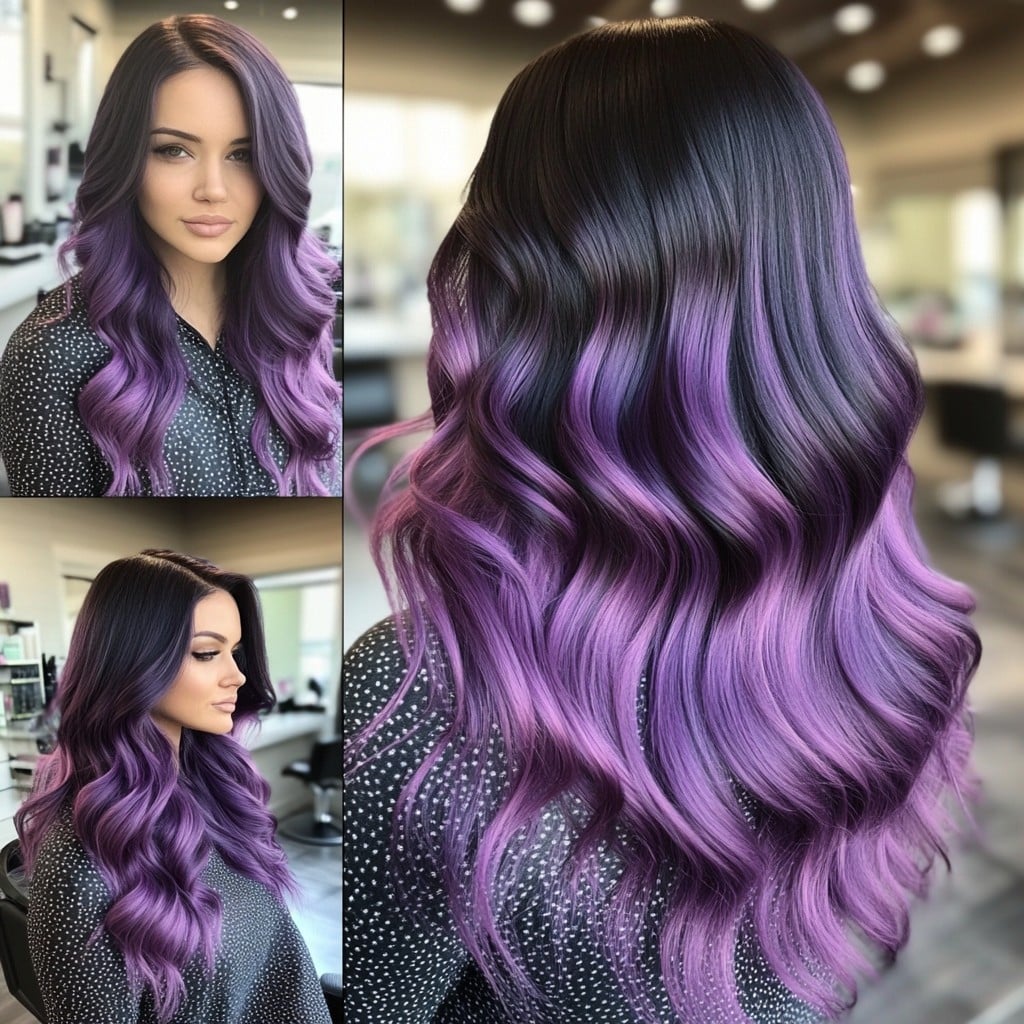
Here’s a fade that changes completely from front to back. Black roots and front pieces stay dark at eye level, and the waves turn into bright lavender purple below the shoulders. From behind, the color looks like it’s pouring downward through big, bouncy curls. Plenty of volume keeps the purple moving. A good pick if you want long hair to look dramatic from every side.
- Best for: Long, thick hair with a dark base.
- Ask your stylist for: A long ombre from shoulder height, black root to bright lavender, with lots of soft blending.
- How to style it: Set large curls with a 1.5-inch wand and brush out for volume.
- Upkeep: Purple conditioner weekly; refresh every 4 to 6 weeks.
7. The violet-tipped long layers
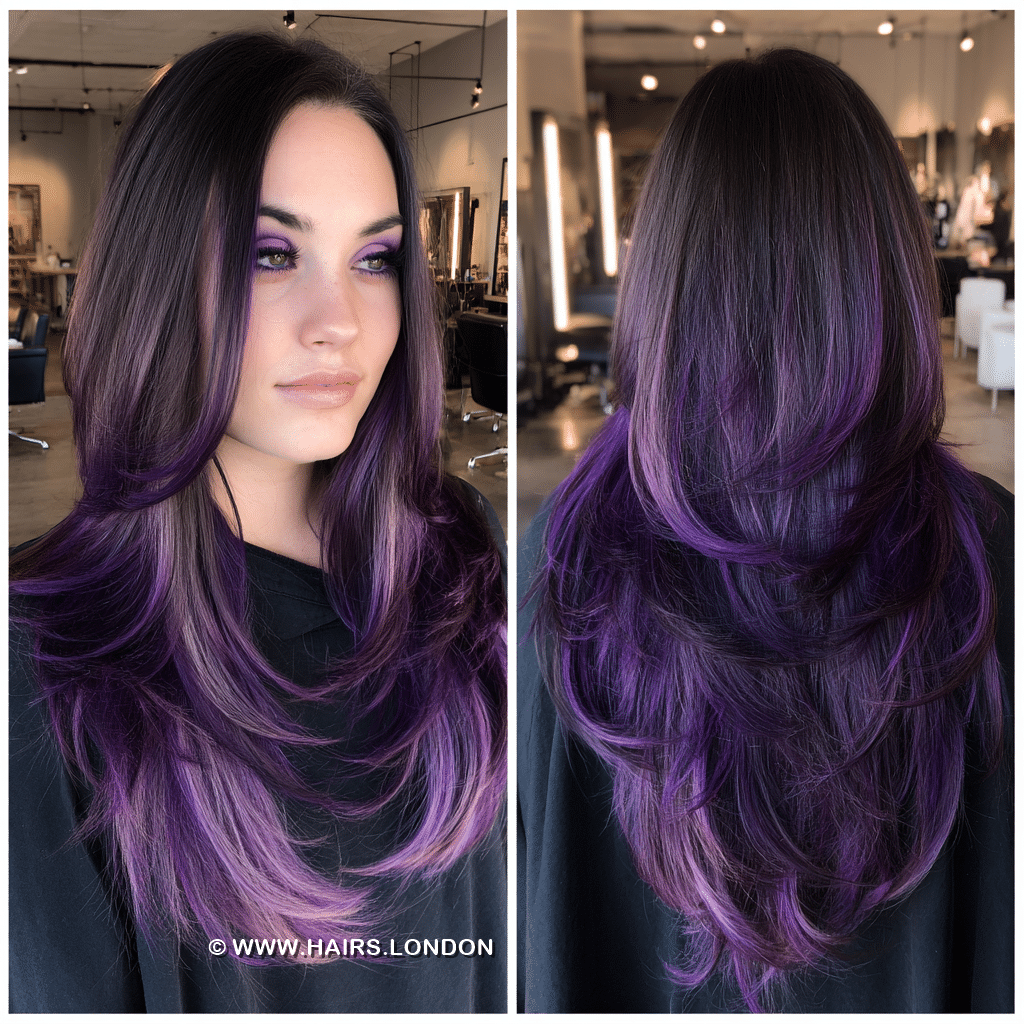
Long layers give purple ombre more places to land. Dark roots and mid-lengths turn violet at the ends of every layer, including the curtain-style pieces at the front. From the back, the shorter layers create flashes of purple on top of darker lengths. The color is deep rather than bright, so it looks rich against the dark base. Layered cut, layered color.
- Best for: Long, straight to slightly wavy dark hair with layers.
- Ask your stylist for: Long face-framing layers with violet painted on the ends of each layer and a soft root melt.
- How to style it: Round-brush blow-dry and flip the ends of the layers outward.
- Upkeep: Layer trim every 8 weeks; color refresh every 6 weeks.
8. The deep side part violet
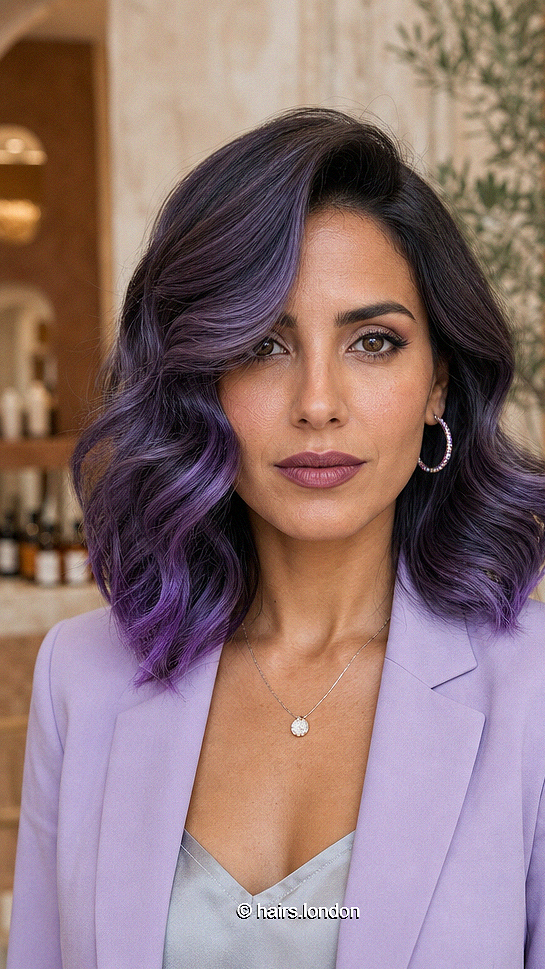
Prefer something polished? A deep side part sends dark brown hair over one side in soft, shoulder-length waves, and violet appears only at the ends and in a few underneath pieces. Because the top stays dark, it suits professional settings, while the purple adds interest as the waves move. Matching the shade to plum-toned makeup ties it together. Grown-up purple.
- Best for: Medium-length dark hair; anyone easing into purple.
- Ask your stylist for: A shoulder-length cut with a deep side part and violet ombre on the ends and underneath sections.
- How to style it: Blow-dry with a large round brush, then bend the ends with a flat iron.
- Upkeep: Refresh every 6 to 8 weeks; trim every 8 weeks.
9. The violet face-framing shag
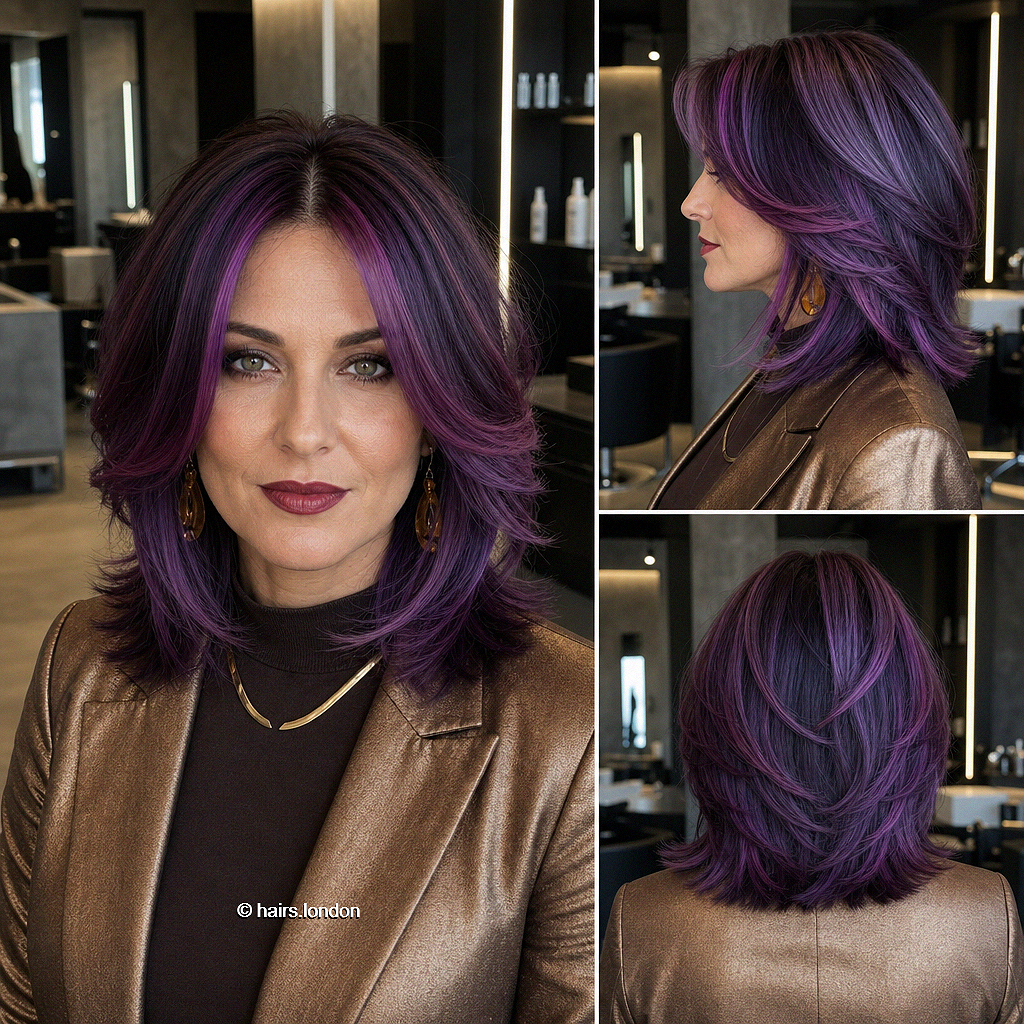
For a mature, modern take, look at the placement. Dark plum roots sit at the crown, while bright violet is brought forward into face-framing layers and through the shaggy ends. Front, side and back views show how the color follows the cut. Bright around the face, deeper elsewhere. It’s a smart way to wear a vivid shade with confidence at any age.
- Best for: Medium-length layered hair; women who want bold color that stays wearable.
- Ask your stylist for: A medium shag with face-framing layers, violet painted brightest at the front and ends, and a plum root.
- How to style it: Blow-dry with a round brush, flicking the front layers away from the face.
- Upkeep: Cut every 6 to 8 weeks; color refresh every 5 to 6 weeks.
Lilac and lavender fades
Pale purples need pale ends, so these fades usually start with lightening. The payoff is a softer, misty finish that suits lighter roots and cooler wardrobes.
10. The purple-to-lilac drift
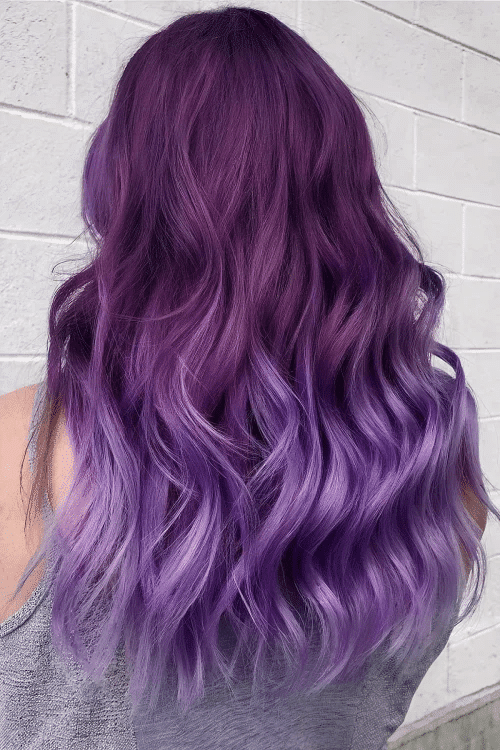
Not every ombre runs from dark natural roots. Here the whole head is purple, starting deep grape at the scalp and drifting down into pale lilac at the tips, viewed from behind against a white brick wall. Long, loose waves blend the shades so you can’t spot where one stops, and the palest lilac gathers at the very bottom of each wave. It’s a full-color commitment with built-in softness. Think of it as purple in two moods.
- Best for: Hair that has been pre-lightened; anyone ready for all-over color.
- Ask your stylist for: A purple root shading into lilac ends, painted as a smooth gradient over pre-lightened hair.
- How to style it: Wave loosely and finish with a lightweight shine spray.
- Upkeep: Refresh every 4 weeks; pastel ends fade fastest.