Winter color tends to be about depth: glossy browns, wine reds, cool shadowed roots. Spring is when most people want the opposite, a little more light around the face and a shade that looks good outdoors instead of under office lighting. That does not have to mean going platinum. Often it is a few face-framing ribbons, a warmer gloss or a softer root that does the job.
These 21 spring hair colors are grouped by how much change they ask of you: sunny blondes that brighten what you already have, lived-in brunette melts that grow out gracefully, and pastel rose and lilac for when you want something new entirely. Each one comes with who it suits, the words to use in the salon, how to style it and how often you will be back. If it is a new cut you are after, our spring bob haircuts focus on shape, and for the darker end of the year our winter hair color ideas pick up the story.
How to choose a spring hair color
The simplest rule is to add light where the sun would hit: around the face, on the top layer and through the ends. How much light, and how warm or cool it should be, depends on your starting color and how often you want to be in the salon.
| Starting color | Spring shades that work best | What to avoid |
|---|---|---|
| Dark brown or black | Caramel or chestnut balayage, soft bronde ribbons, smoky lilac over a dark root | Lifting all-over to pale blonde in one session |
| Medium brown | Honey or golden balayage, face-framing money pieces, warm beige melts | Ashy toners that can look flat on warm skin |
| Dark blonde | Golden or beige blonde with a soft root, rose gold gloss | Heavy foils right to the root, which grow out with a hard line |
| Light blonde | Peach or rose gold, creamy golden blonde, pastel lilac | Over-toning to silver if you want a warm spring finish |
| Gray or silver | Lilac or pearl glosses, soft pastel washes | Bright, saturated pinks that fade unevenly on gray |
Warm or cool: golden, honey and peach shades look sunny; beige, ash and lilac look softer and cooler. If you are unsure, ask your colorist to hold a swatch against your face in daylight. Grow-out: a shadow root or balayage lets you skip appointments through summer, which is why most of these looks start with a deeper root. For more blonde placement ideas, see our blonde balayage looks.
Sunny blondes for spring
Spring blonde is warm and soft rather than icy. Most of these keep a deeper root and put the brightest pieces around the face, so they look sunlit rather than freshly bleached.
1. The glass-straight golden blonde
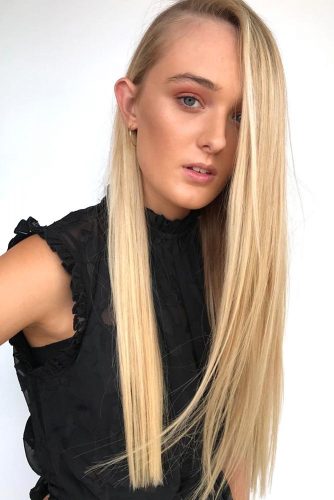
If you love a sleek finish, this is spring blonde at its glossiest. Very long golden blonde hair is flat-ironed straight and swept from a deep side part, so a curtain of color falls across one side of the face. The tone is warm and even from just below the root to the ends, with slightly paler pieces on the top layer. All that length acts like a mirror for daylight.
- Best for: Straight, healthy hair below the shoulders; anyone with natural light blonde or dark blonde hair.
- Ask your stylist for: A golden blonde gloss over babylights, kept slightly deeper at the root, with a deep side part.
- How to style it: Blow-dry with a paddle brush, flat-iron in small sections and finish with a lightweight shine serum.
- Upkeep: Gloss every 6 to 8 weeks; highlights every 10 to 12 weeks.
2. The creamy side-swept blonde
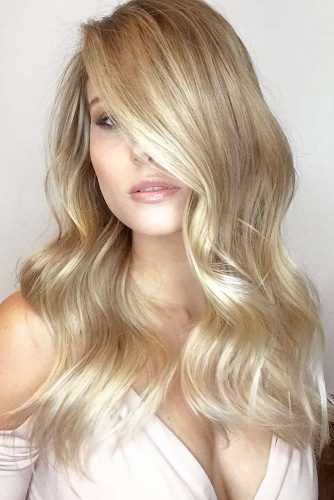
Some blondes look sunny; this one looks buttery. Creamy golden blonde is worn long with side-swept bangs dipping over one eye, and soft, loose waves run through the lengths. The color has gentle variation, slightly darker underneath and almost vanilla on top, which keeps it from looking flat. It is a pretty way to brighten dark blonde hair for the warmer months without going stark.
- Best for: Fine to medium hair; anyone with warm or neutral skin tones.
- Ask your stylist for: Fine babylights with a creamy golden toner and long side-swept bangs.
- How to style it: Set waves with a 1.25-inch wand, then brush them out for a soft finish.
- Upkeep: Toner every 6 weeks; highlights every 10 to 12 weeks.
3. The honey face-frame
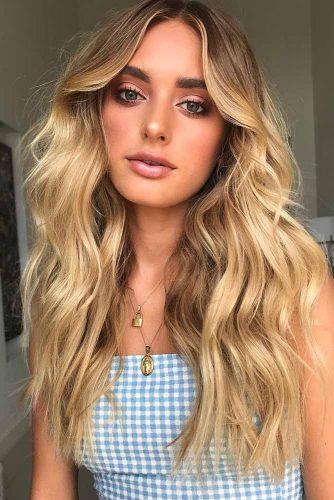
Bright at the front, deeper at the back: that is the whole idea here. Honey blonde pieces frame the face from the part down, while a soft darker root and warmer underneath layers add depth. Voluminous waves and curtain-style front layers swing away from the cheekbones. Paired with a gingham top, it looks like the first warm weekend of the year.
- Best for: Medium to thick hair with a natural wave; anyone with medium brown or dark blonde hair.
- Ask your stylist for: Honey balayage with a brighter face frame, a soft shadow root and long curtain layers.
- How to style it: Blow-dry the front pieces back with a round brush, then wave the lengths with a large barrel.
- Upkeep: Balayage every 12 to 14 weeks; gloss at 6 weeks.
4. The dark root, golden ends melt
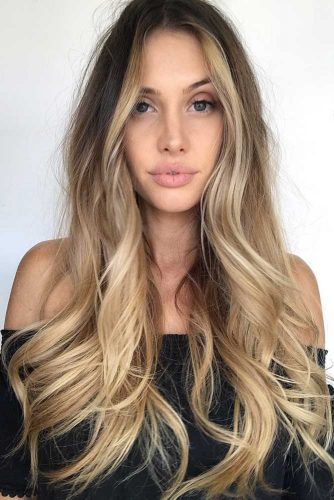
Want blonde but hate root regrowth? This long melt starts almost brunette at the scalp and fades into golden blonde through the mid-lengths and ends. The brightest strands sit right beside the face on both sides of the center part, which lifts the complexion without lightening the whole head. Loose, slightly undone waves keep the blend soft, and face-framing layers that start near the chin put the bright pieces right where they are seen.
- Best for: Brunettes who want a blonde effect with long gaps between appointments.
- Ask your stylist for: A root melt with golden blonde balayage from the mid-lengths, plus face-framing brightness.
- How to style it: Wave with a curling wand, alternating direction, and rake through with fingers.
- Upkeep: Balayage every 12 to 16 weeks; purple shampoo only if the gold turns brassy.
5. The bronde with golden ribbons
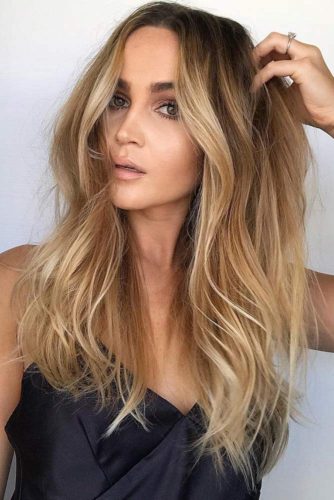
Neither brown nor fully blonde, bronde is about as low-commitment as a spring brightening gets. A soft brown root blends into dark blonde lengths, and slimmer golden ribbons sit at the front. The center part and long, slightly tousled texture make it look relaxed. It is ideal if you want people to say you look rested rather than ask where you got your color done.
- Best for: Medium brown to dark blonde hair; anyone wanting a subtle seasonal change.
- Ask your stylist for: Bronde balayage with golden face-framing ribbons and a blended root.
- How to style it: Air-dry with a light cream, then bend a few front pieces with a flat iron.
- Upkeep: Gloss every 8 weeks; balayage every 12 to 16 weeks.
6. The beige blonde half-up
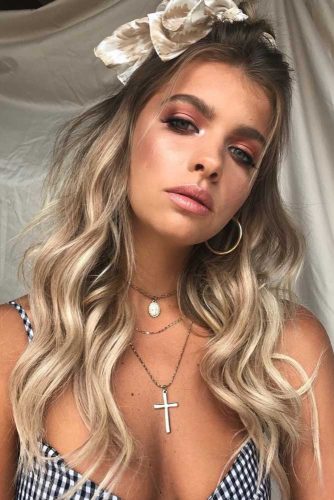
Here a hair accessory does as much as the color. Beige blonde balayage over a darker root falls in big, bouncy waves, and the top section is pulled half-up with a white satin bow. The cooler beige tone keeps it fresh rather than golden, and the bow makes the look feel springy. Swap the satin for a printed scarf and it changes completely.
- Best for: Medium to thick hair; anyone with neutral or cool undertones.
- Ask your stylist for: Beige blonde balayage with a soft shadow root and long layers.
- How to style it: Curl with a 1.25-inch iron, tie the top section half-up and knot a satin ribbon over the elastic.
- Upkeep: Tone every 6 to 8 weeks; balayage every 12 weeks.
7. The scarf-tied dirty blonde
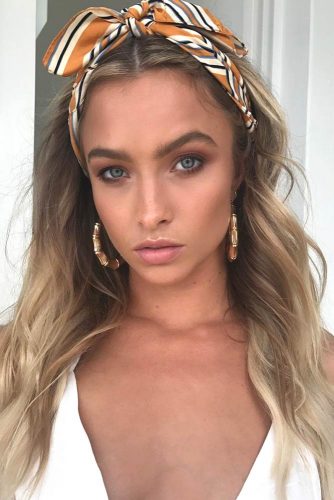
Is there a better spring accessory than a printed headscarf? It sits well against this dirty blonde, which starts with a deeper ash-brown root and turns lighter and warmer toward the ends in loose waves. The orange and white stripes pick up the golden strands, while the darker root keeps the face framed. The waves are loose and uneven, the way hair falls after air-drying, and gold hoops finish the beach-weekend feel.
- Best for: Medium hair with natural wave; dark blondes who want minimal upkeep.
- Ask your stylist for: Soft dirty blonde balayage with a shadow root and lightened ends.
- How to style it: Scrunch in a sea-salt spray, air-dry, then tie a silk scarf as a headband with the knot on top.
- Upkeep: Balayage every 14 to 16 weeks; gloss as needed.
8. The honey heart knot
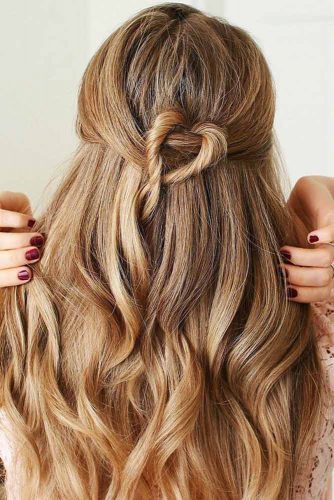
Turn around and the detail appears: a small heart-shaped loop knot holding a half-up section at the back of the head. The color underneath is a warm honey caramel with lighter golden ribbons that show up most in the waves. It is warm enough for spring without going full blonde, and the half-up knot keeps the color from hiding behind your shoulders.
- Best for: Medium to thick wavy hair; light brown and dark blonde hair.
- Ask your stylist for: Honey caramel balayage with golden ribbons through the lengths.
- How to style it: Wave the hair, take two side sections back, knot them into a loop and pin into a heart shape.
- Upkeep: Balayage every 12 weeks; gloss every 6 to 8 weeks.
9. The beach-wave beige melt
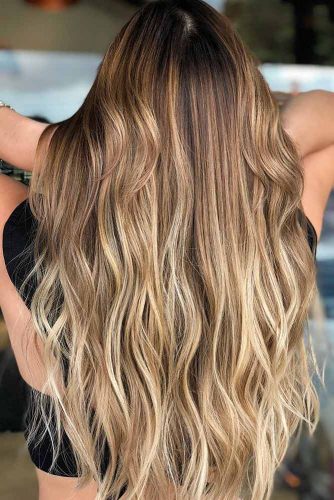
Long hair makes a melt look its smoothest, because there is room for the color to change slowly. This one moves from a dark brown root through soft bronde to beige and golden blonde at the very ends, finished in loose beach waves. Seen from the back, the lighter pieces are spread evenly so there are no stripes. It is the kind of color that looks better the more sun it sees.
- Best for: Long hair, medium to thick density; brunettes going lighter for spring.
- Ask your stylist for: A long root melt into beige and golden blonde balayage with no visible lines.
- How to style it: Use a flat iron to create flat beach waves, leaving the last inch straight.
- Upkeep: Balayage every 14 to 16 weeks; bond-repair treatment monthly.
Lived-in brunette and caramel melts
Not ready to go blonde? These add warmth and movement to brown hair with caramel, chestnut and bronde, and they grow out softly.
10. The espresso to cream ombre
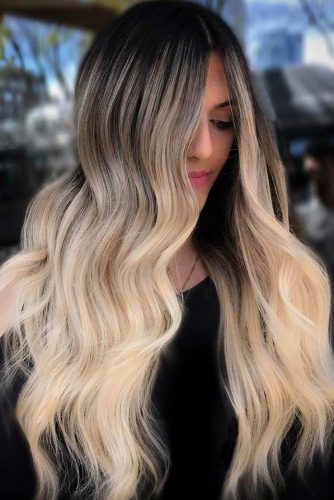
Contrast is the point of this one. A dark espresso root runs a few inches down before melting into creamy, pale blonde through the lengths, finished in loose waves. Because the transition is blended rather than striped, the dark root reads intentional, not grown out. It is a bold spring change for brunettes who want light without daily upkeep at the scalp.
- Best for: Dark brown hair with healthy lengths; anyone who wants maximum change with minimal root maintenance.
- Ask your stylist for: A high-contrast ombre from a natural dark root to creamy blonde, blended with a root smudge.
- How to style it: Wave in large sections with a 1.5-inch iron and finish with a gloss spray.
- Upkeep: Re-blend every 12 to 16 weeks; tone every 6 to 8 weeks.