


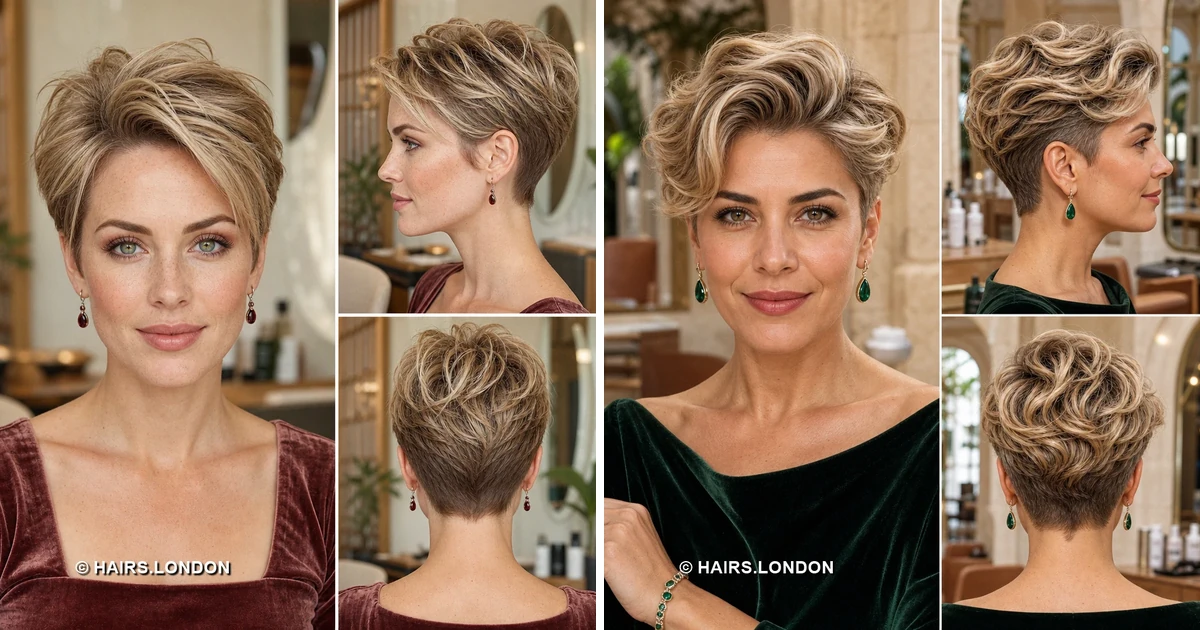
These highlighted pixie cuts share a useful balance: enough length on top to show movement and color, with close sides and napes that keep the outline neat. The images offer options from polished side sweeps to defined curls and lifted, piecey crowns. Use the front, side and back views to decide where you want softness, volume and contrast before your next appointment.
1. Airy Sandy Blonde Pixie with a Sweeping Fringe
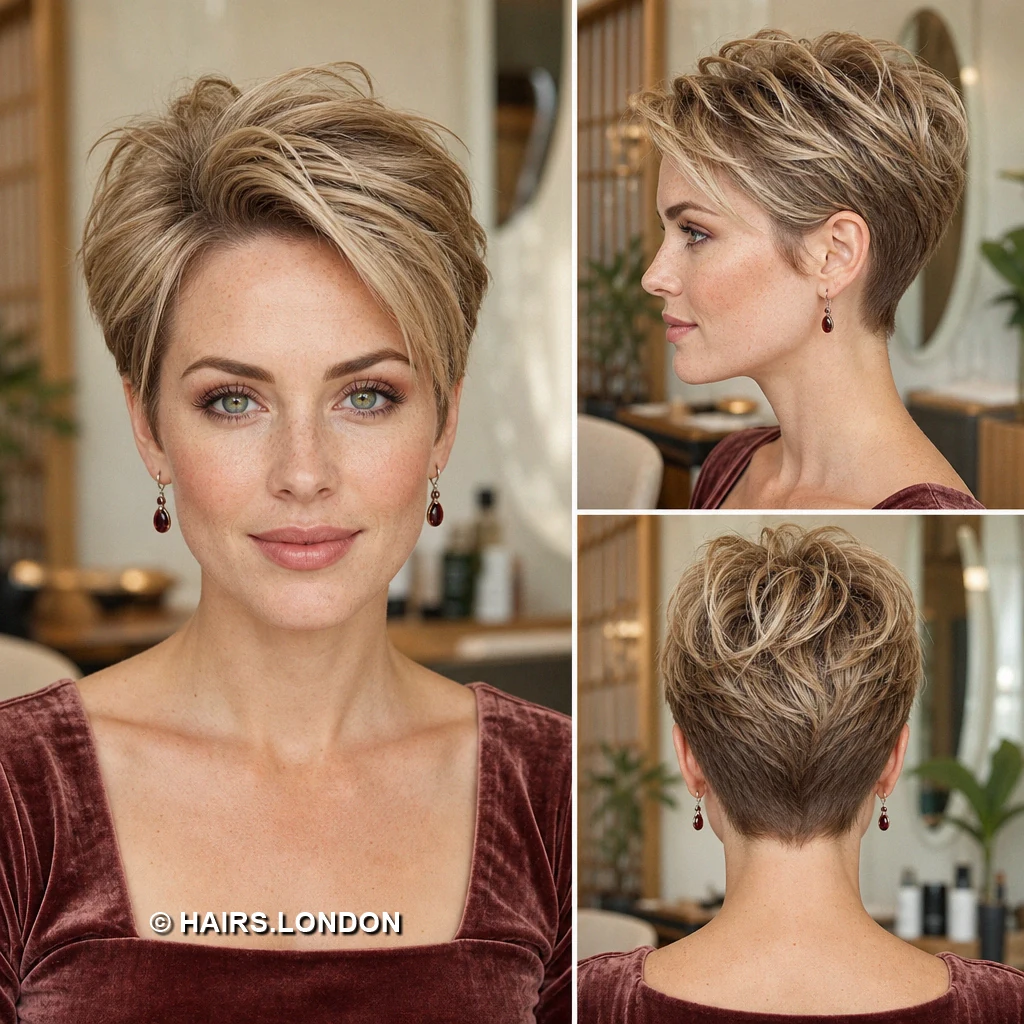
This airy pixie pairs sandy blonde ribbons with darker roots. Long crown layers lift upward before sweeping across the forehead. The fringe curves diagonally, leaving most of the brows visible. Shorter sides sit close around the ears without looking shaved. At the back, softly textured layers taper into the nape. Blonde pieces emphasize separation through the crown and upper sides. Ask for internal layering that preserves movement while reducing bulk. Blow dry upward at the roots, then direct forward pieces. Finish with lightweight paste, separating strands using only your fingertips. Schedule trims when the nape loses its clean, narrow outline.
2. Ash Blonde Pixie with a Feathered Side Fringe
Ash blonde highlights brighten this pixie over a deeper base. Its rounded crown carries soft height without a stiff finish. A feathered fringe falls diagonally toward one eyebrow and temple. Hair above the ears stays close, balancing the fuller top. The back narrows smoothly into a short, tidy tapered nape. Fine pale strands make the layered surface easy to see. Request point cutting through the fringe for flexible, wispy ends. Direct damp hair across the forehead with a small brush. Work in modest styling cream, keeping the sides comfortably flat. Refresh the perimeter before the longer crown begins to collapse.
3. Tousled Blonde Pixie with a Soft Front Fringe
This tousled pixie shows pale blonde streaks against darker roots. The crown stays full, with short layers moving in different directions. A loose fringe brushes forward before breaking into airy pieces. Textured sides cover the upper ears lightly rather than hugging them. Behind, layered ends taper gradually toward a compact, pointed nape. Ask your stylist to retain crown length for this shape. Too much thinning could make the fringe appear sparse. Scrunch a small amount of mousse into hair while damp. Dry with your fingers, lifting sections away from the scalp. Pinch the ends separately for definition without heavy shine.
4. Curly Brown Pixie with a Close Taper
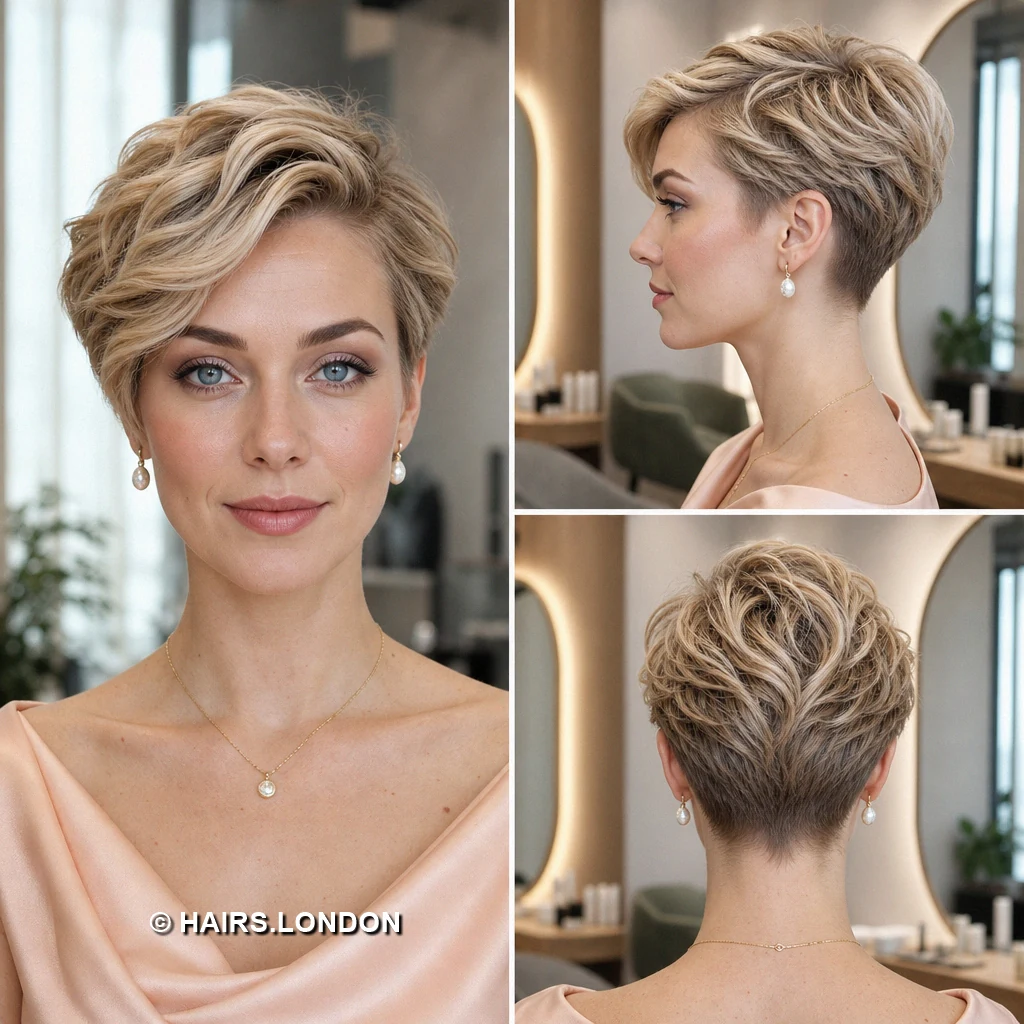
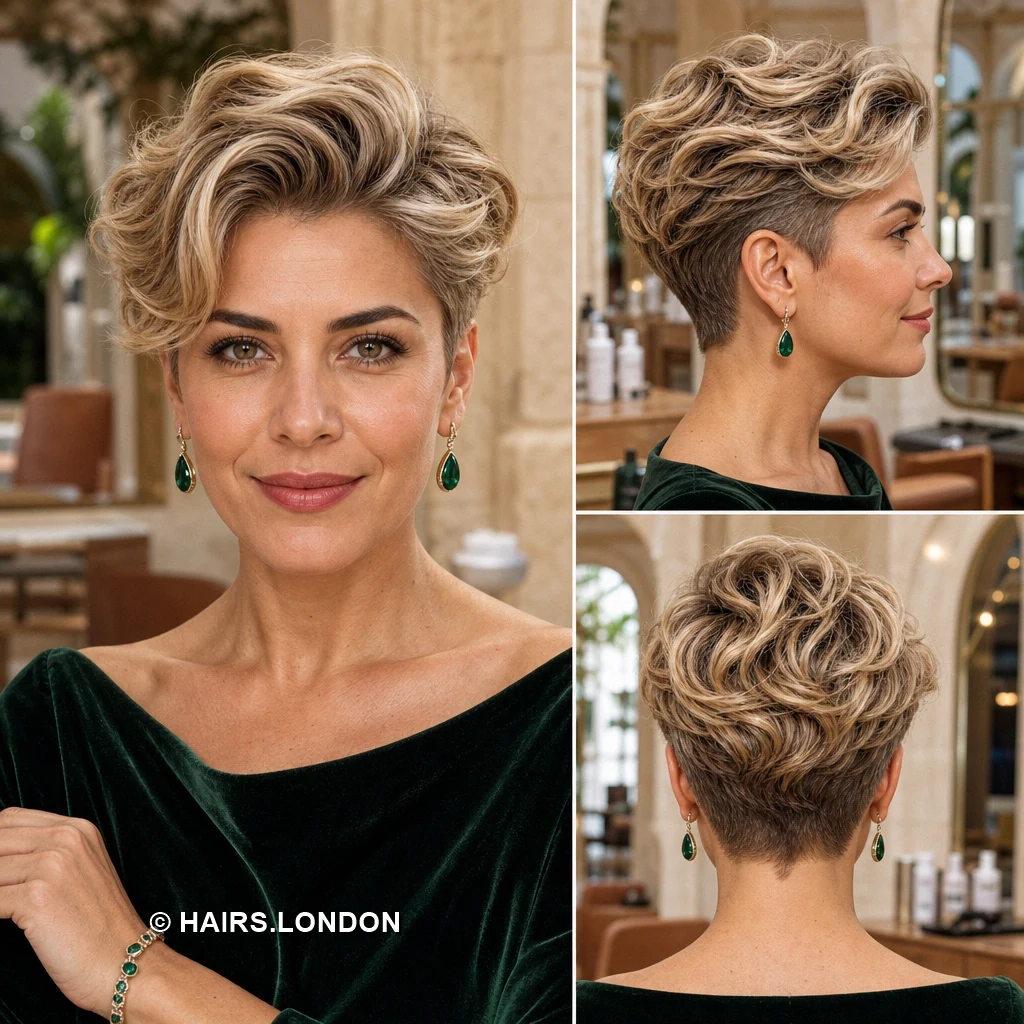
Defined curls give this brown pixie a rounded, buoyant crown. Lighter strands trace the loops and reveal their individual shape. The front sits short, opening the forehead without blunt bangs. Closely cut sides keep volume concentrated above the ears instead. From behind, dense curls narrow into a neatly tapered nape. Ask for enough length on top to support natural spring. Cutting curls dry can help check their finished placement accurately. Apply curl cream to damp hair, then gently scrunch upward. Diffuse on low airflow or allow the curls to air-dry. Trim the sides before they obscure the intentionally narrow silhouette.
5. Warm Blonde Pixie with a Diagonal Sweep
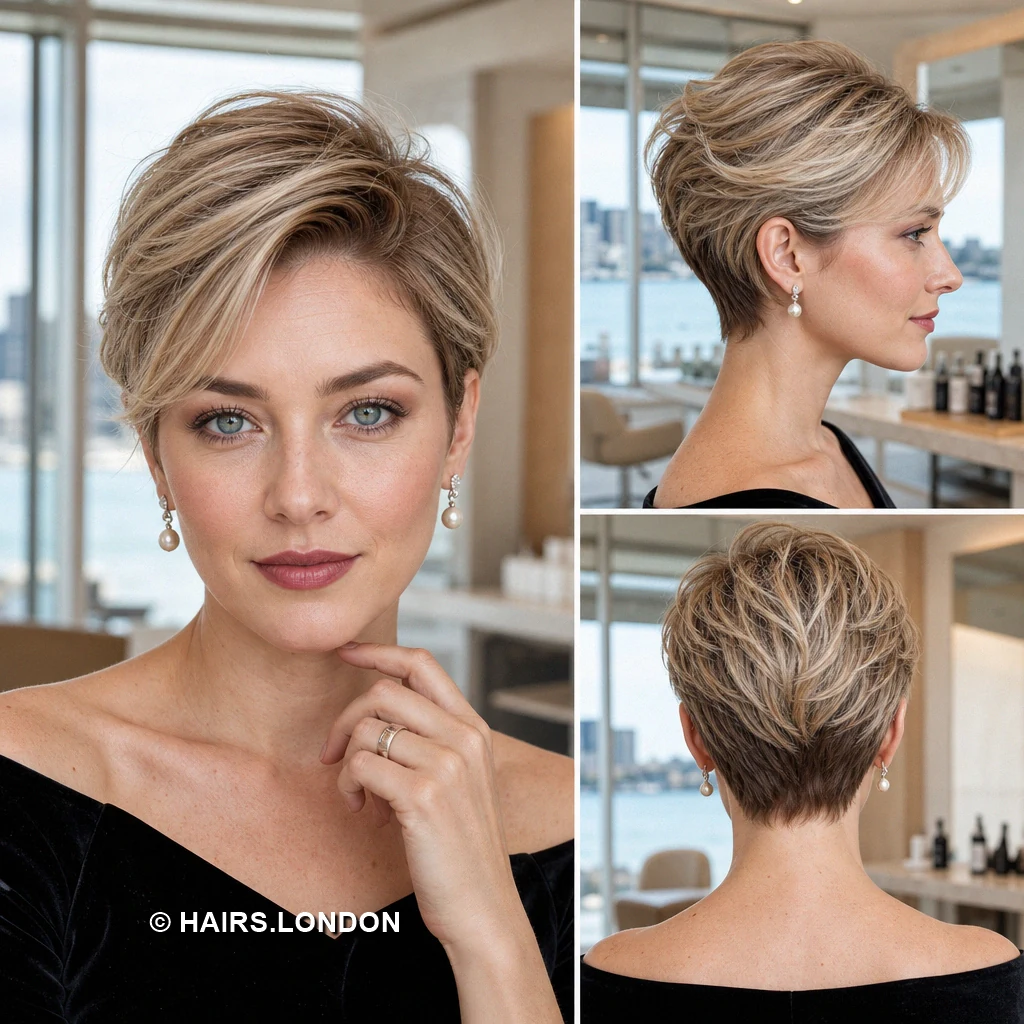
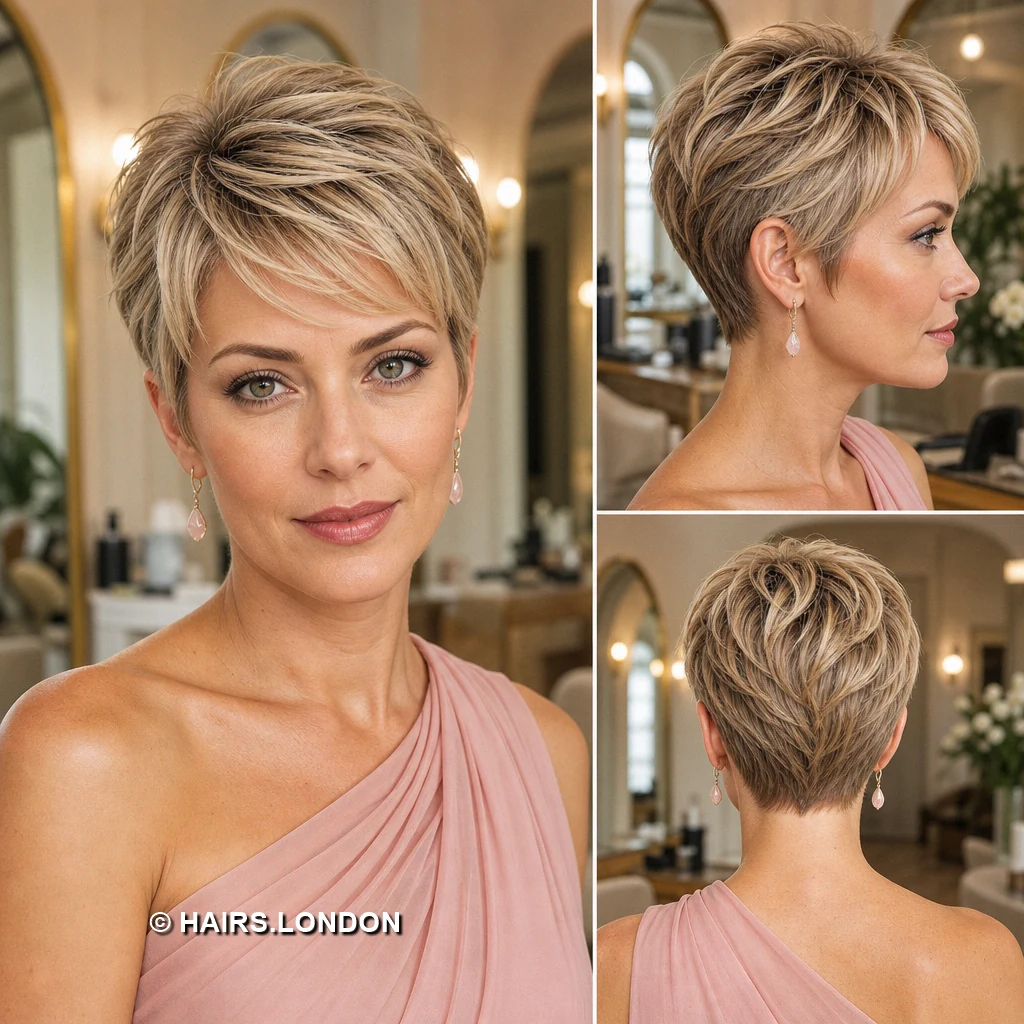
Warm blonde highlights sweep through this softly rounded pixie crown. Deeper brown underneath gives the pale strands clear visual contrast. The long front angles across the forehead in separated pieces. Short, snug sides reveal the ears and sharpen the outline. At the back, layered hair tapers cleanly toward the neck. Ask for weight above the occipital area, not the nape. That placement supports lift while keeping the back gently controlled. Blow dry the fringe sideways, following its visible growth direction. Use a tiny amount of flexible wax to define strands. Keep color appointments focused on brightness without losing root dimension.
6. Cool Beige Pixie with a Neat Side Sweep
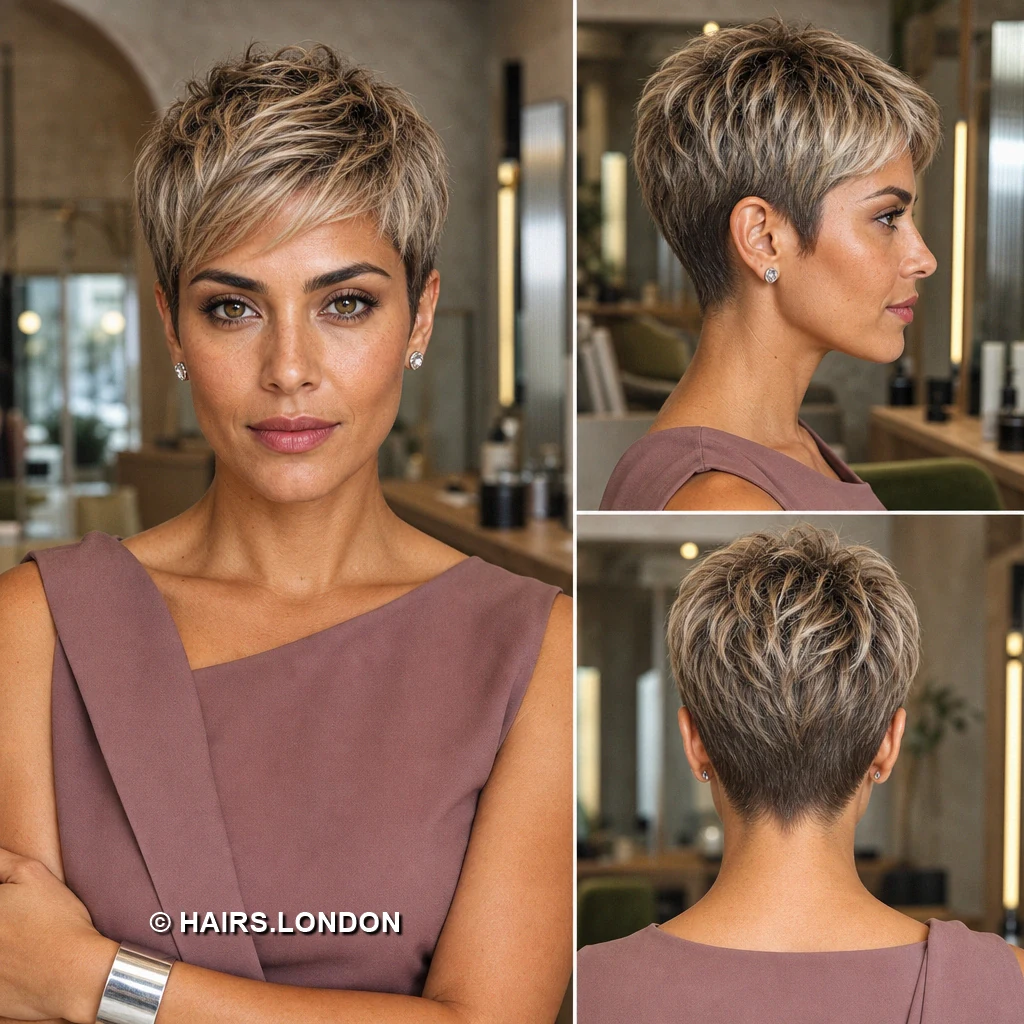
Cool beige highlights create fine lines across this compact pixie. Its crown has gentle lift, then settles into a sideward sweep. A short fringe skims the forehead without covering either eye. Close sides follow the head shape and expose the ears. Darker hair beneath the highlights tapers neatly at the nape. Ask for soft graduation so the crown meets shorter lengths. This keeps the profile rounded instead of abruptly stepped back. Comb damp hair sideways while blow drying on moderate heat. Smooth flyaways with a little cream, avoiding the root area. Regular neckline trims maintain the clean finish from behind.
7. Spiky Blonde Pixie with a Tapered Back
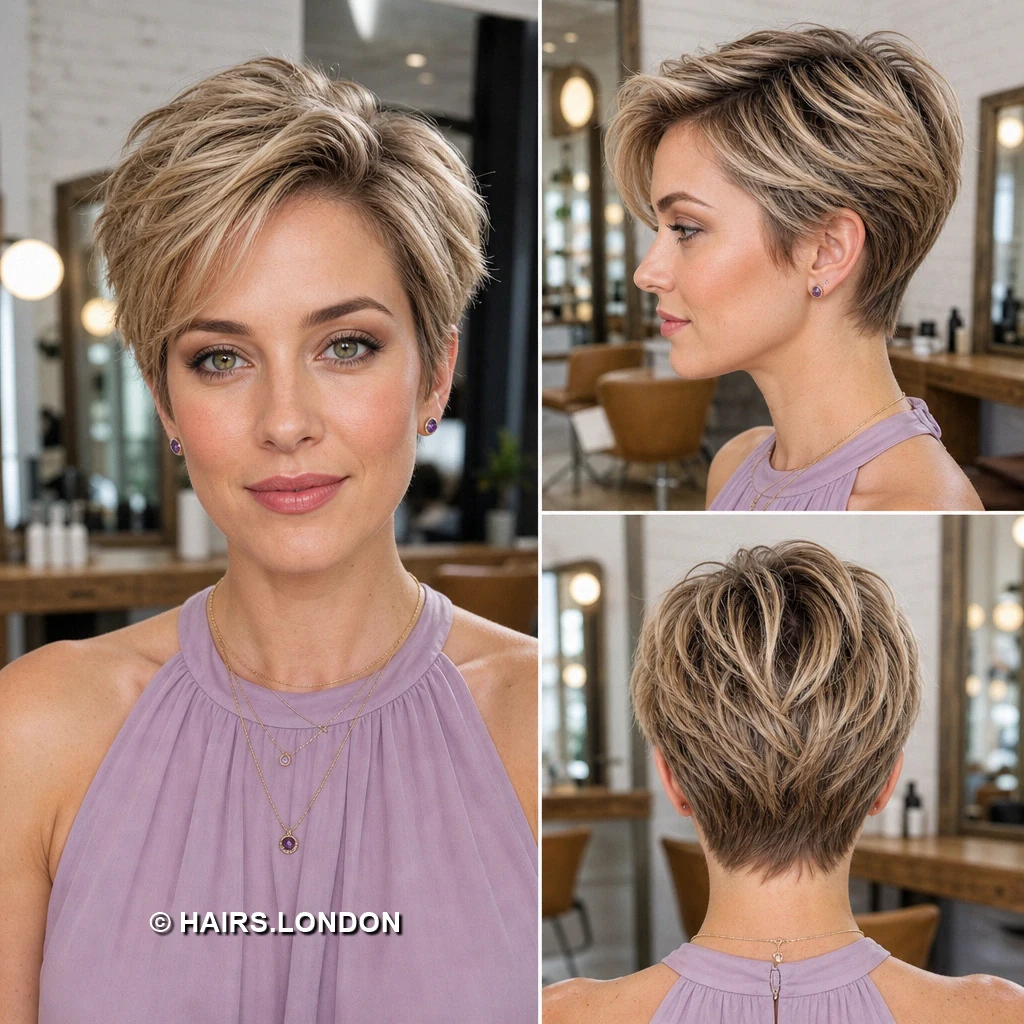
Short blonde tipped layers create pronounced lift across this crown. The front points forward and upward instead of forming bangs. Darker roots make each pale, separated piece more apparent. Closely cropped sides sit flat above and behind the ears. The fuller upper back narrows quickly into a tapered nape. Request textured ends while preserving enough length to style upward. Start with volumizing mousse before drying hair against its growth. Rub a small amount of matte paste between your palms. Pinch individual tips upward rather than coating the entire crown. Book shape trims as soon as the sides begin spreading outward.
8. Beige Blonde Pixie with a Polished Wave
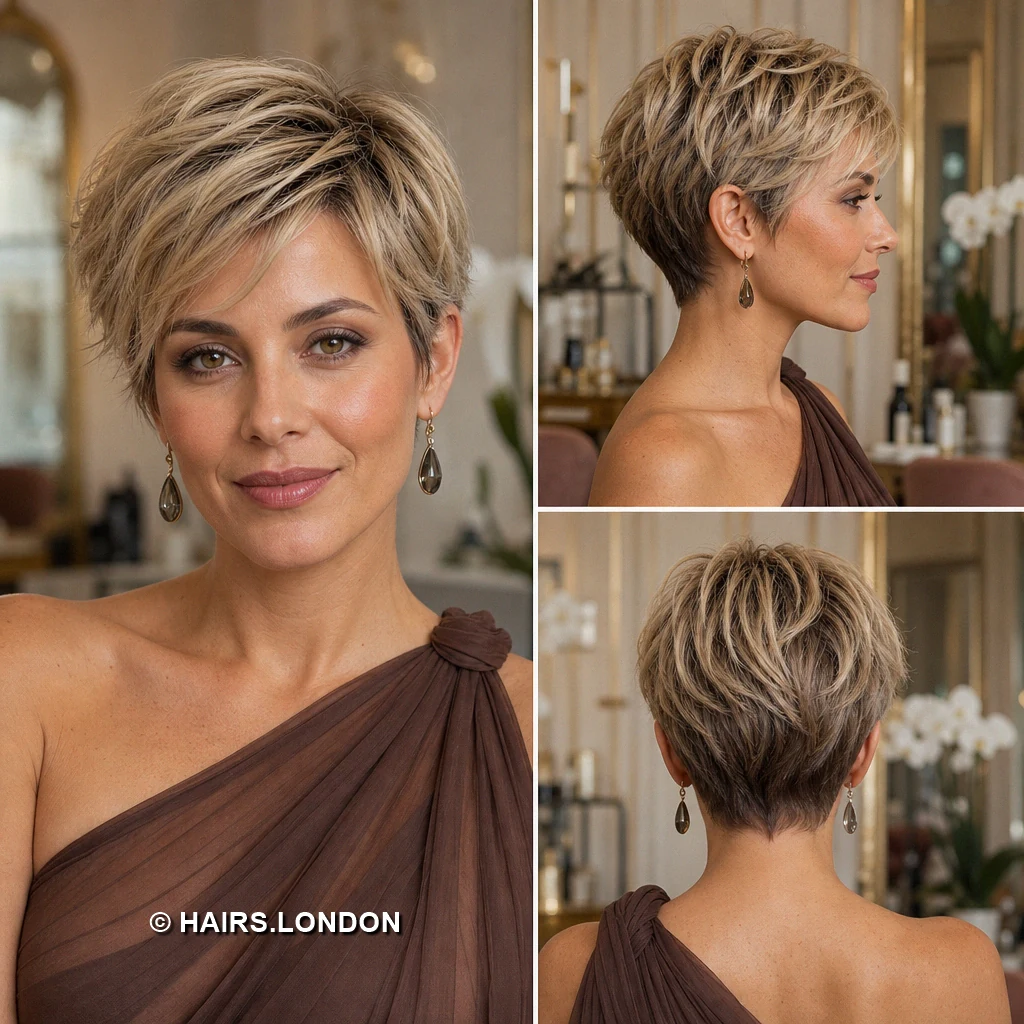
Smooth beige blonde ribbons follow the curved sweep of this pixie. Extra length at the front creates a lifted, wave-like fringe. The crown remains rounded, with separation between highlighted sections. Shorter sides sit neatly around the ears and temples. From behind, layered blonde strands meet a darker tapered nape. Ask for a longer front if you want this sculpted movement. Lift damp roots with a brush, directing the fringe sideways. Allow the hair to cool before arranging its curved shape. A light finishing spray can hold the sweep without stiffness. Keep the nape trimmed to contrast with the generous top.
9. Light Ash Pixie with Wispy Diagonal Bangs
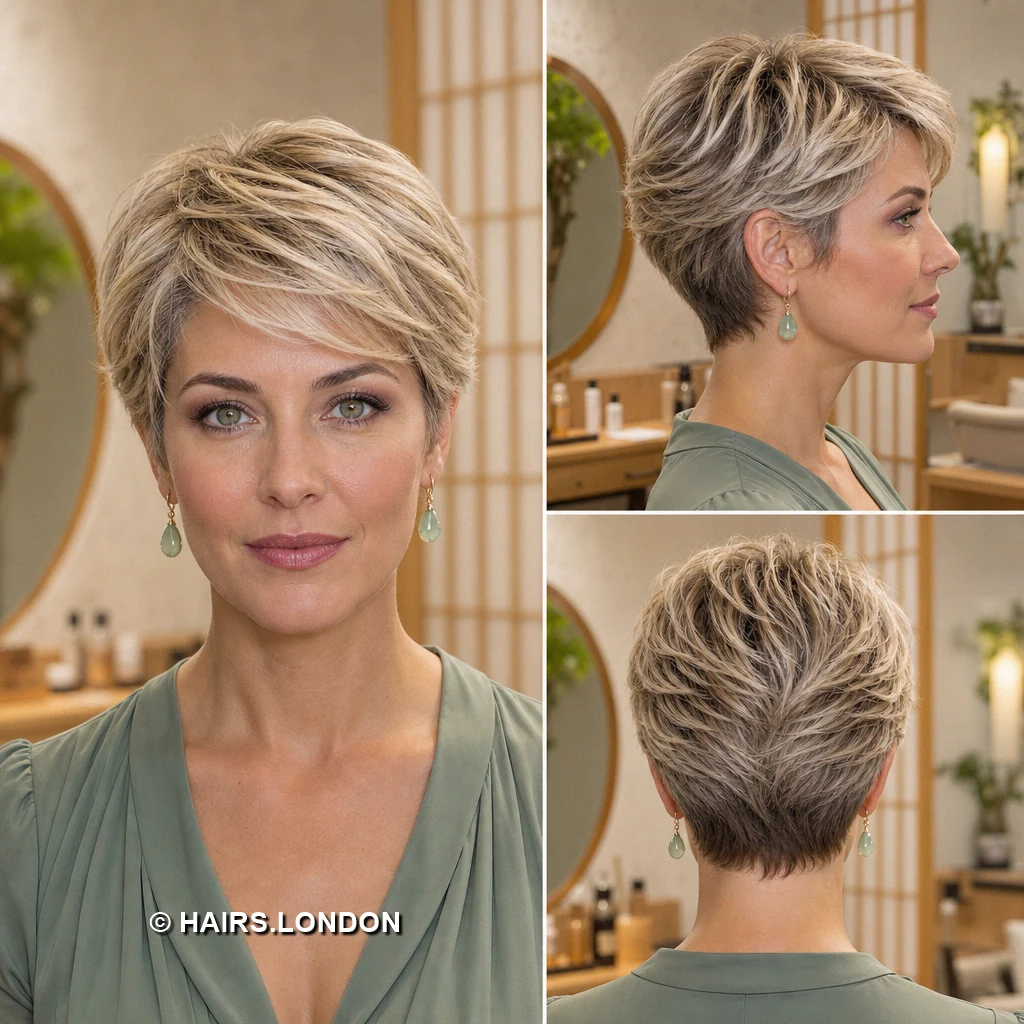
Light ash blonde highlights soften this short, rounded pixie. Fine diagonal bangs spread across the forehead in narrow sections. The crown lies gently layered rather than dramatically lifted upward. Sides fit close above the ears, keeping the profile tidy. A darker underlayer tapers smoothly into the narrow nape. Ask for delicate fringe texture instead of a heavy edge. A small round brush can add controlled root lift while drying. Direct airflow downward afterward to keep fine strands smooth. Apply lightweight styling cream only where the wispy front ends need separation. Fringe and neckline touch-ups help preserve the cut’s balanced proportions.
10. Sculpted Blonde Pixie with a Lifted Front
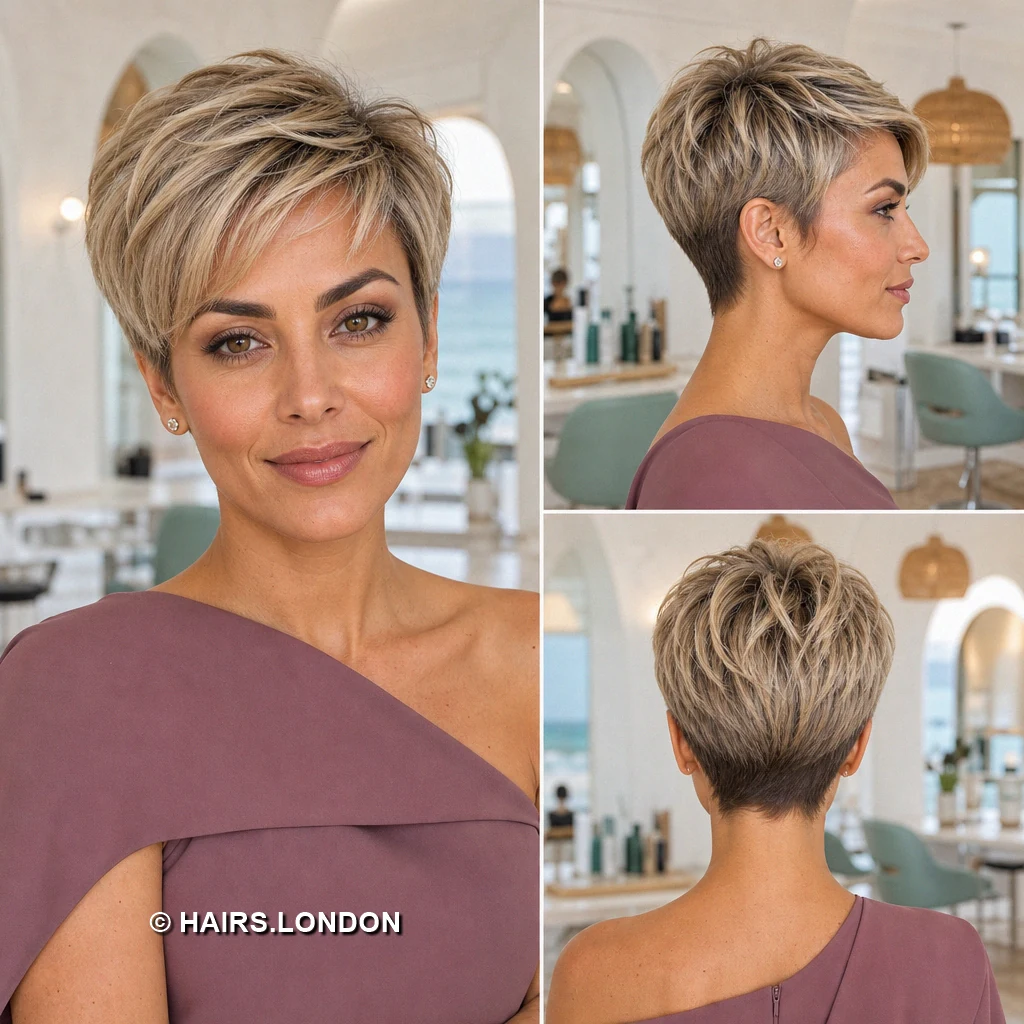
This pixie places its longest layers directly above the forehead. Brushed backward, they form a soft, sculpted front wave. Beige blonde highlights accent the curve against darker underlying hair. Short sides wrap cleanly around the ears without pronounced volume. Crown layers blend into a closely, softly tapered back and nape. Ask your stylist to keep sufficient length for front lift. Blow dry upward with a brush, then guide hair sideways. Use flexible spray sparingly to retain movement through the wave. A light paste can separate highlighted pieces across the crown. Trim the sides regularly so the longer front remains intentional.
11. Piecey Honey Blonde Pixie with Side Bangs
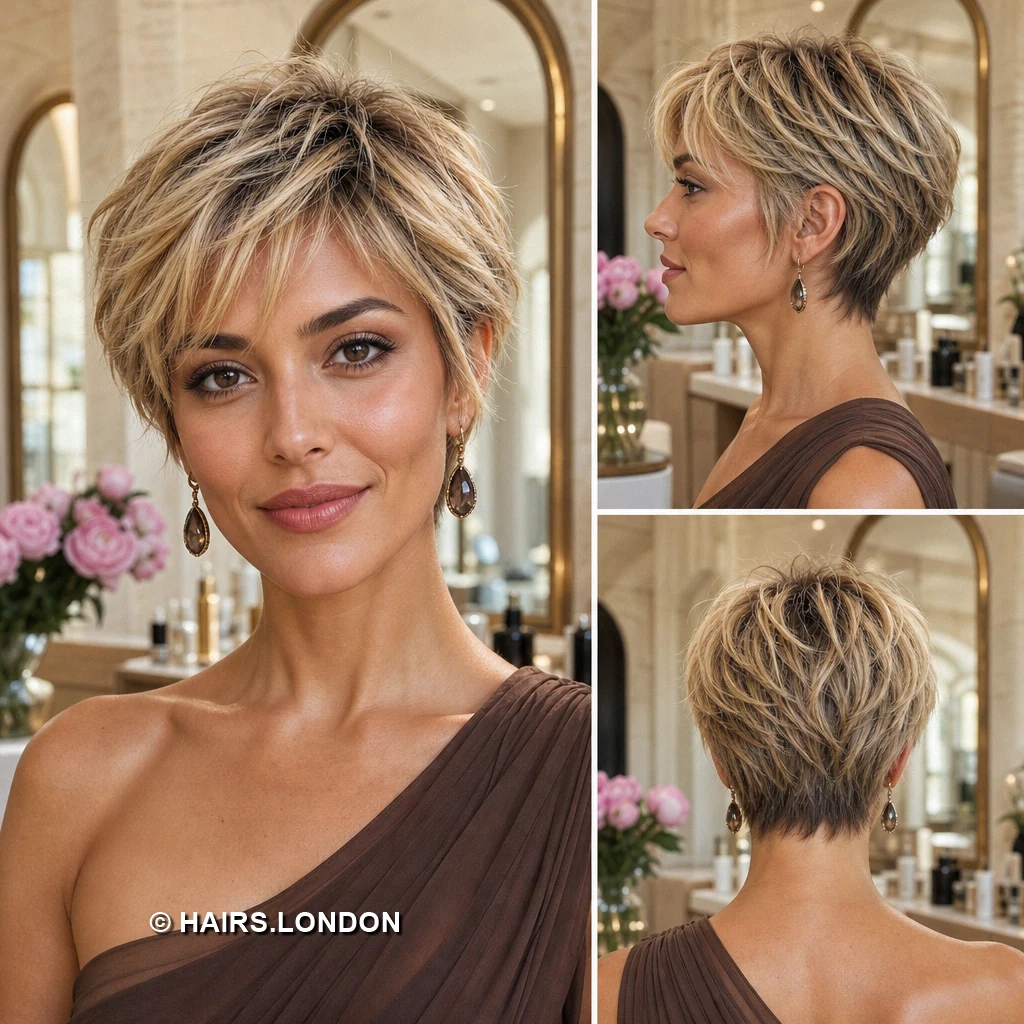
Honey blonde strands break up the darker base of this pixie. Its crown is full and piecey, with tousled movement. Short side bangs angle across the forehead toward one temple. The sides narrow around the ears beneath the textured top. At the back, layered lengths taper into a close neckline. Ask for textured crown ends without removing its supporting weight. Work mousse through damp roots before drying for gentle height. Then rake fingers through the top to establish loose direction. Finish by pinching the fringe, leaving its tips visibly separate. Recut when the sides start competing with the fuller crown.
12. Wavy Blonde Pixie with a Rolled Fringe
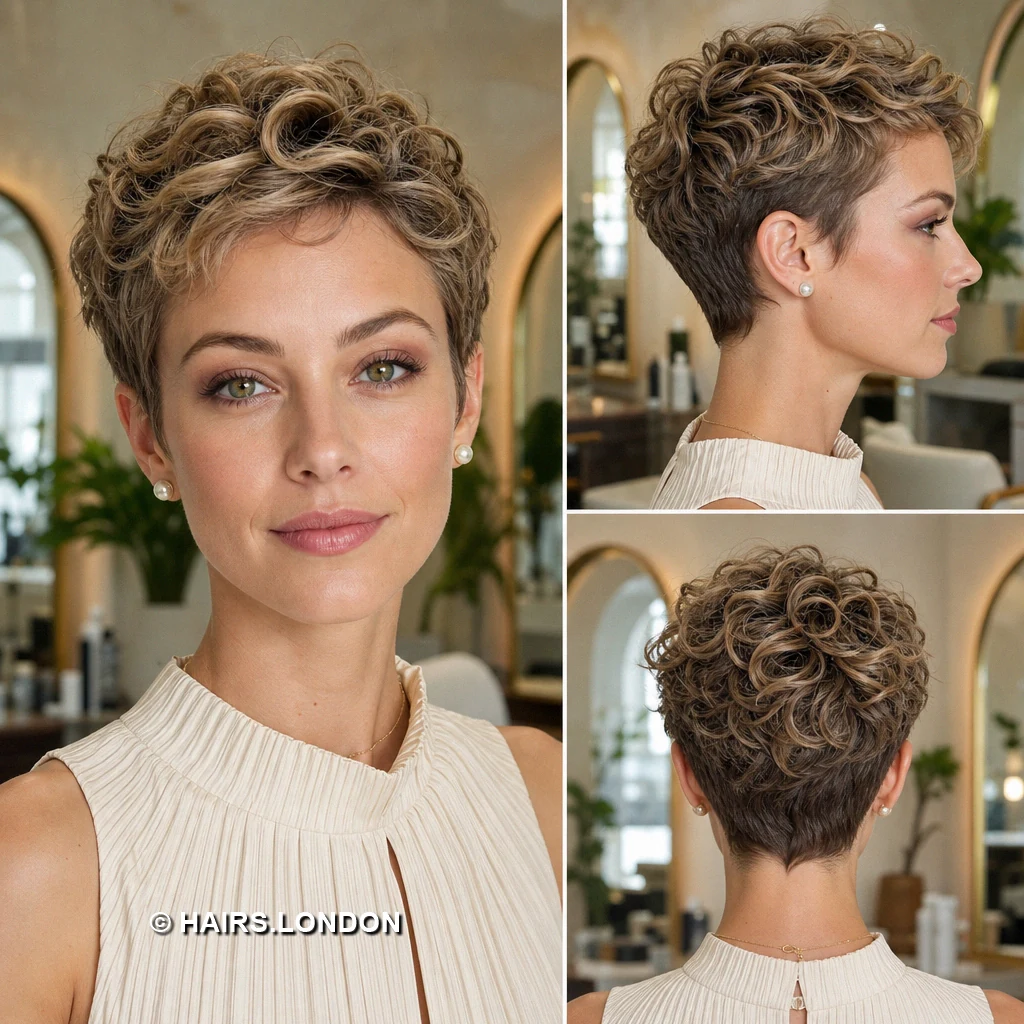
Loose waves give this longer pixie a rounded crown. Bright blonde ribbons follow the bends over a darker base. The generous fringe rolls upward, then falls softly to one side. Hair above the ears stays shorter and flatter than the top. Behind, wavy crown sections transition into a closely tapered nape. Ask your stylist to retain length wherever waves need room. Apply mousse to damp hair and scrunch without roughening ends. Diffuse gently, then arrange the front curl with your fingers. Avoid heavy wax that could pull down the rolled fringe. Maintain the neckline separately if crown length grows slowly.
13. Soft Blonde Pixie with an Angled Fringe
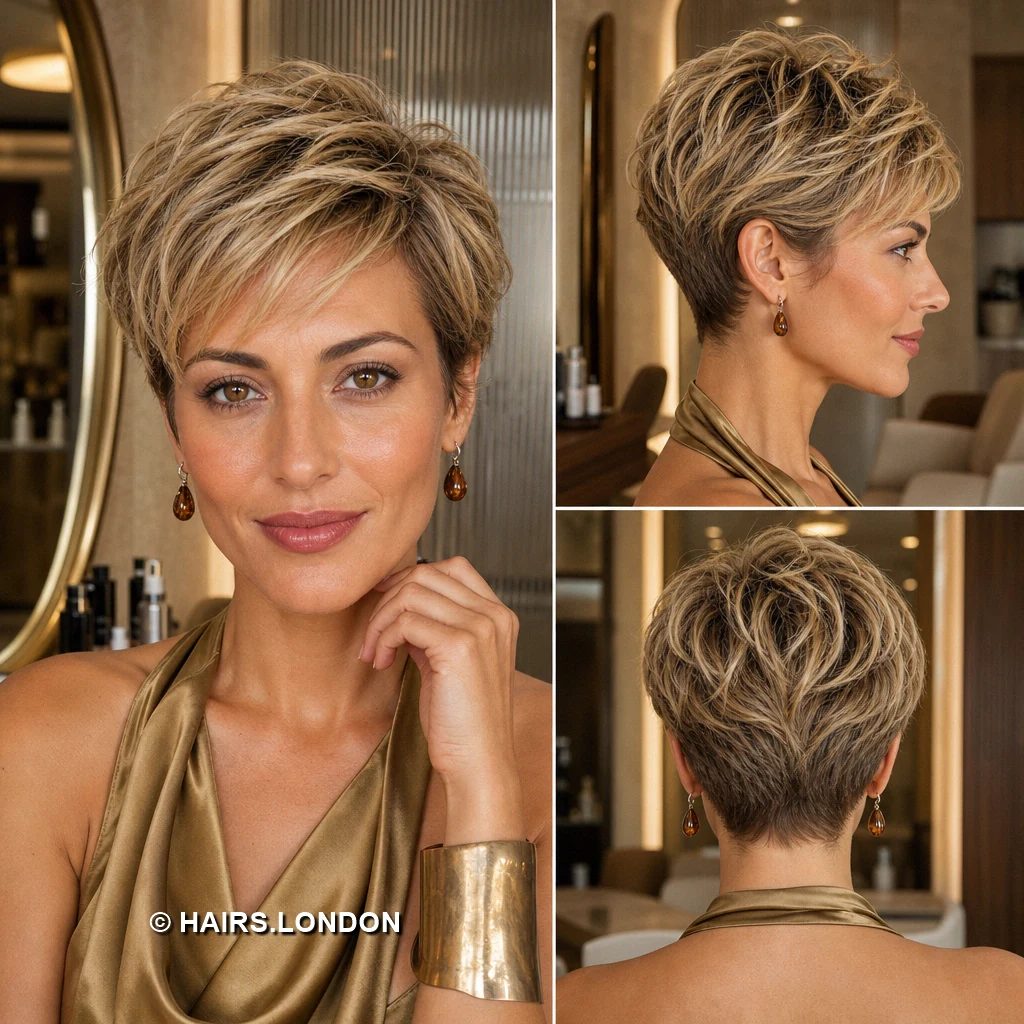
Pale blonde highlights lighten the surface of this layered pixie. A long angled fringe sweeps smoothly across the forehead. The crown carries modest lift and clearly separated, feathered strands. Close sides expose the ears and frame the longer front. At the back, short layers converge toward a tapered nape. Request enough fringe length to recreate its gentle diagonal line. Keep the crown textured lightly so the sweep stays supported. Blow dry forward first, then guide the fringe sideways gradually. Use a small amount of cream to tame stray ends. Trim the clean perimeter when its close fit starts looking heavy.
14. Creamy Blonde Pixie with a Broad Side Wave
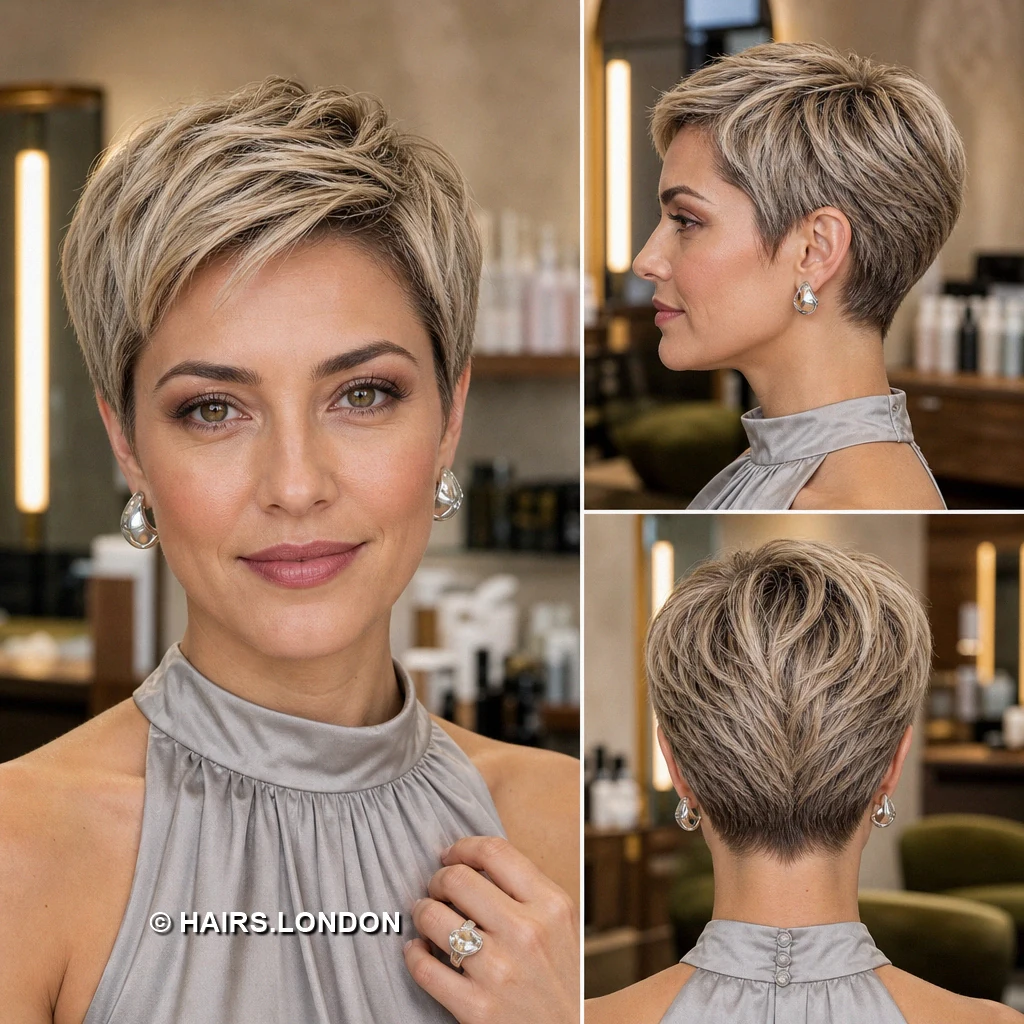
Creamy blonde sections form a broad wave above the forehead. This longer pixie has airy volume across its layered crown. Darker roots show between strands, giving the wave visible depth. Short sides curve close to the ears beneath the top. A narrow, tapered nape balances the generous front and crown. Ask for a connected transition rather than a disconnected undercut. Blow dry roots upward before bending front hair sideways gently. A small brush helps guide the wave without flattening it. Finish with touchable spray instead of firm, glossy gel layers. Arrange regular nape trims to protect the contrasting short outline.
15. Ash Blonde Pixie with a Long Side Sweep
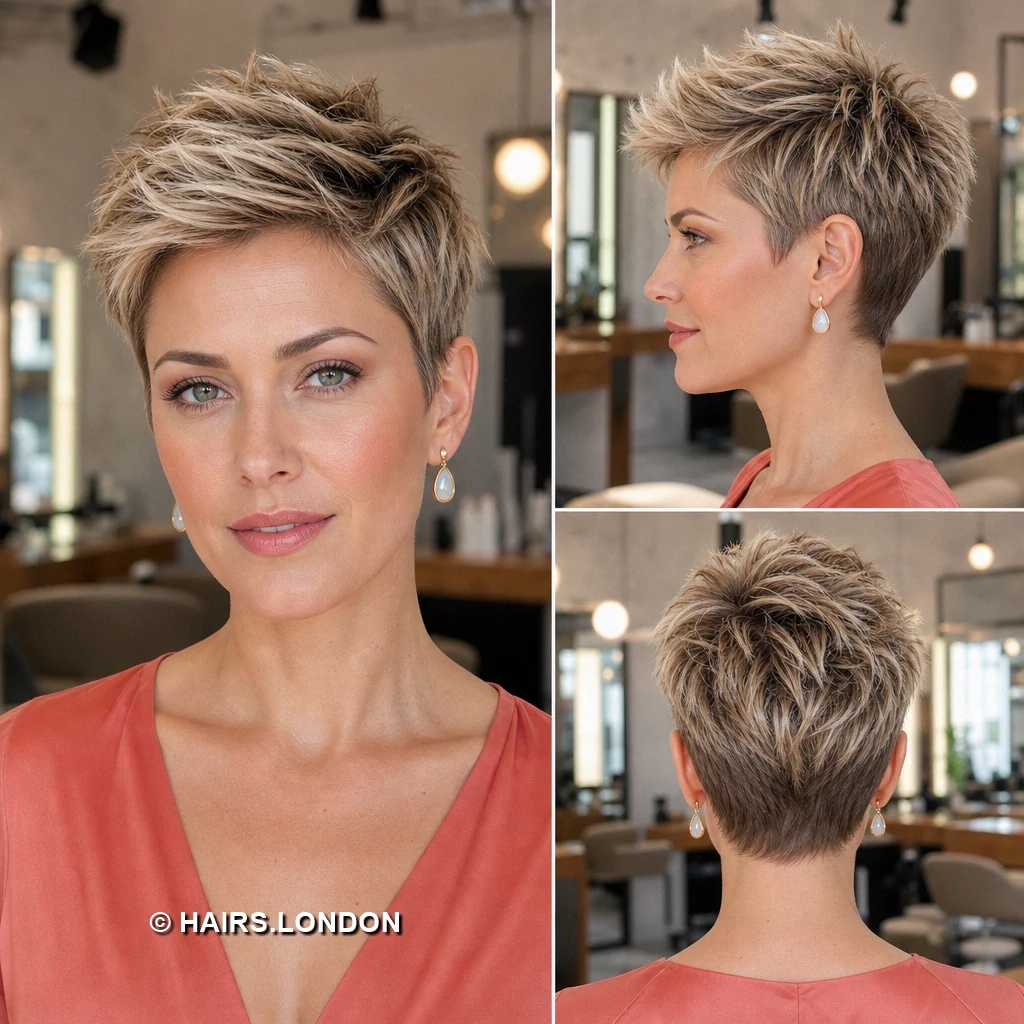
An extended side sweep gives this ash blonde pixie softness. Fine highlights run through the longer fringe and rounded crown. The front covers part of the forehead before tapering away. Hair at the temples stays close and reveals the ears. Short layers at the back narrow into a clean nape. Ask for a fringe long enough to move across naturally. Have the stylist check how it falls before removing weight. Dry the roots upward, then brush the front sideways slowly. Apply lightweight paste to ends, avoiding a solid fringe sheet. Book trims when the sweep begins falling into your eyes.
16. Close Tapered Pixie with Blonde Crown Texture
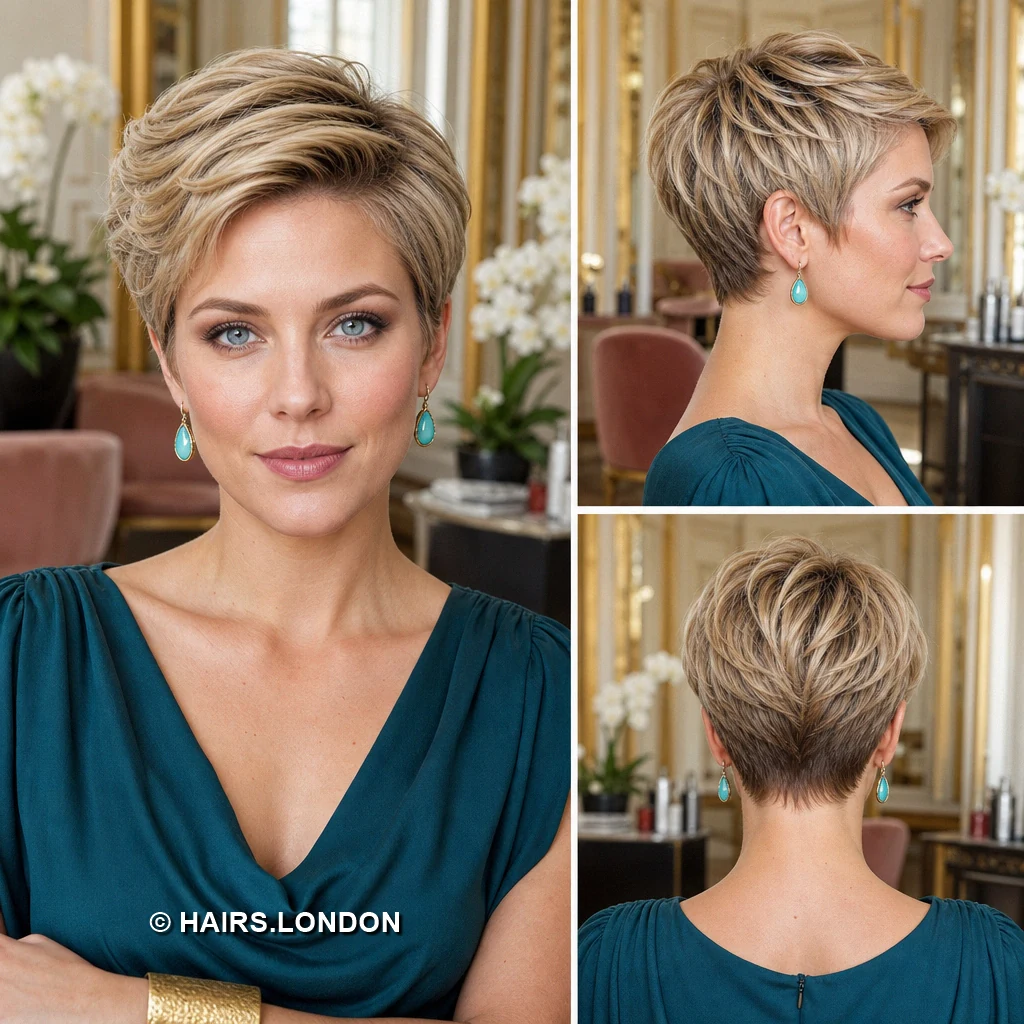
Bright blonde pieces stand out against this pixie’s darker base. Its short crown has compact lift and lightly jagged ends. The fringe falls forward in small, uneven, face-opening sections. Snug sides outline the ears without adding width there. The back tapers closely, with darker hair defining the nape. Request short, movable crown layers rather than rigid spikes throughout. Diffuse or blow dry against the roots for subtle height and shape. Rub matte paste between fingertips before lifting selected top sections. Leave the sides comparatively smooth to emphasize the textured crown. Frequent perimeter cleanups keep this close shape looking deliberately cut.
17. Sandy Blonde Pixie with a Rounded Crown
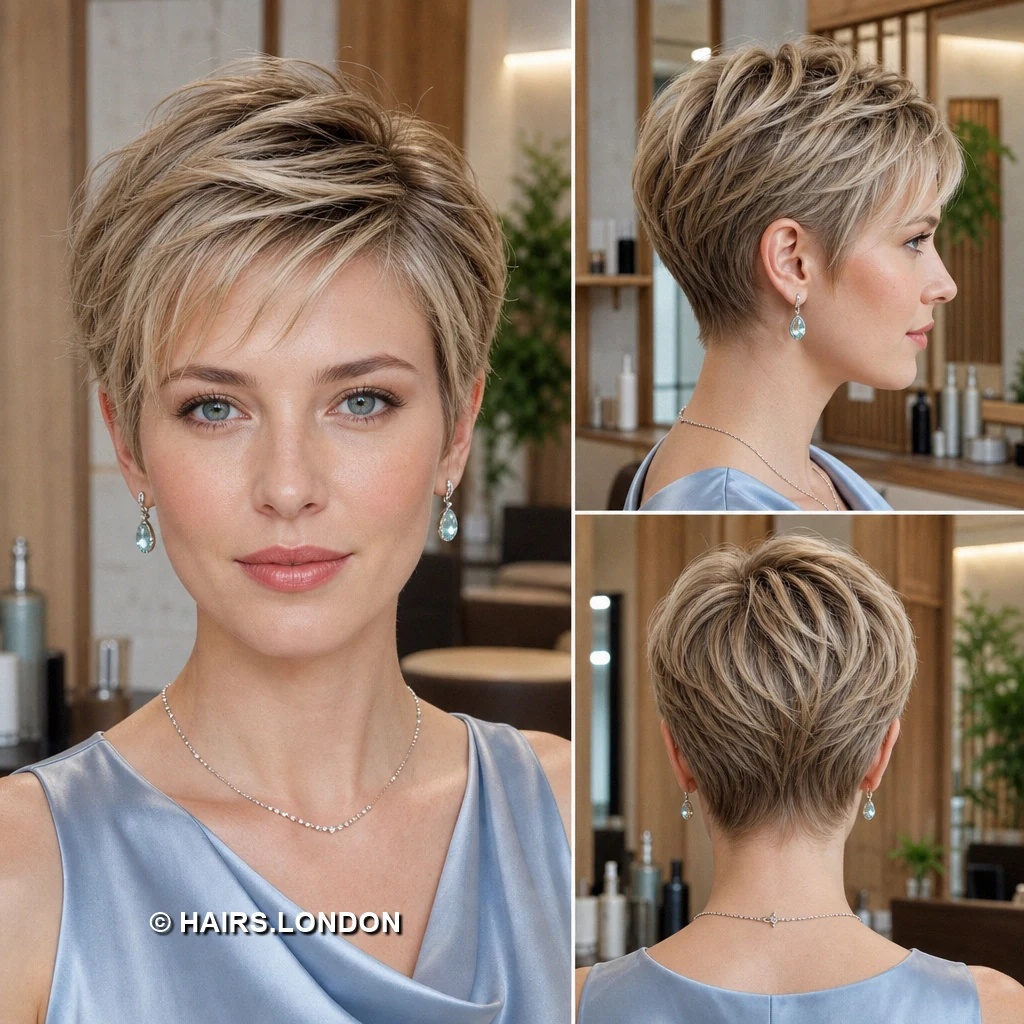
Sandy blonde highlights trace the rounded shape of this pixie. The fuller crown flows forward into a soft diagonal fringe. Shorter strands frame the temples while leaving both ears visible. From the side, the top keeps volume above close-cut hair. Layered sections at the back meet a finely tapered nape. Ask for enough crown weight to maintain that softly curved profile. Gently lift the roots while blow drying with your fingers. Direct the front across, allowing individual ends to separate. Use flexible styling cream when the highlighted strands need definition. Check the back view during trims to preserve its curve.
18. Feathered Blonde Pixie with a Curved Fringe
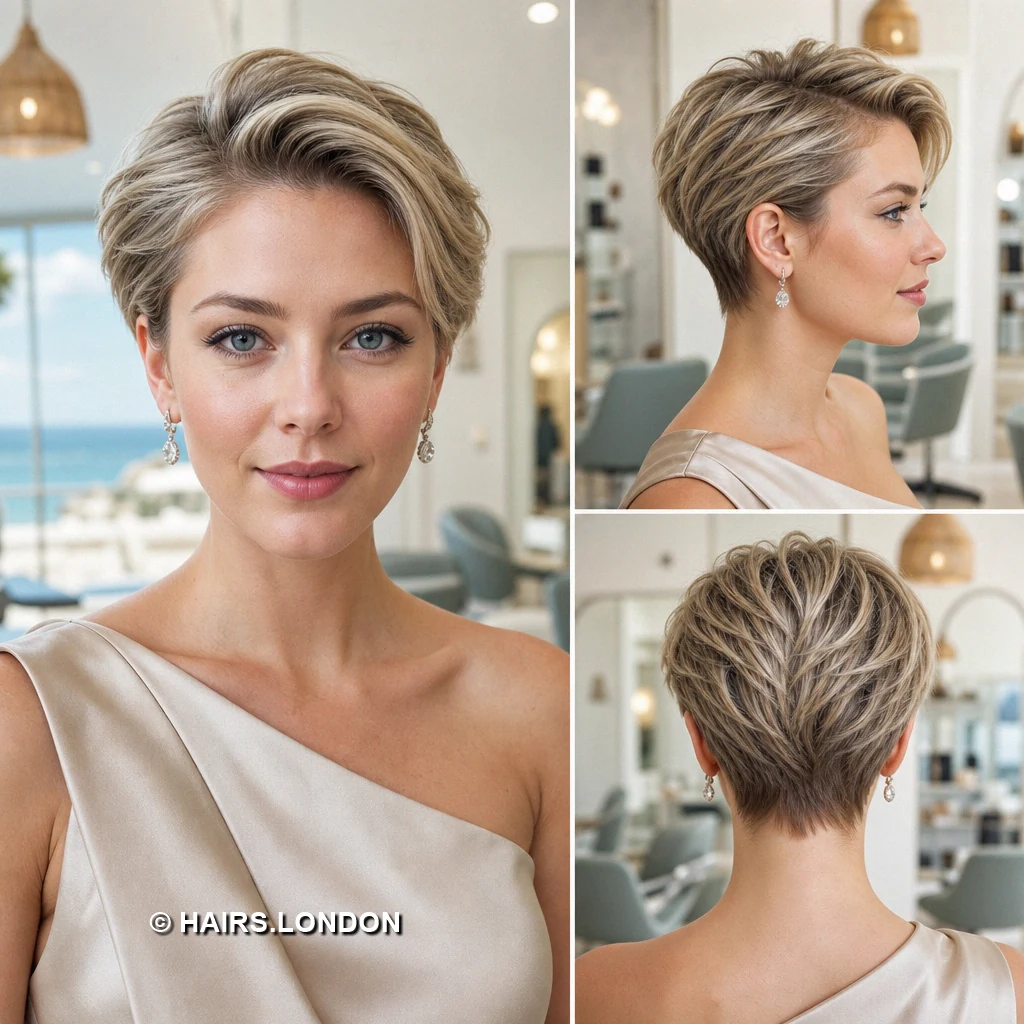
Feathered blonde layers give this pixie a light, rounded crown. The curved fringe crosses the forehead and finishes in wisps. Deeper roots remain visible between the pale surface strands. Neatly shortened sides stay close around the ears and temples. At the back, fine layers narrow into a tidy nape. Ask for softness at the fringe without thinning it excessively. Blow dry across the head, lifting the crown just slightly. Separate a few ends with fingertips and lightweight styling paste. Keep heavier products away from the fringe to preserve movement. Refresh the nape before it loses its narrow, short tapered shape.
19. Layered Ash Blonde Pixie with a Side Fringe
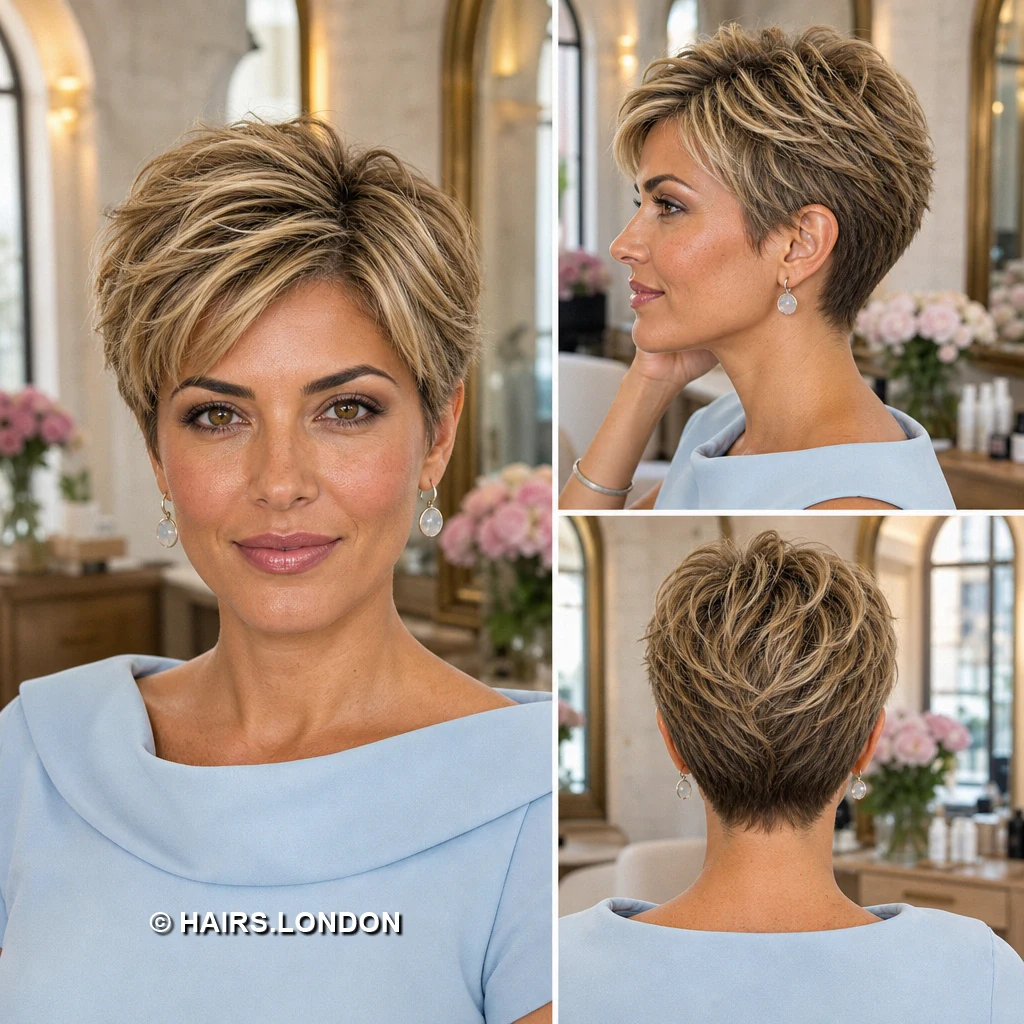
Ash blonde highlights sweep across this pixie’s softly layered crown. A light side fringe skims the forehead without appearing heavy. Darker roots add contrast between the longer, gently feathered top pieces. Close sides follow the head shape and expose both ears. Behind, the layers taper gradually into a short nape. Ask for crown movement while keeping the side profile rounded. Blow dry the front sideways, lifting gently near its roots. Rake through the top with fingers for natural strand separation. A small amount of flexible paste defines the highlighted ends. Maintain regular trims to keep the short sides neatly balanced.
How to Choose a Highlighted Pixie Cut
Start with the amount of fringe you want to manage. A short, wispy front keeps the forehead open; a longer side sweep offers more styling options but may need daily blow drying. Then compare crown volume and side length. Rounded layers suit a softer outline, while closer sides make lifted or curly tops more prominent. Check the back views as carefully as the fronts: the nape affects how tidy the cut looks between appointments.
Styling Different Hair Textures
For fine or straight hair, apply a small amount of mousse at the roots and blow dry in the direction you want the fringe to sit. Use paste only on selected ends to avoid flattening the crown. For naturally wavy or curly hair, work curl cream through damp lengths, scrunch and diffuse on low airflow or air-dry. Avoid brushing defined curls once dry. If your hair is dense, ask for controlled internal texture so the top moves without becoming too wide.
Keeping Highlighted Pixie Color Fresh
The images show pale blonde or beige pieces over deeper hair, so root growth is part of the look rather than something that must always be concealed. Ask your colorist which highlighted sections need refreshing and whether a toner would help maintain your preferred warm or cool finish. Use a shampoo suited to colored hair, condition the lightened lengths and protect hair from excessive heat. Schedule color work according to the brightness and contrast you want to retain.
Maintaining the Pixie Shape
The close areas usually change the silhouette first. Plan a trim when the sides begin covering the ears, the nape loses its taper or the fringe no longer falls where intended. A quick perimeter cleanup may be enough between full cuts if you are growing the crown. When booking, explain whether you want to preserve top length, since cutting every section equally can remove the movement that defines these styles.
What to Discuss with Your Stylist
Bring the front, profile and back view of the cut you prefer. Point out the exact fringe length, crown height, ear exposure and nape taper you want, and show how your hair naturally parts or curls. Ask how much daily styling the shape requires and what it will look like as it grows. For color, discuss your starting shade, the placement of lighter pieces, the desired root contrast and the upkeep you are comfortable scheduling.
Frequently Asked Questions
What makes a highlighted pixie different from a plain pixie?
The cut can be the same, but lighter pieces make its layers, fringe direction and crown texture more visible.
Which of these cuts needs the least fringe styling?
A short, wispy or forward-textured fringe generally needs less arranging than a long sculpted wave or side sweep.
Can fine hair wear a lifted pixie?
Yes. Keeping enough weight in the crown and using a small amount of root-lifting product can help create height without making the ends look sparse.
Will a curly pixie have the same shape when dry?
Not necessarily. Curls spring up as they dry, so ask your stylist to account for shrinkage and check the finished shape.
How do I keep a side-swept fringe out of my eyes?
Ask for a length that clears your eyes when dry, then direct it sideways while blow drying. Arrange a fringe trim when it starts falling forward.
Do the sides have to be shaved?
No. The examples show closely cut and tapered sides, but they can retain enough length for a softer finish.
How often should I trim a tapered nape?
Trim it when the narrow outline loses definition. That may happen before the longer crown needs reshaping.
Can I keep darker roots with blonde highlights?
Yes. Darker roots are visible throughout these looks and provide contrast between the lighter strands.
What product gives piecey texture without stiffness?
Start with a tiny amount of flexible or matte paste on dry fingertips, then define individual ends rather than coating the whole top.
Should I ask for heavy thinning on thick hair?
Ask for targeted weight removal instead. Excessive thinning can leave a fringe sparse or make short layers stick out.
How can I grow out a pixie while keeping it tidy?
Preserve length on top and have the ears and neckline tidied as needed. Your stylist can adjust the layers as the fringe grows.
What should I show my stylist at a consultation?
Show front, side and back views, then identify the fringe, crown, sides, nape and highlight placement you want to reproduce.
Conclusion
A successful highlighted pixie depends as much on its profile and nape as its fringe. Choose the crown texture and front length you enjoy styling, then use the side and back views to make your preferences clear. Thoughtful highlight placement can bring out the cut’s movement while leaving the darker base visible.