


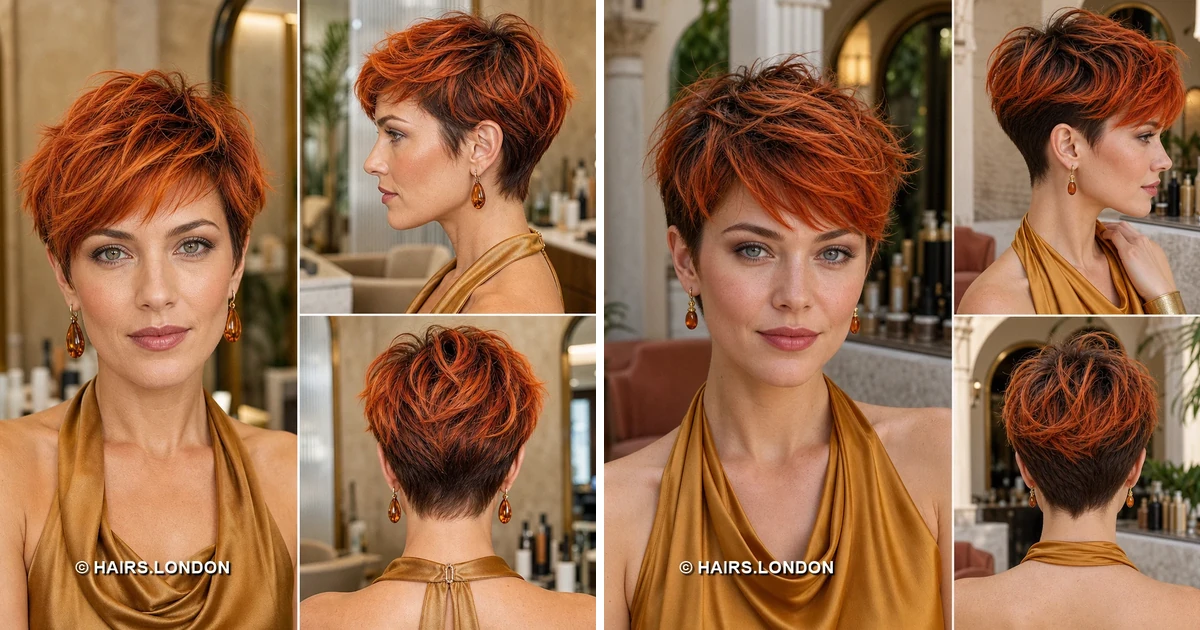
Colorful textured pixie cuts can take different shapes: a tousled copper crown, a smooth burgundy sweep, or defined curls above a close nape. These eight views show how fringe length, layering, and color placement change the look of a short cut. Use the front, side, and back details to decide what you want to keep—and what you would ask your stylist to adjust.
1. Tousled Copper Pixie With a Soft Fringe
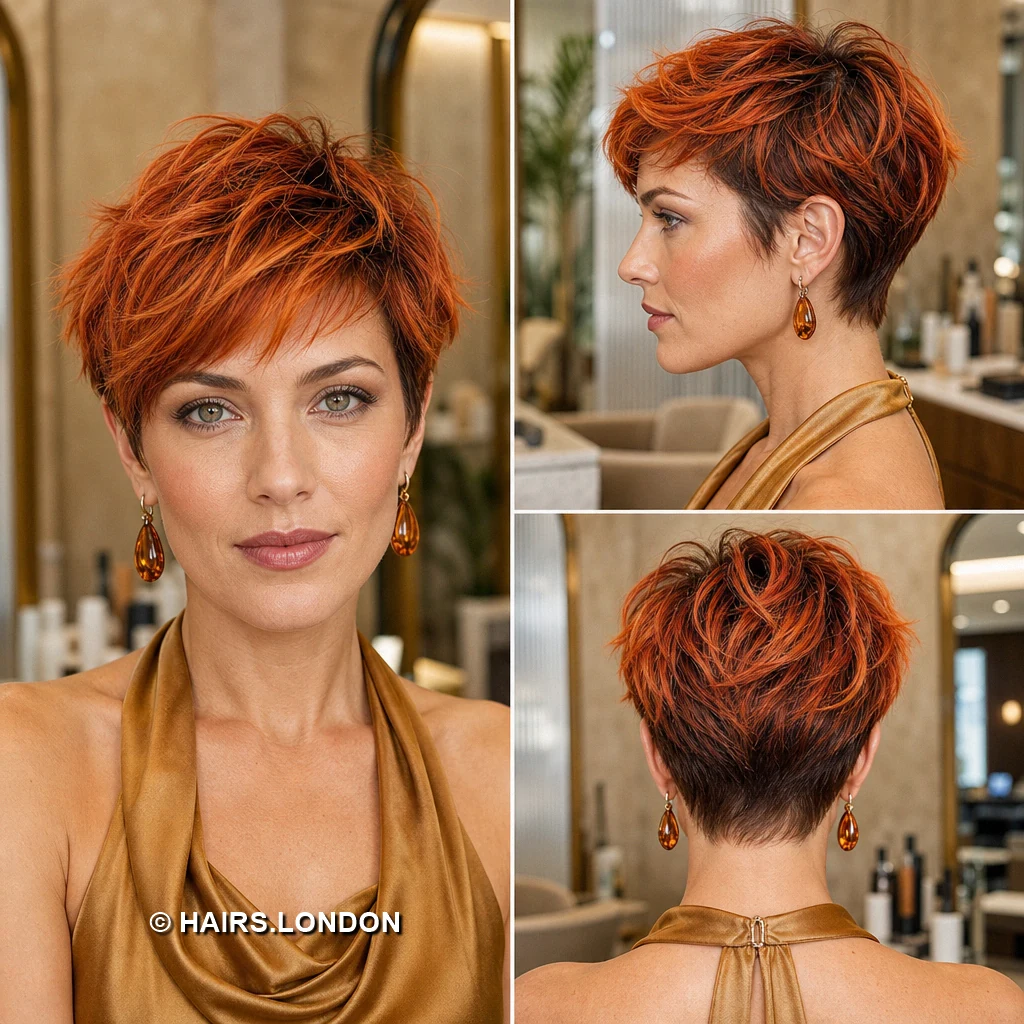
This copper pixie keeps generous movement through its tousled crown. Choppy upper layers reveal deeper brown shading beneath bright strands. A soft, uneven fringe falls lightly across the upper forehead. The sides sit close around the ears without looking shaved. Behind, a narrow tapered nape balances the fuller top beautifully. Ask for point cutting to preserve those airy, separated ends. Work lightweight styling cream through damp hair before gentle drying. Lift the roots with fingers rather than flattening the crown. A little matte paste can define individual pieces near temples. Schedule regular trims to keep the neckline crisp and comfortable.
2. Burgundy Pixie With an Angled Fringe
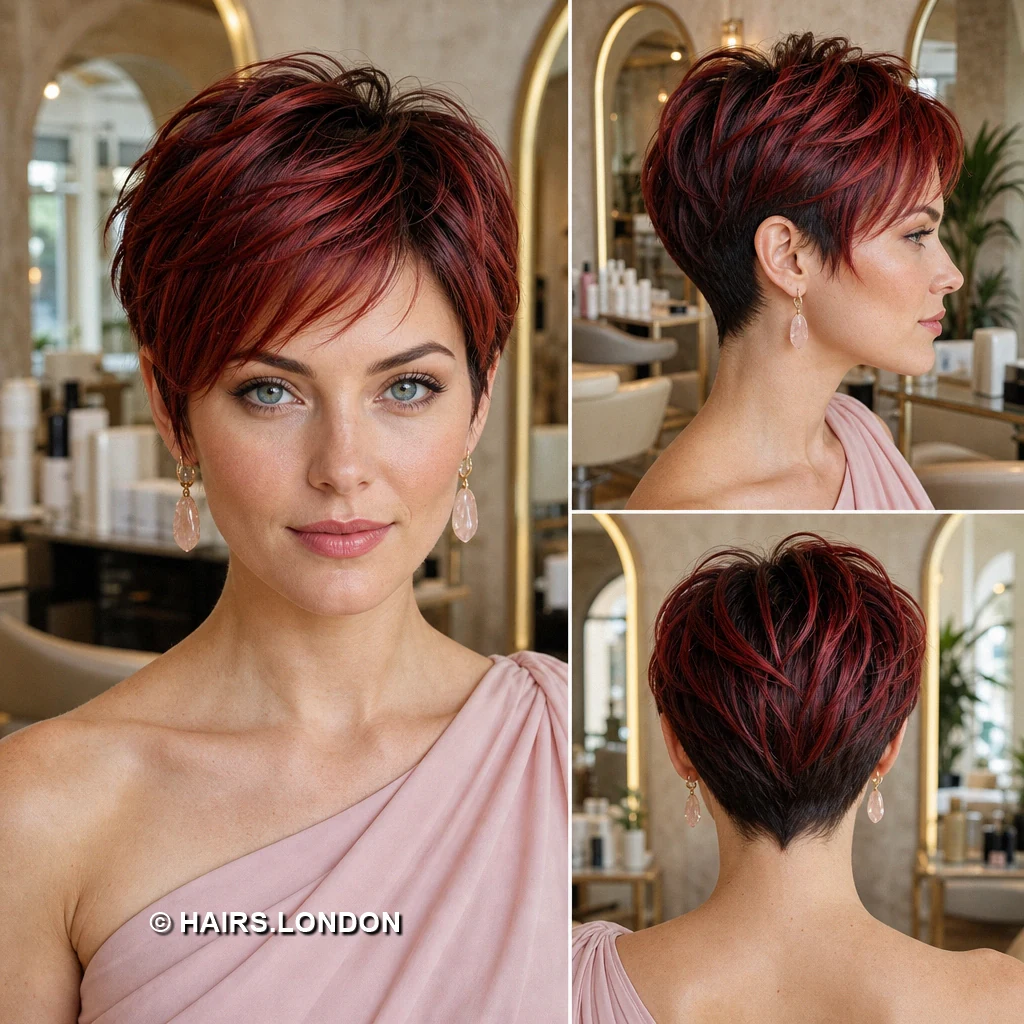
This burgundy pixie combines a rounded crown with tapered edges. Deep brown roots lend dimension beneath vivid red upper layers. The longer fringe angles across the forehead toward one eyebrow. Side sections hug the ears, leaving the cheekbones largely unobstructed. At the back, dark hair tapers into a pointed nape. Request internal layering so the top remains easygoing, not bulky. Blow dry the fringe sideways using a small round brush. Rub minimal paste between fingers before arranging the top layers. Color safe washing helps protect the red from early fading. Trim regularly to maintain the neat ear and neckline contours.
3. Upswept Copper Pixie With Close Sides
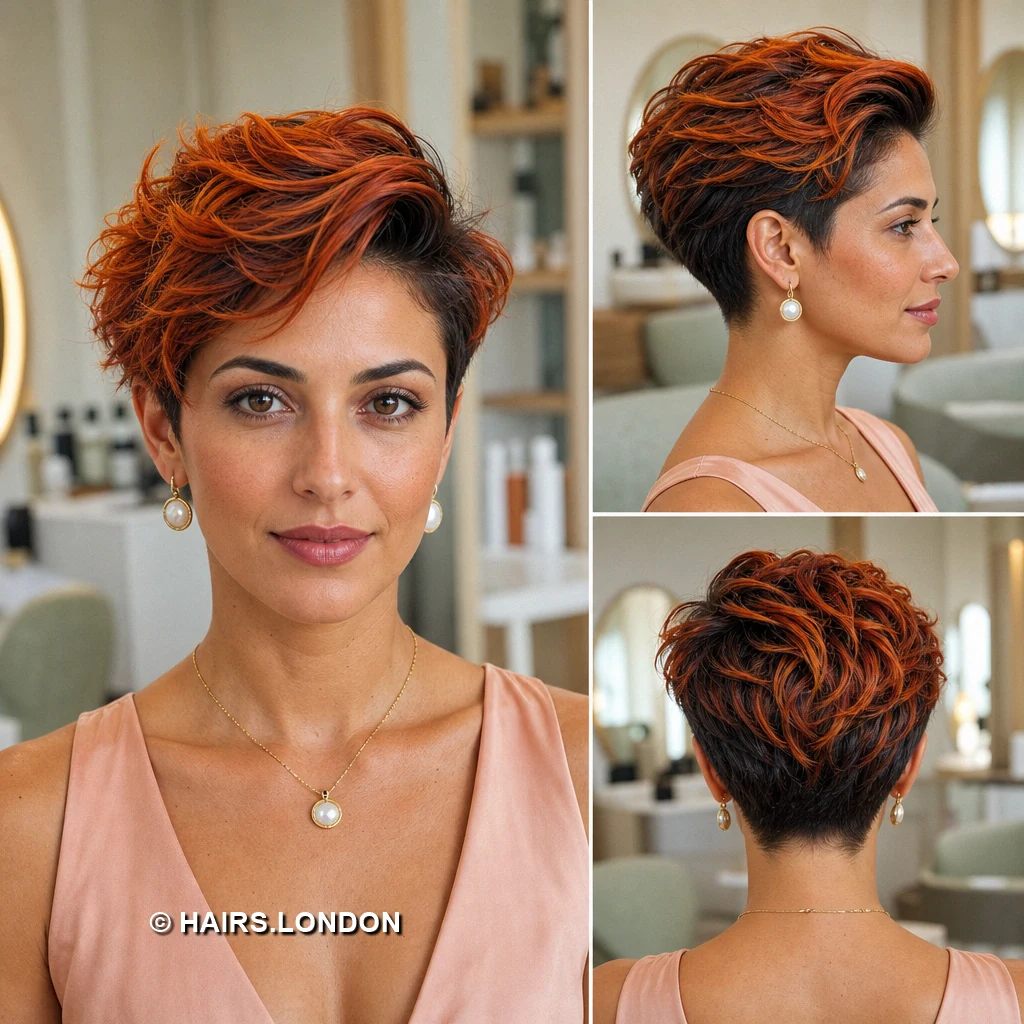
Fiery copper ribbons sweep upward across this asymmetrical short pixie. Dark roots and close sides make the lifted top prominent. The longer front rises before curving back from the forehead. Loose, irregular layers create movement without a rigid sculpted finish. One temple appears especially sleek beside the fuller opposite side. The rear gathers into textured volume above its tapered nape. Ask your stylist to retain sufficient length for that sweep. Apply mousse at the roots and dry upward with fingers. Finish with flexible spray to hold the shape without stiffness. Refresh the copper periodically when brighter strands begin looking muted.
4. Bright Copper Crop With a Forward Fringe
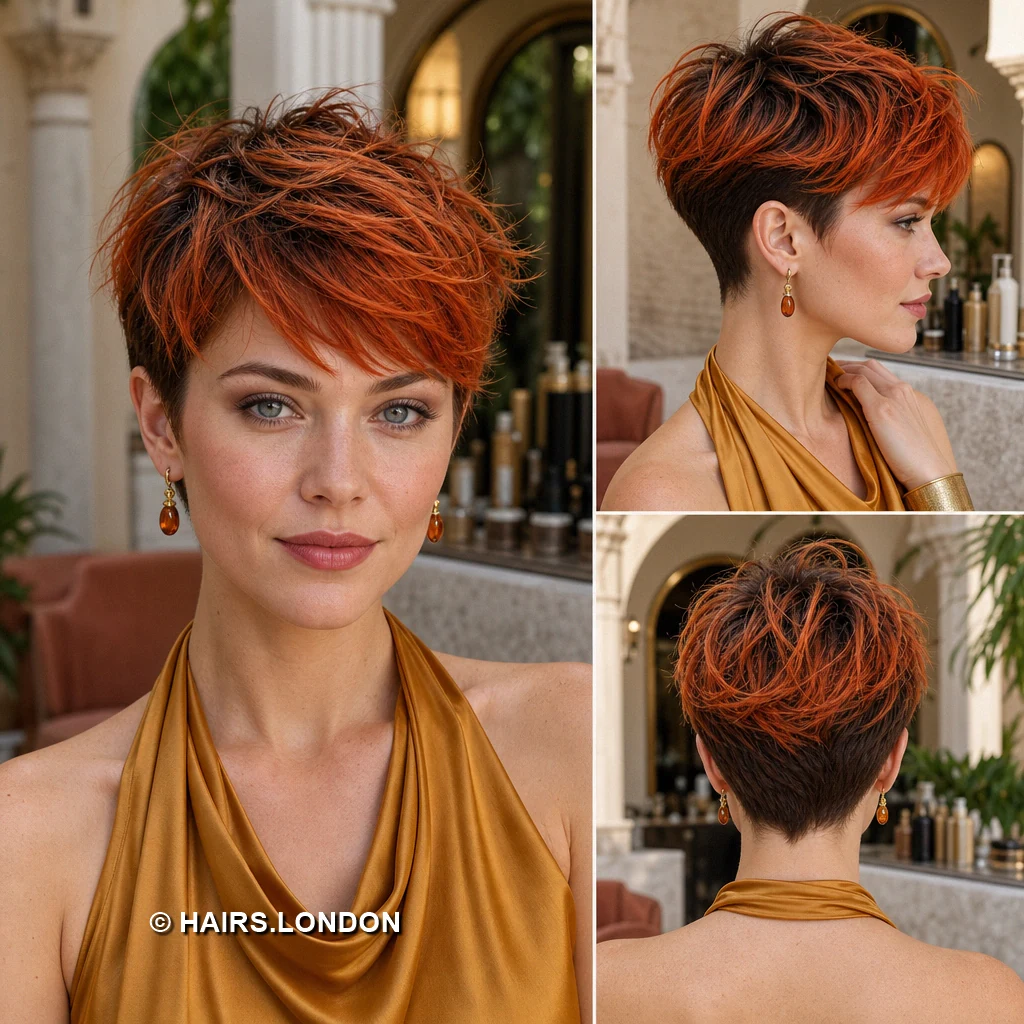
This bright copper crop features an airy, forward sweeping fringe. Shorter sides expose the ears beneath the broader textured cap. Dark roots peek through the warm orange lengths above them. The crown stays tousled, while diagonal pieces soften the forehead. From behind, the silhouette narrows neatly into a tapered neckline. Ask for choppy surface layers without thinning the top excessively. Blow dry forward first, then redirect select pieces with fingers. A tiny amount of texture paste separates the fringe cleanly. Keep product away from roots if your hair collapses easily. Book neckline cleanups before the taper loses its defined outline.
5. Muted Plum Pixie With Feathered Layers
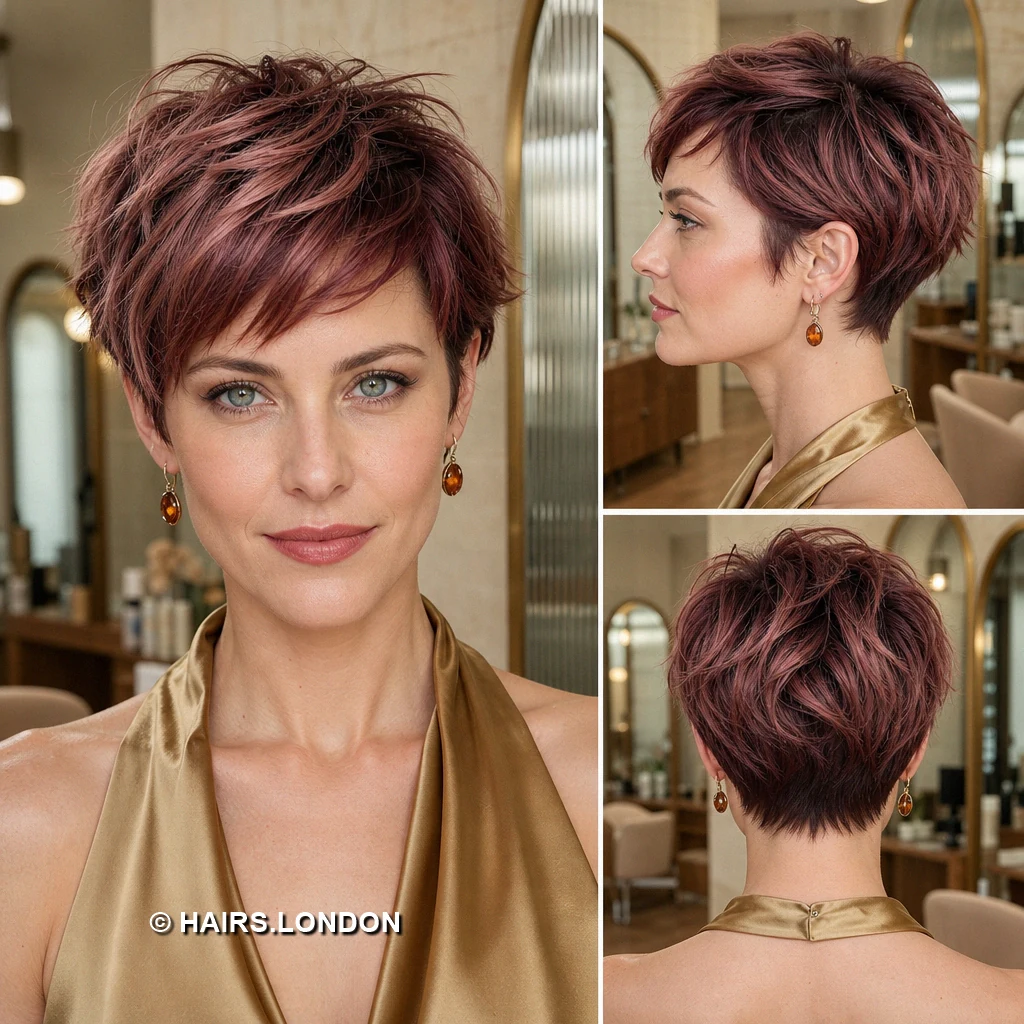
This muted plum pixie pairs feathered layers with soft fullness. Rose tinted strands catch light against its darker brown base. The uneven fringe brushes the forehead and sweeps slightly sideways. Short temple pieces frame the ears without covering them completely. Volume concentrates on top, then tapers into a narrow nape. Ask for soft point cutting rather than a heavy edge. Direct the fringe sideways while drying, lifting roots with fingertips. Lightweight cream adds definition without hiding the separate colored strands. Use gentle cleansing to help preserve the cooler rosy tones. Regular shaping keeps the textured crown from overpowering shorter sides.
6. Curly Chestnut Pixie With Golden Highlights
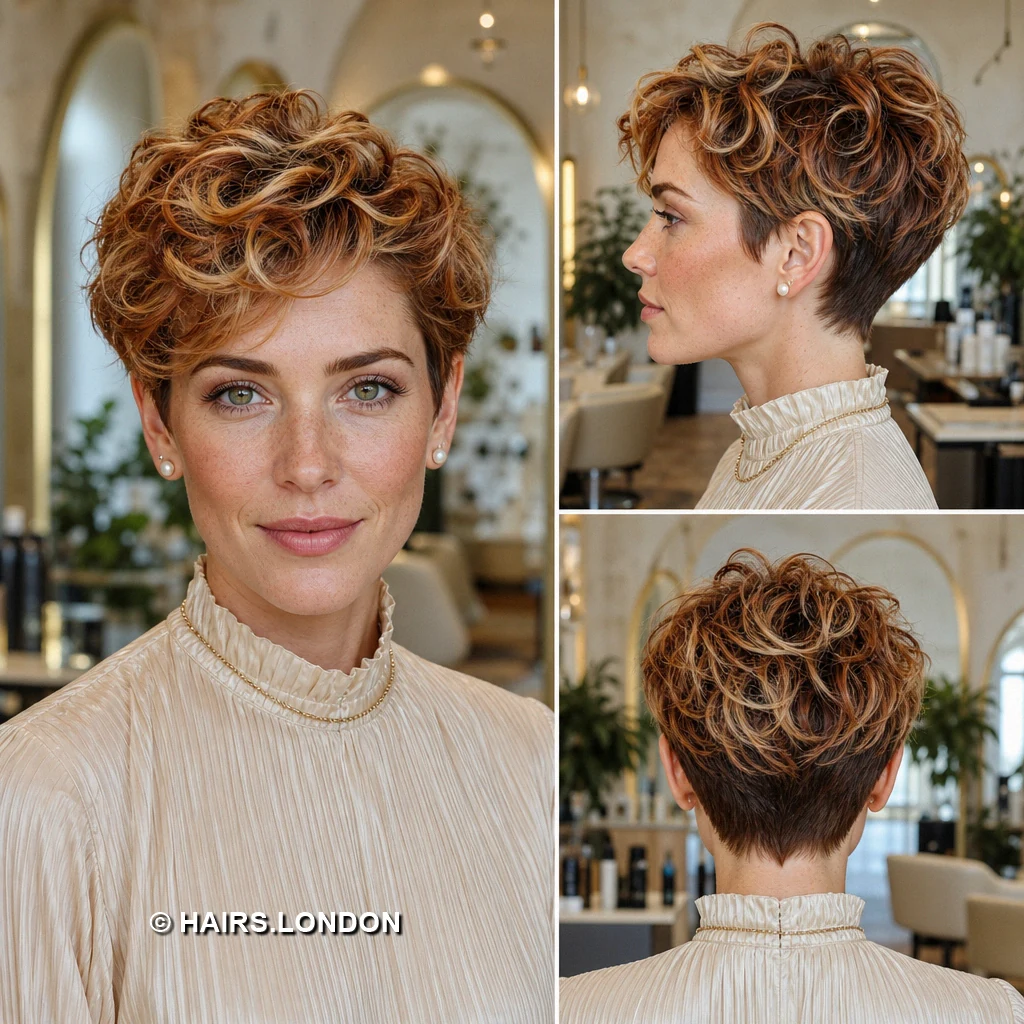
This curly pixie carries golden highlights through its chestnut top. Defined loops cluster around the crown and curl toward forehead. The temples stay shorter, exposing the ears and balancing volume. Behind, tighter dark layers narrow gently into a tapered nape. Ask your stylist to shape curls dry before removing bulk. Preserve enough length overhead for the visible springy curl pattern. Scrunch curl cream into damp strands, then diffuse on low. Avoid brushing dry curls if you want those loops defined. Highlights accent the bends, but their brightness needs thoughtful upkeep. Trim the nape separately when its outline starts growing uneven.
7. Rosy Burgundy Pixie With a Long Side Sweep
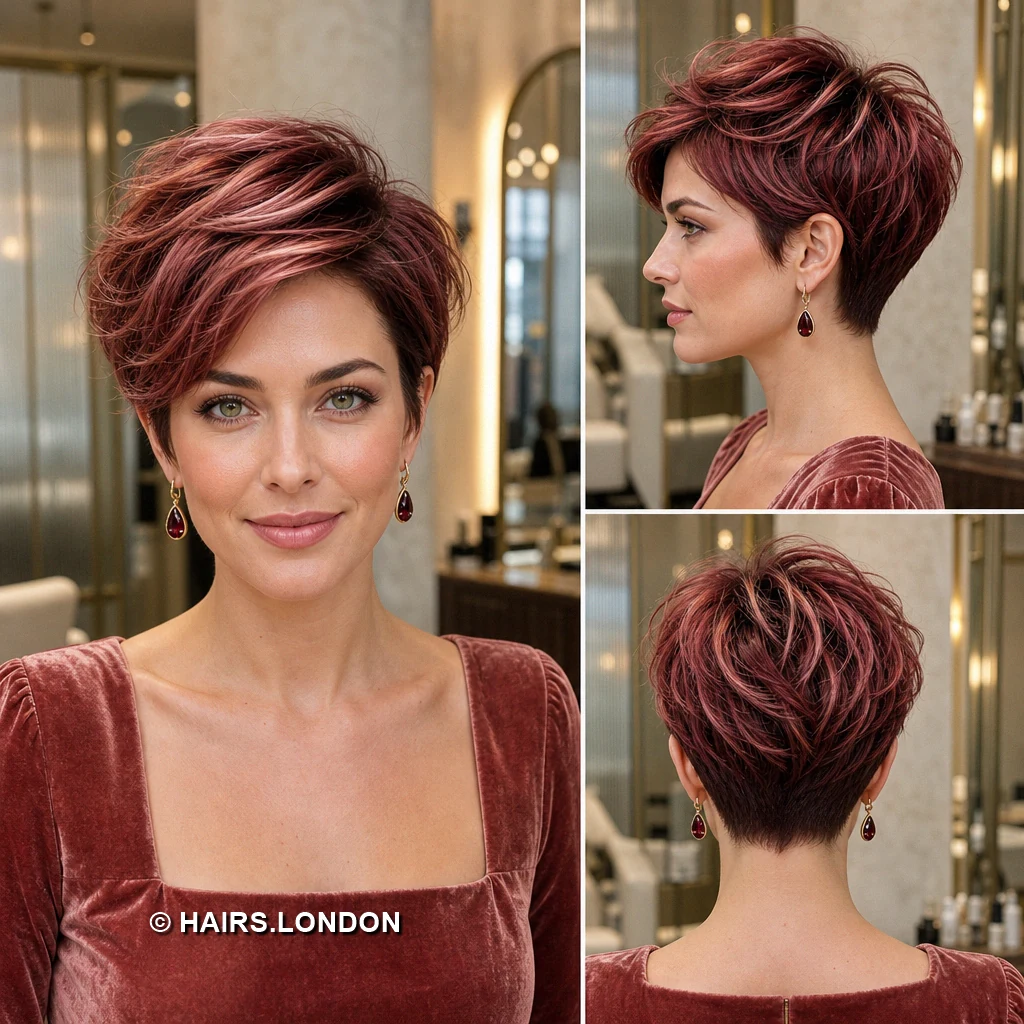
This rosy burgundy pixie sweeps a long fringe across forehead. Lighter pink ribbons thread through the deeper red upper layers. The crown looks full, yet its ends remain distinctly separated. One side carries length while the opposite temple stays close. The nape tapers sharply beneath a softly layered back section. Request a longer front if you prefer styling options daily. Dry the roots upward, directing the fringe across your forehead. Use pliable wax sparingly to separate highlighted surface pieces gently. Rinse with lukewarm water to help limit rapid color fading. Schedule trims before the longer fringe begins obscuring your eyes.
8. Spiky Plum Pixie With Pale Pink Highlights
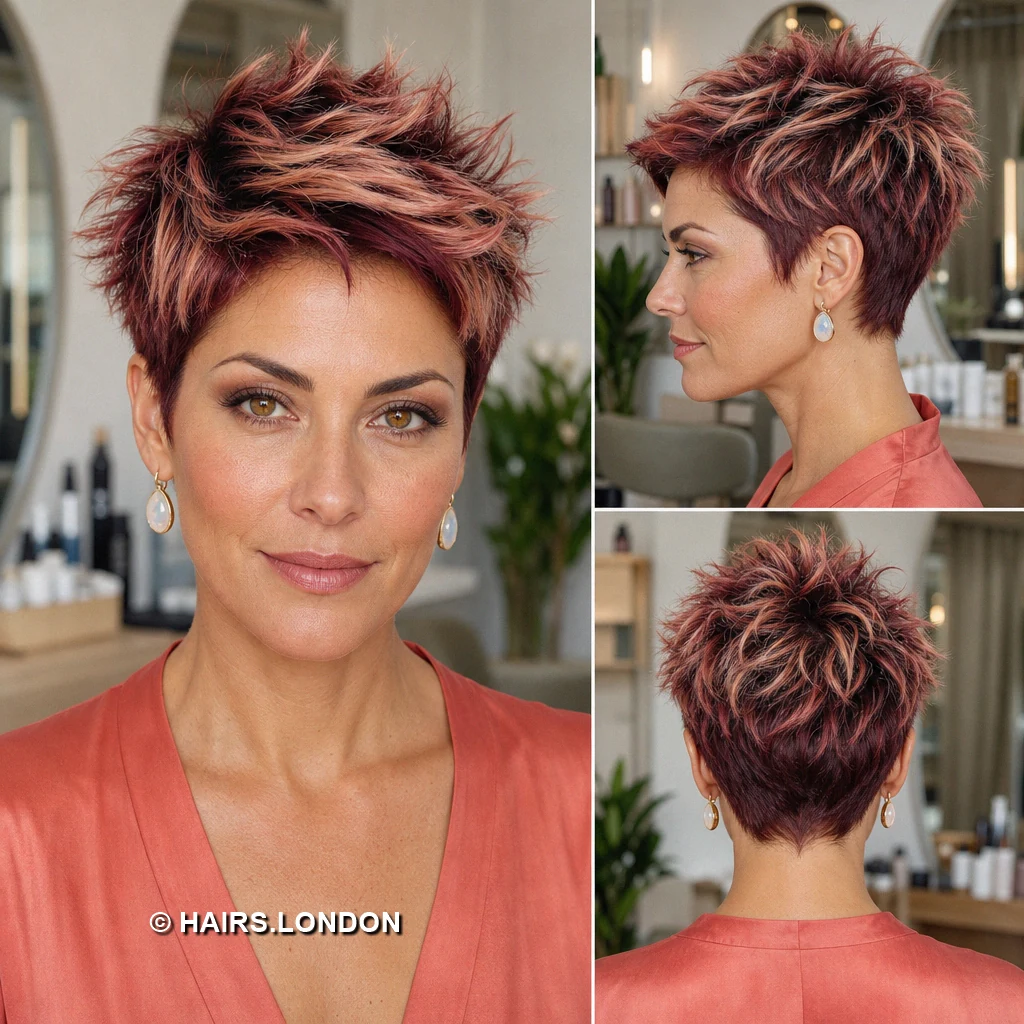
This spiky plum pixie contrasts pale pink highlights with burgundy. Choppy top layers point upward, outward, and across the crown. The short jagged fringe reveals much of the upper forehead. Close temple sections expose ears beneath that expanded textured silhouette. At the back, dense layers narrow toward a tidy nape. Ask for point cut ends that hold distinct, uneven directions. Blow dry against natural growth to create lift through roots. Pinch small sections with matte paste for controlled piecey texture. Limit heavy conditioners near the scalp to protect airy volume. Refresh the crop frequently so its short sides remain balanced.
How to Choose a Pixie Shape
Start with the amount of length you want around your forehead and ears. The longer burgundy and plum fringes offer room to sweep hair sideways; the shorter copper and spiky versions leave more of the forehead open. Compare the side and back views as carefully as the front: a close taper makes a full crown more pronounced. If you want less height, ask for a softer transition between the top and sides.
Styling Straight, Wavy, and Curly Textures
For straighter hair, direct damp roots upward while drying, then separate a few ends with a small amount of paste. Let natural waves keep some irregularity instead of brushing every piece smooth. For curls like those in the chestnut pixie, scrunch a light curl product through damp hair and diffuse gently. Begin with little product on any texture; short layers can lose their airy shape when overloaded.
Keeping Copper, Burgundy, and Plum Color Fresh
The images show brighter color through the upper layers and darker depth beneath. Ask which sections would need lightening to create your preferred contrast. Wash with a color-safe cleanser, use lukewarm rather than hot water, and protect hair from excessive heat when styling. Copper, red, and rosy tones can change between appointments, so discuss a gloss or color refresh based on how your shade wears.
Maintaining the Tapered Pixie Shape
A short nape and neat area around the ears can lose definition before the longer crown needs much cutting. Check the outline every few weeks and arrange a trim when it begins to look heavy. At an appointment, distinguish between cleaning up the taper and shortening the fringe or top. Keeping that longer length preserves the curls, side sweep, or lift that gives each cut its character.
What to Discuss With Your Stylist
Bring the front, profile, and back views of the cut you prefer. Point out the exact fringe length, how closely the sides should sit, and where you want fullness at the crown. Discuss your natural texture, usual drying routine, and how often you can return for cuts and color. For a highlighted look, ask where the brighter pieces will fall when the hair is styled both forward and upward.
Frequently Asked Questions
What makes these pixies look textured?
Their layered tops and separated ends create visible movement. The amount of lift and separation varies from soft and feathered to distinctly spiky.
Which cut has the longest-looking fringe?
The rosy burgundy pixie has a prominent side-swept front that extends farther across the forehead than the shorter, jagged fringes.
Can a curly pixie have tapered sides?
Yes. The chestnut example keeps defined curls on top while the temples and nape sit shorter.
How can I keep a pixie crown from looking flat?
Lift the roots as you dry and use a lightweight styling product. Keep heavier creams away from the roots if they weigh your hair down.
How do I style an upswept pixie?
Direct damp front sections upward and back while drying, then use flexible hold to support the sweep without making it rigid.
Will a longer pixie fringe need more styling?
It may need a little direction after washing, especially if you want it to sit consistently to one side. A small brush or your fingers can guide it while drying.
What should I ask for to avoid a bulky crown?
Show your stylist where you want volume and where you want it reduced. Ask them to assess internal weight while preserving enough length for your intended style.
How often should I trim a tapered nape?
Trim it when the outline starts to lose the close shape you want. The timing depends on your growth rate and how precise you prefer the neckline.
Can I maintain the top length while trimming the sides?
Yes. Ask specifically for an ear and neckline cleanup, and explain that you want to retain the length needed for curls, lift, or a side sweep.
How can I help red or copper color last between visits?
Use a color-safe cleanser, wash with lukewarm water, and limit unnecessary high-heat styling. Ask your colorist whether a gloss suits your chosen shade.
Do highlighted pixies need special placement?
Placement matters because short layers expose different pieces as you move the hair. Discuss whether you want the brighter color most visible in the fringe, crown, or both.
What photos should I bring to a pixie consultation?
Bring front, side, and back views. They help your stylist see the fringe, ear area, crown fullness, and nape you want—not just the overall color.
Conclusion
The most useful distinction among these colorful textured pixie cuts is where each one keeps its length. Decide whether you want curls, an upswept front, or a fringe you can brush across your forehead, then choose how close the sides and nape should sit. A clear plan for both the cut and color will make the look easier to style and maintain.