


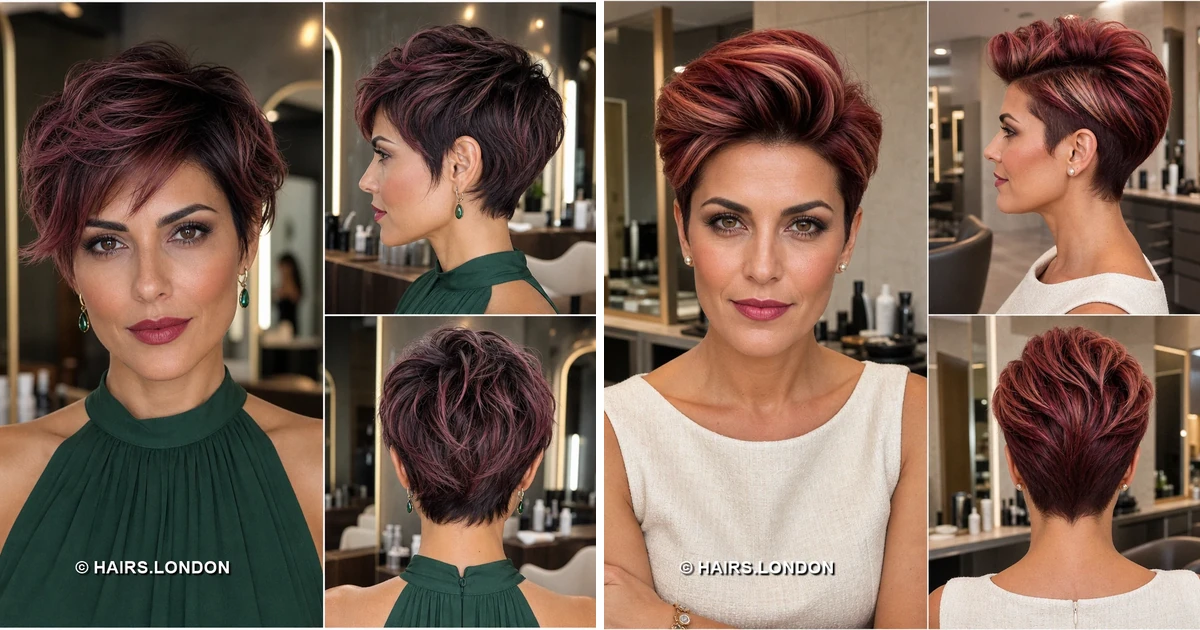
Burgundy pixie cuts can look soft and swept, sharply textured or smoothly sculpted. These nine images show how short tapered sides and napes support different top shapes, while colors range from a chestnut-toned brunette starting point to deep plum, wine red and rosy copper. Use the front, side and back views to decide which details you would want to keep or change.
1. Chestnut Swept-Back Pixie
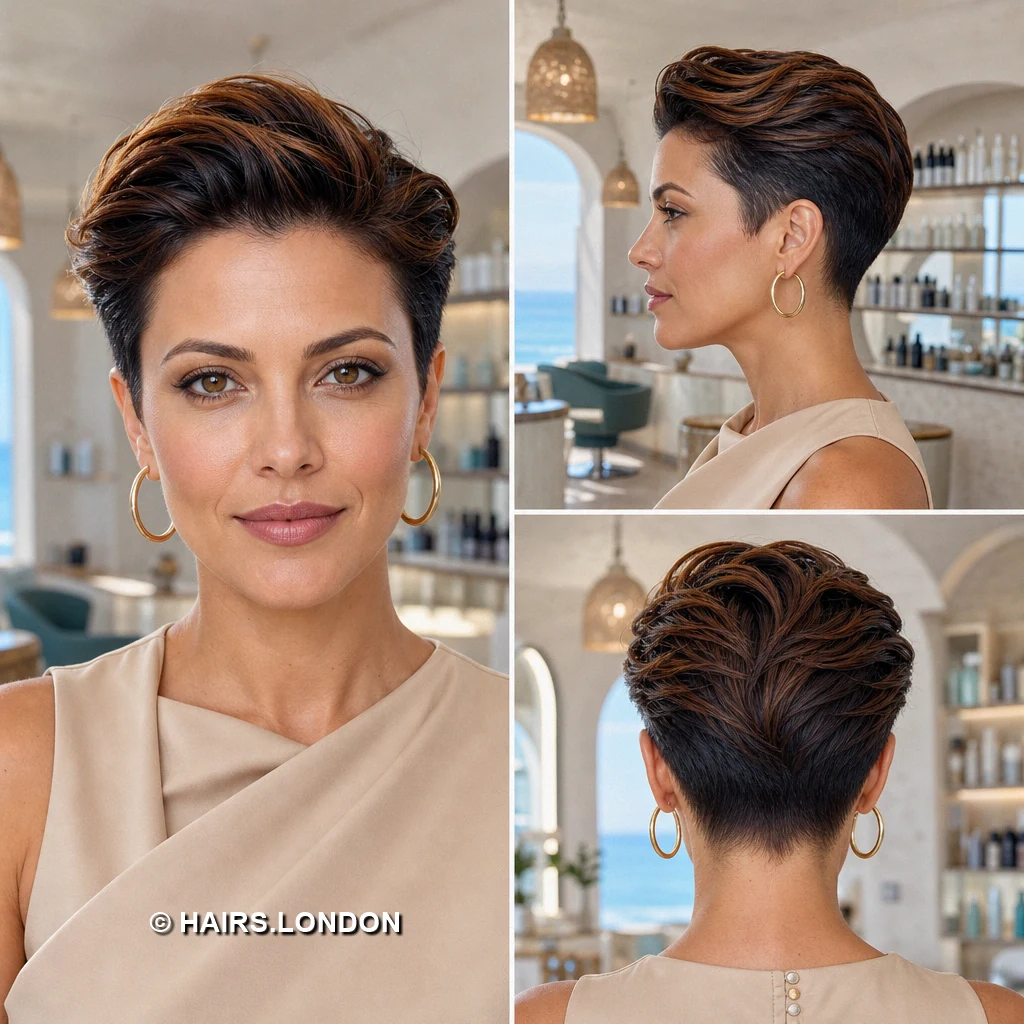
This compact pixie balances a lifted, swept-back top against neat temples and a closely tapered nape. Dark brunette roots support warm chestnut ribbons that follow the combed, curved sections above. The front rises away from the forehead without forming bangs. Ask for scissor-cut length on top and softly blended sides rather than a hard disconnect. Keep enough crown weight for the overlapping shape. Blow-dry upward with a small brush, then guide the hair back with fingers. A little flexible paste holds the lift without flattening the visible separation. Schedule regular nape cleanups to preserve the crisp outline between salon visits.
2. Plum Pixie with a Tousled Side Fringe
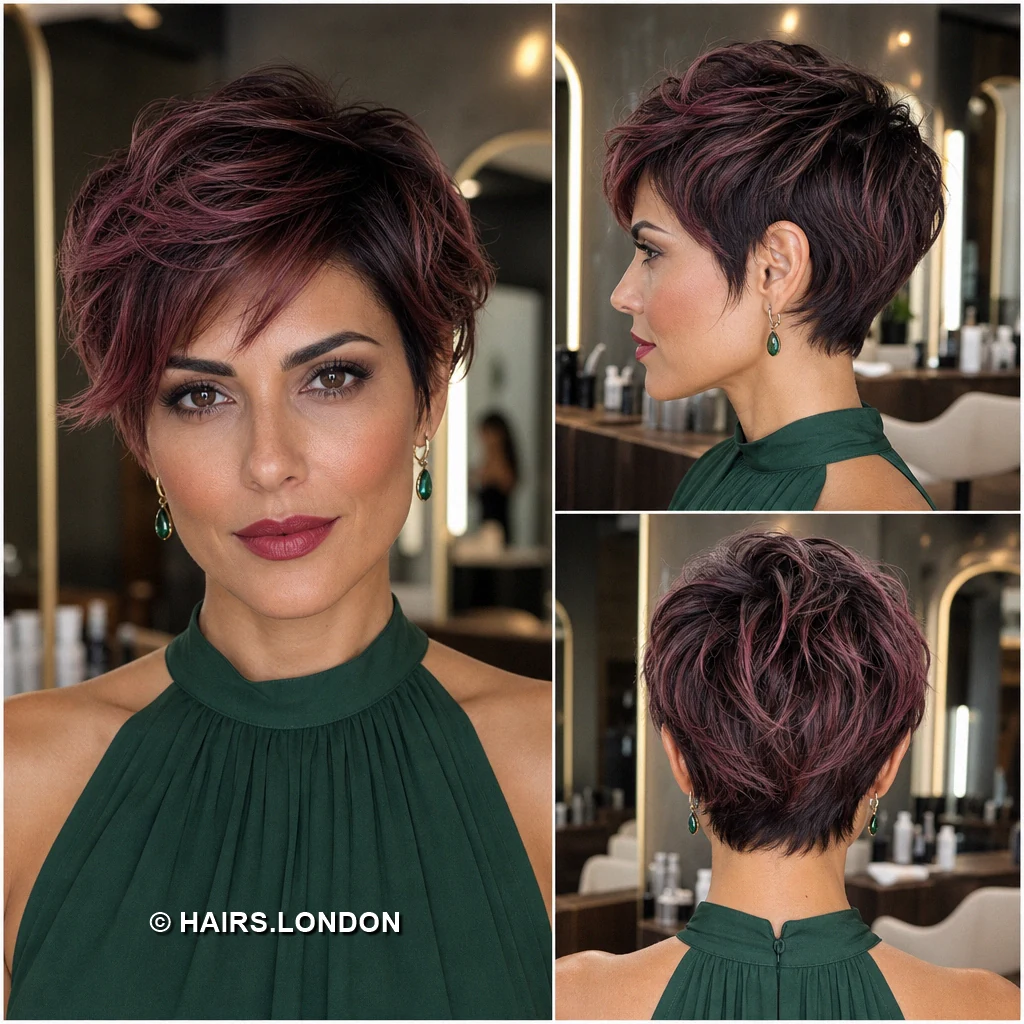
The deep plum pixie has a long, diagonal fringe and an airy, tousled crown. Raspberry-toned strands catch the light throughout the darker base, while close sides reveal the ear clearly. From behind, textured layers narrow into a short nape taper. Ask your stylist to retain generous length through the front and point-cut ends to create soft separation without excessive bulk. Work lightweight mousse into damp roots, then dry with fingers the fringe directed across the brow. Finish with pliable wax on selected ends rather than coating the whole top heavily. Refresh the tapered edges before they obscure the clean silhouette.
3. Wine-Toned Choppy Crown
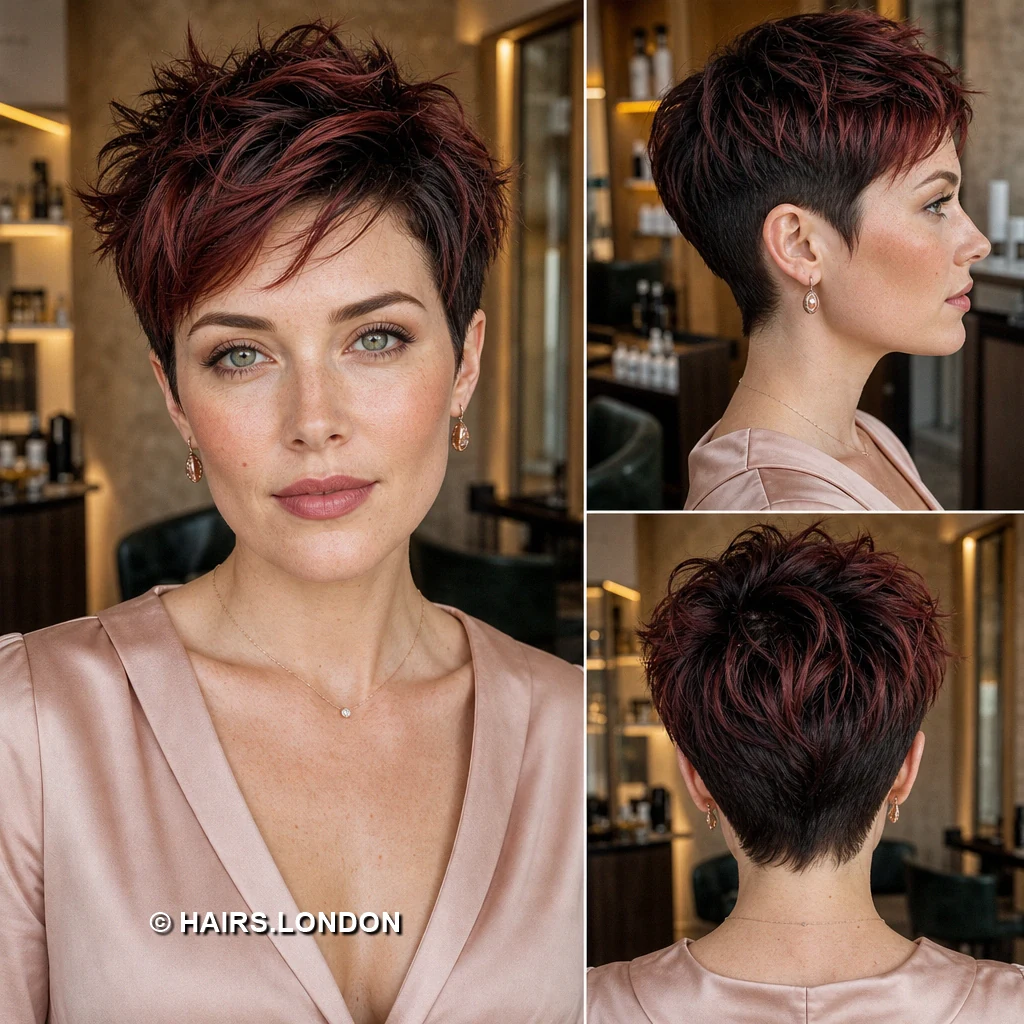
A choppy crown gives this dark burgundy pixie height and movement. Wine-red pieces sit over a nearly black base, creating contrast without covering the short, tidy sides. Fine, separated bangs skim the forehead, and the back tapers to a point at the nape. Request short interior layers that encourage lift without removing too much fullness above the occipital bone itself. Rough-dry upward, then pinch small sections with matte paste sparingly. Direct the shorter fringe forward instead of seeking perfect symmetry. Use color-safe conditioner to protect the red surface sheen longer. Trim the nape regularly to keep its pointed finish defined.
4. Burgundy Pixie with Separated Spikes
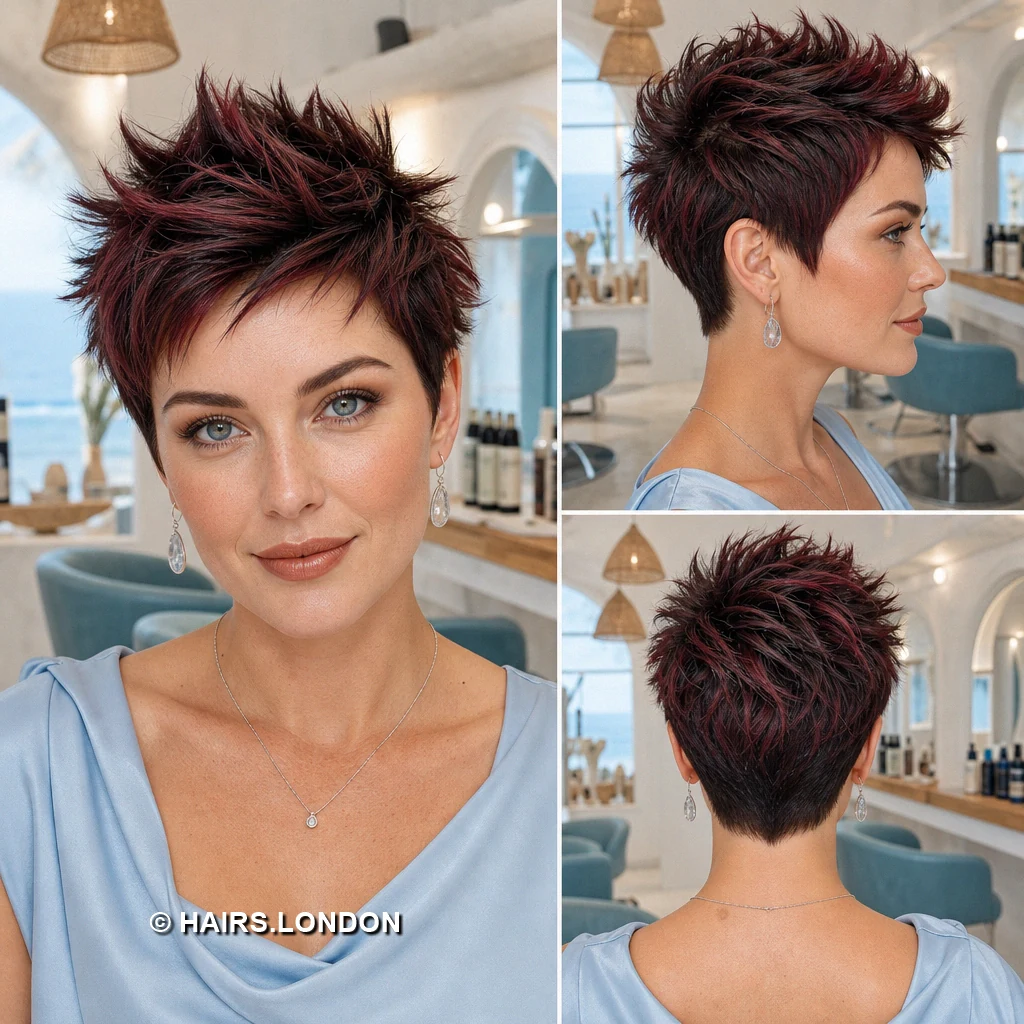
This burgundy pixie uses sharply separated spikes for pronounced height. At the crown, shorter wisps skim across the brow diagonally. Deep wine highlights thread through a dark brown base, adding dimension to the tousled top. Sides hug the head closely, while the back narrows neatly toward the exposed neckline naturally. Ask for short, varied layers up top and a soft blended taper around both ears. Blow-dry roots upward first, then twist tiny sections with firm paste for separated points throughout. Keep product off the scalp to retain visible texture longer. Book frequent tidy-ups if you prefer the sharp outline intact.
5. Rosy Burgundy Pixie with a Brushed-Up Front
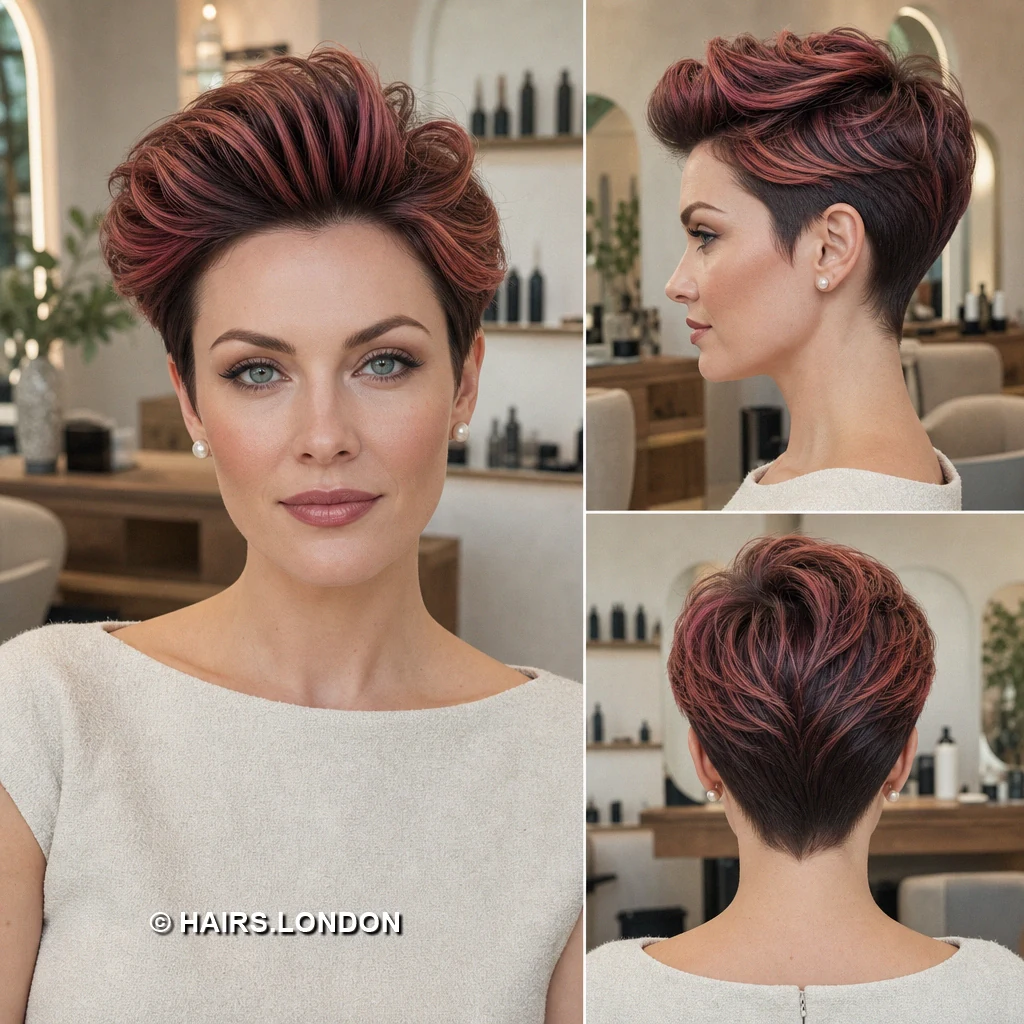
A rounded, brushed-up front gives this rosy burgundy pixie lift, while sleek sides create contrast beneath the airy top. Warm pink-copper ribbons sweep through a deeper wine base underneath. The back retains rounded volume before tapering into a narrow nape. No fringe falls forward; the hairline stays visible instead. Ask for substantial top length and gradually shortened sides underneath so the silhouette looks full without becoming blocky. Dry hair with a round brush, rolling the front back gently first. Set the bend with lightweight spray instead of heavy styling gel. Refresh the rosy color when brighter ribbons begin fading noticeably.
6. Dark Wine Pixie with a Spiked Crown
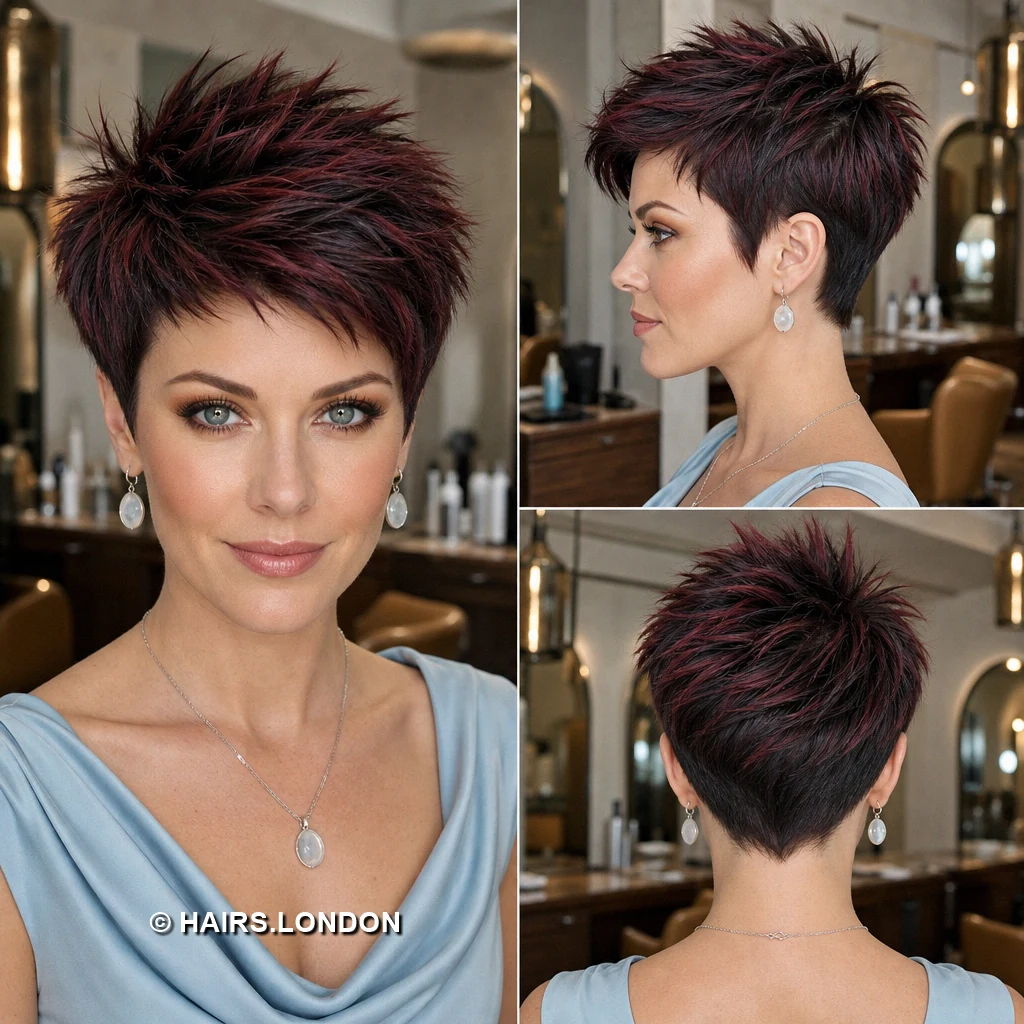
The short, spiked crown of this dark wine pixie leans forward, creating pointed movement above a short, feathered fringe line. Reddish strands stand out against the darker underlayers. Close sides frame the ears, and the nape finishes in a small point. The compact outline keeps the upright texture prominent above. Request point-cutting through the top without thinning its roots excessively. Dry while lifting the hair with fingers; add paste sparingly to the tips and pinch individual spikes into place gently. Avoid heavy oil, which can collapse the airy shape quickly. Keep the temple and nape taper trimmed for definition throughout.
7. Copper-Rose Burgundy Quiff
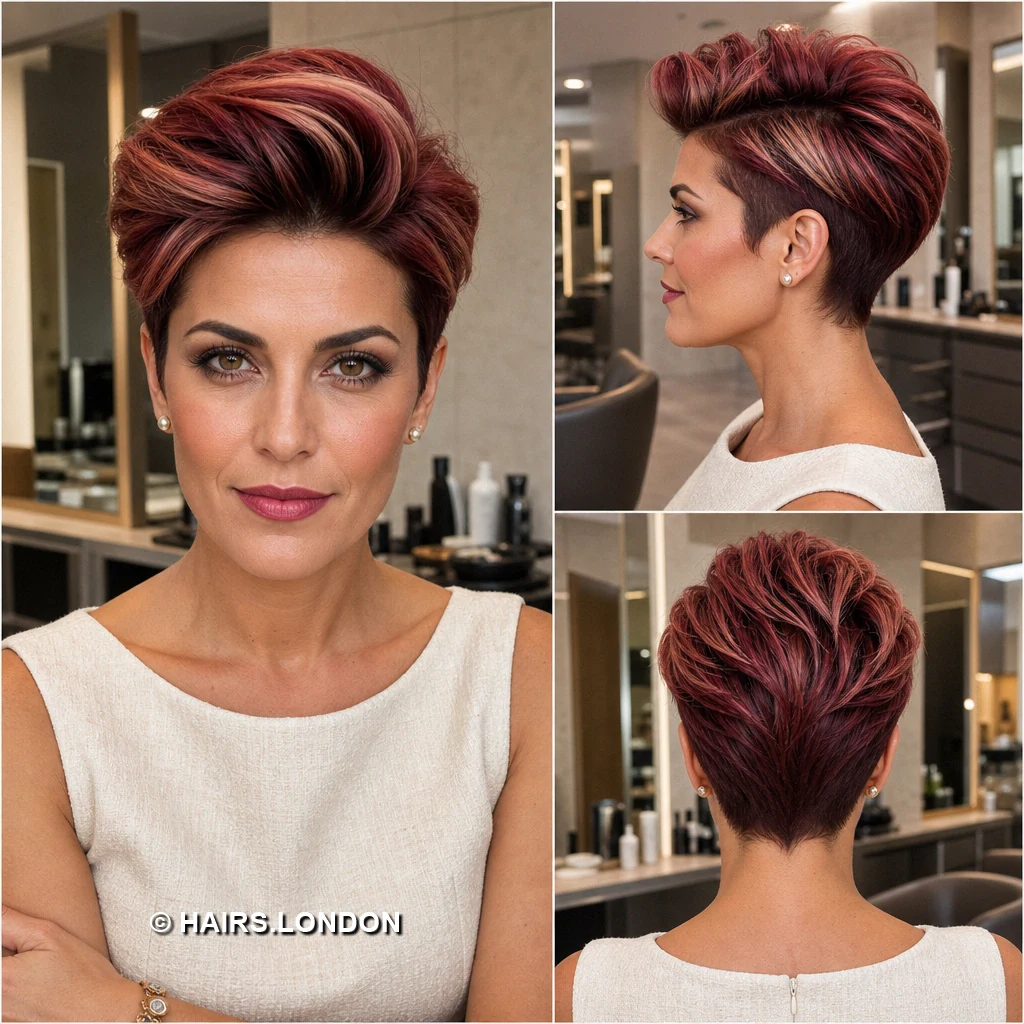
This burgundy pixie features a broad, swept-back quiff with soft copper-rose ribbons tracing its curved shape. Darker, close-cut sides contrast with the longer top, while the back tapers toward the nape. The forehead stays open beneath a backward-moving front section. Ask for enough length at the hairline to fold back over the crown. Brush hair upward while blow-drying, then sweep it backward gently and hold with a flexible finishing spray lightly. Use a touch of cream to smooth stray pieces down. Rebalance top length whenever the quiff starts falling noticeably flat forward. Keep the nape neat to preserve the contrast.
8. Plum Pixie with an Angled Fringe
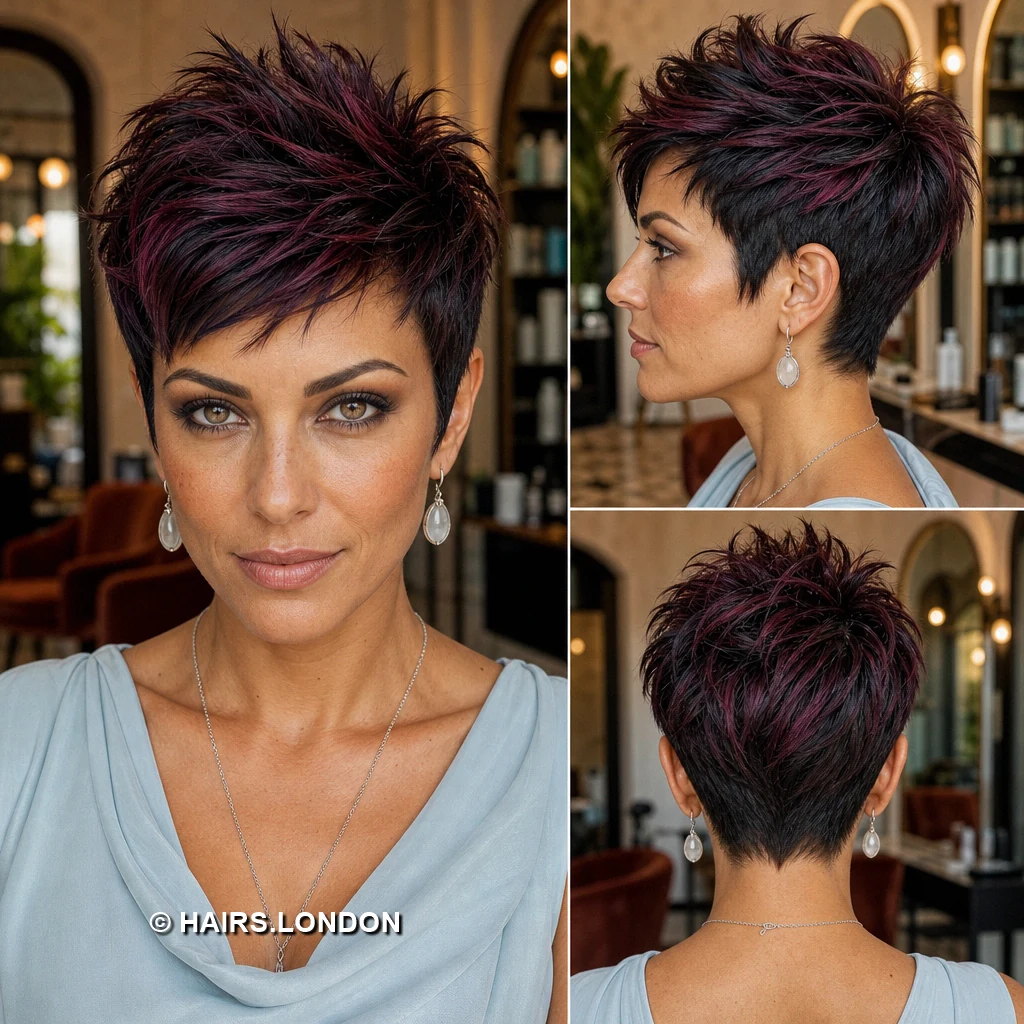
An angled, piecey fringe crosses this dark plum pixie diagonally. Burgundy strands lift unevenly across its textured crown, adding height against near-black sides. Behind, textured top layers narrow downward into a short, pointed nape; temples stay closely cropped underneath. Request a longer diagonal front with carefully debulked ends only so it separates without looking sparse. Finger-dry the roots upward and draw the fringe sideways carefully using a small brush gently. Pinch burgundy tips with paste for definition, avoiding stiffness entirely. Trim the nape before its slim shape grows heavy again. Protect colored lengths from frequent washing and excessive heat exposure.
9. Rosy Copper-Burgundy Rolled Pixie
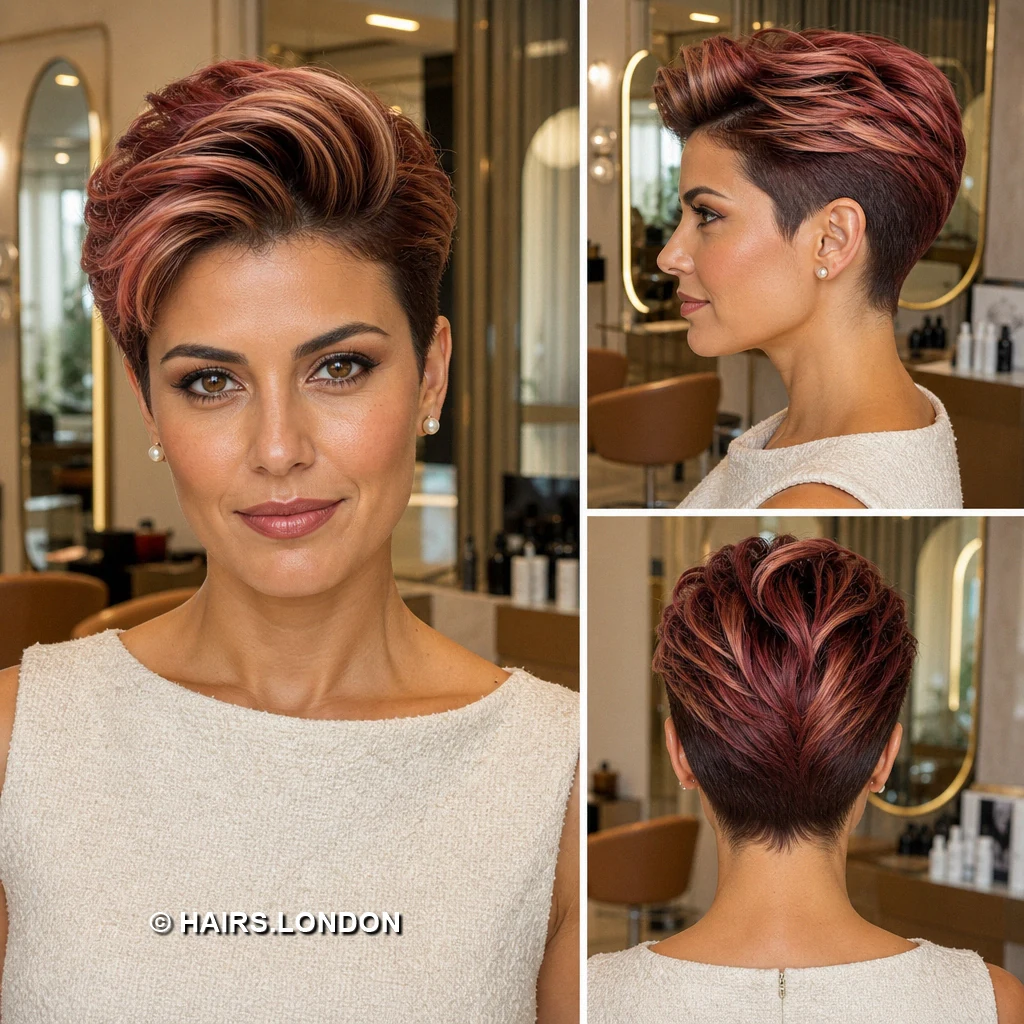
A sculpted, sideward roll defines this rosy copper-burgundy pixie shape. Light ribbons arc across the front and continue through the rounded crown, contrasting with dark, closely tailored sides. Viewed from behind, layered strands gradually converge above a softly tapered neckline. Ask for generous front length and graduated weight around the crown, preserving its smooth, rolling surface. Blow-dry using gentle tension and a round brush, lifting hair before sweeping sideways smoothly. Use flexible spray to secure the bend without stiffness afterward. Schedule nape cleanups and glosses as the color softens gradually. Keep the sides regularly trimmed to maintain their contrast clearly.
How to Choose a Pixie Shape
Start with the front: a brushed-back quiff opens the forehead, while a diagonal fringe gives you more coverage. Next, decide how much height you want at the crown. The rounded styles need enough length to bend smoothly; the spikier cuts rely on shorter, separated layers. Check the side and back views too. A close taper exposes the ears and neckline, so ask for a slightly softer outline if you prefer more coverage.
Styling Different Textures
For straight hair, lift damp roots with a brush or your fingers, then use a small amount of paste to separate the ends. Wavy hair can be dried with gentle finger-shaping to keep its natural bends visible. For curly hair, ask your stylist to adapt the pictured lengths to your curl pattern and cut enough room into the top for spring. Use lightweight products first: too much oil or heavy cream can flatten a short crown.
Keeping Burgundy Color Fresh
The images show several color directions, from subtle wine ribbons over a dark base to brighter plum and rosy copper pieces. Ask which shade and placement will suit your starting color and preferred upkeep. Wash with a color-safe cleanser, avoid unnecessarily hot water and use heat protection before blow-drying. When the brighter pieces begin to look muted, discuss a gloss or color refresh rather than assuming the whole cut needs recoloring.
Maintaining the Pixie Shape
Short sides, temples and pointed napes can lose definition before the longer top feels overgrown. Book trims according to how crisp you want the outline to remain, and tell your stylist if the fringe or crown needs less taken off than the perimeter. Between visits, direct the roots while drying rather than adding more product to correct a flattened shape.
What to Discuss with Your Stylist
Bring the front, profile and back view of the cut you like. Point out the exact fringe length, crown height, side coverage and nape finish you want. Discuss how your growth pattern and natural texture may change the result, particularly for an upright crown or swept-back front. For color, agree on the base, the placement of burgundy or copper ribbons, and a realistic refresh plan before cutting or coloring begins.
Frequently Asked Questions
What distinguishes these burgundy pixie cuts from one another?
The main differences are top length, fringe direction and texture. Some have smooth, brushed-back fronts; others have diagonal bangs or short, separated spikes.
Can I keep a longer fringe with a tapered pixie?
Yes. A longer diagonal fringe can sit over closely cut sides, as long as the stylist preserves enough front length and removes bulk carefully.
Which pictured shape leaves the forehead most open?
The swept-back, brushed-up and rolled-front styles keep hair off the forehead more than the angled-fringe cuts.
How do I style a spiky pixie without making it stiff?
Dry the roots upward, then pinch a small amount of paste onto selected ends. Add product gradually instead of coating the entire top.
Will the wine or plum color show against a dark base?
The images show reddish and plum pieces visible against darker underlayers, particularly where light catches the textured top.
How can I keep a rounded quiff from falling forward?
Lift the roots while blow-drying, guide the front back with a brush and finish with a flexible spray. Ask your stylist to retain enough length for the bend.
Do these cuts require a pointed nape?
No. Several images show a narrow or pointed finish, but you can ask your stylist for a softer taper if that better suits your preference.
How often should I trim a pixie?
Trim it when the sides or nape stop holding the outline you want. A close taper may need attention sooner than a longer crown.
Can naturally wavy hair wear these shapes?
Yes, though the result will have a different surface texture. Ask your stylist to adjust the top and fringe lengths to accommodate your natural bend.
What should I ask for if I want visible color without coloring every strand?
Discuss burgundy, plum or copper-toned ribbons over a darker base, and use the images to show where you want the brighter pieces placed.
Should I use paste or mousse on a textured pixie?
Mousse can help lift damp roots; paste is useful afterward for separating dry ends. Start with small amounts of either.
What views should I bring to a salon consultation?
Bring front, side and back views so you can discuss the fringe, crown volume, temple length and nape outline separately.
Conclusion
The most useful choice is not just a burgundy shade, but a shape you can style comfortably: a soft sweep, an angled fringe, a rounded roll or a deliberately spiky crown. Choose the front you like, check its side and nape profile, then plan the cut and color upkeep with your stylist.