On long hair, color has room to wander. On a bob it has about six inches to make its point, and every foil, brushstroke or gloss shows. That is why the technique matters as much as the shade: the same honey blonde can look streaky, lived-in or glassy depending on whether it went on in fine foils, painted sweeps or one all-over application. Pick the method first and the shade becomes much easier.
This gallery sorts 29 colored bobs by how the color was put on, not by which shade it is. You’ll find fine babylights that brighten a blunt cut, painted balayage that grows out softly, one-shade brunettes and inky blacks that rely on shine, all-over reds and berries, and a few vivid placements for anyone ready to have fun. If you already know the shade you want, our guides to blonde bob haircuts and brunette bob haircuts go deeper on each color family.
How to choose a coloring technique for a bob
The two questions that decide the technique are how often you want to sit in the salon chair and how you wear the cut. Foils give the most even brightness but show regrowth within six to eight weeks. Painted balayage and root shadows grow out softly. Single-process glosses are the lowest effort of all, as long as you stay within a couple of shades of your natural color.
| Hair type | Techniques that work best on a bob | What to avoid |
|---|---|---|
| Fine or thin | Fine babylights or a soft root shadow, which add depth and make the hair look thicker | Chunky high-contrast stripes that expose the scalp at the part |
| Thick | Balayage or ribbon highlights that break up a heavy outline | One flat, dark shade with no shine, which can make a thick bob look solid |
| Straight and blunt | Glossy single shades, fine foils or a clean root melt that keeps the line crisp | Patchy hand-painting that shows every brushstroke on smooth hair |
| Wavy | Painted balayage placed on the outside of each bend | Very fine all-over foils that blur the wave pattern |
| Curly | Hand-painted pieces placed curl by curl, kept a few shades lighter than the base | Heavy bleaching, which dries out curls and loosens the pattern |
Short cuts trim away color fast. A bob trimmed every six to eight weeks loses most of its ends within a year, so expensive work on the lengths does not last as long as it does on long hair. That makes root-friendly techniques, like balayage and glosses, good value. For lighter work on very short cuts, our balayage ideas for short hair show how far a few painted pieces can go.
Foils and babylights for brightness
Foiling places lightener in fine, even slices from root to tip, so the bob reads bright from every angle. These five show how dense or open those slices can be.
1. The pearl foil A-line
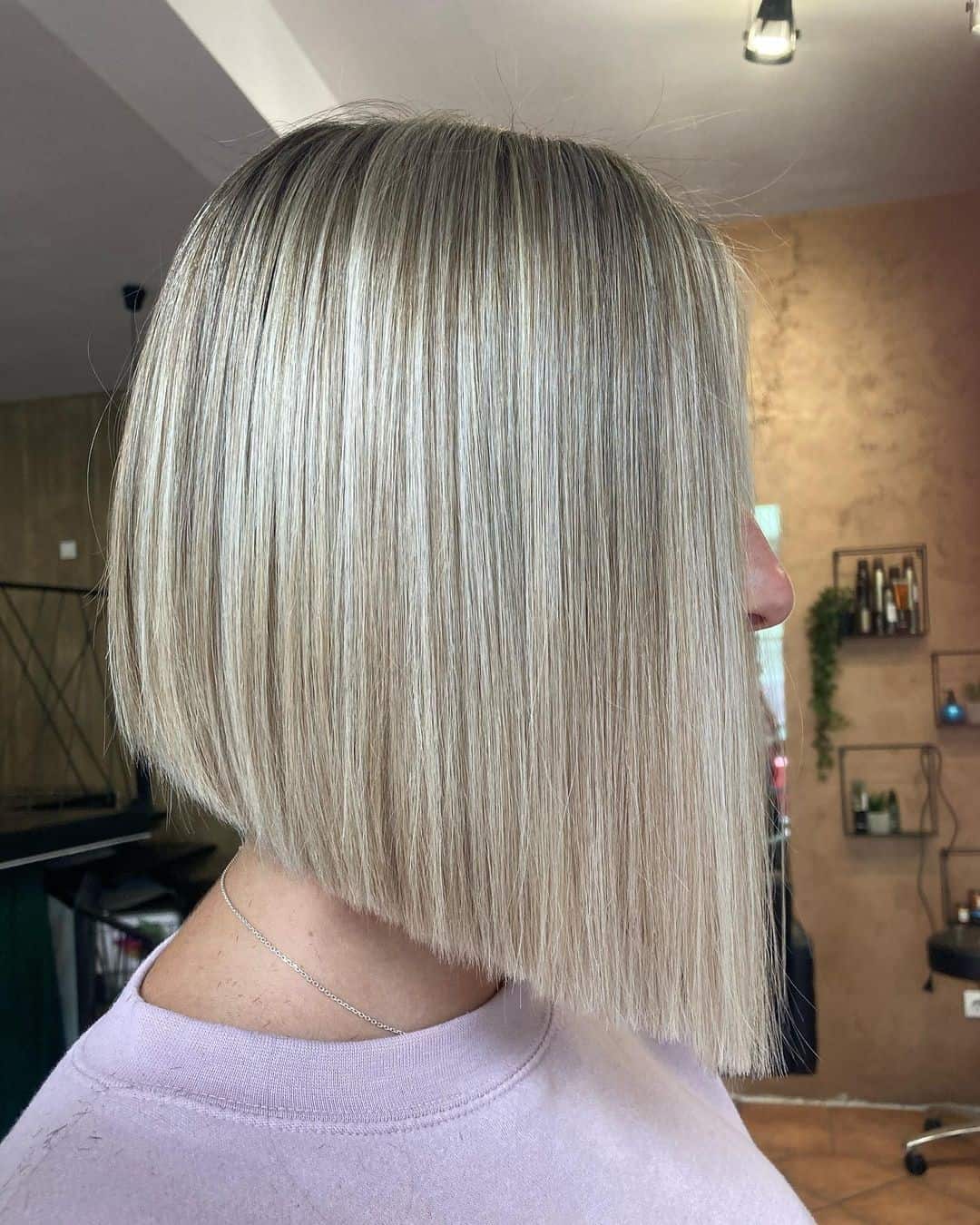
Want brightness that looks almost seamless? Look at how fine these slices are. Pearl and beige blonde highlights run from root to tip through a sleek A-line that is shorter at the nape and longer toward the chin. Because the foils are packed closely, the color blends into one pale shimmer, with just enough darker strands left between them to stop the bob looking flat. Kept dead straight, it shows off every slice.
- Best for: Straight, fine to medium hair; anyone moving from dark blonde toward a pale, cool shade.
- Ask your stylist for: Fine, closely packed babylights toned to pearl beige, on a straight A-line bob that slopes to the chin.
- How to style it: Blow-dry smooth with a paddle brush and finish with a flat iron and a drop of shine serum.
- Upkeep: Highlights every 8 to 10 weeks; toner every 6 weeks; trim every 6 to 8 weeks.
2. The buttercream ribbon bob
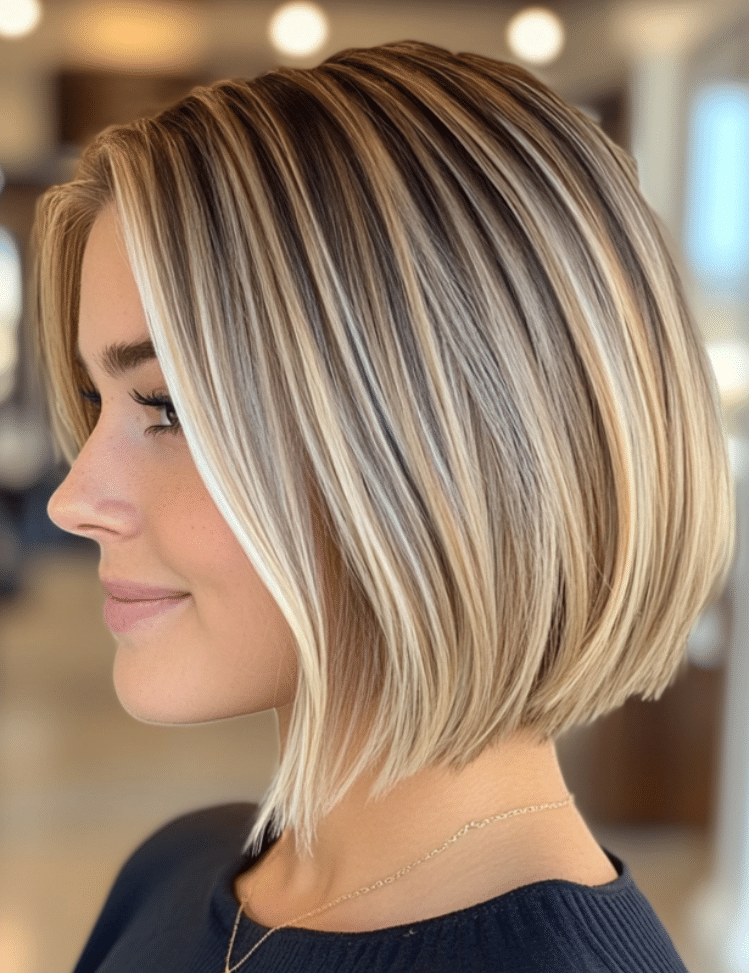
This is what foils look like when they are placed boldly but blended at the root. A deeper brown base shows through between creamy blonde ribbons, and the front pieces are brightest of all, so the color frames the face first. The chin-length cut is smoothed and curved under at the ends, which makes each ribbon bend and catch the light. If you like contrast but hate harsh stripes, the soft root is the secret.
- Best for: Straight or slightly wavy hair with a light to medium brown base.
- Ask your stylist for: Medium-width foil highlights with a brighter face frame and a soft root smudge, toned to buttery blonde.
- How to style it: Blow-dry with a medium round brush, rolling the ends under, then smooth the surface with a flat iron.
- Upkeep: Highlights every 10 to 12 weeks thanks to the smudged root; gloss between visits.
3. The honey stripe blunt bob
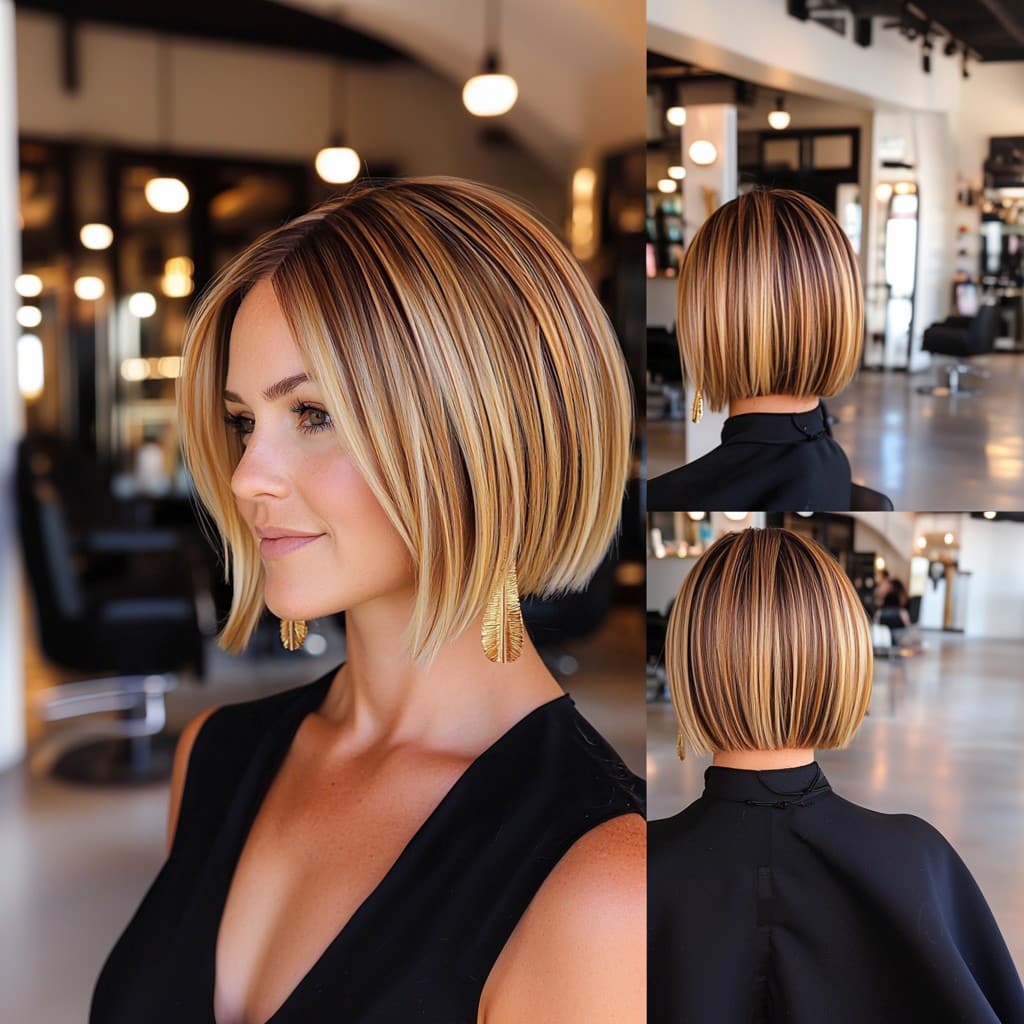
Golden-hour color on a sharp, blunt line. Honey and butter-blonde highlights are woven through a light brown base, and the back view shows how evenly they fall all the way around the head. The outline is cut straight at the jaw with no visible layers, so the stripes stay long and unbroken. A warm, sunny bob that looks polished with a blowout and still works tucked behind one ear.
- Best for: Straight, medium-density hair; warm skin tones that suit golden shades.
- Ask your stylist for: Even foil highlights in honey and golden blonde on a light brown base, with a blunt jaw-length bob.
- How to style it: Blow-dry straight with a round brush, then flat-iron the perimeter so the blunt edge stays crisp.
- Upkeep: Highlights every 8 to 10 weeks; trim every 6 weeks to keep the line sharp.
4. The rosy champagne bob with bangs
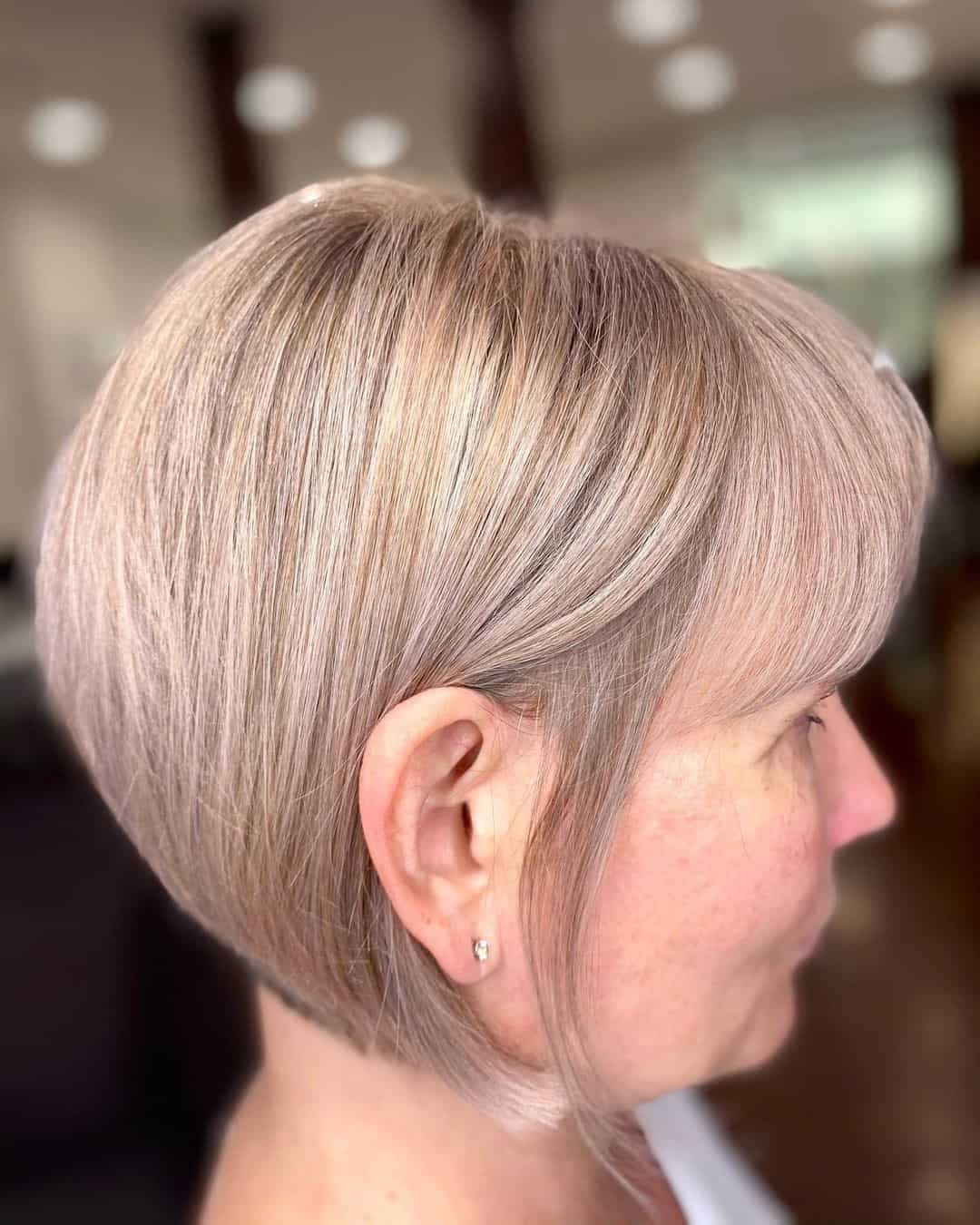
Proof that a soft blonde can still feel modern on a short cut. Fine highlights lift the hair to a pale champagne with a faint rose tint, and they are blended so closely that the cut reads as one shade from a distance. The graduated back sits close at the nape, while the long side-swept bangs and tapered sides frame the cheek. A gentle, flattering way to brighten hair that is starting to gray.
- Best for: Fine hair; anyone blending early gray with a soft blonde.
- Ask your stylist for: Fine babylights lifted to pale champagne with a rosy toner, on a short graduated bob with side-swept bangs.
- How to style it: Blow-dry the bangs to the side with a small round brush and smooth the back with a paddle brush.
- Upkeep: Babylights every 8 to 10 weeks; purple or rose toning shampoo once a week.
5. The bronde sweep bob
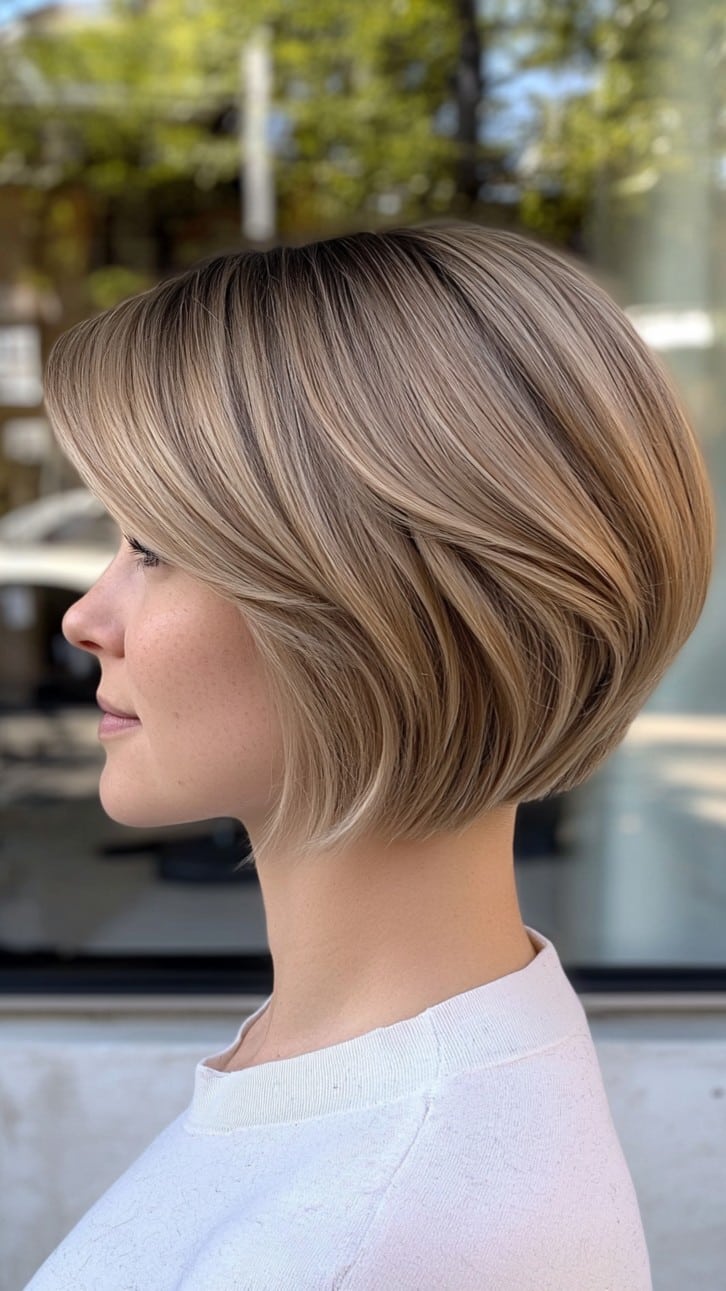
Not quite blonde, not quite brown, and that is the point. Beige highlights sit over a light brown base, with a darker shadow at the roots so regrowth barely shows. The bob is short and rounded at the back, then swept forward from a deep side part into a long fringe that curves around the cheekbone. Polished from the side, soft from the front.
- Best for: Straight, fine to medium hair; brunettes trying blonde for the first time.
- Ask your stylist for: Soft beige highlights with a root shadow, on a rounded short bob with a deep side part and long swept fringe.
- How to style it: Blow-dry over a round brush, sweeping the front across and curving the back under.
- Upkeep: Highlights every 10 to 12 weeks; trim every 6 weeks to keep the rounded back.
Balayage, root shadows and painted ends
Hand-painted color goes where the light naturally hits, so it grows out without a hard line. On a bob, that usually means brighter ends and a deeper root.
6. The strawberry beige wave
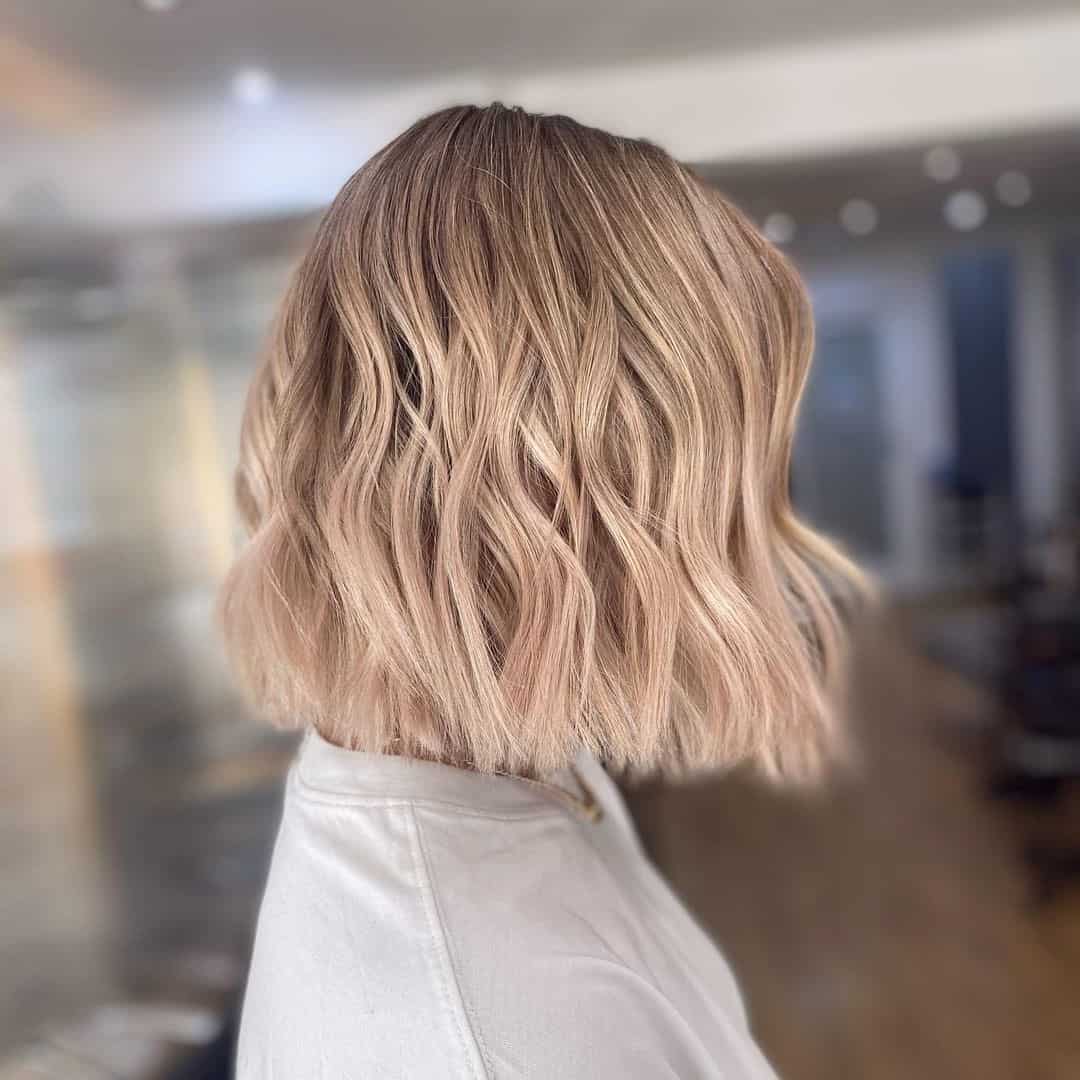
If your idea of low-maintenance color still involves a little warmth, start here. A slightly deeper root melts into a soft strawberry-beige blonde through the mid-lengths and ends. The bob grazes the shoulders and is worn in loose, flat waves that end in a blunt, slightly uneven edge. Because the lightest tone sits at the bottom, the color looks sunlit rather than salon-fresh, even weeks later.
- Best for: Fine to medium hair with a natural light brown or dark blonde base.
- Ask your stylist for: A soft root melt into balayage toned strawberry beige, on a collarbone bob with a blunt, textured edge.
- How to style it: Flat-iron loose waves, leaving the last inch straight, then shake out with texture spray.
- Upkeep: Balayage every 12 to 14 weeks; gloss every 6 to 8 weeks to keep the warm tone.
7. The beachy butter blonde lob
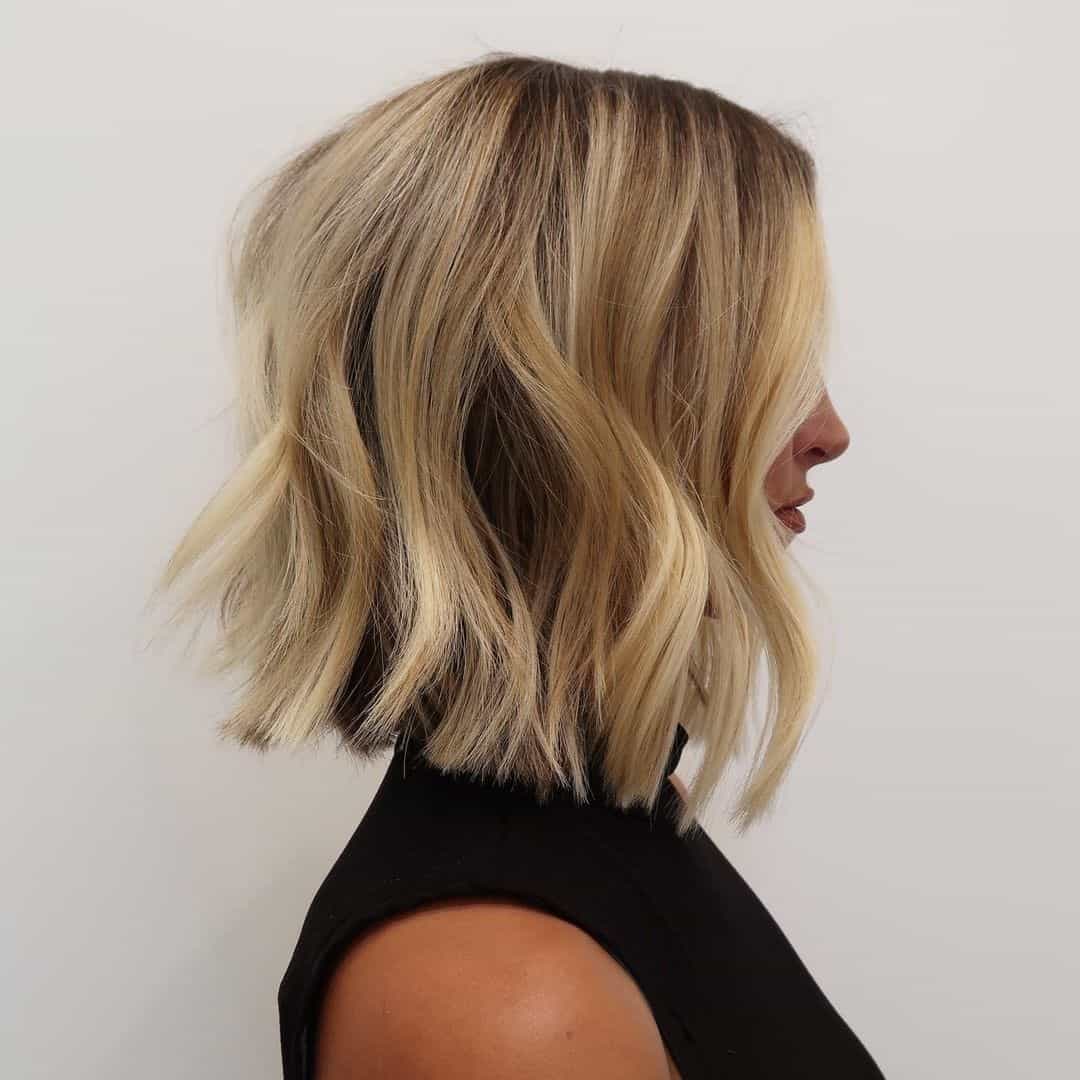
Picture a summer spent outside. Deeper golden roots break up into bright butter-blonde pieces, painted thickest through the ends and around the ear. The chin-to-jaw length is broken into piecey, bent sections, so the color scatters rather than sitting in neat stripes. Seen in profile, you can spot the darker underneath sections that give the brighter pieces something to stand against.
- Best for: Medium to thick hair with a natural wave; anyone who prefers an undone finish.
- Ask your stylist for: Hand-painted balayage with heavier color through the ends, a soft root and a textured jaw-length bob.
- How to style it: Rough-dry, then bend random sections with a flat iron and finish with a dry texture spray.
- Upkeep: Balayage every 12 weeks; trim every 8 weeks.
8. The toffee-tipped brunette bob
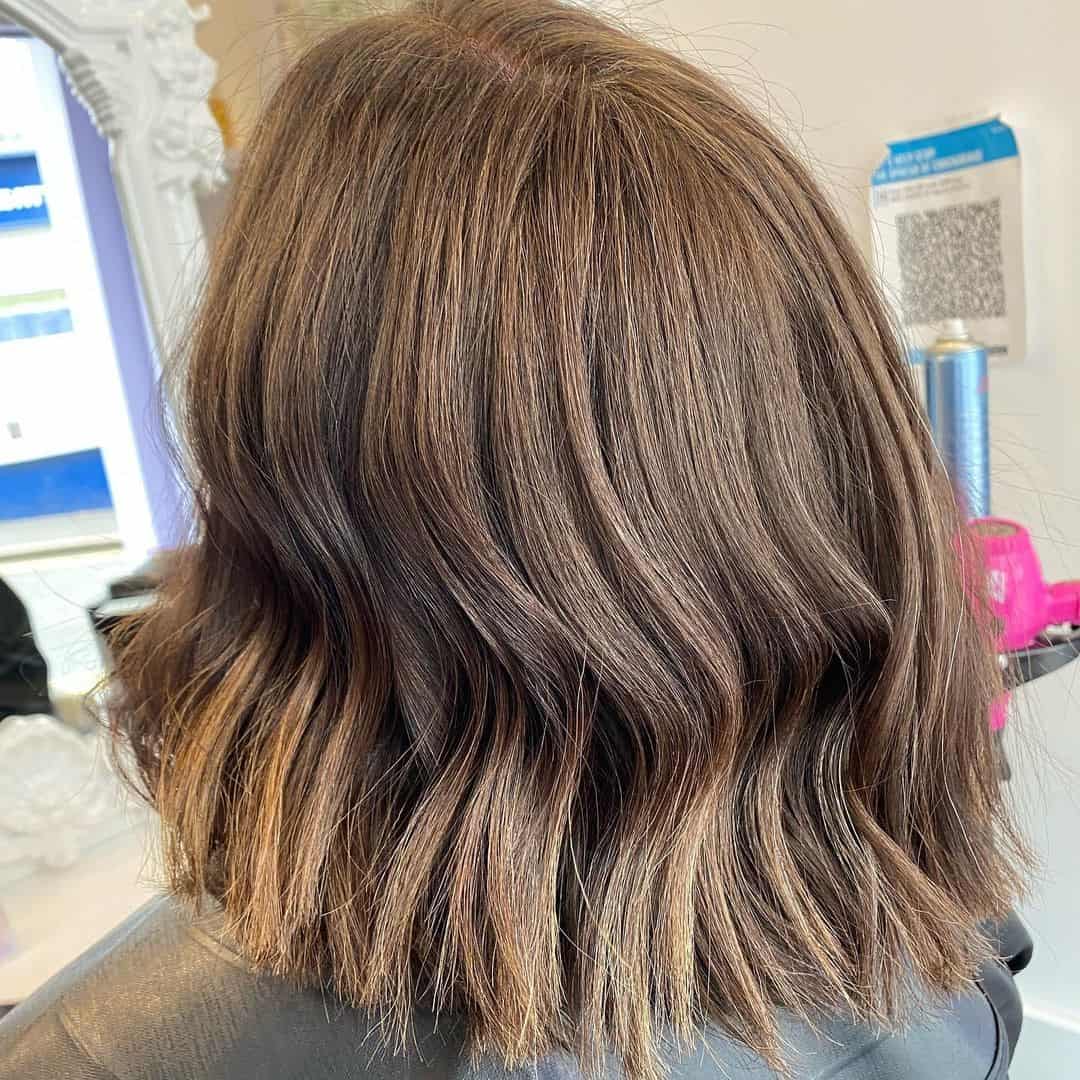
Here’s the subtle way in. A medium brown base stays untouched at the top, then lighter toffee pieces appear only on the bottom few inches, where they flick and separate. The cut sits just above the shoulders with a soft bend through the middle. Since the brighter tone starts so low, your next trim takes some of it away and leaves the shape looking fresh rather than grown out.
- Best for: Medium-density brown hair; anyone nervous about their first lightening.
- Ask your stylist for: Painted toffee balayage on the ends only, with a natural root, on a blunt shoulder-length bob.
- How to style it: Blow-dry with a round brush and bend the mid-lengths with a large barrel iron.
- Upkeep: Color every 12 to 16 weeks; trim every 8 weeks.
9. The caramel ribbon swing
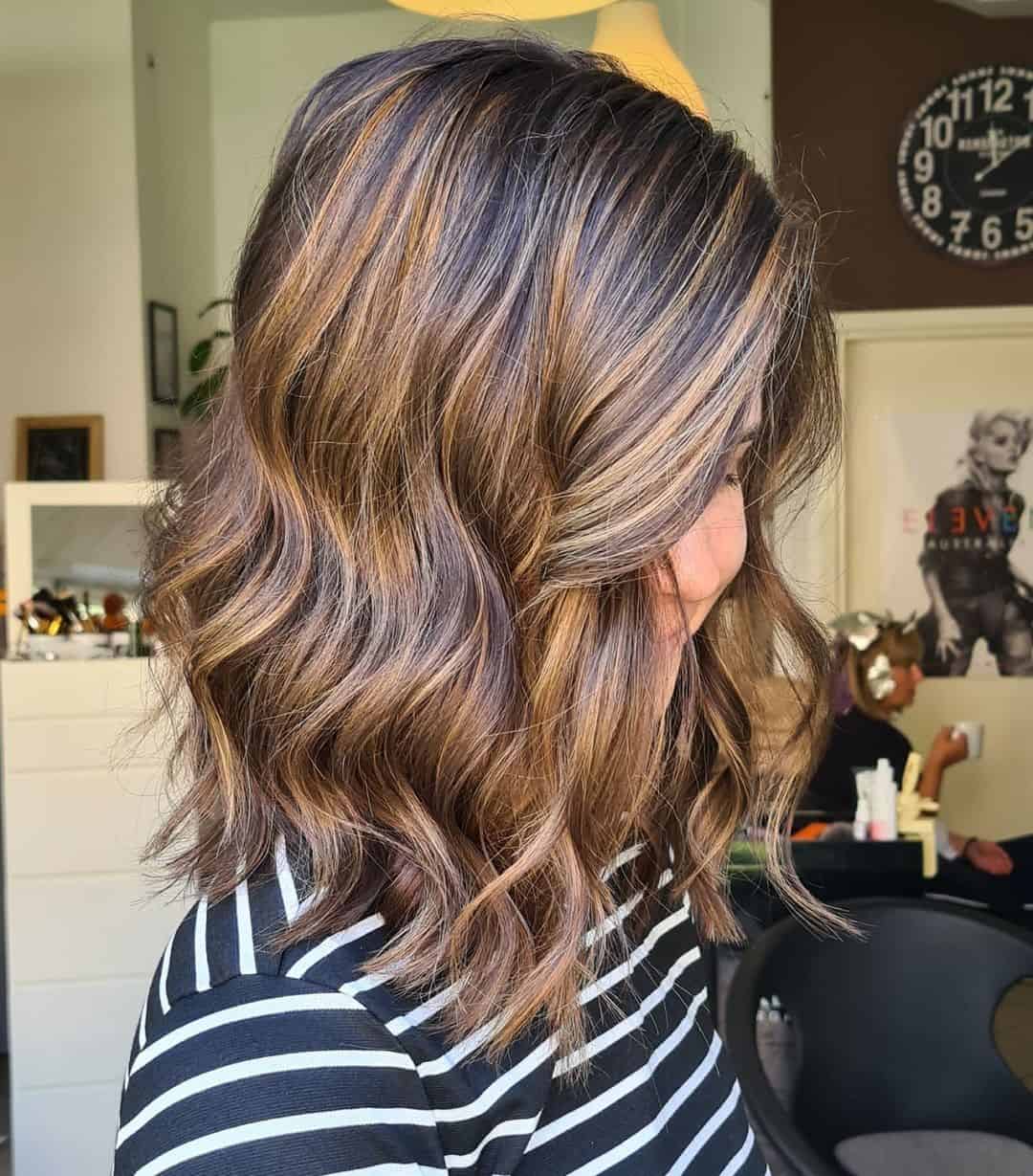
Caramel ribbons plus a deep brown base is a pairing that rarely misses. Here the lighter strands are painted in wide sweeps from about the eye line down, so they twist through every wave. The cut is a long, shoulder-length bob with layers that let the waves fall in different directions. Darker underneath sections keep the contrast rich and make the caramel look brighter than it actually is.
- Best for: Thick, wavy hair; dark brunettes who want warmth.
- Ask your stylist for: Wide caramel balayage ribbons starting at eye level, on a layered shoulder-length lob.
- How to style it: Curl alternate sections away from the face with a 1.25-inch iron, then rake out with fingers.
- Upkeep: Balayage every 12 weeks; gloss every 8 weeks to stop brassiness.
10. The copper-kissed curly bob
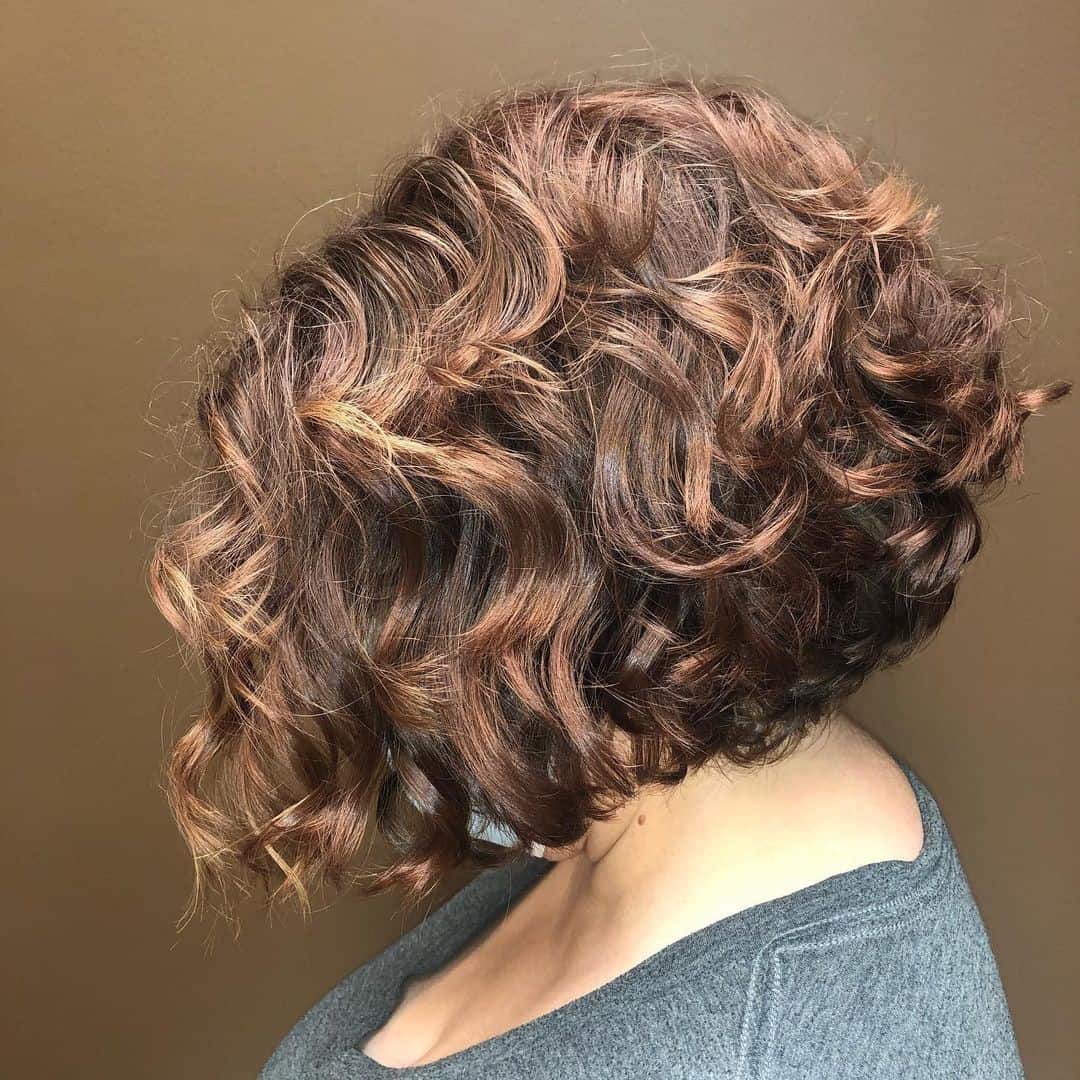
Curls and color need a light hand, and this shows how it’s done. Copper and caramel pieces are painted onto individual ringlets over a chestnut base, so the highlights spiral with the curl instead of streaking across it. The bob is stacked slightly at the back and fuller around the jaw. Each painted curl catches the light on its outer edge, which is exactly where you want the brightness.
- Best for: Curly hair, type 3A to 3B; warm brunettes.
- Ask your stylist for: Curl-by-curl painted highlights in copper and caramel on a chestnut base, with a dry-cut bob stacked at the back.
- How to style it: Apply curl cream to soaking-wet hair, scrunch, and diffuse on low heat without touching.
- Upkeep: Color every 12 weeks; curl trim every 10 to 12 weeks; deep condition weekly.