


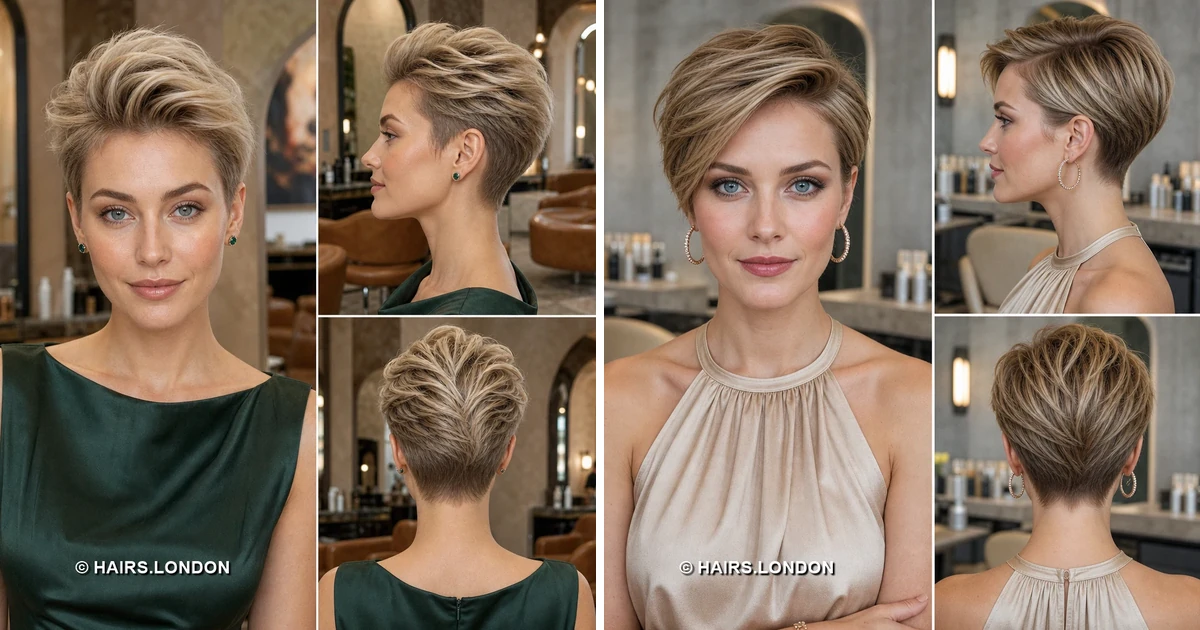
These highlighted pixie cuts show how much difference a few inches of length, a change in fringe direction, or a closer taper can make. Most pair lighter strands on top with deeper roots and shorter sides, but their silhouettes range from smooth and swept to airy and deliberately tousled. Use the front, side, and back views to decide which details you would actually enjoy styling.
1. Soft Ash-Blonde Pixie with a Diagonal Fringe
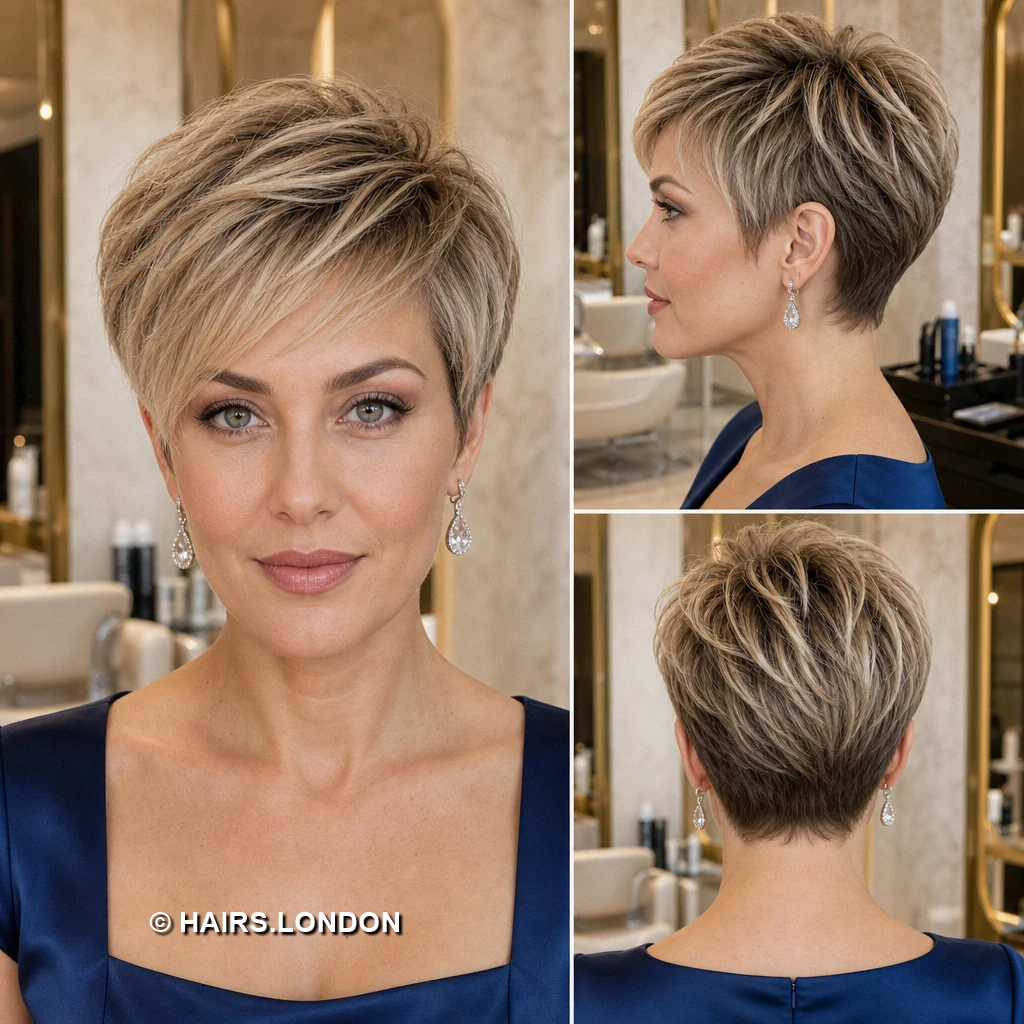
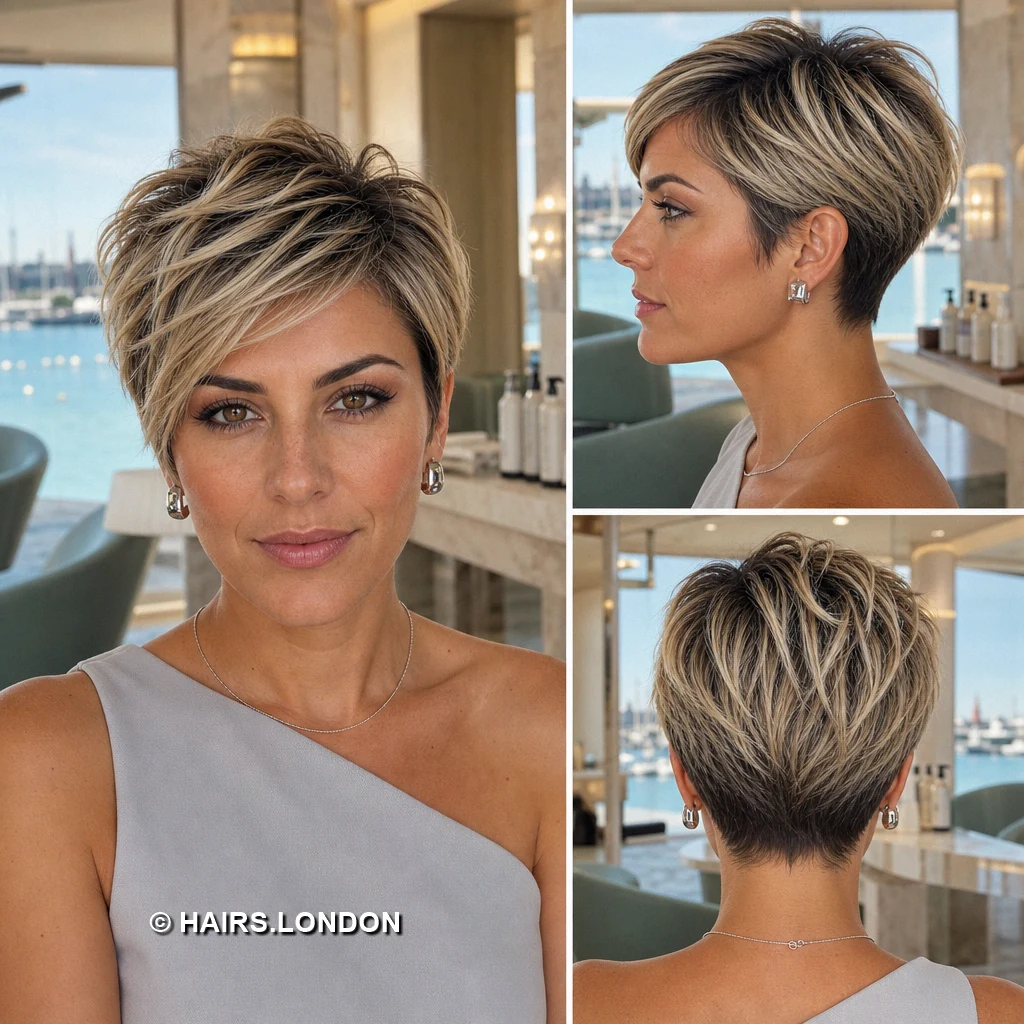
Soft ash blonde highlights brighten this closely tapered pixie cut. The longer fringe falls diagonally across the forehead and brow. Fine layers give the rounded crown gentle height and movement. Darker roots create depth beneath the lighter, separated top sections. Short sides sit neatly around the ears without looking shaved. The back narrows smoothly into a softly textured, tidy nape. Ask for point cutting to preserve softness through the fringe. Work lightweight mousse through damp roots before directing hair sideways. Pinch individual ends with paste once the hair feels dry. Schedule regular trims to keep the tapered outline looking deliberate.
2. Lifted Beige-Blonde Pixie
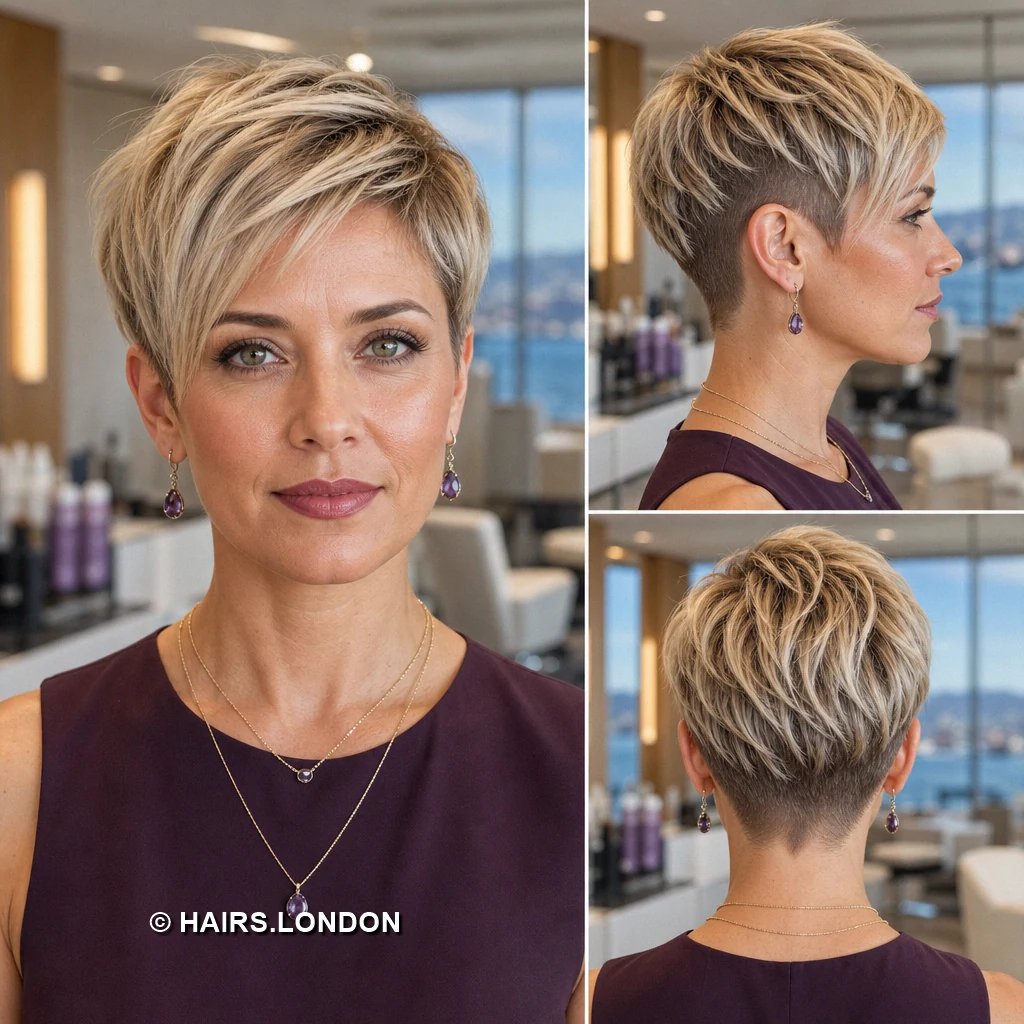
Beige blonde ribbons run through this tall, brushed back pixie. A lifted front opens the forehead instead of forming bangs. Loose bends add substantial volume throughout the longer top layers. Warm brown roots remain visible beneath the pale surface strands. Close sides taper behind each ear toward the narrow nape. Back layers follow the head while retaining softly airy texture. Request enough length above to support that rounded upward silhouette. Blow dry against growth using fingers for controlled root lift. Finish with flexible spray rather than flattening the separate pieces. Trim the sides frequently if their close shape matters most.
3. Asymmetrical Pixie with a Long Blonde Sweep
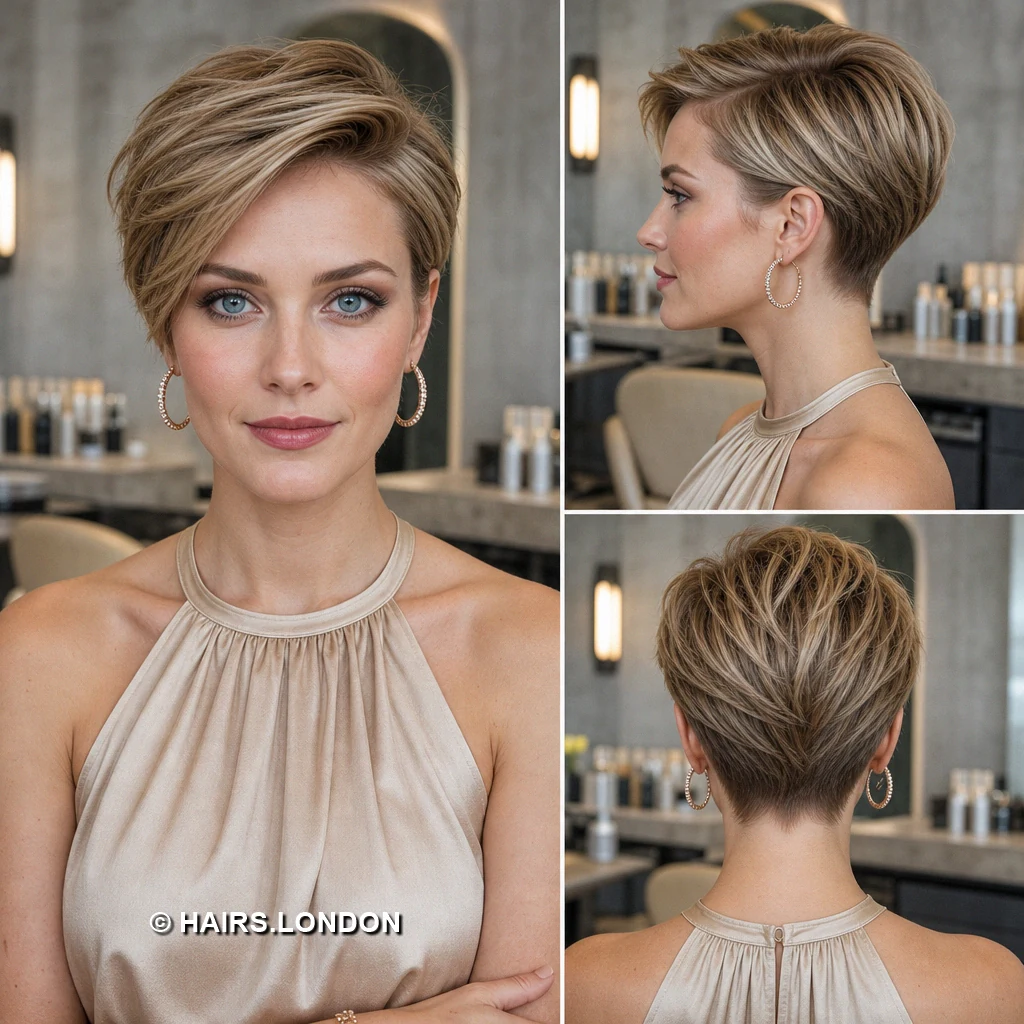
Pale blonde strands sweep across this distinctly asymmetrical pixie shape. One side carries a long fringe that grazes the eye. The opposite side sits close, exposing the ear and temple. Darker underlayers sharpen the contrast beneath the airy blonde surface. Choppy crown sections build height without creating a rigid finish. The back tapers inward to a short, clean, compact nape. Ask your stylist to preserve weight where the fringe falls. Dry that section diagonally with a brush, then loosen it. A little paste defines the ends without obscuring their movement. Plan trims before the longer side starts covering your vision.
4. Sweeping Pixie with a Close Side
Blonde highlights trace the broad sweep across this pixie. The raised fringe curves away from the forehead before turning sideways. A closely cut side creates clear contrast with the fuller crown. Darker hair remains visible along the temple and tapered neckline. Layered back sections feed into a small point at the nape. Ask for connected layers so the top moves without collapsing. Lift damp roots with mousse, guiding the front across. Use your fingers to separate highlighted strands after drying. Keep the close side tidy between full appointments when needed. Discuss how much height you can comfortably style each morning.
5. High-Crown Pixie with Textured Blonde Layers
A tall, textured crown gives this highlighted pixie its shape. Beige blonde pieces sit over darker roots and close sides. The front lifts upward, leaving the forehead largely uncovered here. Shorter hair around the ears keeps the outline compact below. At the back, layered fullness narrows into a tapered nape. Request internal texture without removing support from the longer top. Blow dry the roots upward with fingers for flexible height. Add a small amount of paste to define individual bends. Avoid heavy wax if your hair loses volume very easily. Refresh the sides before their growth blurs the intended contrast.
6. Long-Fringe Pixie with a Rounded Crown
A long pale blonde fringe drapes diagonally across this pixie. Its lighter pieces contrast with the darker, closely shaped side. The full crown rounds gently before narrowing toward the back. Fine layers keep the surface loose rather than uniformly smooth. A short nape provides structure beneath the fuller upper sections. Ask where the fringe should finish when your hair dries. Direct damp hair across the forehead with a small brush. Scrunch the crown lightly to maintain its relaxed, separated texture. Keep product away from the fringe roots if they flatten. Regular shaping protects the balance between long front and taper.
7. Feathered Pixie with a Light Side Fringe
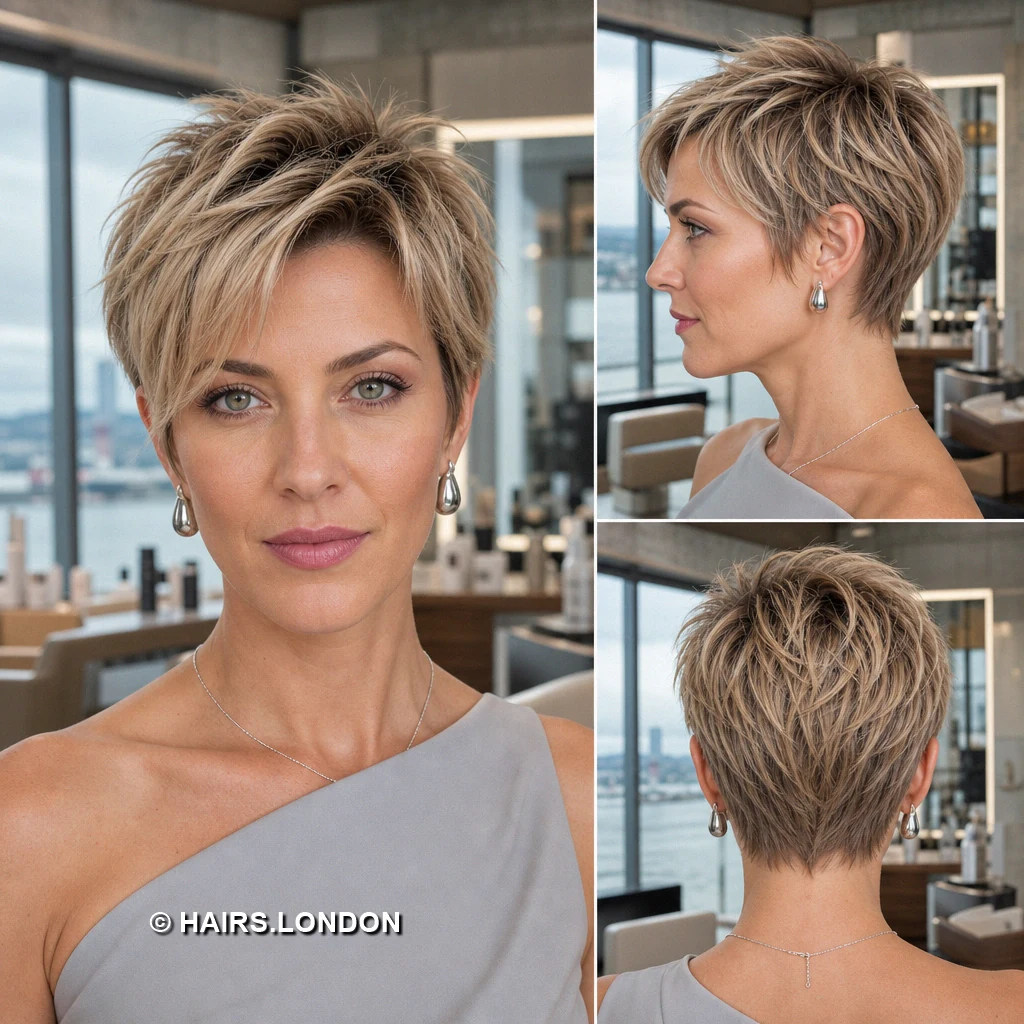
Fine blonde streaks brighten the feathered top of this pixie. A light side fringe crosses the forehead without covering it. Layered crown pieces rise gently above the closely tapered side. Deeper roots show between strands, making their separation more visible. The back curves inward toward a small, neatly finished nape. Request soft ends rather than a blunt fringe edge here. Blow dry forward first, then guide the fringe sideways gently. A pea sized dab of cream helps control stray pieces. Keep the crown touchable instead of coating it with hairspray. Trim around the ears as soon as the outline widens.
8. Smooth Pixie with a Polished Side Sweep
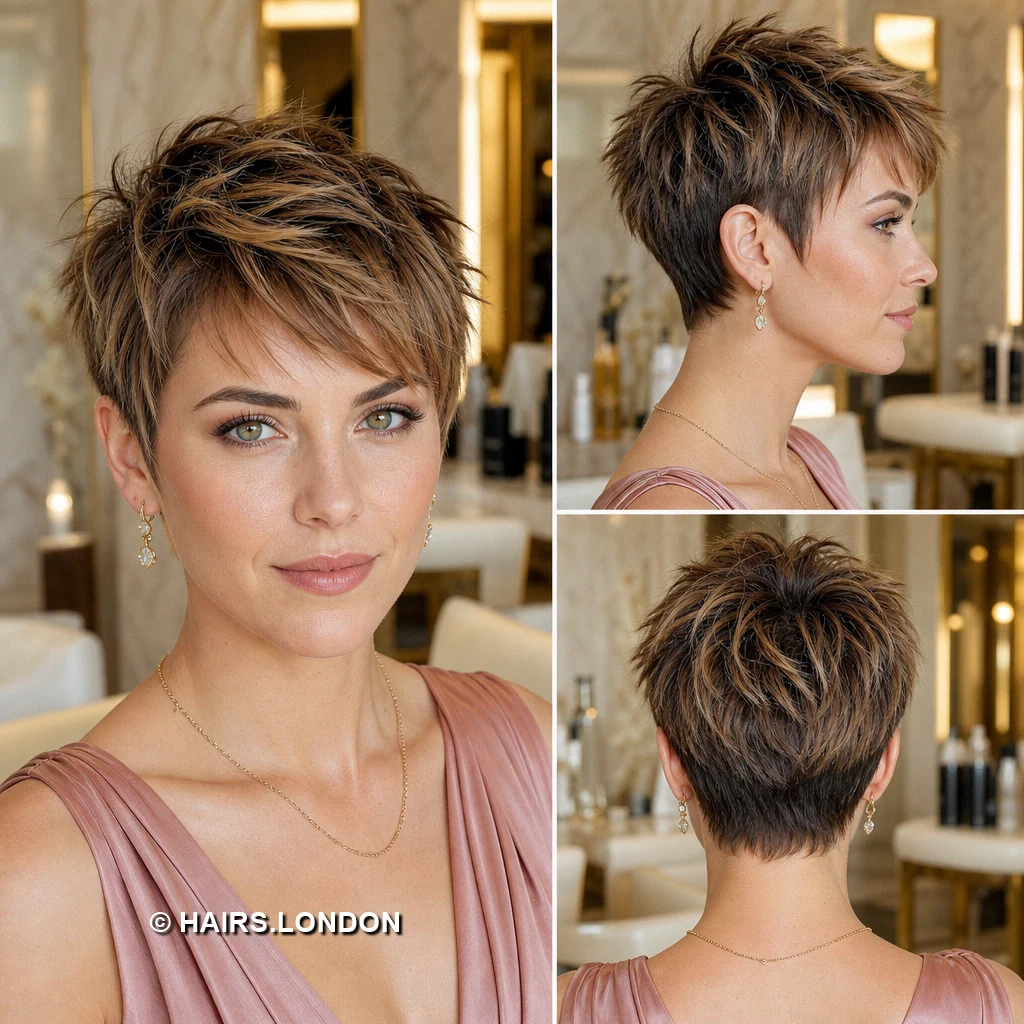
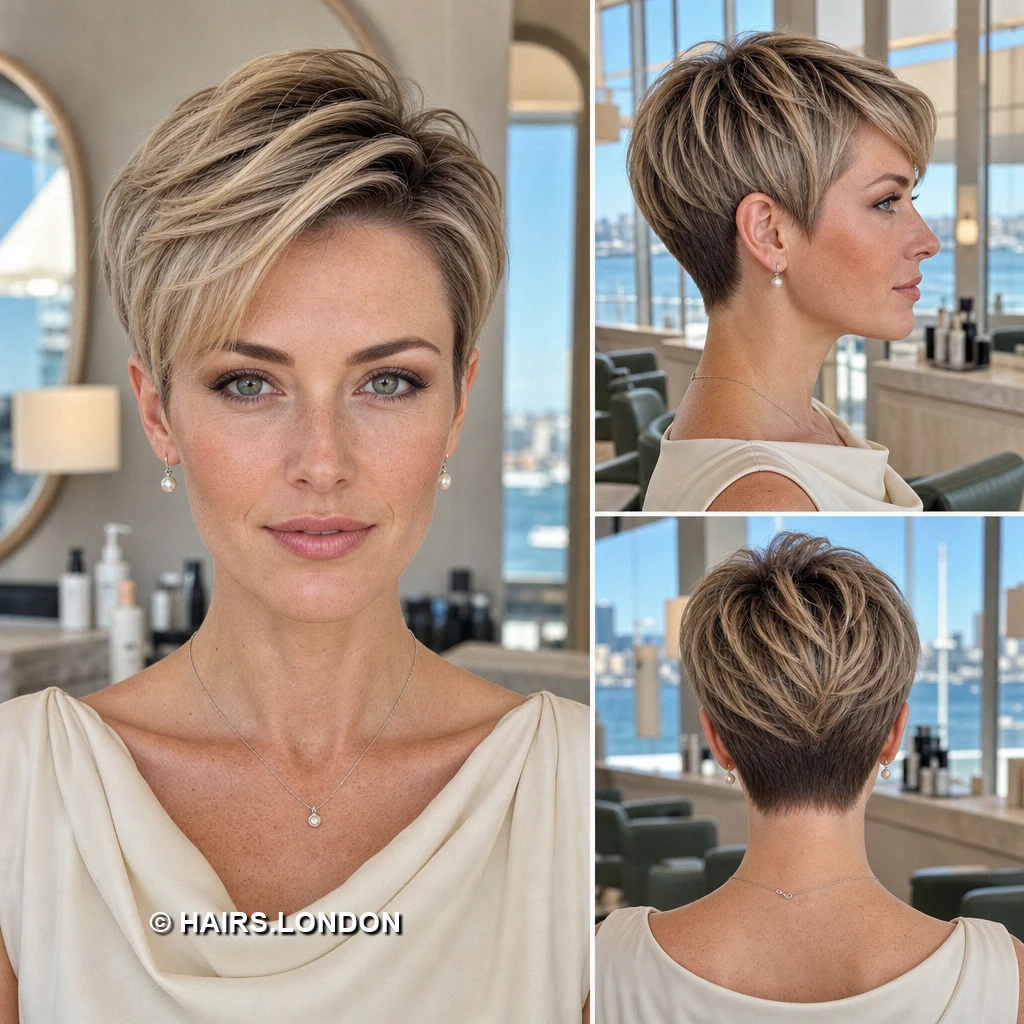
Muted blonde highlights follow the smooth sweep of this pixie. The front crosses the forehead and blends into longer sides. Its crown has rounded volume without sharply separated or spiked pieces. Darker roots give the sleek upper layers depth here. Hair sits close around the ears and tapers at the back. Ask for enough front length to maintain that continuous sweep. Smooth damp hair with a brush while keeping some root lift. Finish with cream, avoiding a stiff, lacquered surface. Check the side profile when deciding how short to taper. A fringe trim helps preserve its clean line between cuts.
9. Piecey Pixie with Bright Blonde Ribbons
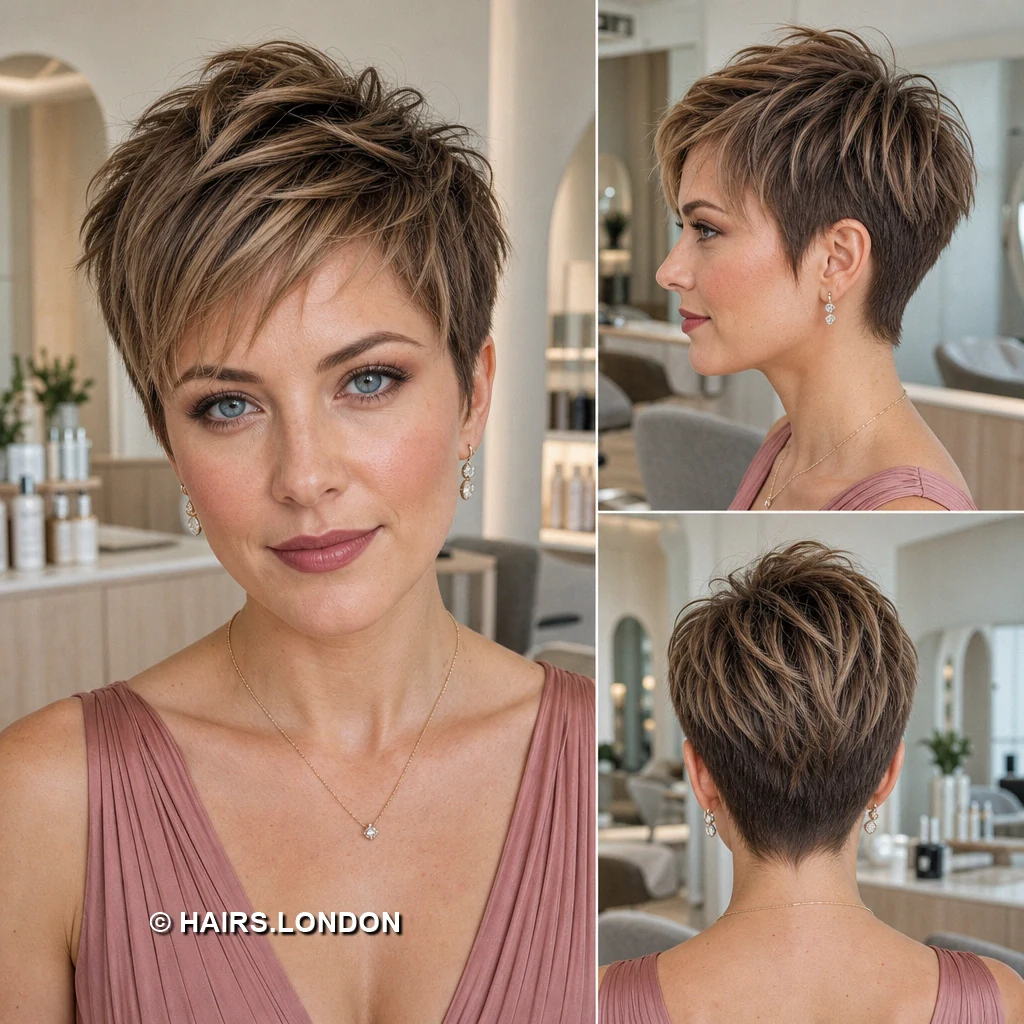
Bright blonde ribbons stand out against this pixie’s darker base. The long fringe angles across the forehead in distinct pieces. Tousled crown layers create lift without a uniformly rounded finish. Short sides and a tapered back keep the silhouette narrow. Highlighted strands remain visible from the front and rear views. Ask for selective texturing that preserves fullness along the top. Work mousse into damp roots before drying against their growth. Separate a few ends with paste rather than coating everything. Let the fringe fall naturally before adjusting its final direction. Discuss highlight placement if you want contrast from every angle.
10. Chestnut Pixie with a Blonde-Tipped Fringe
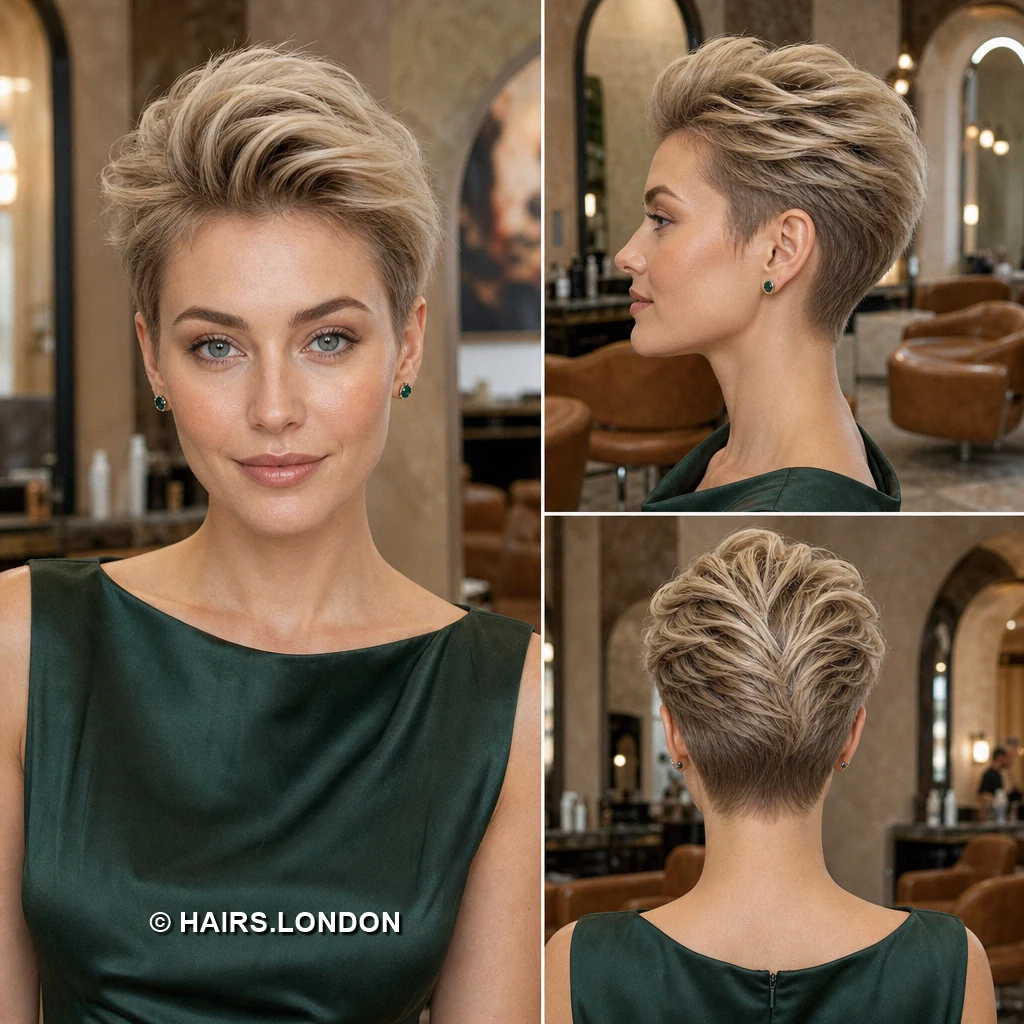
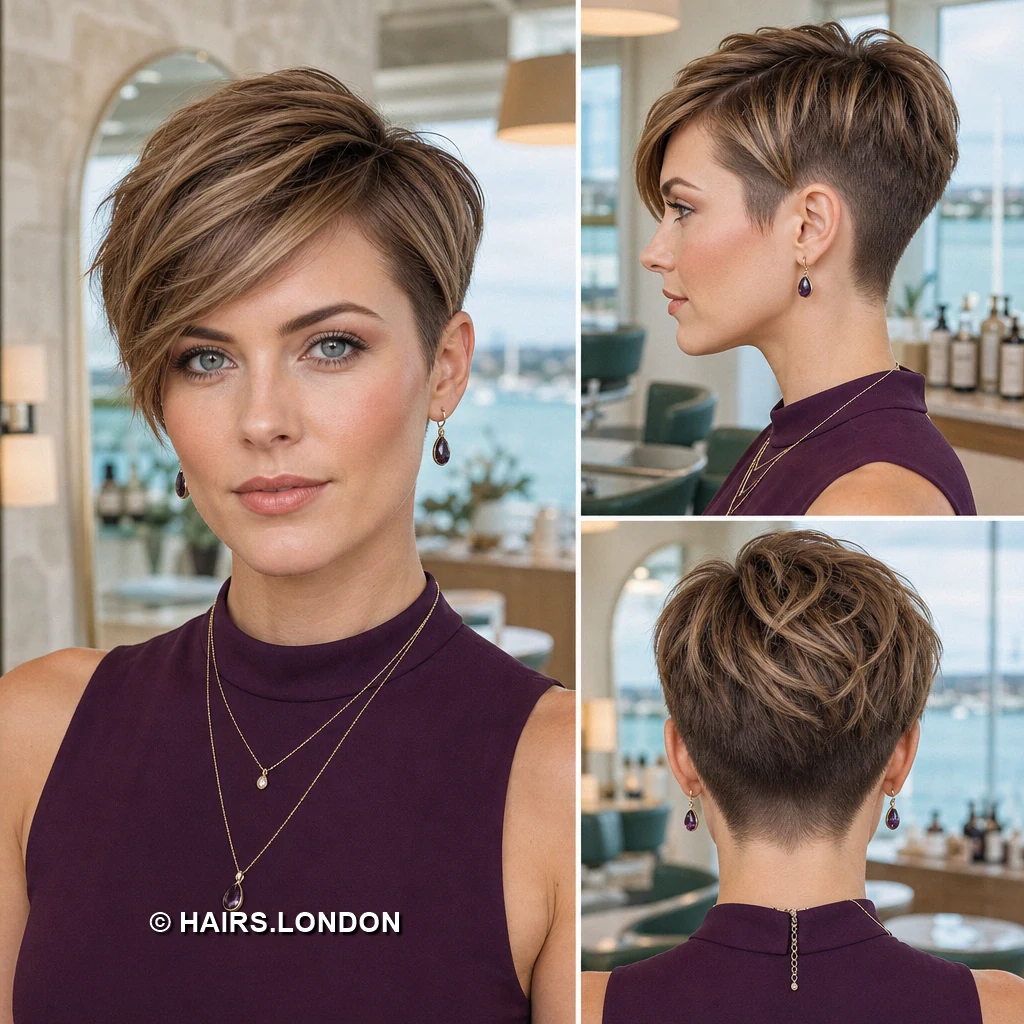
Chestnut brown forms the base of this side swept pixie. Blonde accents brighten the fringe and several longer crown pieces. The front extends diagonally while one side remains closely cropped. Rounded back layers taper cleanly toward the center of nape. The highlighted top looks smooth, with only gentle surface separation. Request a fringe length that stays clear of your eyes. Use a brush to guide damp hair across the forehead. Add lightweight cream if the shorter side needs gentle control. Keep heavier products away from the roots to preserve lift. Ask for nape maintenance when the tapered outline starts softening.