


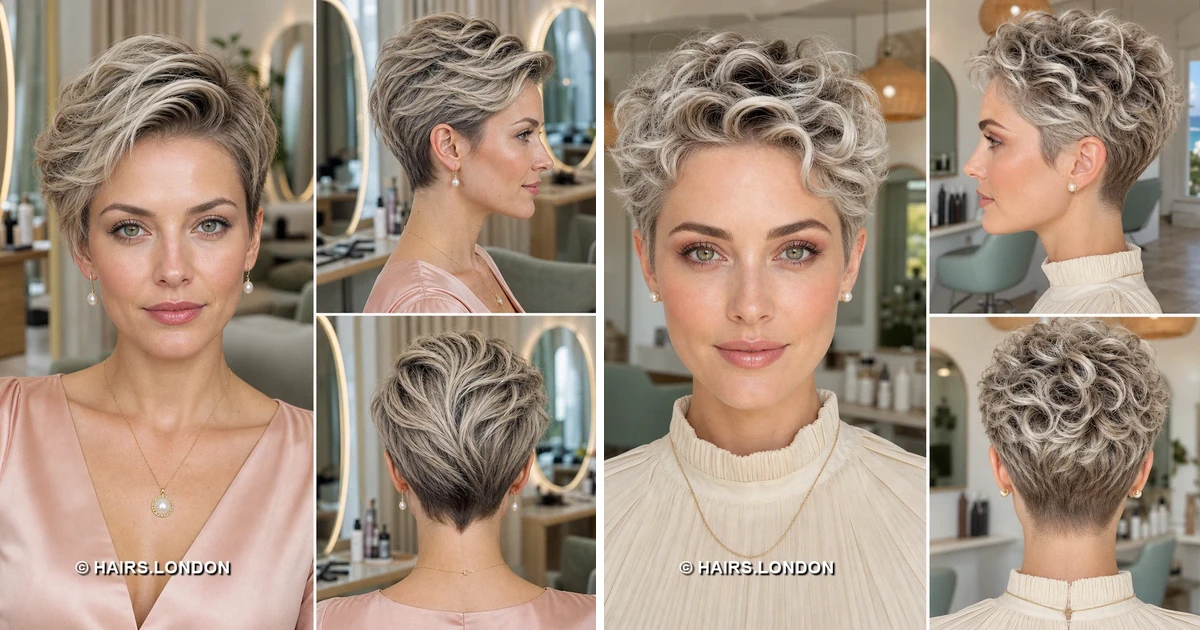
11. High Volume Pixie with Closely Tapered Sides
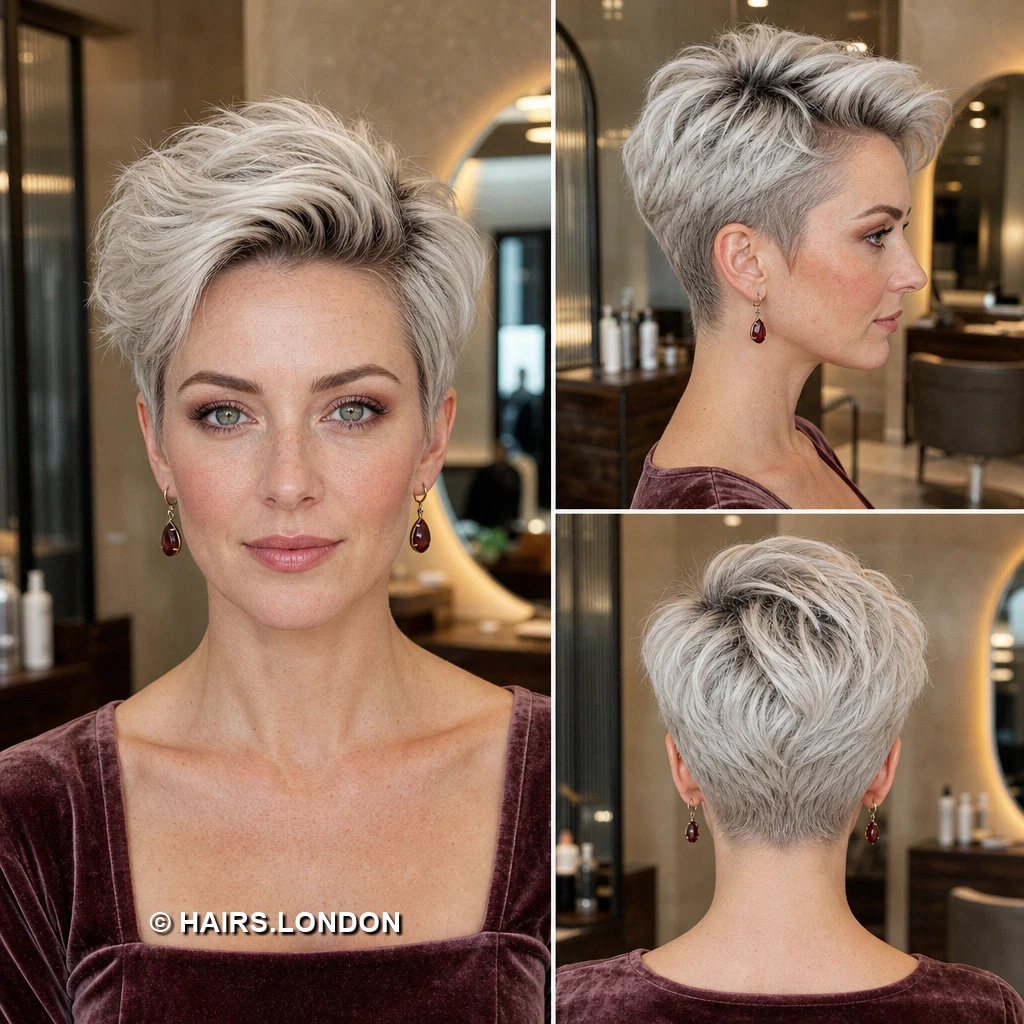
This silver blonde pixie places its volume firmly above. Swept back front layers rise high and reveal the forehead. The long crown curves into shorter, closely fitted side sections. A darker underlayer adds contrast beside the bright upper strands. At the back, fine layers taper toward a clean neckline. Ask for graduation that supports height without creating bulky edges. Lift damp roots with a brush and direct airflow upward. Work flexible paste through the ends to retain visible separation. The short sides will change quickly as new hair grows. Arrange regular appointments to keep the high crown proportionate over time.
12. Piecey Pixie with a Fine, Forward Fringe
Fine, piecey layers give this ash blonde pixie airy texture. A narrow fringe falls forward in wisps across the forehead. The crown appears lifted, with darker roots visible between strands. Short sides sit close to the ears and temples. Its back tapers smoothly into a small point at the nape. Request soft end texture rather than a thick, blunt fringe. Finger dry the top forward, lifting some sections near roots. Separate selected ends using only a little lightweight styling paste. Keep the cool blonde finish in mind when discussing toner. Trim the fringe and neckline whenever their definition starts fading.
13. Curved Fringe Pixie with Textured Crown Waves
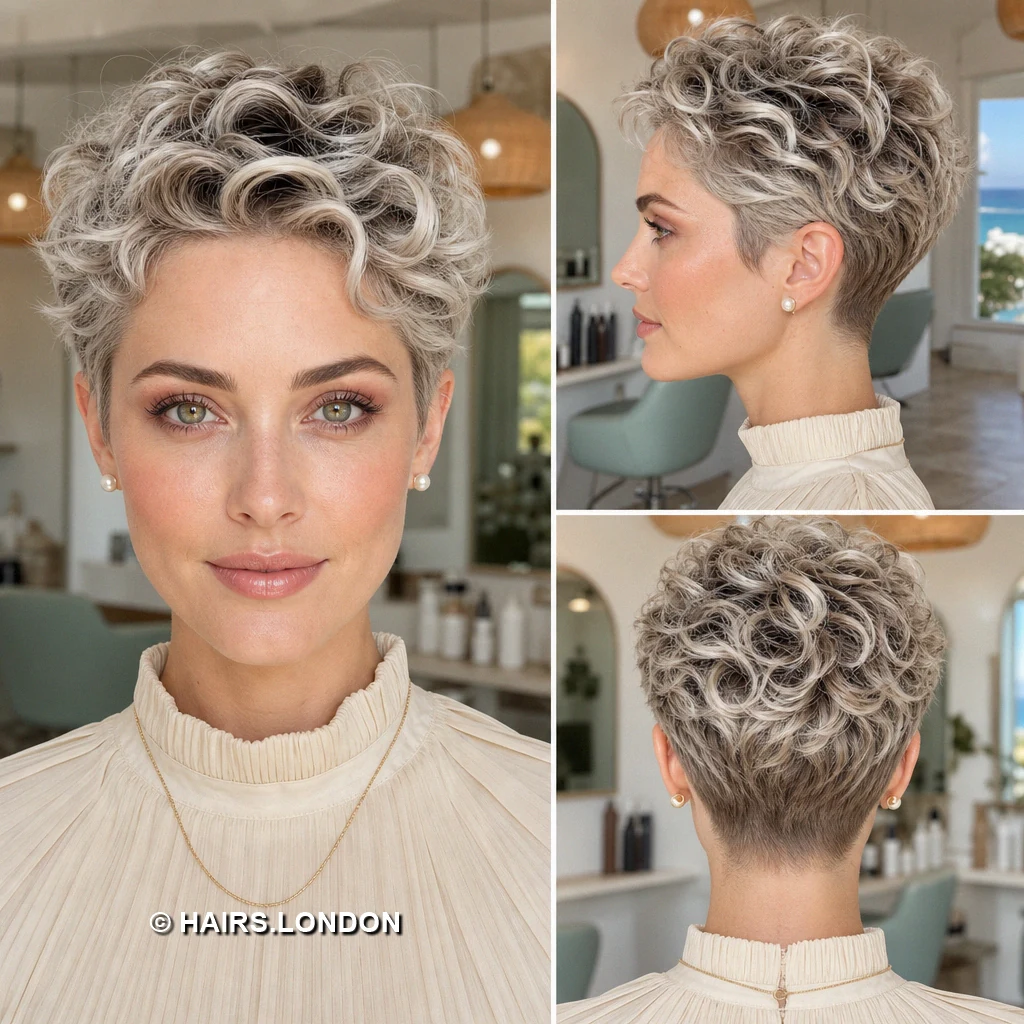
A curved blonde wave frames the front of this pixie. Loose bends continue across the crown, creating a textured shape. Pale ribbons follow those bends above a deeper root color. The sides stay short, leaving the ears clearly visible. Behind, layered waves narrow into a tidy, tapered nape. Ask for longer front pieces if you want this curve. Dry the fringe around a brush while lifting its root. Use light cream to separate bends without making them rigid. Smooth the sides down to keep the rounded top prominent. Recut the nape as soon as its narrow outline softens over time.
14. Lightly Layered Pixie with Side Swept Bangs
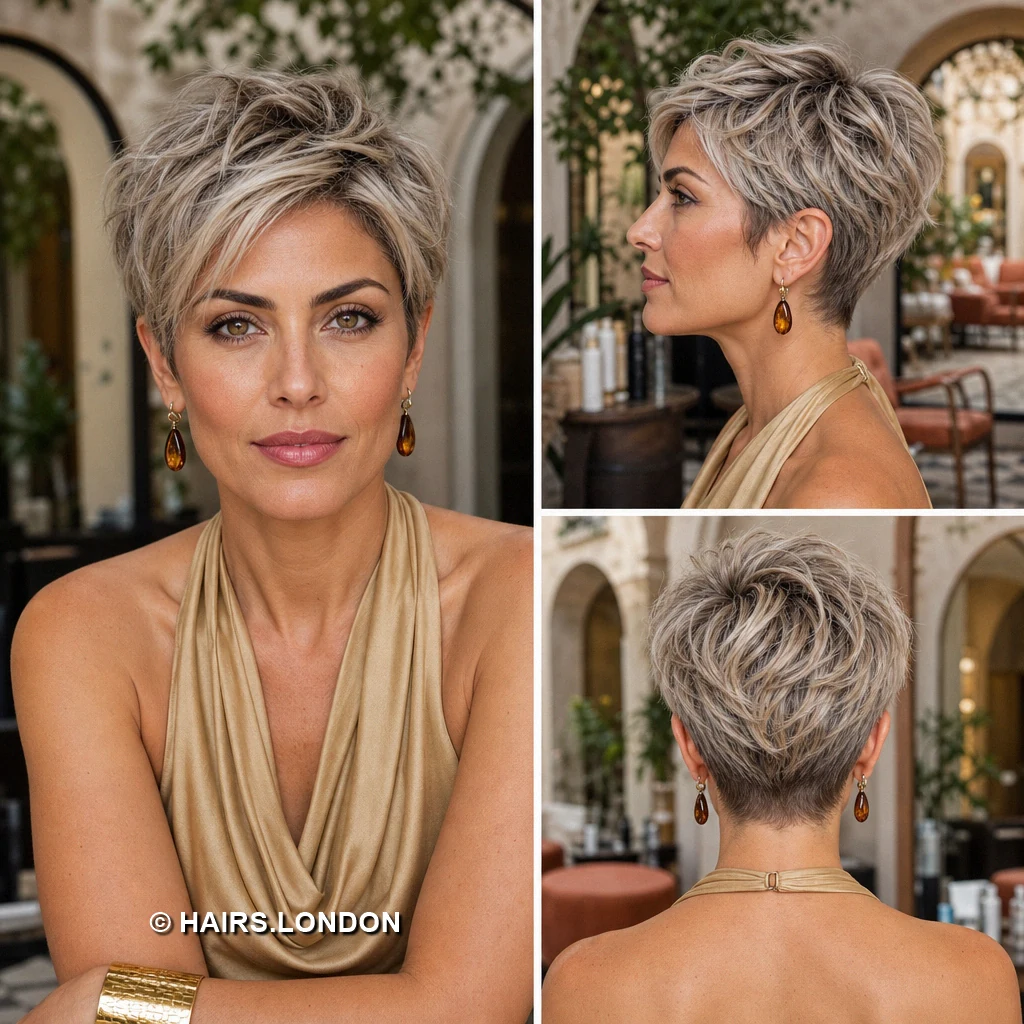
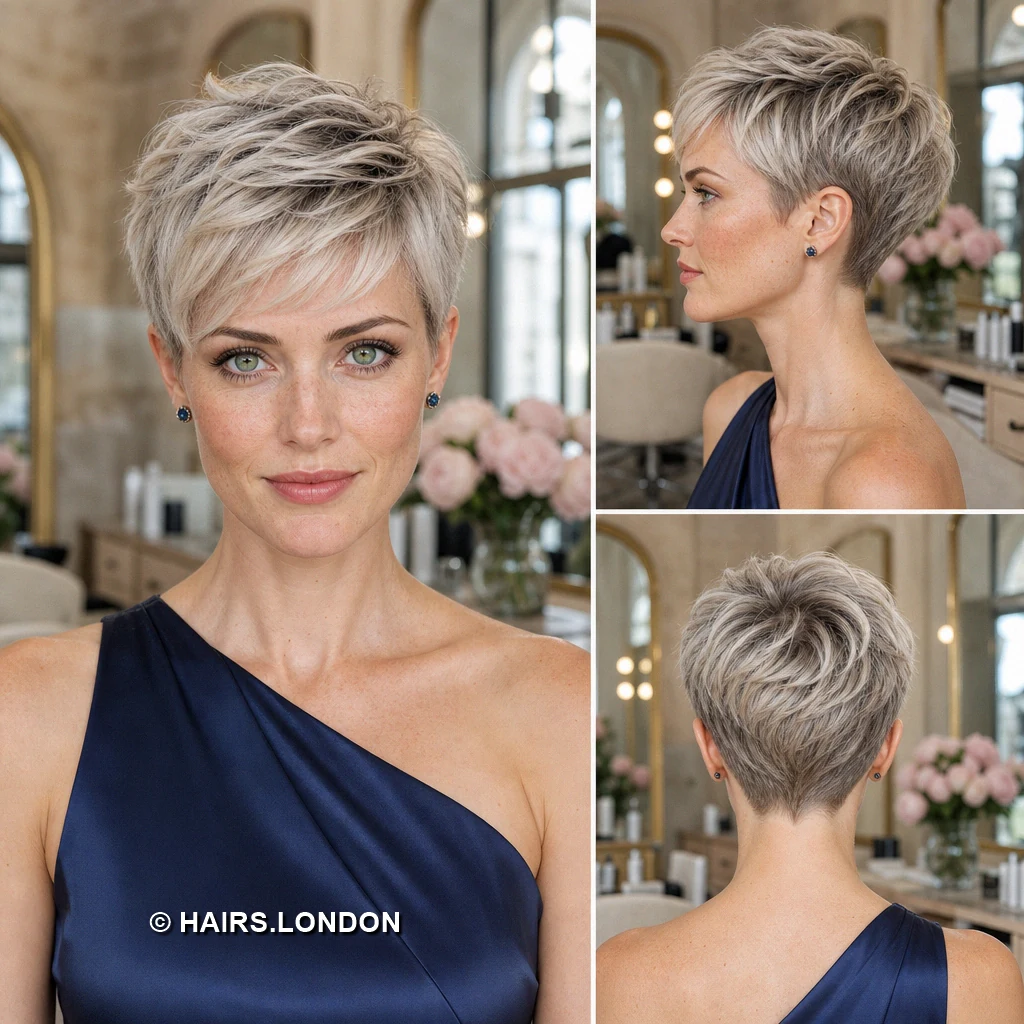
Soft side swept bangs give this pale blonde pixie movement. Several light layers cross the crown in subtly different directions. Deeper roots show clearly between the lifted blonde strands. Close, blended sides end just around the exposed ears. Short back layers draw inward toward a gently pointed nape. Ask for fringe length that clears your eyes when styled. Dry the front diagonally, lifting its roots for modest volume. Finish by separating just a few strands with light cream. Avoid heavy wax, which could flatten the fine layered surface. Keep both fringe and neckline neat with regular appointments as it grows.
15. Swept Back Pixie with Soft Side Volume
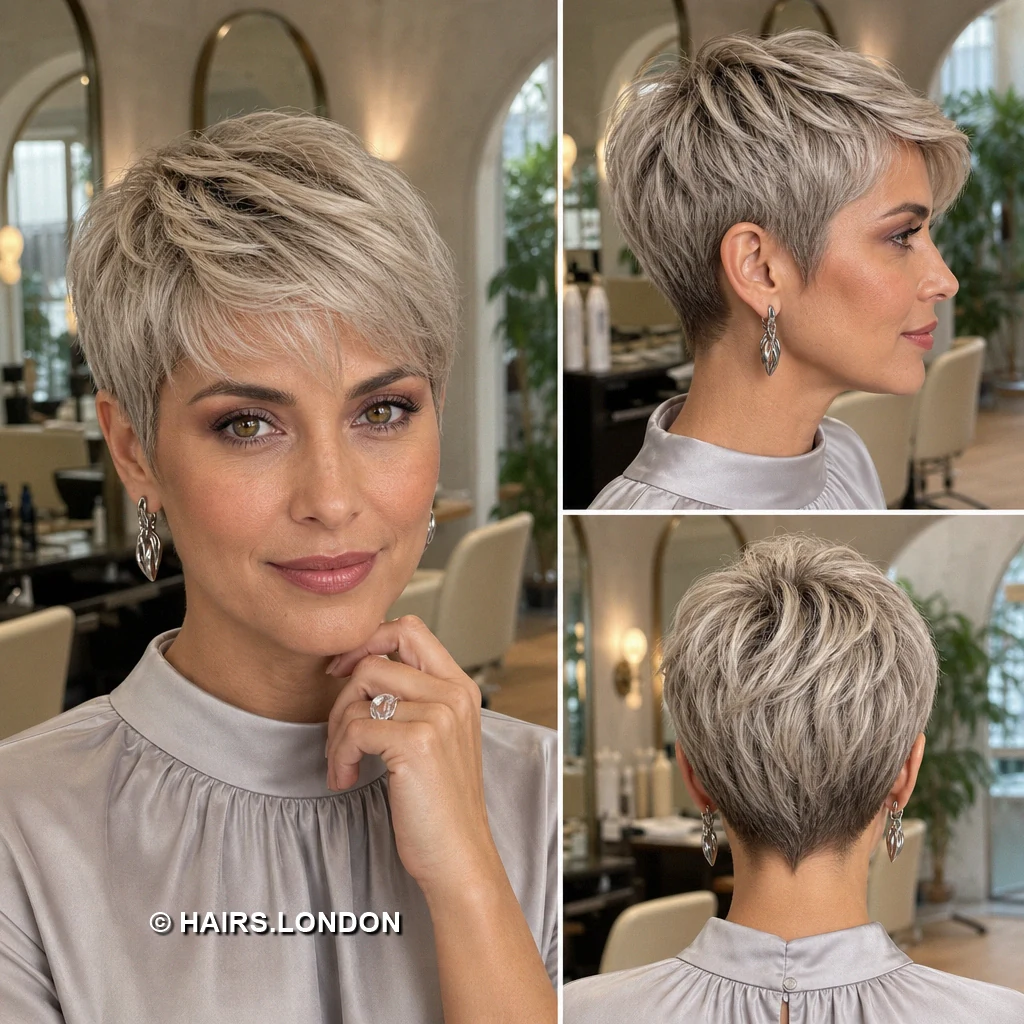
Creamy ash blonde layers sweep back into a full crown. The front rolls upward softly instead of falling as bangs. Pale highlights trace broad sections over the darker root area. The sides remain close, balancing the generous top section. Back layers taper into a defined, narrow point at the nape. Ask for crown length if you enjoy shaping soft volume. Blow dry backward with fingers, lifting gently at the roots. A small amount of flexible cream keeps the sweep touchable. Let the sides lie smooth to emphasize the rounded top. Schedule trims before the back begins losing its tapered finish.
16. Long Diagonal Fringe with a Compact Nape
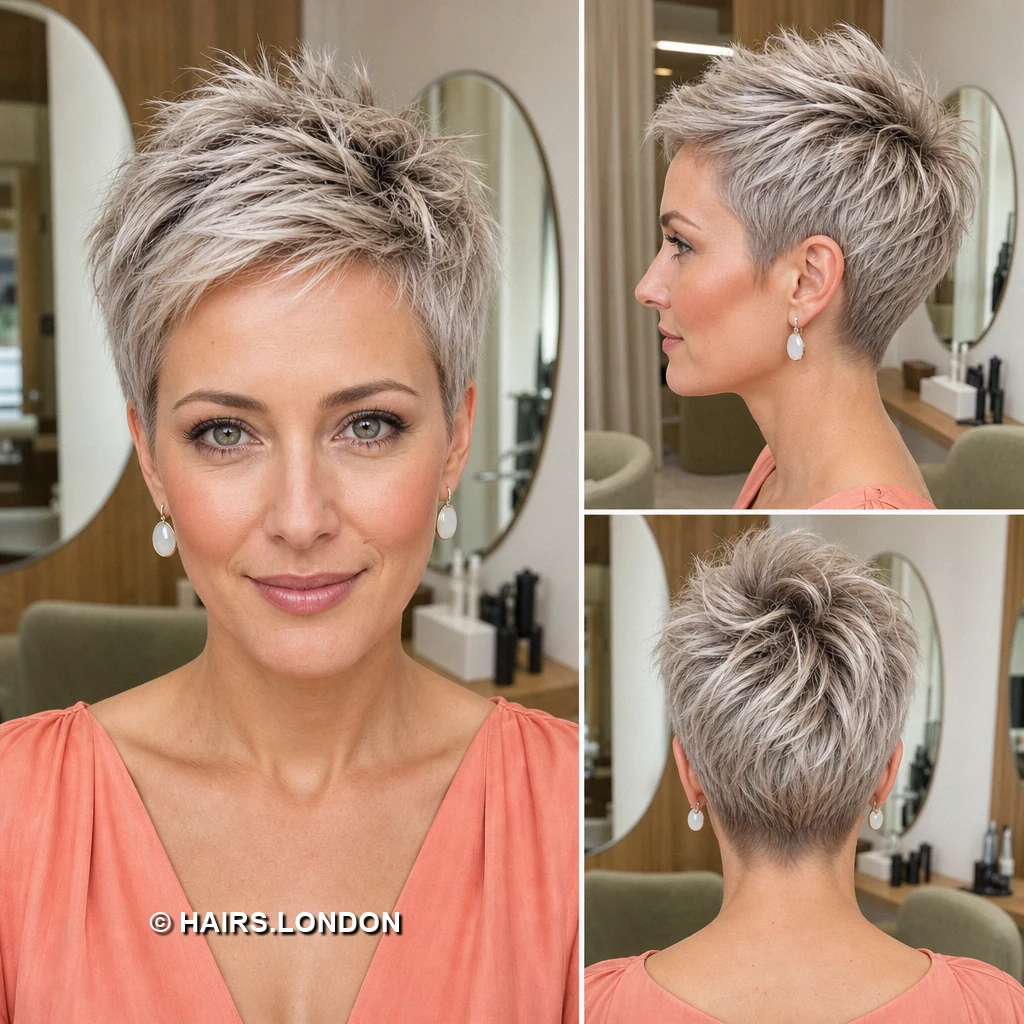
A long silver blonde fringe falls diagonally across one brow. Smooth top layers follow the same direction over shadowed roots. The crown remains rounded rather than standing high or spiky. Short sides frame the ears with a softly blended edge. Behind, the back narrows into a compact, tapered nape. Ask for enough front length to create this sweeping shape. Dry the fringe across your forehead with a brush. Use lightweight smoothing cream to control the pale, fine ends. Check how the fringe sits both forward and tucked aside. Maintain its diagonal line with regular, careful front trims between salon appointments.
17. High Textured Crown with Dark Tapered Sides
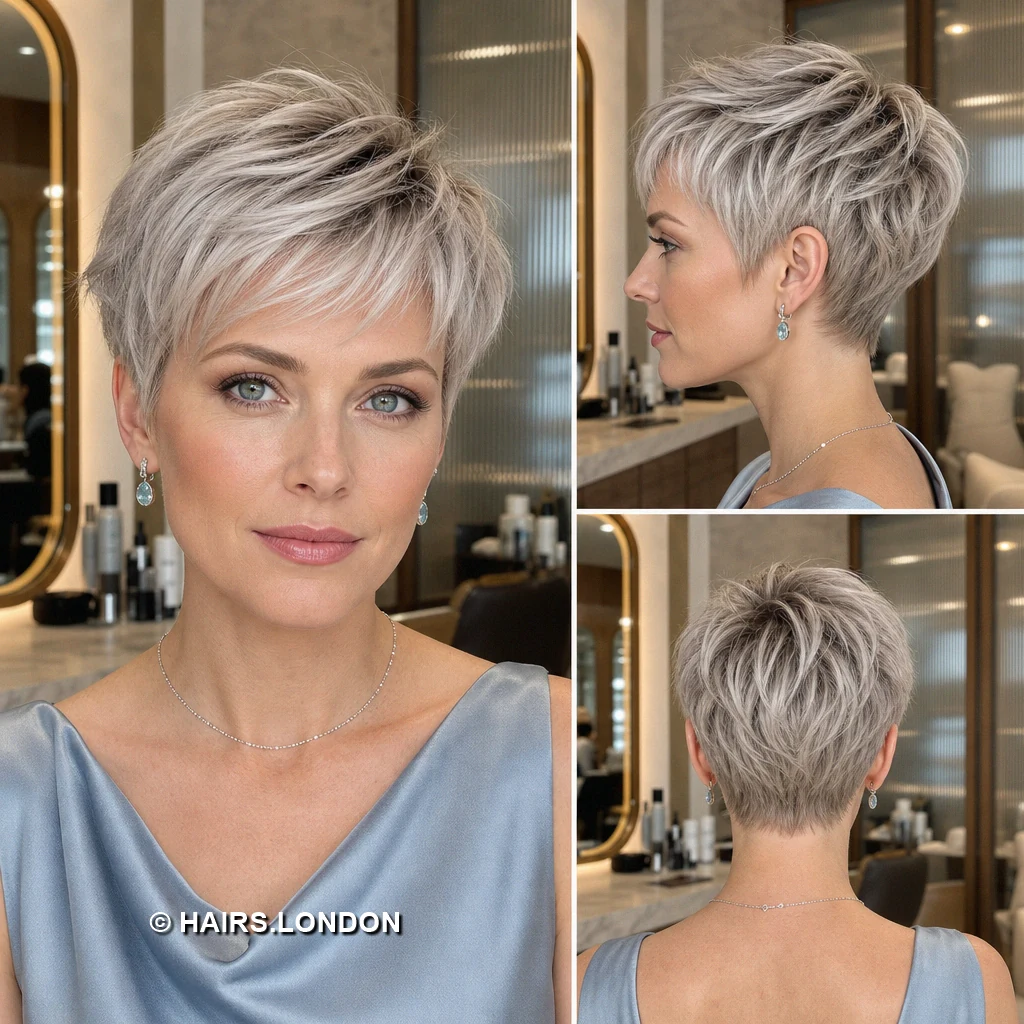
Lifted blonde strands create a tall, textured pixie crown. The front bends sideways, leaving part of the forehead exposed. Darker hair near the roots emphasizes each pale highlighted section. Closely tapered sides provide contrast beneath the fuller top layers. The back descends into a short, clearly defined nape. Ask for internal texture while preserving enough length for height. Dry upward first, then direct the longer front pieces sideways. Pinch matte paste through selected ends rather than coating everything. Keep the side sections smooth so the top remains prominent. Arrange regular trims to preserve its pronounced short long contrast over time.
18. Feathered Pixie with a Short Angled Fringe
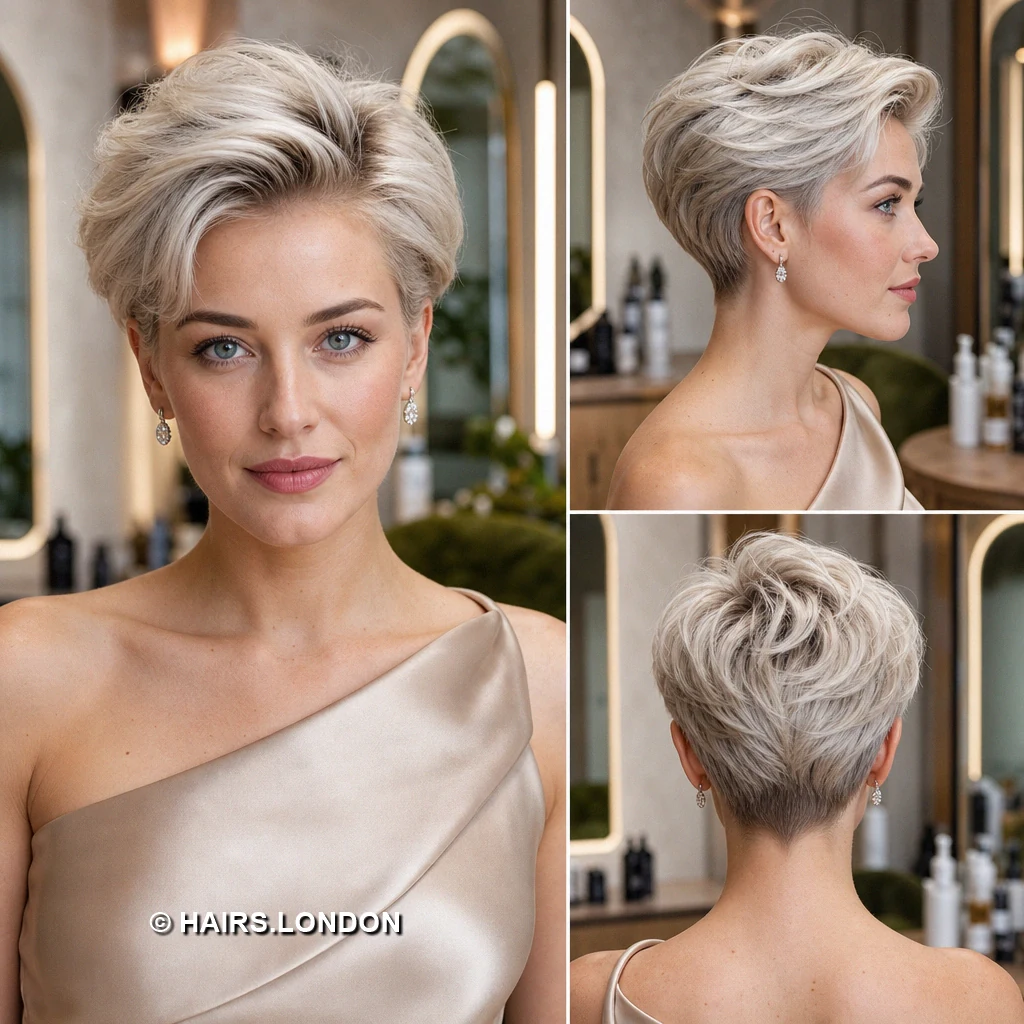
Feathered ash blonde layers sweep forward across this short pixie. A brief angled fringe leaves most of the forehead visible. Pale strands sit above darker roots, adding clear surface definition. The sides fit close around the ears and temples. At the back, graduated layers narrow toward the short nape. Ask for movement through the crown without excessive thinning. Dry the top forward, then shift selected strands sideways gently. A small touch of paste highlights the feathered ends. Let the underlying darker shade provide contrast between blonde pieces. Refresh the perimeter when its clean, close shape starts growing out of place.
How to Choose an Ash Blonde Pixie Cut
Start with the feature you want to style most. A longer diagonal fringe offers several ways to change the front, while a short fringe keeps the forehead open. Choose a rounded crown for a softer outline or a longer, textured crown if you like visible lift. Compare the side and back views too: a close taper needs more frequent shaping than a softer, grown-in edge. Your natural growth pattern matters, especially around the fringe and crown.
Styling Straight, Wavy, and Curly Textures
On straight hair, dry the roots in the direction you want the top to sit, then define a few ends with lightweight paste. For natural waves, scrunch a small amount of cream into damp hair and avoid brushing once dry. On curls, discuss cutting with shrinkage in mind; use curl cream sparingly and let the top dry before separating it. Fine hair benefits from light products and root lift, while denser hair may need internal weight removal to keep the crown controlled.
Keeping Ash Blonde Color Fresh
These looks range from creamy ash blonde to pale silver, often with deeper roots visible underneath. Bring the image closest to your preferred level of contrast to a color consultation. Ask what lightening and toning your starting hair would require rather than assuming one appointment will achieve the result. Follow your colorist’s advice on washing and conditioning; use a purple shampoo only as directed, since overuse can leave pale sections looking dull or tinted.
Maintaining the Pixie Shape
Short sides, fringe, and a tapered nape make growth noticeable. Check the shape every few weeks and book trims according to how crisp you want the outline to remain. Between visits, style with small amounts of product so the crown stays movable and the short sections do not look coated. If you are growing the cut longer, ask your stylist to adjust the fringe and back together rather than simply skipping trims.
What to Discuss with Your Stylist
Show the front, profile, and back view of your chosen image. Point out the fringe length, crown height, amount of texture, side coverage, and nape shape you want. Describe how you normally dry your hair and whether you prefer a smooth finish or separated pieces. Discuss your natural texture, cowlicks, color history, desired root contrast, and the time you can commit to styling and salon upkeep.
Frequently Asked Questions
What distinguishes an ash blonde pixie from a platinum pixie?
Ash blonde describes a cooler blonde tone; platinum describes a very light level. A pixie can appear both pale and cool, as several of these images do.
Which pictured shape gives the most crown height?
The lifted, swept-back shapes and the spiky crown place the most visible height above the sides.
Can I keep a fringe with a closely tapered pixie?
Yes. Several cuts pair short sides and napes with longer front pieces. Ask your stylist to plan the fringe length separately from the perimeter.
How should I style a diagonal pixie fringe?
Direct damp hair across the forehead while drying, using fingers or a small brush. Finish with a little lightweight cream if the ends need control.
How do I make a textured pixie look less stiff?
Use less product, apply it mainly to selected ends, and leave some strands untouched. A flexible cream or a small amount of paste preserves movement.
Will the curly pixie look the same when dry?
Curls can shorten as they dry. Discuss shrinkage and the desired dry length before cutting the top or fringe.
Are the darker roots part of these color looks?
Darker roots are visible in many of the images and add contrast beneath the pale pieces. The amount of contrast varies between looks.
Do I need purple shampoo for ash blonde hair?
Not always. Ask your colorist whether it suits your toner and how often to use it; too much can affect the appearance of pale hair.
Which pixie is easiest to style with fingers?
The tousled and piecey cuts are particularly suited to finger drying and small amounts of product. Smooth fringes usually benefit from more precise direction.
How often should I trim a tapered nape?
Trim it when the outline no longer looks the way you want. A sharply defined taper generally calls for more frequent appointments than a softer edge.
What should I bring to a pixie consultation?
Bring front, side, and back references, and identify which details matter most. Be ready to discuss your natural texture, styling routine, and color history.
Can I change the styling without changing the cut?
Often, yes. Longer top layers can be swept, lifted, or separated, although the fringe length and natural growth pattern will limit some directions.
Conclusion
The strongest choice is the pixie whose fringe, crown, and taper suit the way your hair behaves—not just the way it looks in one photograph. Pick a front view you love, check its side and back, and use those details to plan a cut and ash blonde color you can maintain.