


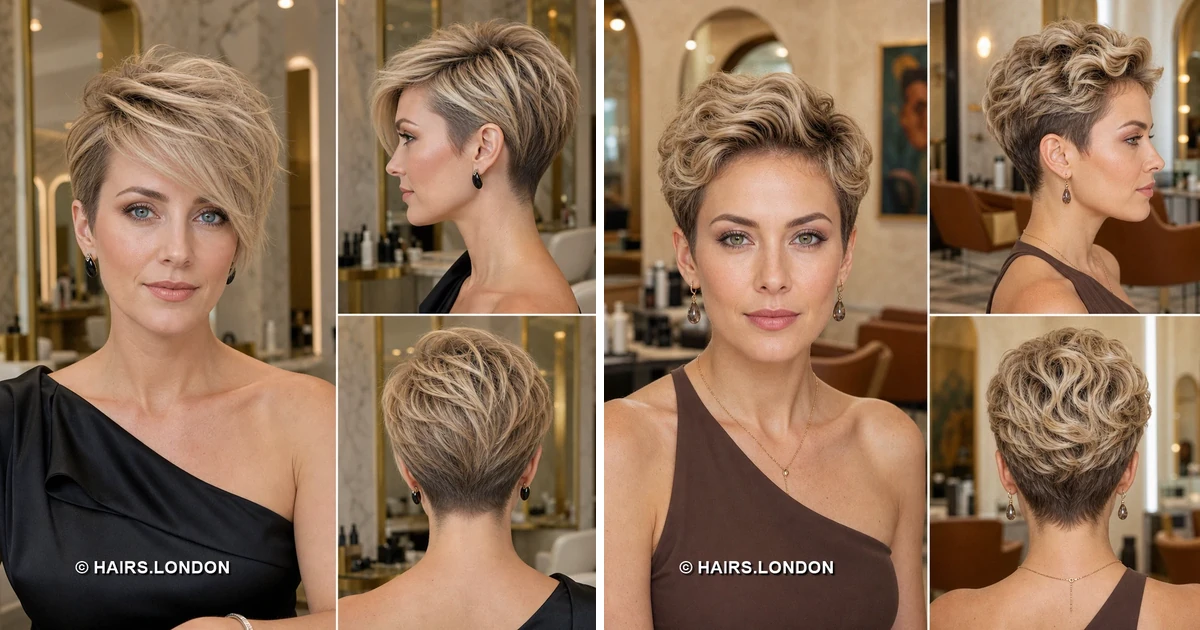
11. Ash Blonde Pixie with a Sleek Diagonal Sweep
Smooth blonde strands form a long sweep across one eyebrow. A deeper ash base remains visible between the pale highlights. Short hair hugs the ear while the crown retains fullness. From behind, layered strands converge toward a slim tapered nape. Ask for a smooth transition between the long and short. Blow-dry the fringe diagonally using a nozzle for controlled airflow. Finish with light serum only on the longer surface pieces. Too much product can make the swept front look separated. Review both sides with your stylist before the final trim. Plan fringe maintenance around how much brow coverage you enjoy.
12. Short Layered Pixie with Blonde Crown Highlights
Compact crown layers carry fine blonde streaks over ash brown. A short angled fringe leaves much of the forehead visible. The sides are closely shaped, with no abrupt shaved line. A small lift at the crown adds texture to profile. The back blends downward into a neat, narrow nape area. Ask for manageable layering if you prefer a quick routine. Style damp roots upward, then smooth the fringe slightly sideways. Use a pea-sized dab of paste for soft definition only. Schedule regular trims to keep the short sides in proportion. Discuss whether highlights should extend into the back layers too.
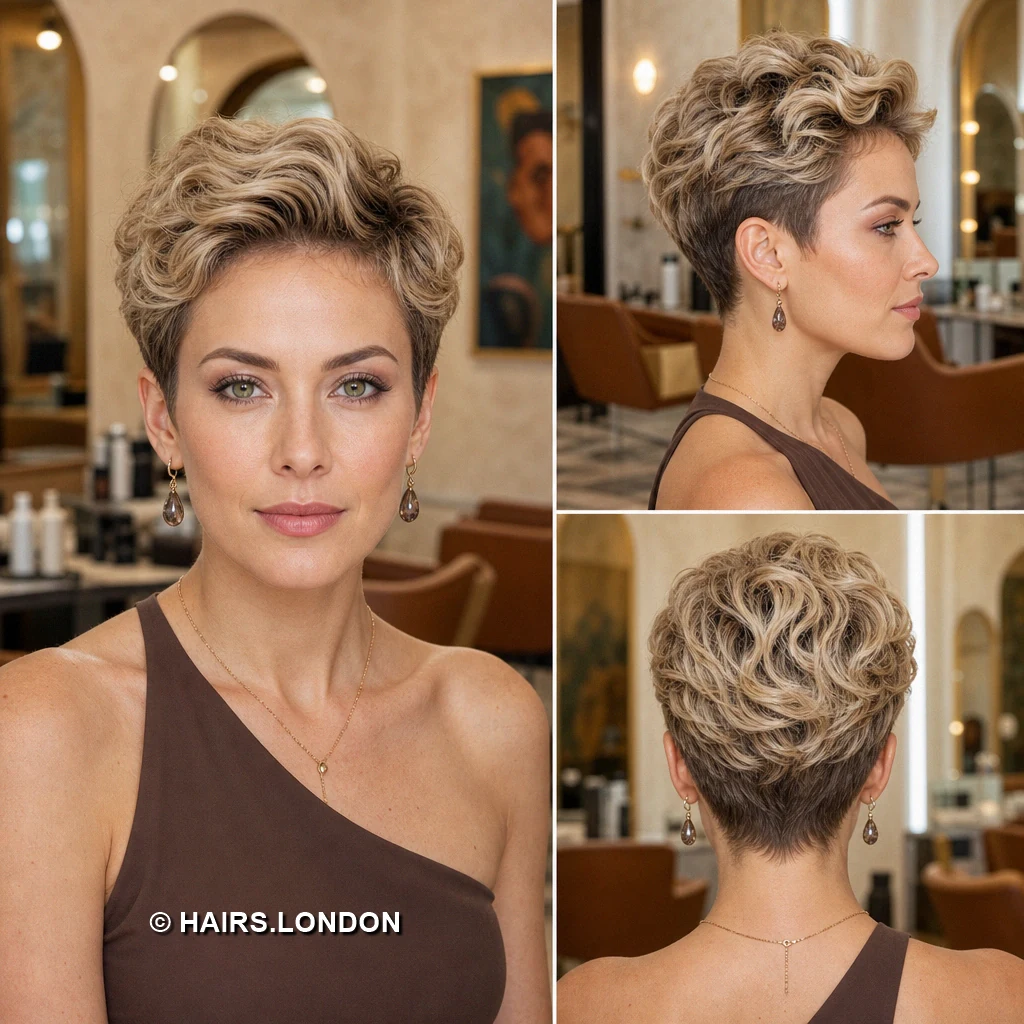
13. Curved Blonde Waves on a Tapered Pixie
Pronounced blonde waves curl over the front and upper crown. Their pale edges stand out against the deeper root color. Shorter sides keep the waves prominent without widening the profile. The back remains textured, then narrows softly at the nape. Ask for sufficient top length to bend with your tools. Shape the front with a small brush or careful tong. Let each wave cool before touching it for lasting definition. Keep styling heat moderate on the visibly lightened blonde sections. A soft paste can emphasize curves without making them rigid. Check the tapered back when arranging your next salon appointment.
14. Brushed-Over Ash Pixie with a Defined Side Part
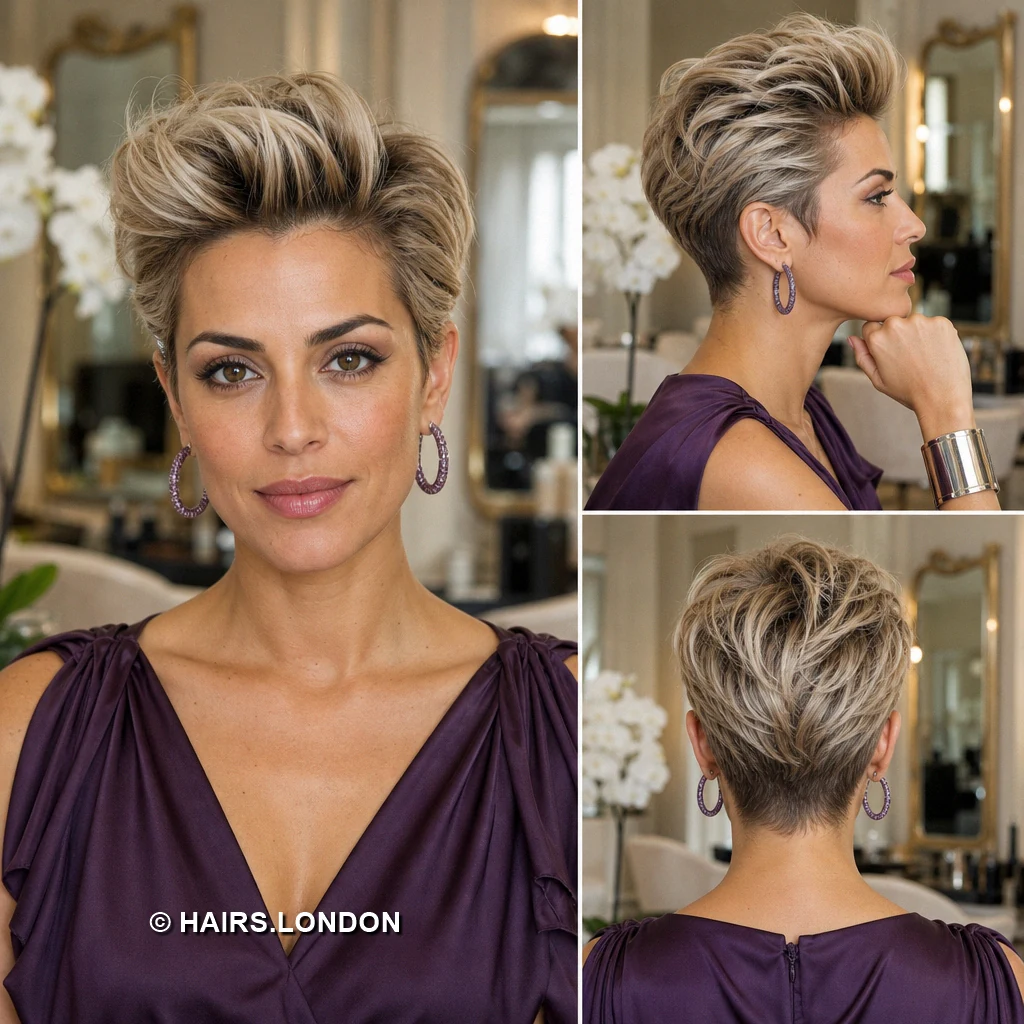
A defined side part directs smooth blonde layers across crown. The front rises slightly before sweeping toward the opposite temple. Close, darker sides create a clean contrast beneath that movement. Rear layers form gentle fullness above the closely tapered neckline. Ask for enough length to change the sweep if needed. Dry from the part outward using a brush for control. Light styling cream can tame flyaways without hardening the finish. Keep the ear area trimmed to preserve the tidy profile. Discuss where the part naturally falls before cutting the fringe. Root color can remain visible between the fine pale streaks.
15. Voluminous Blonde Pixie with a Rolled Front
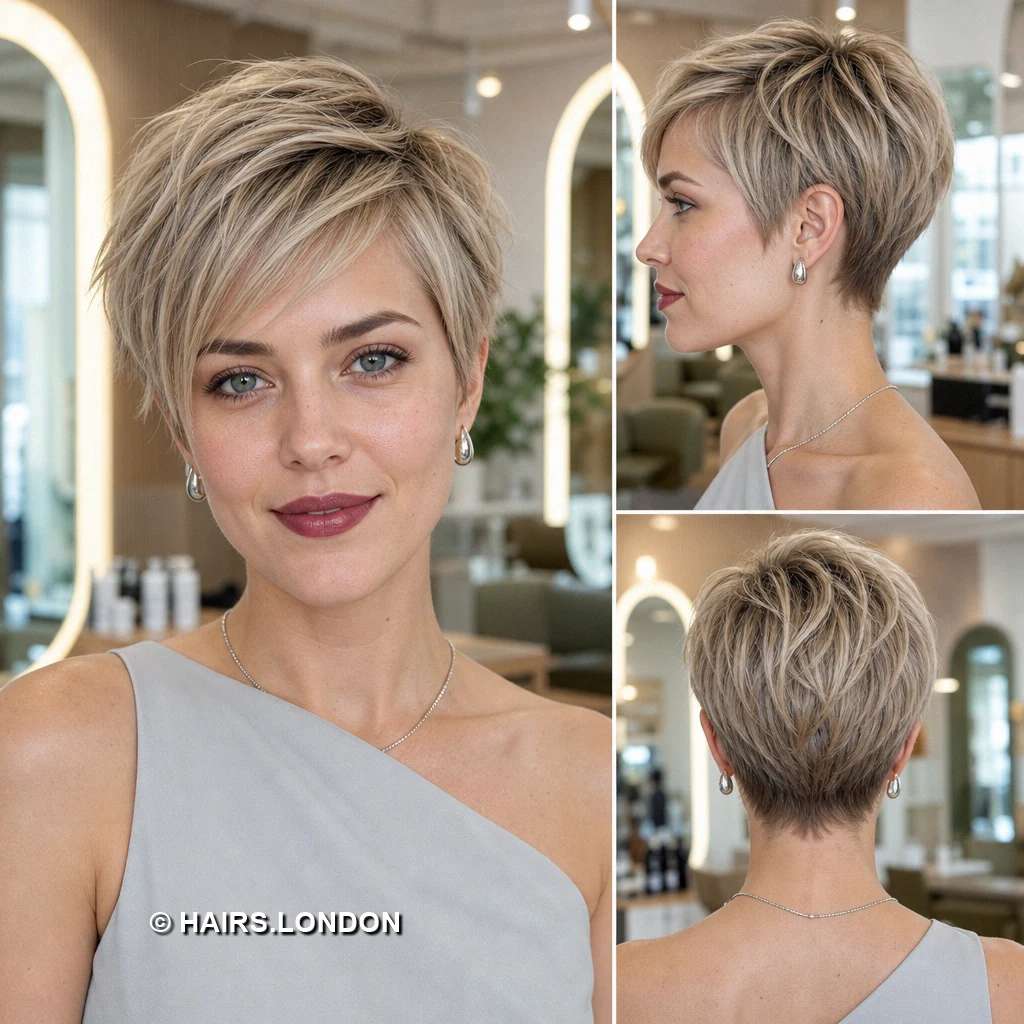
A broad blonde front section rolls upward from the hairline. Feathered ends sweep backward through a noticeably full upper crown. Deeper ash tones show underneath the highlighted, airy top layers. The sides sit close, and the nape tapers short behind. Ask your stylist to leave generous length through the front. Blow-dry upward around a brush, then release the cooled section. Finger-comb the top to preserve its loose, lifted direction. Use flexible hairspray where extra hold is necessary, not everywhere. Expect the high front to need more styling than flatter pixies. Schedule neckline trims without sacrificing the desired airy crown volume.
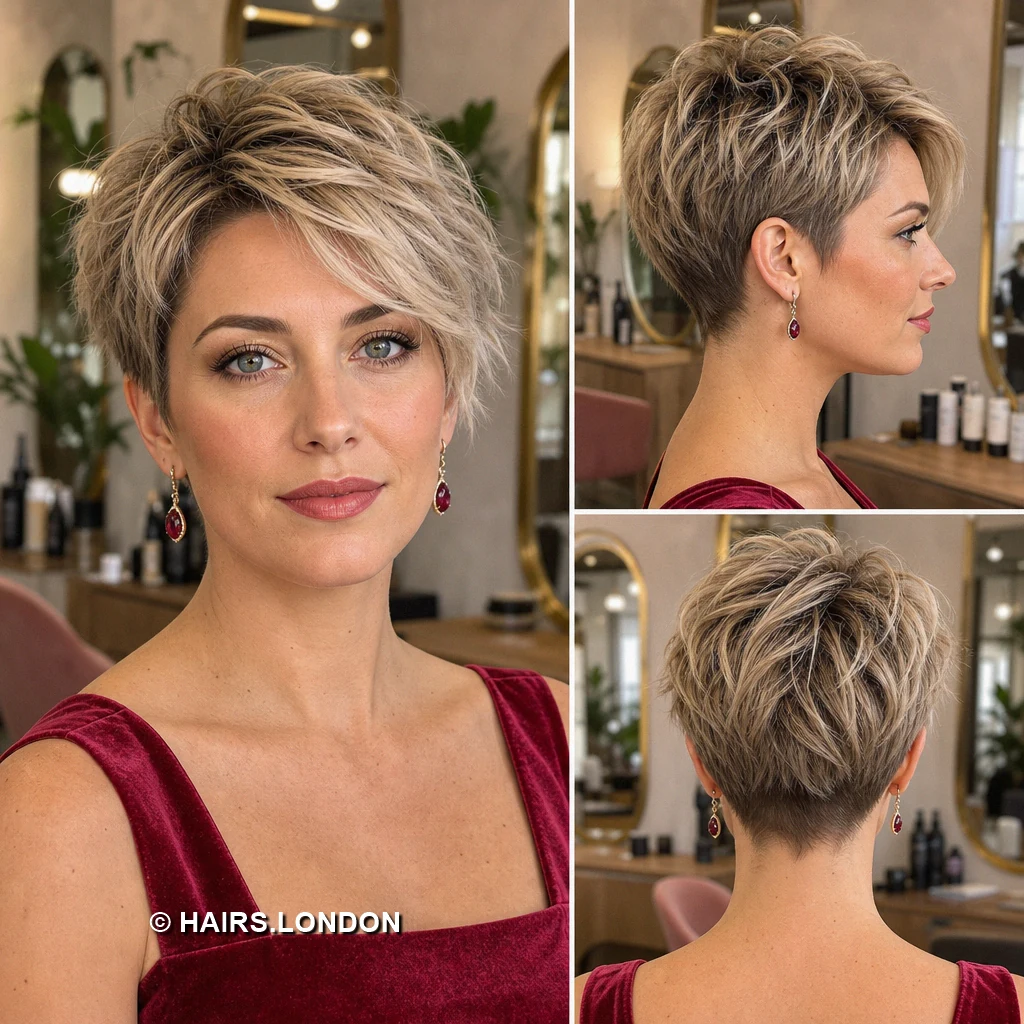
16. Choppy Ash Pixie with a Soft Blonde Fringe
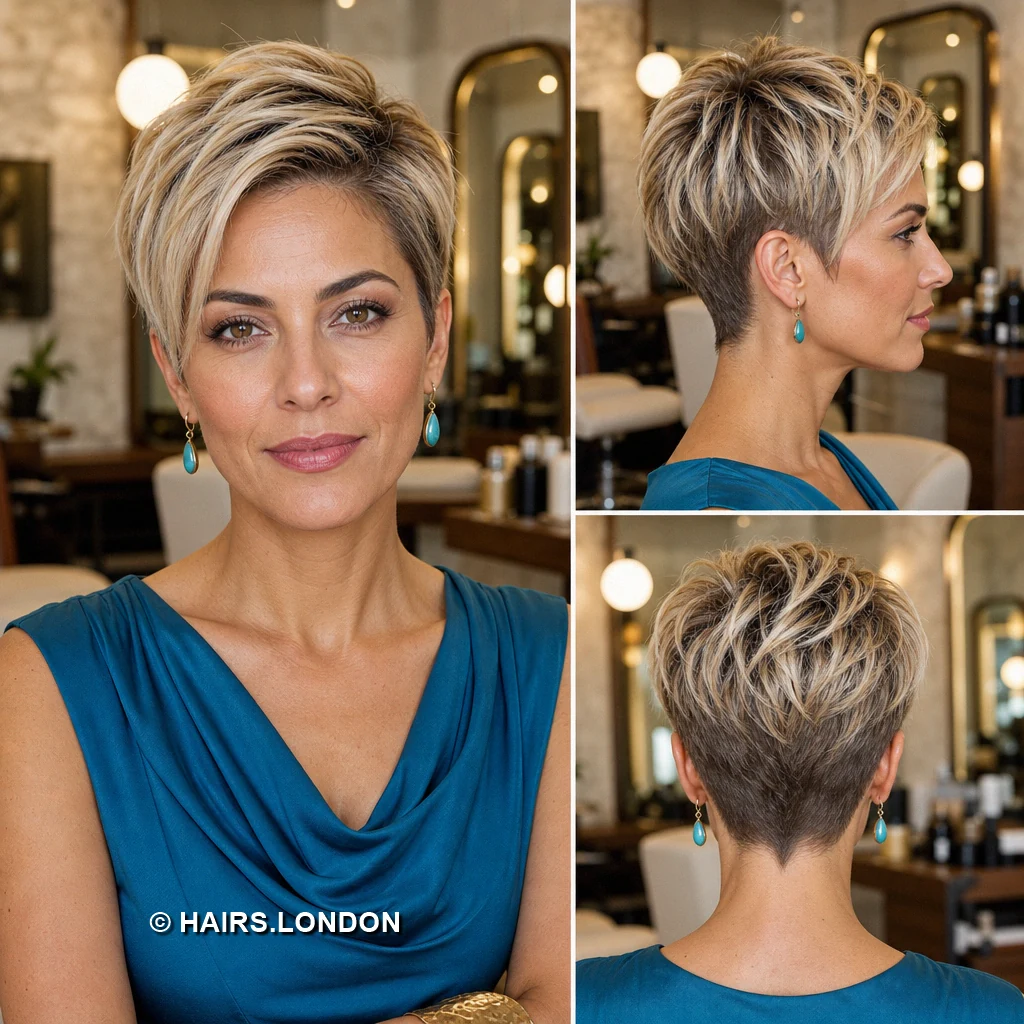
A soft blonde fringe falls diagonally from the textured crown. Short, choppy pieces lift behind it for an uneven finish. Darker sides stay close around the ear and sideburn area. The rounded back narrows into a short, tidy neckline taper. Ask for texture through the upper layers, not excessive thinning. Direct damp fringe sideways while lifting crown roots with fingers. Pinch dry ends with paste to distinguish a few pieces. Keep the product light so pale hair retains visible movement. Frequent small trims can stop the fringe from becoming heavy. Show your stylist both the relaxed front and tapered back.
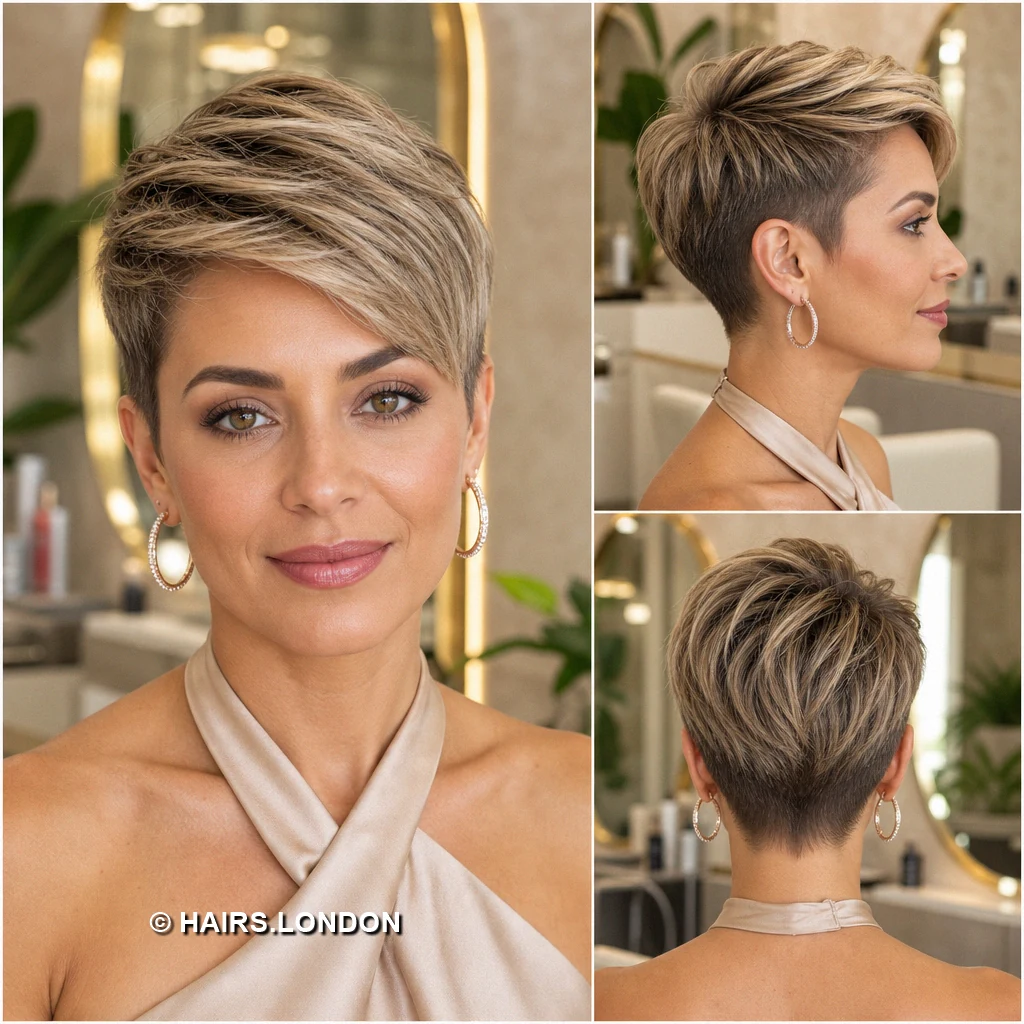
17. Swept Blonde Pixie with Dark Ash Sides
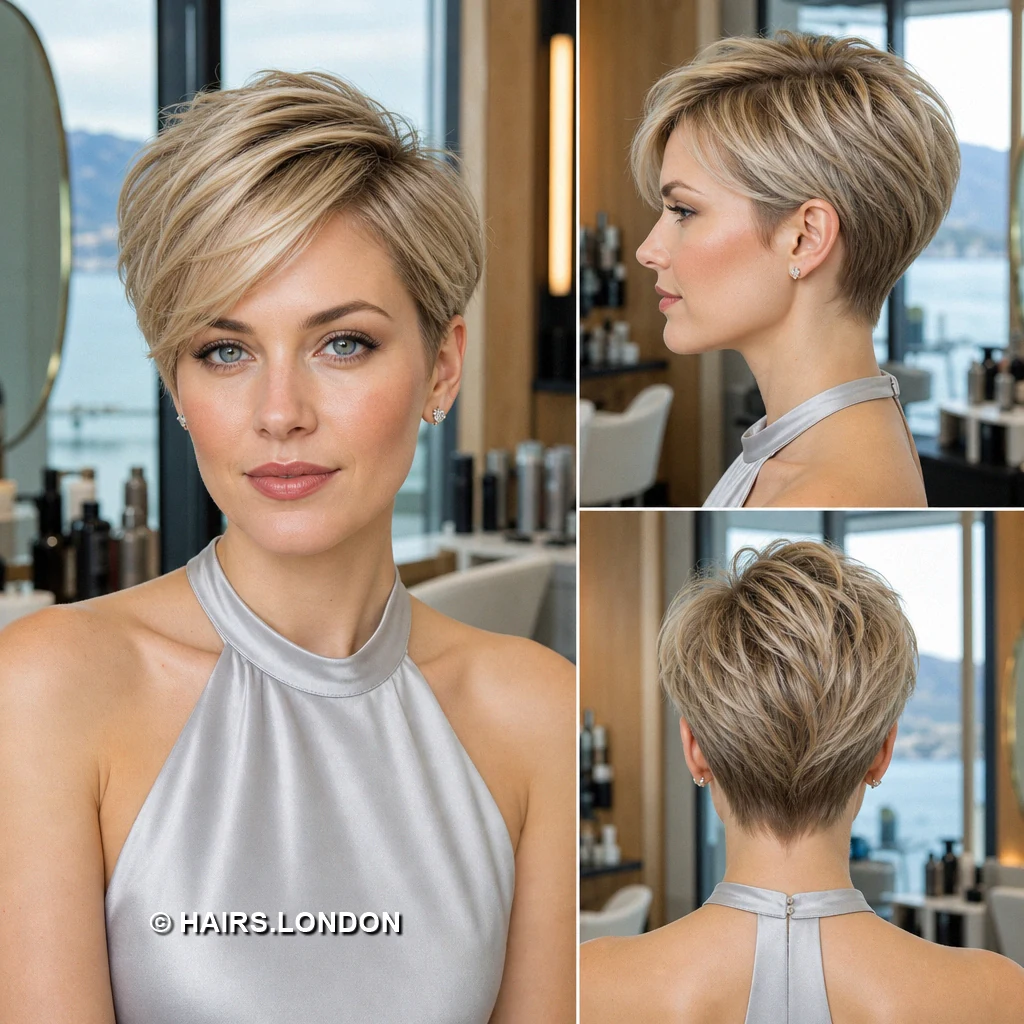
Longer blonde layers travel sideways across the top and fringe. Their light tone contrasts clearly with the close, dark sides. The crown stays rounded while the front forms airy strands. At the back, short hair tapers toward a narrow point. Ask where the highlight color should stop above the sides. Blow-dry from roots to ends following the chosen sweep. Add a small amount of paste for controlled strand definition. Avoid cutting the fringe too short for this diagonal movement. Keep the darker side and neckline edges regularly shaped up. Review how your natural growth pattern affects the visible front lift.
18. Brushed-Back Ash Blonde Pixie with a Clean Forehead
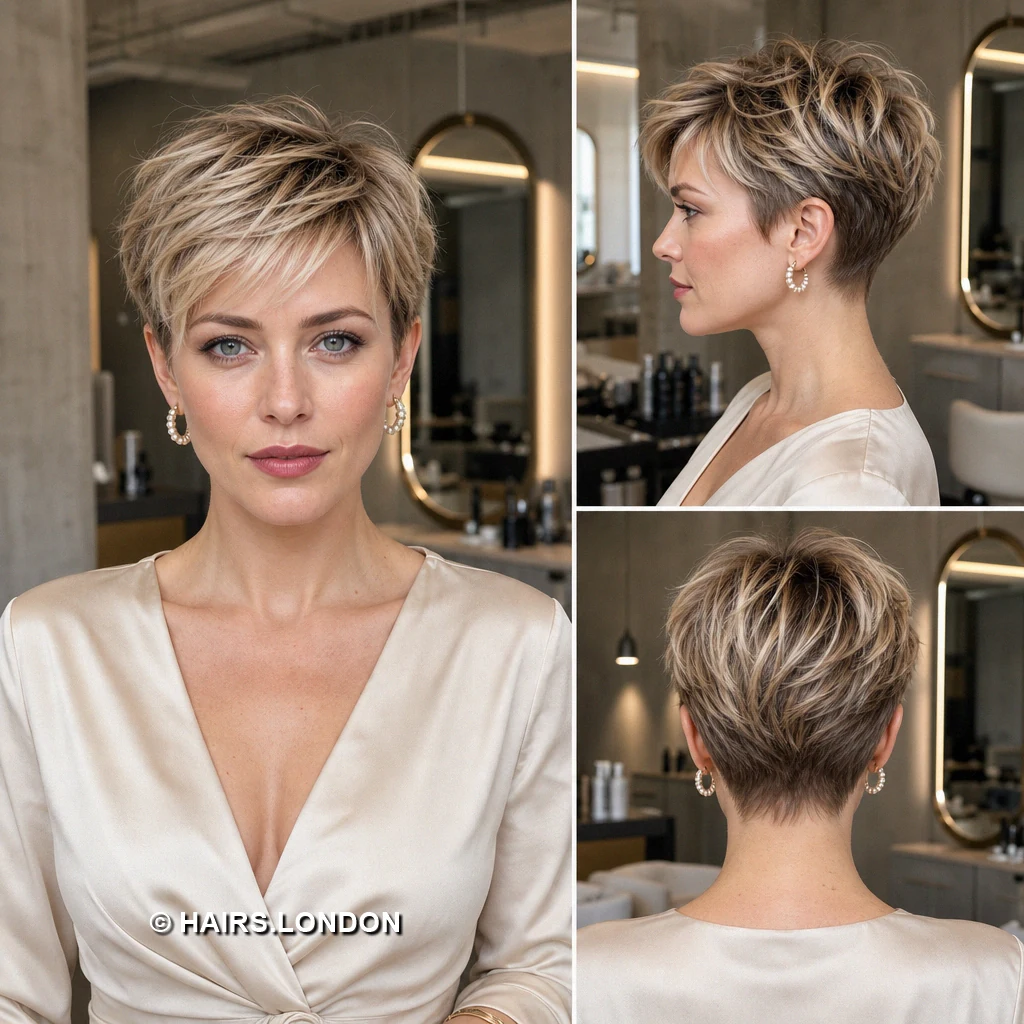
Ash blonde strands brush back, leaving the forehead mostly clear. Gentle height at the hairline continues into a smooth crown. The ear area is short, with deeper color beneath highlights. From the rear, pale streaks converge above a narrow nape. Ask for front layers long enough to hold this direction. Blow-dry backward with a brush while lifting at roots. Use flexible cream to keep the surface smooth, not stiff. Check that the sides blend comfortably into the fuller top. A tapered neckline benefits from regular upkeep between color visits. Discuss how much forehead exposure you want before cutting front layers.
19. Tousled Blonde Pixie with a Deep Side Sweep
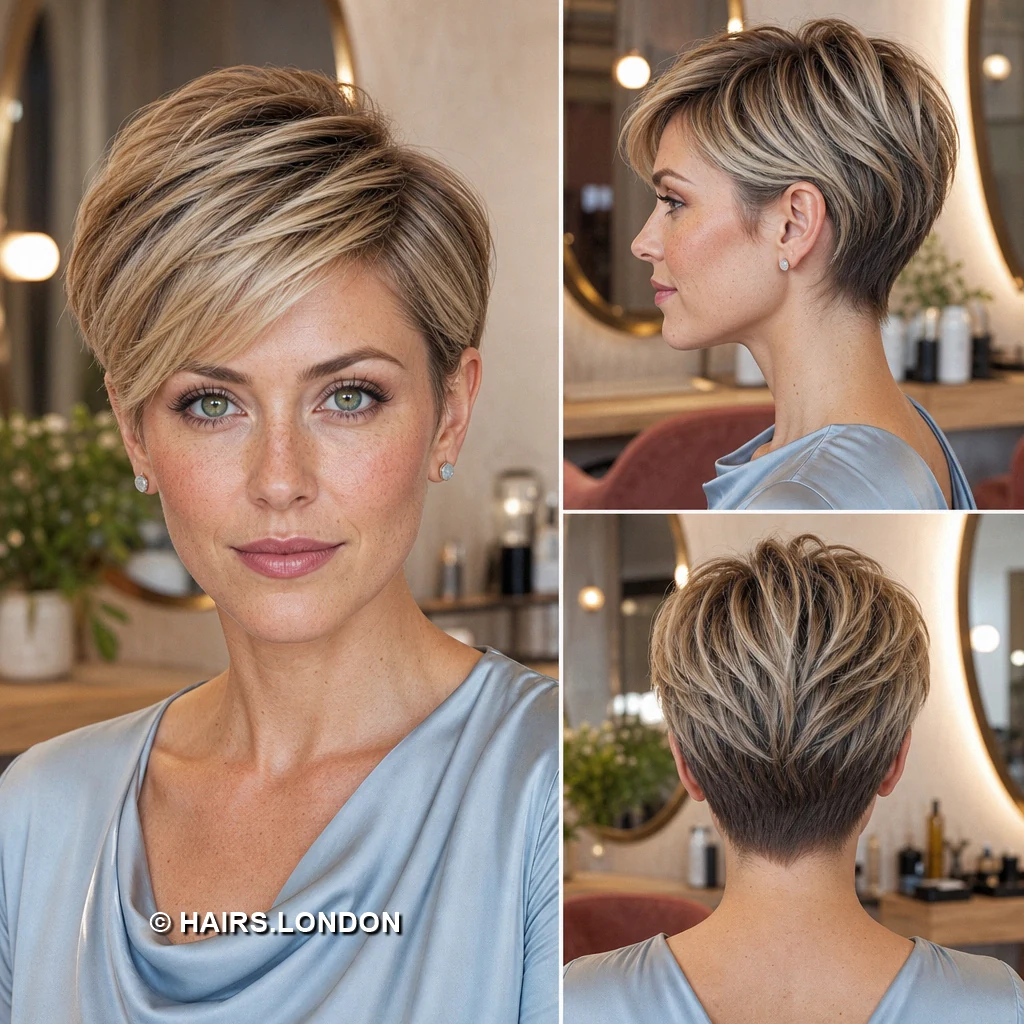
A deep side sweep carries blonde fringe across one eyebrow. Loose crown pieces show dark roots between the fine highlights. Short sides and a slim nape contain the fuller top. The back retains enough layering to echo the front texture. Ask for softness around the forehead rather than a blunt edge. Blow-dry sideways with fingers for a relaxed, lifted finish. Add a little paste to separate the uppermost blonde strands. Keep the sweep flexible if you frequently change your part. Trim when the fringe begins obscuring more vision than intended. Check whether your stylist recommends toner for the pale sections.
20. Feathered Ash Blonde Pixie with a Tapered Back
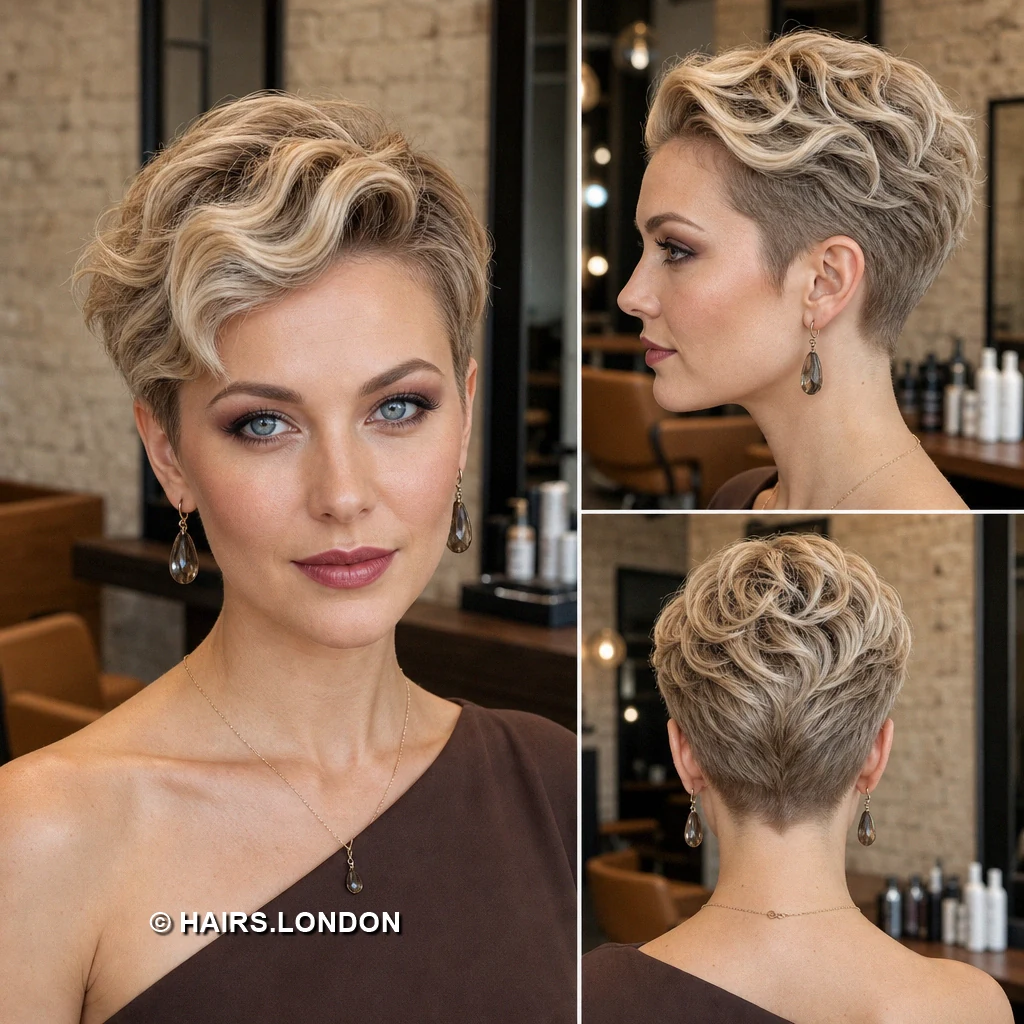
Pale blonde strands sweep diagonally over the deeper ash base. Feathered crown layers create movement without an overly sharp outline. One side sits close beneath the longer, flowing front section. The rear looks softly rounded before narrowing into its nape. Ask for tapered sides that still blend into textured length. Dry the front across, lifting lightly through the upper roots. Define several ends with paste while leaving the rest loose. Keep highlights concentrated where they visibly accent the layered movement. Neckline trims help retain the shape shown in profile views. Bring photos showing front, side, and back to your consultation.
How to Choose an Ash Blonde Pixie Cut
Start with the amount of front length you want to manage. A longer diagonal fringe gives you more styling options but needs regular reshaping; a short, wispy fringe leaves the forehead more open. Then compare the side profiles: a close ear area emphasizes crown fullness, while a softer blend looks less contrasted. Check the back views as carefully as the front, especially if you have a strong growth pattern at the nape.
Styling Straight, Wavy and Curly Textures
For straight hair, lift damp roots with a brush or your fingers before directing the fringe sideways or back. A small amount of paste can separate layers without weighing them down. Let natural waves keep their bends: work in mousse while damp, diffuse gently, and define a few dry pieces by hand. If your hair curls more tightly than the examples shown, ask your stylist how much top length to leave for your shrinkage and how to shape the sides without losing curl definition.
Keeping Ash Blonde Color Fresh
The images show pale, cool-looking highlights against deeper ash and brown bases. Ask a colorist which parts of your cut need lightening to achieve that contrast; an all-over blonde service will create a different result. Use color-safe products, limit unnecessary heat, and ask whether a toner or occasional purple shampoo suits your specific shade. Follow your colorist’s timing, since overusing toning products can leave light pieces looking dull or uneven.
Maintaining the Pixie Shape
Short sides and napes show growth quickly, even when the longer crown still styles well. Plan trims according to how closely you want the ear area and neckline kept; many pixies benefit from a shape check every four to six weeks. Tell your stylist if you want to grow out the fringe while maintaining the back. At home, use less product than you think you need, then add more only to the pieces that need definition.
What to Discuss with Your Stylist
Bring the front, side and back view of the image you prefer. Point out your desired fringe length, crown height, ear coverage and nape shape separately rather than asking for the picture as a whole. Show how your hair falls when air-dried and mention cowlicks, daily styling time and how often you can return for trims. For color, discuss your starting shade, highlight placement, the visible darker base and a realistic plan for maintaining a cool finish.
Frequently Asked Questions
What distinguishes these ash blonde pixie cuts?
They pair cool-looking blonde pieces with deeper roots or sides, plus short, tapered outlines. Fringe length and crown texture vary across the images.
Which pictured shape offers the most fringe length?
The broad side sweeps in images 2, 8 and 11 leave noticeably more hair across the forehead than the shorter fringes.
Can I wear a pixie like this without a dramatic undercut?
Yes. Several examples have closely shaped sides that blend into the top rather than showing a distinct shaved line.
How do I keep a side-swept fringe in place?
Dry it in the intended direction from the roots, then use a small amount of flexible product. Ask your stylist to account for any cowlicks.
Which examples are best for visible waves?
Images 3 and 13 show the clearest defined waves, while image 15 uses a larger lifted bend at the front.
Will a close nape require frequent trims?
It usually needs attention sooner than the longer crown because growth changes its outline. Your preferred neatness determines the timing.
Do I need to lighten all my hair for this color effect?
Not necessarily. The pictured cuts retain darker areas beneath and between the blonde pieces. A colorist can assess placement for your starting shade.
How can I stop a textured pixie looking greasy?
Apply paste or cream sparingly, concentrating on selected ends instead of coating the roots and every strand.
What should I ask for if I prefer a smoother finish?
Show your stylist images 5, 9 or 11 and ask for a controlled side sweep with soft blending and enough length to brush into place.
Can I change the direction of the fringe?
Often, provided the front has sufficient length. Your natural part and growth pattern may make one direction easier to style.
How do I maintain a cool-looking blonde tone?
Use a color-safe routine and ask your colorist when toner is needed. Follow their guidance before adding purple shampoo.
What photos should I bring to a consultation?
Bring front, side and back views of your preferred cut, plus a photo of your hair in its usual, unstyled texture.
Conclusion
The right choice depends on where you want the length: across the forehead, lifted above it or concentrated in a wavy crown. Save the views that show your preferred fringe and nape, then use them to plan both the cut and the ash blonde placement with your stylist.