


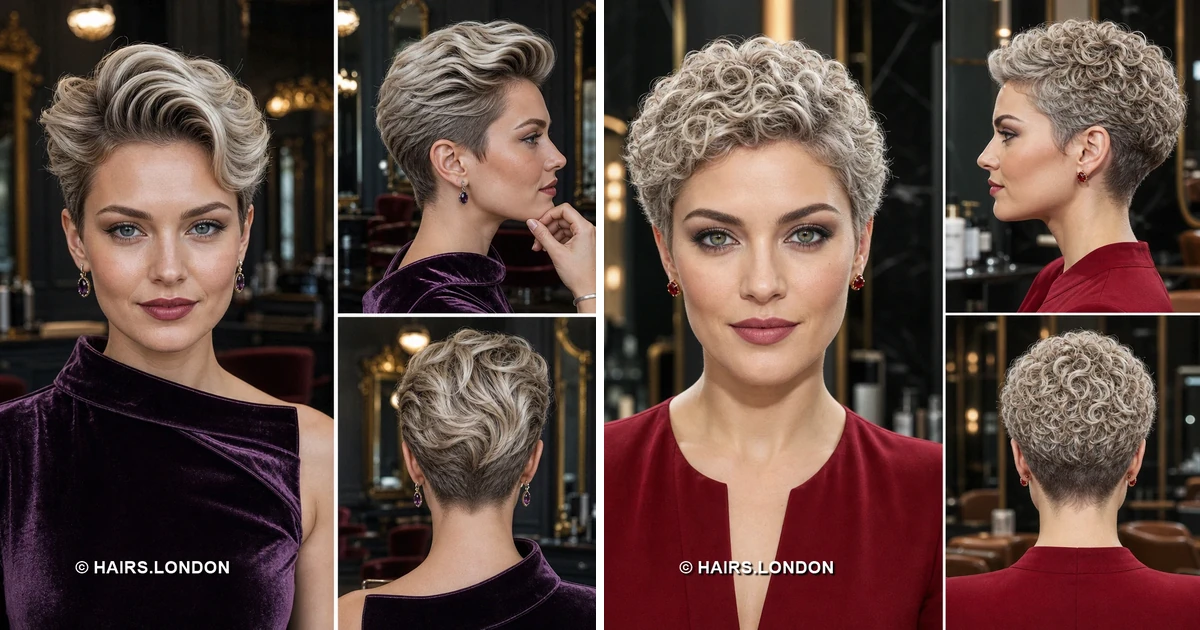
11. Piecey Ash Blonde Side Sweep
Longer ash blonde pieces sweep sideways across the upper forehead. The fringe breaks into pointed ends instead of forming bangs. Lifted crown layers add height while retaining a tousled finish. Closer sides frame the ears and emphasize the longer top. A short, tapered back keeps the silhouette light below. Request enough front length to change the direction between washes. Blow dry from the roots before pushing strands sideways gently. Separate a few ends with paste rather than coating everything. The pale highlights stand out against visibly deeper interior root color. Trim the sides regularly, but preserve movement through the fringe.
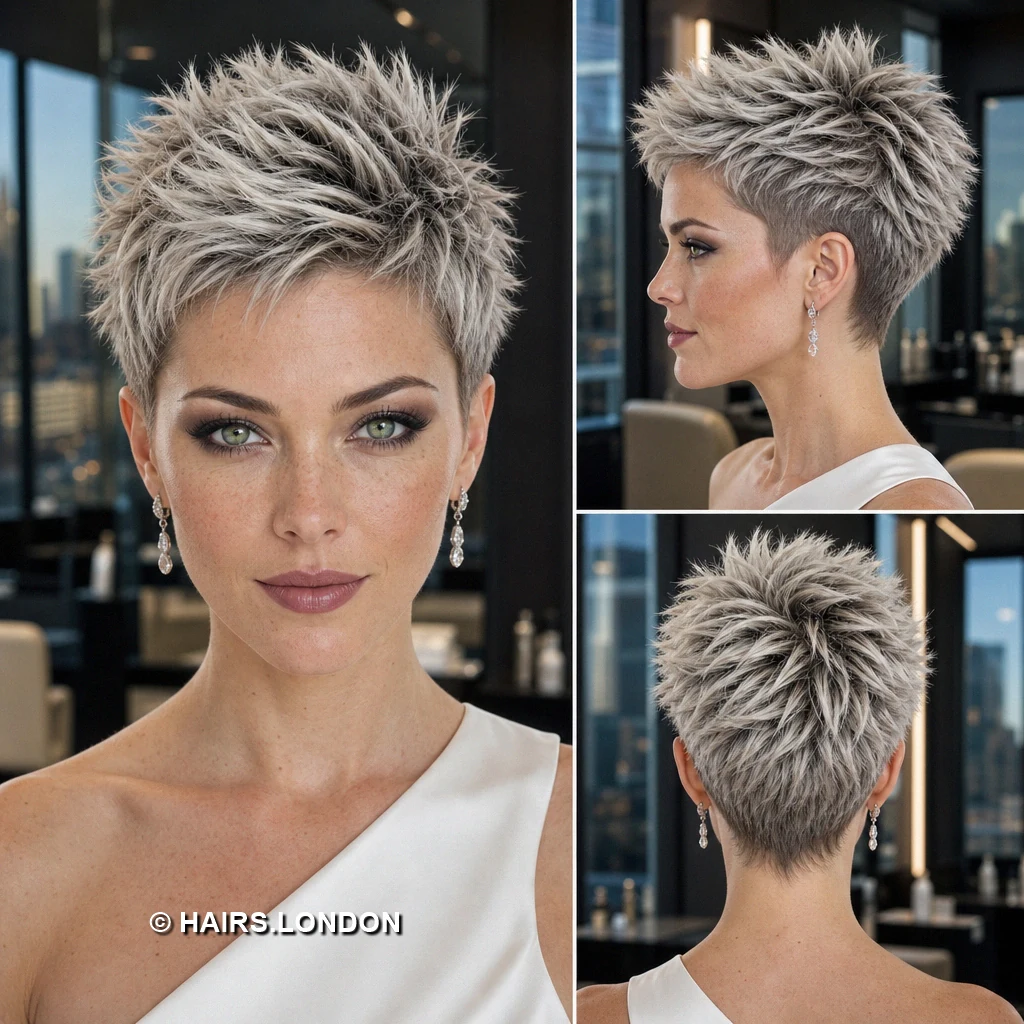
12. Rounded Beige Blonde Pompadour
A rounded beige blonde pompadour rises smoothly from the hairline. Its broad front curves backward into layered crown texture behind. The fringe stays lifted, keeping the forehead fully uncovered here. Shorter sides balance the height without creating a harsh divide. At the back, tapered hair meets the neck neatly below. Ask for enough front length to build this rounded volume. Apply mousse at damp roots, then brush the front upward. Guide the ends backward while keeping the crown lightly separated. Finish with flexible spray to retain the soft outer shape. Discuss root growth if you prefer less frequent blonde retouching.
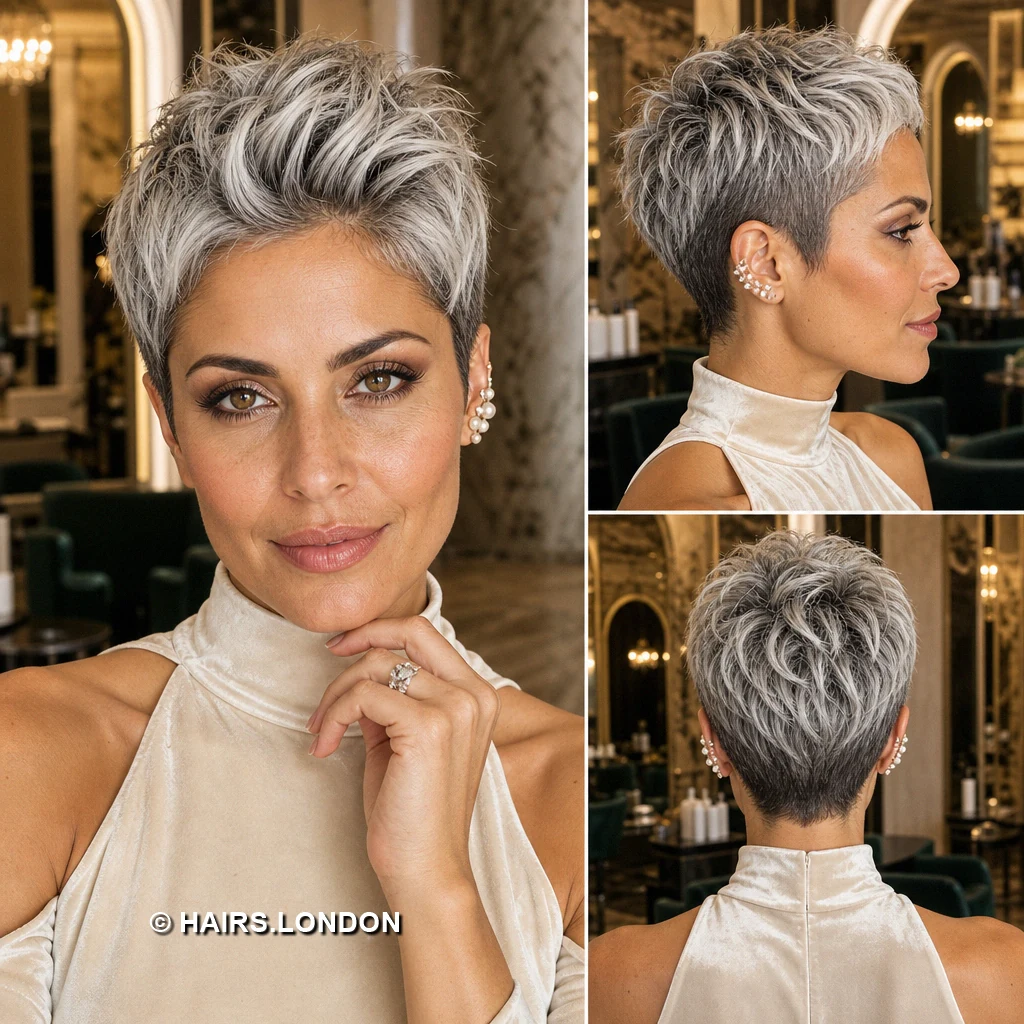
13. Compact Silver Blonde Pixie
A compact silver blonde pixie keeps its shape close overall. Short fringe strands angle gently across the upper forehead here. Fine crown layers create texture without dramatic height or lift. Neat sides follow the head closely around both visible ears. The back remains softly layered above a clean tapered neckline. Ask for a little extra crown length if volume matters. Finger dry from different directions to loosen the upper layers. Use light paste only on sections needing definition or hold. This restrained outline depends on keeping the edges regularly trimmed. Bring the back view when explaining your preferred nape finish.
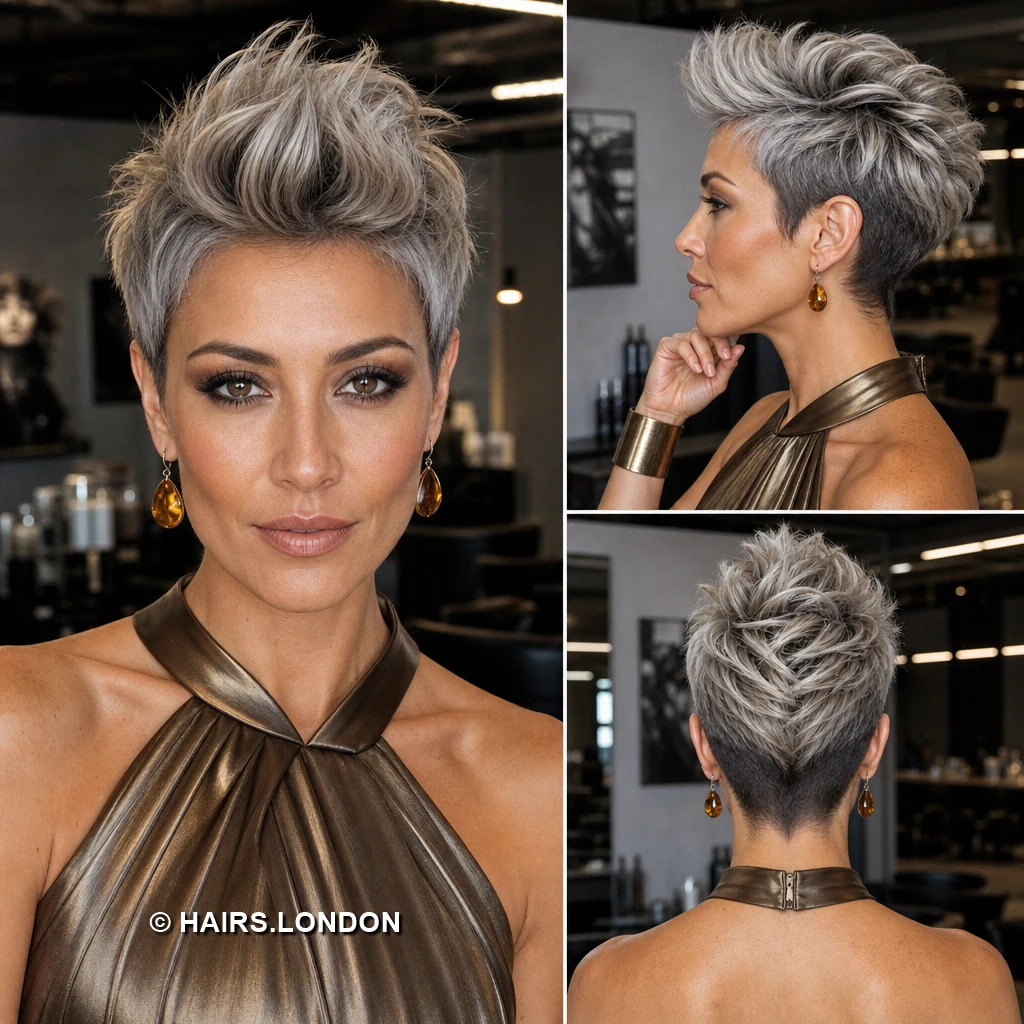
14. Soft-Fringed Platinum Crop
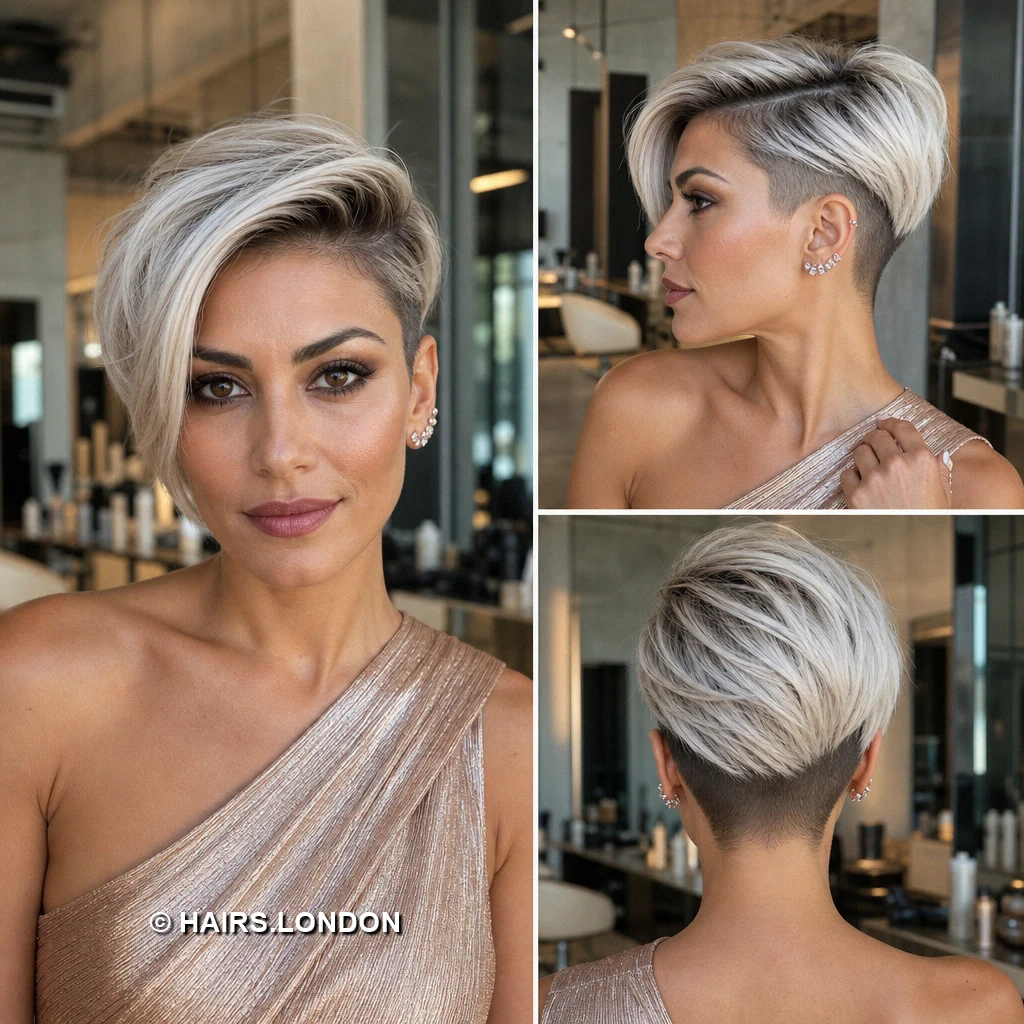
Pale platinum layers form a soft, slightly rounded pixie. Its wispy fringe falls forward in fine, separated short pieces. The crown shows gentle texture without the height of a quiff. Close sides expose the ears and keep the profile compact. Fine layering continues down the back toward the narrow nape. Request light ends if you want this soft feathered appearance. Blow dry the fringe forward and tousle the crown gently. A small amount of cream can settle any flyaway strands. Avoid heavy wax that would obscure the fine piecework here. Short trims help retain the neat outline around each ear.
15. Tousled Silver Fringe Pixie
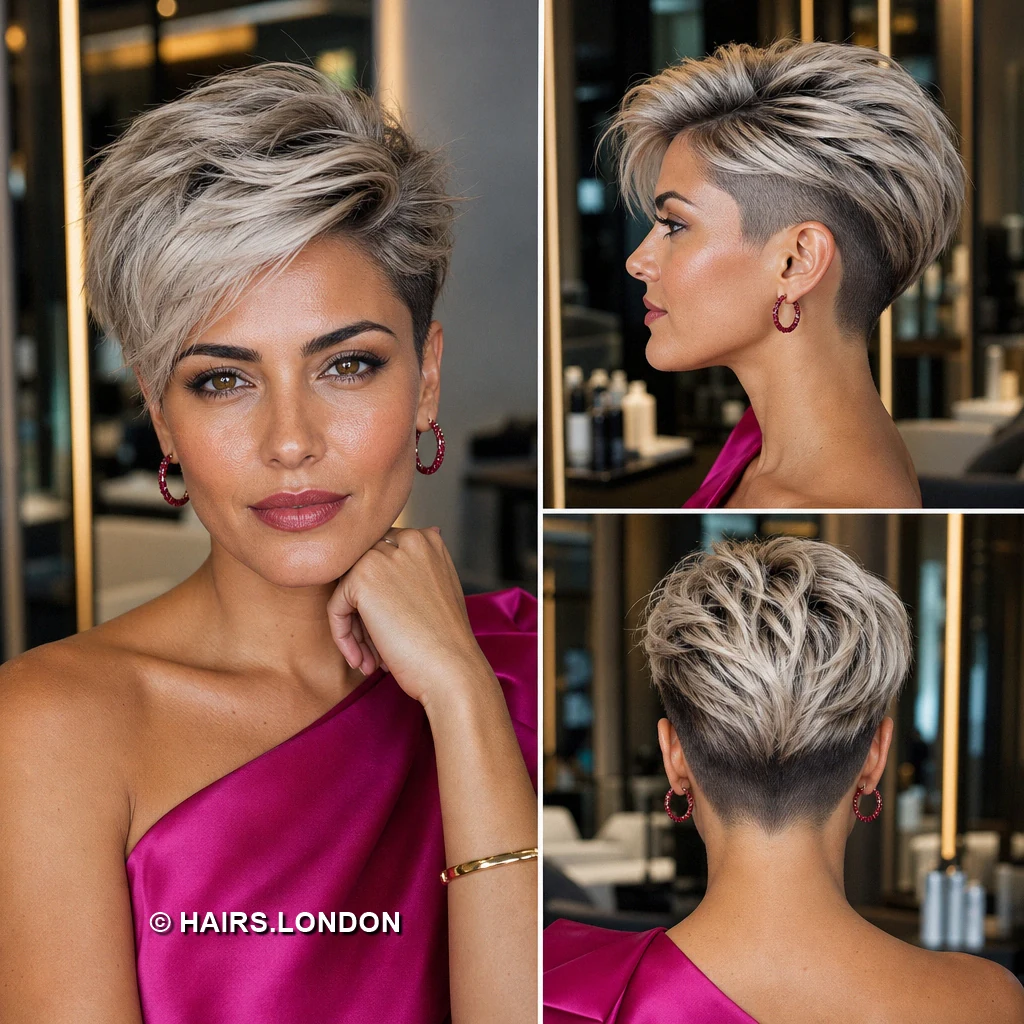
Silver blonde strands form a fuller, tousled upper silhouette. Short fringe pieces point forward across the upper forehead lightly. The crown carries softly uneven movement rather than a polished wave. Sides remain shorter and flatter, revealing the ear outlines clearly. Behind, upper layers gather above a neatly narrowed lower section. Request point cut ends to encourage this broken surface texture. Dry with fingers, lifting randomly instead of establishing one part. Pinch the fringe lightly with paste for visible piece separation. Keep product off the roots if your hair flattens easily. Ask how much side length will balance your crown density.
16. Contrasting Ash Blonde Crest
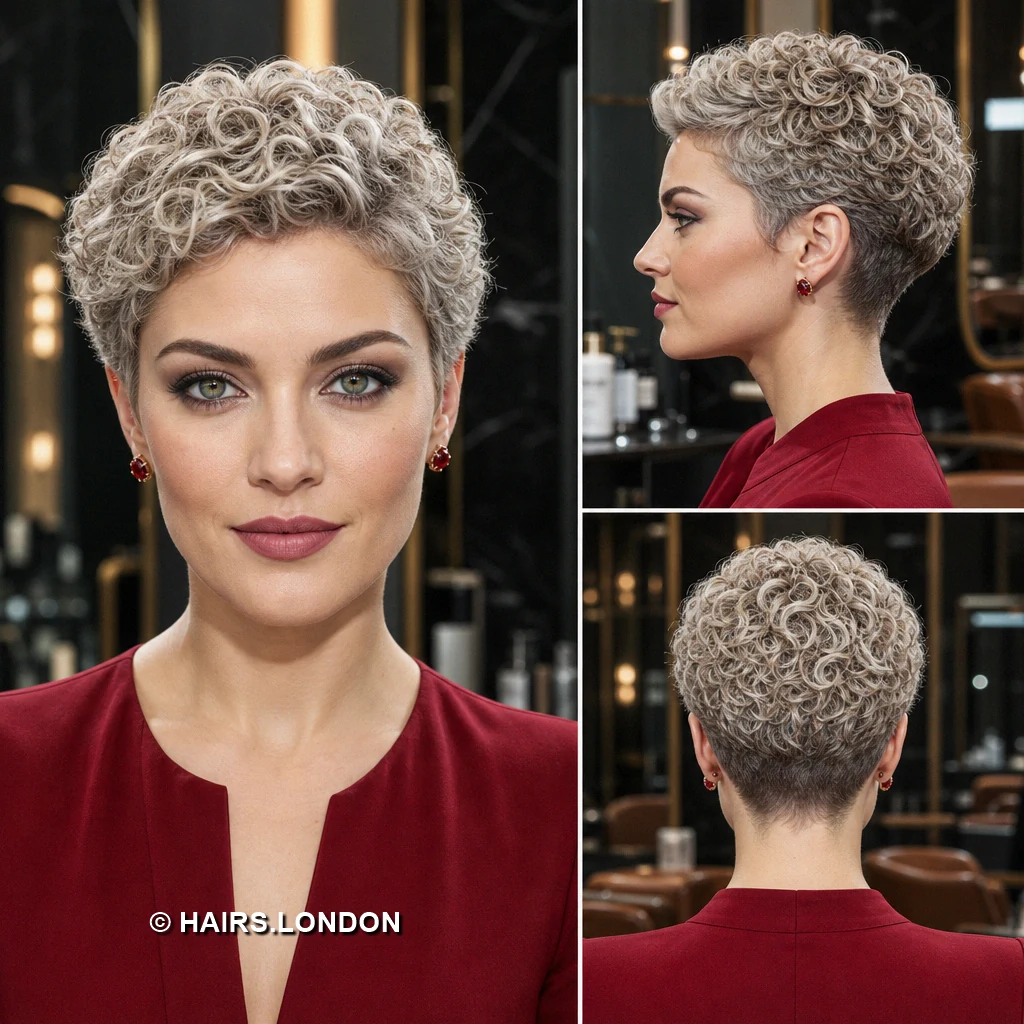
Pale ash blonde streaks lift through a darker pixie crest. The front sweeps across, with pointed pieces near the brow. A visibly deeper base strengthens the contrast between individual strands. Short sides sit close while the crown remains strongly layered. The back tapers sharply beneath the highlighted, textured upper hair. Ask your colorist which light sections need regular refreshing first. Lift damp roots, then direct the front slightly sideways outward. Use matte paste to separate highlights without adding excessive shine. Keep the nape trimmed so the darker base stays crisp. Discuss how much contrast you want once roots grow in.
17. Feathered Gray Blonde Side Sweep
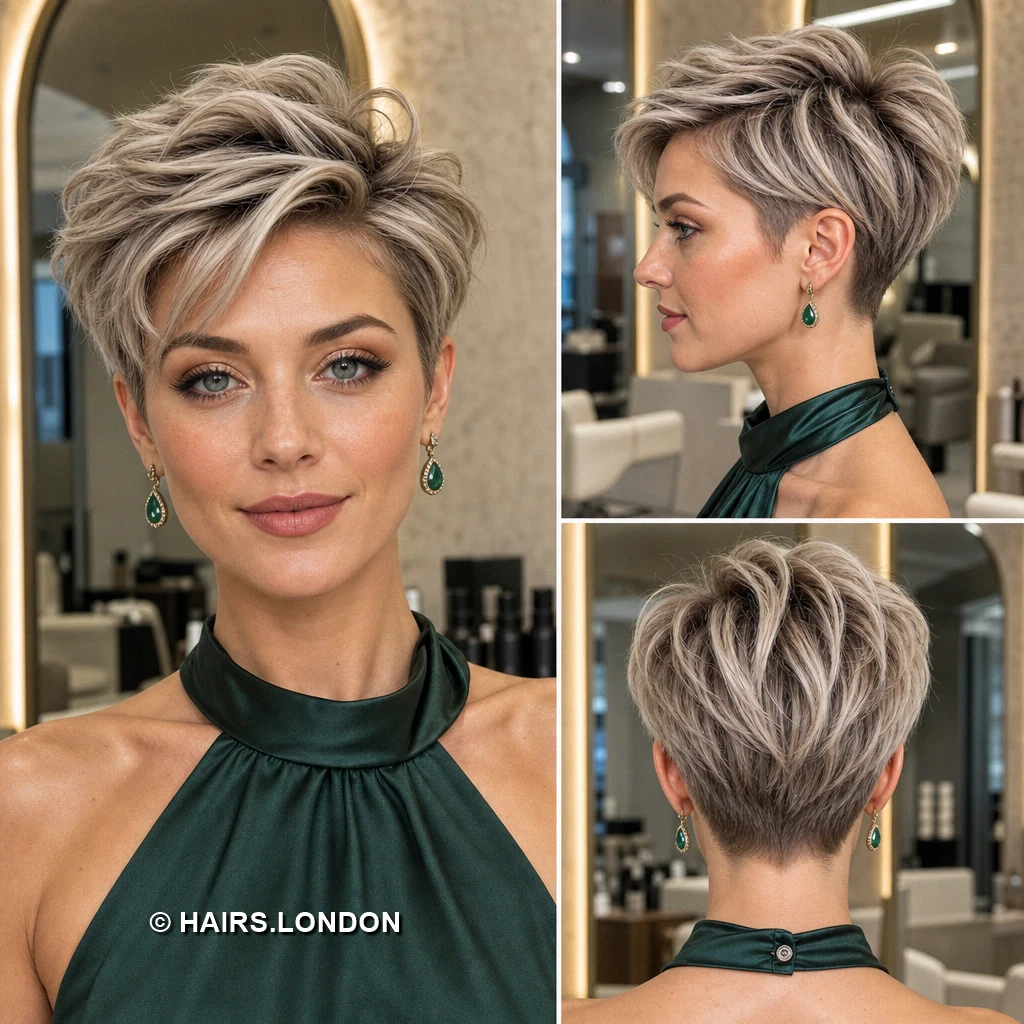
Gray blonde highlights feather across a gently lifted pixie. The front angles sideways, leaving only a light broken fringe. Textured crown layers create volume that settles toward one side. Cropped sides keep both ears visible and the profile narrow. A deeper shaded nape tapers neatly beneath the fuller back. Request soft layering if you want natural movement without sharp spikes. Dry the roots upward before guiding the longer pieces across. Work a little styling cream through ends for flexible separation. The darker underside gives the pale upper layers visible depth. Keep side trims consistent to protect the balanced crown shape.
18. Asymmetric Ash Blonde Draped Pixie
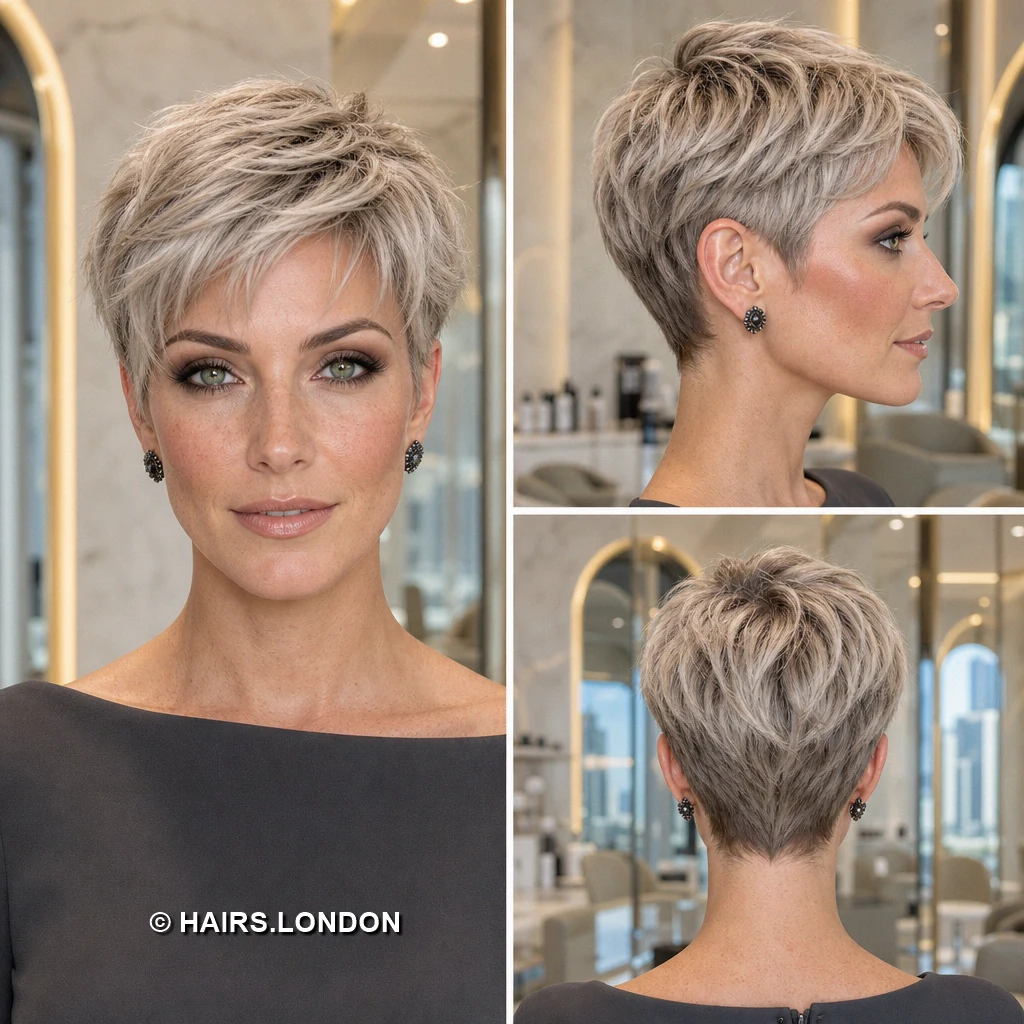
This ash blonde pixie places extra length across one side. A smooth, substantial fringe drapes diagonally toward the eyebrow area. The opposite side stays shorter, emphasizing its asymmetric front shape. Swept crown layers create height before rounding into the back. Beneath them, a darker taper finishes cleanly at the nape. Ask for enough fringe length to reproduce this visible sweep. Blow dry across with a brush, lifting lightly at roots. Finish with flexible spray rather than weighing down the fringe. The dark roots soften the transition into the pale lengths. Check the fringe position throughout styling, especially near your eyes.
19. Sculpted Beige Blonde Wave
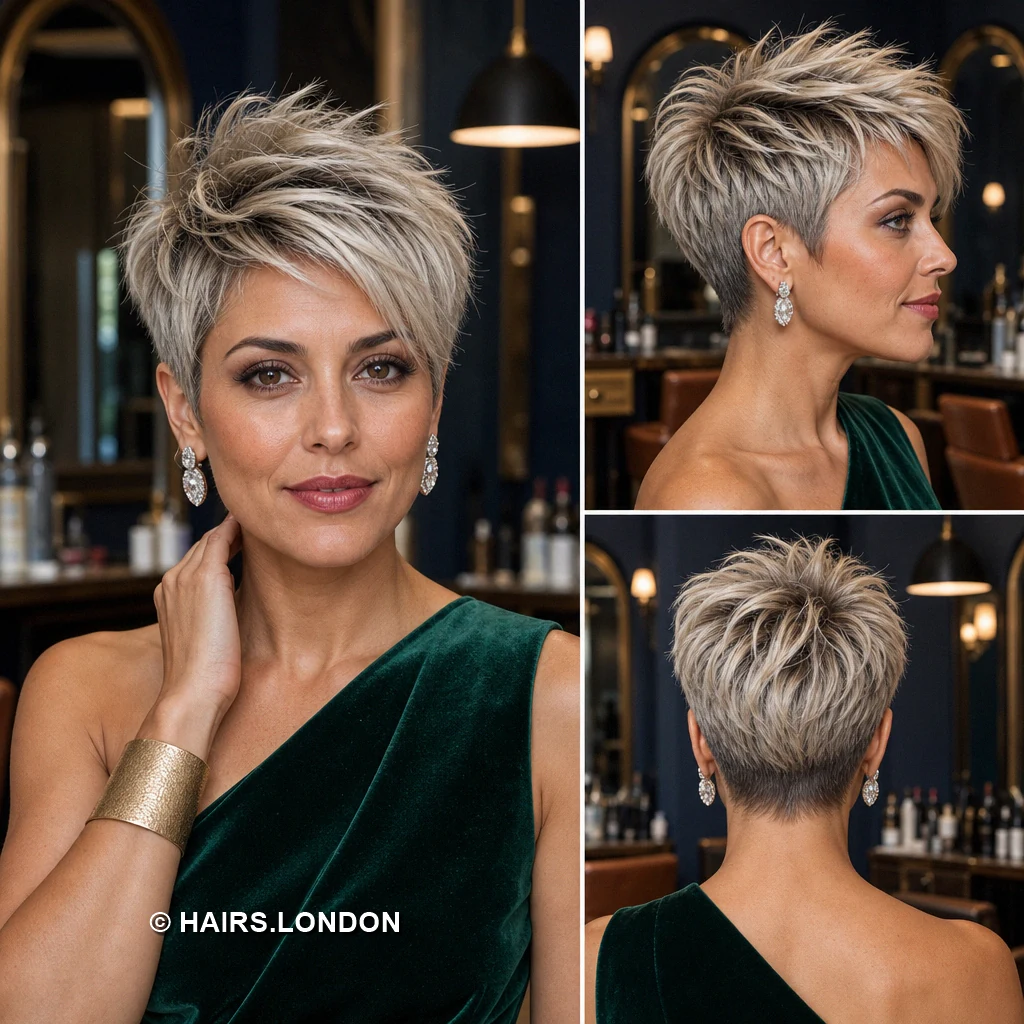
A beige blonde wave curls high above the forehead. Darker roots clearly outline each polished bend through the upper layers. The lifted fringe sweeps backward instead of falling over brows. Closely tapered sides contrast with the broad, sculpted crown shape. Behind, the textured top narrows into a dark nape. Ask your stylist to retain front length for the wave. Round brush the roots upward, then guide ends backward gently. Use flexible spray to hold bends without making them rigid. The defined outline benefits from regular side and nape maintenance trims. Discuss whether your natural growth pattern supports this front direction.
How to Choose an Ash Blonde Pixie Haircut
Start with the shape you want to see from the side: a close crop, a rounded crown, or a taller quiff. Then consider the front. A lifted fringe keeps hair off your face, while a long diagonal sweep needs more positioning. Compare the back views as carefully as the portraits; a closely tapered nape changes both the silhouette and the trim schedule. Hair density and growth direction matter, so ask your stylist which image is most realistic for your hair.
Styling Different Hair Textures
Fine hair often needs a light mousse at the roots and careful blow-drying to hold height without feeling coated. For thicker hair, a stylist can remove internal weight while leaving enough length to shape the crown. If your hair is naturally wavy, work with the bend using fingers and a small amount of cream. For curls like those in image 8, apply curl product while damp and dry gently; brushing after drying will change the defined finish. Use paste sparingly and only where you want separation.
Keeping Ash Blonde Color Fresh
These images show pale blonde lengths with varying amounts of darker root and underside color. Decide whether you prefer that contrast or a more even result before booking. Ask your colorist how to manage warmth, how often your chosen lightness may need refreshing, and which cleanser suits your hair. Use a conditioning routine appropriate for lightened hair, and follow your colorist’s directions for any toning product rather than using it at every wash by default.
Maintaining the Pixie Shape
The shortest sides and napes will show growth before a longer crown does. Book trims according to the outline you want to keep, and tell your stylist if you would rather preserve top length while tidying only the edges. Between appointments, reset lifted styles from damp roots instead of repeatedly adding product to dry hair. Long fringes also deserve a comfort check: once they begin falling into your eyes, the cut or your usual styling direction may need adjusting.
What to Discuss with Your Stylist
Bring the front, side, and back view of your favorite image. Point out the exact details you want—fringe length, crown height, how closely the sides sit, and where the nape ends. Explain how much time you can spend styling and whether you want to see darker roots. Ask how your hairline, texture, density, and natural growth pattern might alter the result. Agree on a cutting and color-maintenance plan before making a major change.
Frequently Asked Questions
What makes an ash blonde pixie different from a platinum pixie?
Ash blonde describes a cooler-looking blonde tone. Platinum describes a very pale level of blonde; a platinum pixie can also have an ash tone.
Which cut shown has the shortest-looking sides?
Images 6 and 7 show especially clear contrast between their longer tops and closely cropped sides.
Which option keeps the most fringe length?
Image 6 has a long fringe that falls across one eye. Image 18 also has a substantial side-swept front.
Can a pixie still have volume at the crown?
Yes. Images 1, 5, and 12 show noticeably lifted crowns, supported by longer upper layers and shorter sides.
Is there an option for naturally curly hair?
Image 8 shows a rounded pixie with defined small curls and a closely tapered lower section. Ask for shaping that accounts for your curl shrinkage.
How do I style a lifted pixie front?
Start at damp roots, direct the hair upward while blow-drying, and use a small amount of product to shape the ends.
What product helps create separated pieces?
A small amount of paste worked through selected ends can define pieces. Choose a light application so the crown keeps its movement.
Do these cuts require an undercut?
No. Several have softly tapered sides. Images 6 and 7 show a more pronounced difference between the long top and short side.
Will darker roots work with ash blonde?
The images show darker roots and undersides beneath many pale tops. Discuss the amount of contrast you want with your colorist.
How often should I trim a pixie?
Trim timing depends on how short the sides are and how crisp you want the outline. Your stylist can suggest a schedule for your chosen shape.
What should I show my stylist besides the front view?
Show the matching side and back views. They reveal the taper, crown length, and nape shape that a front portrait cannot.
Can I change the direction of a side-swept fringe?
Possibly, if the front has enough length. Ask your stylist to assess your growth pattern and cut the fringe for the ways you plan to wear it.
Conclusion
The most useful reference is the one whose front, profile, and nape you all like. Choose your preferred balance of length and taper, then let your stylist adapt it to your texture and growth pattern. That conversation will do more for the finished cut than choosing a shade or fringe in isolation.