


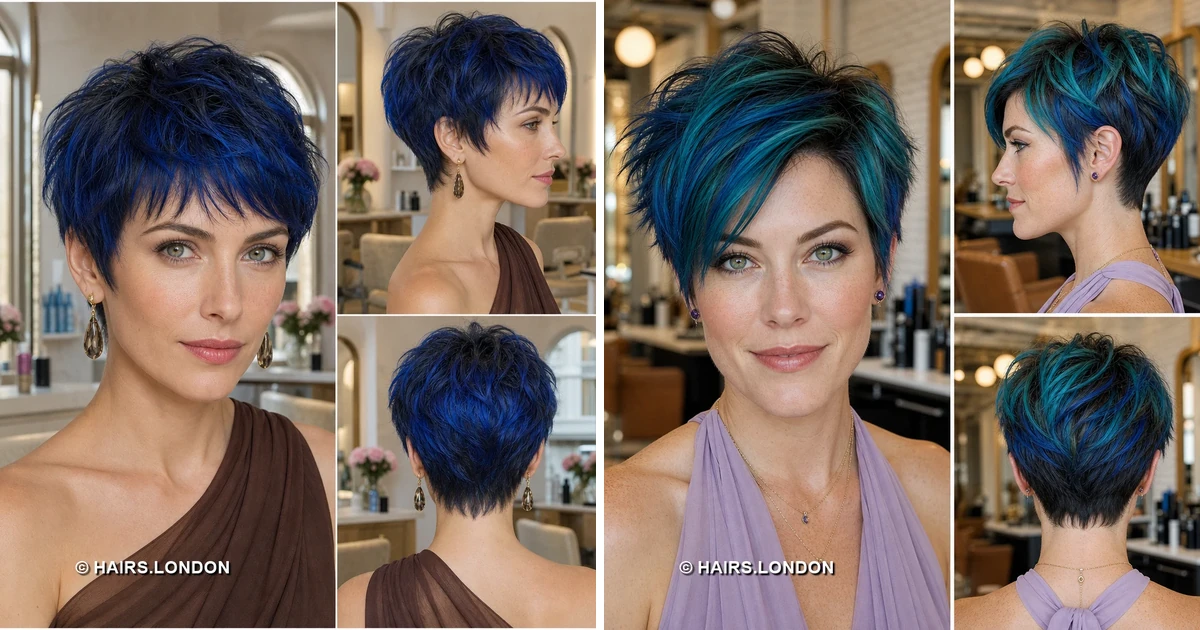
11. Spiky Blue Pixie with a Short Fringe
Short blue tipped layers stand up across the upper crown. A cropped fringe sits close to the forehead beneath them. The sides follow the head closely, exposing the ear. At the back, pointed pieces soften an otherwise narrow taper. The vivid blue reads most clearly on lifted surface strands. Request short, textured top layers that still allow some movement. Apply firm paste sparingly, then lift pieces with dry fingertips. Avoid coating the fringe if you prefer its lighter finish. Discuss crown growth patterns before asking for pronounced upright texture. Frequent shape trims help keep the short sides proportional to top.
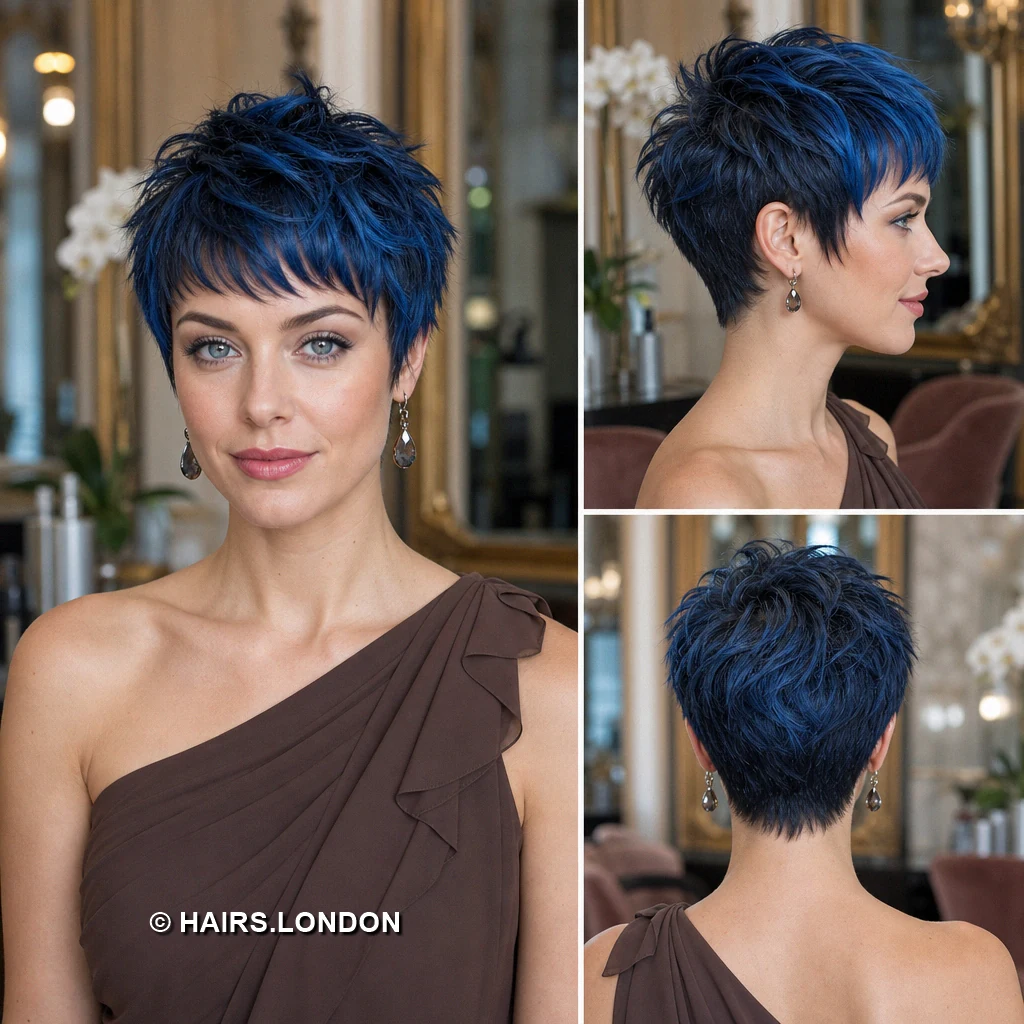
12. Layered Blue Pixie with a Smooth Diagonal Fringe
Deep blue sections brighten a smooth fringe sweeping diagonally forward. The top sits fuller, with gently separated layers behind it. Short sides fit neatly around the ears without looking shaved. From behind, textured crown hair narrows into a fine nape. Darker roots remain visible beneath the brighter blue upper strands. Ask for a fringe length that works with your usual part. Blow dry across the forehead while lifting roots for softness. Finish by shaping individual ends with a tiny cream amount. Check color placement from both sides during your salon consultation. Keep the tapered back tidy with regular, modest trims.
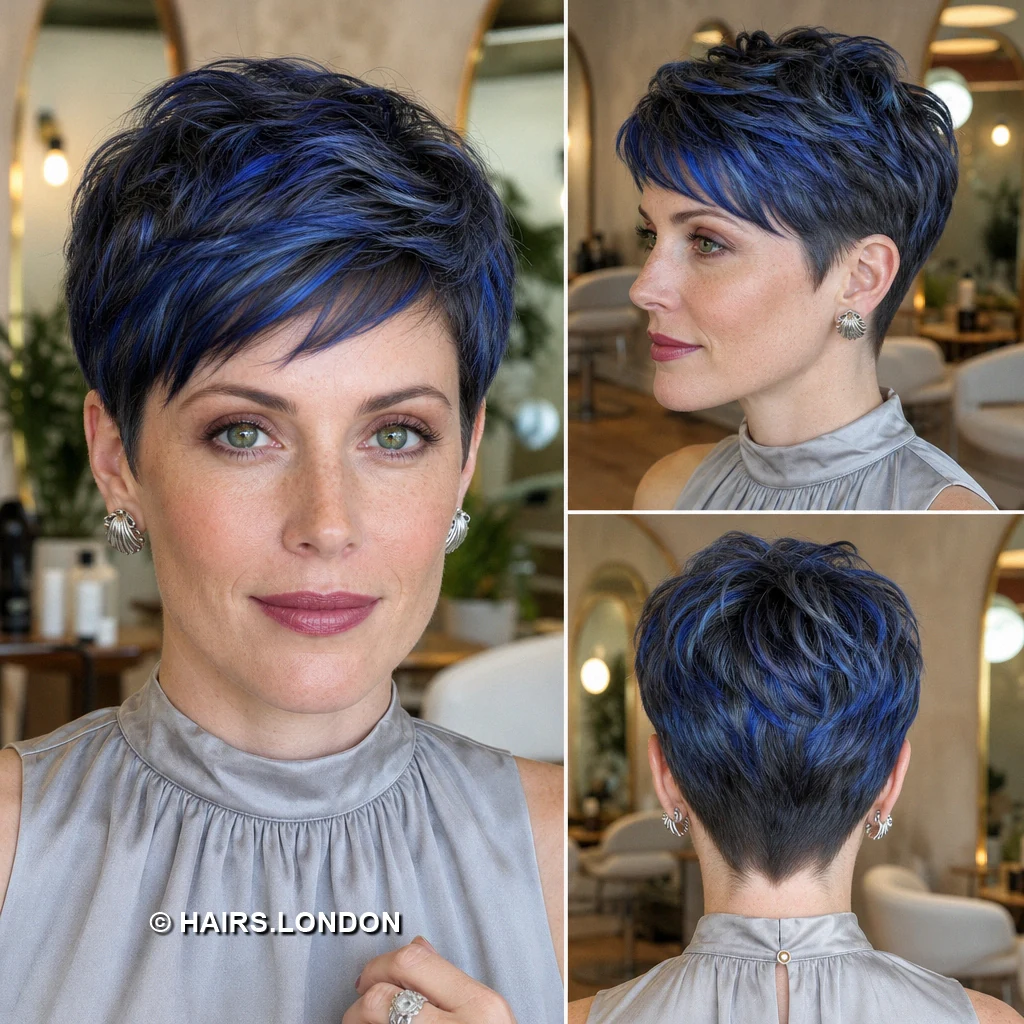
13. Compact Navy Pixie with Swept Blue Layers
Blue surface layers sweep across a compact, dark navy pixie. The fringe sits lightly to one side above the eyebrows. Crown texture creates lift without making the silhouette look spiky. Closely cut sides transition smoothly into the narrow rear taper. The back retains visible layering above its short, neat neckline. Ask for blended graduation if you prefer this continuous shape. Dry with fingers, directing the front gently across your forehead. Use lightweight spray to keep the swept surface in place. Leave some dark depth when refreshing the brighter blue pieces. Review ear clearance and nape length at each shape trim.
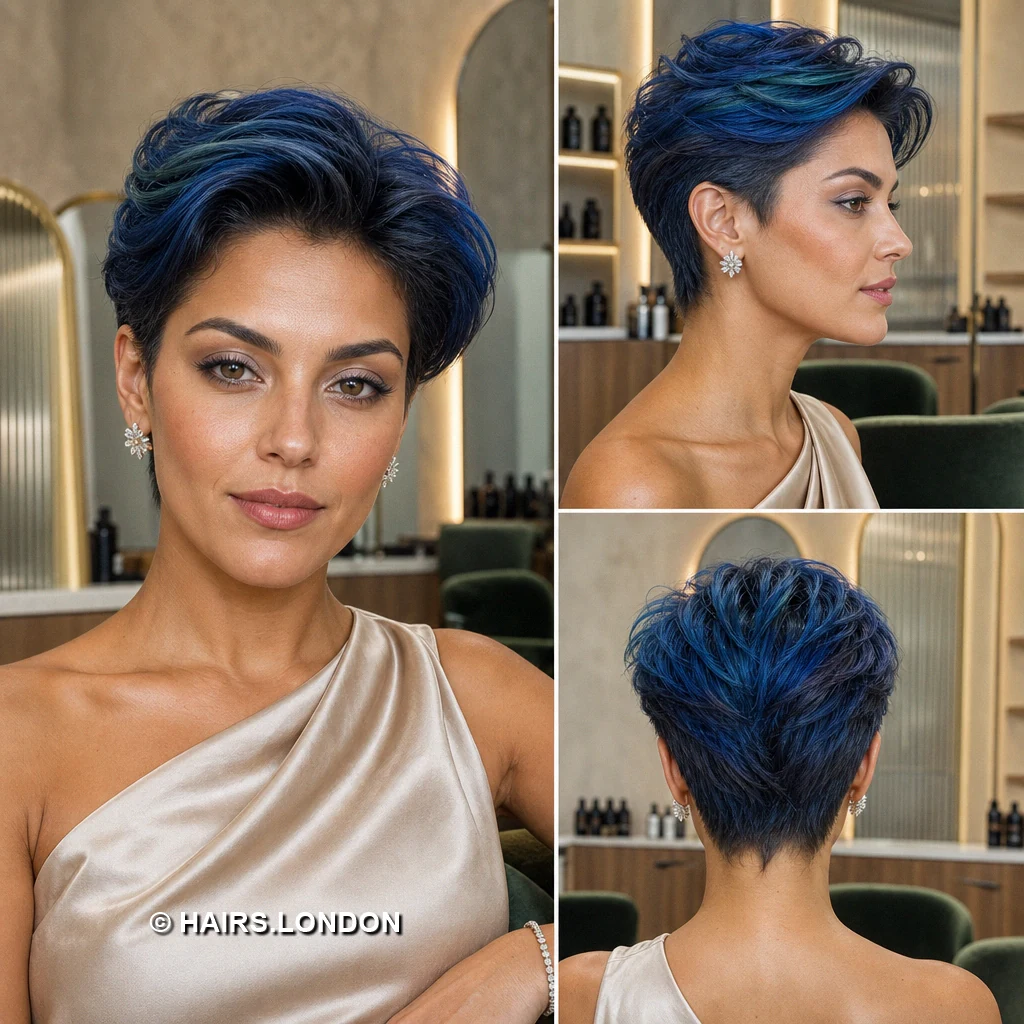
14. Navy Pixie with Teal-Blue Fringe Highlights
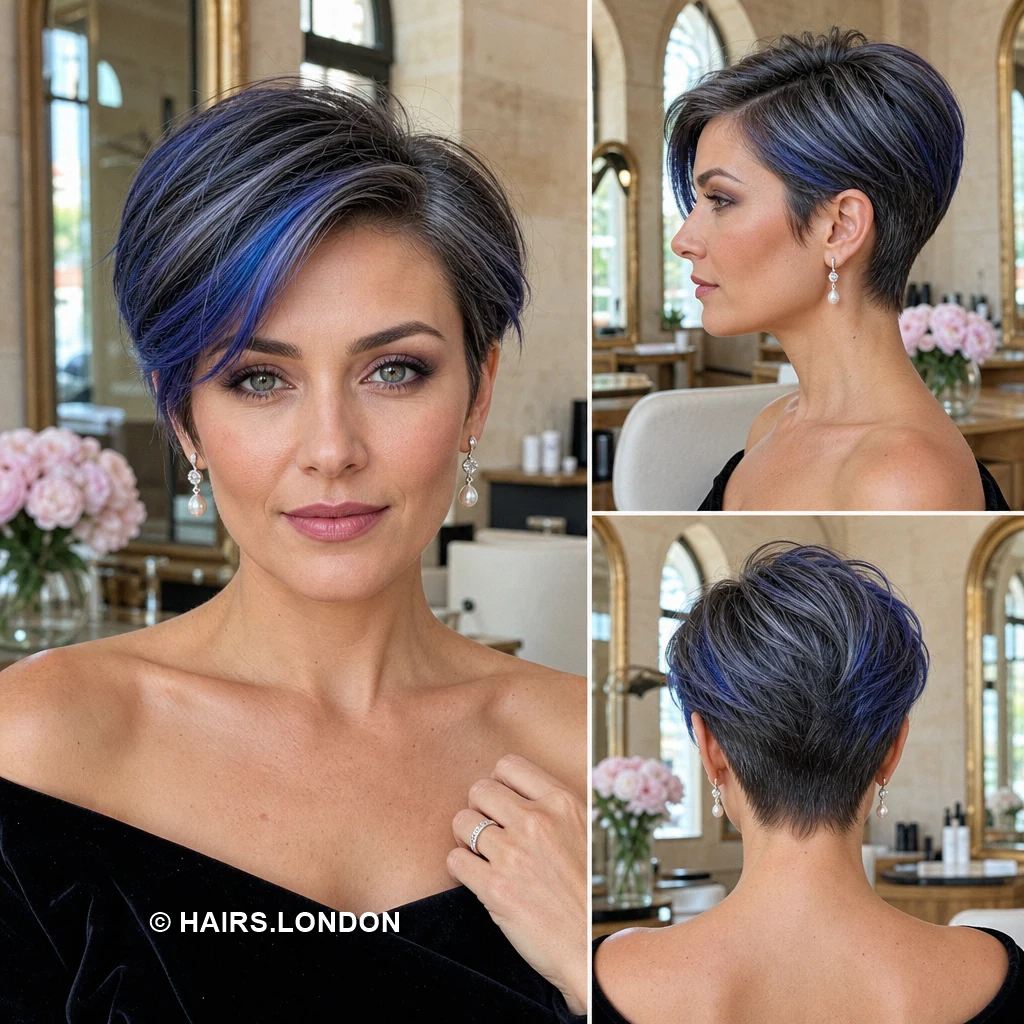
Teal strands mix with royal blue across this navy fringe. The short front breaks into airy points over the forehead. Tousled layers bring moderate height through the crown and back. Close sides frame the ears before meeting a tapered neckline. Teal also appears in selected sections toward the rear crown. Request deliberate accent placement instead of an evenly colored top. Scrunch a light styling product through damp, layered hair. Lift and separate the fringe only after the roots dry. Ask how the teal may change between your regular color appointments. Refresh the short neckline to keep its narrow outline visible.
15. Asymmetric Pixie with Bright Teal Ribbons
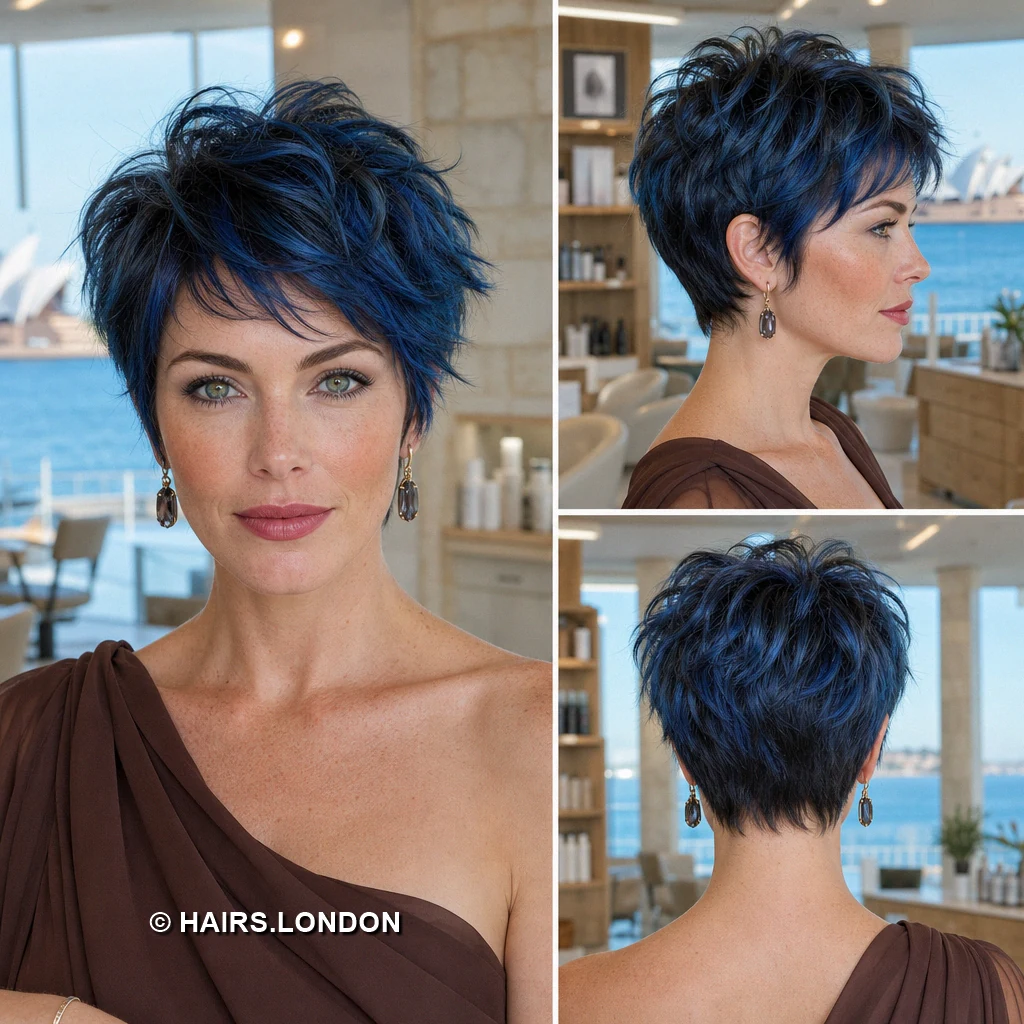
Bright teal ribbons sweep across longer cobalt and navy layers. The asymmetrical fringe extends farther over one side of forehead. A lifted crown adds width above the closely cropped sides. At the back, colorful texture narrows toward a dark nape. The layered colors are visible from both front and behind. Ask your stylist to retain length where the fringe falls. Work mousse into roots before drying the longer side across. Define selected teal strands with fingers, leaving softer pieces untouched. Discuss color placement when deciding how the haircut will part. Trim shorter areas regularly while maintaining the sweeping top length.
16. Blue Pixie with a Silver Swept Front
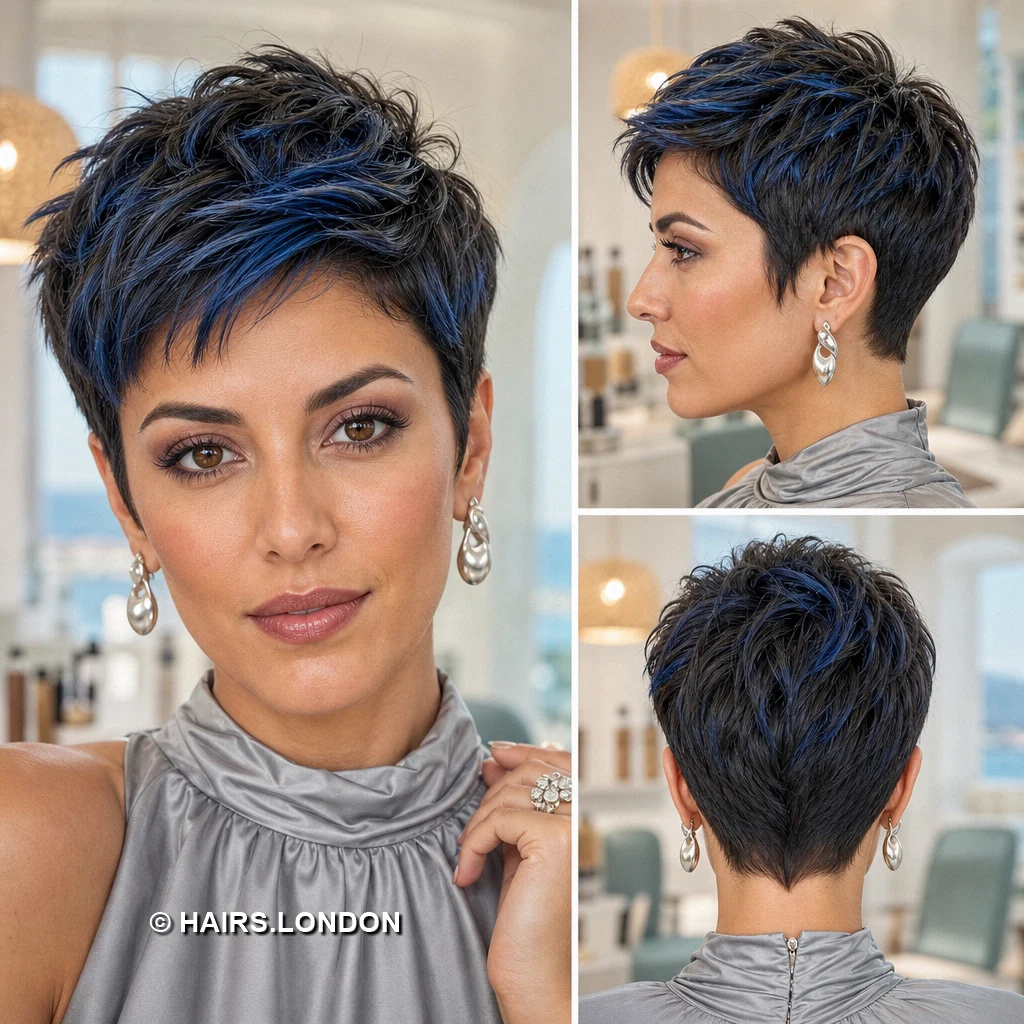
A silver front streak contrasts with the deep blue base. Longer hair lifts upward before curving over the forehead softly. The sides fit closely, creating a clear difference in length. Blue crown layers curl back into a neatly tapered nape. Silver strands remain visible through the upper rear crown section. Request careful placement so the lighter piece follows your styling. Lift damp front roots with a dryer for visible height. Smooth the silver section without pressing the crown completely flat. Ask about separate upkeep for the silver and blue tones. Keep the close sides trimmed to preserve their clean contrast.
17. Blue Pixie with a Feathered Teal Sweep
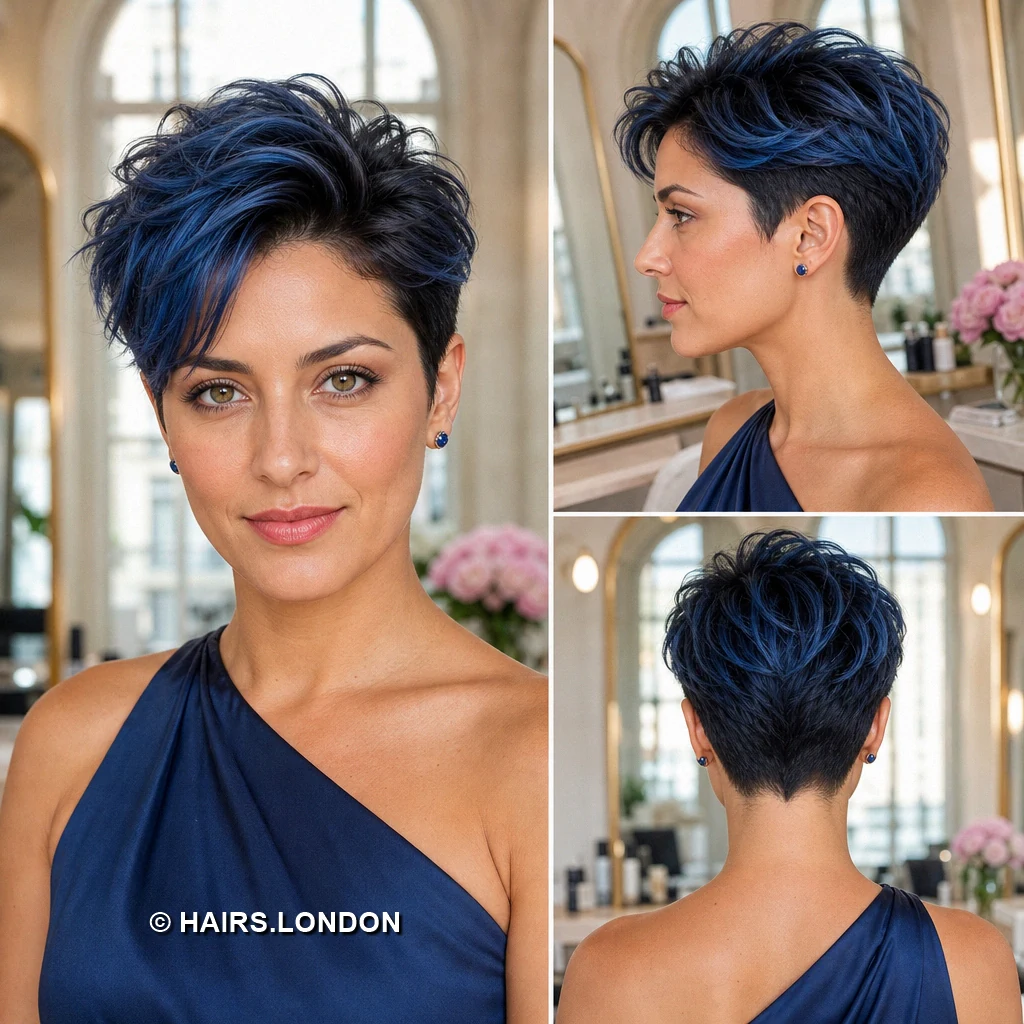
Cool teal and blue strands sweep across the longer front. Fine ends create a feathered fringe above the visible brow. The rounded crown carries soft texture instead of sharp spikes. Darker blue sides taper closely around the ears and nape. Teal highlights continue over the back of the crown. Ask for light ends if your hair tends to sit heavily. Dry the fringe sideways while directing the crown gently upward. Separate only a few strands for a softer finished shape. Discuss how much dark base should show beneath the teal. Trim the nape routinely while allowing the fringe some flexibility.
18. Textured Navy Pixie with Muted Teal Highlights
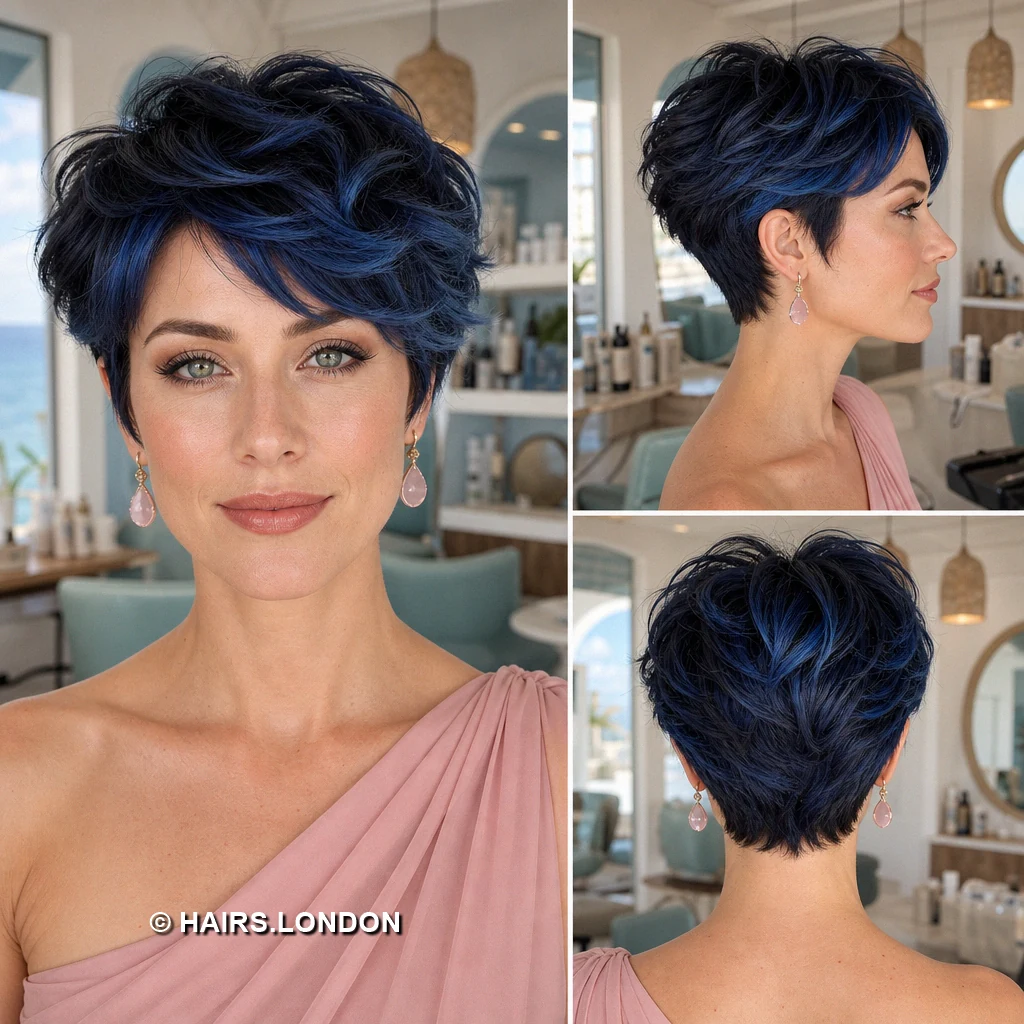
Muted teal strands brighten the lifted front of this navy pixie. The longer fringe sweeps away from the forehead in gentle curves. Short side sections sit neatly above the visible ear. Textured crown layers flow into a closely tapered, dark nape. Teal appears again across selected sections at the back. Request airy layering while preserving enough front length for movement. Dry against your usual part to build gentle root lift. Add styling cream to selected tips rather than every layer. Check whether your chosen teal needs lightening before color application. Keep the sides shaped as the longer crown grows out.
19. Spiky Blue Pixie with Turquoise Tips
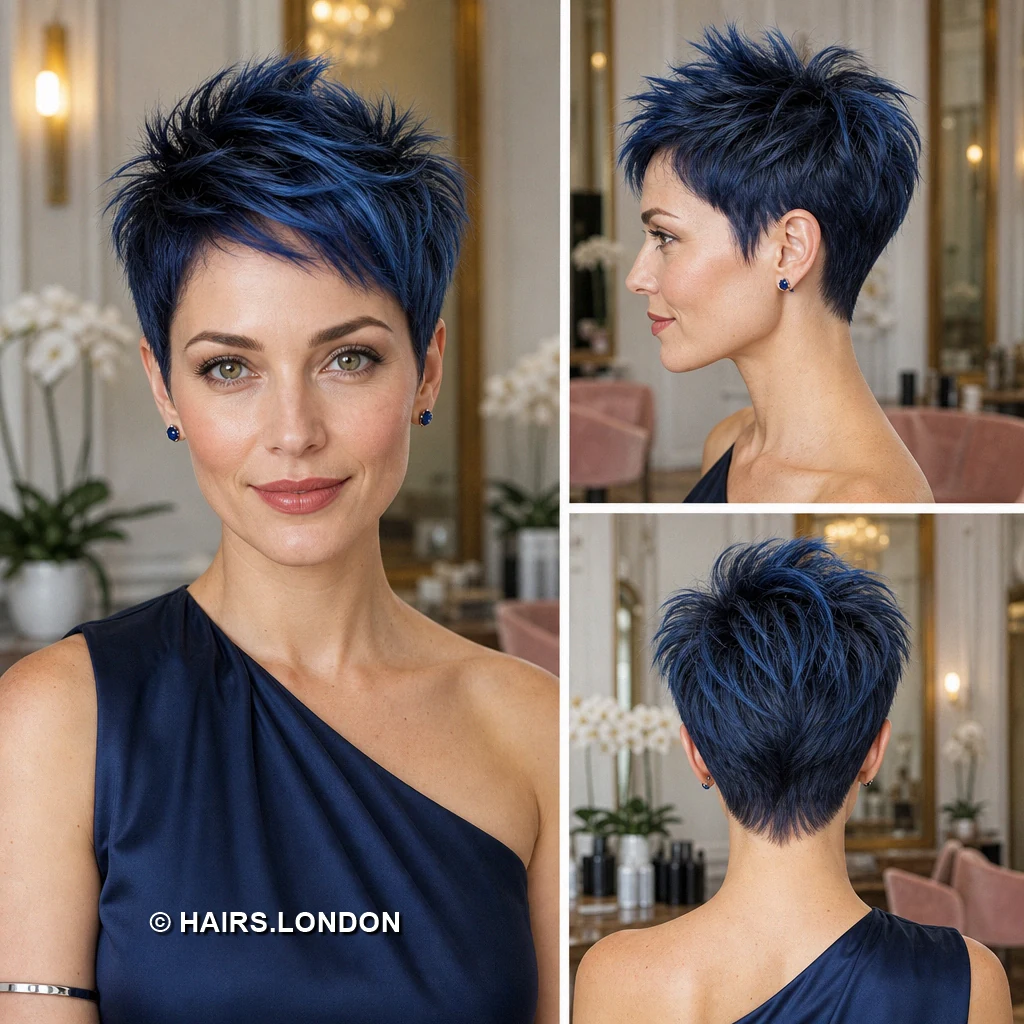
Bright turquoise tips flash against the rich blue, tousled crown. Short, angled fringe points sweep lightly across the upper forehead. The top rises into distinct pieces with plenty of separation. Compact sides blend downward into a neat, tapered dark nape. Brighter turquoise strands remain visible from front and rear. Ask for textured ends while keeping the sides closely and smoothly blended. Rub a little paste between fingers before lifting individual pieces. Avoid heavy conditioner near roots if volume falls quickly. Discuss whether turquoise should concentrate near the fringe or crown. Schedule trims before the spiky top loses its intended proportion.
How to Choose a Blue Pixie Haircut
Start with the shape, then choose the shade. A long, side-swept top offers more styling options and forehead coverage; a short, piecey fringe puts more emphasis on crown texture. Compare the side and back views as carefully as the front. Decide whether you want a close fit around the ears, a sharply defined nape, or a softer transition, and consider how often you are willing to have those areas trimmed.
Styling Different Hair Textures
For fine hair, lift damp roots with a light mousse and use minimal paste on the ends. Dense hair may benefit from internal texturing during the cut so the crown moves without becoming bulky. If your hair has a natural wave, let it shape the longer top, then define selected pieces with a small amount of cream. For straighter hair, dry the fringe in the direction you want it to sit before adding product. Use moderate heat and avoid repeatedly working color-treated ends.
Keeping Blue and Teal Color Fresh
The images pair bright surface color with darker sections underneath, so discuss which pieces actually need coloring before committing to an all-over shade. Ask your colorist what preparation your starting color requires and how they expect the chosen blue, teal, or silver accent to fade. Wash gently, follow the product guidance for your specific color, and limit unnecessary heat. Plan any color refresh around the pieces that show most prominently at the fringe and crown.
Maintaining the Short Pixie Shape
The nape and ear area will usually reveal growth before a longer top does. Book shape trims based on when those outlines stop looking intentional, rather than cutting every section back to the same length each time. If you are growing out a swept fringe, tell your stylist so they can tidy the sides and back while preserving useful front length. Bring a rear-view reference when a pointed or closely tapered neckline matters to you.
What to Discuss with Your Stylist
Show your stylist the front, side, and back views of the cut you prefer. Point out the fringe length, crown height, ear clearance, and nape shape separately; the same blue color can look quite different on another silhouette. Explain how you normally part and dry your hair, where it grows strongly, and how much daily styling feels realistic. For color, agree on the dark base, accent placement, expected upkeep, and a plan for refreshing faded sections.
Frequently Asked Questions
What makes a pixie look textured rather than smooth?
Separated layers, piecey ends, and directional styling make texture visible. A small amount of paste can emphasize individual strands without coating the whole cut.
Can I keep a longer fringe with a short nape?
Yes. Several pictured cuts combine a sweeping front with close sides and a tapered back. Tell your stylist which front length you want to preserve.
Will a side-swept pixie need daily styling?
It may need a quick reset, particularly if your hair naturally parts elsewhere. Directing damp roots and the fringe with a dryer usually matters more than adding lots of product.
How can I avoid a bulky pixie crown?
Ask your stylist to assess the weight inside the top while keeping enough surface length for your preferred shape. Avoid heavy styling products at the roots.
Are blue accents possible without coloring every strand?
Yes. Many of these looks show blue or teal pieces over a darker base. Discuss which sections will remain visible when you style your hair normally.
Where should teal highlights go on a pixie?
That depends on the effect you want. Fringe placement draws attention to the front, while crown placement becomes more visible in the side and back views.
How do I keep a short fringe from looking stiff?
Start with less product than you think you need. Shape a few dry strands with your fingertips and leave the rest soft.
What is the difference between a tapered and blunt nape?
A tapered nape gradually narrows into shorter hair, as shown throughout these images. A blunt nape ends in a more distinct, solid line.
Can wavy hair wear these pixie shapes?
Natural wave can give the longer crown movement. Ask your stylist to account for how your hair rises and settles before deciding on fringe and top lengths.
How often should I trim a pixie haircut?
Trim it when the fringe, ear area, or nape no longer sits the way you want. Closely fitted sections tend to show growth sooner than longer top layers.
Will silver accents need the same care as blue?
Not necessarily. The silver-and-blue look contains two visibly different tones, so ask your colorist for care and refresh guidance for each one.
What should I bring to a pixie consultation?
Bring front, side, and back references, plus a photo of your hair in its usual state. Identify the fringe, taper, and color placement you like in each image.
Conclusion
A successful blue pixie starts with proportions you enjoy wearing, whether that means a closely cropped fringe, an airy crown, or a longer sweep across the forehead. Choose the side and nape shape as deliberately as the front, then use blue or teal placement to bring out the layers you want noticed.