


11. Slate Blue Soft Pixie with Fine Fringe
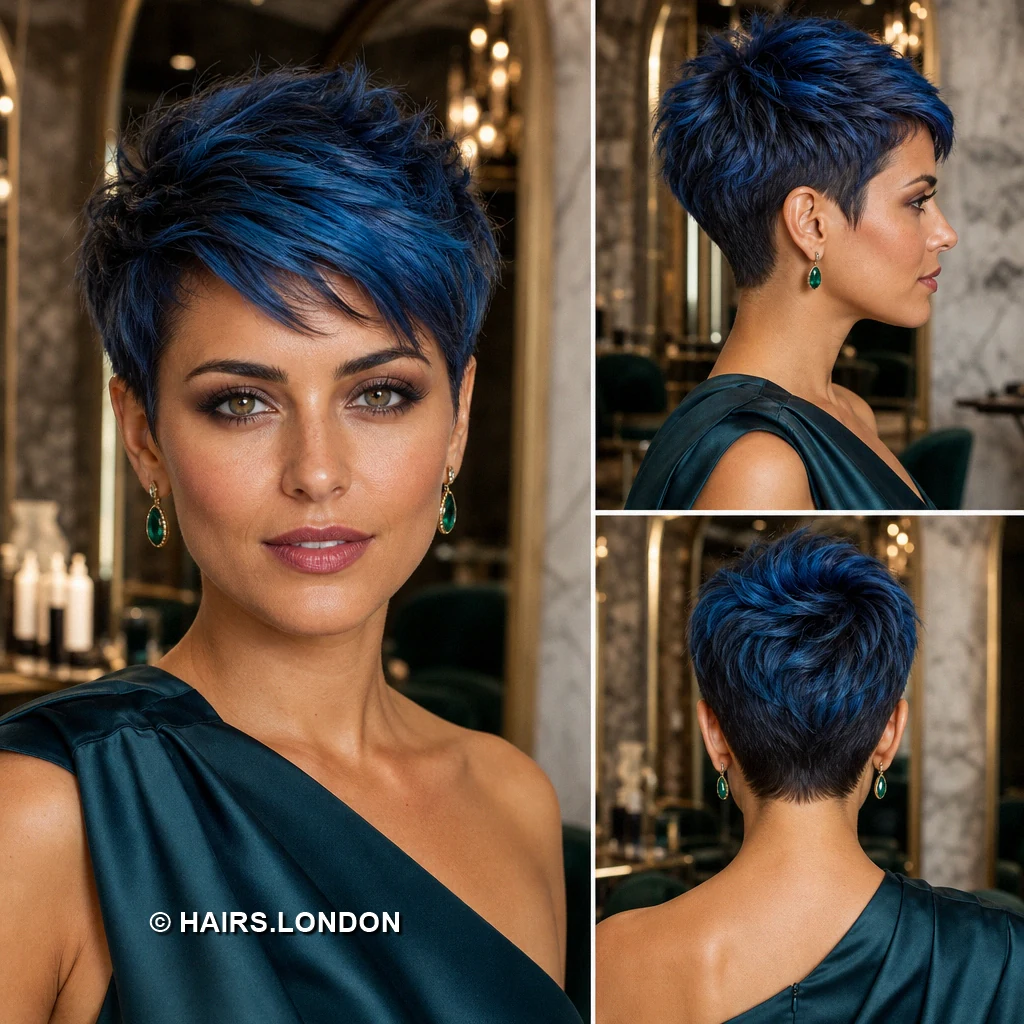
Slate blue threads soften a dark pixie with gentle dimension. The crown stays full but follows a relatively compact outline. Fine fringe strands angle across the forehead without heavy coverage. Short sides frame the ears with softly tapered edges. The back shows textured layers above a pointed neckline. Ask for light point cutting to avoid blunt fringe ends. Dry the hair forward, then guide the fringe diagonally. Use a small amount of cream for quiet separation. Blue highlights over dark hair still require careful color washing. Trim the fringe and nape as soon as they lose their neat original shape.
12. Blue and Silver Swept Pixie Quiff
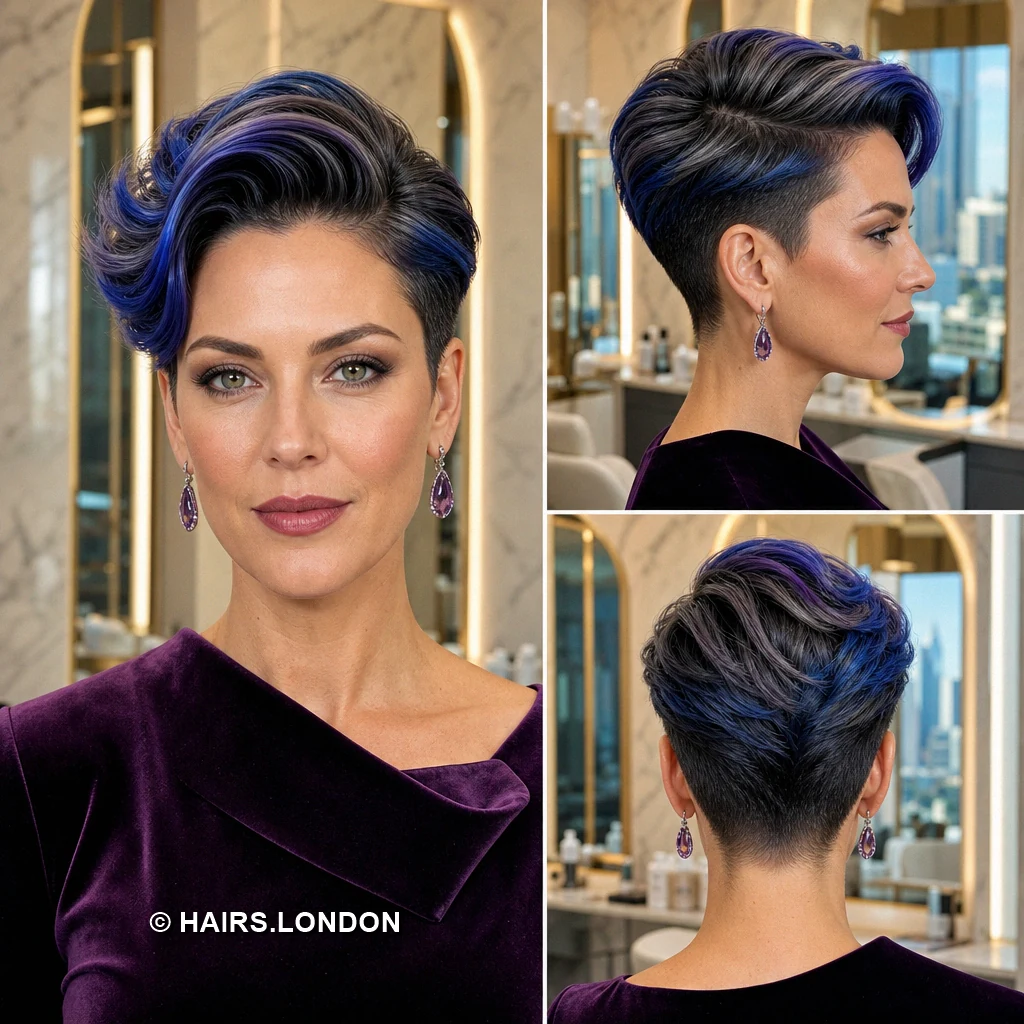
Silver ribbons contrast with cobalt blue through the sweeping top. The front rises gently before curving down toward one side. Fuller crown layers continue the curved movement toward the back. Shorter sides sit close around the ears and temples. A dark tapered nape gives the pale highlights definition. Ask your stylist to position silver pieces along visible curves. Dry the front upward, then sweep it over with fingers. Choose flexible hold so the rounded shape stays touchable. Ask about toning silver without dulling the accompanying blue. Regular trims prevent the close sides from overtaking the quiff as your hair grows.
13. Teal Blue Raised Pixie with Sculpted Front
Teal and blue strands rise from darker roots here. The front forms a tall, curved lift above the forehead. Short sides expose the ears while supporting generous top volume. Crown layers sweep backward with clearly separated, curved pieces. The back tapers down into a narrow pointed nape. Request sufficient front length to create this rounded height. Blow dry roots upward, then guide lengths gently backward. Work paste through your hands before defining the upper strands. Keep teal and blue vibrant with gentle, cooler washes. Trim the sides before they soften the lifted silhouette before they start growing over the ears.
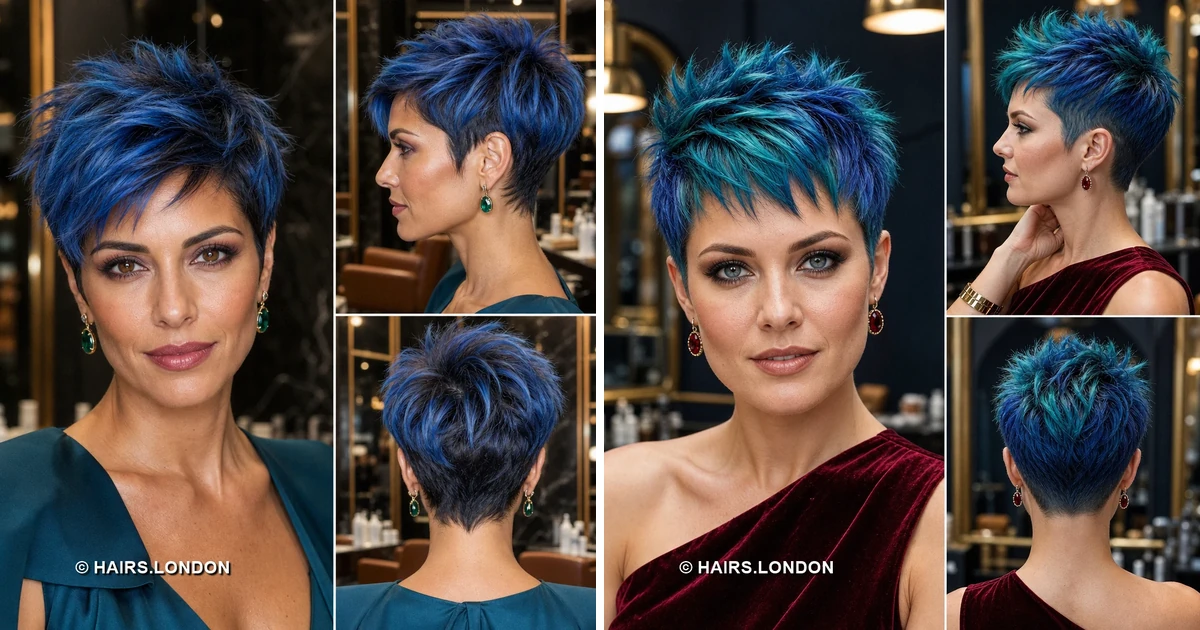
14. Turquoise and Cobalt Pixie with Side Fringe
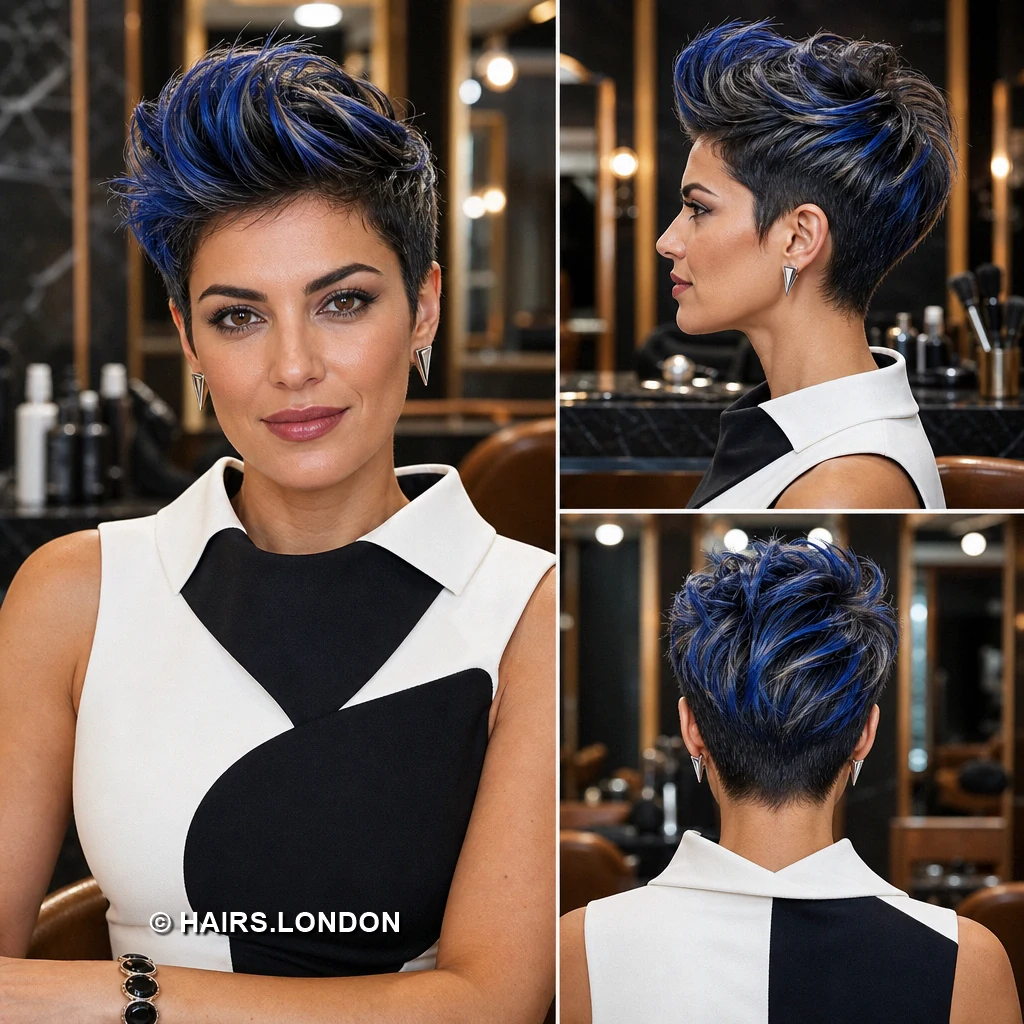
Turquoise and cobalt pieces mingle across a tousled crown. The fringe sweeps low across one side of the forehead. Shorter temple hair keeps the face open around both ears. Choppy upper layers create lift without forming a stiff quiff. A darker tapered back finishes in a defined point. Ask for varied layers that preserve fullness through the crown. Dry loosely with fingers to keep the surface irregular. Touch individual strands with paste rather than coating everything. Ask your colorist how separately placed blues will fade. Keep the neckline neat while allowing movement above it and leaving the crown slightly tousled.
15. Teal Cobalt Spiked Pixie
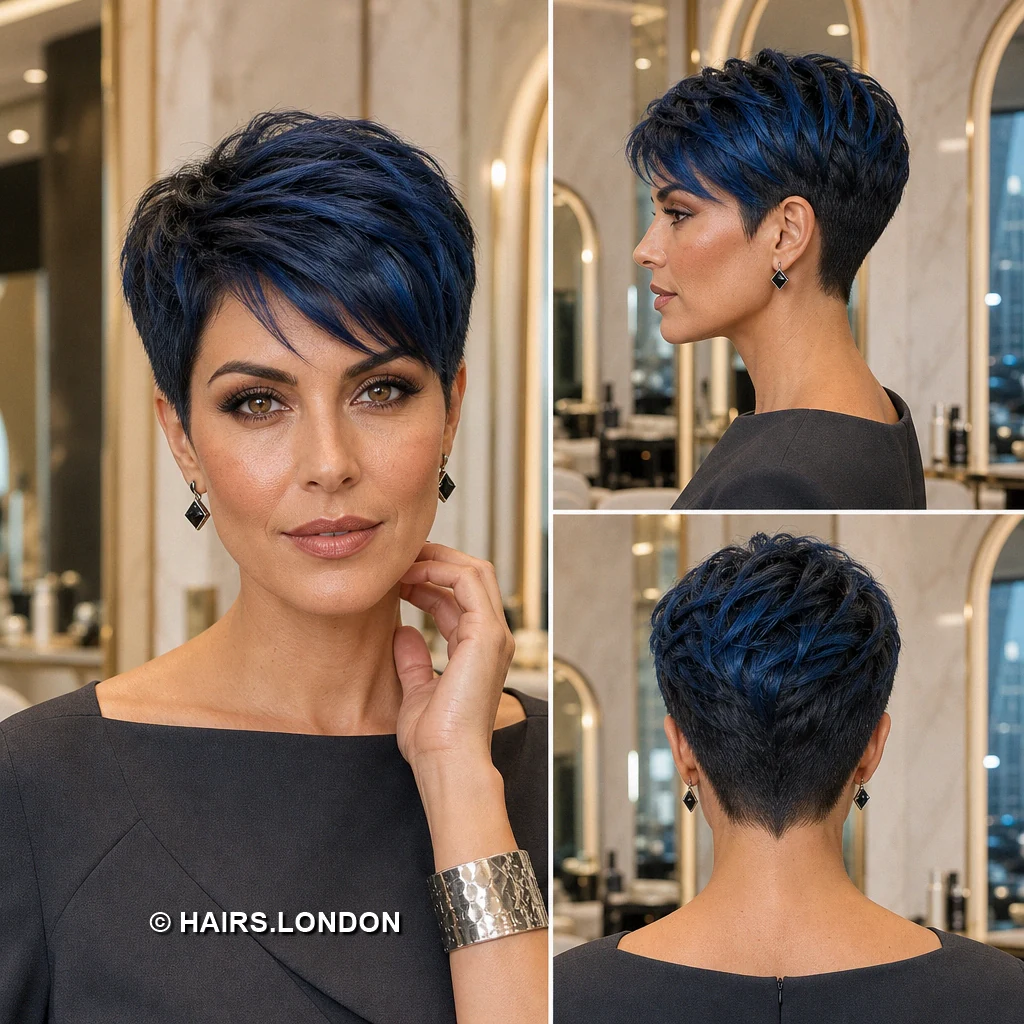
Teal and cobalt highlights sharpen this tall, textured pixie. Short fringe strands lift away instead of covering the forehead. The crown forms separated peaks with a fuller central silhouette. Closely cut sides reveal the ears beneath the raised top. Dark nape hair tapers down to a narrow point. Ask for piecey layers that can stand with light product. Dry upward from the roots, using fingers for direction. Add firm but flexible paste only to selected tips. Bright teal sections need careful washing to limit uneven fading. Maintain the short sides to keep the height prominent and both ears clearly visible.
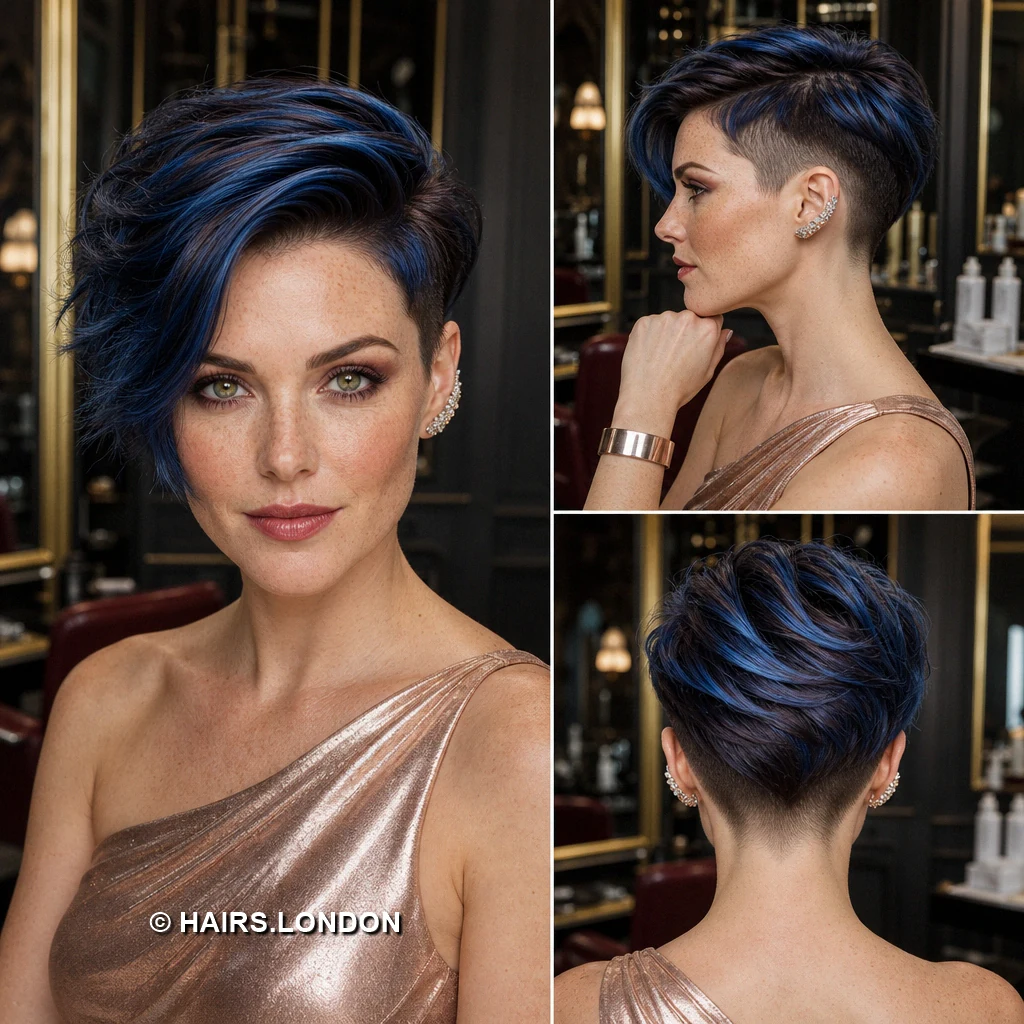
16. Blue Pixie with Sweeping Silver Ribbons
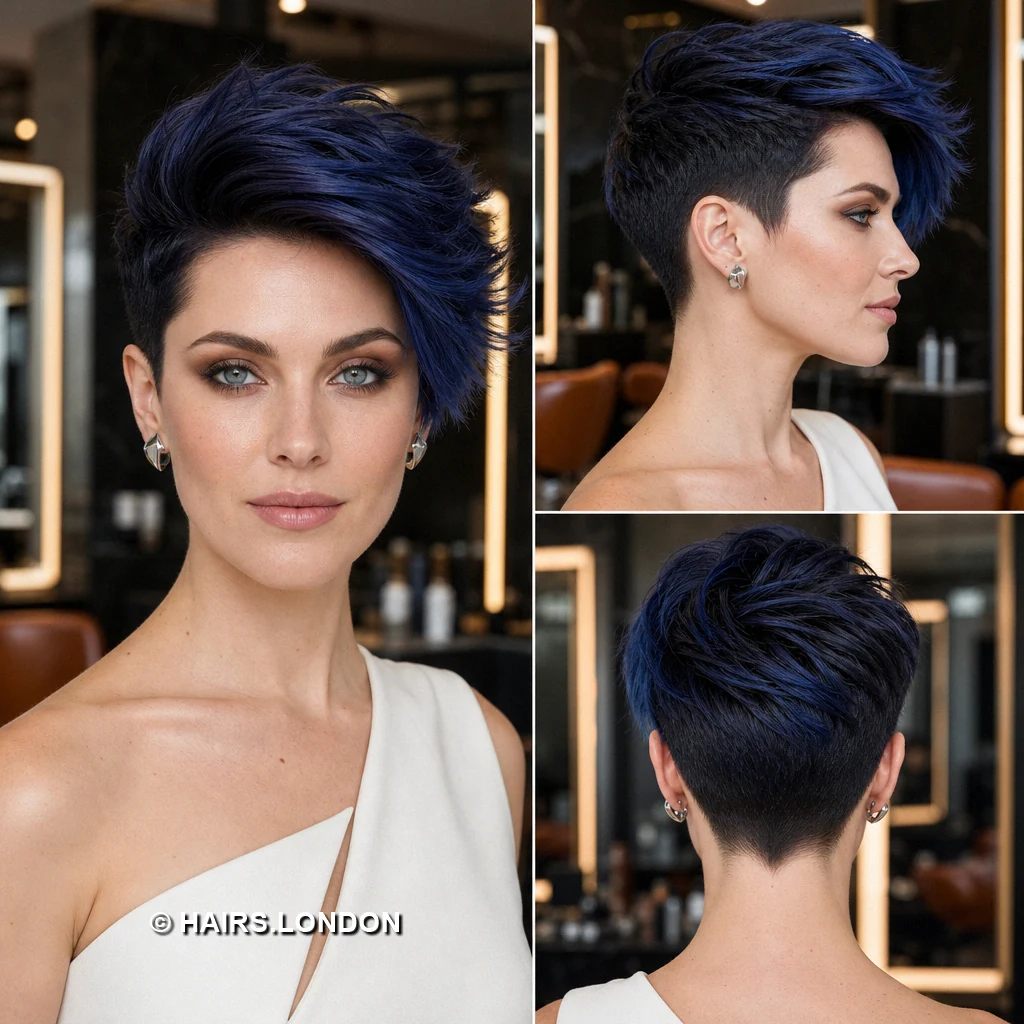
Wide silver ribbons sweep through a deep blue top. The long front curves across the forehead toward one eye. Crown layers fan backward, showing blue beneath lighter strands. Short sides frame the ears and contrast with overhead volume. The back narrows into a clean, dark tapered neckline. Ask for highlight placement that follows the intended sweeping direction. Dry the fringe sideways while lifting its roots gently. Use smoothing cream sparingly to retain visible strand separation. Discuss silver toning and blue refreshes as separate services. Trim the nape regularly while keeping enough length overhead to maintain the smooth, sweeping front curve.
17. Bright Teal and Blue Piecey Pixie
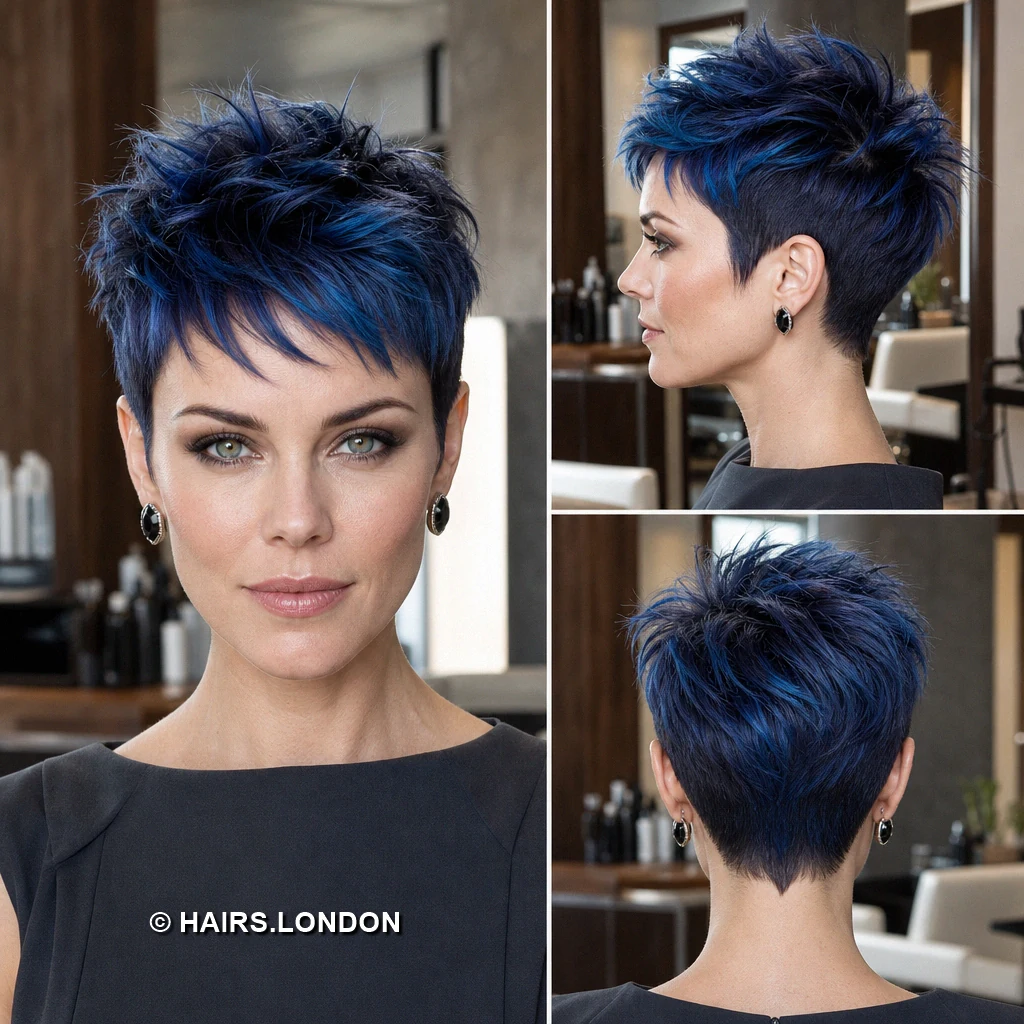
Bright teal and blue strands enliven this piecey pixie. The fringe falls forward in narrow, uneven sections. Short crown layers lift into scattered points and tufts. Tapered sides expose the ears beneath the vivid upper hair. Darker blue at the back narrows into a neat nape. Ask for short textured layers rather than uniformly cropped hair. Dry forward, then lift selected crown pieces with fingertips. Apply minimal paste to preserve the airy, separated finish. Cleanse gently to help the different blues fade evenly. Arrange trims when the fringe and crown lose their definition or start feeling too heavy and flat.
How to Choose a Blue Pixie Haircut
Start with the front shape you would enjoy wearing daily. A fine fringe can sit close to the forehead, while a longer asymmetric sweep needs more drying and shaping. Then compare the side and back views: closely cropped sides create stronger contrast, whereas softly blended sides make the cut feel more even. If you want height, keep enough length through the front and crown to lift it. Use the images to point out exactly where you want fullness, how much ear coverage you prefer and whether you like a pointed or softly tapered nape.
Styling Blue Pixies on Different Textures
On fine hair, lift the roots while drying and use a small amount of lightweight paste so the top does not collapse. Dense hair may need weight removed from the interior to let a fringe sweep or a quiff bend cleanly. If your hair has a natural wave, work with its direction and define selected pieces with cream rather than trying to make every strand identical. For curls or strong growth patterns, ask your stylist to adjust the fringe and crown lengths to how your hair settles when dry.
Keeping Blue Pixie Color Fresh
The images include dark roots, vivid cobalt, teal, violet accents and silver ribbons, so upkeep will depend on the shades and placement you choose. Ask your colorist how your proposed blue is likely to fade on your starting hair color. Wash with a color-friendly cleanser, use cooler water when practical and avoid unnecessary heat. Silver sections may need a different toning plan from blue or teal sections. Arrange color refreshes around the areas that fade first rather than assuming every piece needs the same treatment.
Maintaining the Pixie Shape
Short sides and napes show growth sooner than a longer crown. Book trims when the outline around your ears or neckline starts to lose its shape, and explain which top sections you are growing or preserving. A tidy-up need not remove the length that makes an asymmetric fringe or lifted quiff work. At home, dry the fringe in its intended direction before it sets, then use only enough product to define the cut.
What to Discuss with Your Stylist
Bring the front, side and back views of the cut you prefer. Identify the fringe length, crown height, side closeness and nape shape separately; those details make a more useful brief than asking for a blue pixie alone. Discuss your natural texture, growth patterns, daily styling time and how frequently you can return for trims. Before coloring, agree on where the blue will sit, whether darker roots will remain visible and what maintenance the chosen shades will require.
Frequently Asked Questions
What is the easiest blue pixie shape to style?
A softly layered pixie with a short side fringe generally needs less shaping than a tall quiff or long asymmetric sweep. Dry the fringe in its chosen direction and define a few ends.
Which pixie works if I want hair off my forehead?
Choose a lifted quiff or raised, piecey top. Tell your stylist you want the front long enough to lift but not designed to fall forward.
Can a blue pixie have a long fringe?
Yes. Several cuts shown keep a longer section that sweeps across the forehead, paired with shorter sides and a tapered back.
Do I need closely cropped sides for this look?
No. Close sides emphasize contrast, but softly blended sides also work with a textured blue crown and fine fringe.
How do I keep a quiff from looking stiff?
Build lift while blow-drying, then use a small amount of flexible product. Separate selected strands instead of coating or pressing down the whole top.
What should I ask for if I like a pointed nape?
Show your stylist the back view and ask for a tapered neckline that narrows to a visible point. Discuss how sharp or soft you want its outline.
Will blue highlights show over dark roots?
They are clearly visible in these images when placed through the top and fringe. Ask your colorist what preparation your starting color needs for the blue you want.
Can I combine blue with teal or violet?
Yes. The images show both combinations. Decide where each shade should appear, and ask how the colors may look as they fade.
How do silver ribbons affect color maintenance?
Silver may need its own toning plan alongside blue upkeep. Discuss both shades with your colorist before choosing wide, prominent ribbons.
How often should I trim a blue pixie?
Trim when the sides, fringe or nape stop holding the shape you chose. Closely cropped sections may need attention sooner than a longer top.
What styling product suits a piecey pixie?
Start with a small amount of paste or cream. Work it through your hands, then define individual tips so the texture remains visible.
What should I bring to a salon consultation?
Bring the image showing your preferred front, side and back shape. Explain which details matter most and how much daily styling and color upkeep you can manage.
Conclusion
The most useful distinction between these blue pixie haircuts is not just the shade: it is where the length sits. Choose the fringe, crown, sides and nape you want first, then plan the cobalt, navy, teal or silver placement with your colorist. A cut that suits your natural texture and styling routine will make those details easier to enjoy between appointments.