


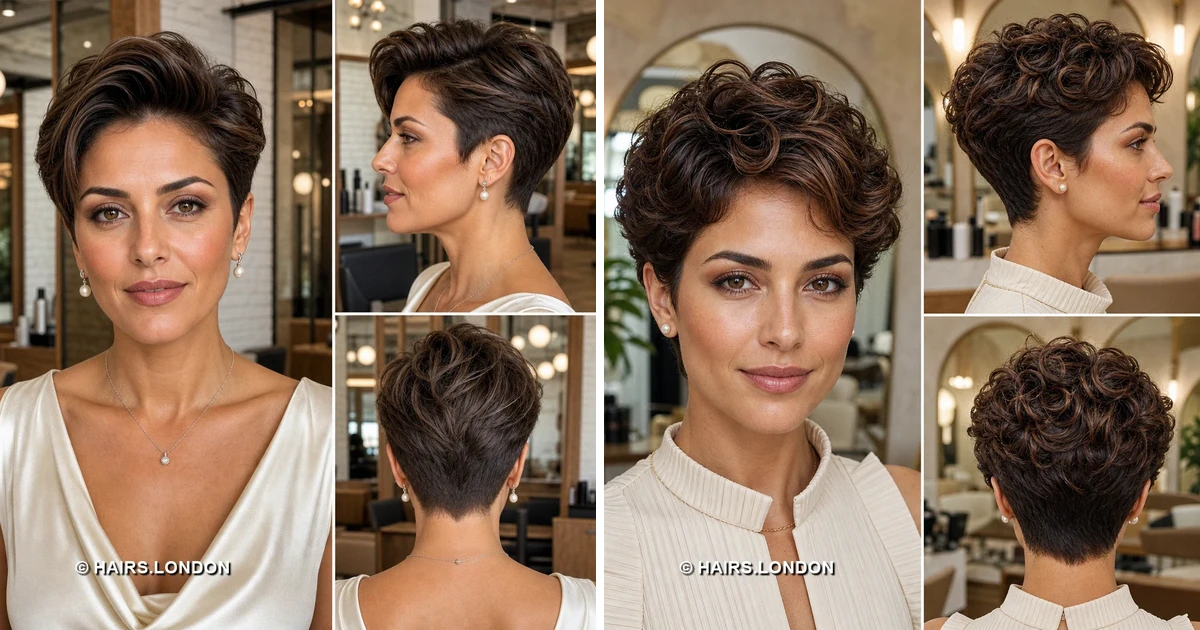
11. Feathered Brunette Pixie with Caramel Pieces
Caramel pieces brighten the feathered surface of this brunette pixie. Its short fringe falls forward in fine, uneven sections. Longer layers sweep loosely across the top and rounded crown. The sides tuck close around the ears, without sharp lines. At the back, soft layers taper toward a narrow neckline. Ask for selective texture that keeps the highlighted sections visible. Leave small differences in length through the fringe for movement. Finger dry the top, lifting strands from their natural direction. Add a small dab of paste to emphasize individual caramel pieces. Maintain the soft perimeter before the nape becomes noticeably heavy.
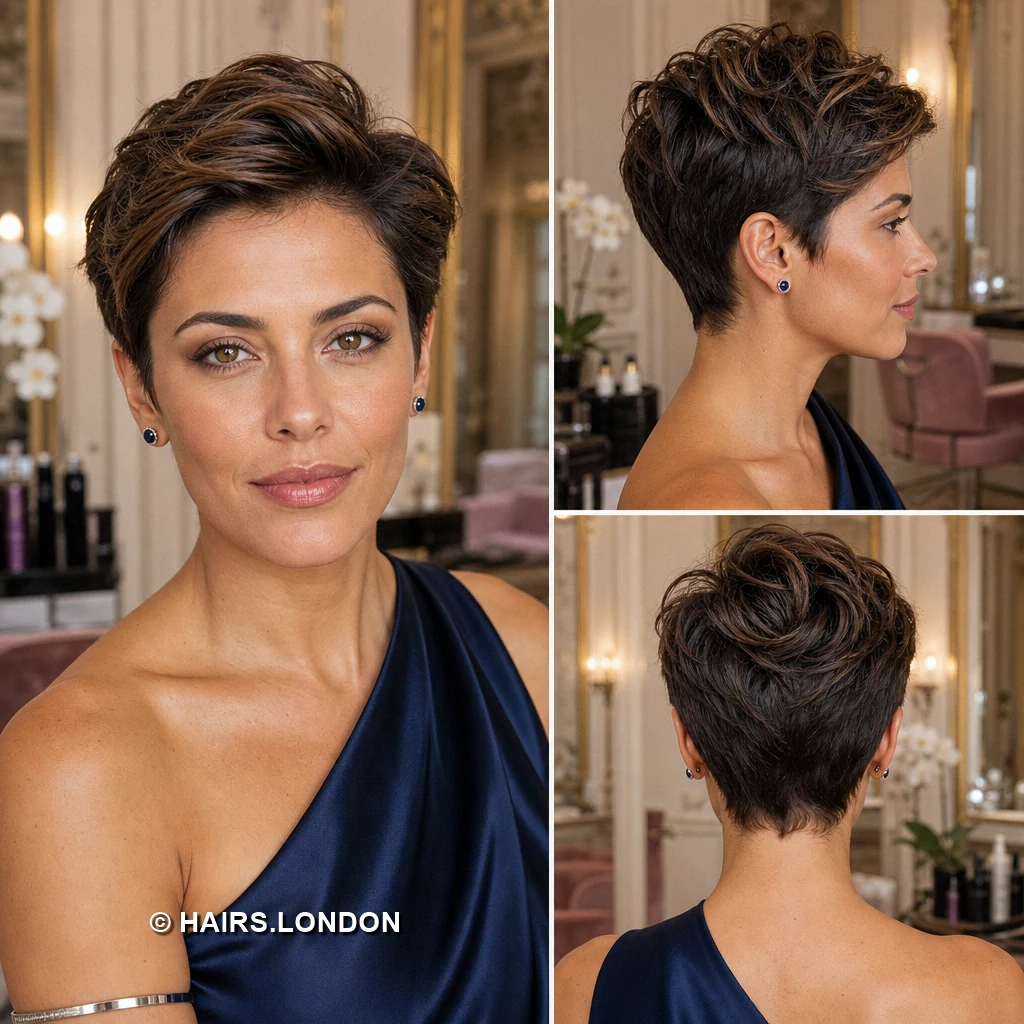
12. Layered Brown Pixie with a Sweeping Top
Warm caramel tones follow the sweeping layers across this pixie. A long front section curves sideways above the eyebrow area. The crown looks full, with clearly separated, overlapping upper strands. Sides are cropped closer, keeping the shape slim beside ears. The back tapers neatly beneath the thicker, rounded upper section. Ask for graduated layers that support volume without creating shelves. Keep front pieces long enough to move naturally across forehead. Direct a dryer along the sweep for a smooth finish. Use light cream to define strands while preserving their softness. Check the nape between appointments for growth that changes balance.
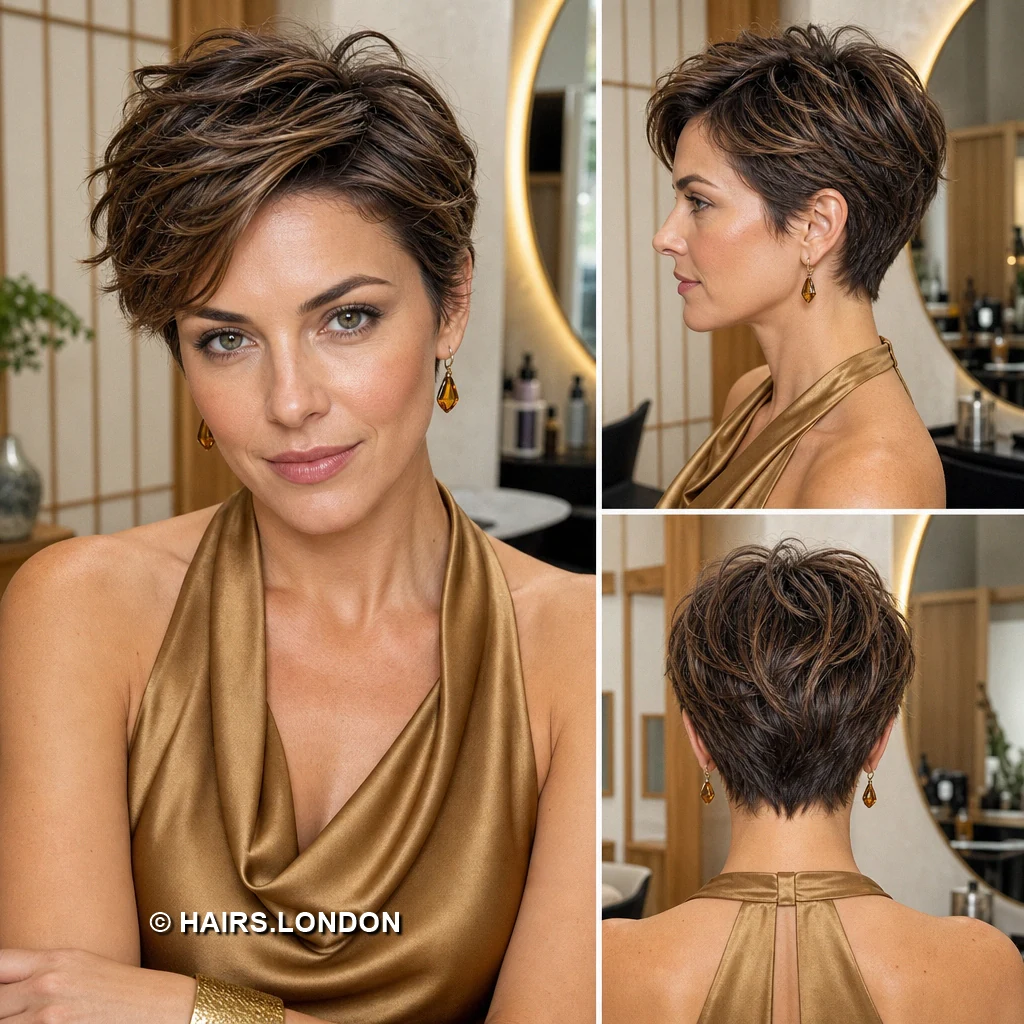
13. Long-Fringed Brunette Pixie with Soft Volume
A long diagonal fringe defines this softly voluminous brunette pixie. It reaches across the forehead, nearly meeting one eyebrow. The crown stays rounded, with loose strands lifting above it. Shorter sides provide contrast while leaving the ears mostly uncovered. Fine tapering at the back keeps the neckline understated. Ask for a connected transition between fringe and upper layers. Keep enough weight in front for the fringe to sweep. Blow dry from the roots, guiding the longer section sideways. A small amount of flexible paste controls flyaways without flattening. Trim the fringe and nape separately if they grow at different rates.
14. Lifted Brunette Pixie with Tucked Sides
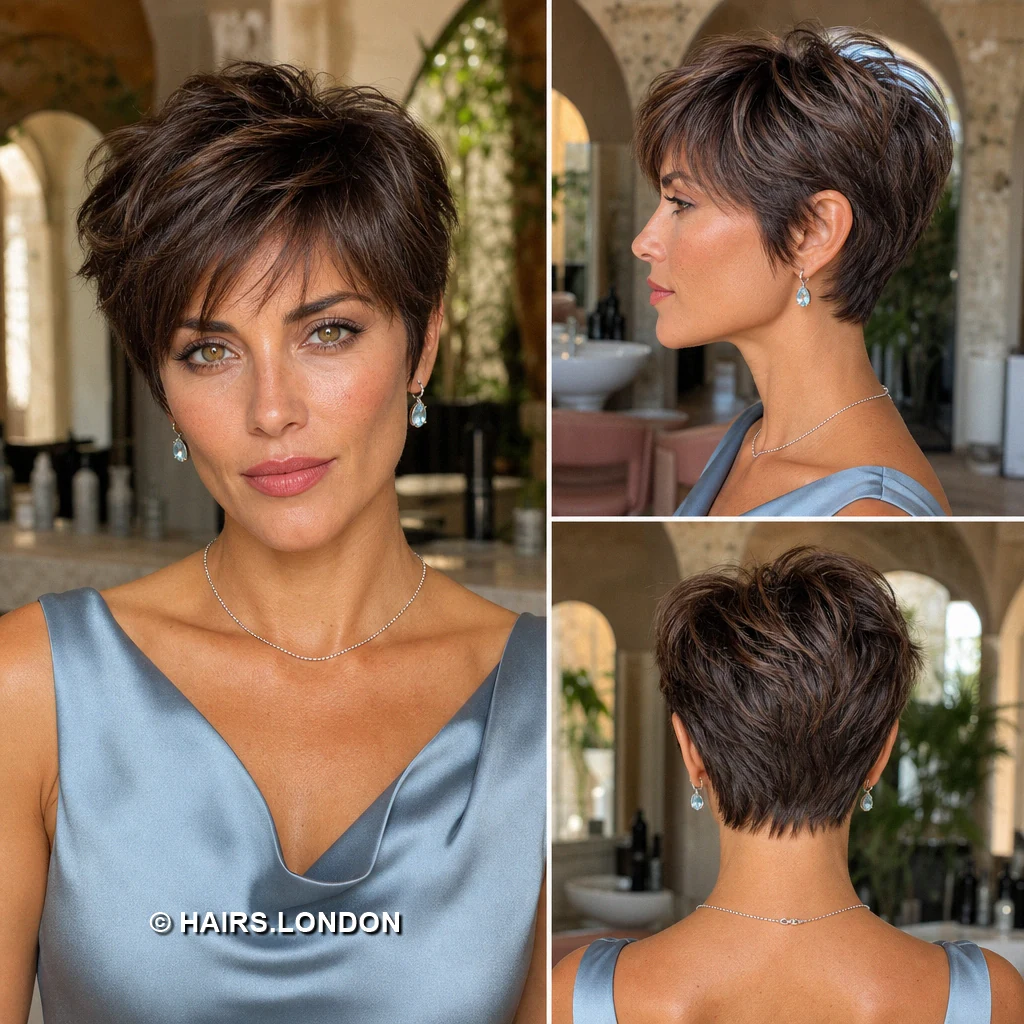
The lifted top gives this brunette pixie a sculpted outline. Swept strands rise from the forehead into a textured crown. Its front stays open, with only wisps nearing the hairline. Close sides tuck neatly behind the visible ears. The rear layers graduate down into a short, tapered nape. Ask your stylist for lift that follows your natural growth. Leave the upper layers long enough to bend and separate. Dry upward at the roots before sweeping the strands back. Finish with a lightweight, flexible hold, concentrating product away from the sides. Keep the neckline trimmed so the elevated top remains balanced.
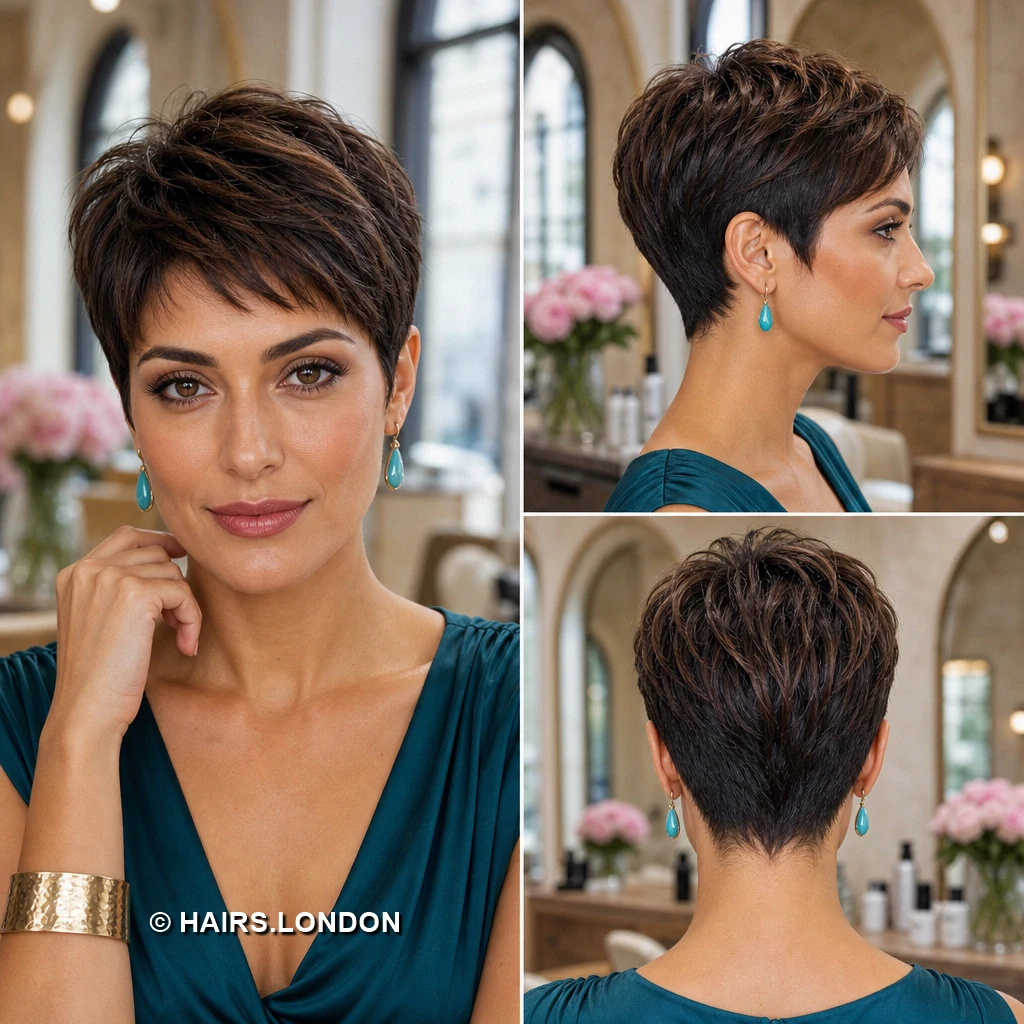
15. Choppy Brown Pixie with a Fine Fringe
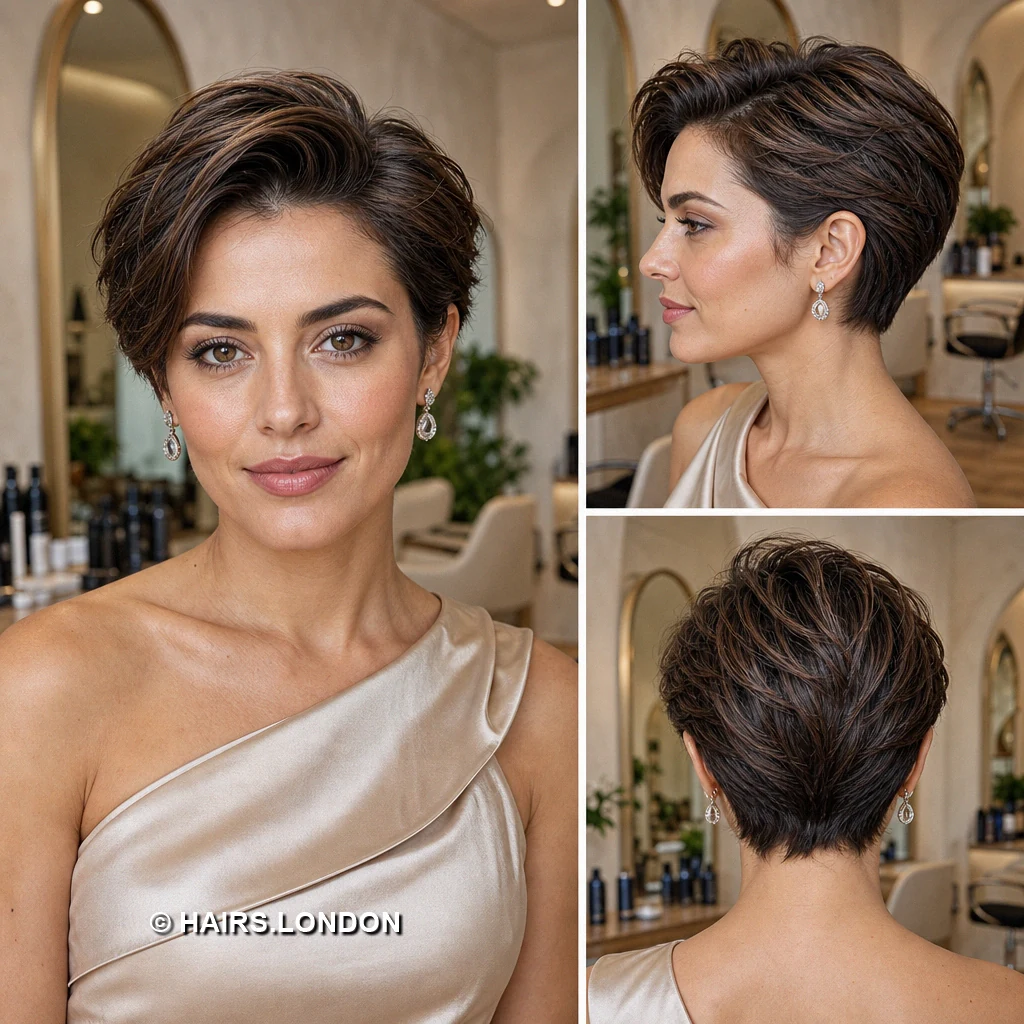
Choppy brown layers give this compact pixie an upright texture. Fine fringe pieces fall forward above the eyebrows. The crown is fuller, with short ends pointing in varied directions. Close sides follow the temples and leave the ears exposed. The nape finishes neatly, tapering inward beneath the textured back. Ask for point cutting that creates separation without excessive thinning. Keep a little length on top for easy fingertip styling. Rough dry upward, then arrange the fringe into smaller sections. Use a tiny amount of matte paste on dry ends. Regular salon trims keep the short sides distinct from the crown.
16. Soft Brunette Pixie with Side-Directed Layers
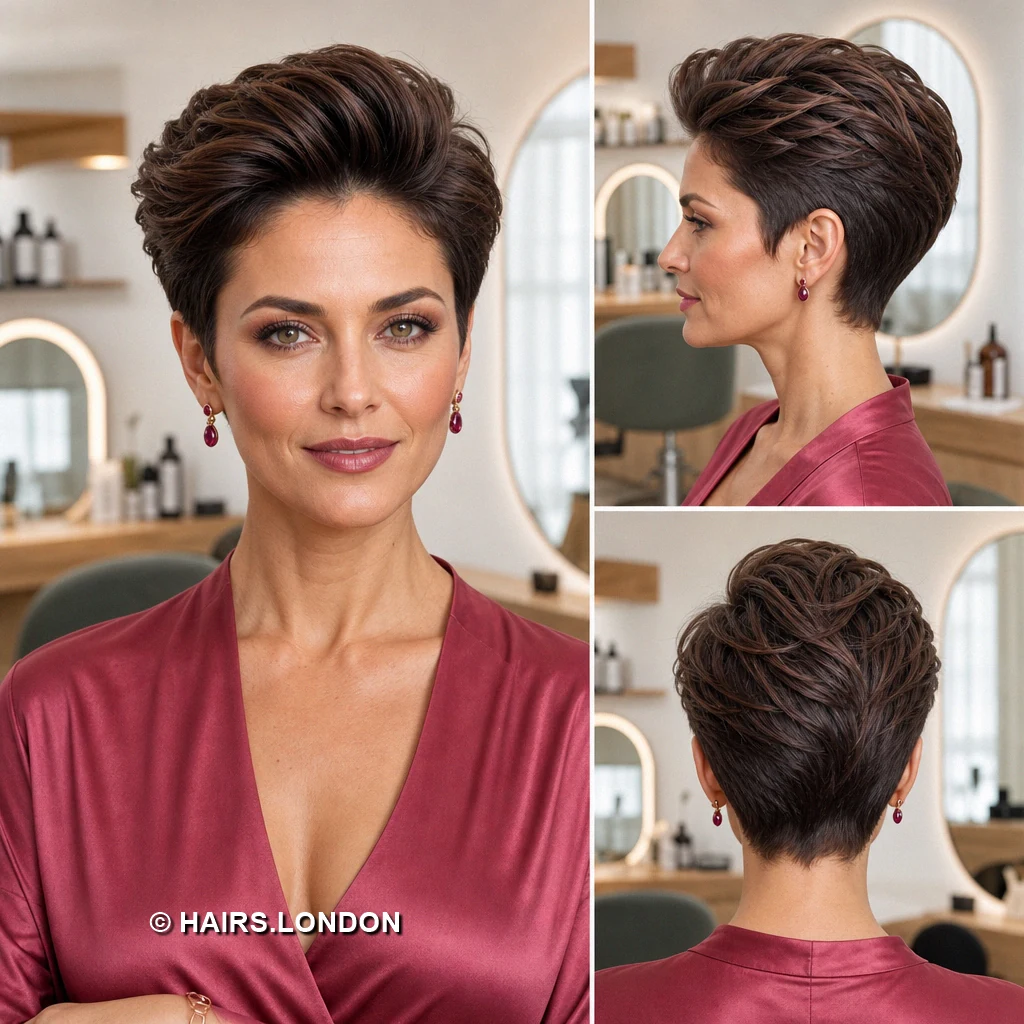
Smooth brunette layers travel sideways across this softly rounded pixie. A fine fringe bends across the forehead in separated strands. The crown has moderate height, with gentle rather than dramatic texture. Cropped sides frame the ears and flow into the back. A tapered nape completes the compact shape below fuller layers. Request connected layering that lets the top move without gaps. Direct damp strands sideways using fingers and gentle dryer airflow. Add lightweight cream if the fringe needs a smoother finish. Avoid coating the roots, where product could reduce natural lift. Maintain the nape before it outgrows the rounded silhouette.
17. Airy Brunette Pixie with a Broken Fringe
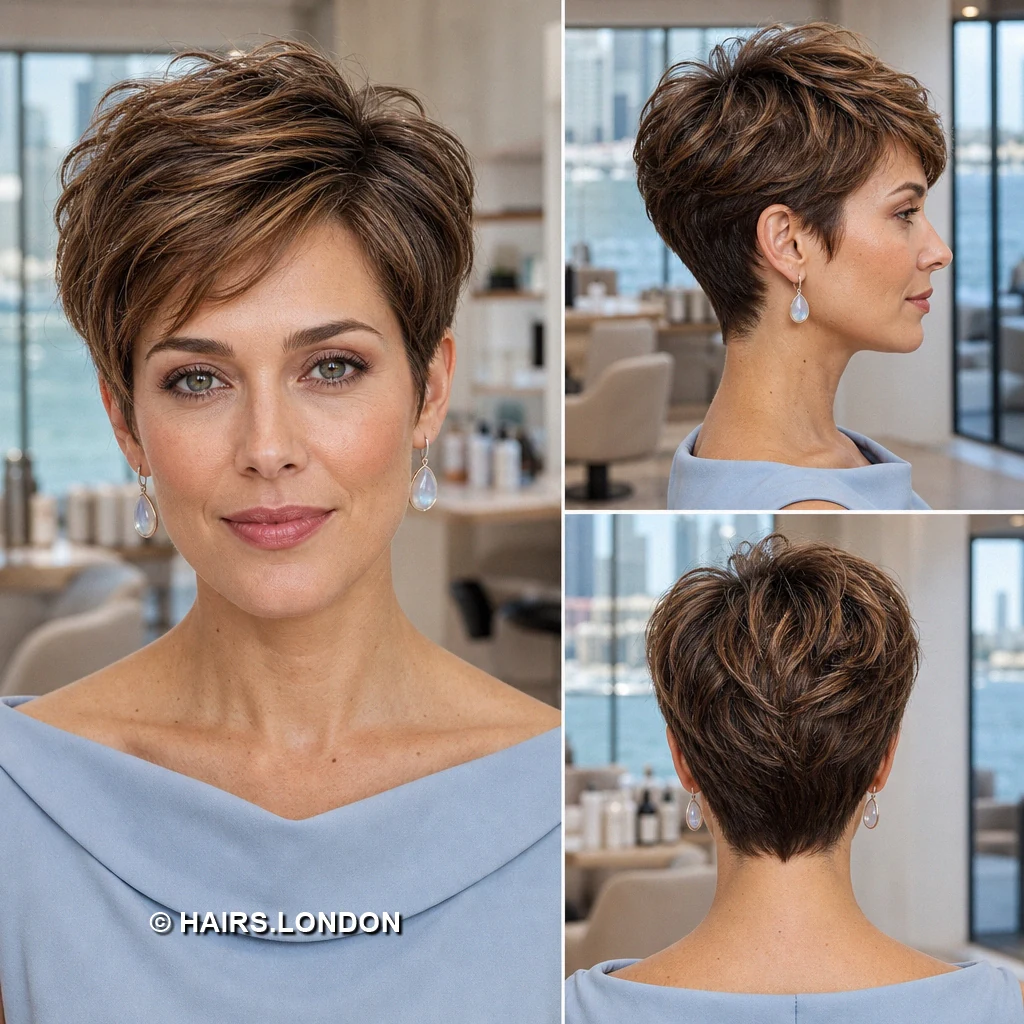
Airy brunette layers build height across this lively pixie crown. The short fringe breaks into wisps above the eyebrow line. Longer upper pieces bend in different directions without looking rigid. Close sides reveal the ears and emphasize the lifted top. Short tapered ends form a narrow, softly textured nape. Ask for varied upper lengths to support this loose separation. Work mousse through damp roots before drying with your fingers. Redirect a few crown pieces while the hair remains warm. Finish with minimal paste, defining ends instead of coating everything. Refresh the closely cut perimeter when it starts losing its shape.
18. Feathered Brown Pixie with Curved Fringe
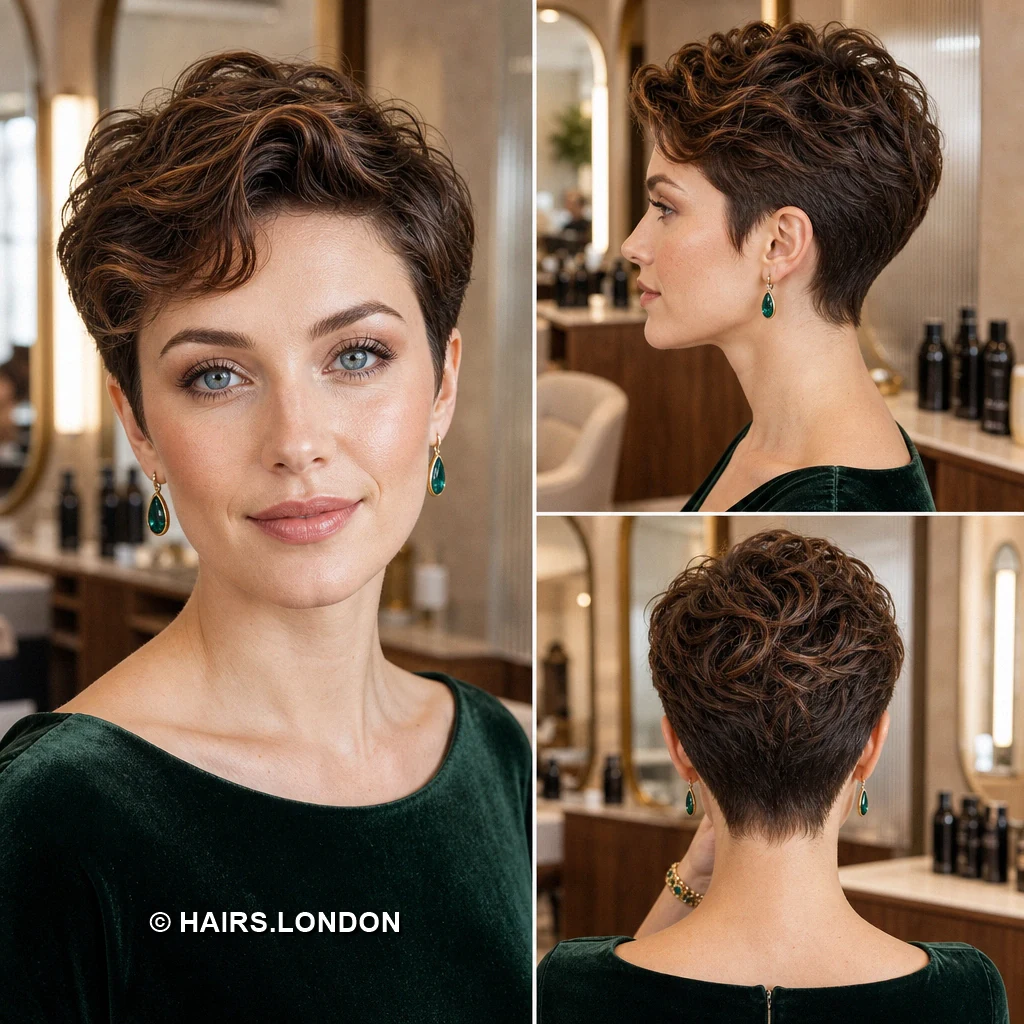
This brown pixie pairs a curved fringe with feathered layers. Wisps cross the forehead while leaving both eyes completely clear. The crown looks softly full, with individual strands visibly separated. Short sides sit close around the ears without severe lines. Behind, the hair tapers into a small, pointed neckline. Ask for light texture through the top, not heavy thinning. Keep front pieces long enough to curve rather than spike. Finger dry the fringe forward, then ease it sideways gently. Smooth selected ends with cream for flexible, natural looking definition. Trim the nape regularly to preserve its tidy, softly pointed finish.
19. Rounded Brunette Pixie with Defined Curls
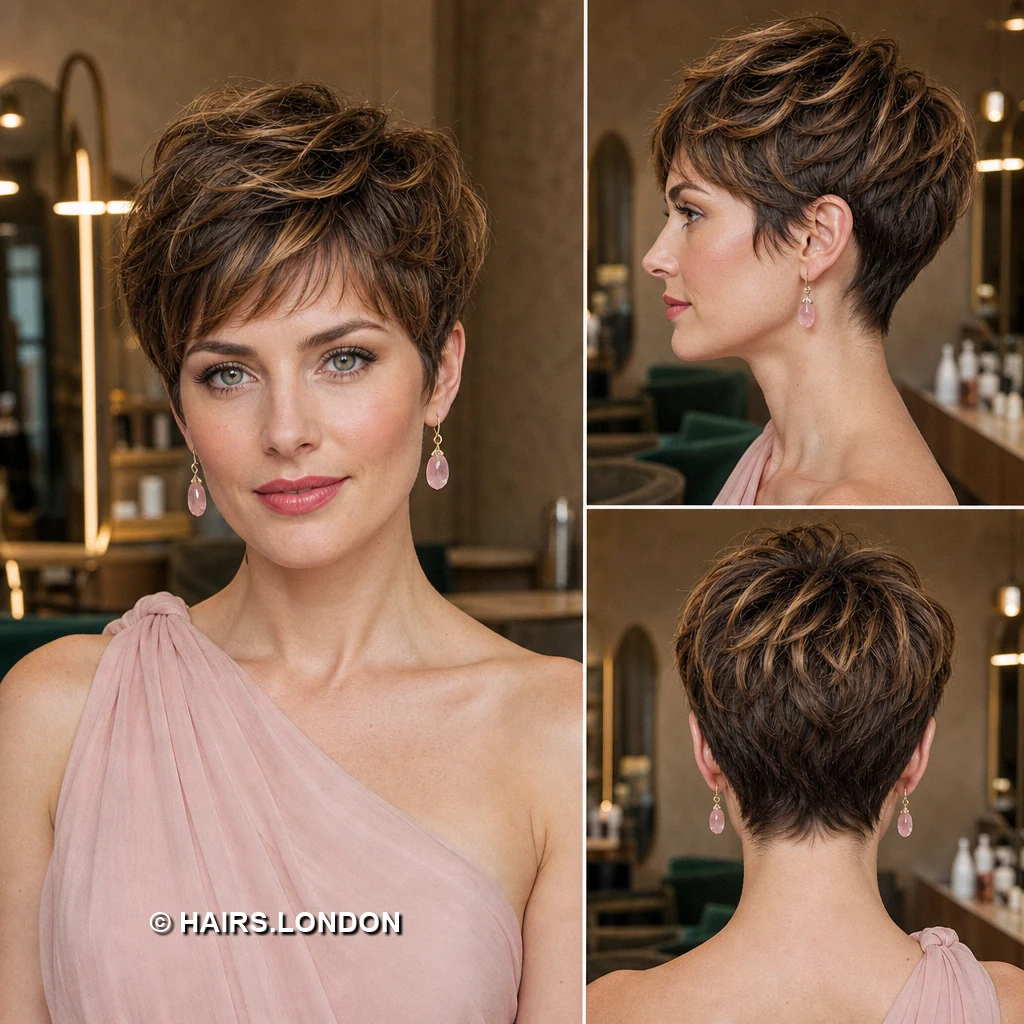
Defined brunette curls create a full, rounded crown and front. Short curled pieces sit just above the forehead. The top carries most of the volume, with visible separation. Sides are cut closer, exposing the ears beneath curls. A tapered nape narrows the silhouette from the back. Keep the upper layers noticeably longer. Ask for upper length that accommodates the curls when dry. Discuss shrinkage before deciding exactly where the fringe should fall. Apply curl cream to damp hair, then diffuse gently. Separate curls sparingly to preserve their rounded, springy shape. Trim the tapered base while protecting length across the crown.
How to Choose a Brunette Pixie Haircut
Start with the front view: decide whether you prefer an open forehead, a short wispy fringe, or a longer diagonal sweep. Then check the profile and back. A close taper makes the crown look fuller, while a softer nape creates a less sharply defined finish. Choose upper length according to how your hair bends or curls when dry, not just how it looks pulled straight.
Styling Pixies Across Different Textures
For straighter hair, apply lightweight mousse at the roots and blow dry in the direction you want the fringe to sit; lift against the roots first if you want height. For wavy hair, finger dry and use a little cream or paste to separate bends. For curls, distribute curl cream through damp hair and diffuse gently. Start with less product than you think you need: short layers can look coated quickly.
Keeping Brunette Color Fresh
Several cuts show lighter brown or caramel pieces against darker bases. If you choose that contrast, ask where the lighter strands will be placed so they remain visible in your usual parting and styling direction. Use color-safe cleansing products, limit unnecessary heat, and discuss a gloss or color refresh when the tone begins to look dull. How often you need color work depends on the technique and visible regrowth.
Maintaining the Pixie Shape
The sides and nape usually reveal growth before the textured top does. Check whether hair is beginning to cover the ears, widen at the temples, or lose its tapered neckline. You may want a perimeter tidy before you need much length removed from the crown. Bring reference views of both the front and back to each appointment so the original balance stays clear.
What to Discuss with Your Stylist
Show the exact image you like and identify its defining feature: curl volume, fringe length, crown lift, close sides, or pointed nape. Ask how that feature will behave with your natural texture, density, growth patterns, and preferred drying routine. Agree on how much ear coverage and neckline taper you want, and request a styling demonstration using an amount of product you would realistically use at home.
Frequently Asked Questions
What distinguishes a pixie with a long fringe from a short-fringed pixie?
A long fringe can sweep across the forehead and offers more styling direction. A short fringe stays closer to the hairline and generally keeps the front more compact.
Can naturally curly hair suit a tapered pixie?
Yes. Keeping more length on top allows curls to form, while a closer taper controls the sides and nape. Discuss curl shrinkage before cutting the fringe.
How can I add height to a brunette pixie?
Apply a lightweight root product to damp hair, dry the front upward, and shape it while warm. Use flexible hold rather than heavy product that weighs the top down.
Which of these cuts has the most compact outline?
The short-fringed, close-sided styles have the most compact outlines. Compare images 5 and 15 with the fuller curled tops in images 1 and 19.
Will a side-swept fringe need daily styling?
It may need brief redirection after washing or sleeping, especially if your hair naturally falls the other way. A dryer and your fingers may be enough.
How do I keep a textured pixie from looking stiff?
Start with a very small amount of flexible cream or paste. Work it through selected ends rather than spreading a firm-hold product over the entire top.
Should the sides and top always be trimmed together?
Not necessarily. You can tidy growing sides and the nape while preserving upper length, particularly when your style depends on curls, lift, or a sweeping fringe.
What should I ask for if I like a pointed nape?
Show your stylist the back view and request a soft taper that narrows toward the center. Specify whether you want a noticeable point or a subtler finish.
Can subtle highlights show up in short brunette hair?
Yes. Lighter pieces are visible across several layered and curled tops here. Placement matters because a pixie offers less length for color transitions.
How should I dry a curly pixie?
Apply your preferred curl product to damp hair and diffuse with gentle airflow. Avoid repeatedly touching the curls while they dry if you want clearer definition.
What reference photos should I bring to a salon?
Bring front, side, and back views of the same cut when possible. Point out the fringe, crown, sides, and nape separately rather than asking for only the overall look.
How do I know when my pixie needs a trim?
Look for a fringe that no longer sits where you want it, sides that cover more of the ears, or a nape that loses its intended outline.
Conclusion
The most useful detail in these brunette pixie haircuts is the balance between the longer top and shorter perimeter. Choose the fringe and crown texture you want first, then use the side and back views to settle on your ideal taper. A clear reference and a realistic styling routine will help your stylist turn that choice into a cut you can maintain.