

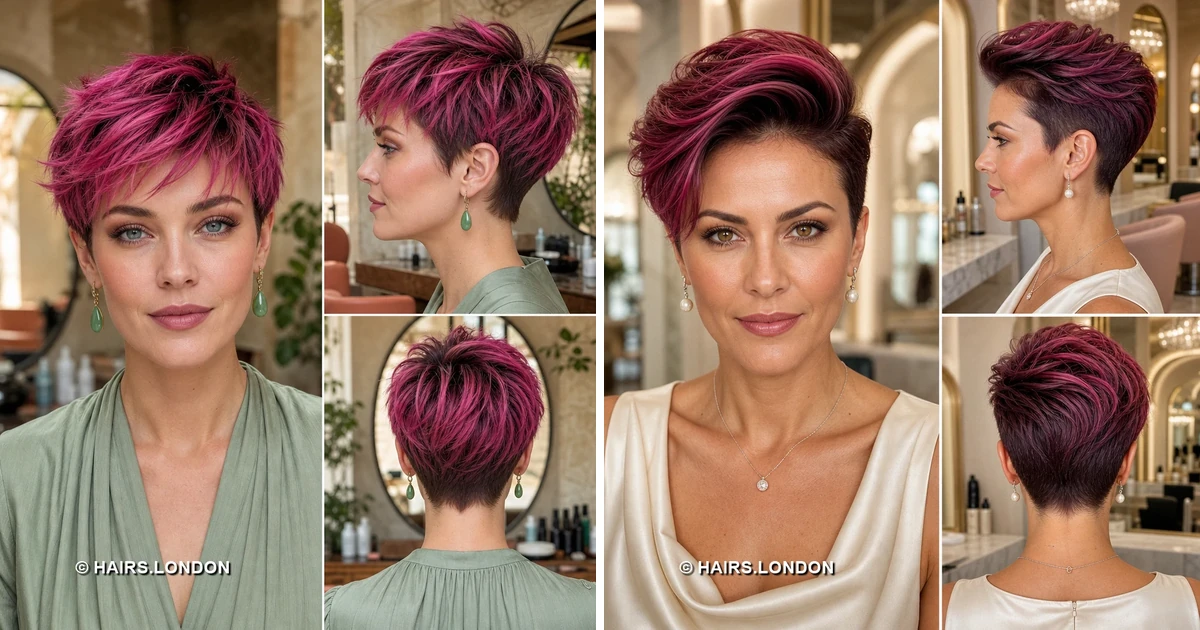
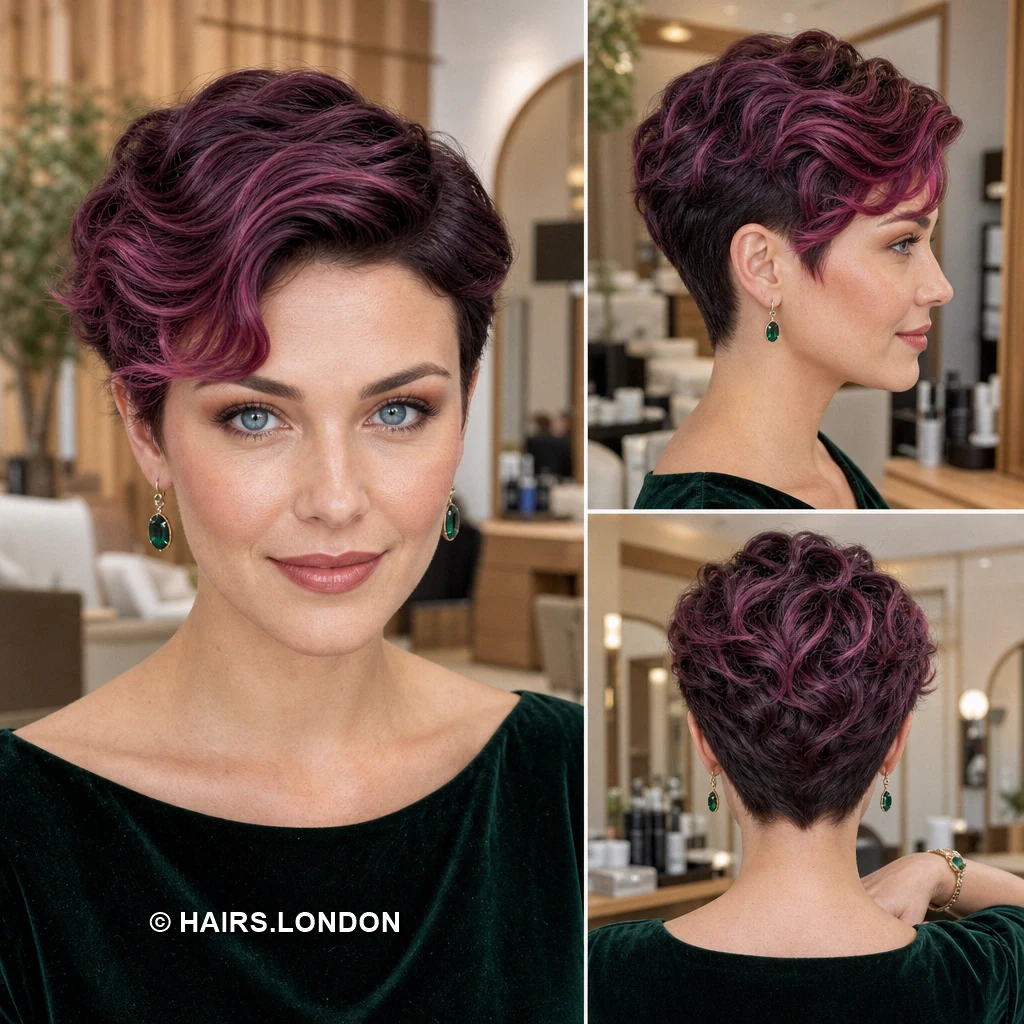
11. Curly Burgundy Pixie With Close Sides
Burgundy curls gather across the crown of this compact pixie. A small front curl dips onto the forehead as fringe. Shorter, darker sides keep attention on the textured upper shape. At the back, curls narrow toward a neat, pointed nape. The visible layering preserves definition while allowing airy crown volume. Ask your stylist to assess curls before choosing top length. Work a modest amount of curl cream through damp sections. Diffuse gently, avoiding excessive touching as the hair begins drying. Lift individual curls afterward if you want more visible separation. Schedule careful trims that respect the way your curls spring.
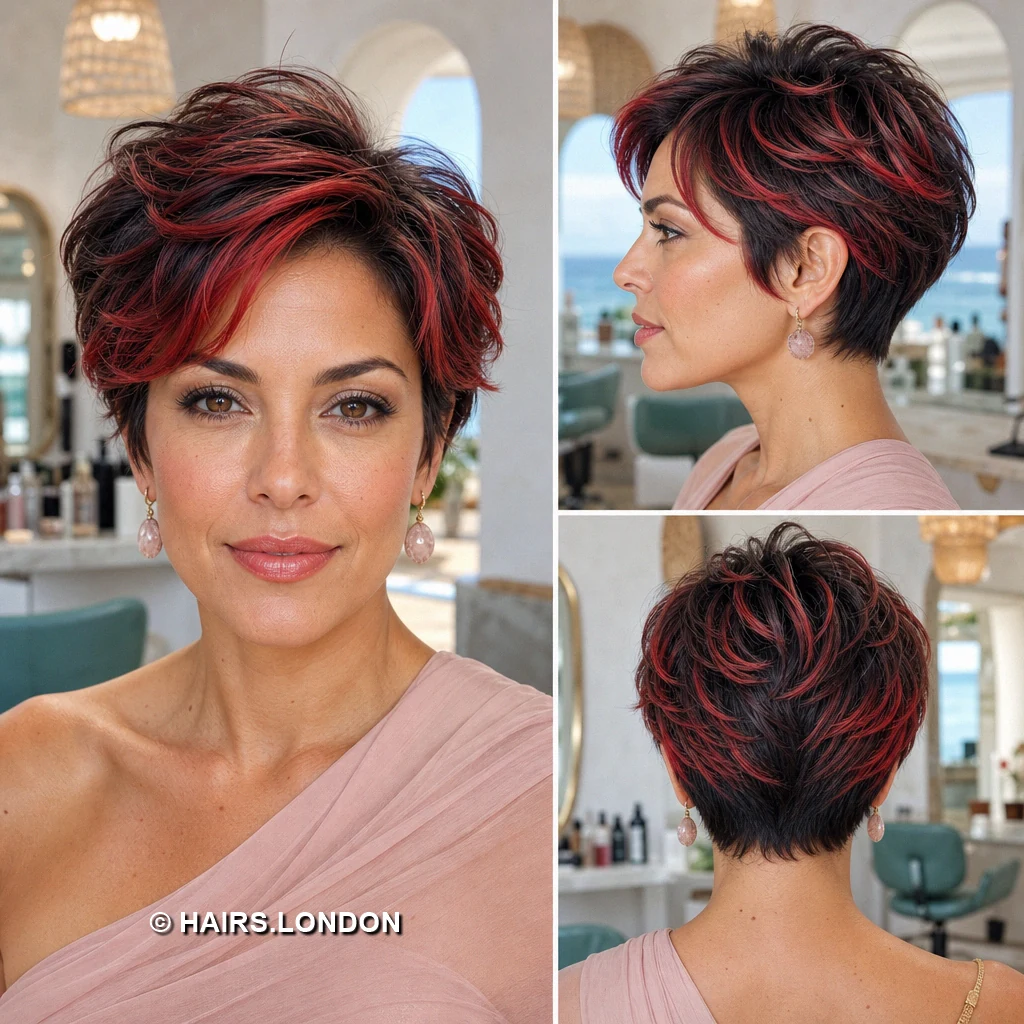
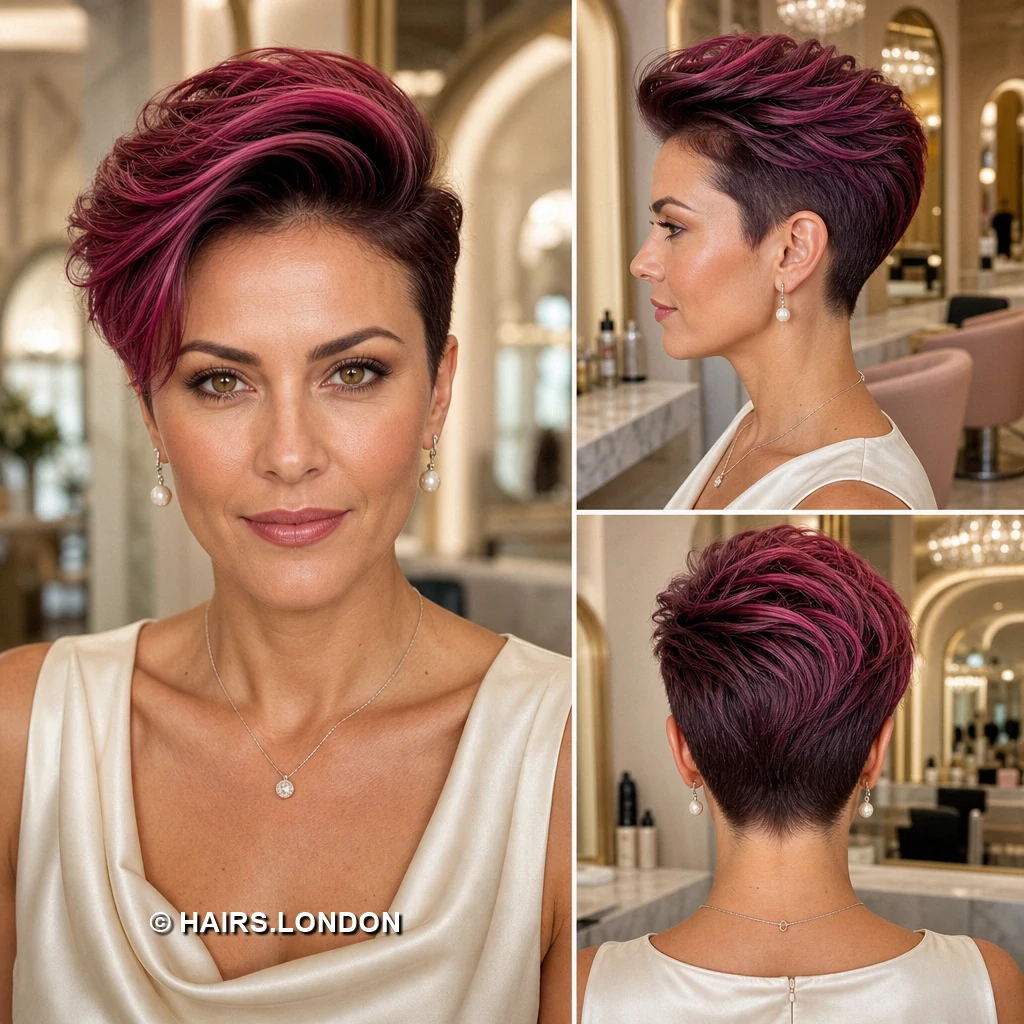
12. Dusty Rose Pixie With a Rolled Front
Dusty rose strands sweep into a broad, softly rolled front. The fringe curves upward rather than dropping across the eyes. Longer crown layers flow backward over closely trimmed, darker sides. From behind, overlapping waves taper into a short, narrow nape. This shape depends on keeping sufficient length above the forehead. Ask for soft layering that supports movement without thinning ends. Blow-dry upward at the roots, directing the front sideways. A round brush can reinforce the visible bend near the front hairline. Use flexible spray if the raised fringe falls during wear. Keep the sides trimmed to preserve their sculpted contrast.
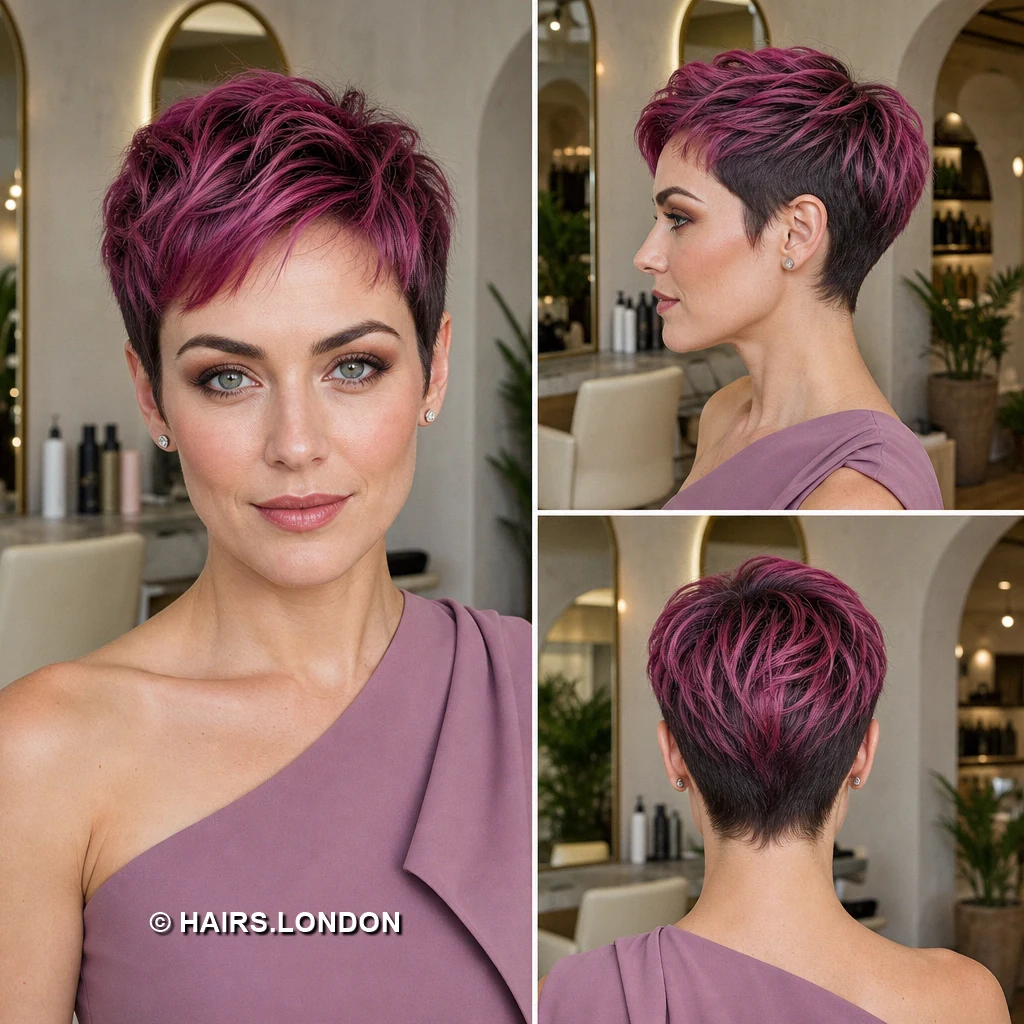
13. Deep Auburn-Burgundy Pixie With Wispy Bangs
Deep auburn-burgundy accents thread through this dark, textured pixie. Short, uneven bangs skim the forehead in distinct wispy sections. The crown sits softly raised, without a strong directional sweep. Layers around the ears stay fuller than closely cropped sides. At back, feathered ends form a slightly longer, pointed neckline. Ask for light texturizing while keeping coverage around the crown. This softer outline suits hair that naturally forms gentle bends. Dry with your fingers to encourage irregular pieces and lift. Add minimal paste to define fringe tips without clumping them. Check the nape frequently if you prefer its sharply pointed finish.
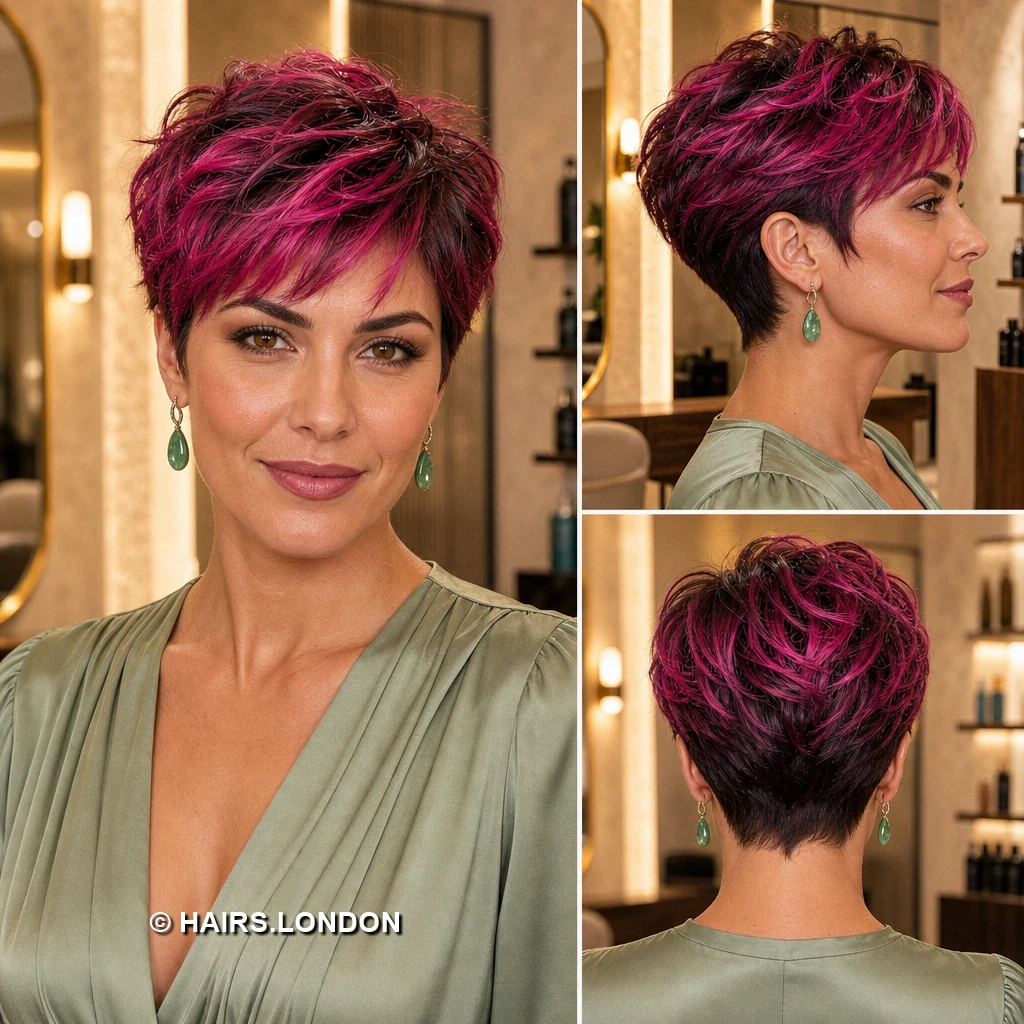
14. Raised Raspberry Pixie With Tapered Back
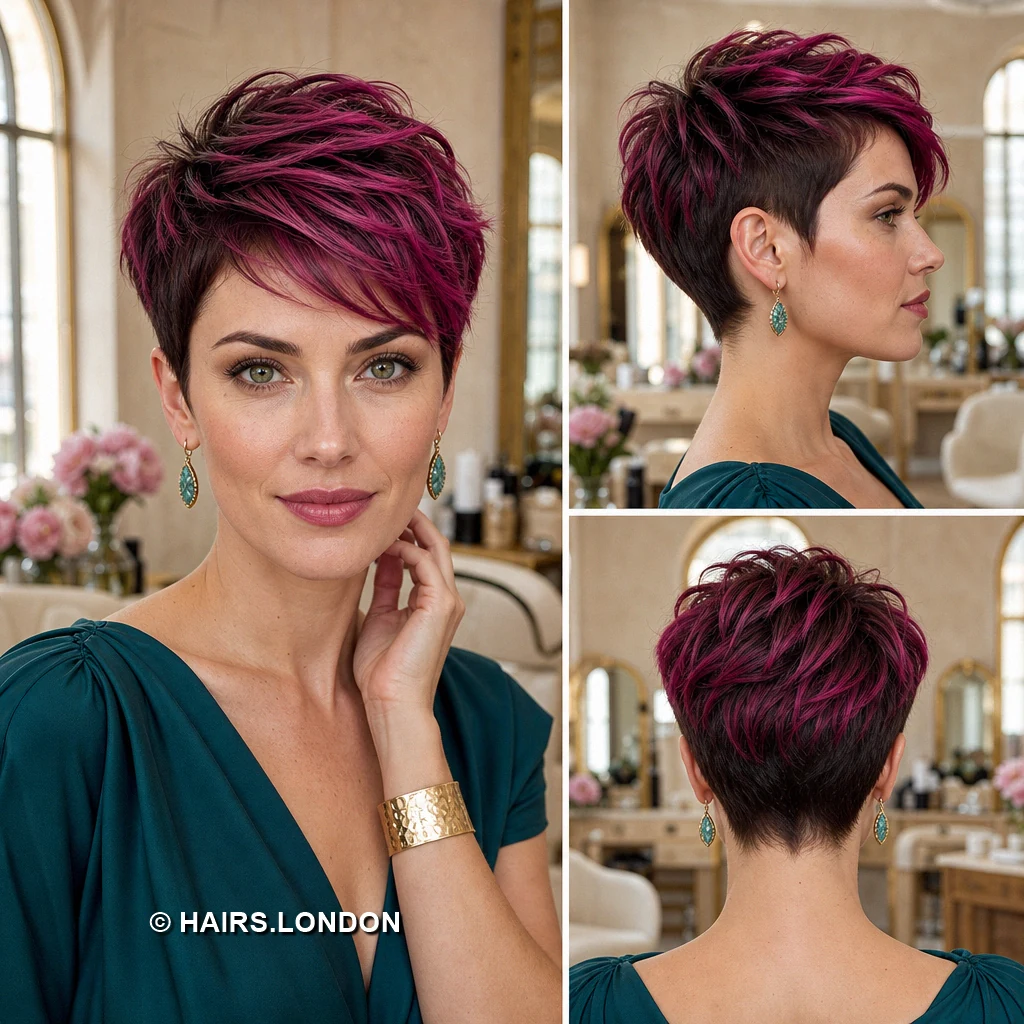
Raspberry streaks emphasize the height of this brushed-back pixie. The front rises into a smooth wave, leaving forehead exposed. Longer upper layers overlap above short, closely fitted sides. The crown remains textured while keeping a controlled overall outline. At back, the color converges above a dark tapered nape. Request supportive layering rather than thinning the elevated front excessively. Blow-dry the roots upward, then sweep lengths gently backward. A small brush helps shape the wave without flattening it. Finish with light hold, concentrating spray near the raised roots. Keep sides and nape tidy to sustain the silhouette throughout the growing period.
15. Brushed-Up Burgundy Pixie With Subtle Streaks
Subtle burgundy streaks run through this dark, brushed-up pixie. The front stands high, with layered ends directed backward. There is no hanging fringe; the forehead remains fully open. Close sides and a compact back sharpen the taller crown. At the neckline, dark hair tapers into a clean point. Ask for enough front length to create this upward movement. Apply root lift sparingly before drying hair away from forehead. Direct airflow backward, then arrange the top with your fingers. A flexible paste can hold separated strands without rigid spikes. Plan regular side trims to keep the profile closely shaped between appointments.
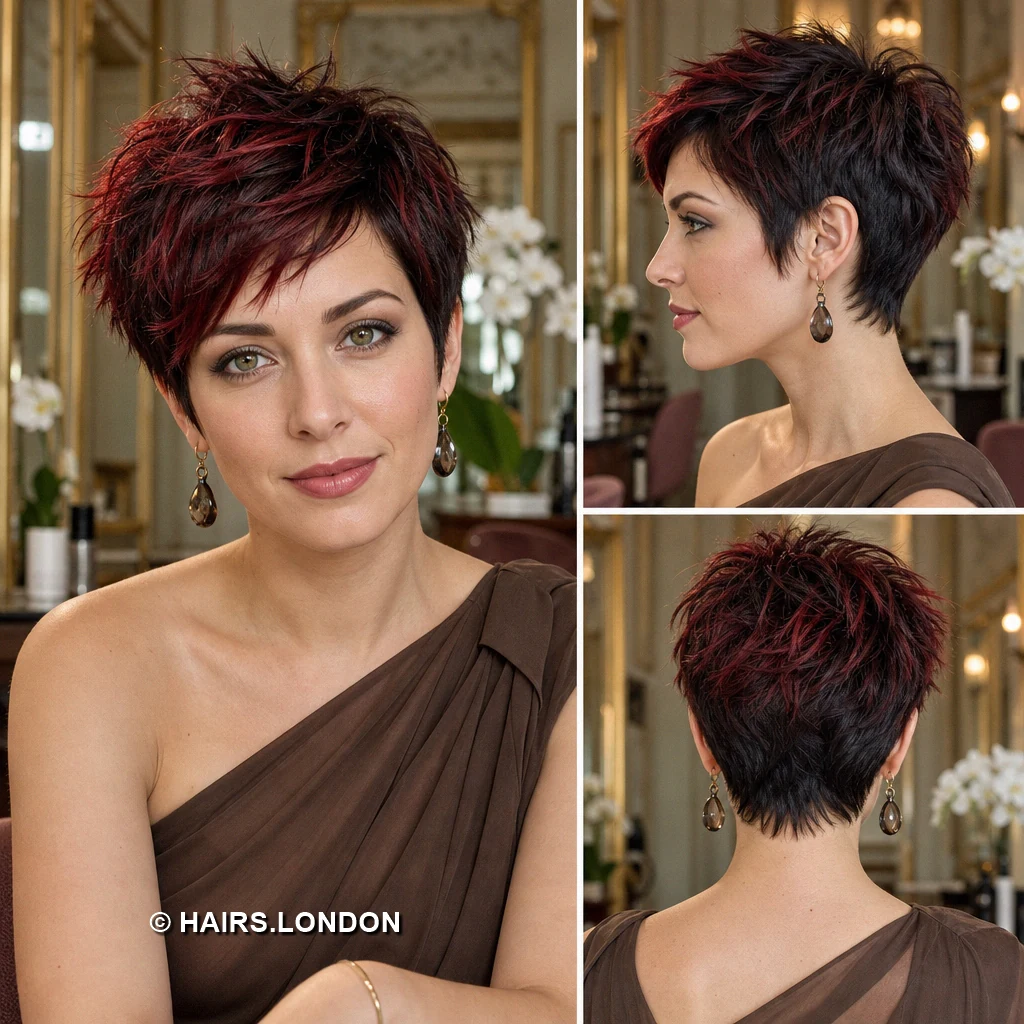
16. Auburn Pixie With Short, Side-Pointing Fringe
Auburn-red color warms this softly layered, close-cut pixie. Short fringe pieces angle sideways across the upper forehead. The crown has gentle lift, with no sharply separated spikes. Closely fitted sides trace the ears and keep bulk controlled. Behind, rounded layers descend into a tidy, tapered nape. Ask for short, textured bangs that follow your natural growth. Finger-dry the front sideways, then fluff the crown lightly. A little matte cream can reveal movement between upper layers. Avoid overloading the short fringe, which may make pieces stick. Trim around the ears as soon as the outline spreads to preserve the clean shape.
17. Deep Burgundy Pixie With Loose Crown Curls
Deep burgundy glints through the loose curls of this pixie. The front curves upward, forming a soft, lifted fringe. Full crown texture contrasts with short, dark hair near ears. At back, clustered curls sit above a close, tapered nape. Ask for layering that keeps curls visible without widening sides. Apply curl-defining cream sparingly to damp upper sections first. Diffuse on gentle airflow, allowing the fringe to rise naturally. Once dry, separate only curls that need additional airy movement. Keep the short area beneath the crown neat between cuts. Discuss shrinkage before carefully trimming the curly top to its final length.
18. Chestnut-Burgundy Pixie With Soft Side Bangs
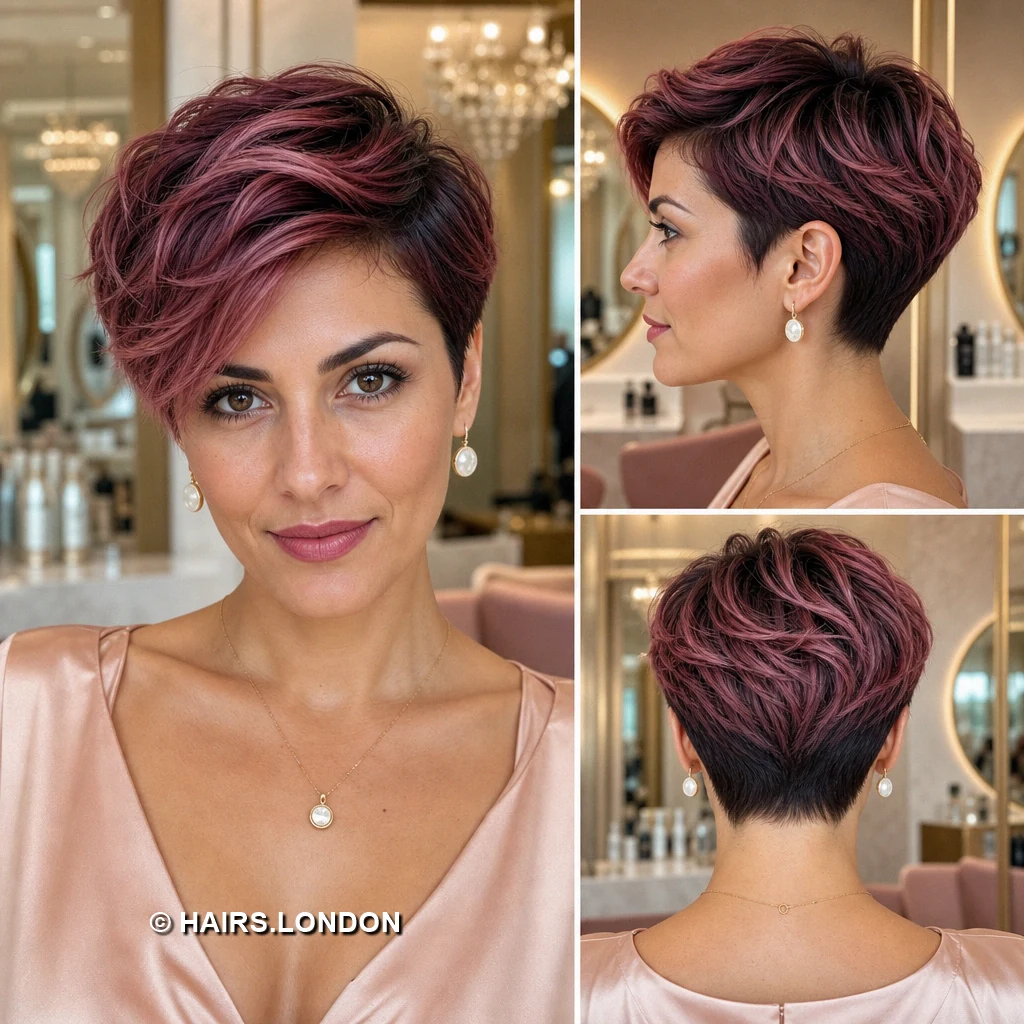
Chestnut-burgundy highlights weave through this smoothly layered pixie cut. A short side fringe sweeps lightly across the forehead. The crown holds gentle height, while remaining close and rounded. Tapered sides frame the ears without a harsh clipped edge. From behind, layered strands narrow into a pointed, dark nape. Ask for soft graduation to maintain this balanced, compact shape. Blow-dry forward first, then move the fringe to one side. Smooth the surface with a small amount of light cream. Keep some separation at the crown rather than flattening everything. Arrange trims when the side fringe begins covering your eyes between appointments.
19. Burgundy Pixie With a Long Diagonal Fringe
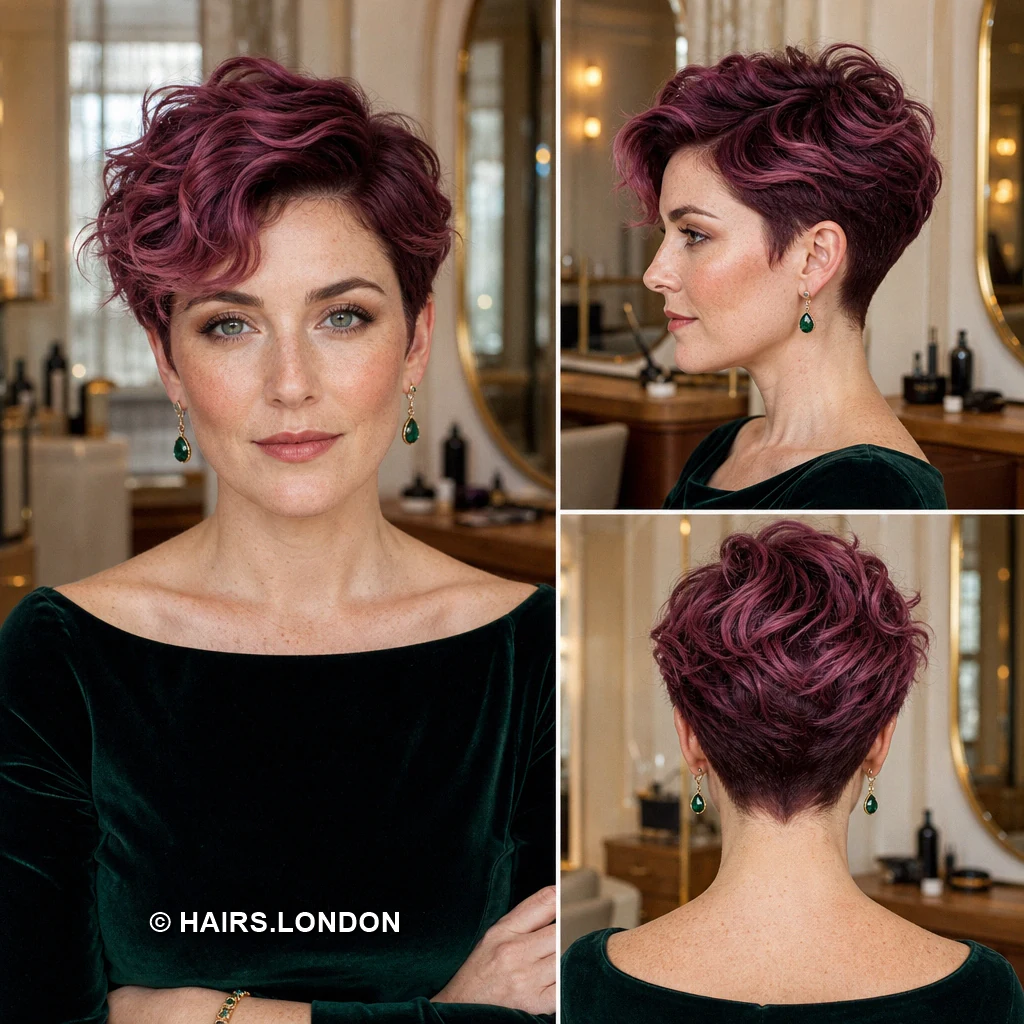
Rich burgundy ribbons brighten this dark, asymmetrically swept pixie. The longest front section falls diagonally toward one eyebrow. Shorter layers add subtle height through the crown behind it. Close sides balance the full fringe without looking severely clipped. At back, overlapping layers taper into a narrow, feathered nape. Ask where the fringe should finish before any cutting begins. Dry it across the forehead using your natural parting direction. Smooth flyaways lightly, leaving the crown layers visibly separated. Keep color concentrated through the sweep if contrast appeals. Trim the fringe promptly when it slips into your eyes before your next appointment.
How to Choose a Pixie Shape
Compare the front, side, and back views rather than choosing by fringe alone. A long sweep needs enough top length to cross the forehead; a lifted front needs room at the roots; and a close taper changes how often the neckline needs attention. Consider where your hair naturally parts and whether you prefer your ears exposed or softly framed.
Styling Straight, Wavy, and Curly Textures
For straighter hair, direct a blow-dryer at the roots before arranging the fringe with a small brush or your fingers. Encourage waves by scrunching a light cream into damp hair and disturbing it as little as possible while it dries. For curls, diffuse gently and separate only selected dry pieces. Start with less product than you think you need: a short crown can lose lift quickly.
Keeping Burgundy and Magenta Color Fresh
Ask your colorist what care suits your particular shade and starting color. Wash with a color-friendly cleanser, use lukewarm rather than hot water, and protect hair when heat styling. Bright magenta, muted rose, and deep burgundy can change differently between appointments, so discuss whether you want a vivid refresh, a softer fade, or a more pronounced dark base as the color grows.
Maintaining the Pixie Shape
Watch the areas that define your chosen cut: the fringe, the hair around the ears, and the nape. A closely tapered pixie may need reshaping sooner than a softer, fuller version. Bring the front, profile, and back images to follow-up appointments so your stylist can preserve the same balance rather than simply cutting every section shorter.
What to Discuss with Your Stylist
Show your stylist the complete image of your preferred cut and point out the exact fringe length, crown volume, side coverage, and nape finish you like. Explain how much daily styling you will do and how your hair behaves when air-dried. Before coloring, discuss the placement of brighter ribbons, the depth of the base, likely upkeep, and a plan for refreshing the shade.
Frequently Asked Questions
What is the difference between a swept pixie and a lifted pixie?
A swept pixie directs longer top hair across the forehead. A lifted pixie raises the front away from the face, often showing more forehead.
Can a pixie keep some length around the ears?
Yes. Several of these cuts have softly layered sides rather than an extremely close clip. Show your stylist how much ear coverage you want.
Which option has the shortest-looking fringe?
The auburn pixie in image 16 has short, side-pointing fringe pieces. The brushed-up style in image 15 leaves the forehead open.
Which cuts make the most of natural waves or curls?
Images 9, 11, and 17 visibly use bends or curls to create crown volume. Ask your stylist to account for how much your hair springs up when dry.
Do I need a dark base to wear burgundy highlights?
The images show burgundy and magenta alongside darker hair, which creates visible contrast. A colorist can advise what placement and preparation suit your starting color.
How can I keep a pixie fringe out of my eyes?
Choose a shorter fringe, style a longer one upward, or have the sweep trimmed when it begins to block your view.
What product works for a piecey crown?
A small amount of flexible paste or cream can define selected ends. Apply it gradually so the short layers retain their lift.
How do I style a raised pixie front?
Dry the roots upward first, then guide the longer front into place with your fingers or a small brush. Finish with light hold if needed.
Will a close nape require regular trims?
Yes. A clean taper or pointed neckline becomes less distinct as it grows, so discuss a trimming schedule that matches your preferred finish.
Can I have vivid color without coloring every strand?
Yes. Many of these looks place brighter color through the top and fringe while leaving darker hair visible at the sides or nape.
Should my stylist cut a curly pixie wet or dry?
Ask how they assess your curl pattern and shrinkage. The key is agreeing on the finished dry length, especially around the fringe.
What should I bring to a salon consultation?
Bring the front, side, and back views of your favorite image, plus notes on fringe length, daily styling time, and desired color contrast.
Conclusion
The strongest choice is the pixie whose fringe, crown, sides, and nape fit both your hair texture and your routine. Save the views that show those details clearly, then use them to plan a cut and color you can comfortably maintain.