


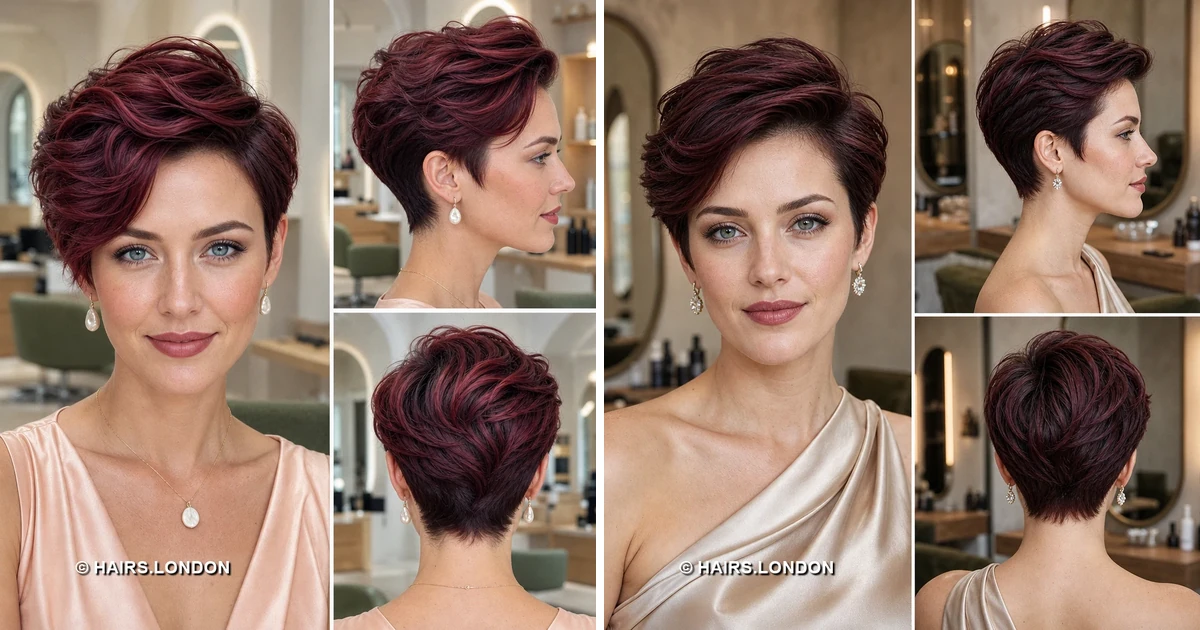
11. Spirited Wine Texture Above a Clean Taper
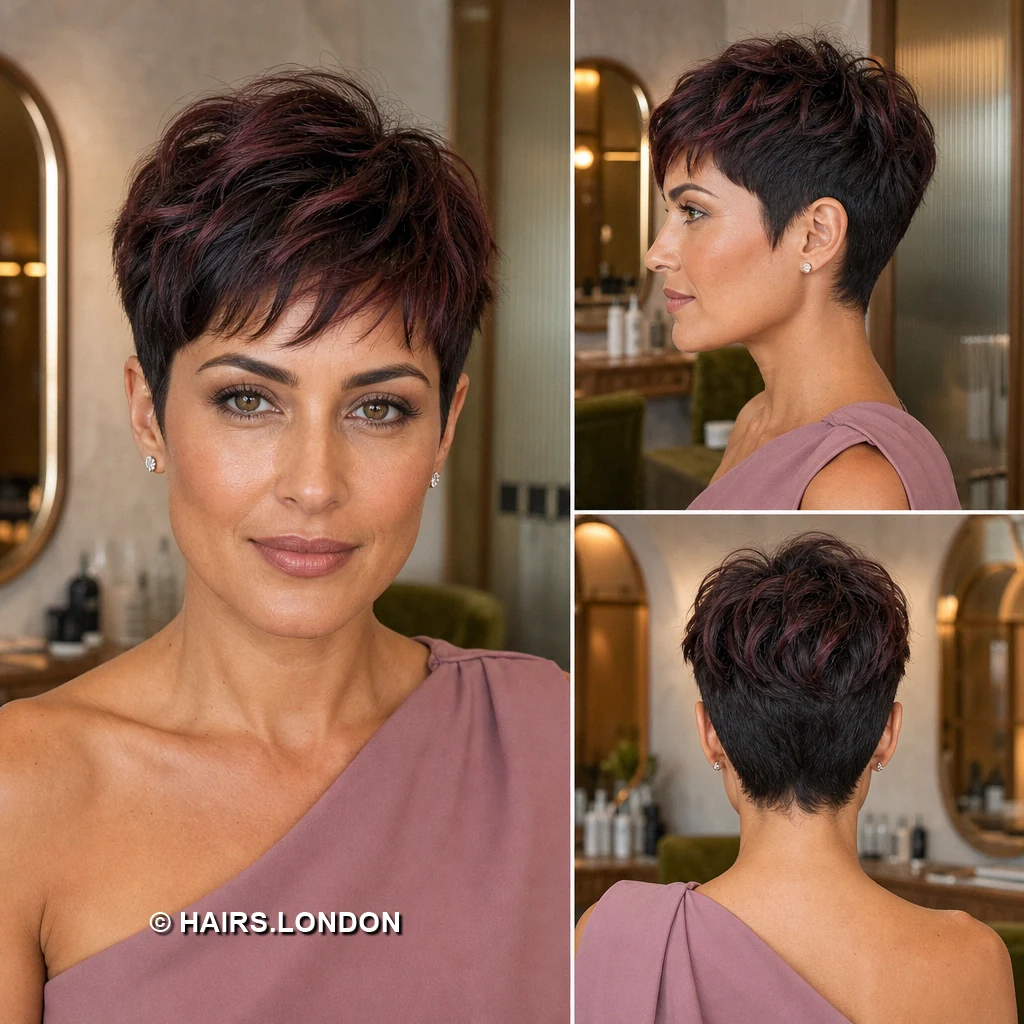
Short front pieces leave much of the forehead visible here. Longer crown strands rise into an intentionally loose, spiky texture. Wine red accents break up the otherwise dark hair color. The sides fit close without losing their soft layered finish. Behind, the fuller crown tapers to a narrow neckline. Ask for movement that suits your natural growth patterns first. Keep the front short enough to lift without heavy product. Rough dry upward and across with your fingertips for volume. Rub paste between hands before defining a few separate tips. Trim the taper regularly while leaving enough crown length to play.
12. Glossy Burgundy Sweep With a Softly Rounded Crown
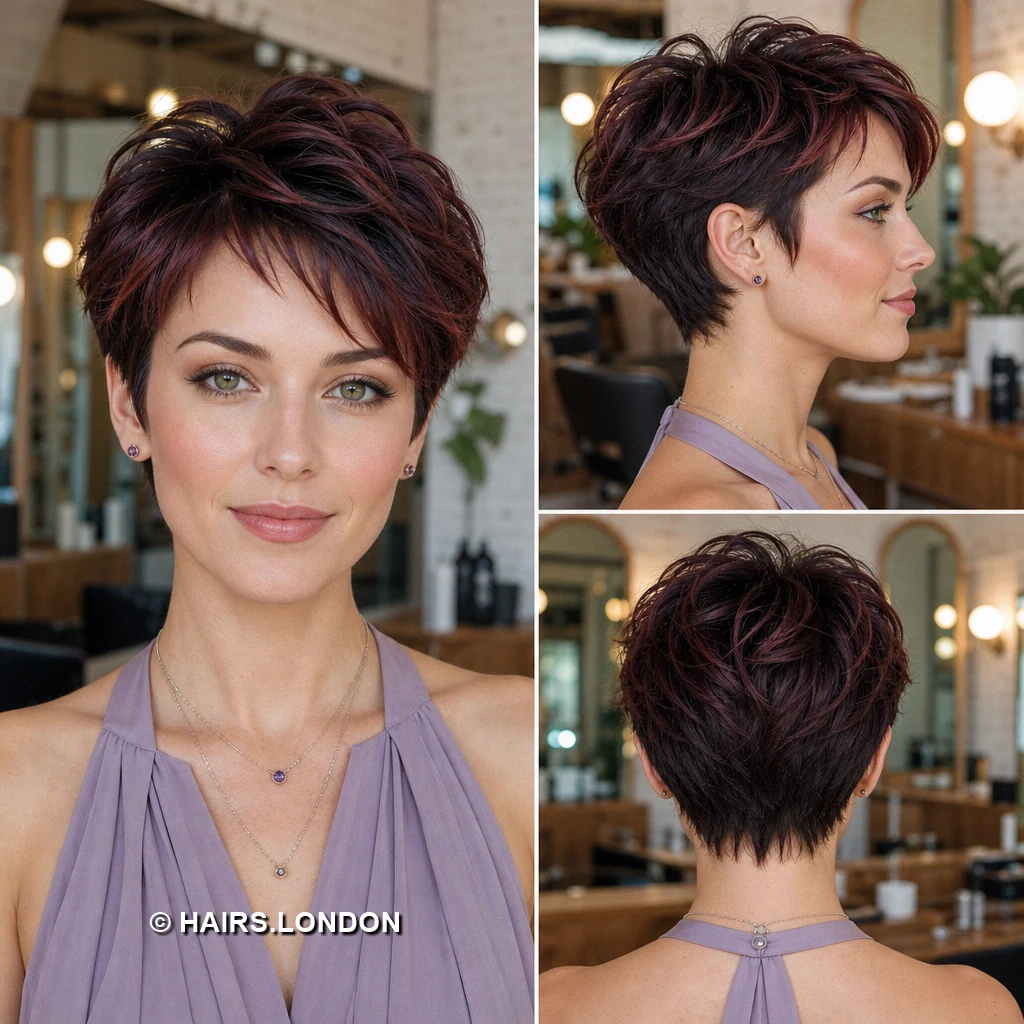
A longer fringe sweeps diagonally over one side of the forehead. Burgundy and dark strands create visible ribbons through the top. The crown looks rounded, with gentle lift rather than spikes. Close sides bring the focus toward the flowing upper layers. Back views reveal a narrow, softly pointed nape below. Ask for a connected transition between the sweep and crown. Preserve front length if you want to tuck it sideways. Direct the dryer across the head, smoothing with your fingers. Finish with lightweight serum on ends rather than at roots. Maintain the neckline so the back stays neatly tapered overall.
13. Broad Burgundy Front Wave and Close Sides
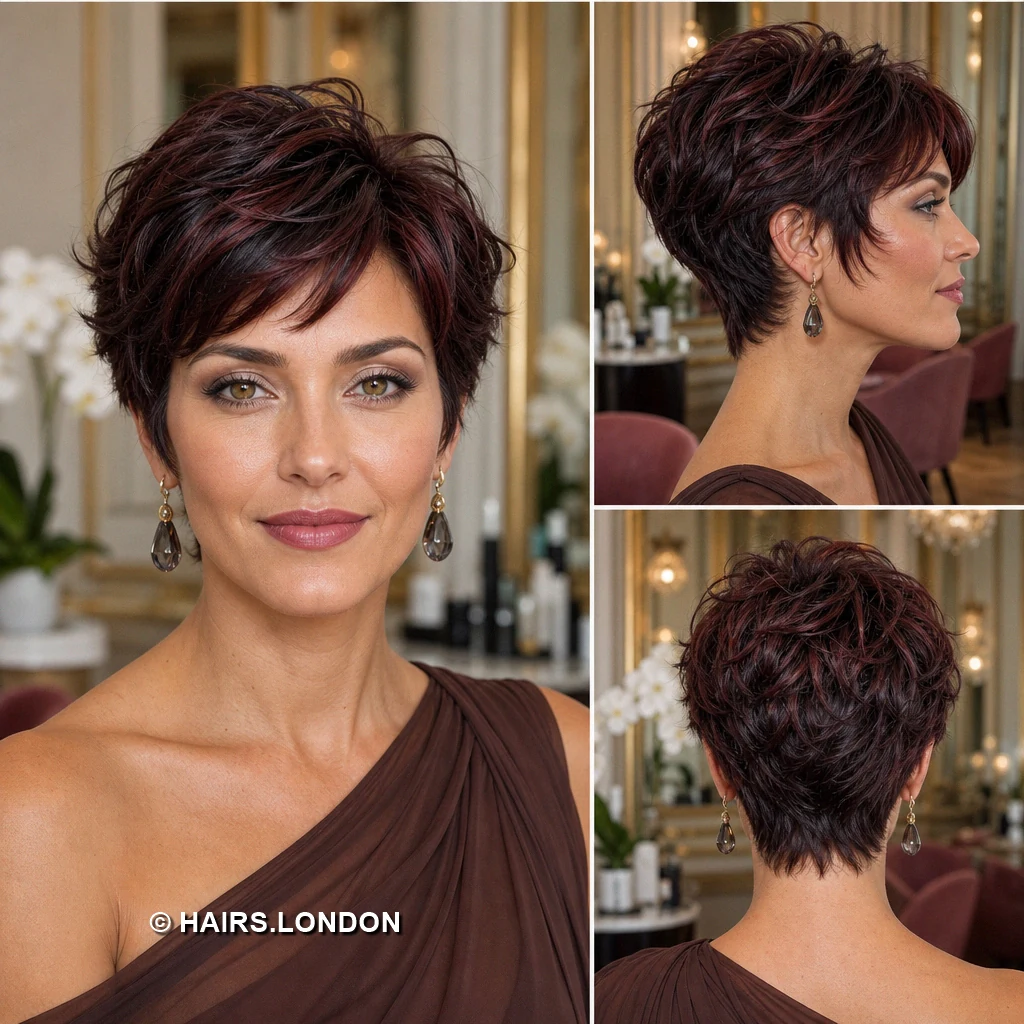
The front forms a broad wave lifted away from the forehead. Darker sides are shorter and sit neatly around the ears. Burgundy color follows the wave and textured crown behind it. The back tapers into a short, clean looking nape. This shape depends on enough upper length to bend smoothly. Show your stylist the height and direction you actually want. Ask for softness where the longer top meets shorter sides. Lift damp roots, then brush the front backward and across. Set the wave with flexible hold, leaving ends touchable still. Plan trims that preserve contrast without removing necessary top length.
14. Curved Wine Fringe With a Curl Rich Crown
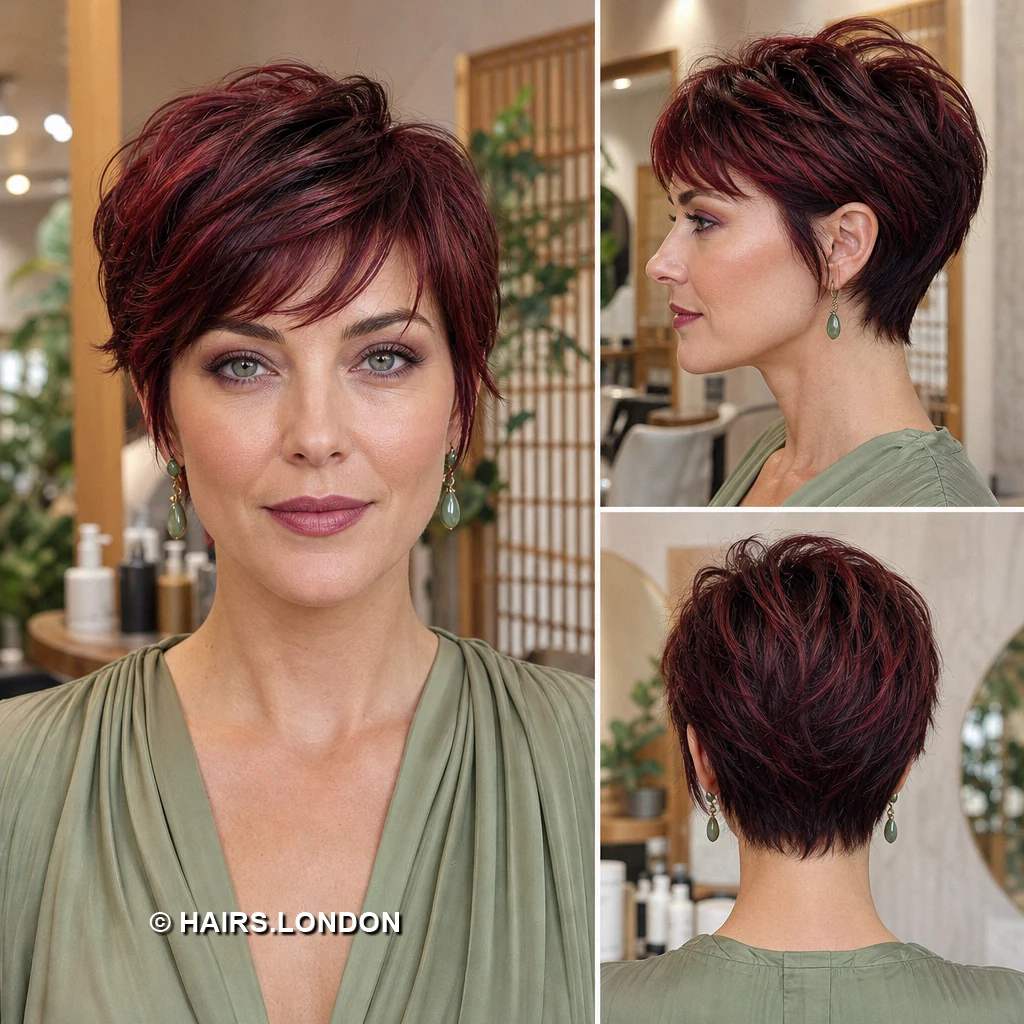
A curved front section rests beside the forehead without covering it. Defined bends and loose curls give the crown rounded fullness. Wine highlights pick out individual curves against the dark base. Short sides sit close near the ears and temples. The back shows textured volume above a closely tapered nape. Ask your stylist to shape the top around its bends. Avoid removing so much weight that curls separate unevenly afterward. Scrunch styling cream into damp hair and dry gently afterward. Shape the front curl with fingers while it remains pliable. Refresh the neckline when the soft taper begins growing out.
15. Polished Burgundy Wave Over a Short Back
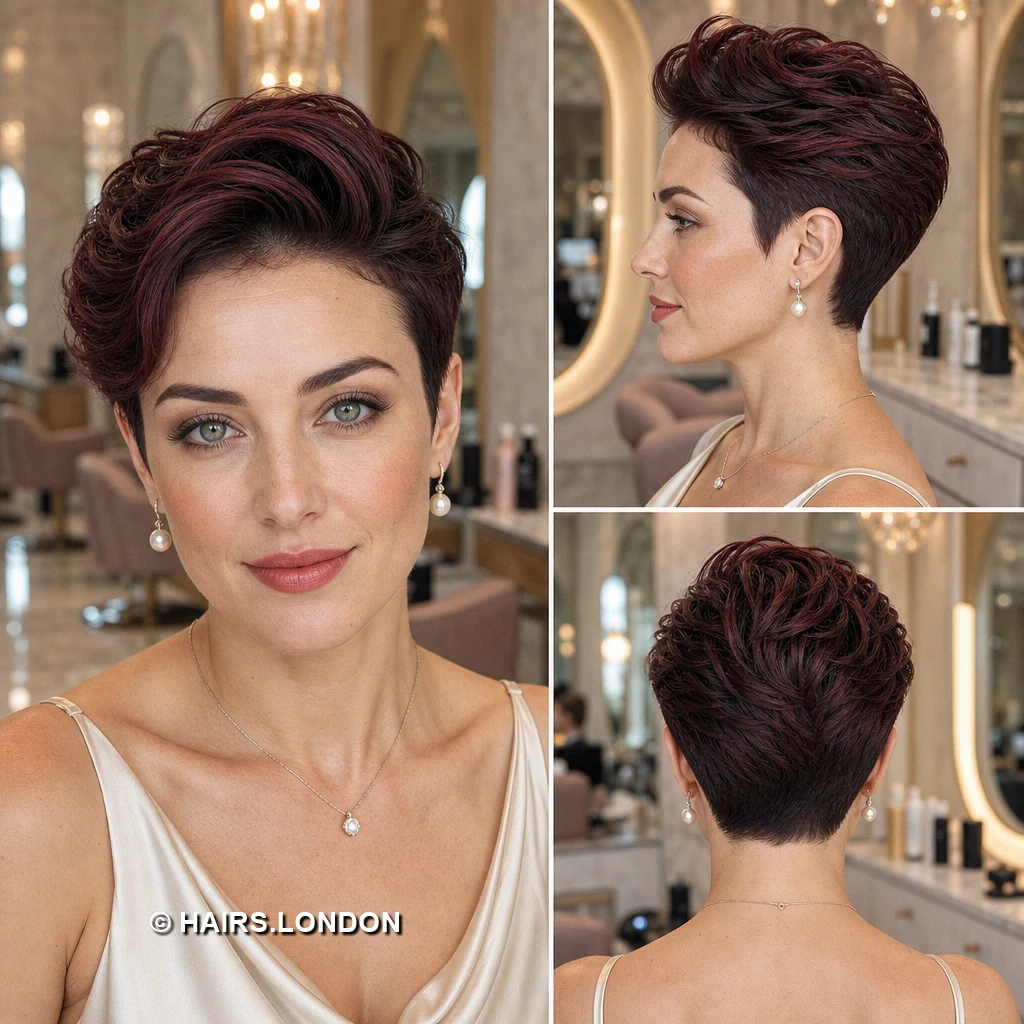
A generous upper wave travels sideways above the short fringe. Burgundy ribbons emphasize its shape within the darker base color. The crown flows backward in smooth, overlapping textured layers here. Close sides reveal the ears and balance the fuller top. From behind, the hair narrows neatly toward the neck below. Request long enough top layers to recreate this soft wave. Keep the perimeter short without cutting into the upper fullness. Dry roots upward, guiding longer lengths to one side afterward. Smooth flyaways with a small amount of flexible cream only. Recut the neckline as soon as its outline loses definition.
16. Short Wine Fringe With Subtle Crown Lift
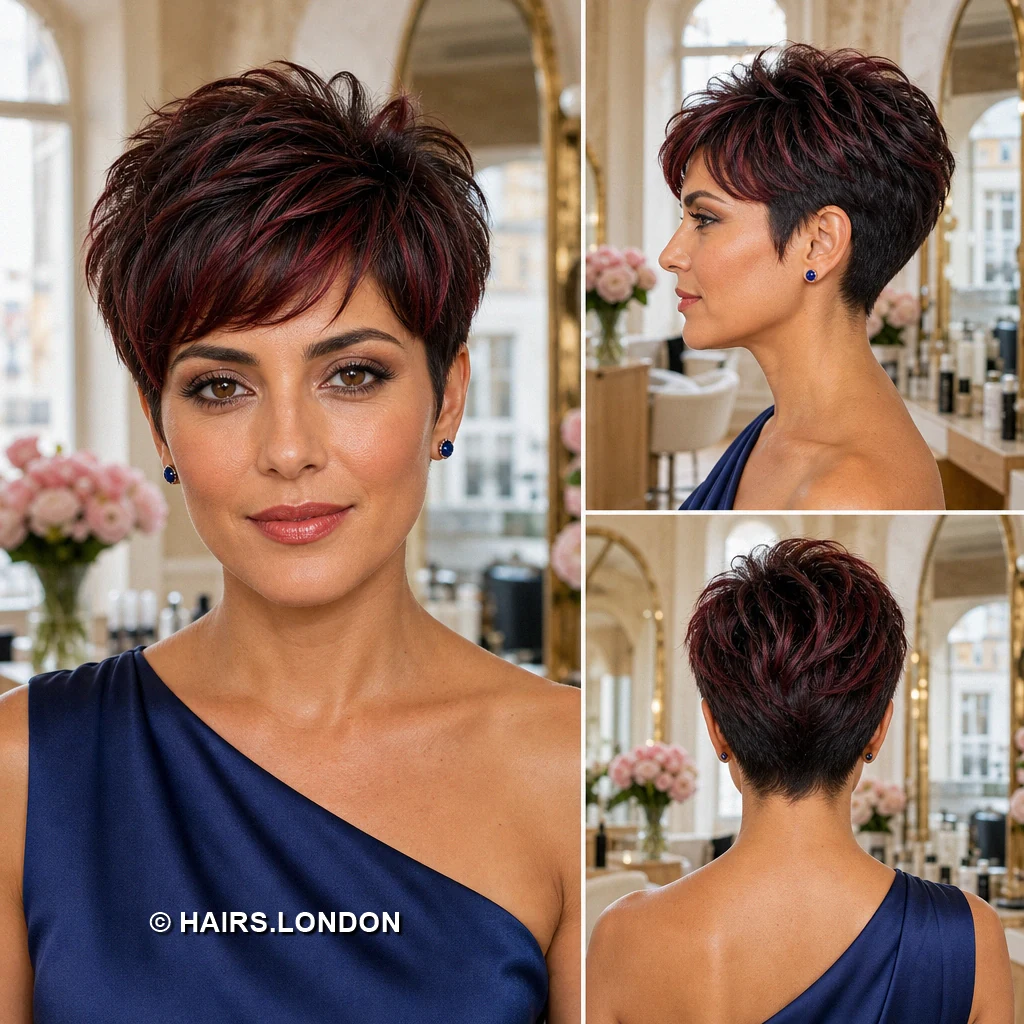
The short side swept fringe reveals most of the forehead. Wine colored layers lie close at the sides, then lift. More height appears through the crown without an oversized silhouette. The back rounds gently before tapering into a pointed nape. Darker lengths near the neckline make that taper more apparent. Request controlled layering that allows lift without losing overall density. Style the fringe flat while drying the top against growth. Separate a few crown pieces using a small paste amount. Skip heavy wax if you prefer this soft, airy finish. Keep ear edges and neckline tidy between longer styling appointments.
17. Piecey Burgundy Crown With a Fine Side Fringe
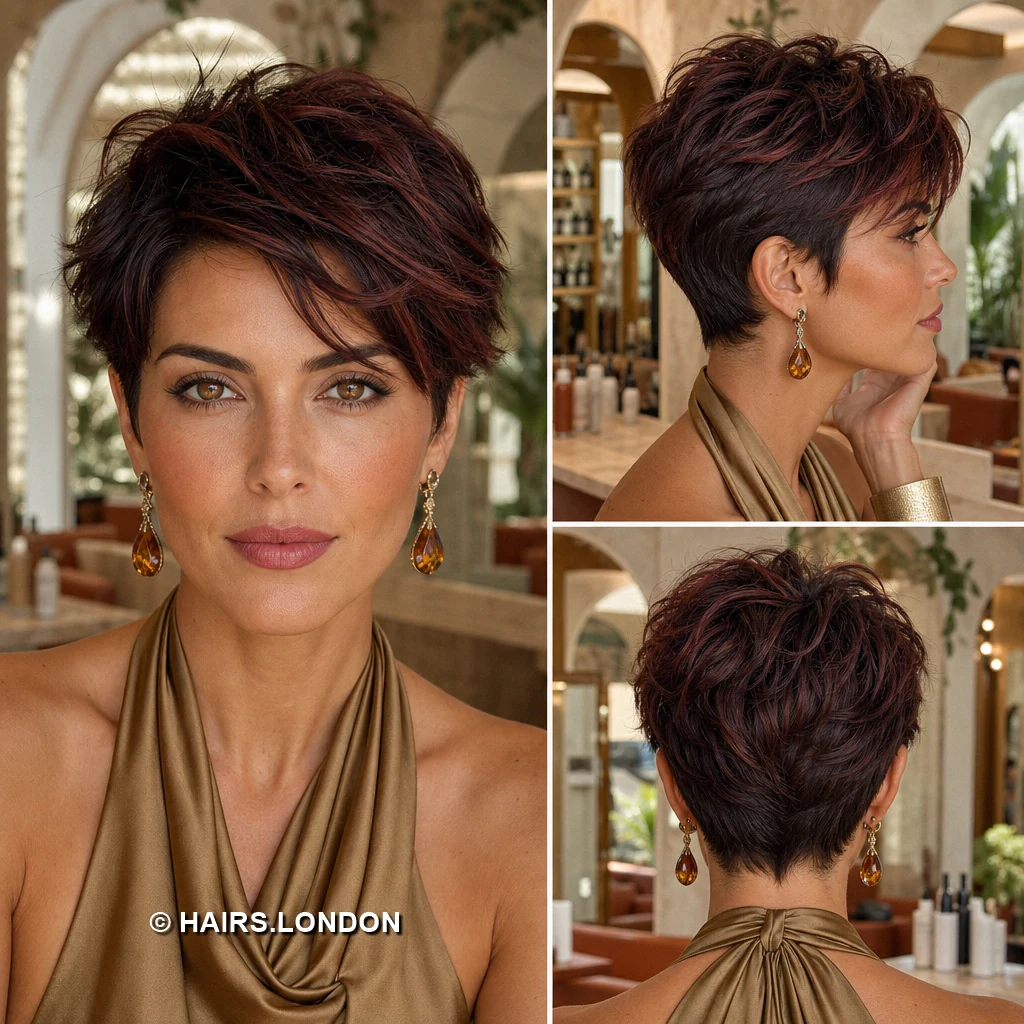
Fine angled bangs skim the forehead beneath a textured crown. Burgundy strands catch light throughout the dark, separated upper layers. The sides follow the head closely while retaining soft edges. At the back, shorter hair tapers into a narrow nape. Slightly uneven ends keep this compact shape from appearing severe. Ask for movement through the crown and precision around ears. Agree on fringe placement before your stylist shortens the front. Dry forward, then lift selected sections with fingers for texture. Work minimal paste through tips to preserve their airy separation. Book regular trims to keep both fringe and neckline balanced.
How to Choose a Burgundy Pixie Haircut
Start with the length you want around your forehead and ears. A broad, lifted front needs more styling length than the short, wispy fringes shown here; a close side or nape will also show regrowth sooner. Compare the side and back views, not just the front portrait. If your hair is dense, ask where weight can be removed without making the crown thin. If it is fine, prioritize a shape that keeps enough hair through the top to support your preferred lift.
Styling Different Hair Textures
For straight hair, direct the dryer against the roots briefly, then guide longer layers across the head; a little flexible paste can separate the ends. On naturally wavy hair, scrunch a light cream into damp lengths and dry gently so bends remain visible. For curls, discuss how short the sides and fringe will sit once dry, and shape curls with fingers rather than brushing them out. Start with less product than you think you need: these short crowns can lose their airy texture when overloaded.
Keeping Burgundy Color Fresh
These images show reddish or wine colored strands against darker hair, with the brightest color often concentrated in the longer top. Ask your colorist which areas they would color and how visible new growth will be. Use a shampoo intended for color treated hair, wash in lukewarm rather than hot water, and protect hair when heat styling. Burgundy tones can change between appointments, so arrange a color refresh according to your chosen formula and the shade you want to maintain.
Maintaining the Pixie Shape
Pay particular attention to the ears, fringe and neckline: small changes there can alter the whole outline. Short, close tapers may need tidying sooner than the longer crown, while a sweeping front needs enough length to keep bending into place. At each trim, say whether you want to preserve crown fullness, shorten the fringe or sharpen the nape. Photograph the cut when it sits well so its proportions are easier to repeat.
What to Discuss with Your Stylist
Bring the front, side and back views of your preferred image and point out the exact fringe length, crown height and nape shape you like. Explain your natural texture, growth patterns, styling time and willingness to use a dryer or product. Ask how the cut will look without styling, how much length must remain on top, and whether the color can be placed over your current shade. Agree on a realistic plan for both shape trims and color upkeep.
Frequently Asked Questions
What distinguishes these burgundy pixie haircuts?
They share dark hair with visible reddish or wine tones, but vary in fringe length, crown lift, texture and the closeness of the sides and nape.
Which version leaves the most forehead visible?
The raised fronts in images 7 and 13 expose more forehead than the longer diagonal fringes.
Which cuts have a softer fringe?
Images 4, 6, 10, 16 and 17 show short, lightly separated fringe pieces rather than a solid blunt line.
Do these pixies have shaved sides?
No shaved section is clearly visible. The sides shown are short and close fitting, with layered or softly tapered edges.
Can I keep more volume on top?
Yes. Show your stylist images 2, 7, 13 or 15 and ask what upper length your hair needs to support that height.
How should I style a swept pixie fringe?
Dry it in the direction you want it to sit, using your fingers or a small brush, then define a few ends with minimal product.
How can I make the crown look textured?
Lift the roots while drying and separate selected ends with a small amount of pliable paste or texture spray.
Will a short nape need regular trims?
Yes. The narrow, tapered necklines shown here will change shape as they grow, so plan trims around how crisp you want the outline.
Where is the burgundy color most noticeable?
It is generally most visible through the longer top layers, where light catches the reddish strands against the darker base.
Can naturally wavy hair suit these shapes?
Natural waves can contribute to the lifted tops and curved fringes. Ask your stylist to account for how your hair sits when dry.
What should I request if my hair is fine?
Ask your stylist to retain useful density through the crown and fringe and to remove weight selectively rather than thinning throughout.
What images should I bring to a consultation?
Bring the complete front, side and back views of the cut you prefer, plus an image that shows your desired amount of burgundy color.
Conclusion
The most useful choice is the one that fits both your natural texture and your preferred daily routine. Decide whether you want a fringe that falls forward, sweeps sideways or lifts clear of the forehead, then compare the ear and nape outlines. Those details will help your stylist turn a burgundy pixie haircut you like in a photo into a shape you can comfortably maintain.