


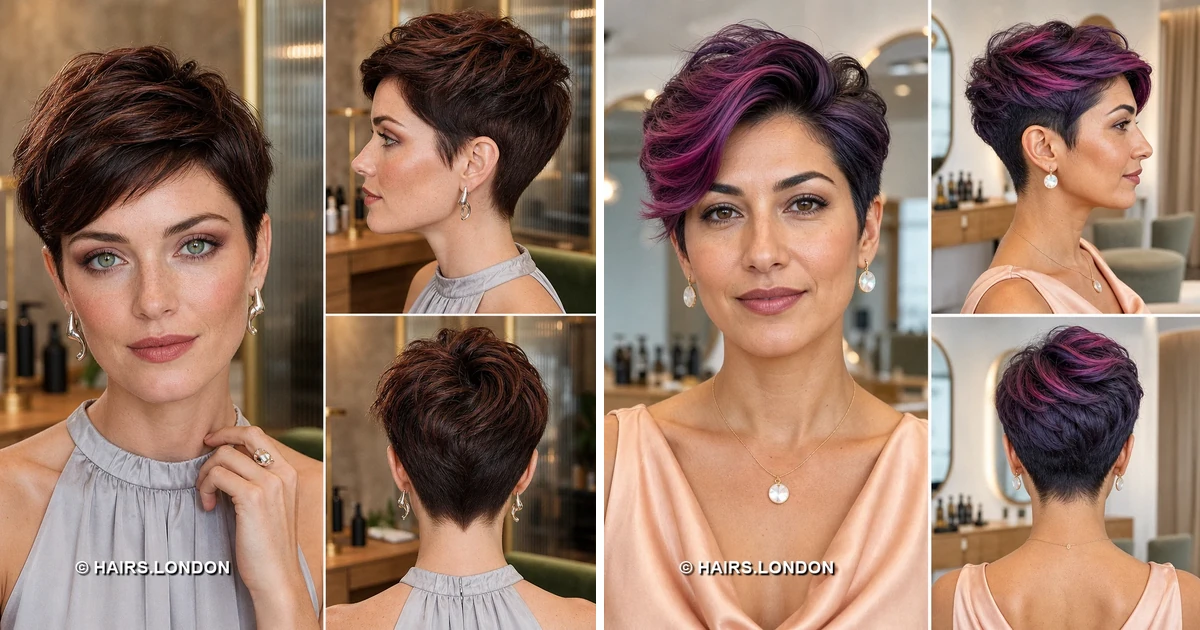
11. Burgundy Pixie with a Soft Side Part
Deep burgundy ribbons accent a smooth, softly lifted top section. A side part directs the longer fringe across one eyebrow. The hair curves close around the ears without appearing shaved. Rounded crown layers create fullness above a closely tapered nape. Ask for subtle layering if you prefer this controlled finish. Blow dry along the part while gently lifting the roots. Comb the fringe sideways before adding a little finishing cream. Leave some separation visible rather than flattening every upper strand. The darker base makes the red accents appear more restrained. Regular trims will keep the side profile clean and compact.
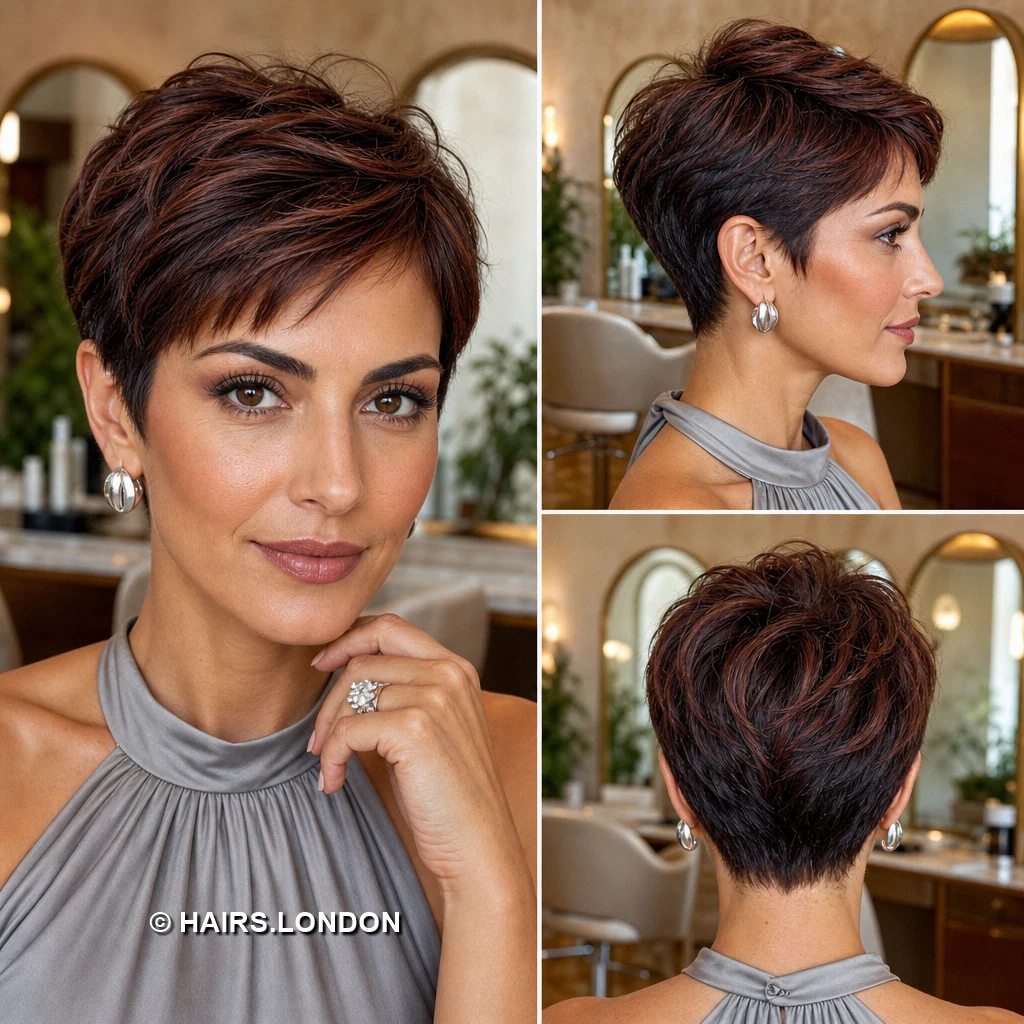
12. Purple Pixie with Airy Forward Layers
Purple and berry tones thread through this abundantly layered top. Airy fringe pieces fall forward naturally before breaking across the forehead. The crown rises loosely, with individual strands showing clear separation. Darker sides remain short around the ears and temples. Behind, the upper layers taper gradually toward a compact nape. Request lightweight texturing instead of removing too much top length. Apply mousse to damp roots if your hair needs support. Dry with fingers, guiding some front strands toward your face. Finish selected pieces with paste to emphasize their uneven ends. Preserve the short neckline while allowing crown texture to grow.
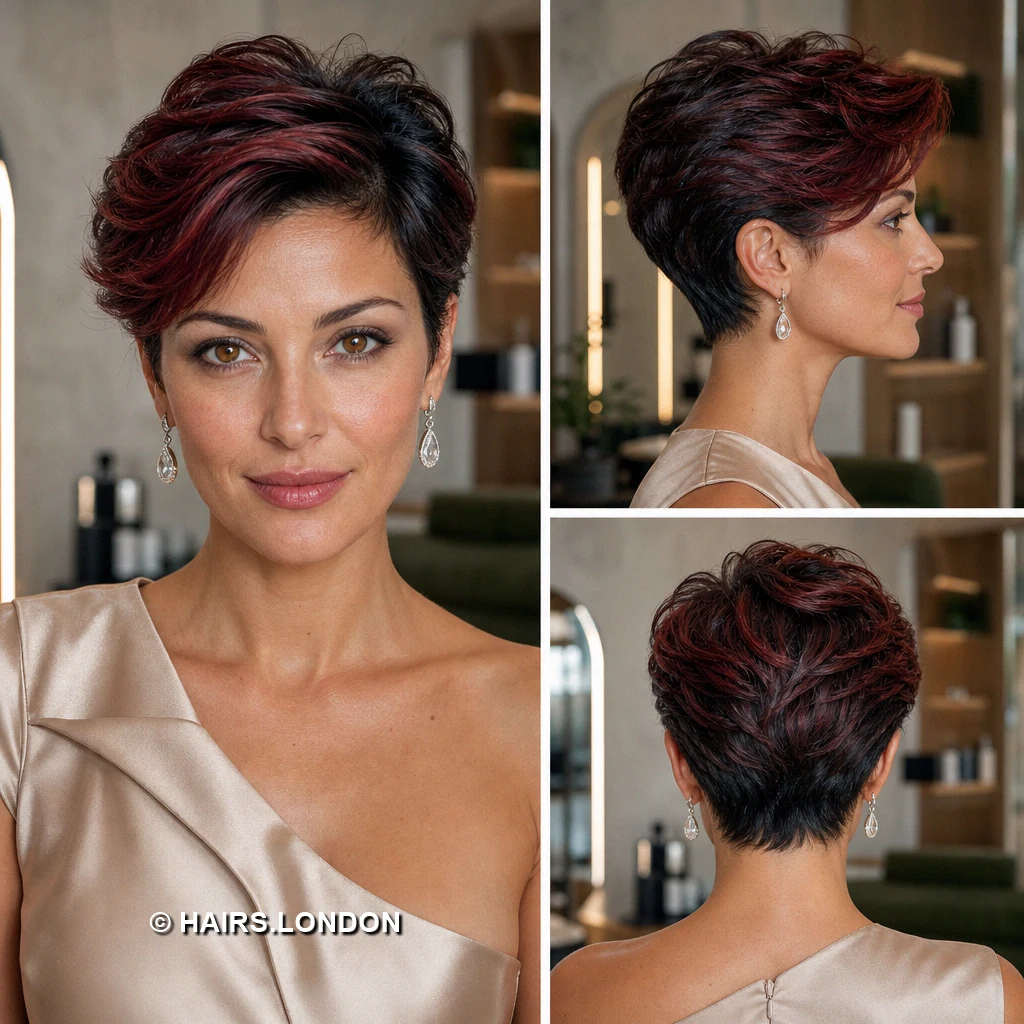
13. Bordeaux Pixie with a Polished Raised Front
Bordeaux red lends depth to this smooth, raised front section. The fringe sweeps upward and back, revealing the entire forehead. Short sides bring focus to the sculpted height above them. Crown layers flow smoothly backward toward a cleanly narrowed nape. Ask for front length that can hold a gentle roll. Keep side graduation close without introducing an abrupt disconnected edge. Blow dry upward with a brush before directing hair back. Use flexible hold spray to support the shape without stiffness. The red surface catches light against the darker underlying hair. Trim the sides promptly if their close outline starts widening.
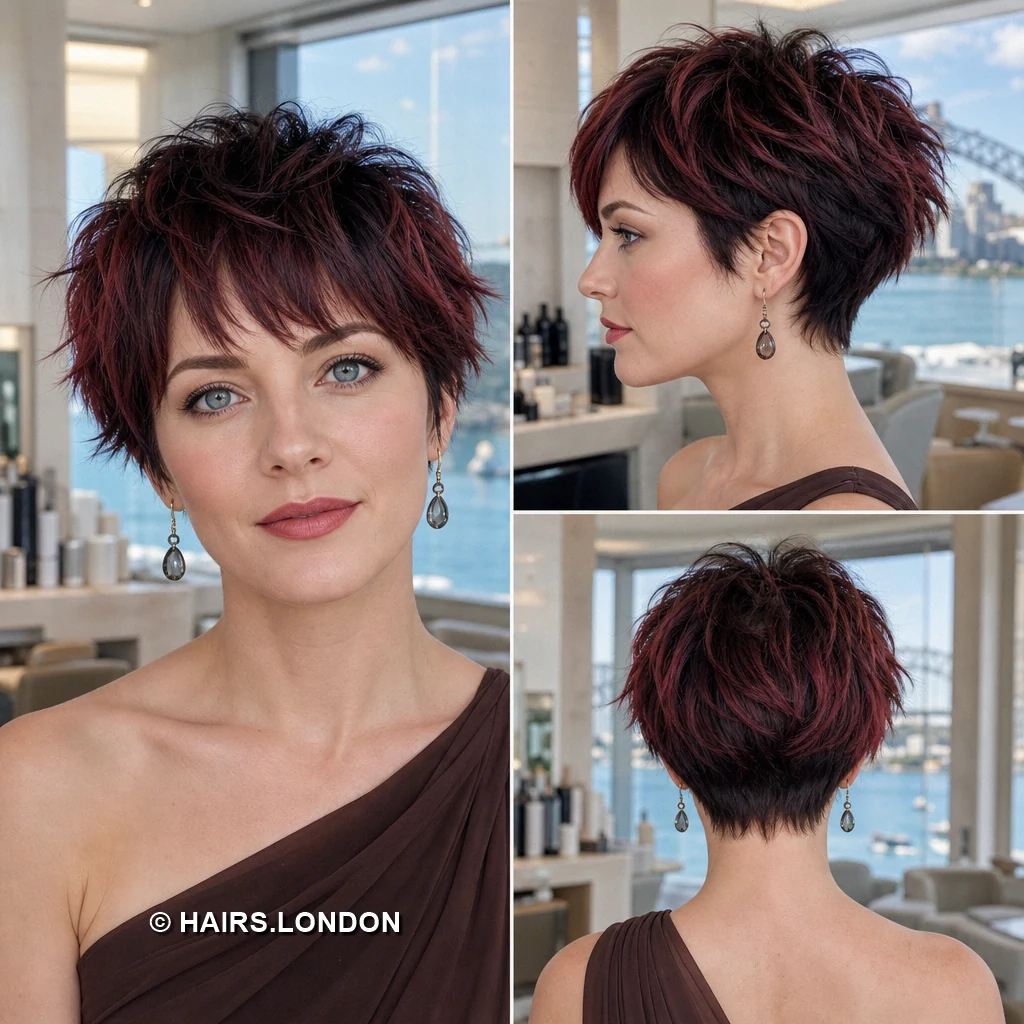
14. Chestnut Pixie with a Tousled Crown
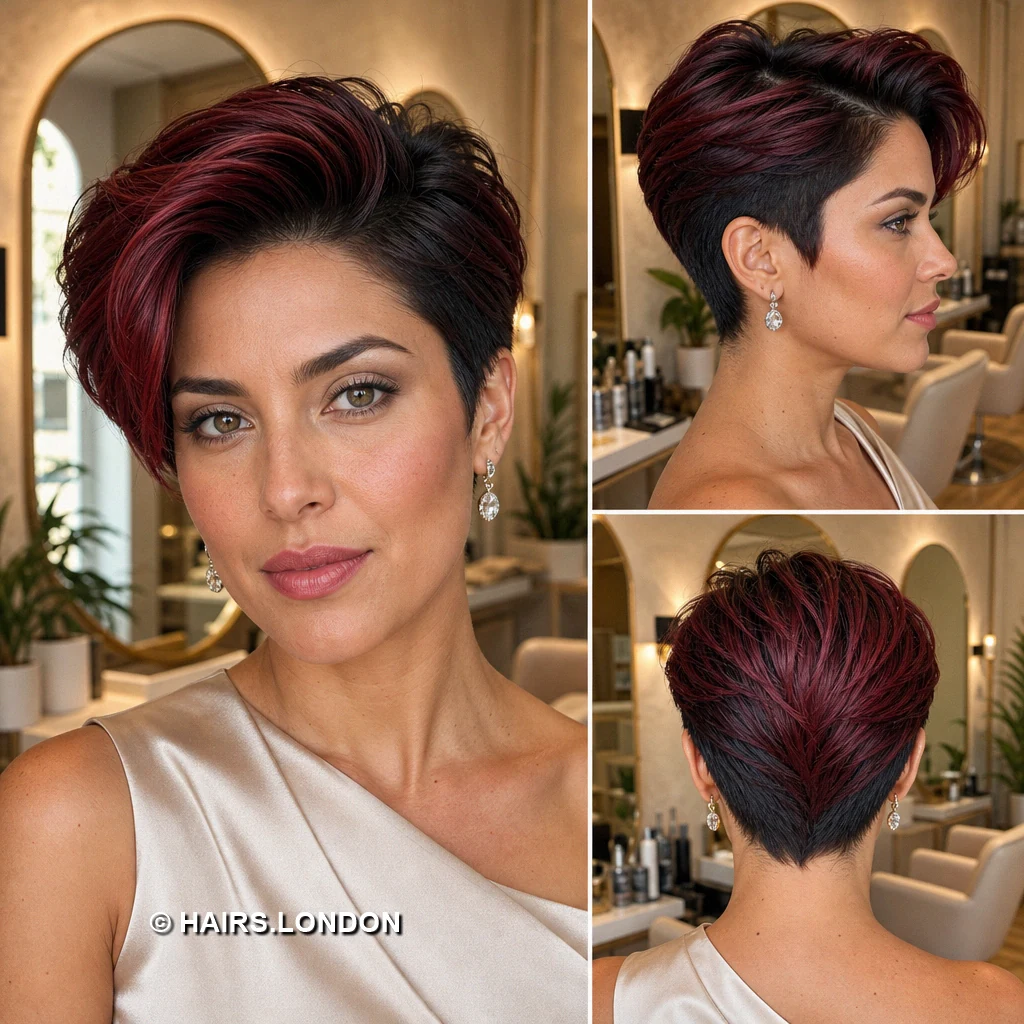
Chestnut brown hair shows subtle red warmth through lightly textured layers. A short, irregular fringe opens the forehead above one eyebrow. Fuller crown pieces twist loosely, giving the cut relaxed height. The sides remain tidy around the ears and temples. Behind, the rounded top narrows into a short nape. Request soft separation rather than sharp spikes through the crown. Work styling cream through damp hair, then dry with fingers. Lift individual sections to keep the finish airy and flexible. Check the back view when discussing how closely to taper. Small perimeter trims can preserve the shape between larger layering appointments.
15. Merlot Pixie with Soft Front Curls
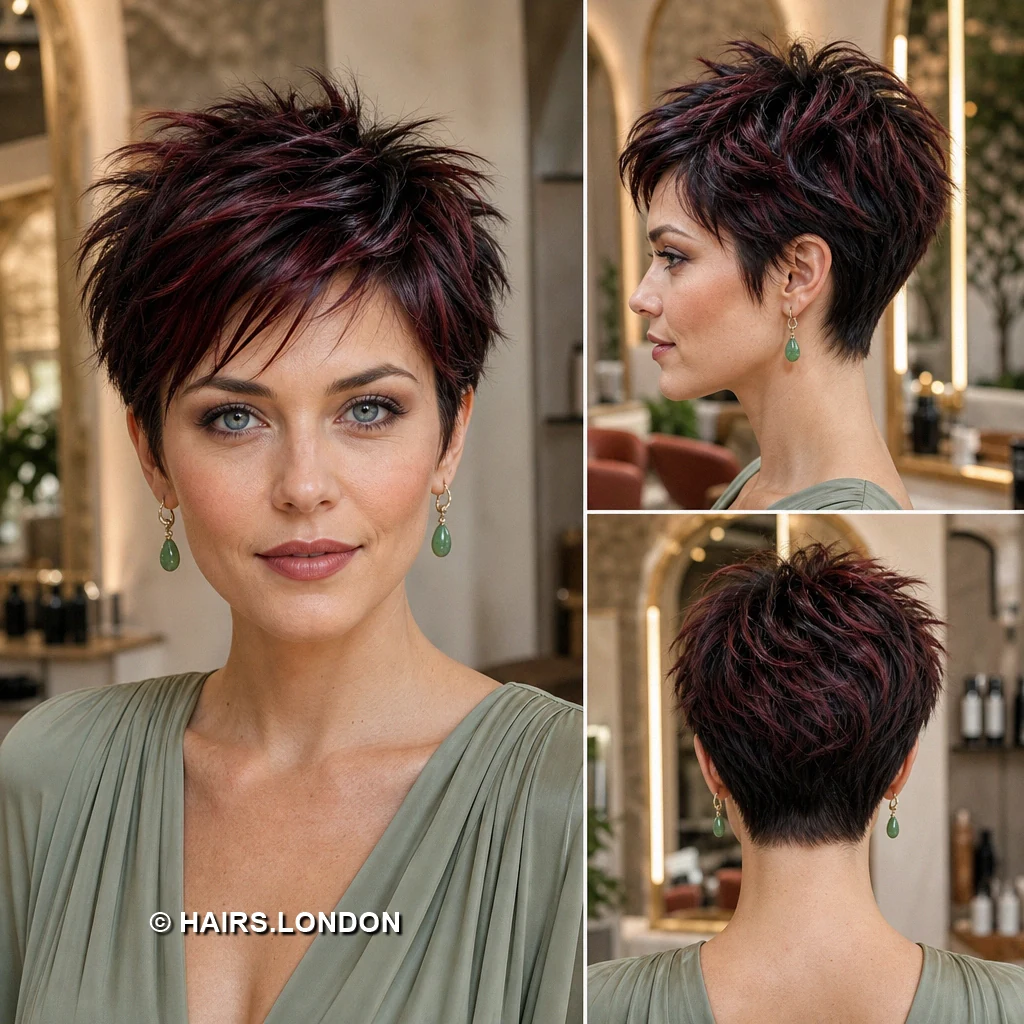
Merlot highlights follow the bends of this softly curled pixie. A curved front piece dips onto the forehead near center. Full upper layers form loose, soft waves above the closer sides. The ears remain exposed, while back curls retain rounded fullness. Shorter dark hair tapers neatly along the lower neckline. Ask your stylist to cut for your natural bend pattern. Scrunch in lightweight curl cream while the hair stays damp. Diffuse gently, or let the longer upper sections dry naturally. Avoid brushing finished curls if you want their natural definition preserved. Refresh the nape without cutting away useful crown length.
16. Berry-Brown Pixie with a Polished Sweep
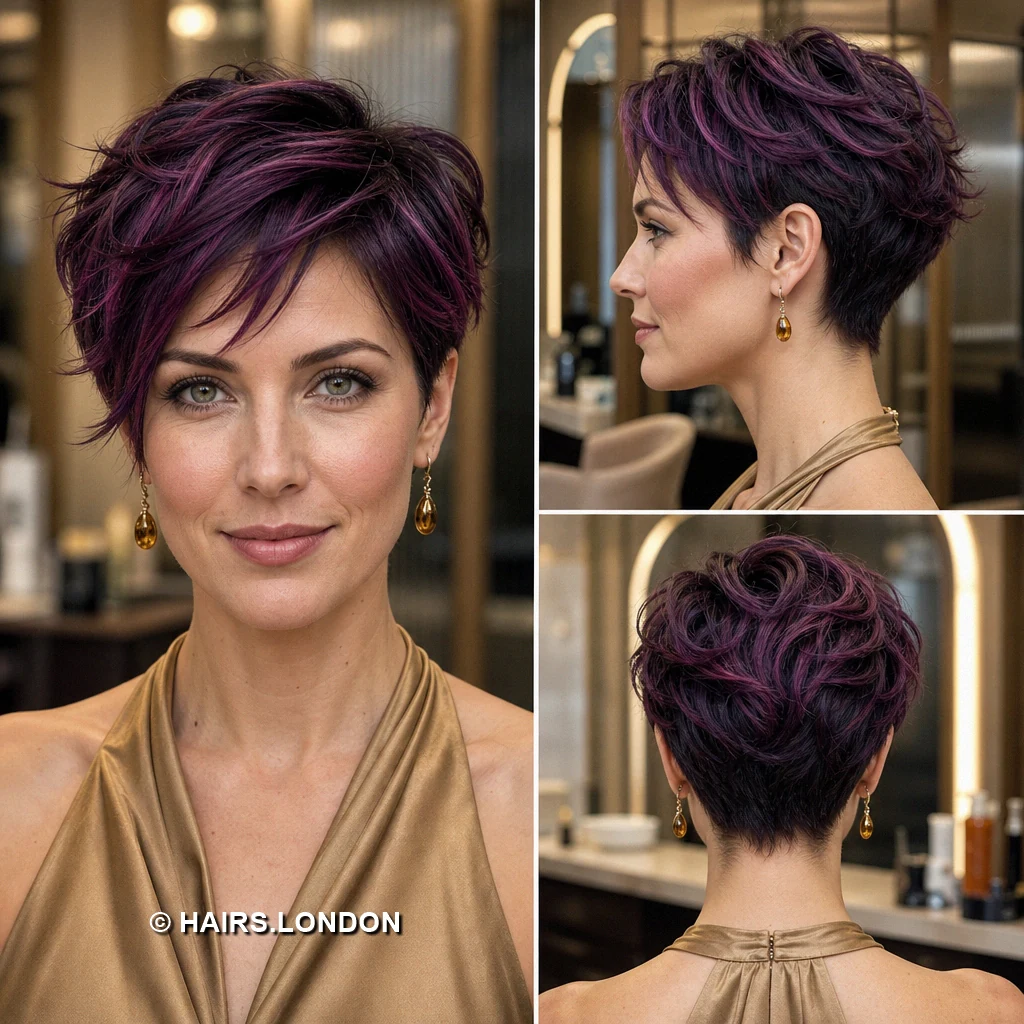
Berry brown tones add warmth across this neatly layered pixie. The long front curves sideways above a softly exposed forehead. Rounded crown layers create soft volume without an obviously choppy surface. Shorter sides sit close around the visible ears here. At the back, the shape finishes in a tidy, close taper. Request connected layers that support the smooth, sweeping front section. Blow dry from the roots while guiding hair across sideways. Add a small touch of cream to control surface flyaways. Maintain some movement rather than fixing every strand into place. Ask for neckline cleanups whenever the taper loses definition.
How to Choose Your Burgundy Pixie Haircut
Start with the length you want around your face. An extended side sweep offers more coverage and styling flexibility; a short, separated fringe opens the forehead. Then compare the side and back views: some of these cuts keep a softly rounded crown, while others rely on stronger contrast between a long top and close nape. Choose a shape that works with your growth patterns and the amount of time you want to spend directing the fringe.
Styling Pixies with Different Textures
For straight hair, lift damp roots with a brush or your fingers, then use a little paste to separate the ends. Hair with a natural wave can be scrunched with lightweight cream and dried gently to retain its bend. For curls, ask your stylist to allow for shrinkage in the fringe and crown; apply curl cream while damp and diffuse gently or air dry. Start with less product than you think you need, especially on short sides.
Keeping Burgundy Color Fresh
These images range from subtle red ribbons to prominent plum and magenta sections, so upkeep will depend on the color placement you choose. Follow your colorist’s guidance on washing frequency and color-safe products, and protect the hair from excessive heat during styling. Ask whether your chosen shade can be refreshed with a gloss or whether the brighter sections will require a more involved color appointment.
Maintaining the Pixie Shape
The close napes and ear areas in these cuts can lose their definition before the longer tops do. Arrange trims according to how quickly your hair grows and how precise you want the outline to remain. At each visit, explain whether you want to preserve fringe length, crown fullness, or both; cutting every section equally short may change the shape you chose.
What to Discuss with Your Stylist
Bring the front, profile, and back views of your preferred cut. Point out the exact fringe length, crown height, side coverage, and nape taper you want. Discuss your natural texture, parting, cowlicks, daily styling routine, and willingness to maintain the color. If you like one image’s haircut but another image’s red placement, say so: the cut and color can be planned separately.
Frequently Asked Questions
What makes these cuts pixies rather than short bobs?
Their close sides and tapered napes sit beneath short, layered crowns, although some have comparatively long fringes.
Which pictured shape leaves the most fringe to style?
The extended side sweep in image 1 leaves substantial front length, while images 6 and 9 also show longer, shaped fronts.
Can I keep my forehead more open?
Yes. The raised front in image 13 exposes the forehead, while the shorter, broken fringes in images 3 and 14 offer less coverage.
Which cuts have the closest-looking napes?
Several taper closely, particularly images 2, 4, 9, and 13. Show your stylist the back view of the one you prefer.
Will a textured pixie work with naturally wavy hair?
It can. Images 8, 12, and 15 show longer upper layers with visible bends; discuss how your own wave pattern will affect the finished length.
How can I create height at the crown?
Lift the roots while drying, then use a small amount of lightweight styling product to separate and support the upper layers.
How do I stop a long fringe from falling into my eyes?
Direct it to the side while drying and use flexible hold if needed. At your trim, identify the longest length that remains comfortable.
Does burgundy color need to cover the whole pixie?
No. Many of these images show red or plum sections over a darker base, especially through the fringe and crown.
How often should I refresh the color?
Ask your colorist for a schedule based on the chosen shade, how much contrast you want to retain, and your washing routine.
Can I keep the top long while trimming the sides?
Yes. Tell your stylist you want to maintain the fringe and crown while cleaning up the ears and neckline.
What should I bring to a salon consultation?
Bring the image’s front, side, and back views, then identify the particular length, texture, taper, and color placement you like.
Which finish requires less deliberate sculpting?
The softer, tousled shapes in images 5 and 14 appear less structured than the raised, rolled fronts in images 6 and 13.
Conclusion
The most useful reference is the one that matches your priorities from every angle, not just the front. Decide how much fringe you want to handle, how close the sides should sit, and whether burgundy should be a subtle accent or the first thing you notice. Those choices will give your stylist a clear starting point for a pixie shaped around your hair.