


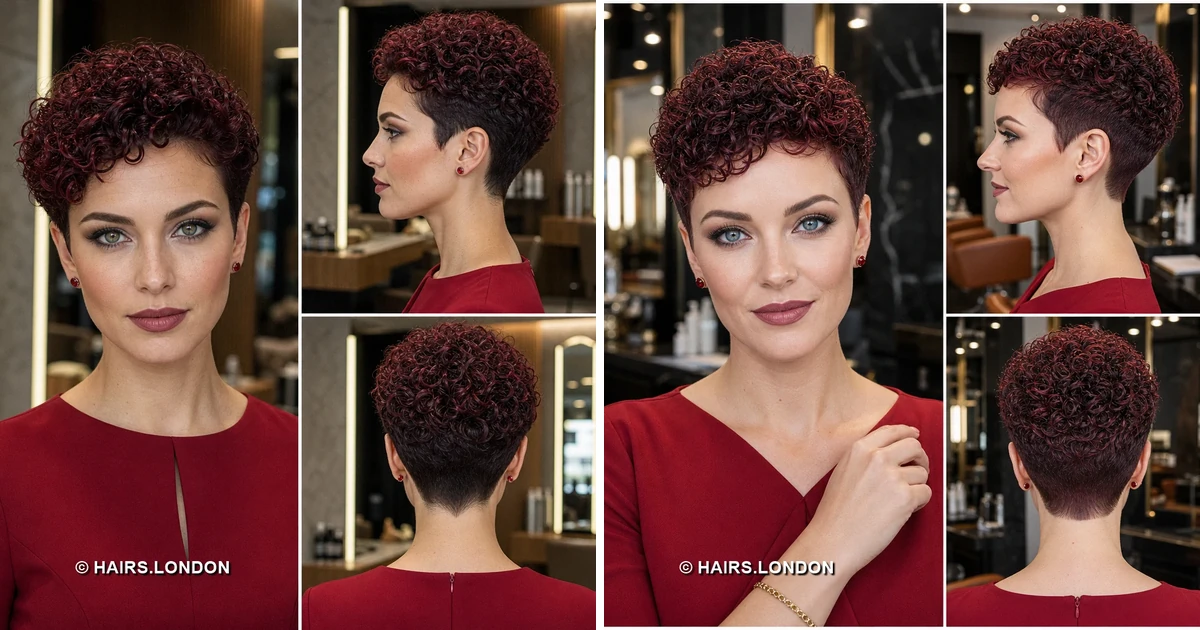
11. Smooth Burgundy Diagonal Pixie
A broad diagonal fringe sweeps across this softly lifted pixie. Burgundy layers lie smoother here, with subtle separation near ends. The crown stays rounded while the sides taper close underneath. A short nape keeps the fuller top looking carefully balanced. Darker hair near the ears emphasizes the brighter upper lengths. Request a long fringe that can travel across your forehead. Blow dry with a brush for smoother direction and lift. Finish with a flexible cream to control stray short strands. Have the sides refined before they bulk beneath the sweep. Ask your stylist how the fringe will sit without styling.
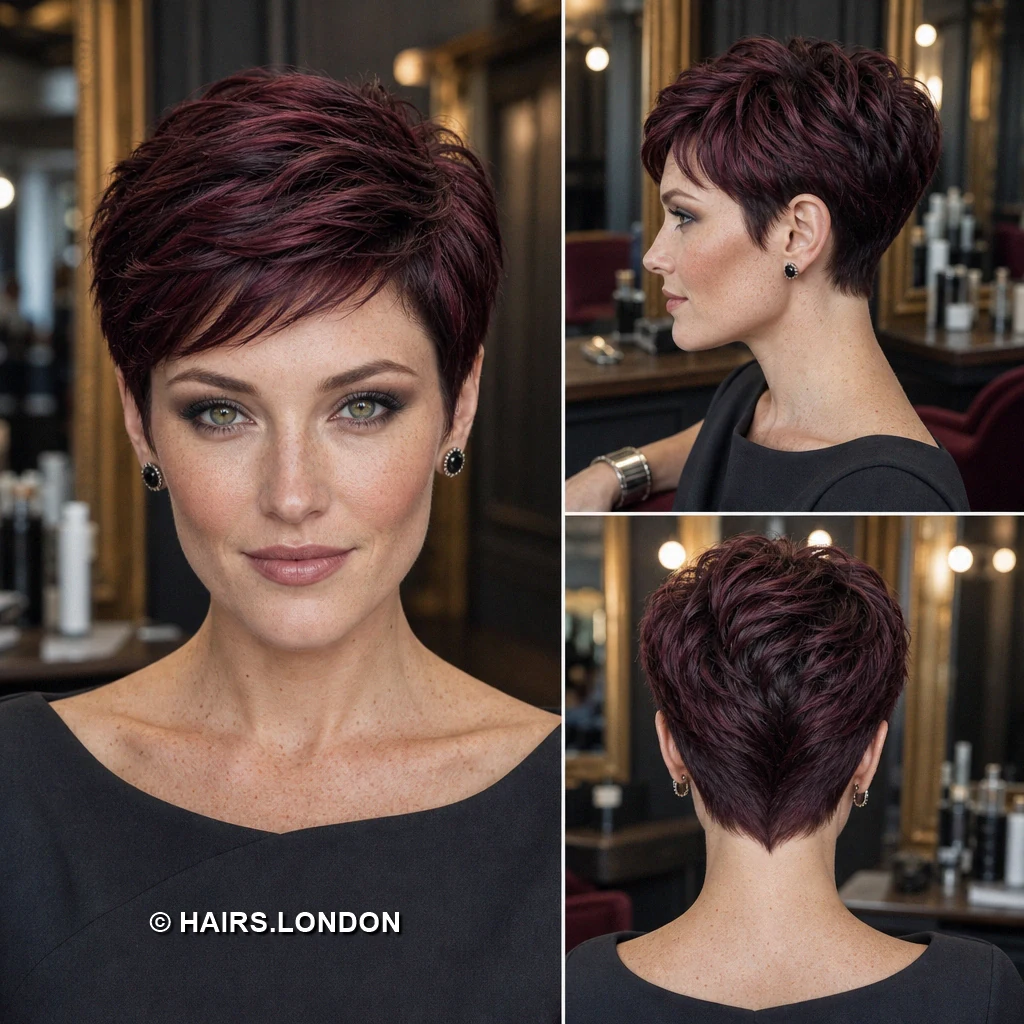
12. Upright Burgundy Spiked Pixie
The front stands high, forming an open, upright spiked quiff. Separated burgundy tips extend through the crown toward the back. Close sides keep the dramatic upper texture visually well defined. A tapered nape reduces weight below the raised back layers. The forehead remains clear because the fringe is styled upward. Ask whether your top has enough length for flexible spikes. Direct warm air at the roots before adding styling paste. Pinch small sections individually instead of lifting everything into clumps. A light spray can help hold height without hardening ends. Trim regularly to prevent longer layers collapsing over shorter sides.
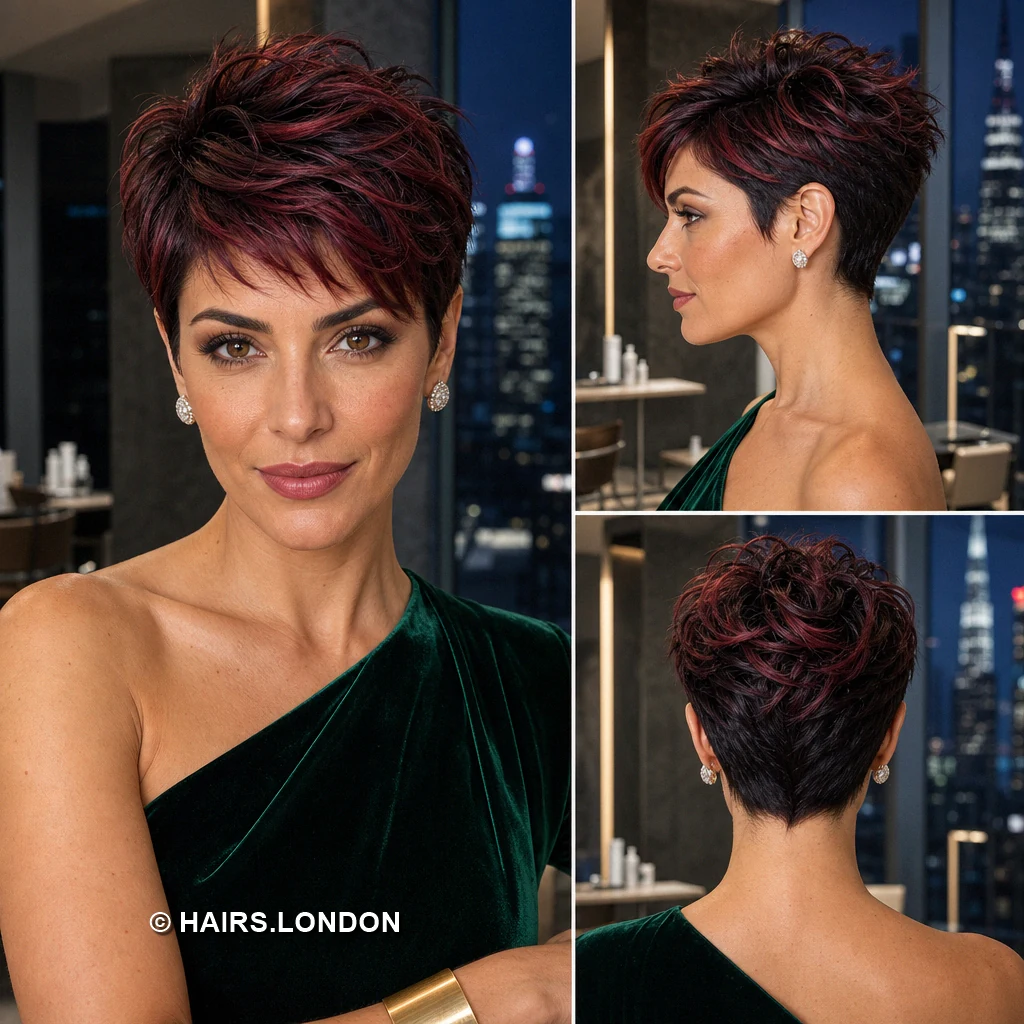
13. Sculpted Plum Burgundy Wave
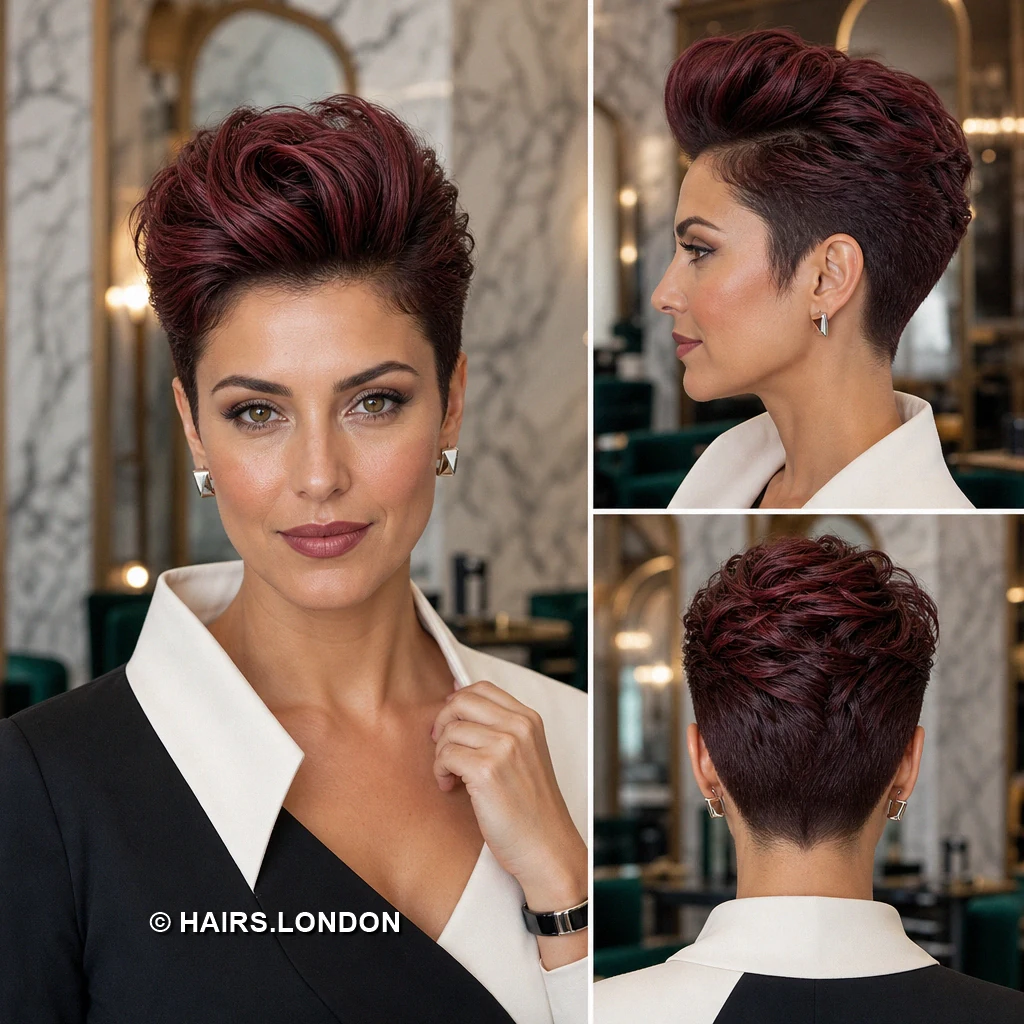
A prominent front wave curves back from the forehead. Plum burgundy lengths flow through a rounded, sculpted upper shape. The shorter sides remain smooth, putting emphasis on that wave. Behind, curved layers settle above a closely tapered nape shape. This style needs enough top length to bend rather than spike. Ask for weight through the front to support its curve. Shape damp hair with a round brush and gentle airflow. Use light styling cream to retain shine and flexible movement. Avoid aggressive thinning that could leave the wave looking sparse. Refresh its outline when the sides begin covering the ears.
14. Neat Burgundy Tapered Pixie
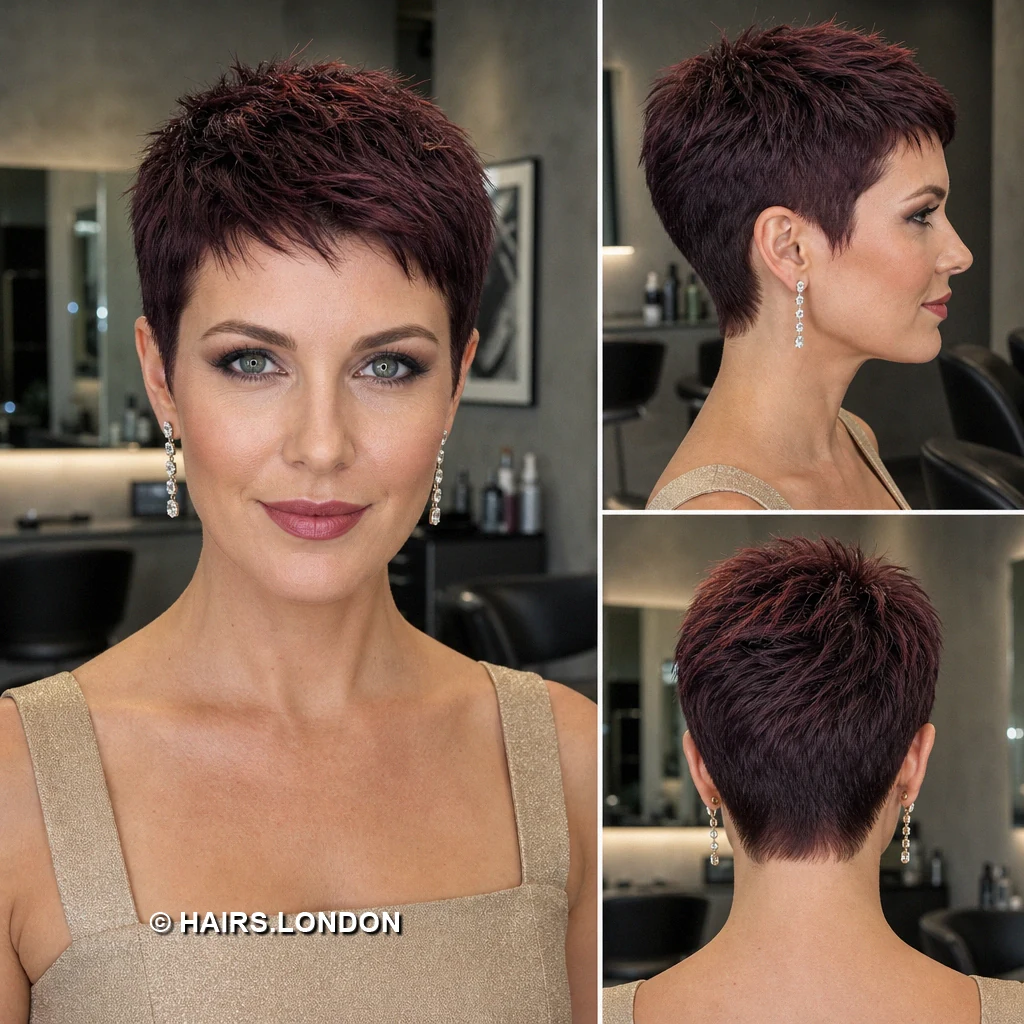
A compact, softly textured top sits over close tapered sides. Burgundy strands sweep sideways, leaving a short, restrained front fringe. The crown retains slight lift without becoming high or spiky. Behind, the back narrows cleanly toward the center neckline point. Darker lower sections give the red upper layers clear contrast. Ask for restrained texture if you prefer a tidier silhouette. Smooth a little cream through damp hair, directing it sideways. Lift the crown gently with fingers before the hair dries. Keep the nape trimmed to maintain its neat, narrow finish. This shape offers noticeable color without requiring elaborate daily styling.
15. Feathered Burgundy High-Front Pixie
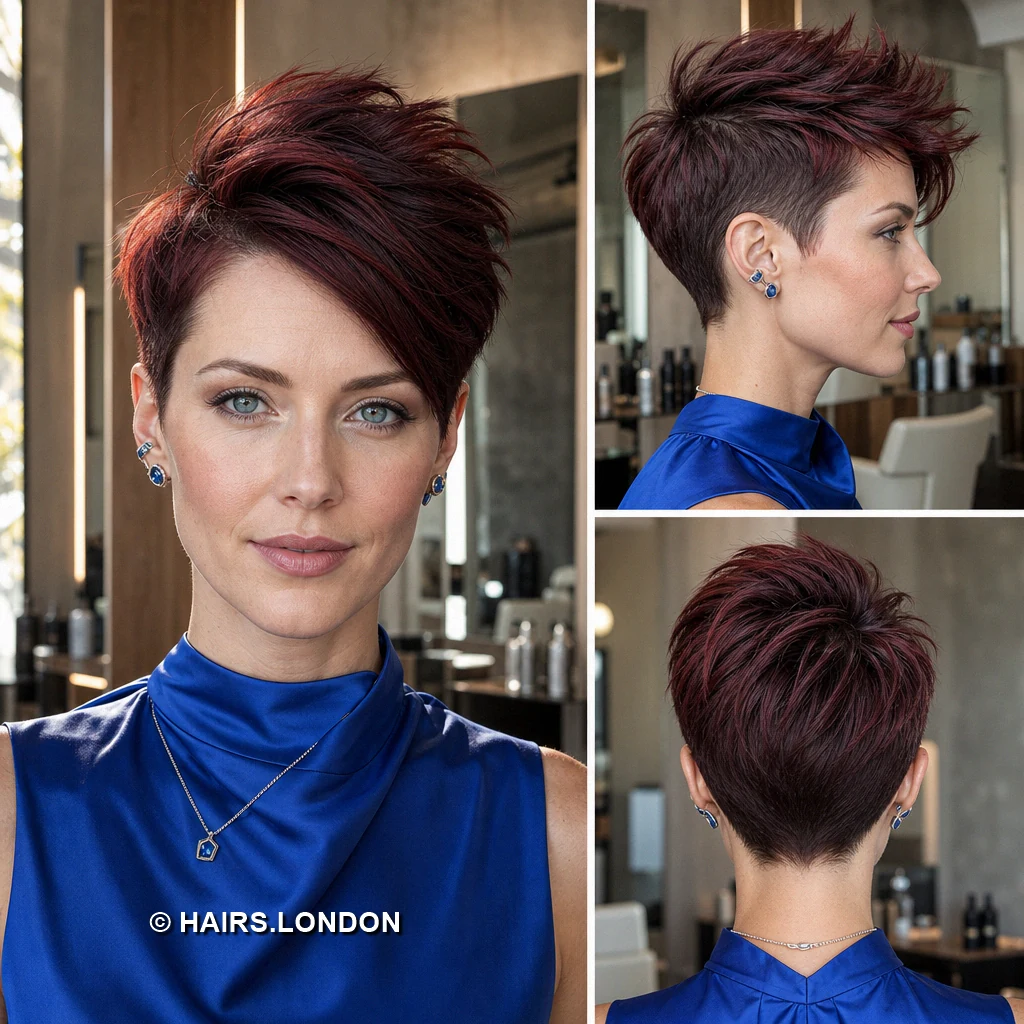
Feathered layers rise from the forehead into a broad crest. Burgundy highlights trace the separated strands across the raised crown. Short, dark sides create a distinct foundation beneath that volume. At the back, pointed lengths meet a tight nape taper. The front stays open, with no fringe covering the forehead. Request feathered ends rather than a single solid upper block. Lift damp roots with fingers while blow drying away from face. Add a little paste to define the surface layers. Book a trim when the sides lose their close shape. Discuss how much height feels comfortable for everyday styling routines.
16. Long Burgundy Side-Swept Pixie
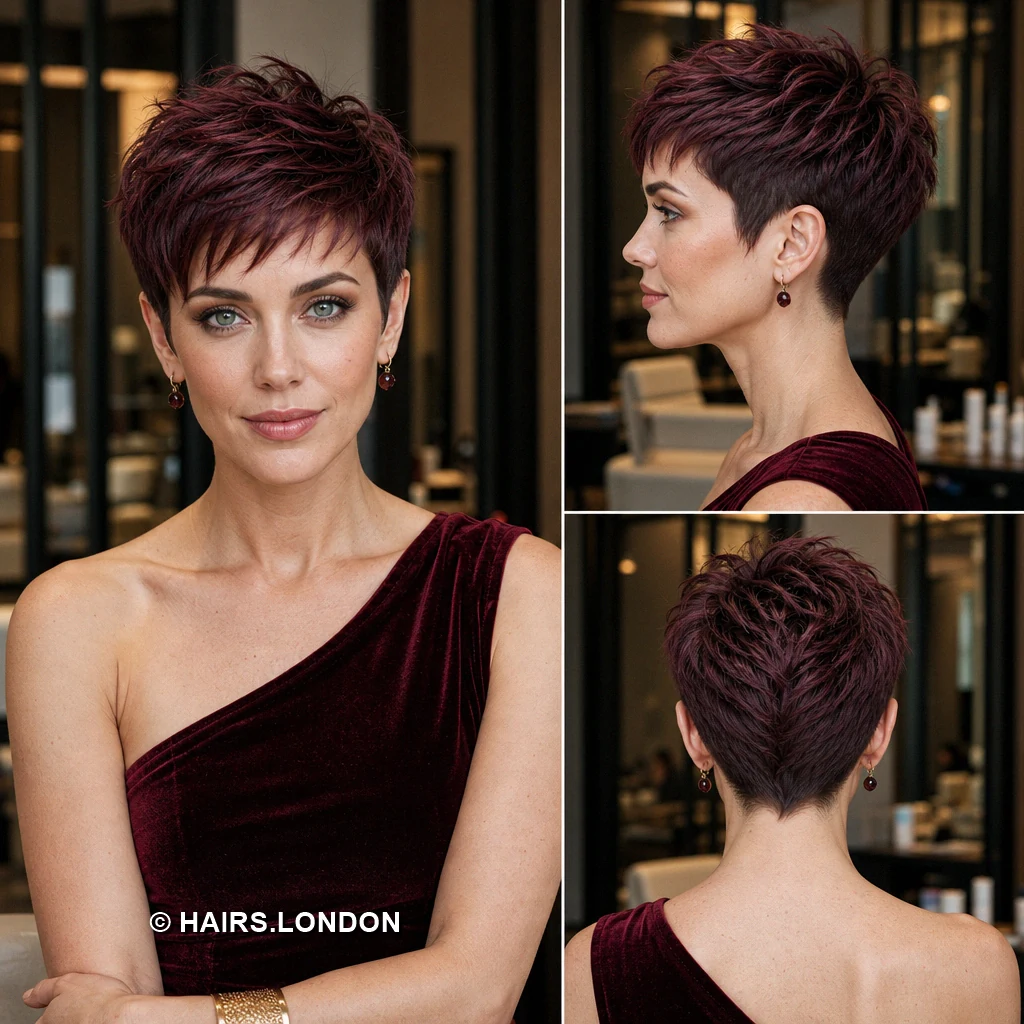
A long, sleek fringe travels diagonally across the forehead. Burgundy upper lengths create a strong contrast with shorter sides. The crown remains full, allowing the sweep to sit smoothly. Behind, layered hair narrows into a neatly tapered nape. One side appears especially close beneath the extended front section. Ask your stylist to agree on the shortest acceptable fringe. Use a brush to direct damp hair across its parting. A light serum can smooth ends without weighing roots down. Trim the taper often enough to preserve the asymmetric profile. Expect longer fringe pieces to need more frequent, careful daily styling adjustment.
17. Dense Burgundy Ringlet Pixie
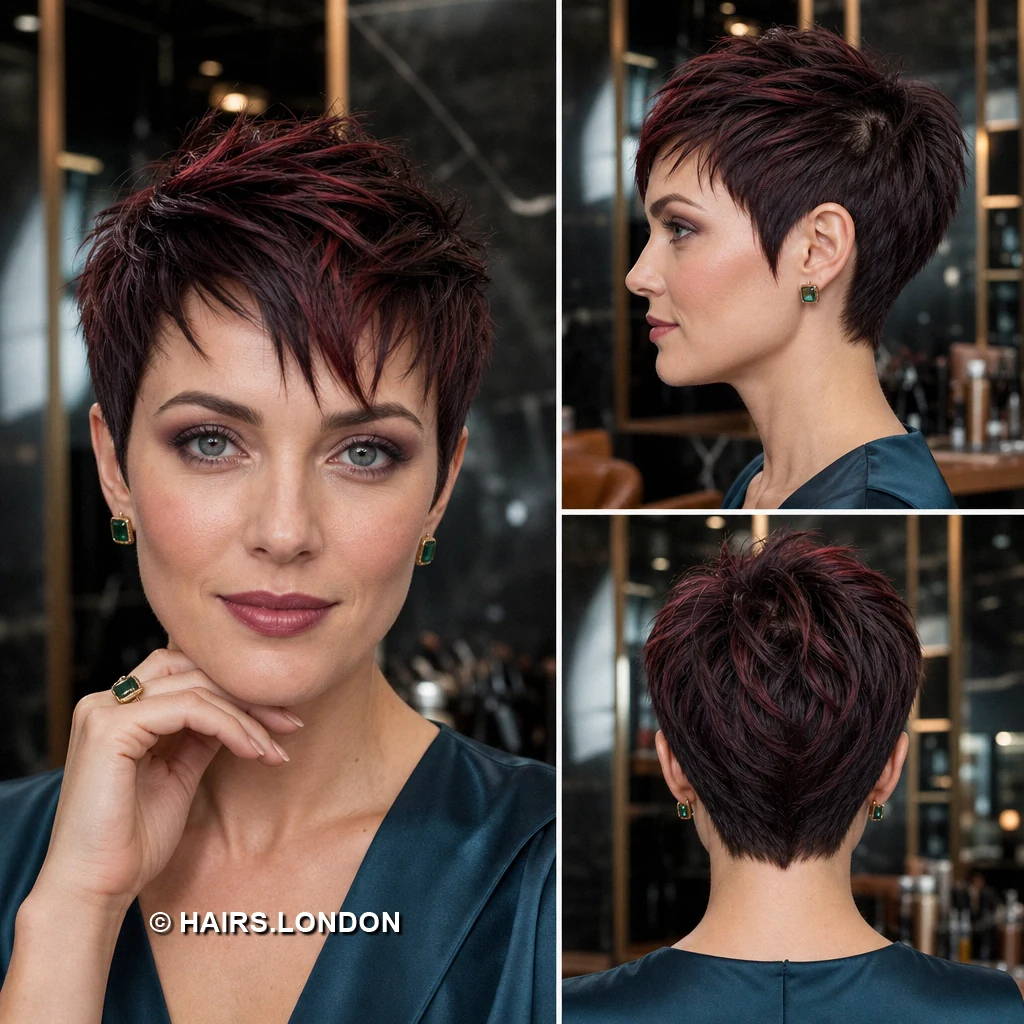
Dense, small ringlets form a rounded cap above tapered sides. Burgundy red curls continue across the crown and short fringe. The sides sit close while retaining a softly blended edge. At the back, curls end above the closely shaped nape. This fuller curl pattern differs from the taller, brushed styles. Request shaping while accounting for how much your curls spring. Apply curl cream evenly, then encourage definition by gentle scrunching. Diffuse on low airflow to reduce frizz around the fringe. Refresh flattened curls with water before adding additional styling product. Keep the perimeter tidy without cutting into upper curl density.
18. Soft Burgundy Brushed-Back Pixie
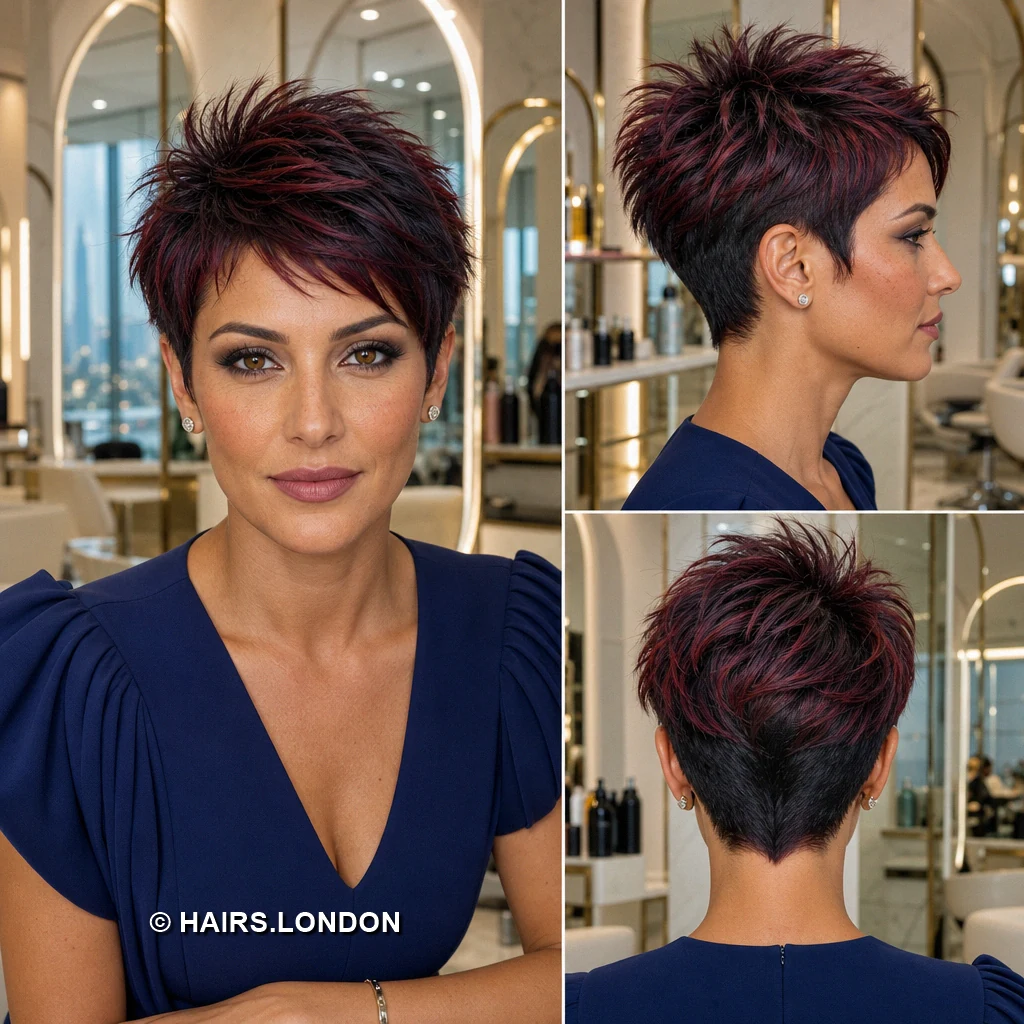
Longer front layers brush backward into a softly rounded crown. Burgundy tones appear among darker strands rather than covering everything. A gently lifted hairline keeps the face free of fringe. The sides sit short and smooth around the visible ears. Behind, the layered top tapers gradually toward a narrow nape. Ask for enough front length to create that backward flow. Blow dry with fingers, lifting roots and guiding ends backward. Finish with a flexible cream instead of firm, stiff gel. Maintain side length so the soft crown keeps its shape. Check your growth pattern before choosing this brushed back direction.
19. Layered Burgundy Sweeping Pixie
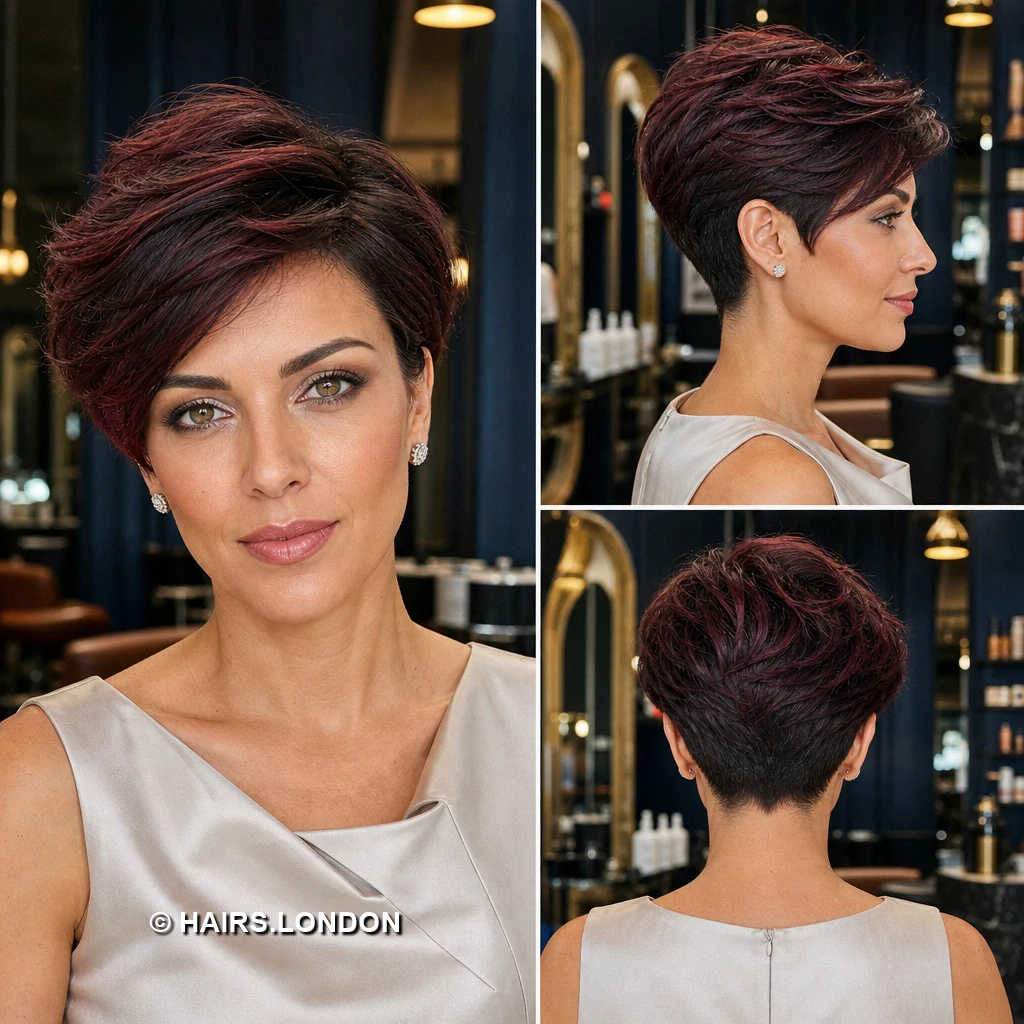
Layered burgundy strands sweep across a full, textured upper section. The long fringe angles toward one side of the forehead. Shorter, dark sides keep the silhouette close around both ears. The crown has loose movement that continues toward the back. A clean, pointed taper finishes the shape at the nape. Ask for layers that preserve volume without creating heavy bulk. Guide damp hair sideways with a brush, then loosen strands. Use minimal paste to separate ends and support crown movement. Schedule trims before the sweeping fringe becomes difficult to control. Color safe care helps protect the visible burgundy upper layers.
How to Choose a Burgundy Pixie Haircut
Start with the amount of top length you want to style. The close crop and neat taper offer compact shapes; the rolled quiff and sculpted wave need substantially more length in front. If you like hair off your forehead, compare the upright styles. If you want coverage, look at the diagonal and extended fringes. Pay equal attention to the side and back views: a close taper changes the outline as much as the fringe does.
Styling Straight, Wavy, and Curly Textures
For straighter hair, blow dry the roots in the direction needed for your chosen sweep or quiff, then define a few ends with light paste. Wavy hair can be guided with fingers and a little styling cream; avoid brushing away the movement once dry. For curls, preserve enough length for the curl pattern, apply product evenly to damp hair, and diffuse gently. Use less product than you think you need at first, especially on short layers.
Keeping Burgundy Color Fresh
The images show brighter burgundy through many of the longer top sections, with darker hair visible underneath. Ask your colorist whether you want that contrast maintained as it grows. Wash with a color-safe cleanser, avoid unnecessarily hot water, and use heat protection when blow drying. Red tones can change between appointments, so discuss whether a gloss or another color refresh suits your starting shade and desired result.
Maintaining the Pixie Shape
These cuts rely on a clear difference between the top and the closely shaped sides or nape. Book trims according to how quickly your own hair grows and how precise you want that outline to remain. A fringe may need attention before the rest of the cut, while a lifted quiff can lose height as its layers get longer. Take note of which area becomes difficult to style first and mention it at your next appointment.
What to Discuss with Your Stylist
Bring the image that best matches your preferred front, then show its side and back views as well. Agree on fringe length, crown height, how close to cut around the ears, and whether you want a pointed or softer nape. Explain your natural texture, growth patterns, daily styling time, and color-maintenance preferences. Ask your stylist to show you how to recreate the finish with a realistic amount of product.
Frequently Asked Questions
What makes these burgundy pixie haircuts different from one another?
The main differences are top length, fringe direction, crown texture, and the closeness of the sides and nape. Their burgundy tones also range visually from subtle highlights to more prominent red curls.
Which pictured option has the shortest-looking fringe?
The close textured crop has a very short, broken fringe. The neat tapered pixie also keeps its front relatively restrained.
Which cuts leave the forehead most open?
The high rolled quiff, upright spiked pixie, feathered high-front pixie, and brushed-back pixie direct the front hair away from the forehead.
Can a burgundy pixie work with naturally curly hair?
Yes. The rounded curl pixie and dense ringlet pixie show short tapered sides with enough length on top for visible curls. Ask your stylist to account for shrinkage.
What should I request for a side-swept fringe?
Specify where you want the longest point to fall and how much forehead coverage you prefer. Show your stylist the front and profile views of the example you choose.
Do the sides have to be shaved?
No. Many of the pictured sides are closely tapered rather than visibly shaved. Discuss how much coverage you want around your ears.
How can I add height to a quiff without making it stiff?
Lift damp roots while blow drying, then use a small amount of workable paste or flexible spray. Add product gradually so the longer front can still move.
How do I keep short curls defined?
Apply curl cream or a light gel to damp hair, diffuse gently, and avoid repeatedly touching the curls as they dry. Refresh them with a little water when needed.
Will darker roots work with burgundy lengths?
Darker roots and underlayers are visible in several images and add contrast to the red upper sections. A colorist can advise on placement for your starting color.
How often should I have a pixie trimmed?
There is no single schedule for every cut. Arrange a trim when the side taper loses definition, the fringe becomes inconvenient, or the top no longer styles as intended.
What styling product suits a smooth sweeping pixie?
A light cream or serum can help smooth the longer section. Apply sparingly, especially near the roots, to avoid flattening the crown.
What should I ask before committing to burgundy color?
Discuss your current color, the burgundy tone you want, whether you prefer visible darker roots, and the washing and refresh routine you can maintain.
Conclusion
The most useful comparison is not simply curl versus quiff: it is how each burgundy pixie balances its fringe, crown, sides, and nape. Choose a silhouette you can style with your natural texture, then use the matching side and back views to make your salon consultation more precise.