


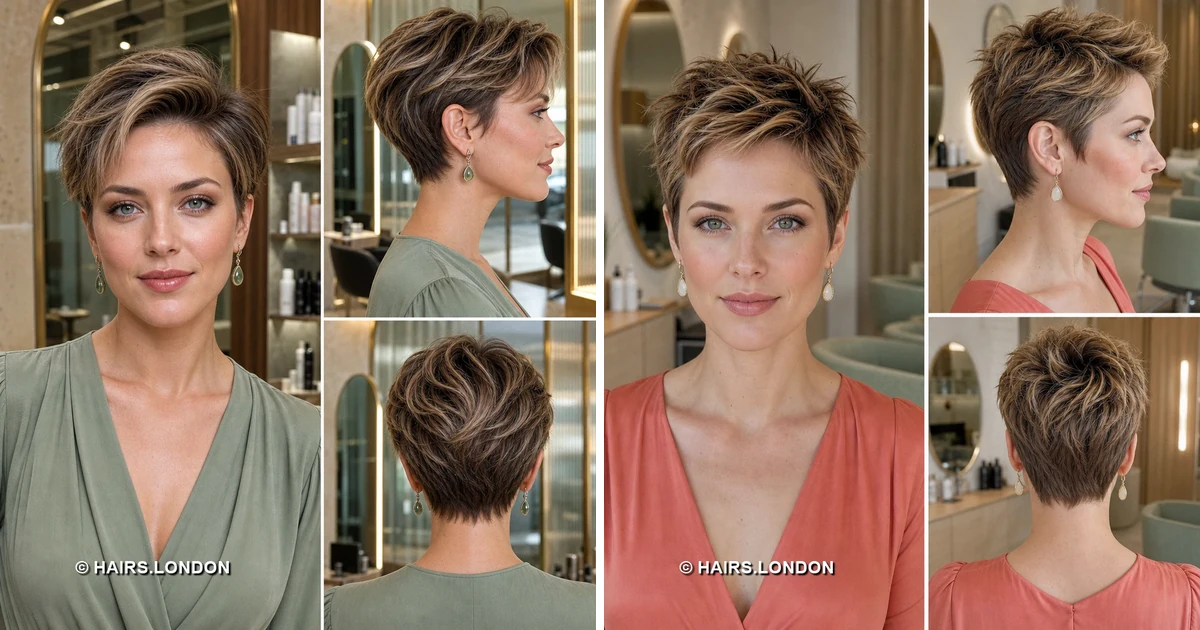
11. Rose-Highlighted Pixie with a Sculpted Side Wave
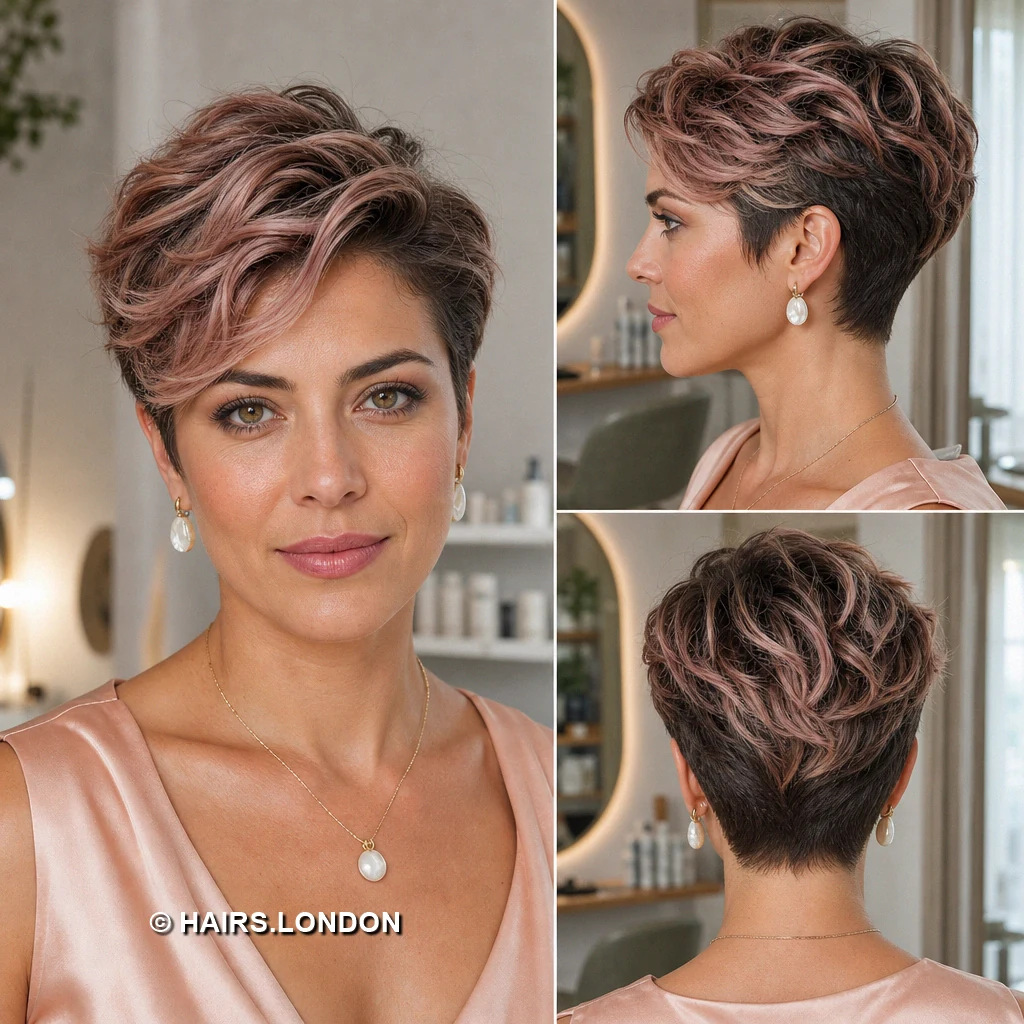
Muted rose highlights weave through this dark, textured pixie. A defined front wave rises before falling toward one side. The crown carries loose bends above closely cut dark sides. Short back layers taper toward a clean edge at neck. Ask your stylist to preserve the front’s longer curved pieces. Dry them upward and sideways to encourage the lifted wave. Use flexible paste to separate bends without making them rigid. Keep conditioner mainly on longer sections when extra softness helps. Rose tones may change between appointments, so discuss refresh options. Trim the darker taper to maintain its contrast with upper volume.
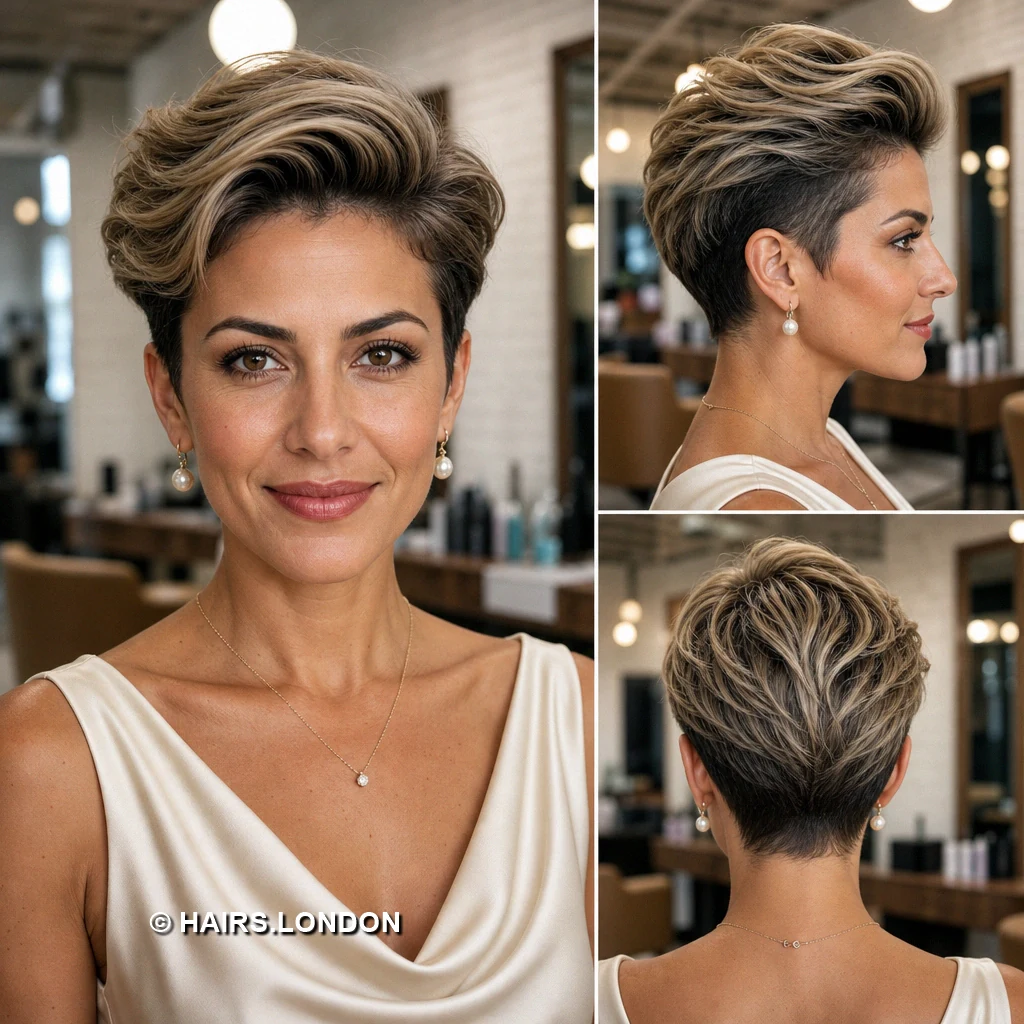
12. Asymmetric Pixie with an Extended Side Fringe
One extended fringe sweeps low beside the eye here. Shorter hair on the opposite side emphasizes that asymmetric front. Chestnut highlights trace the long sections over dark brown. The crown remains lifted, while the back tapers closely inward. Ask for a clear length difference before any texturizing starts. Dry the longer side away from roots for natural height. Direct its ends forward to retain the distinctive sweeping finish. A light cream controls flyaways without collapsing the layered crown. Discuss whether the fringe needs occasional adjustment between regular full trims. Keep the nape tidy so its elongated front remains especially prominent.
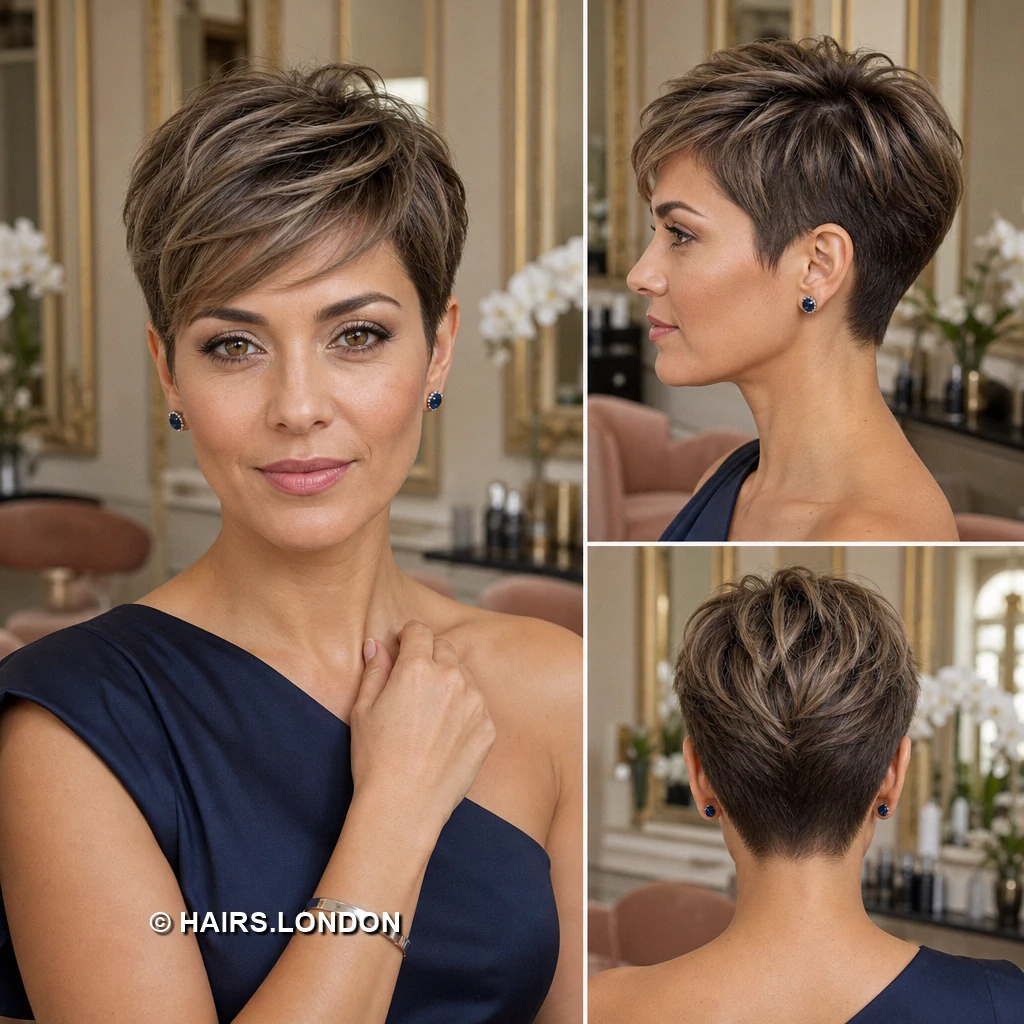
13. Lifted Brown Pixie with a Broad Highlighted Wave
A broad highlighted wave rises from this pixie’s front. Darker brown underneath gives the lighter upper strands definition. The crown has generous height and softly separated shorter back layers. Short sides follow the ears, then narrow toward the neck. The nape stays close beneath the visibly fuller upper shape. Request layered length overhead rather than a uniformly short crop. Brush the front upward while directing its tips across gently. Use a small amount of pliable paste for flexible hold. Avoid flattening the wave when smoothing the shorter side sections. Maintain the close taper to keep the silhouette crisp from behind.
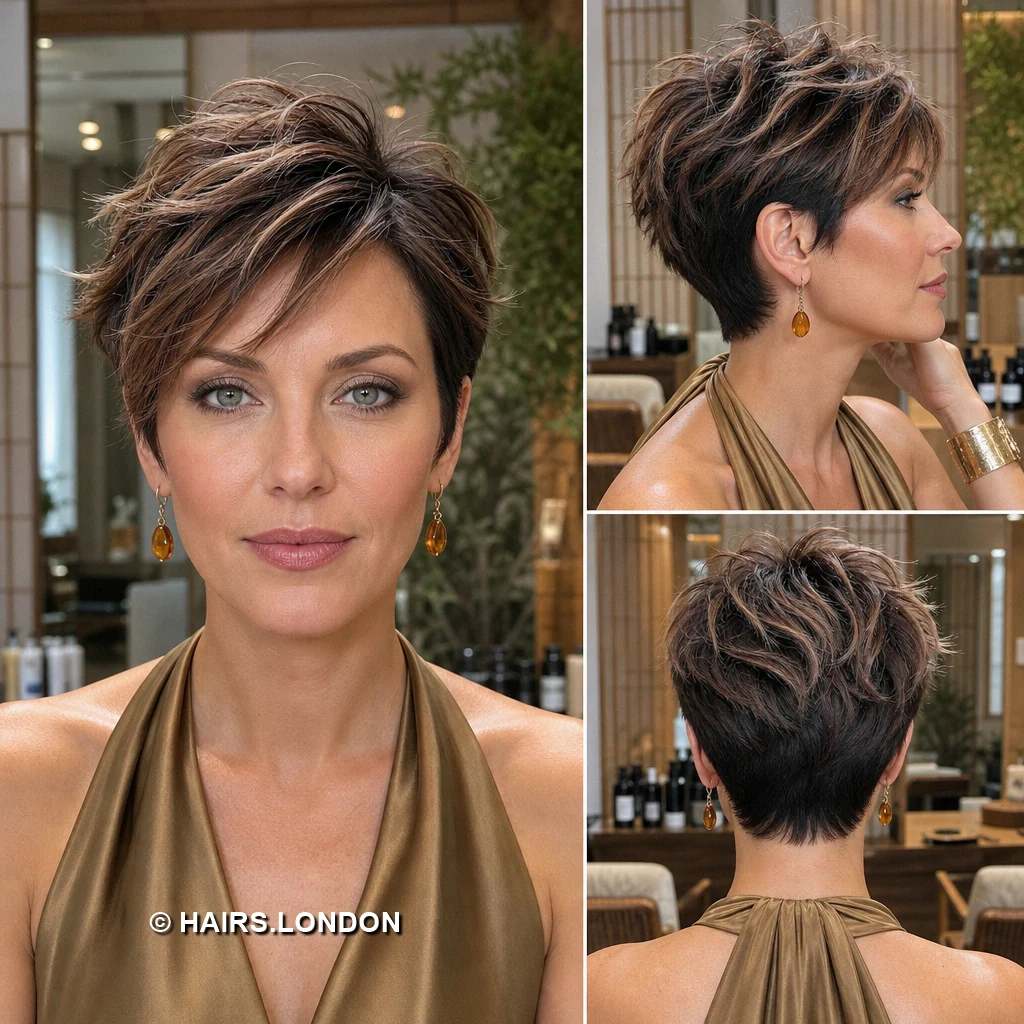
14. Neat Side-Fringed Pixie with Fine Highlights
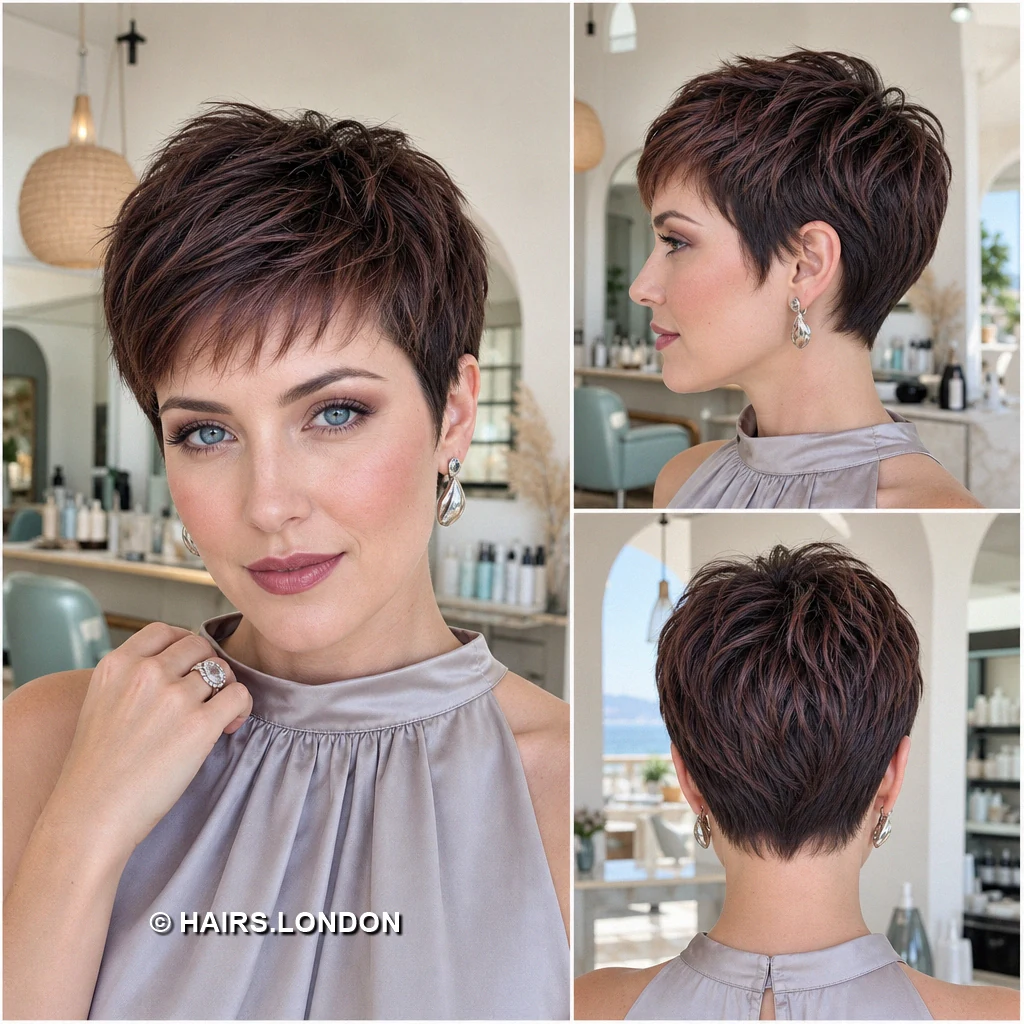
Fine highlights gently brighten the top of this neatly rounded pixie. A side fringe skims diagonally across the upper forehead. The crown appears softly layered, with no sharply separated spikes. Close sides and a short nape give it definition. Ask for a fringe that moves without becoming overly thin. Dry the top in its intended direction using gentle airflow. Tuck shorter pieces toward the ears for a tidy outline. Smooth only the surface if you want to preserve volume. Discuss highlight spacing so darker hair remains clearly visible between strands. Recut the sides when their rounded outline starts spreading outward.
15. Voluminous Layered Pixie with a Curved Front
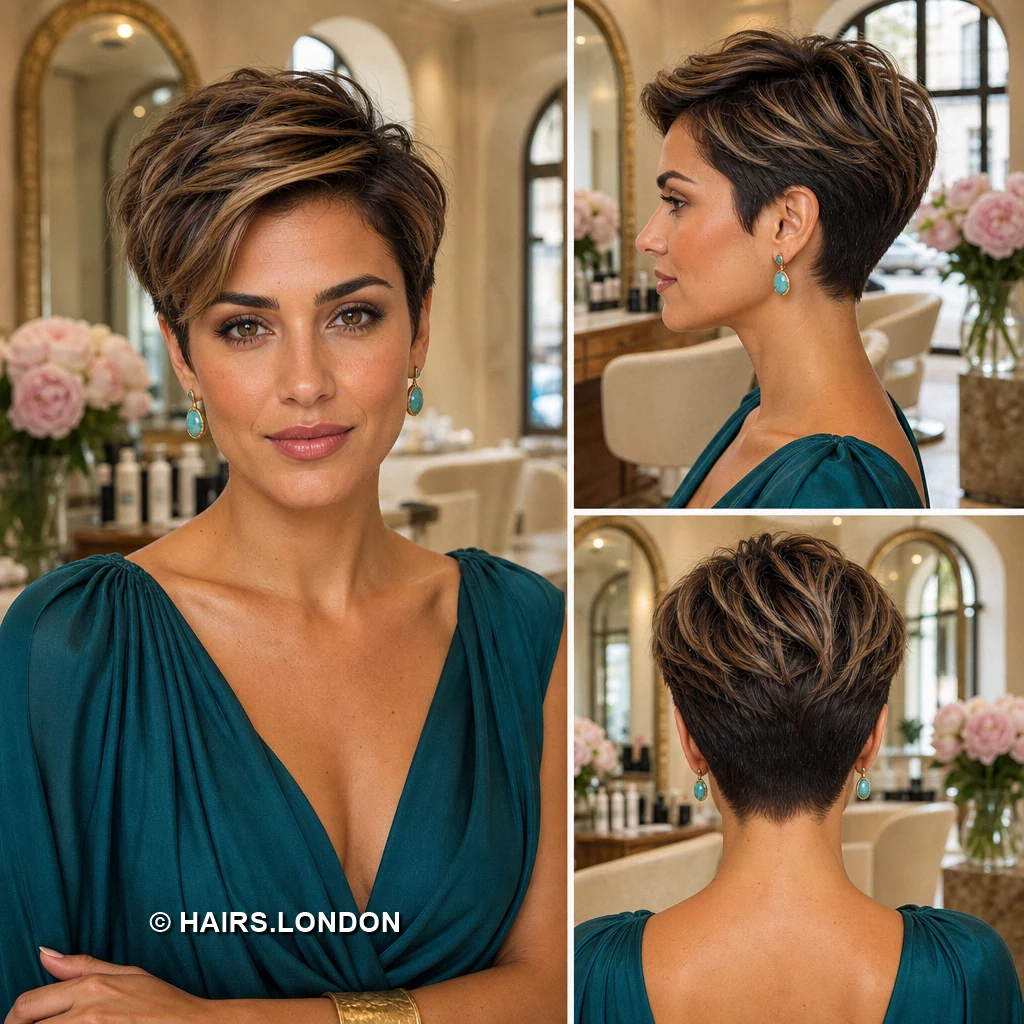
Longer upper layers create an abundant, loosely curved crown. A sweeping front piece drops toward the forehead before lifting. Delicate beige highlights follow subtle bends through the brown top. Shorter dark sides and nape ground the fuller silhouette. Ask for internal layers that reduce weight while keeping ample length. Lift damp roots with a brush to build airy volume. Shape the front with fingers rather than pressing it flat. Use flexible paste sparingly on the most visible highlighted sections. Let the darker side areas remain compact and lightly styled. Frequent precise edge trims help distinguish the top from shorter lengths.
16. Feathered Pixie with a Wispy Tapered Nape
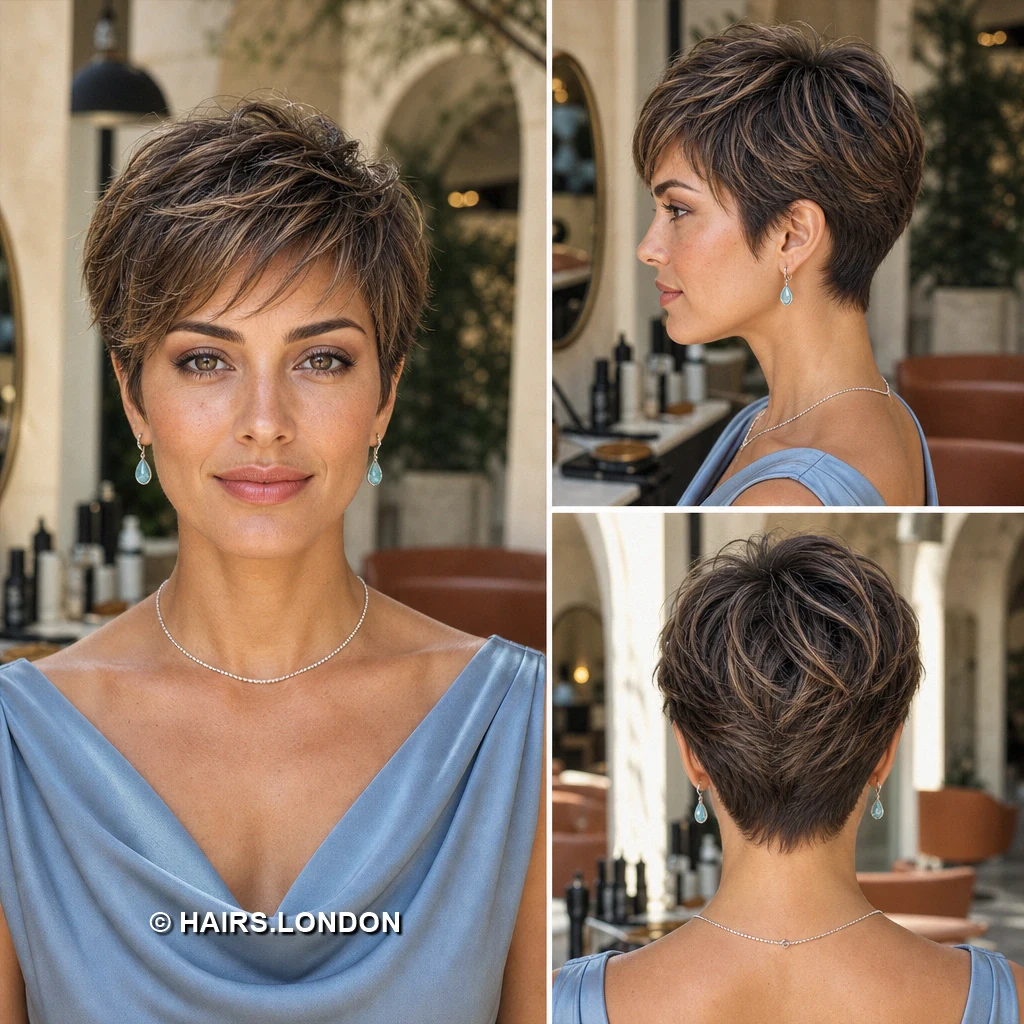
Feathered upper layers give this pixie a relaxed outline. The fringe breaks into soft, fine pieces across the forehead. Brown and beige strands create visible movement through the crown. The sides stay short and tidy, while the nape finishes slightly wispy. Ask for gentle texturizing rather than an aggressively clipped back. Dry with fingertips to keep individual layers loose and separated. A tiny amount of cream can settle flyaway front pieces. Avoid heavy wax that might gather the fine fringe together. Check how the nape falls before choosing its length. Regular shaping prevents the softly tapered back from growing shapeless.
17. Full Side-Swept Pixie with a Textured Back
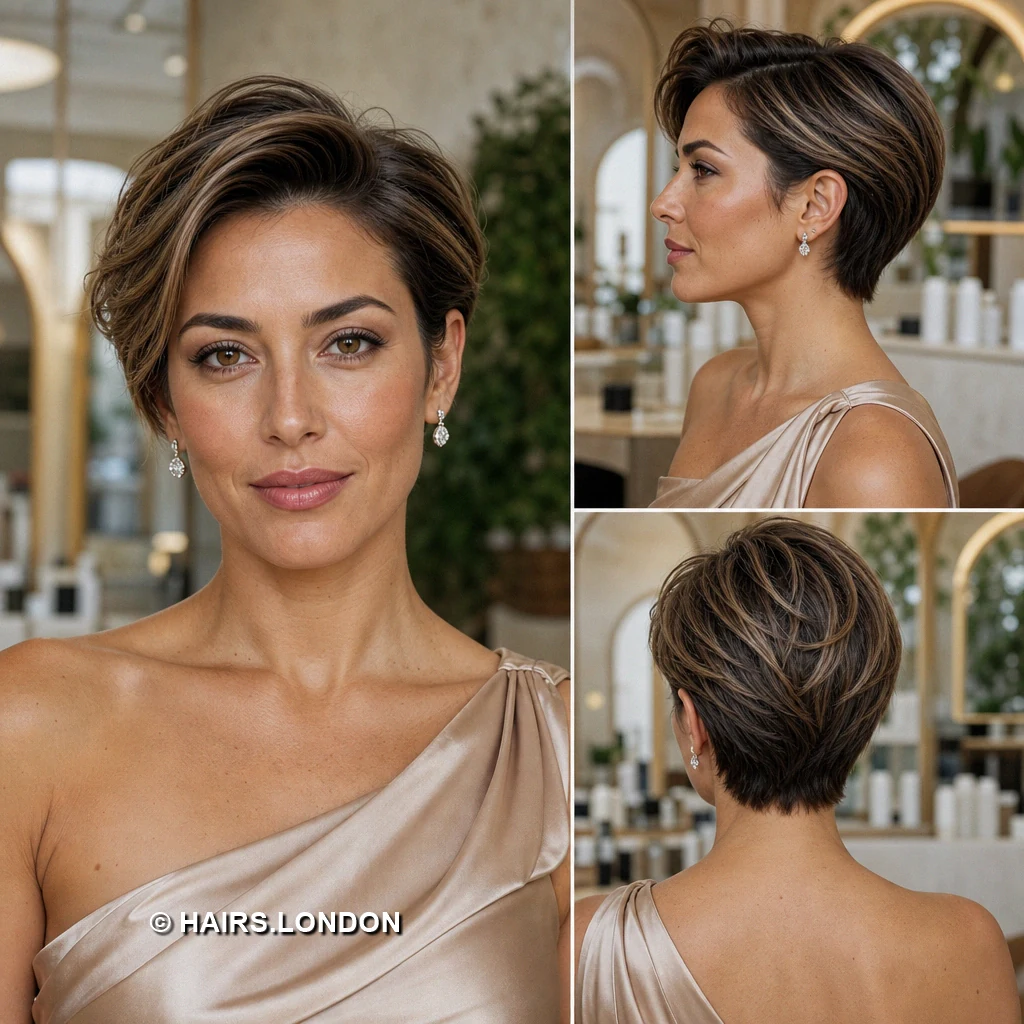
A full side sweep travels across this pixie’s front. Fine highlights follow the curve through the layered top. The crown has soft height and a visibly textured back section. Close sides expose the ears above a neatly tapered nape. Ask for sufficient front length to support the sweeping shape. Dry from the part, gently guiding upper layers sideways and back. Use lightweight cream to define bends without stiffening the surface. Keep the shorter side smooth for contrast with crown movement. Discuss whether your natural part supports this sweeping front direction. Trim the nape before its clean, narrow outline grows out.
18. Short Piecey Pixie with an Upright Crown
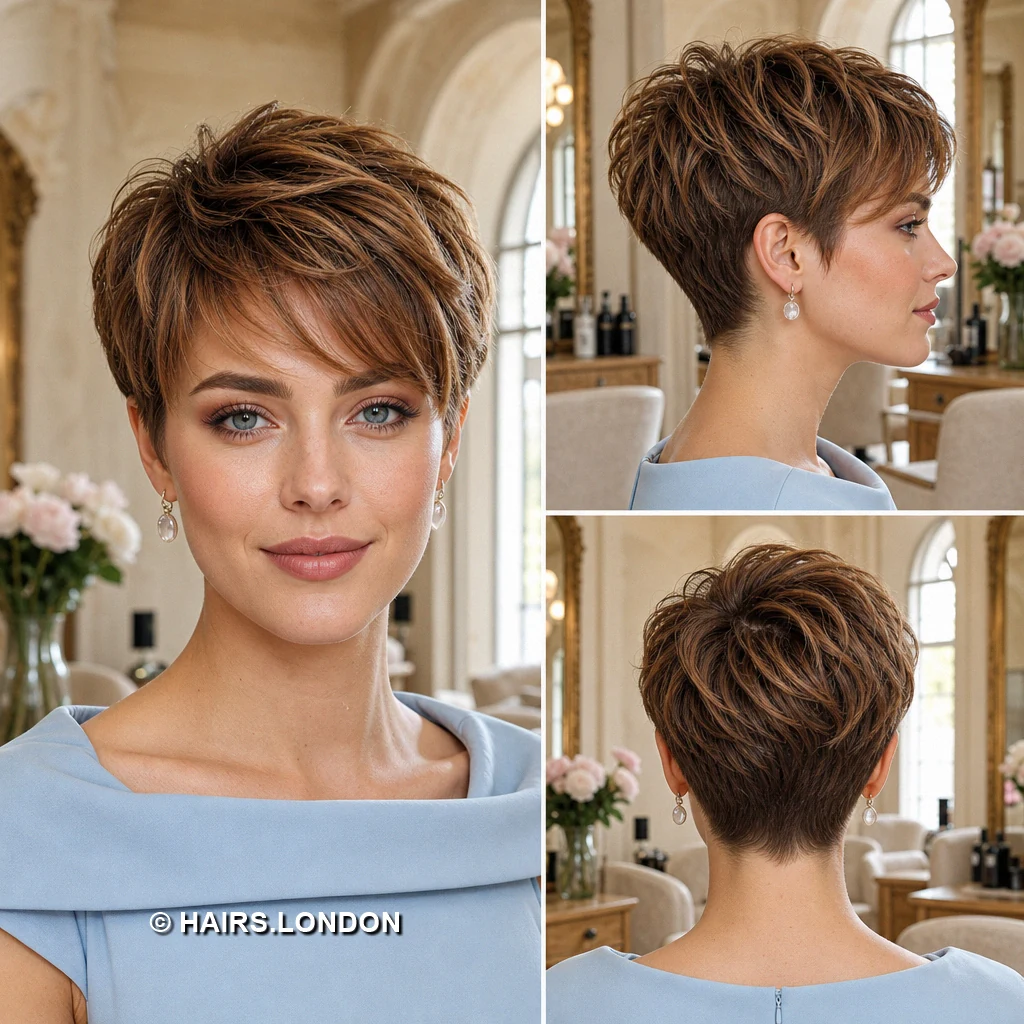
Short, piecey layers stand upward across the textured crown. Blonde highlights emphasize individual tips above a deeper brown base. The front stays open, with only scattered pieces near forehead. Tapered sides follow the ears into a closely finished nape. Request short layers with enough length to bend, not bristle. Dry against the growth direction to encourage root lift. Pinch selected tips with matte paste for separated definition afterward. Leave a few strands softer to avoid an overly uniform finish. Ask how your crown growth pattern affects the upright styling. Trim frequently if you want the compact sides to remain distinct.
19. Spiky Highlighted Pixie with a Close Taper
Separated spikes give this short pixie an energetic crown shape. Lighter brown highlights pick out their direction against darker hair. The front lifts away from the face instead of falling. Sides sit close around the ears and taper behind them. A neat nape completes the compact outline beneath textured height. Ask for varied upper lengths so the tips separate naturally. Blow dry upward with fingers before applying any styling product. Work a small amount of paste onto chosen ends. Keep the sides flatter to highlight the difference in length. Return for regular trims once the spikes lose their easy separation.
How to Choose a Highlighted Pixie Cut
Start with the front: a long side sweep offers more styling flexibility, while a wispy fringe feels lighter and an open forehead puts the emphasis on crown height. Then compare the side and back views. A close taper needs more frequent shaping than a softer, slightly longer nape. Choose a crown length that works with your hair’s density and natural growth direction, not just the amount of lift shown in a styled photograph.
Styling Different Hair Textures
Fine hair often needs a small amount of root mousse and lightweight finishing product to keep the top from collapsing. Dense hair may need internal weight removed during the cut; use fingers and a little pliable paste to show its layers. For naturally wavy hair, let the wave guide the fringe and crown instead of forcing every piece straight. If your hair dries very flat or changes direction at the crown, ask your stylist to demonstrate the blow-dry movement your chosen shape requires.
Keeping Highlighted Color Fresh
The images show light pieces over predominantly darker brown hair, with one pixie featuring muted rose tones. Ask for highlights positioned where your layers and part will actually display them. Use color-safe shampoo, condition the lightened lengths as needed, and protect hair from excessive heat. If you choose a rosy accent, ask how its tone may change and whether a gloss or color refresh fits your upkeep preferences.
Maintaining the Pixie Shape
Check the sides, around the ears, and at the nape as the cut grows: these areas often lose their outline before the longer top does. Many short shapes benefit from a trim roughly every four to six weeks, though your hair growth and preferred finish may call for a different schedule. Tell your stylist if you want to keep length in the fringe while tightening only the back and sides.
What to Discuss with Your Stylist
Bring the front, profile, and back views of your preferred cut. Point out the exact fringe length, crown height, side coverage, and nape shape you want. Discuss your natural part, any strong growth patterns, how much time you will spend styling, and whether your hair can support the pictured volume. For color, agree on the highlight width, placement, contrast, and maintenance plan before the service begins.
Frequently Asked Questions
What makes highlights effective on a pixie cut?
Highlights can reveal the direction of short layers, particularly through a swept fringe, lifted front, or textured crown.
Which pixie in this collection has the longest fringe?
The asymmetric cut has the most noticeably extended side fringe, reaching down beside the eye.
Can I keep a pixie soft rather than spiky?
Yes. Choose rounded or feathered layers and style them with gentle airflow and a small amount of lightweight cream.
How do I create height at the front?
Dry the front upward at the roots, then direct the ends into the intended sweep. Add flexible product only after the shape is established.
Will a close taper need frequent trims?
Usually. Its outline becomes more noticeable as it grows, especially around the ears and nape.
What should I request for a piecey finish?
Ask for layers with movable, lightly textured ends, then separate selected dry pieces with a small amount of paste.
Can fine hair wear a full-looking pixie?
It may, provided the cut retains useful length on top and styling products do not weigh down the roots.
How should dense hair be cut for these shapes?
Ask your stylist whether selective internal weight removal will help the crown move while preserving the outer shape.
Where should highlights go on a side-swept pixie?
Placing some lighter pieces along the visible sweep and upper layers can emphasize their movement. Confirm placement with your colorist.
How do I avoid flattening a textured crown?
Lift the roots as you dry, use product sparingly, and concentrate smoothing cream on the ends rather than the scalp.
What if my natural part differs from the photograph?
Show your stylist the direction you like, then discuss whether your growth pattern will support it or suggest a more workable variation.
Can I trim the sides while growing out the top?
Yes. Ask for a maintenance cut that cleans the ears and nape while leaving the fringe and crown length intact.
Conclusion
The most useful distinction among these highlighted pixie cuts is not just color: it is where each cut holds length and movement. A close nape can support a soft fringe, a smooth sweep, or an upright crown. Choose the front and side profile you would enjoy styling, then work with your stylist to adapt the layers and highlight placement to your own hair.