


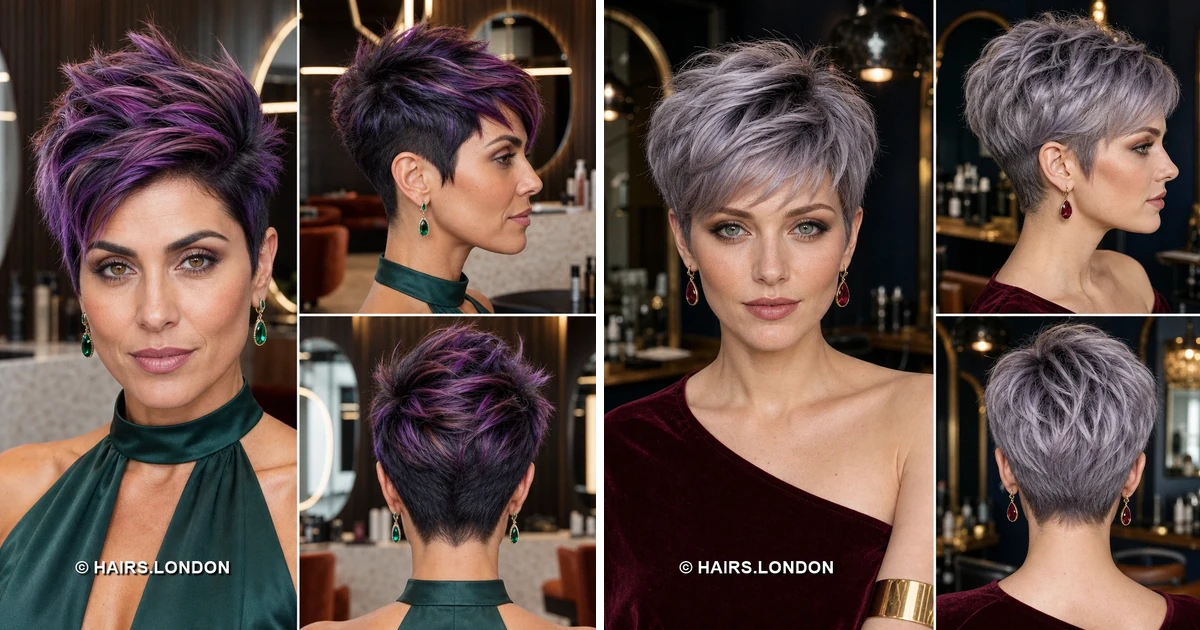
11. Dusty Purple Pixie With an Angled Front
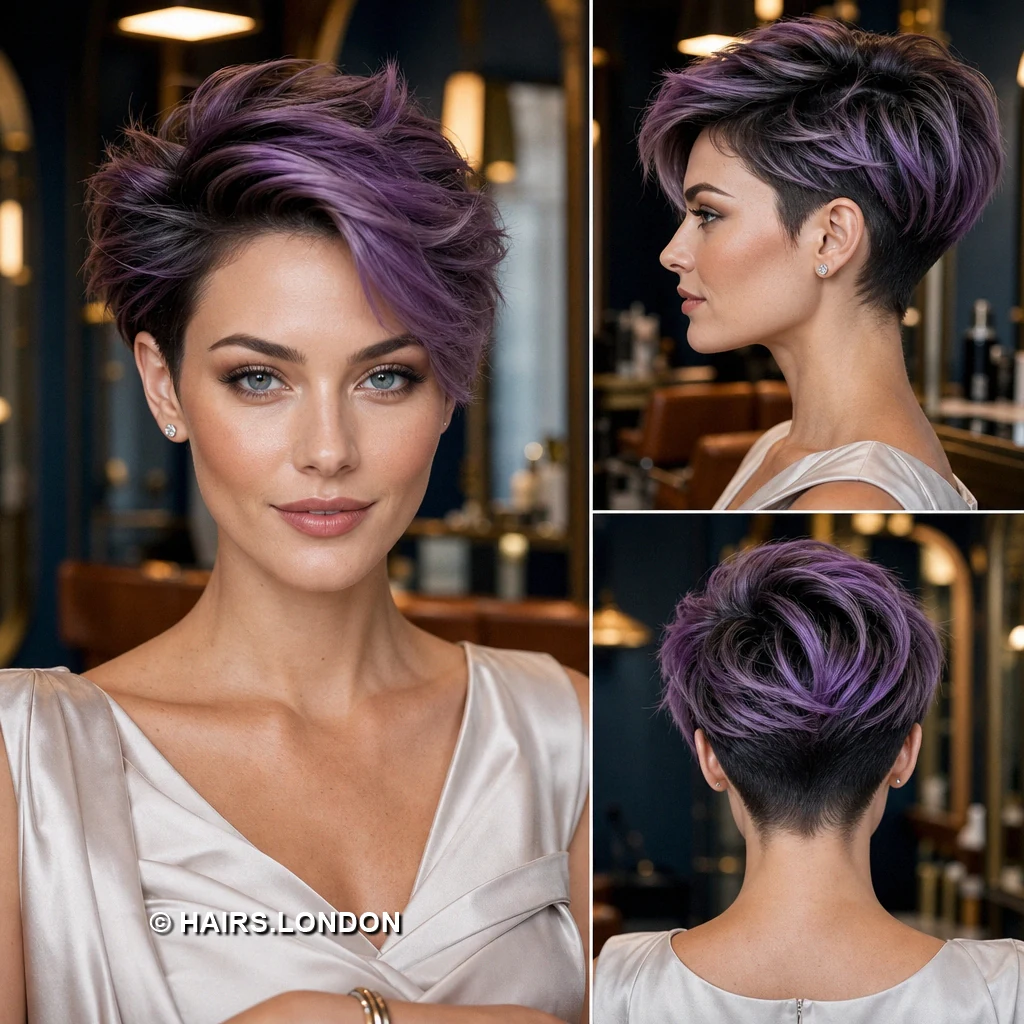
Dusty purple layers build height before sweeping toward one side. An angled fringe extends lower than the short opposite side. The crown looks full, with loose strands crossing its surface. Closely tapered dark hair shapes the sides and narrow nape. That contrast makes the longer, pale front easy to see. Discuss fringe placement and your preferred part before cutting begins. Lift damp roots while drying, then guide the ends diagonally. A touch of paste defines the front without fixing it rigidly. Ask about color refreshes for the muted purple upper layers. Keep side appointments regular to maintain the asymmetric outline.
12. Lilac Layered Pixie With a Short Side Fringe
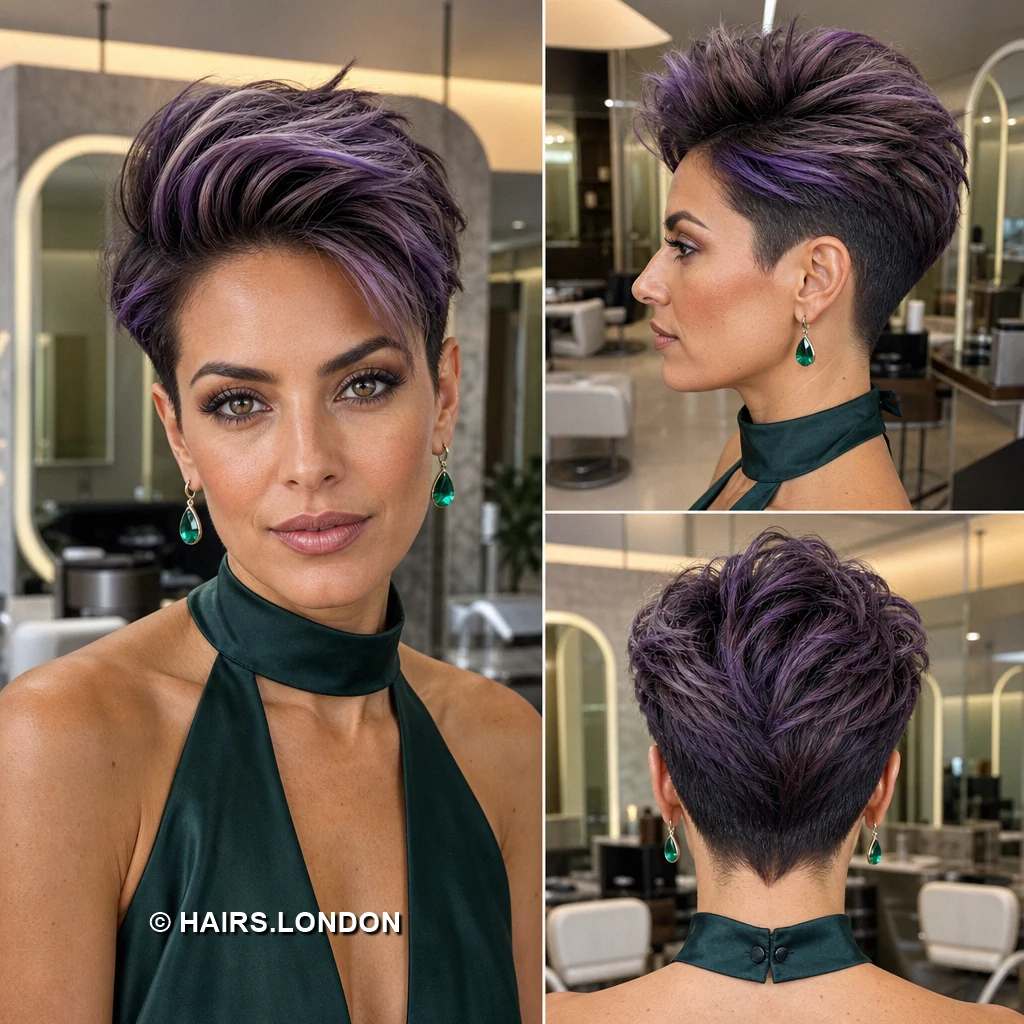
Lilac and purple tones run through this layered pixie. A short side fringe curves lightly above the eyebrow area. Airy crown pieces rise above tidy, closely shaped side lengths. The rear layers gather into a narrow, pointed nape shape. Fine highlighted sections make the upper texture easy to distinguish. Request short, movable layers rather than a heavily thinned crown. Blow dry with fingers to keep the surface loose and lifted. Use minimal paste on selected pieces for a cleaner finish. Discuss whether pale sections need separate toning from deeper purple. Trim the tapered edges as soon as they look overgrown.
13. Feathered Lavender Pixie With Side Volume
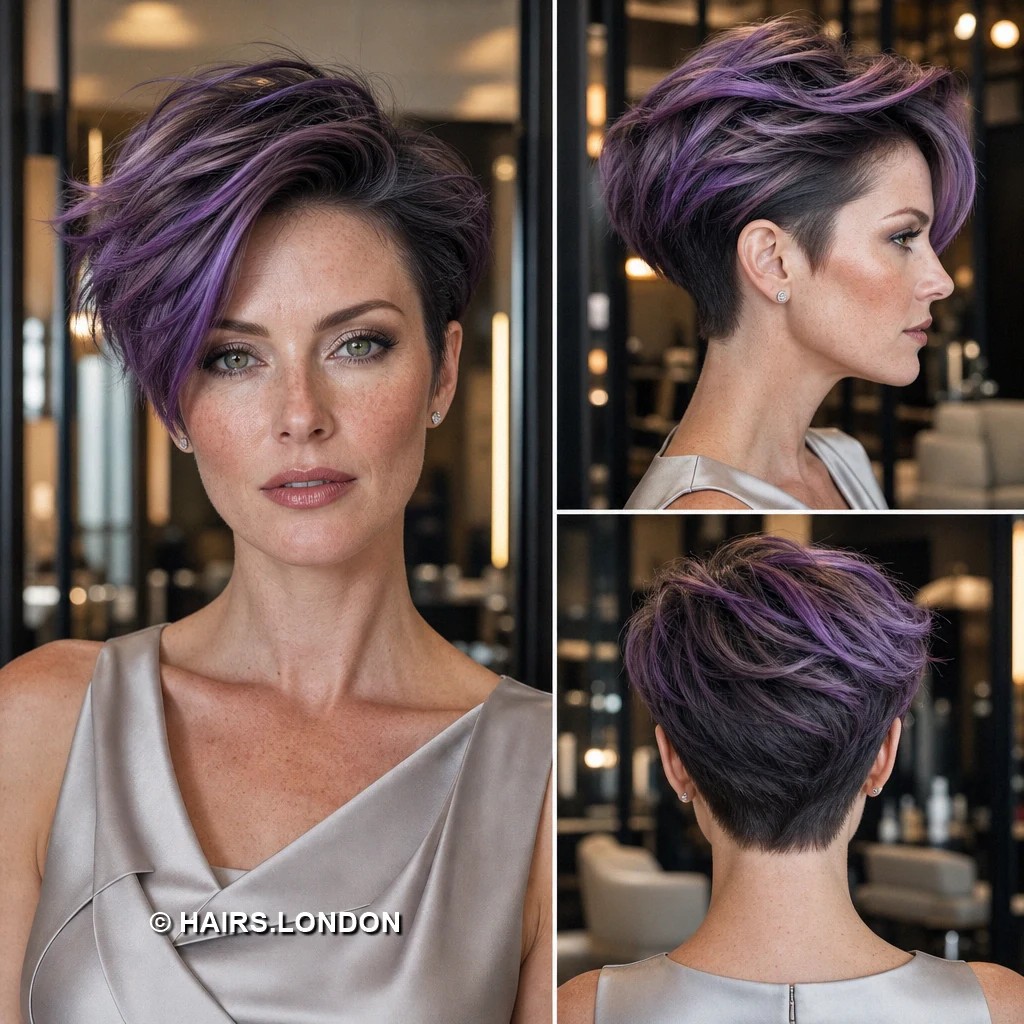
Feathered lavender layers sweep sideways across this high, rounded pixie. The fringe sits above one brow before extending across the forehead. Short sides anchor the fuller, directional crown and front. At the back, the darker hair tapers toward the neckline. Pale individual strands create movement around the otherwise substantial silhouette. Ask for layered length that remains easy to sweep sideways. Blow dry across the head while lifting roots with fingers. Finish with flexible spray so the feathered pieces remain separate. Check which lavender shade best complements the darker lower sections. Maintain short side lengths to preserve the strong upper shape.
14. Smoky Lilac Undercut With a Long Sweep
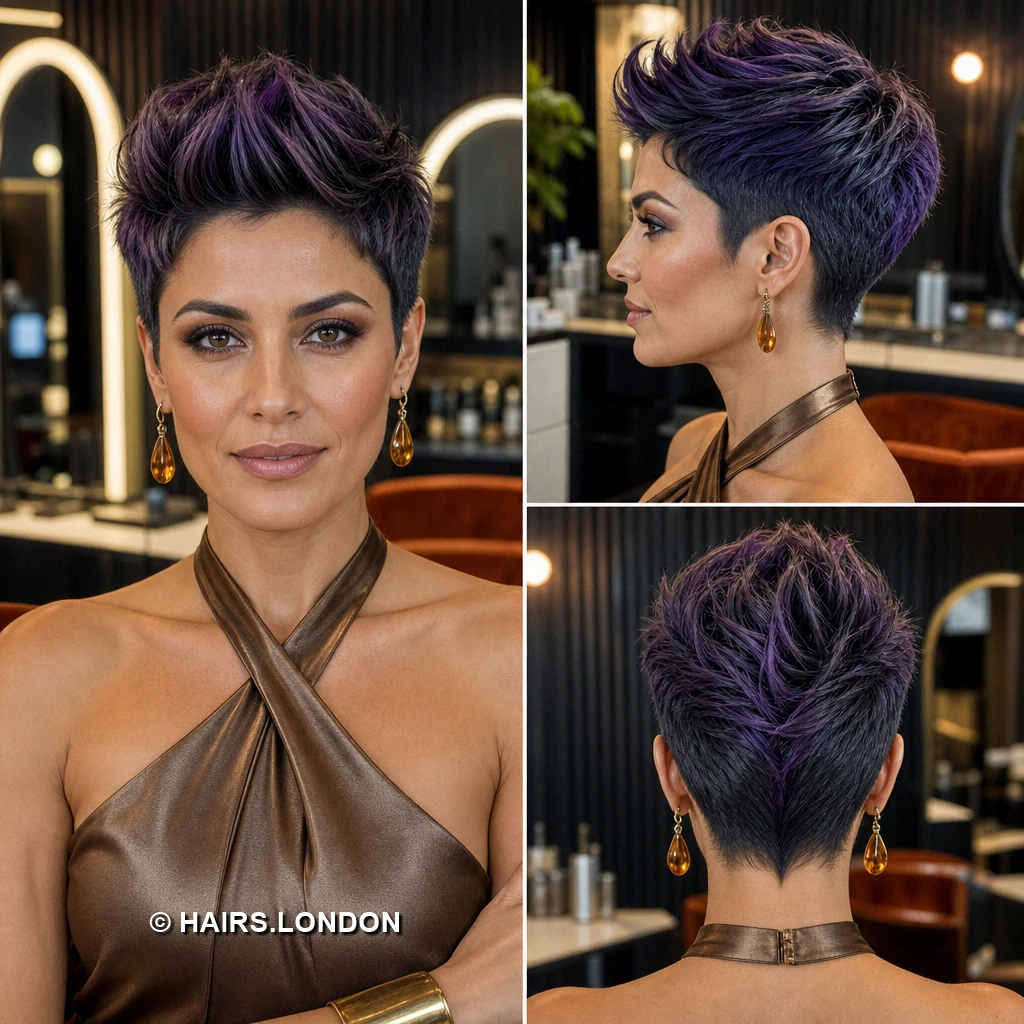
Smoky lilac lengths sweep over one side of this pixie. A long fringe reaches toward the eye from a raised crown. The opposite side is closely cut beneath the fuller top. Rounded back layers settle above a short, dark tapered nape. Smooth directional strands give the pale color a flowing appearance. Ask your stylist to preserve enough length for that front curve. Blow dry the long section across with a brush. Keep product light so the fringe retains its swing. Discuss root contrast before committing to the pale lilac finish. Trim the exposed side regularly to keep the undercut defined.
15. Silver Lilac Pixie With a Curved Fringe
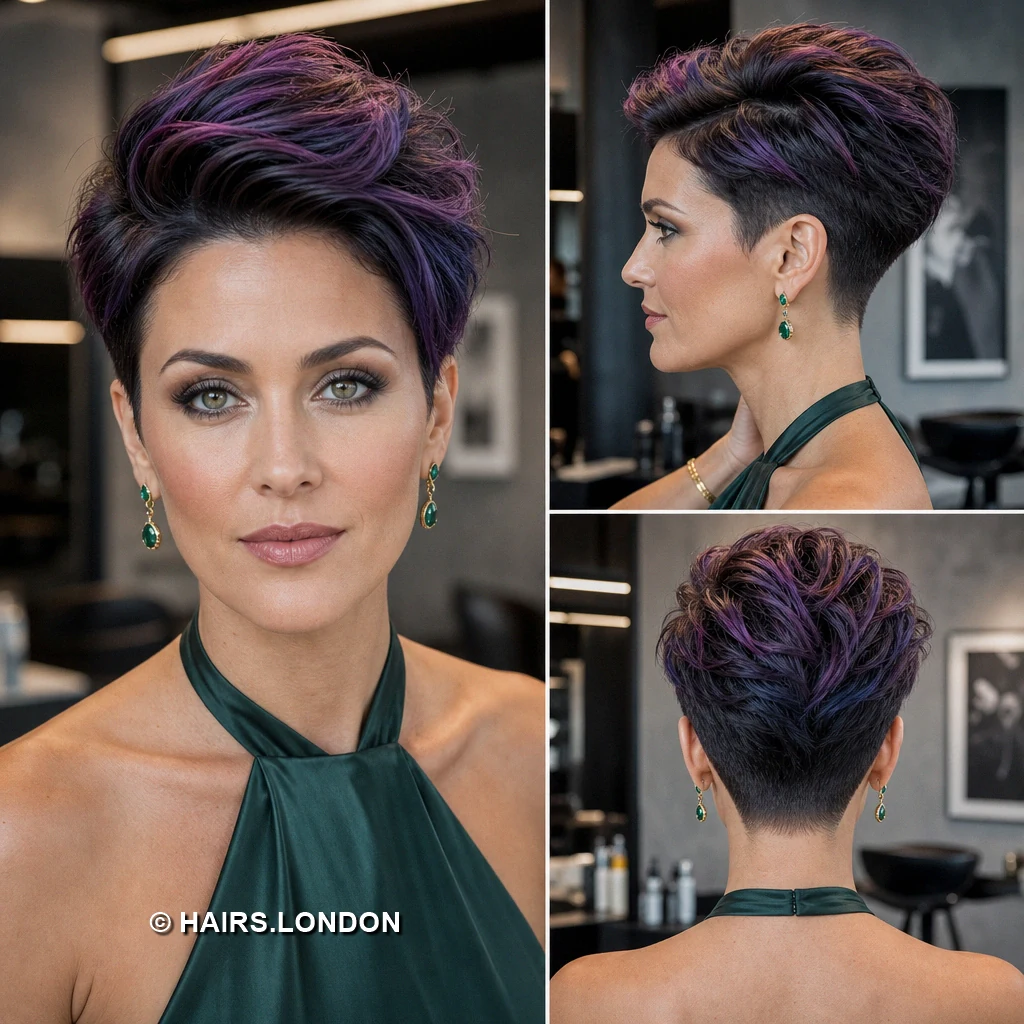
Silver lilac hair forms a soft, rounded pixie with movement. Its curved fringe crosses the forehead without hiding the eyes. Feathered crown layers build fullness above the closely fitted sides. A darker nape tapers neatly beneath the pale back layers. Subtle violet strands are visible among the lighter upper sections. Ask for a fringe length that works when worn naturally. Direct damp hair sideways while drying to encourage its curve. Apply light cream to smooth ends without losing their separation. Ask how to tone the pale finish without dulling violet. Trim around the ears and neckline to maintain clean edges.
16. Rose Lilac Crop With Choppy Texture
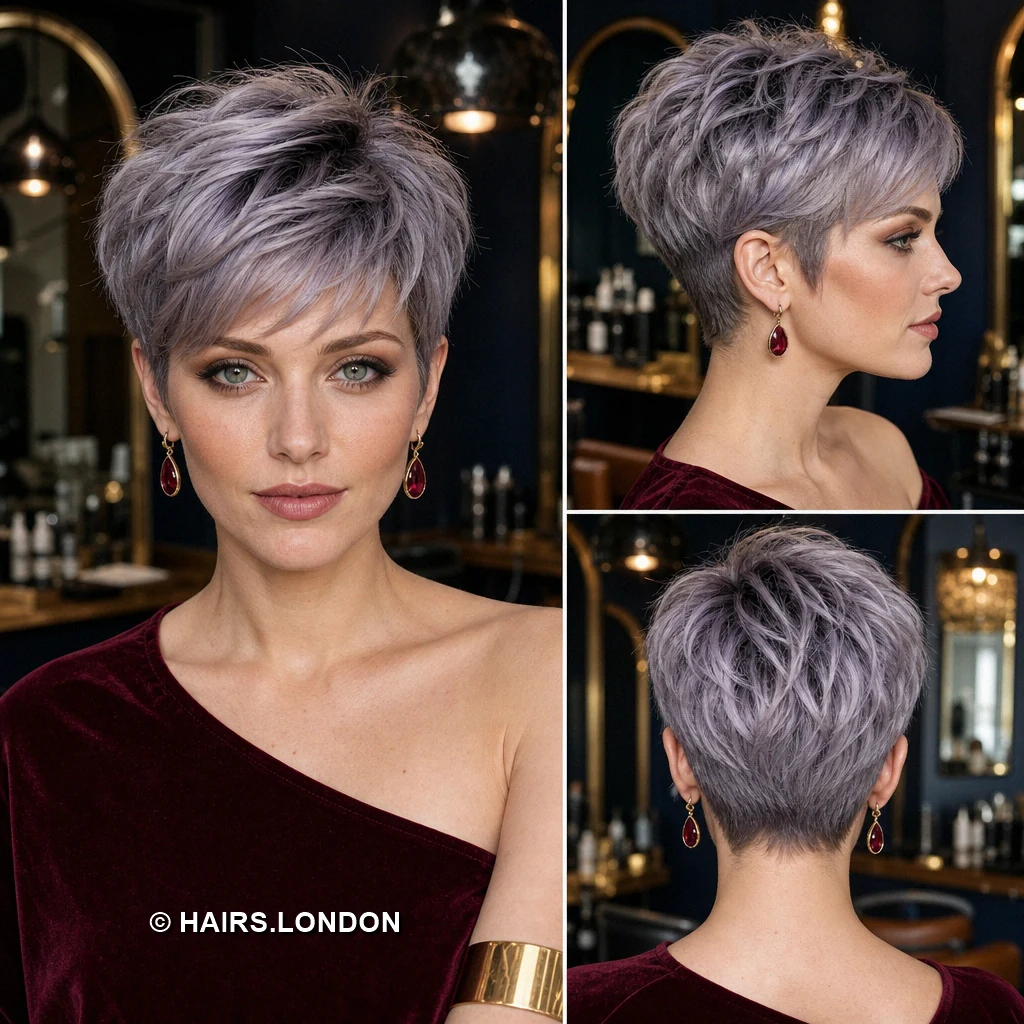
Rose lilac color softens the choppy surface of this pixie. Short, irregular fringe pieces sit lightly above the forehead area. Lifted crown strands create texture without a large front quiff. Close sides continue into a neatly tapered, softly pointed nape. Pale highlights emphasize each separated section across the rounded top. Request point cutting that creates movement while preserving crown coverage. Blow dry upward briefly, then arrange the strands using fingers. Work a small amount of paste only through dry ends. Discuss upkeep for the delicate pink and lavender color blend. Book trims when the side profile begins losing its definition.
17. Pastel Purple Pixie With a Rolled Front
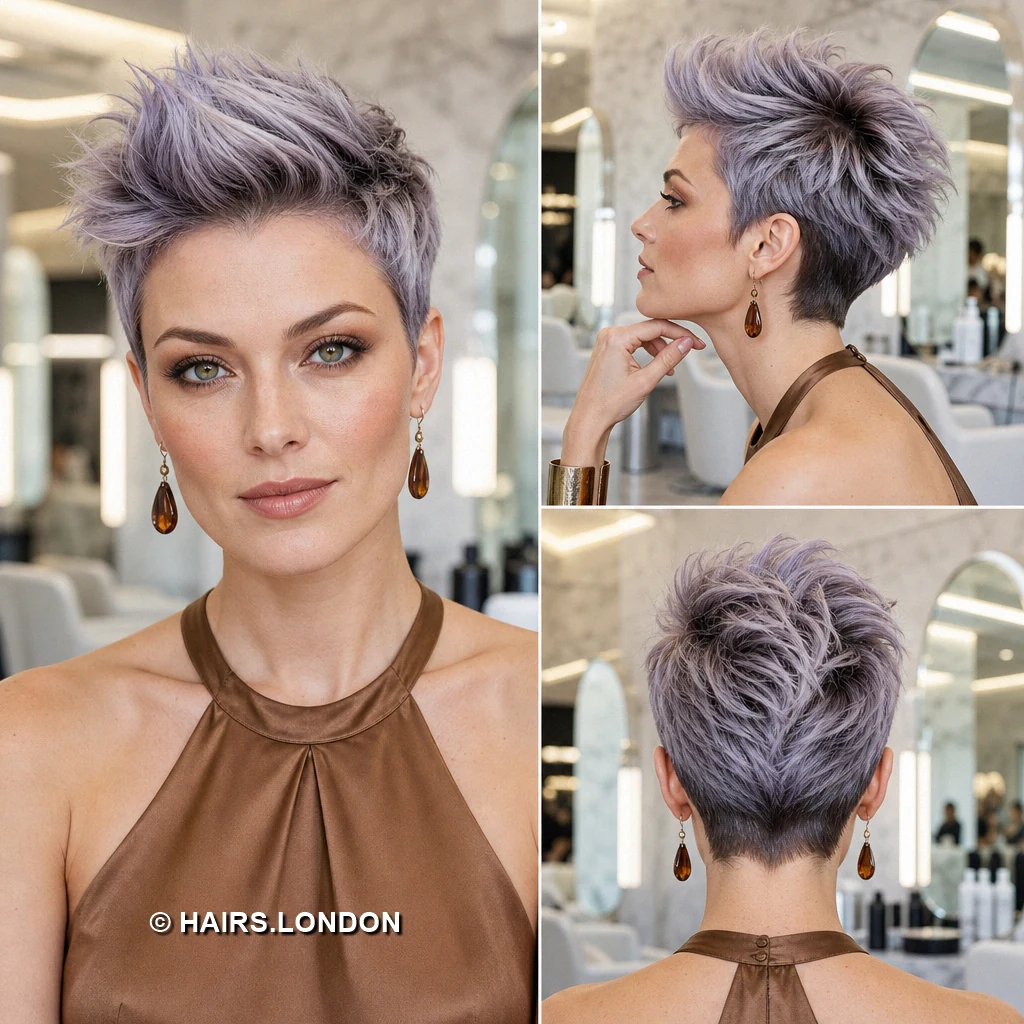
Pastel purple and pink ribbons curve through this lifted pixie. The longer front rolls upward and sideways, exposing the forehead. Short, gray toned sides contrast with the colorful upper layers. Back sections follow a swirling pattern above the tapered nape. Smoothly separated strands make the curved shape especially prominent. Ask your stylist to retain length for that front bend. Blow dry the fringe up and back using a brush. Set its curve with flexible spray rather than heavy wax. Discuss protecting the delicate pastel sections from frequent high heat styling. Keep the gray toned lower lengths tidy between color visits.
18. Pale Lavender Pixie With Spiky Crown Layers
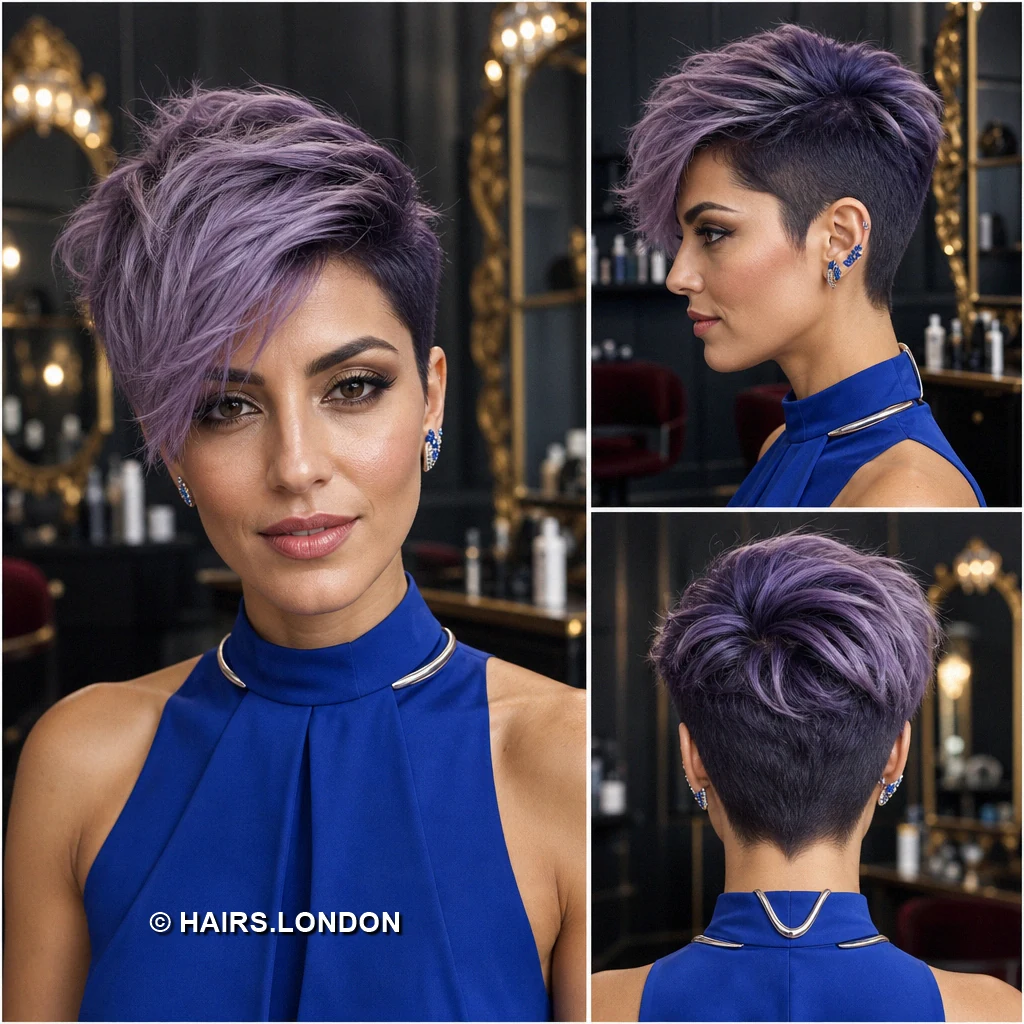
Pale lavender strands create a deliberately spiky, textured pixie silhouette. The short fringe angles slightly across the upper forehead. Uneven crown layers stand out above the closely shaped sides. The rear texture narrows into a short, neatly tapered nape. Darker undertones remain visible between the separated lavender pieces. Ask for varied top lengths rather than uniformly blunt tips. Blow dry against the roots to establish lift throughout. Twist small sections with paste once the hair is dry. Use gentle washing routines to help the pale lavender stay fresh. Return for regular trims when the spikes become too long to stand.
19. Dusty Lilac Pixie With Allover Piecey Texture
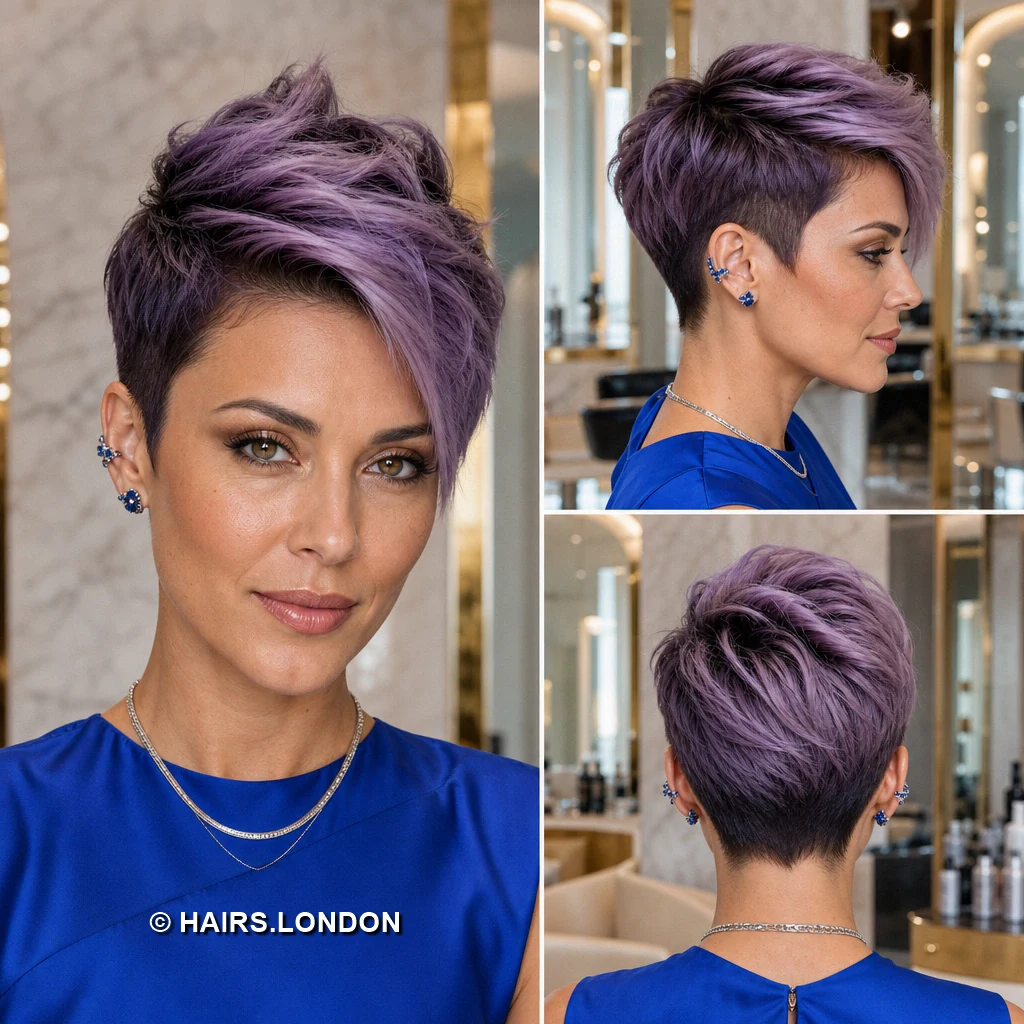
Dusty lilac layers form a full, softly tousled pixie crown. Short, separated fringe pieces point across the forehead from above. Textured sides stay closer to the head than the top. The back narrows into a tidy nape beneath feathery layers. Pale and deeper strands add definition to the uneven surface. Request piecey cutting that preserves enough hair for visible fullness. Lift roots while drying, then let individual sections fall naturally. Use a pea sized amount of paste to separate tips. Discuss toning options as the lilac finish begins to fade. Regular shape appointments will keep the textured outline from spreading.
How to Choose a Purple Pixie Shape
Start with the feature you want to emphasize. A long side fringe gives you more hair around the face, while a lifted front keeps the forehead open. Closely tapered sides make crown volume more pronounced; softly blended sides produce a rounder outline. Compare the side and back views as carefully as the front, especially if you have a strong preference about nape length or visible contrast.
Styling Different Hair Textures
Fine hair can benefit from lightweight mousse at the roots and blow drying upward before adding a little paste. For thicker hair, ask for strategic internal layering so the top moves without becoming bulky. If your hair has natural waves, try arranging them with fingers and a small amount of styling cream before deciding whether to use a brush. Use product sparingly on short cuts: too much can flatten a lifted crown or clump a delicate fringe.
Keeping Lavender and Purple Color Fresh
The images range from violet accents over dark hair to pale lilac throughout the top, so their color plans will differ. Ask your colorist which sections need lightening, how visible new growth will be, and whether a toner or color-depositing product suits your chosen shade. Gentle washing, moderate water temperature, and reduced heat styling can help limit fading. Follow your colorist’s product instructions rather than assuming every purple shade needs the same routine.
Maintaining the Pixie Shape
A short side or pointed nape can lose its outline before the longer crown needs much cutting. Arrange trims around the part of your haircut that grows out most noticeably. At each appointment, decide whether to keep growing the fringe, restore its original length, or adjust its direction. Bring front, side, and back references so the stylist can maintain the whole silhouette.
What to Discuss with Your Stylist
Show the image that best matches your preferred fringe, then point out the exact crown height, side length, and nape shape you want. Explain how much time you will spend styling and whether you usually air dry. For color, discuss your current base, the lightness needed for your chosen purple, upkeep costs, and a realistic refresh plan. Ask the stylist to adapt the cut to your growth patterns and demonstrate how to restyle it at home.
Frequently Asked Questions
What is the difference between a lavender pixie and a violet pixie?
Lavender generally describes the paler looks shown here, while violet describes the deeper purple accents. Your colorist can help choose a specific tone rather than relying on the name alone.
Can I keep dark sides with a lavender top?
Yes. Several pictured cuts pair a lighter top with dark, closely tapered sides and nape. Discuss where you want the color transition to sit.
Which pictured shape leaves the most styling flexibility?
A pixie with a longer top and side fringe offers room to sweep, lift, or smooth the front. The shortest fringes have less directional flexibility.
Will a long side fringe need extra maintenance?
It may need fringe trims between full cuts, particularly if it starts falling into your eye.
How do I add height to a pixie crown?
Apply a light root product to damp hair, blow dry upward, and finish by separating a few dry strands with paste.
How do I avoid flattening fine pixie hair?
Use small amounts of lightweight product and concentrate heavier styling products on the ends, not the roots.
Can naturally wavy hair wear these shapes?
Yes, but ask your stylist to plan the fringe and crown around your wave pattern and show you how the cut sits when it dries naturally.
What should I ask for if I want a softer pixie?
Point to the rounded crowns, feathered ends, and lightly blended sides in the images rather than the sharper undercut or spiked versions.
How often should I trim a tapered nape?
Trim it when its outline no longer looks intentional. The timing depends on your hair growth and how precise you want the edge.
Do pale lilac shades require lightening?
They generally need a sufficiently light starting base. A colorist should assess your current hair and explain the process required.
How can I make purple accents last longer?
Follow your colorist’s washing and product advice, keep styling heat moderate, and arrange a refresh when the accents fade.
What photos should I bring to a salon consultation?
Bring a front view for the fringe, a profile for side length and crown height, and a back view for the nape.
Conclusion
The most useful reference is the one whose shape you would enjoy wearing between salon visits, not just on styling day. Choose your preferred fringe and crown first, then decide how closely tapered the sides should be and how much purple color you want to maintain.