


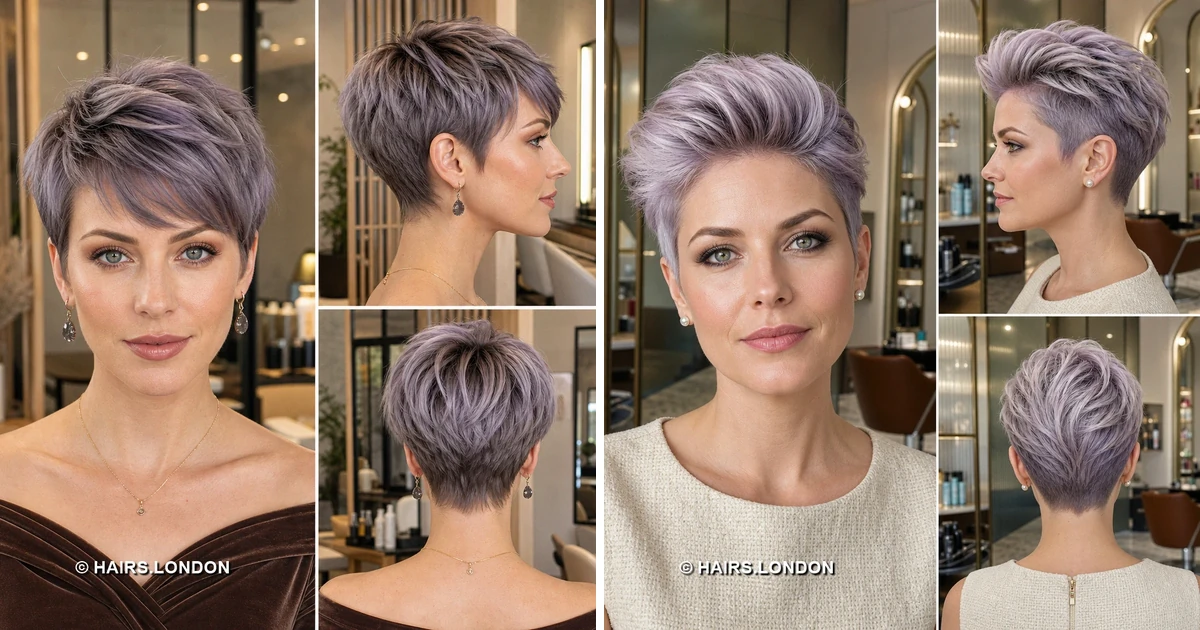
11. Dusty Lilac Pixie With a Windswept Front
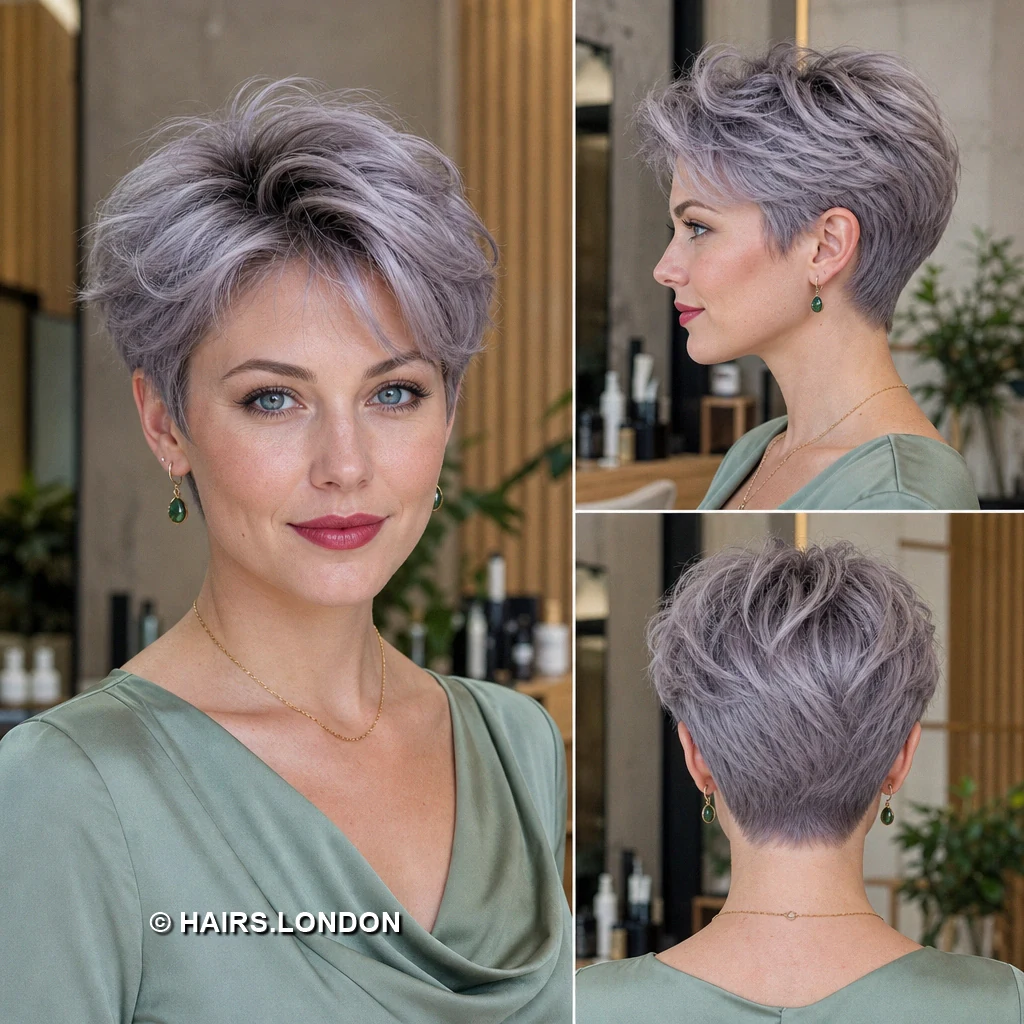
Dusty lilac color complements this softly windswept, layered pixie shape. The full front rises before sweeping sideways over the forehead. Broad crown sections form loose bends rather than pointed spikes. Close cut sides reveal both ears beneath the generous top. Back layers overlap softly before tapering toward the narrow neckline. Subtle root depth lends contrast to the lighter surface strands. Ask for longer front layers with softly blended interior weight. Dry forward initially, then lift and sweep hair across sideways. Apply light cream for definition while retaining the airy finish. Schedule trims when the sweeping fringe starts obscuring your eyes.
12. Multicolored Pastel Pixie With a Long Side Fringe
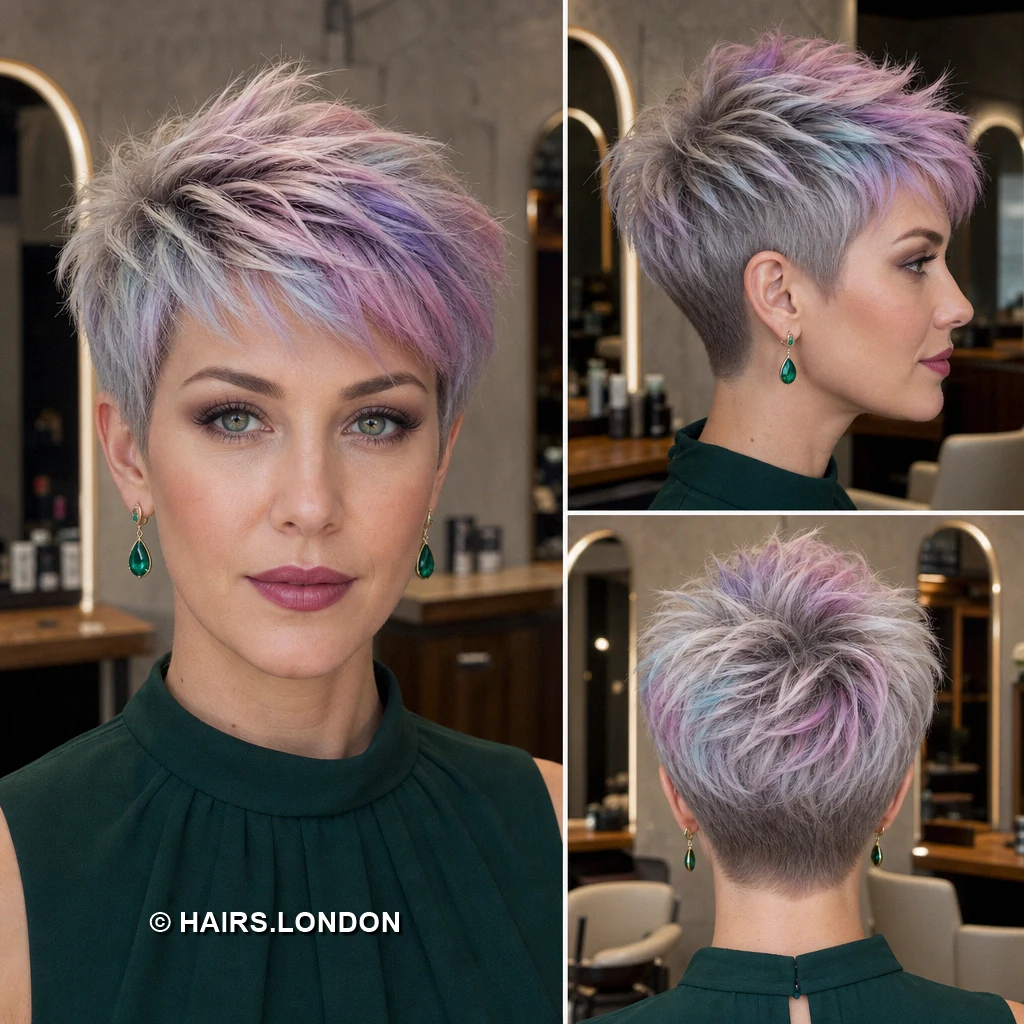
Pastel lavender and pink weave through this multicolored asymmetrical pixie. Cool aqua ribbons show prominently along the side and back. The long fringe sweeps diagonally, skimming one eyebrow without heaviness. Layered crown strands overlap, giving the top a tousled finish. One side lies close around the ear beneath longer strands. The rear narrows into a tapered nape with deeper teal. Request ample fringe length and precise placement for colored panels. Dry across your part, then separate highlights using styling cream. Protect delicate pastels with gentle washing and limited heat styling. Ask your colorist how different shades should be refreshed individually.
13. Smoky Lilac Pixie With a Broad Side Sweep
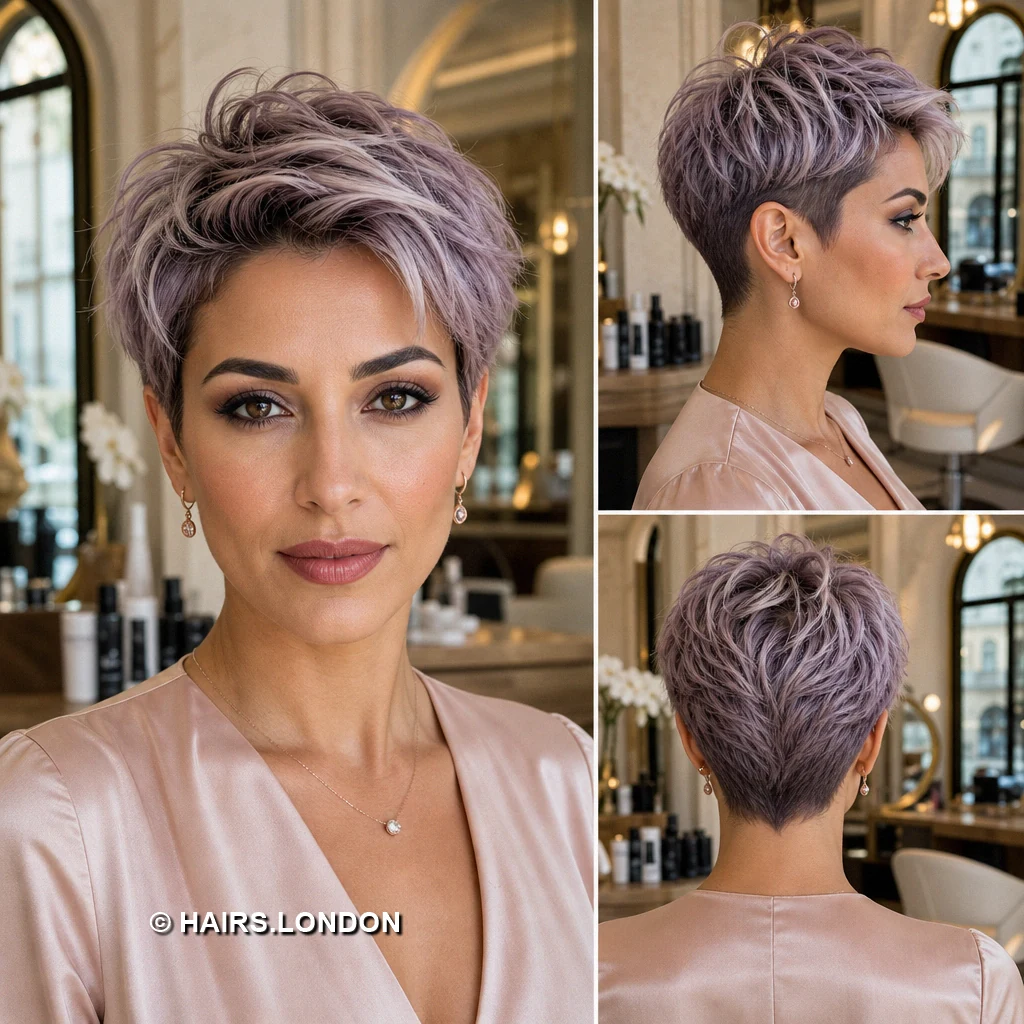
Smoky lilac hair forms a generous, softly waved side sweep. The broad fringe curves across the forehead, grazing one eyebrow. Crown layers flow backward in separated arcs with visible lift. Short, neat sides remain tucked closely above the exposed ear. The rounded back narrows into a tidy, closely tapered nape. Light silver strands trace the shape without obscuring deeper roots. Request long sweeping front layers paired with softly graduated sides. Use a round brush to lift roots and guide curves. Finish with flexible spray to maintain shape without stiff sections. Keep nape trims frequent enough to retain the clean outline.
How to Choose a Lavender Pixie Haircut
Start with the front: decide whether you prefer a brow-skimming fringe, a shorter broken edge, or an open forehead. Then compare the side and back views. A fuller crown with close sides creates more contrast; a rounded crop feels more even throughout. Consider how much time you want to spend lifting or directing the top each morning. If you wear glasses, ask your stylist to check where the side pieces and fringe fall with them on.
Styling Pixies on Different Hair Textures
Fine hair may benefit from lightweight root mousse and blow drying against its natural fall; too much paste can collapse the lift. On dense hair, ask for internal layering that removes bulk without making the surface patchy. Natural waves can be encouraged with a small amount of styling cream and gentle finger drying. For curlier hair, discuss the finished length in its dry state before cutting a short fringe or close sides.
Keeping Lavender and Pastel Color Fresh
Pale lavender, pink, and aqua sections can shift in tone between appointments. Wash with a gentle, color suitable cleanser, use cooler water if comfortable, and limit unnecessary heat styling. Ask your colorist whether a tinted conditioner or salon gloss suits your particular mix of shades. The multicolored cuts especially benefit from a clear plan for refreshing each panel without muddying neighboring colors.
Maintaining the Pixie Shape
The close sides, ear edges, and tapered nape usually show growth before the longer crown does. Arrange trims around how quickly your own outline loses definition, and tell your stylist if you want to keep growing the top. Between visits, use small amounts of product and restyle the crown with your fingers rather than coating every strand. A fringe that starts falling into your eyes may need attention before the rest of the cut.
What to Discuss with Your Stylist
Bring the image that best matches the front you want, along with its side and back views. Point out the exact fringe length, crown height, ear coverage, and nape taper you like. Discuss your natural part, growth patterns, styling routine, and whether your hair has enough length to make the chosen sweep or quiff. For color, ask what lightening may be needed, how the shade could fade, and what upkeep you can realistically maintain.
Frequently Asked Questions
What is the main difference between a rounded pixie and a lifted quiff?
A rounded pixie keeps its volume closer to the head. A quiff leaves more length at the front so it can be dried upward and back.
Can a lavender pixie have a long fringe?
Yes. Several cuts shown keep the sides and nape short while leaving enough front length to sweep across the forehead.
Which cut needs less directional styling?
A softly rounded or naturally tousled crop generally asks for less deliberate blow drying than a tall, swept back front.
How can I keep a pixie fringe from looking heavy?
Ask for the length and density to be assessed separately. Lightly separated ends can soften a fringe without removing the length needed for a side sweep.
Will a close nape change how the haircut grows out?
The clean taper becomes less distinct as it grows. Regular neckline trims help preserve the original shape while the top stays longer.
What product works for the spiky crown styles?
Start with a small amount of lightweight paste on dry hair. Pinch selected tips, then add more only if the shape needs it.
How do I create lift in a short pixie?
Apply a light root product to damp hair and direct airflow upward or against the natural fall. Finish by placing the front with your fingers.
Can naturally wavy hair wear these cuts?
Yes, though its bends will alter the finished fringe and crown. Ask your stylist to account for how much your hair springs up when dry.
Why do some of these lavender shades look deeper at the roots?
The images show darker areas beneath several pale surface layers. That contrast adds visible depth, especially where the top is separated or lifted.
How often should pastel color be refreshed?
That depends on the starting color, the shade used, and your washing routine. Ask your colorist for a schedule tailored to the result you choose.
Can pink, blue, and lavender sections be maintained separately?
A colorist can advise on placement and refresh products for each shade. Check before using tinted products that might deposit color across other panels.
What should I show my stylist at a consultation?
Show the front, side, and back of your preferred cut. Identify the fringe, crown volume, side length, nape shape, and color placement you want to keep.
Conclusion
The most useful detail in these lavender pixie haircuts is their balance: longer layers create movement on top, while carefully shaped sides and napes keep each silhouette clear. Choose the fringe and crown shape you would enjoy styling, then use the multiple views to plan a cut and color routine with your stylist.