


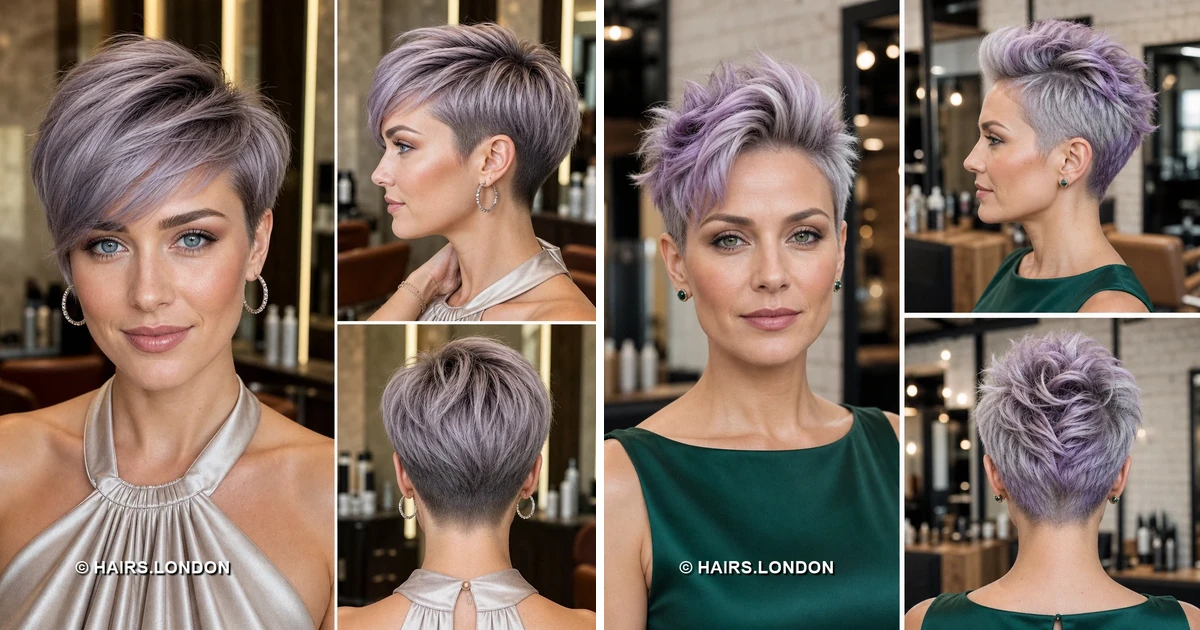
11. Lavender Pixie with Pale Mint Streaks
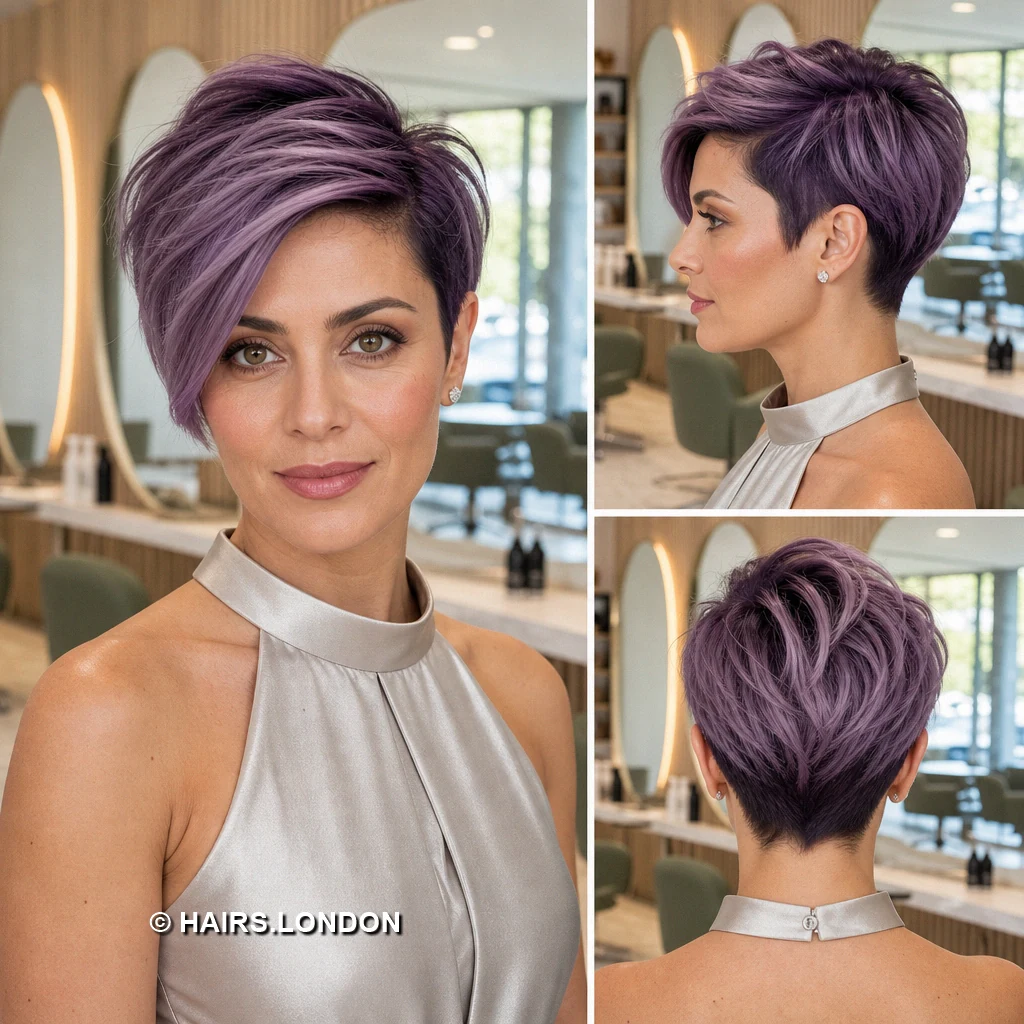
Lavender lengths carry pale mint streaks through the sweeping front. The long fringe drops diagonally toward one eye with separation. Lifted crown layers look tousled rather than sleek or uniform. Closely clipped sides reveal the ear beneath the longer top. The rear fullness contracts into a compact, cool toned nape. Ask your stylist to place contrasting streaks where layers separate. Keep the fringe long enough to show its multicolored ribbons. Direct airflow sideways, scrunching the crown lightly for extra lift. Use minimal wax so the palest pieces remain visibly distinct. Refresh cool tones separately if different sections fade unevenly quickly.
12. Smoky Lilac Jagged Pixie
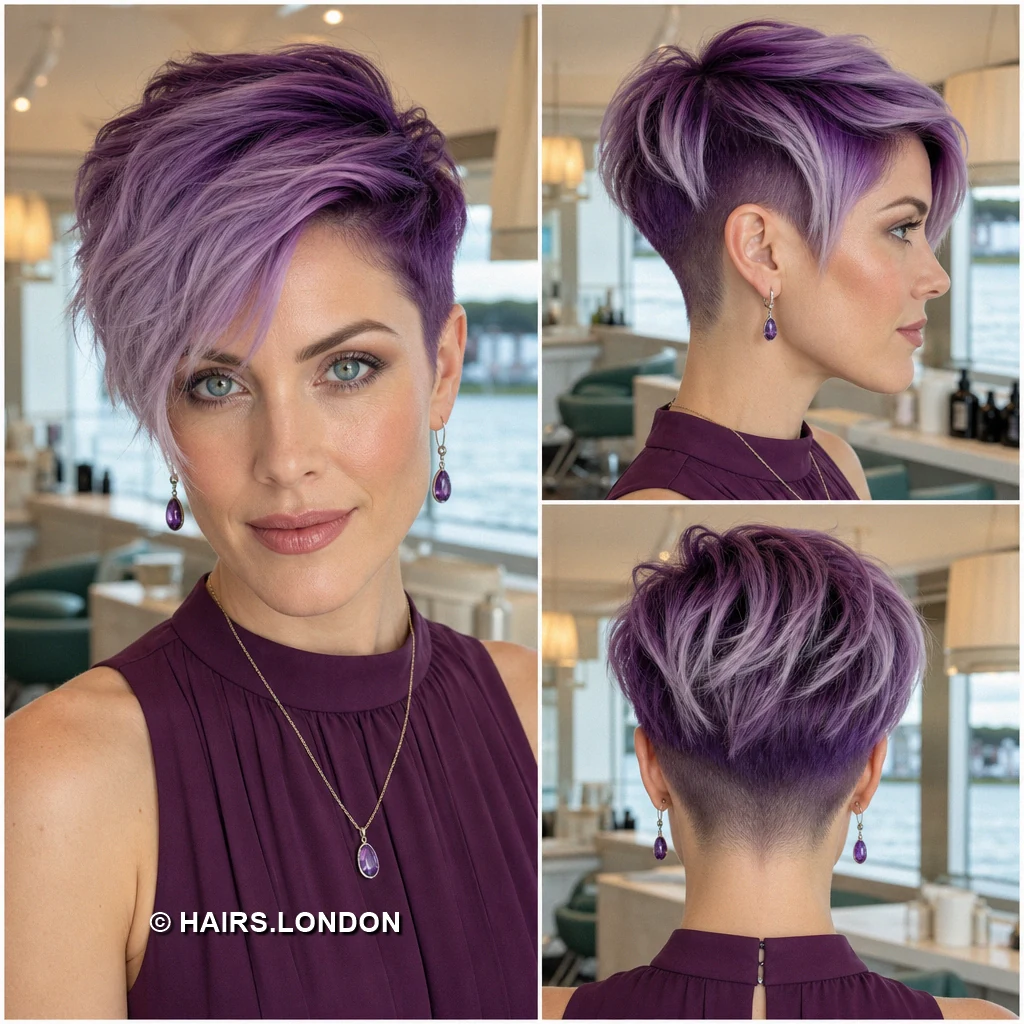
Smoky lilac covers a short pixie with deliberately jagged layers. The short fringe breaks into fine points above the brows. Textured crown strands rise unevenly, creating a gently spiked outline. Close sides frame exposed ears without looking severely shaved down. The layered back narrows into a tidy, darker tapered nape. Request short point cut layers that retain some crown fullness. Dry upward with fingertips, then rough up selected top pieces. Try pliable matte paste rather than coating every strand heavily. Keep the fringe trimmed so its uneven edges remain intentional. Discuss side length carefully if you want softer growout later.
How to Choose a Lavender Pixie Haircut
Start with the front: a long side sweep needs enough length to cross the forehead, while a short fringe keeps the eyes clear. Next, compare the side and back views. Close sides and a tapered nape need more frequent reshaping than a softer, fuller outline. Choose crown height with your hair’s density and the time you want to spend styling in mind.
Styling Different Hair Textures
For fine hair, lift damp roots with your fingers or a small brush and use product sparingly so the crown stays airy. For dense hair, ask your stylist to remove weight selectively while protecting the fringe’s shape. If your hair has a natural wave, work with its bend when directing the top, then separate dry pieces with a little cream or pliable paste. Always check the finished cut from the side and back, not just the front.
Keeping Lavender Color Fresh
These images range from pale lilac and silver-lavender to deeper violet roots and hints of pink or mint. Tell your colorist which parts you want lightest and whether visible root depth appeals to you. Use the washing, heat-styling, and toning routine recommended for your particular color service; pale sections may need more attention as their tone changes.
Maintaining the Pixie Shape
A pixie can change quickly as the fringe reaches the eyes, the sides cover the ears, or the nape loses its taper. Arrange trims according to the detail you want to preserve most. You can keep a longer crown while refreshing just the perimeter, but explain that plan before the cut so the top is not shortened unintentionally.
What to Discuss with Your Stylist
Bring the front, profile, and back views of your favorite cut. Point out the exact fringe length, crown volume, side coverage, and nape shape you want. Discuss how your natural growth pattern affects the sweep or raised front, how much daily styling feels realistic, and how the lavender shade will be maintained between color appointments.
Frequently Asked Questions
What makes a pixie haircut look side-swept?
A longer front section is directed across the forehead, usually over shorter hair at the sides. Its length and layering determine whether the sweep looks smooth or piecey.
Can I keep my ears covered with a lavender pixie?
Yes. Ask for longer side sections rather than the closely cut sides shown in many of these images, and discuss how that change will affect the silhouette.
Which cut leaves the forehead most open?
The raised-front styles, particularly the silver-lavender and pink-lavender pixies, lift the fringe away from the forehead.
Which options have a longer fringe?
The plum-lavender asymmetric fringe and violet-and-lavender dramatic sweep have the longest, lowest fronts in this collection.
How do I create height at the crown?
Dry the roots upward or against their usual direction, then separate the ends with a small amount of flexible styling product.
How do I style a choppy pixie without stiff spikes?
Use a small amount of pliable paste on dry hair and pinch only a few sections. Leave the rest loose for a softer outline.
Will a darker root change the look of lavender hair?
Yes. The darker roots visible in several images add contrast and make the pale or brighter lengths stand out.
How often should I trim a tapered nape?
Trim it when it begins to lose the neat outline you chose. Your stylist can suggest a schedule based on your growth and preferred taper.
Can I refresh the sides without cutting the top?
Yes. Ask for a perimeter or side cleanup and specify how much length you want to retain through the crown and fringe.
What should I ask for if I want a softer pixie?
Point to wispy ends, a rounded crown, and gently shortened sides. Ask your stylist to avoid removing so much weight that the outline becomes sparse.
How can I preserve several pastel shades?
Show your colorist where you want each shade placed and ask for care instructions suited to those sections. Different pastel colors may change at different rates.
Which photos should I bring to a consultation?
Bring the front, side, and back views of the cut you prefer. They communicate the fringe, side length, crown shape, and nape more clearly together.
Conclusion
The most useful choice is not simply a favorite lavender shade, but the combination of fringe length, crown texture, and nape shape you want to live with. Save the views that show those details clearly, then use them to plan both the cut and its upkeep with your stylist.