


11. Beige Blonde Pixie with a Long Pastel Fringe
Beige blonde hair reveals pink, blue, and lavender pastel streaks. An extended fringe sweeps diagonally, grazing one eye’s outer edge. The full crown lifts softly before folding toward the front. Closely cut sides highlight the contrast with the long top. The back graduates down to a short, natural looking nape. Ask your stylist to preserve enough fringe for this drape. Keep internal layers light, allowing the colorful ribbons to show. Dry upward at roots, then bring the fringe gently forward. Use flexible spray to control flyaways without freezing the sweep. Schedule fringe trims separately if visibility becomes difficult between appointments.
12. Mint and Lilac Pixie with Airy Spikes
Mint, lilac, and blush streaks brighten this spiky pixie cut. Short uneven fringe pieces lift away, keeping the forehead open. Longer crown sections point outward with airy, deliberately separated ends. The dark sides taper closely beneath the pale textured top. A deep shadowed nape sharpens the contrast from behind beautifully. Request choppy top layers while retaining a softly blended outline. Blow dry against growth patterns to lift short front pieces. Pinch styling paste into tips without coating the entire head. Expect pale pastel color to need careful washing and retouching. Keep sides freshly trimmed so the upper texture remains prominent.
How to Choose a Pastel Pixie Cut
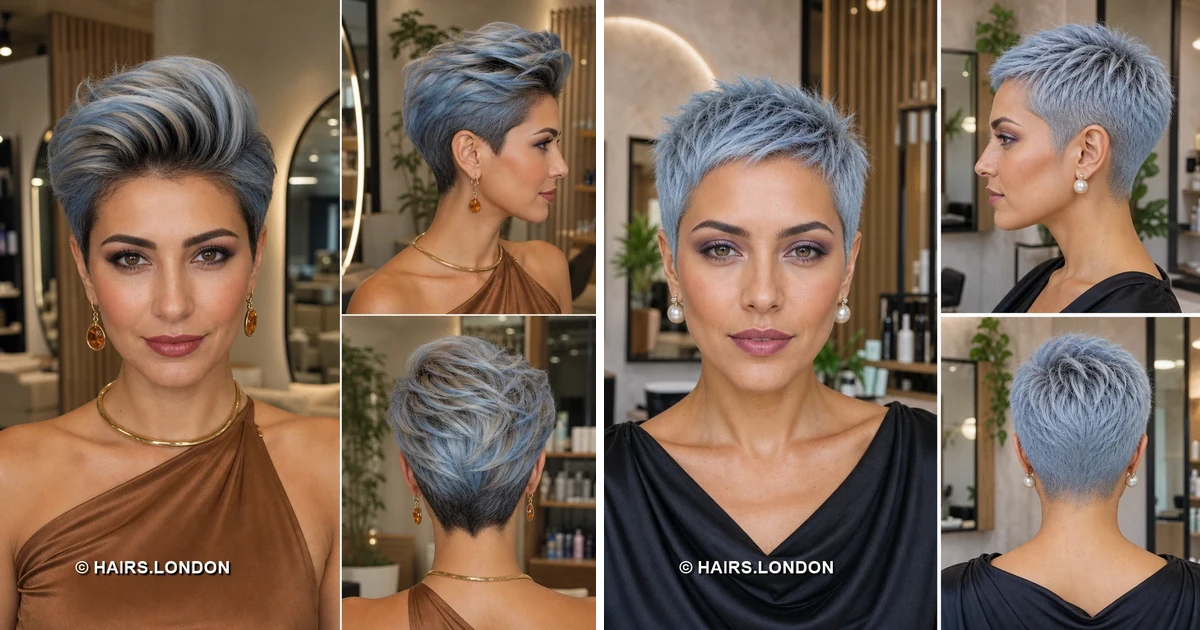
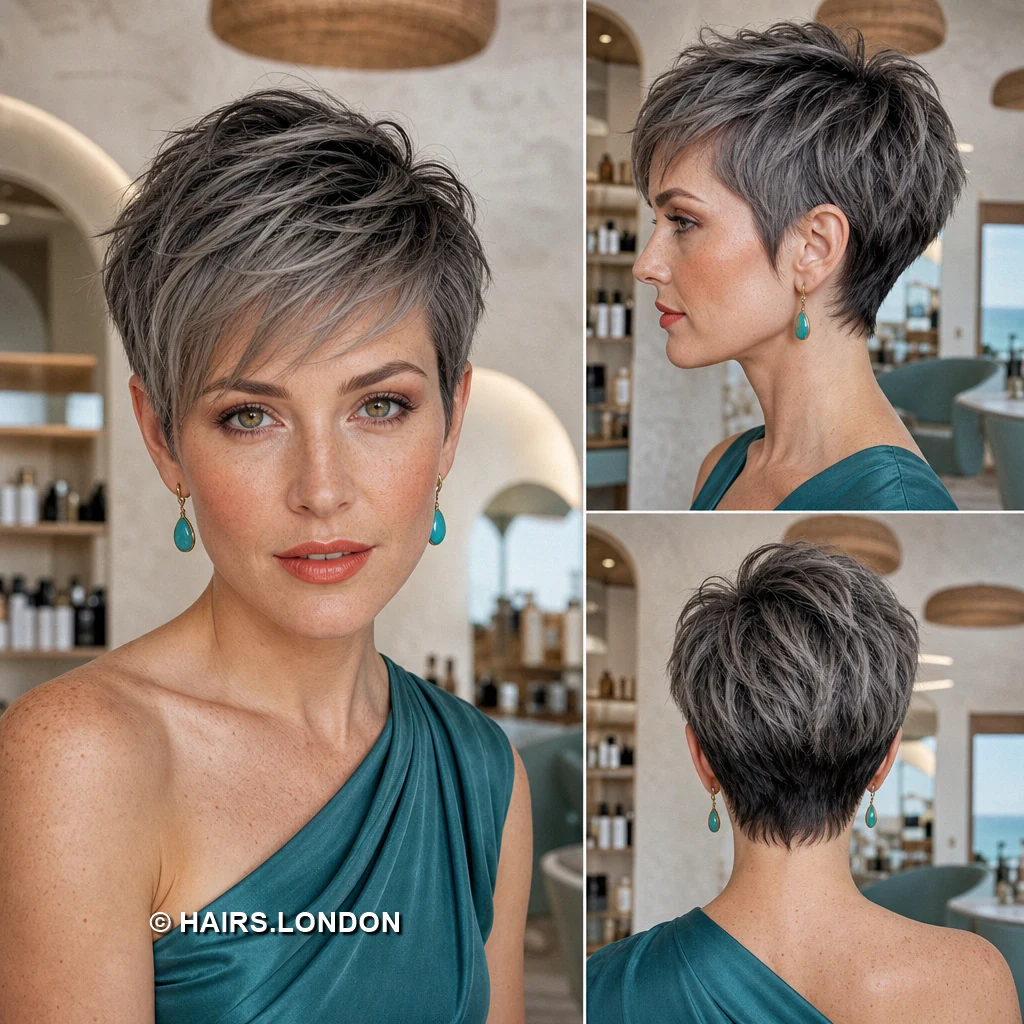
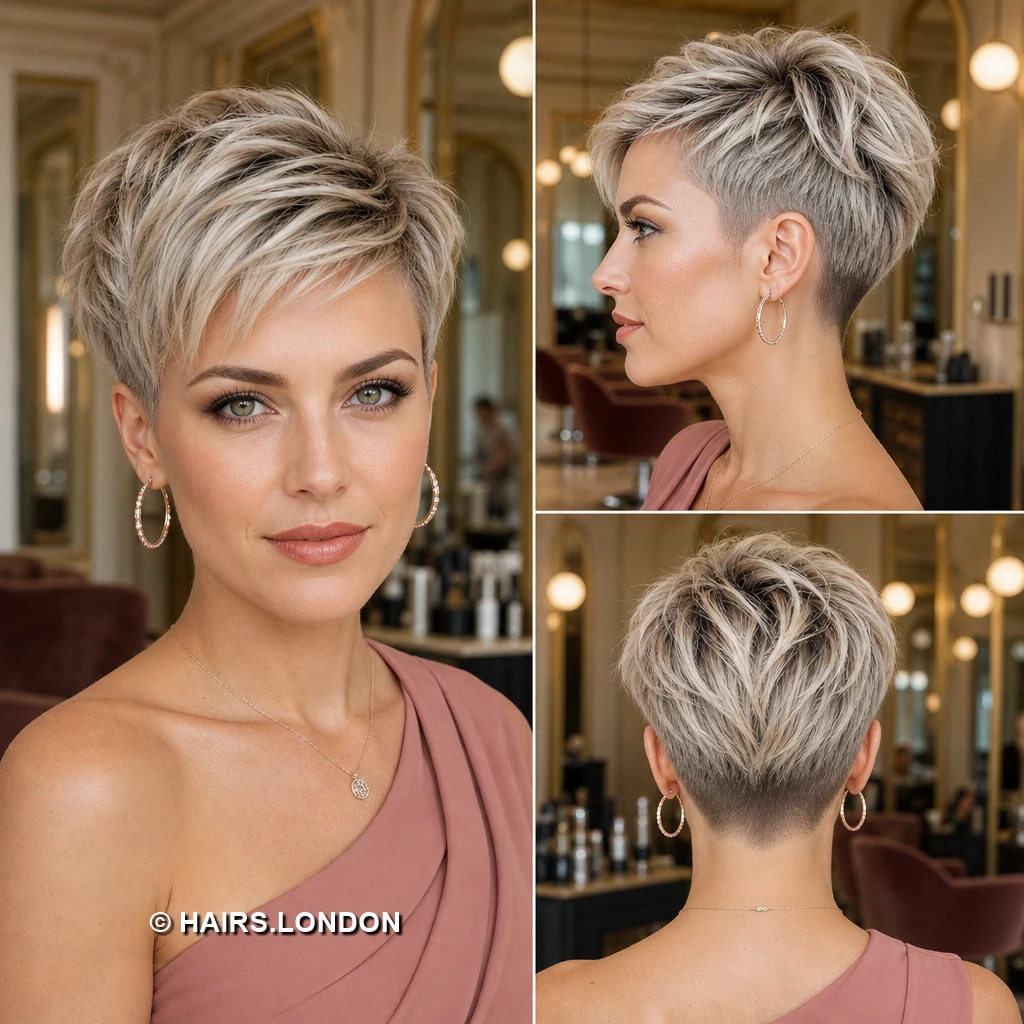
Start with the amount of forehead coverage and styling time you want. The short fringe in the powder blue pixie leaves the face open, while the longer fringes in the navy-streaked and beige blonde cuts need more daily direction. Compare the side and back views, too: a close taper gives a different outline from a fuller, rounded crown. If your hair is dense, ask how the stylist will remove bulk without making the lightened ends look thin.
Styling Different Hair Textures
Fine hair may need a light root product and gentle blow-drying to hold the lifted shapes without being weighed down. On dense hair, dry the roots in the desired direction first, then define selected ends with a small amount of paste. For naturally wavy hair, work with its bends when choosing a swept fringe; a longer front allows more room for movement. These images show smooth to piecey finishes, so ask your stylist how your natural texture will change the result.
Keeping Pastel Pixie Color Fresh
The palest silver, mint, blue, and lilac sections are likely to show fading or unwanted warmth sooner than the darker roots. Follow the colorist’s washing and toning instructions, use a gentle shampoo, and limit unnecessary heat. A heat protectant is useful when brushing the fringe into place. Ask which shades can be refreshed between full color appointments and whether maintaining a darker root is part of the planned look.
Maintaining the Pixie Shape
Short sides and napes reveal growth quickly, even when the top still styles well. Plan regular shape checks with your stylist, and mention whether the fringe is approaching your eyes or the sides feel bulky. Avoid cutting only the longest pieces at home: the connection between the crown, sides, and nape is what keeps these pixies balanced.
What to Discuss with Your Stylist
Bring the front, side, and back view of your preferred cut. Point out the exact fringe length, crown height, area of close taper, and nape shape you like. Discuss your natural growth patterns, daily styling time, and how much visible dark root you want. Before choosing a pale pastel, ask what lightening is needed for your current hair and what color upkeep is realistic for you.
Frequently Asked Questions
Which pastel pixie is easiest to style quickly?
The compact powder blue cut has a short fringe and close sides, so it has less length to direct than the taller or longer-fringed options.
Can I keep a longer fringe with closely cut sides?
Yes. Several cuts shown pair a sweeping fringe with close sides. Ask your stylist to plan how the longer top blends into the shorter area.
What should I request for a lifted crown?
Show the desired side view and ask for enough crown length to lift and brush into place. Cutting it too short may change the rounded sweep into spikes.
How do I make a piecey pixie look defined rather than greasy?
Start with a very small amount of lightweight paste or cream and apply it to selected ends, not the entire head.
Will a diagonal fringe need separate trims?
It may. A fringe that reaches toward an eyebrow or eye can affect visibility before the rest of the pixie loses its shape.
What is the difference between the rounded and spiky shapes here?
The rounded cuts retain longer, overlapping top layers. The spikier cuts use shorter, more separated crown and fringe pieces.
Why do some of these pastel colors show dark roots?
Darker roots are visible in several images and add contrast between the pale upper layers and closely tapered sections.
How can I style a swept fringe on wavy hair?
Discuss the length and direction of your natural wave with your stylist. Dry the roots toward the intended sweep, then let the lengths retain some bend.
What keeps a tapered nape looking neat?
Regular perimeter trims maintain its narrow outline. Ask your stylist to show you the back view before deciding how close or pointed to go.
Do pale mint and lilac shades require upkeep?
Yes. Ask your colorist about washing, heat use, toning, and refresh appointments before committing to a very pale shade.
Can I get the color without copying the exact haircut?
Yes. Bring the image for its color placement and explain the fringe, side, and nape shape you would prefer instead.
Which view should I bring to a salon appointment?
Bring all available views. The front shows fringe placement, the side shows crown height and taper, and the back shows the nape finish.
Conclusion
The most useful choice is the one whose shape works as well from the side and back as it does from the front. Save the views that show your preferred fringe, crown, taper, and color placement, then use them to plan a version suited to your hair and upkeep routine.