


11. Blue Pixie with a Violet-Tinted Crown
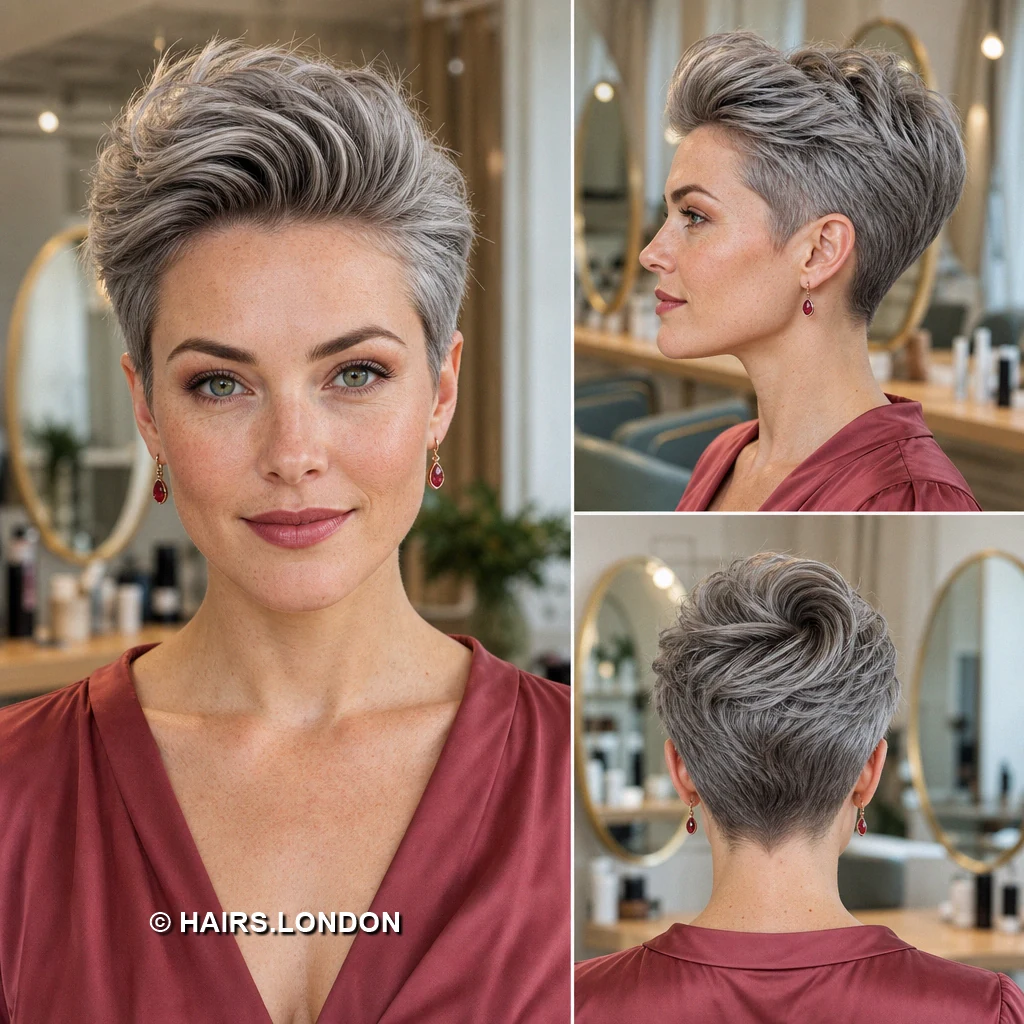
Powder blue hair carries a subtle violet accent near the crown. A long, wispy fringe angles across the open forehead. Choppy upper layers create lift without forming a single crest. The closely fitted sides show a softer blue beneath. Behind, airy strands descend toward a softly pointed, tapered nape. Ask your stylist to keep the crown’s colored section visible. Maintain enough length in front for that diagonal movement. Lift damp crown roots while blow drying, then guide ends sideways. Apply styling paste sparingly to keep the fringe softly separated. Discuss whether future color appointments should refresh blue, violet, or both.
12. Lavender Pixie with Multicolored Fine Strands
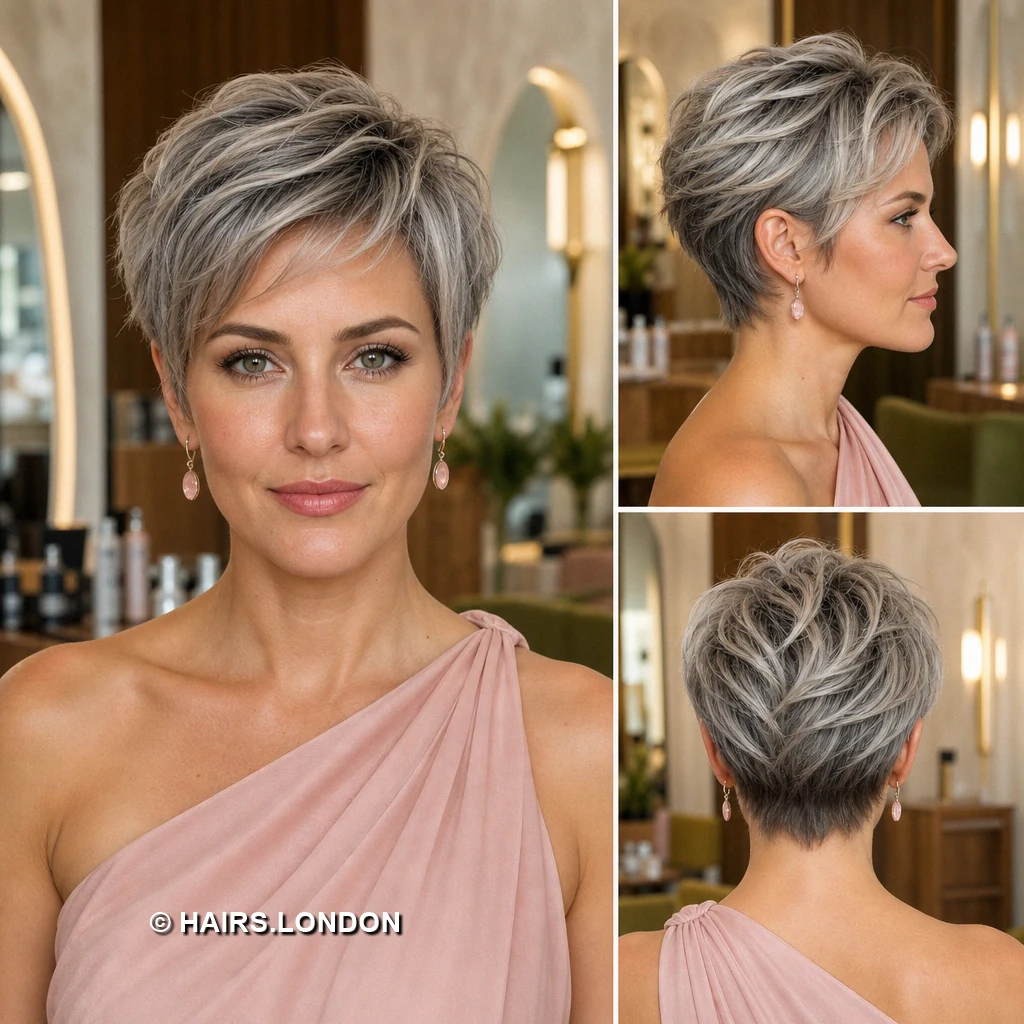
Soft lavender dominates this pixie, with pale blue and blush accents. Fine streaks follow the longer fringe across the forehead. The crown has loose, tousled height and clearly separated strands. Closely cropped sides ground the colorful layers above the ears. In back, overlapping pieces narrow toward a short, dark nape. Ask for color sections that follow the haircut’s visible movement. Keep the front long enough to show several delicate shades. Dry gently with fingers rather than brushing every piece smooth. Pinch a few ends with cream to reveal color variation. Schedule shape and color appointments according to their separate needs.
13. Icy Blue Pixie with Short, Spiky Layers
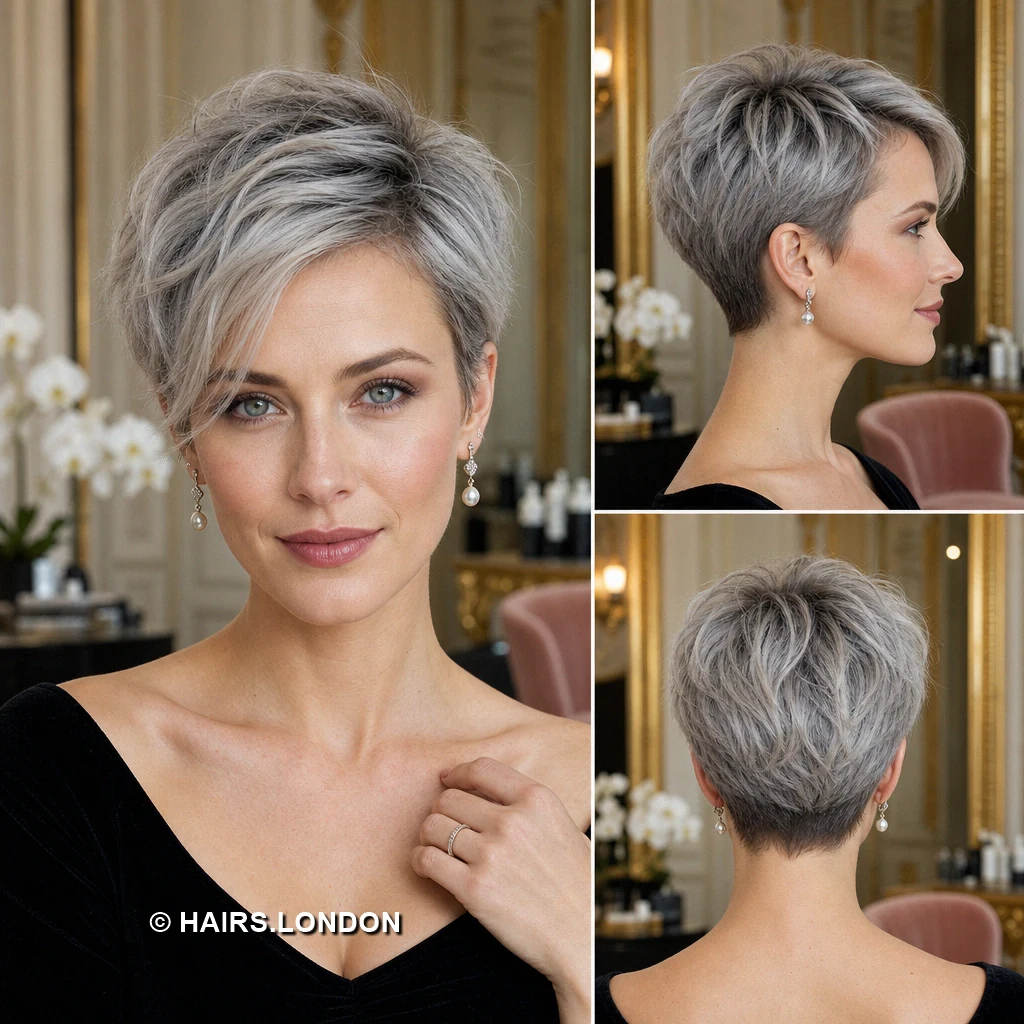
Pale blue and silver strands form this crisp, textured pixie. Small lifted points add definition across the front and crown. The fringe stays short, leaving most of the forehead visible. Closely cut sides lead into a slim, softly tapered nape. From behind, layered strands radiate over the rounded upper shape. Request short, textured top layers with enough length to pinch upward. Keep the side edges neat instead of making them bulky. Work a little matte paste between fingertips before styling ends. Lift pieces individually, avoiding a uniformly rigid, upright finish. Frequent trims maintain the contrast between crown texture and taper.
14. Pastel Pixie with a Sculpted Side Sweep
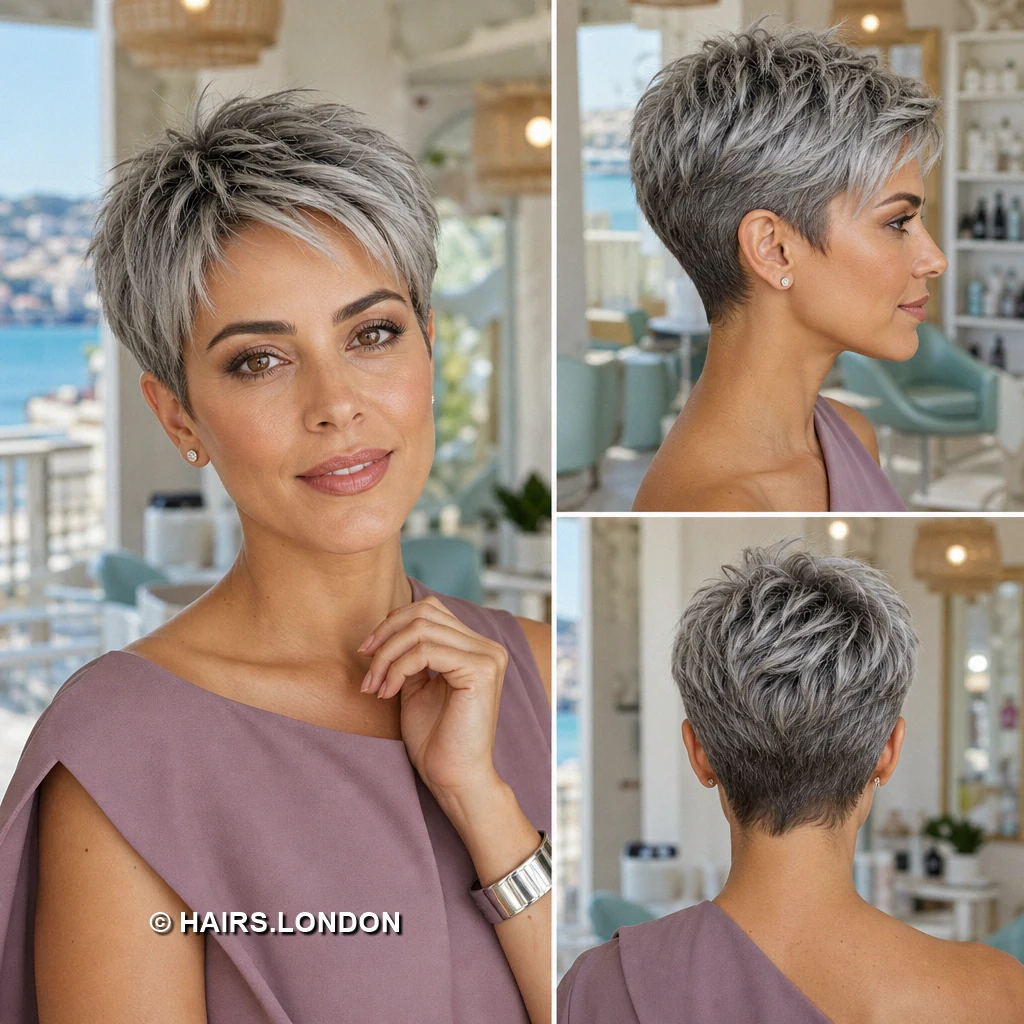
Cool silver hair carries visible soft pink, lavender, and turquoise ribbons. A broad, longer front section curves across the forehead and upward. Layered color continues through the rounded, layered crown and back. The closely cut gray sides create contrast beneath the flowing top. A neat taper finishes the hairline at the nape. Ask your stylist to retain length for the front curve. Discuss where each pastel ribbon will appear when styled. Use a brush and directed airflow to shape the sweep. Apply flexible hold sparingly so colored strands remain distinct. Arrange touchups when the color changes beyond your preferred softness.
15. Blue Pixie with an Extended Side-Swept Fringe
Cool blue covers this layered pixie from crown to fringe. The longer front falls diagonally, reaching toward one eyebrow. Swept upper strands overlap to create height and flowing direction. Shorter sides hug the ears without a harsh dividing line. The back retains texture before narrowing into a close nape. Ask for a longer fringe balanced by a compact perimeter. Explain whether you prefer airy separation or a smoother sweep. Blow dry across the head, lifting the roots first gently. Smooth individual ends with minimal lightweight cream to preserve visible layers. Trim the nape as needed without automatically shortening the front.
How to Choose a Pastel Pixie Cut
Start with the length you want around your forehead, ears, and nape. A long fringe offers more ways to change the front, while a short fringe makes the cut’s close outline more prominent. Compare side and back views as carefully as front views: these examples range from softly rounded crowns to distinctly lifted ones. Consider how often you are willing to trim the taper, and ask which shapes your hair’s natural growth pattern can support.
Styling Different Hair Textures
Fine hair can benefit from a small amount of root foam and directed blow-drying; keep heavier creams away from the roots. For thicker hair, ask about internal weight removal so a long top can move without expanding at the sides. If your hair has natural waves, try diffusing on a low setting and separating the bends with your fingers. Straighter hair can follow the sweeping shapes with a small brush; create distinct bends only where you want them. Begin with little product, then add more if needed.
Keeping Pastel Pixie Color Fresh
Lavender, blue, mint, and pink accents can change noticeably between color appointments. Ask your colorist what undertone to expect as your particular shade fades and whether a suitable depositing product would help. Wash with a color-safe cleanser in comfortably cool water, limit unnecessary heat, and use heat protection when styling. If lightening is needed to reach a pale result, discuss hair condition, realistic color placement, and a refresh schedule before committing.
Maintaining the Tapered Pixie Shape
These cuts depend on a visible difference between their longer crowns and close sides or napes. Many people find that a perimeter trim every four to six weeks keeps that relationship clear, though your growth rate and preferred outline may call for a different schedule. Tell your stylist if you want to maintain fringe length while tightening only the back and sides. Between visits, style from clean roots and avoid piling product onto the shorter sections.
What to Discuss with Your Stylist
Bring the front, profile, and back views of the cut you prefer. Point out the exact fringe length, crown height, side coverage, and nape taper you want rather than requesting a pixie alone. Discuss your part, cowlicks, natural texture, daily styling time, and how the shape should grow out. For color, identify the shades and placement you like, and ask what preparation, upkeep, and home products your starting hair would require.
Frequently Asked Questions
What makes these pixies different from a uniformly short crop?
Most retain noticeably longer, layered hair at the crown or fringe while tapering closer around the ears and nape.
Which cut gives the most fringe coverage?
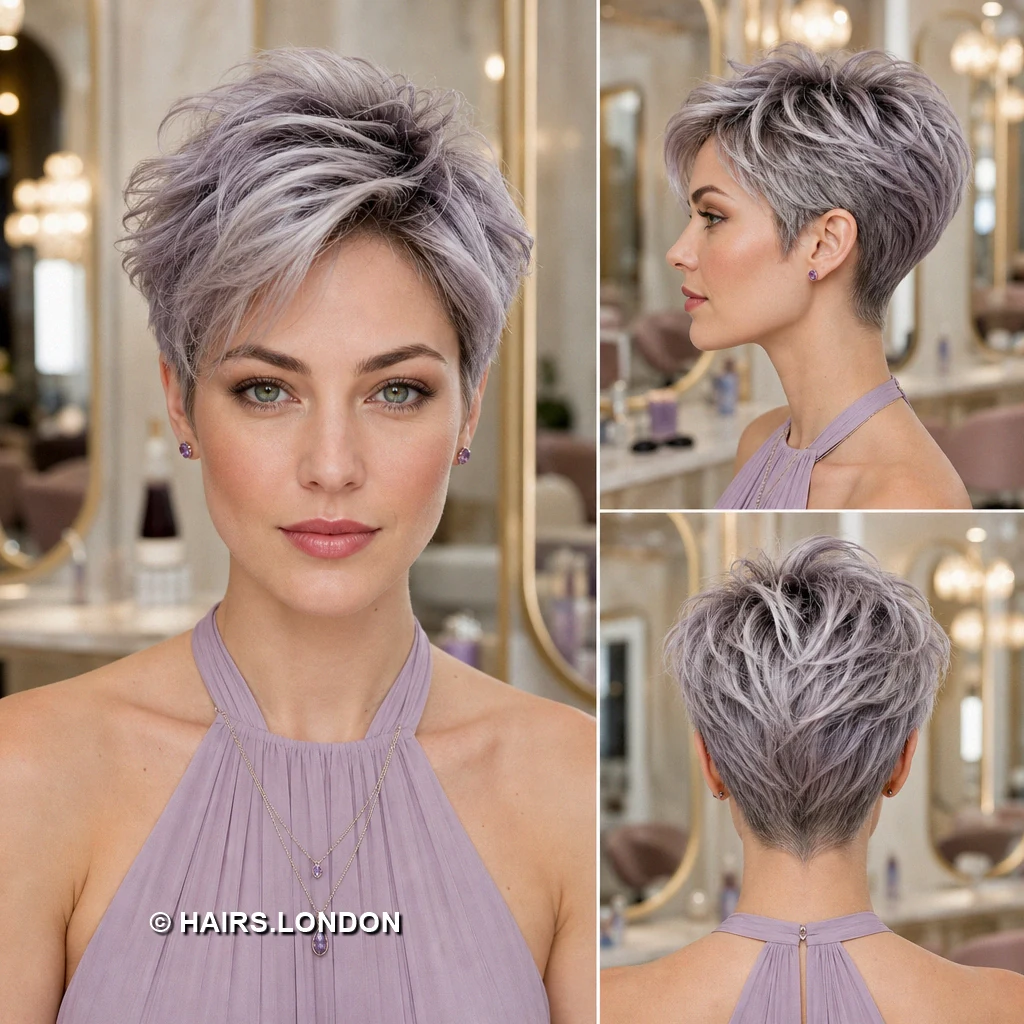
The pale silver pixie with the long side fringe in image 5 has one of the longest front sections, reaching toward an eye.
Which option keeps the forehead most open?
The brushed-back silver pixie in image 3 lifts its front away from the forehead.
Can a tapered pixie work with natural waves?
Yes. The mint-tinted cut in image 9 shows bends through a longer top above close sides and a tapered nape.
How do I add crown height without making hair stiff?
Lift the roots while blow-drying, then use a small amount of lightweight styling product and flexible hold.
Should I choose a long or short pixie fringe?
Choose a longer fringe if you want a sweeping front; choose a shorter one if you prefer an open forehead and less hair near your eyes.
How often should I trim the nape?
A four-to-six-week trim is a useful starting point, but adjust it according to your growth rate and how precise you want the taper.
Will a color refresh always require another haircut?
Not necessarily. Color and shape may need attention on different schedules, so plan each with your stylist.
How can I keep pastel strands from looking flat?
Keep product light, lift the roots while drying, and separate a few ends to show the layers and color placement.
What should I ask about before choosing pale blue or lavender?
Ask your colorist about the preparation your starting hair needs, expected fading, hair condition, and home upkeep.
Can my stylist keep the top long while trimming the sides?
Yes. Specify that you want a perimeter cleanup without automatically shortening the crown or fringe.
Which photos should I bring to a consultation?
Bring the front, side, and back views of your preferred image, then identify the features you want to keep or change.
Conclusion
The strongest starting point is the silhouette you want to live with: a lifted front, a loose wave, a long fringe, or a compact crop. Once you have chosen your preferred crown, sides, and nape, you and your stylist can plan pastel placement and an upkeep routine that suits the cut.