


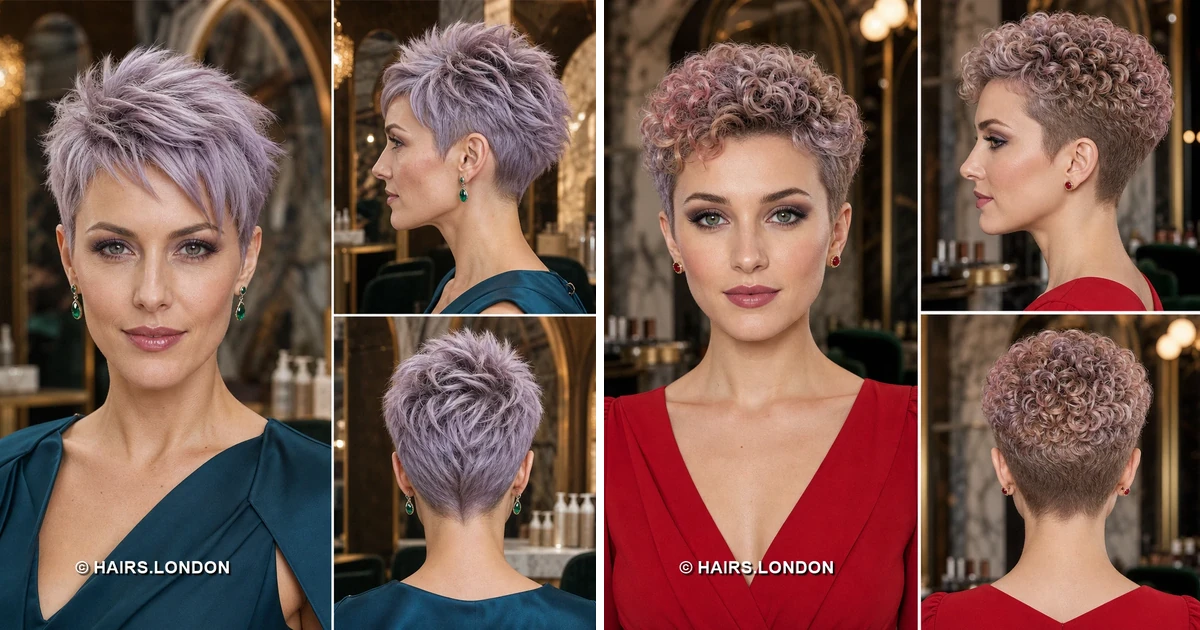
11. Pink-Lavender Pixie With an Asymmetric Fringe
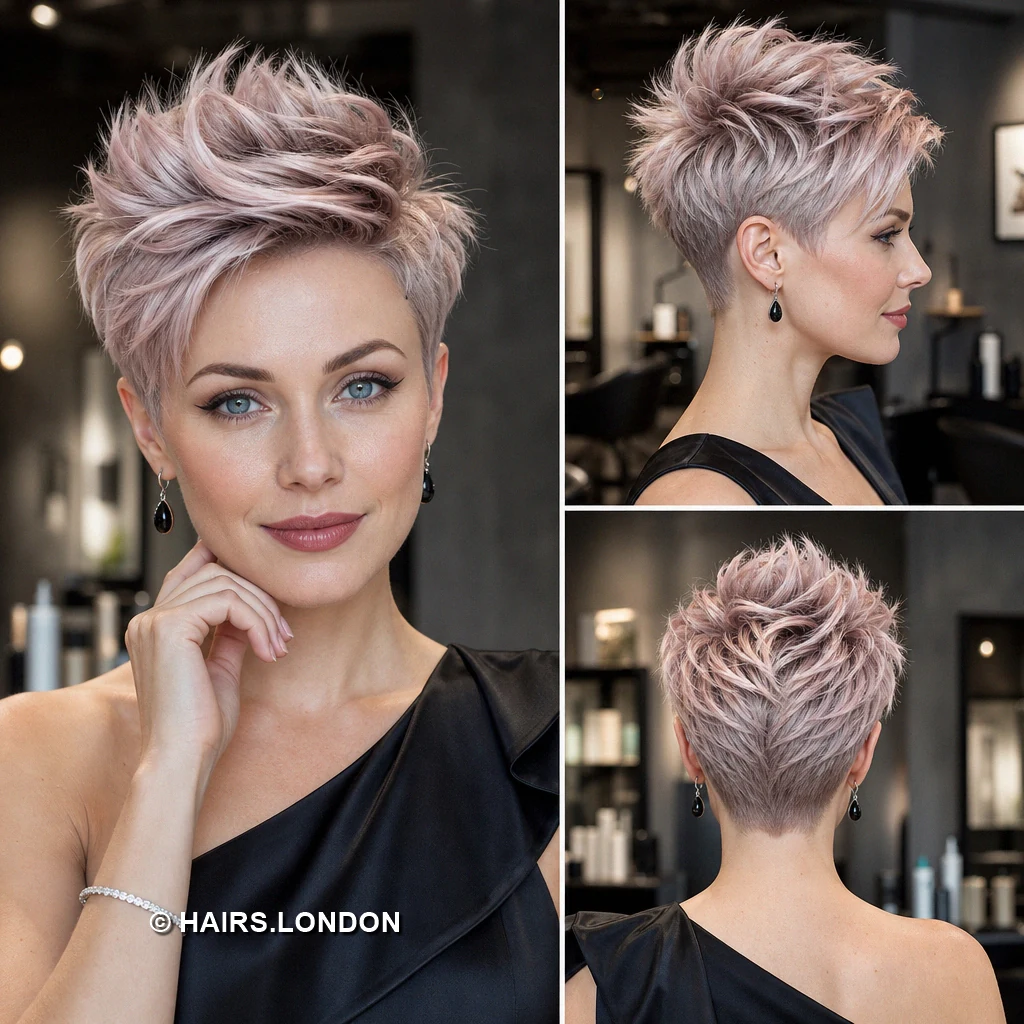
This pink-lavender pixie carries longer layers toward one temple. Its sweeping fringe crosses the forehead and falls gently past the brow. The opposite side is cropped closely, exposing a clear contrast. Loose, airy crown strands echo the direction of the fringe. Behind, textured lengths settle above a short tapered nape. Keep sufficient weight in front so the sweep stays substantial. Bring photos showing both the lifted front and tapered back. Use a small amount of styling cream to define separation. Keep color appointments as pastel tones gradually soften between visits. Refresh the perimeter regularly to keep the shape looking intentional.
12. Peach Pixie With a Piecey, Raised Top
This peach pixie lifts short layers into a playful crown. Fine fringe points project forward while longer pieces angle upward. Warm peach dominates the top, with violet visible near sides. The side panels remain cropped but retain a soft texture. At the back, feathered layers taper into a narrow neckline. Ask for varied top lengths to create those distinct points. Request softly textured ends rather than removing too much weight. Finger style with matte paste for definition without excessive shine. Shield pastel color from frequent hot tools whenever possible daily. Book regular trims to maintain the crisp outline around ears.
13. Powder Blue Pixie With a Directional Crest
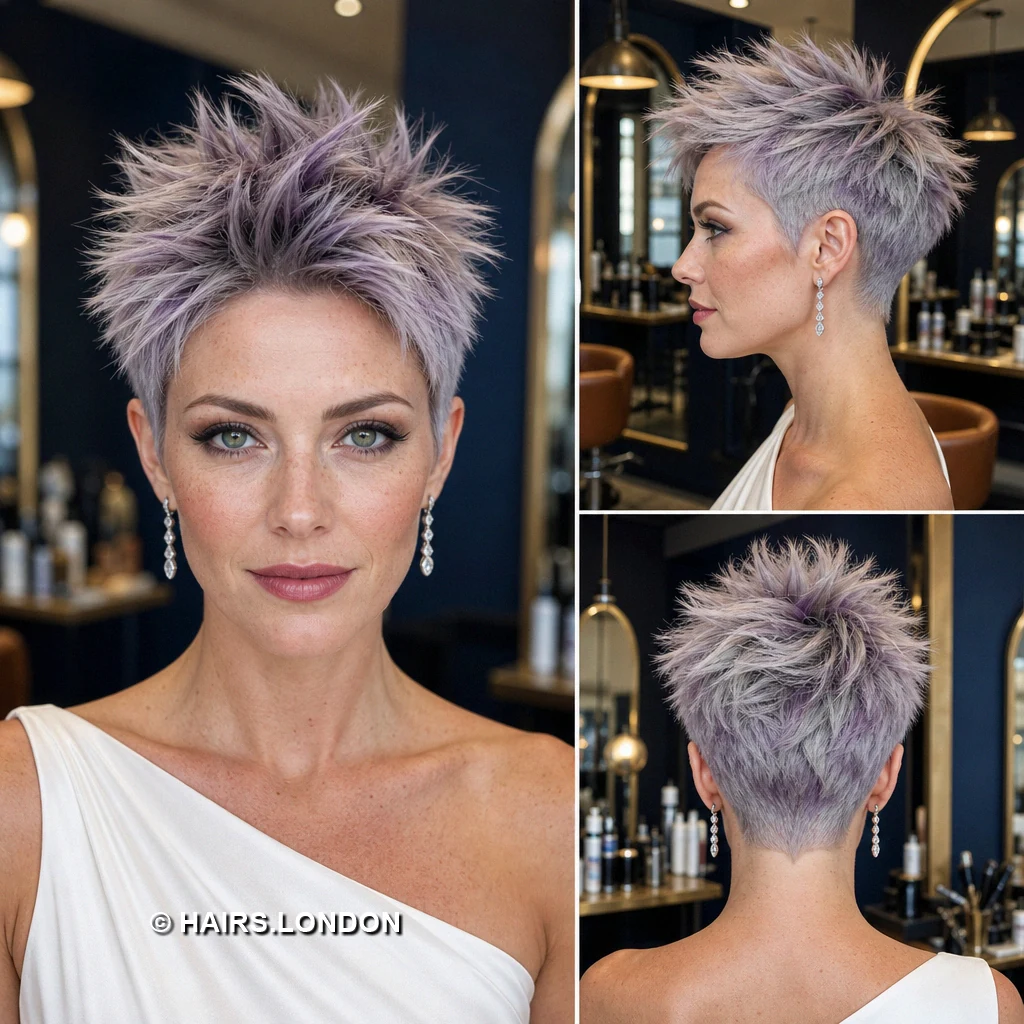
This powder blue pixie sends its longest layers dramatically sideways. The lifted front forms a pointed crest above the forehead. Pale silver runs through blue strands, emphasizing their separated ends. One side appears closely cropped beneath the broad upper sweep. From behind, the textured crown narrows into a tidy nape. Preserve length at the front if you want similar height. Bring photos showing both the lifted front and tapered back. Apply heat protectant before blowdrying the longer top into place. Finish with flexible spray, avoiding stiff buildup across the crown. Refresh the perimeter regularly to keep the shape looking intentional.
14. Silver Pixie With Pastel Streaks
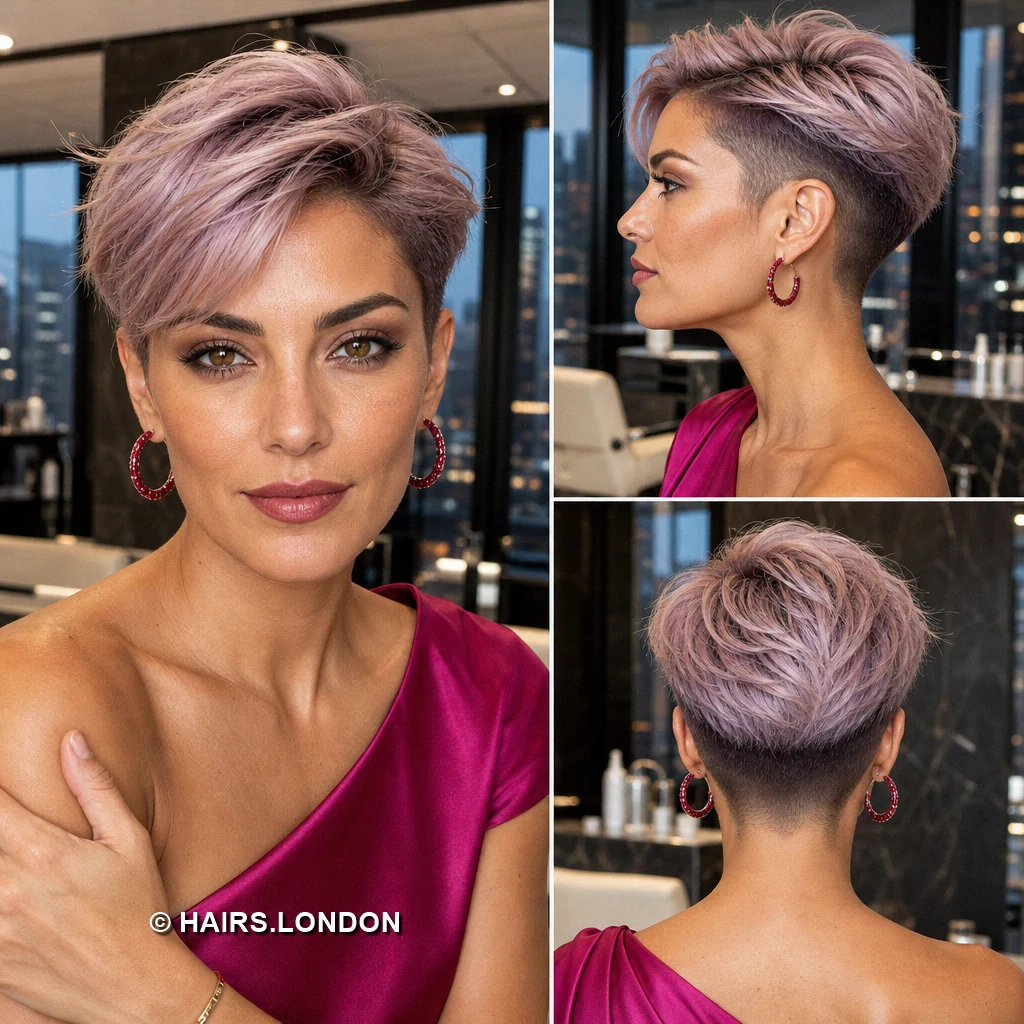
This silver pixie rises into a sharply textured front crest. Thin pink, blue, and lavender streaks weave through pale lengths. The crown carries those colors backward in separated, lifted sections. Close gray sides keep the ears clear and outline compact. At the back, fine strands meet a softly pointed nape. Discuss streak placement before cutting so visible sections retain color. Ask for point cutting to separate ends while preserving fullness. Finger style with matte paste for definition without excessive shine. Keep color appointments as pastel tones gradually soften between visits. Book regular trims to maintain the crisp outline around ears.
15. Coral Pixie With a Swept-Up Fringe
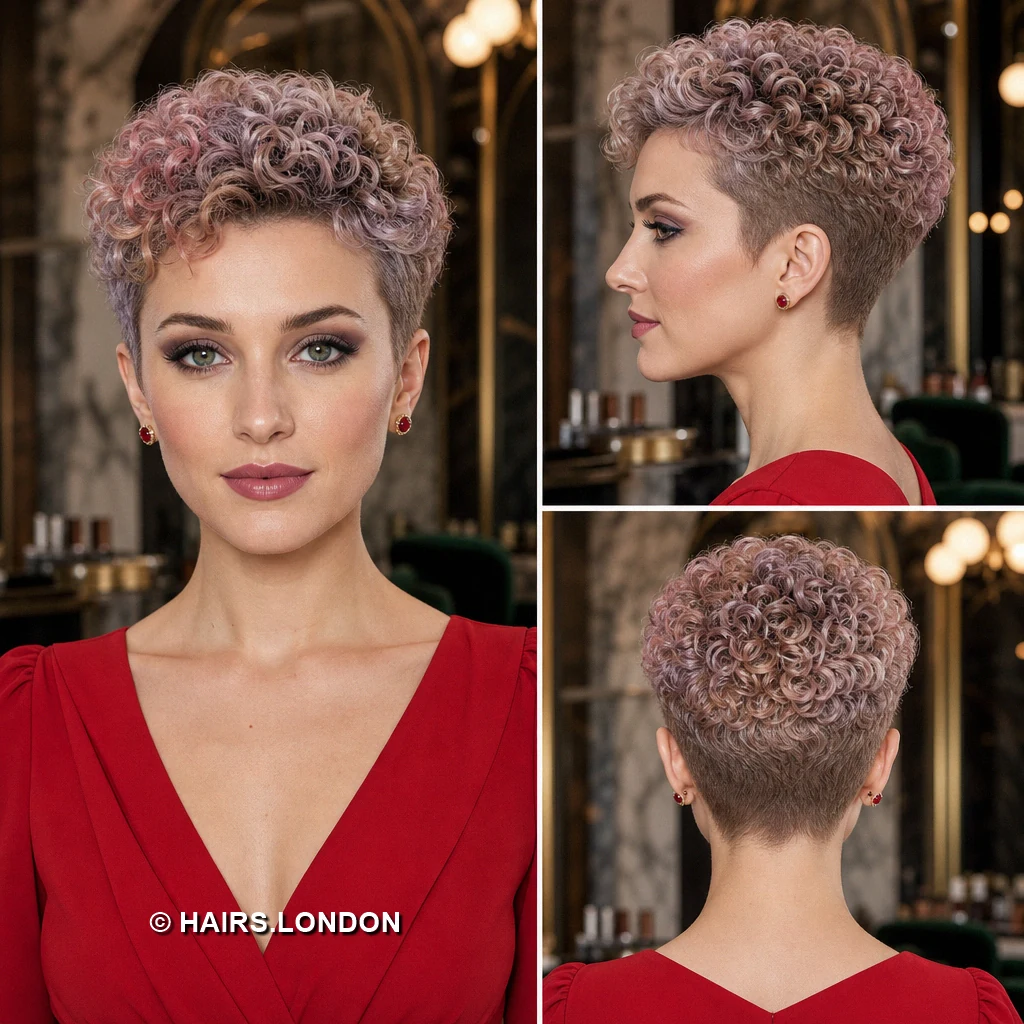
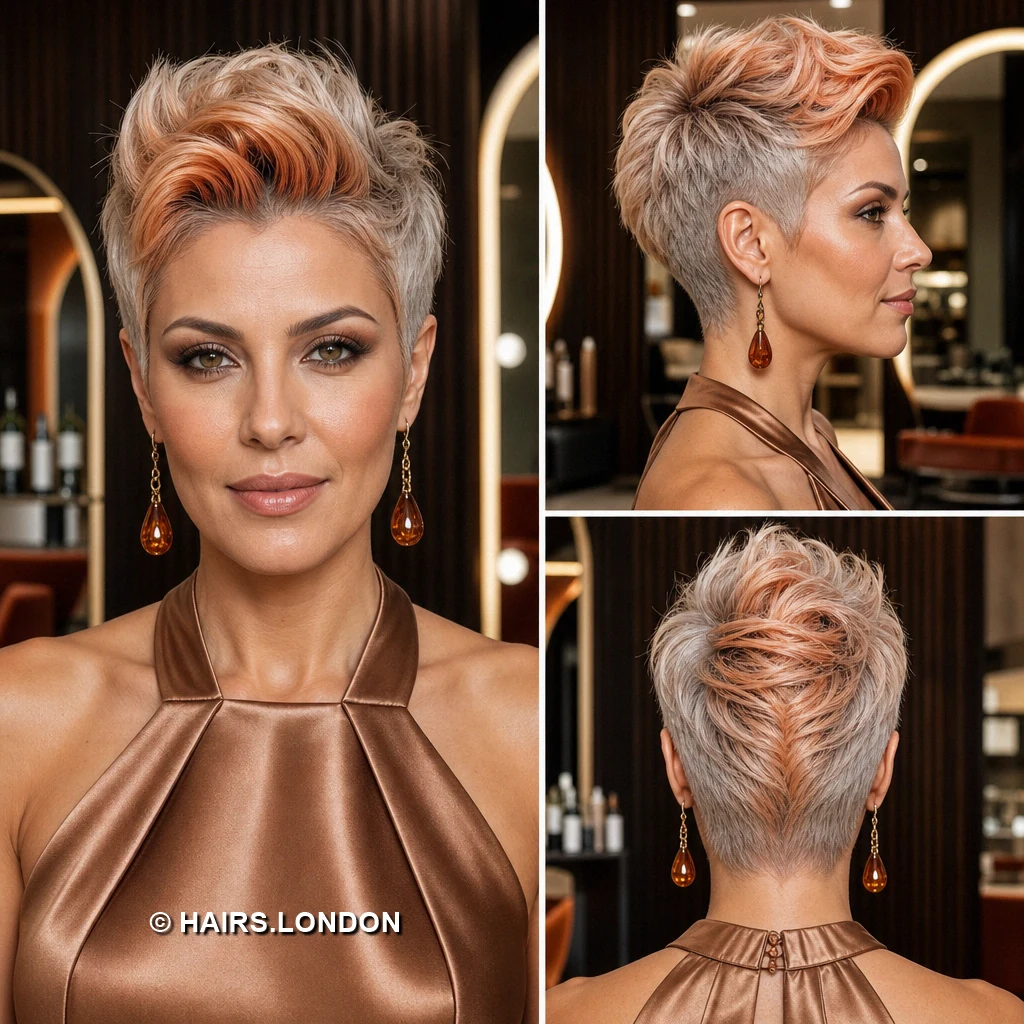
This coral pixie raises its front into several feathered points. The top blends warm peach tones with lighter beige strands. Short fringe pieces join the lift instead of covering eyebrows. Close, pale sides create contrast with the saturated upper layers. The crown remains textured through the back, above tapered growth. Ask for a firm outline without making the sides harsh. Apply heat protectant before blowdrying the longer top into place. Finger style with matte paste for definition without excessive shine. Shield pastel color from frequent hot tools whenever possible daily. Refresh the perimeter regularly to keep the shape looking intentional.
16. Mauve Pixie With a Long Draped Fringe
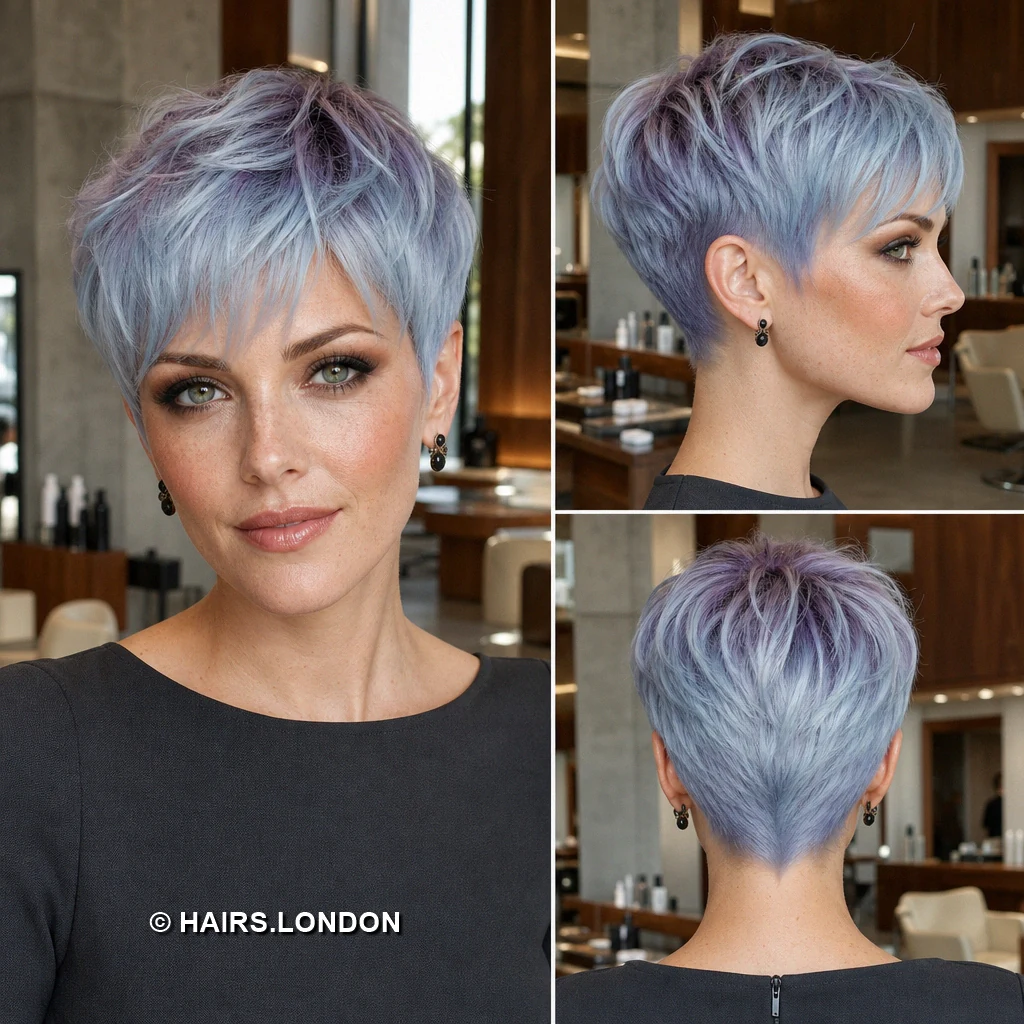
This mauve pixie places most of its length above one eye. A broad fringe curves smoothly downward from the rounded crown. Pale pink strands brighten the lavender sweep and emphasize movement. The opposite side is closely cropped, exposing the ear. Behind, long upper layers blend into a short, neatly tapered nape. Ask how much fringe length suits your preferred visibility. Request softly textured ends rather than removing too much weight. Use a small amount of styling cream to define separation. Keep color appointments as pastel tones gradually soften between visits. Refresh the perimeter regularly to keep the shape looking intentional.
17. Lavender Pixie With a Soft Diagonal Fringe
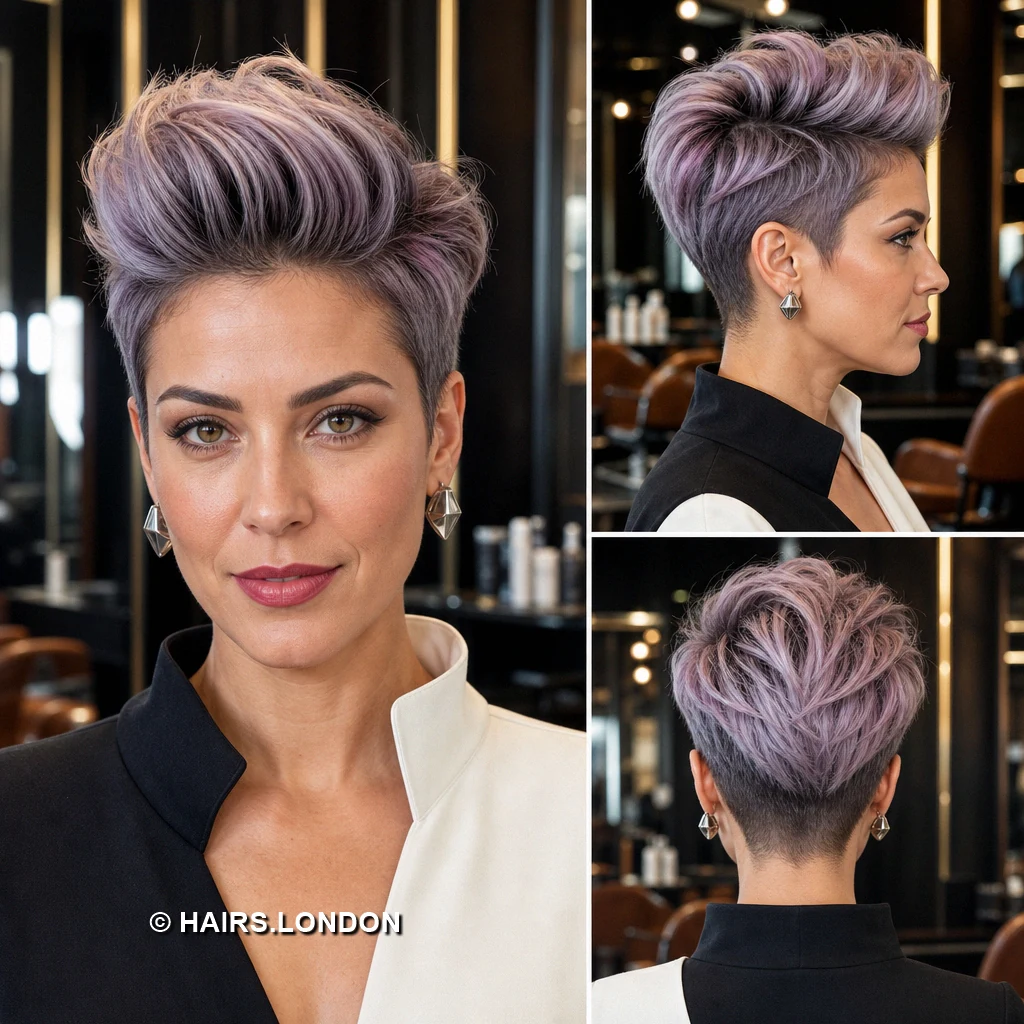
This lavender pixie keeps its crown full but softly controlled. Fine fringe sections angle diagonally across the forehead and brow. Blended crown layers create a smooth silhouette with visible texture. The sides sit close, without the dramatic contrast of undercutting. From behind, overlapping strands taper toward a narrow, clean neckline. Ask for gentle graduation if you prefer this softer perimeter. Request softly textured ends rather than removing too much weight. Use a small amount of styling cream to define separation. Keep color appointments as pastel tones gradually soften between visits. Book regular trims to maintain the crisp outline around ears.
18. Apricot Pixie With Windblown Texture
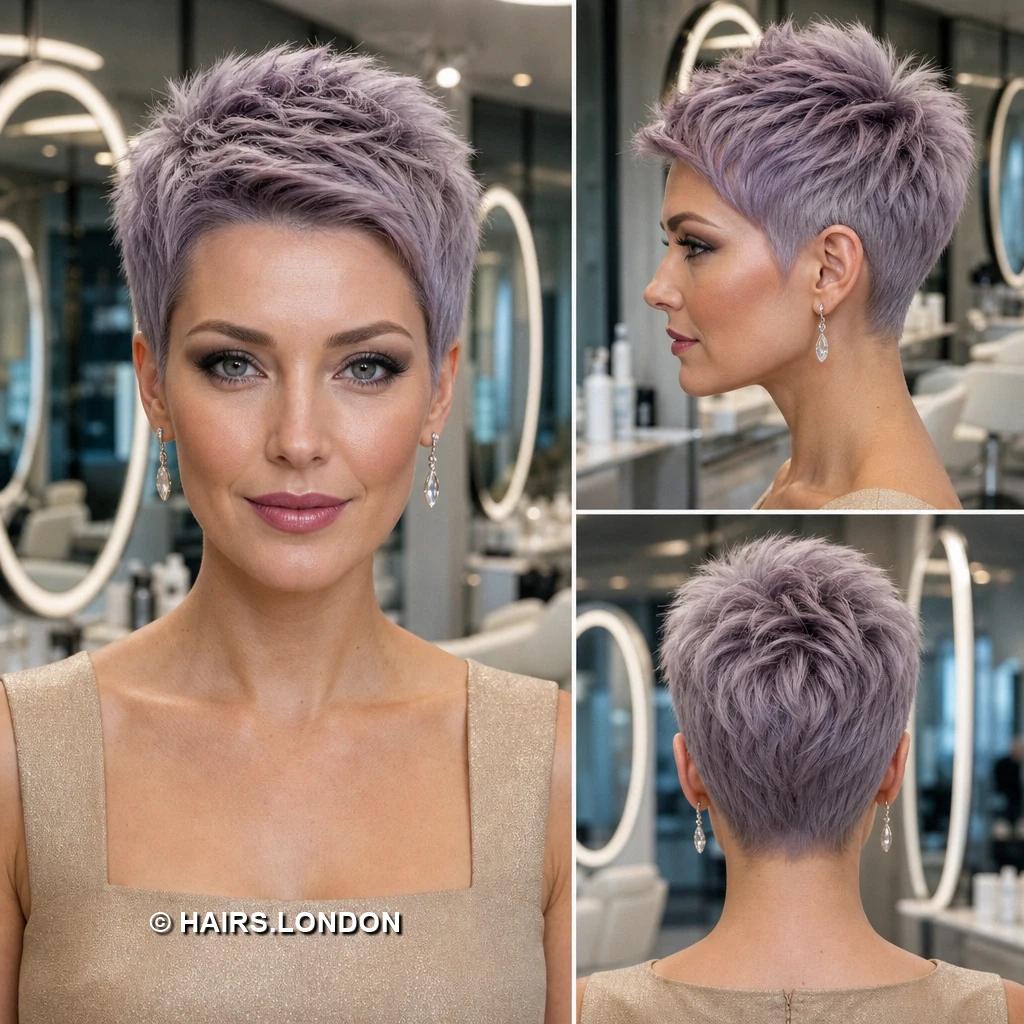
This apricot pixie has separated layers pointing across the crown. Its short, uneven fringe leaves much of the forehead visible. Warm apricot lengths contrast with darker roots and shorter sides. Texture continues behind the crown before meeting a compact nape. The outline stays snug around the ears despite generous height. Ask for choppy ends, but retain support beneath longer layers. Work lightweight mousse through damp hair before lifting the roots. Finger style with matte paste for definition without excessive shine. Shield pastel color from frequent hot tools whenever possible daily. Refresh the perimeter regularly to keep the shape looking intentional.
19. Rose Pink Pixie With a Piecey Front
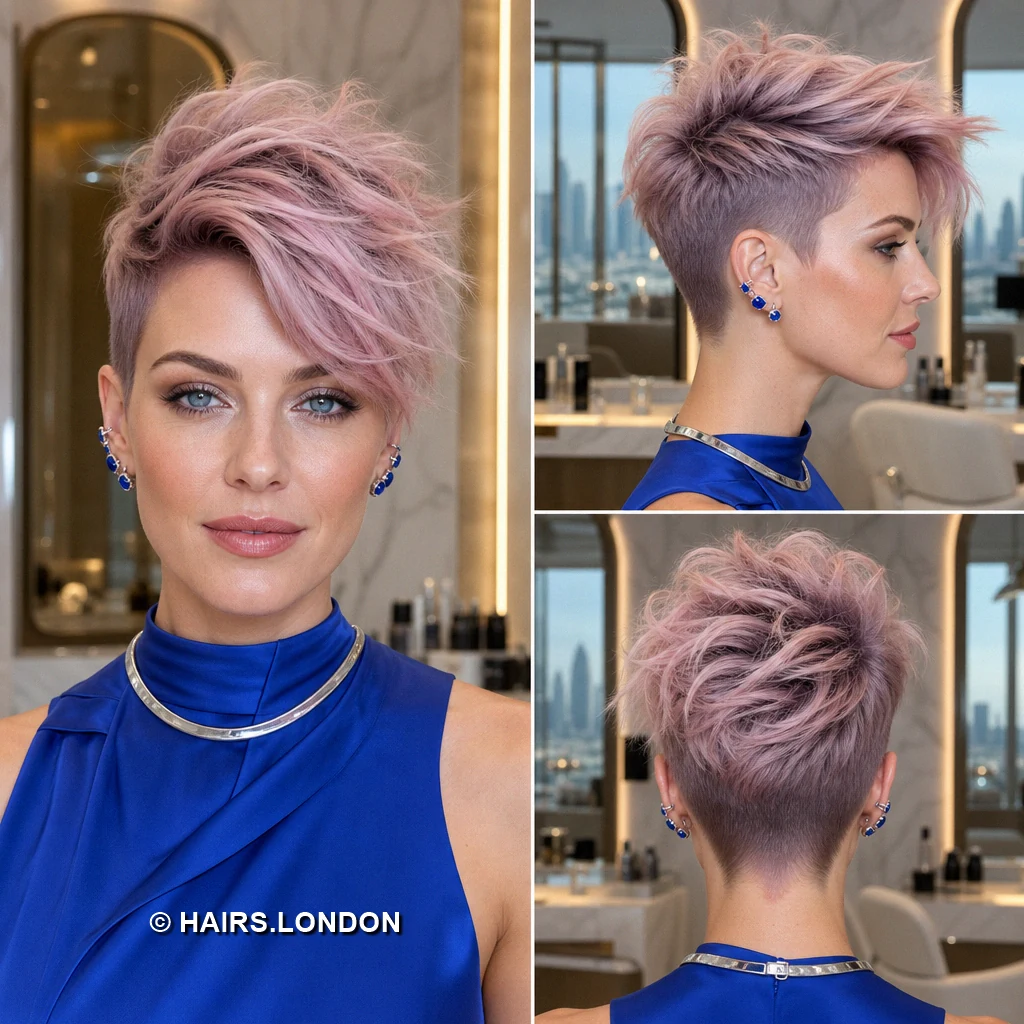
This rose pink pixie combines a lifted crown with wispy fringe. Several front pieces fall forward while others rise into points. Soft pink color extends through the sides and layered back. A close ear area gives the textured top definition. The nape tapers neatly, without a heavy edge or tail. Ask for flexible layering so the front styles either way. Request softly textured ends rather than removing too much weight. Use a small amount of styling cream to define separation. Keep color appointments as pastel tones gradually soften between visits. Book regular trims to maintain the crisp outline around ears.
How to Choose a Pastel Pixie Haircut
Start with the outline you want to see from every angle. A long side fringe offers more coverage and styling flexibility; a raised quiff exposes the forehead and needs enough top length to hold its curve. Closely tapered sides make the crown look more prominent, while softly graduated sides give a gentler transition. Compare the pictured napes, too: some finish close and narrow, while others retain visible layered texture. Choose a shape that fits your hair’s density, growth patterns, and willingness to style it.
Styling Different Hair Textures
For straight hair, apply a light mousse at the roots, direct airflow against the natural fall, and separate dry ends with a little paste. Wavy hair may need less lifting: scrunch in lightweight cream and refine only the fringe with a brush or dryer. For curls, ask the stylist to account for shrinkage, then diffuse gently or air-dry to protect definition. Start with small amounts of product on fine hair; thicker hair may need more hold to keep a tall quiff in place.
Keeping Pastel Color Fresh
Pastel shades can change visibly as they wash out. Ask your colorist what starting lightness your chosen blue, pink, peach, or lavender requires and how the underlying color may show through later. Use a color-safe cleanser, avoid unnecessarily hot water, and protect hair before heat styling. A color-depositing conditioner may help between appointments, but confirm the shade and application with your colorist first—particularly when several pastel tones share the same cut.
Maintaining the Pixie Shape
Short sides and napes reveal growth quickly, especially beside a longer fringe or quiff. Arrange trim timing around the part of the cut that loses its shape first rather than waiting for every section to feel long. At each visit, explain whether you want to preserve top length, shorten the fringe, or tighten only the perimeter. Keep a clear photo of the back view so the nape remains as considered as the front.
What to Discuss with Your Stylist
Bring front, side, and back references for the specific cut you like. Point out the desired fringe length, crown height, side tightness, and nape finish. Describe how your hair behaves after washing and how much time you will spend styling it. If color is part of the plan, ask about lightening, likely upkeep, and whether the proposed placement will still show after your next trim. Agree on a manageable version of the image for your own texture.
Frequently Asked Questions
What makes a pixie haircut look pastel?
The color does: soft lavender, pink, peach, and blue tones appear throughout these short cuts. The pixie’s layers and styling determine where those shades are most visible.
Which of these cuts leaves the longest fringe?
The mauve draped fringe and pink-lavender asymmetric pixie both keep substantial length across the forehead.
Can a pastel pixie work with curly hair?
Yes. The rosy curly pixie shows a full ringlet top with closely tapered sides. Have the stylist assess curl shrinkage before deciding on the finished length.
Which shape needs the most daily lifting?
The tall blush and smoky lavender quiffs rely on an elevated front, so they are likely to need deliberate drying and hold.
What is an easier shape to style softly?
A forward-layered cut, such as the icy blue feathered pixie, can be styled with gentle separation rather than a sharply raised crest.
How do I keep a side-swept fringe in place?
Dry it in its intended direction, let it cool, then use a small amount of lightweight styling product. Preserve enough length for the sweep when trimming.
Will tapered sides make the top appear fuller?
They can create stronger visual contrast, as seen in the curly and high-quiff cuts. Your stylist can adjust how close the sides are cut.
How often should I trim a pixie?
Book a trim when the fringe, sides, or nape stop holding the intended outline. Very close tapers usually show growth sooner than softer, longer sides.
Do pastel colors require lightening?
Your colorist can assess the starting shade and the lightness needed for the particular pastel you want. Pale tones often require a light base to appear clearly.
How can I limit fading?
Use color-safe products, moderate water temperature, and heat protection. Ask your colorist whether a suitable color-depositing conditioner would help.
What should I show my stylist besides the front view?
Show the side and back views so you can agree on the ear area, crown layering, and exact nape shape.
Can I keep dark roots with a pastel top?
Yes. Several pictured cuts show darker roots beneath lighter lengths. Discuss the contrast and placement you want before coloring.
Conclusion
The strongest choice is the pixie whose shape appeals to you even before you consider its color. Decide whether you prefer a soft fringe, defined curls, or a lifted crown, then use the accompanying side and back views to plan the cut. A clear consultation and realistic color routine will help you keep that chosen outline looking deliberate.