

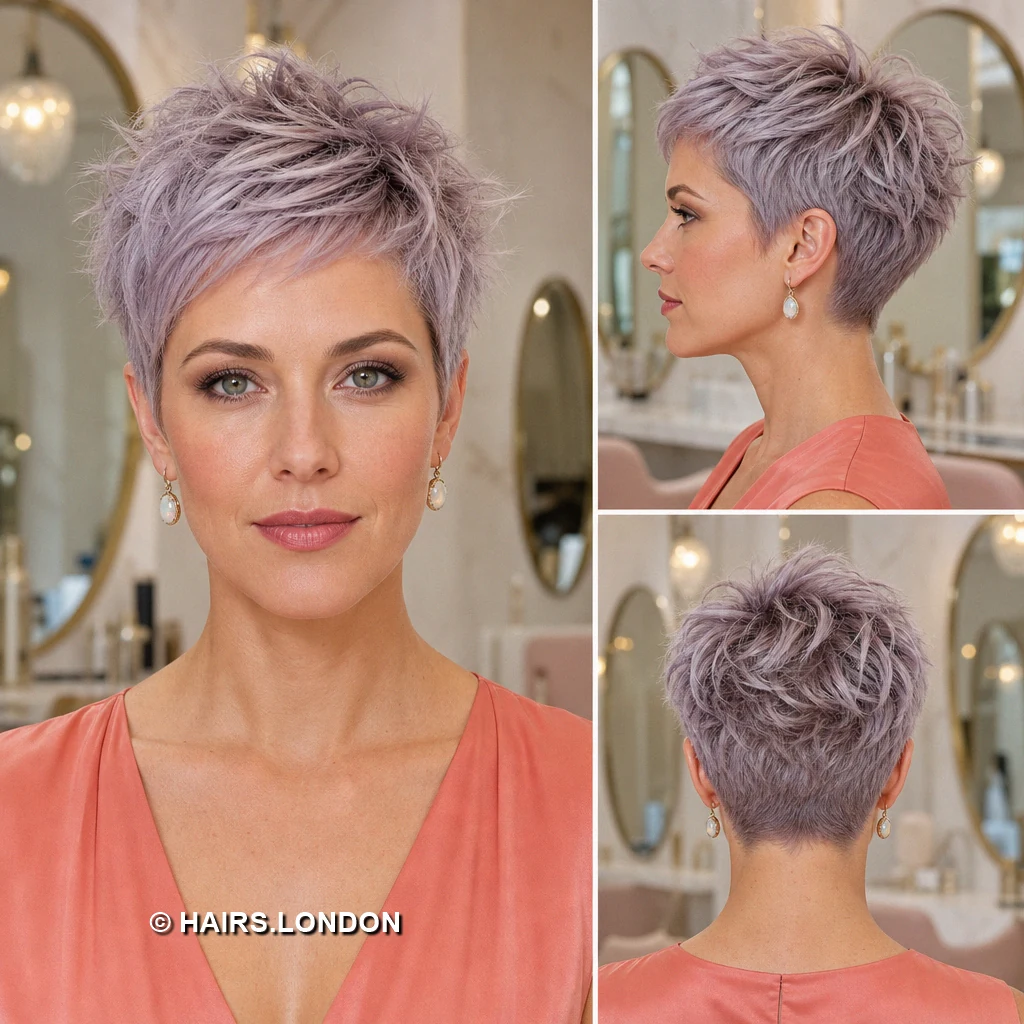
11. Dusty Lilac Pixie with a Loose Side Fringe
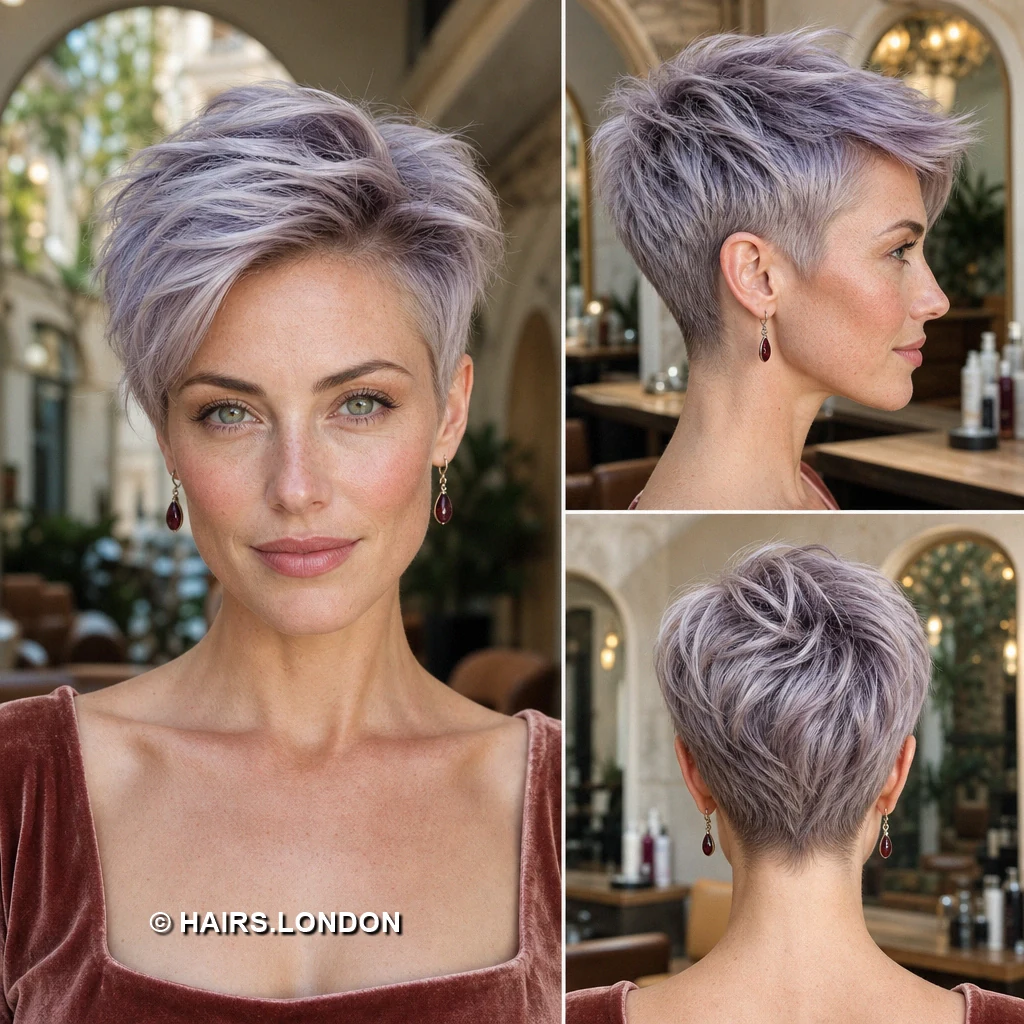
Dusty lilac layers cross the forehead in a loose fringe. The crown looks softly tousled rather than strongly lifted upward. Fine pieces near the temples frame the face without heaviness. At the back, layered strands narrow toward a darker nape. Lighter highlights trace the direction of movement across the top. Ask for gentle texture if you prefer this relaxed finish. Let the fringe keep enough length to shift either way. Work a small amount of cream into nearly dry hair. Loosen the top with fingertips for natural looking separation afterward. Maintain the tapered back before its outline becomes too rounded.
12. Silver Pixie with Blended Pastel Highlights
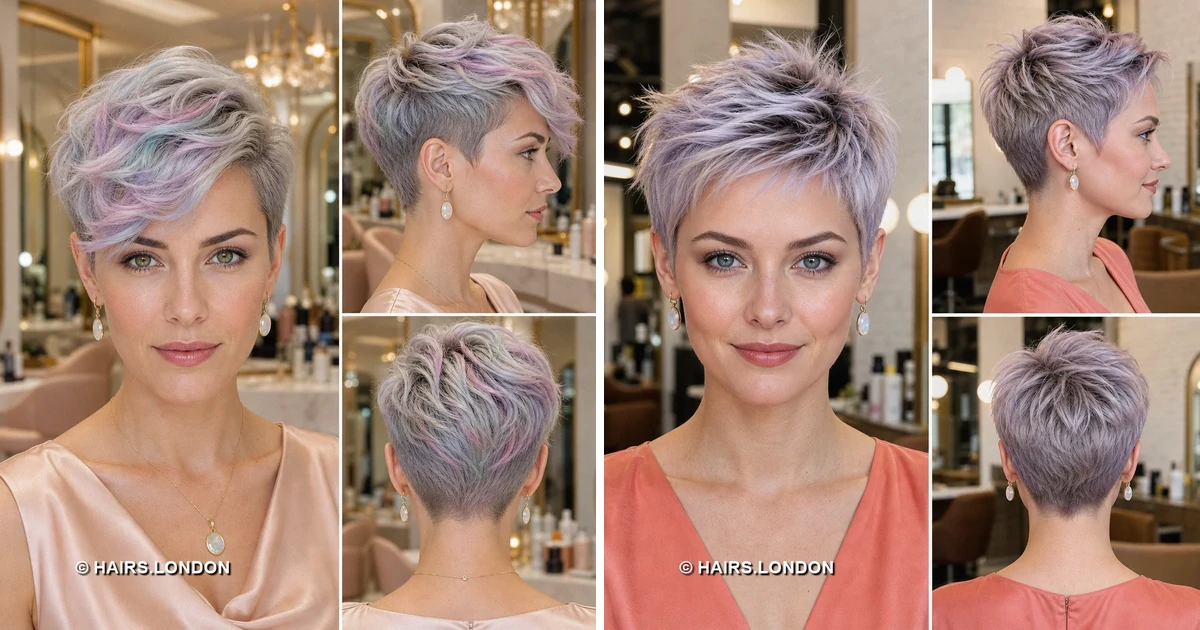
Silvery hair carries pink and lilac through its layers. A pale blue fringe sweeps forward and slightly to one side. Short sides frame the ears beneath a softly lifted crown. The back tapers into closely cut, darker hair at the nape. Pastel strands remain blended rather than forming wide contrasting panels. Ask for fine color sections if you want subtle variation. Preserve some top length so the shades remain visible. Dry with fingers to encourage lift without overly precise shaping. Finish sparingly with cream along the wispy front ends only. Discuss how toner changes may affect each pale shade differently.
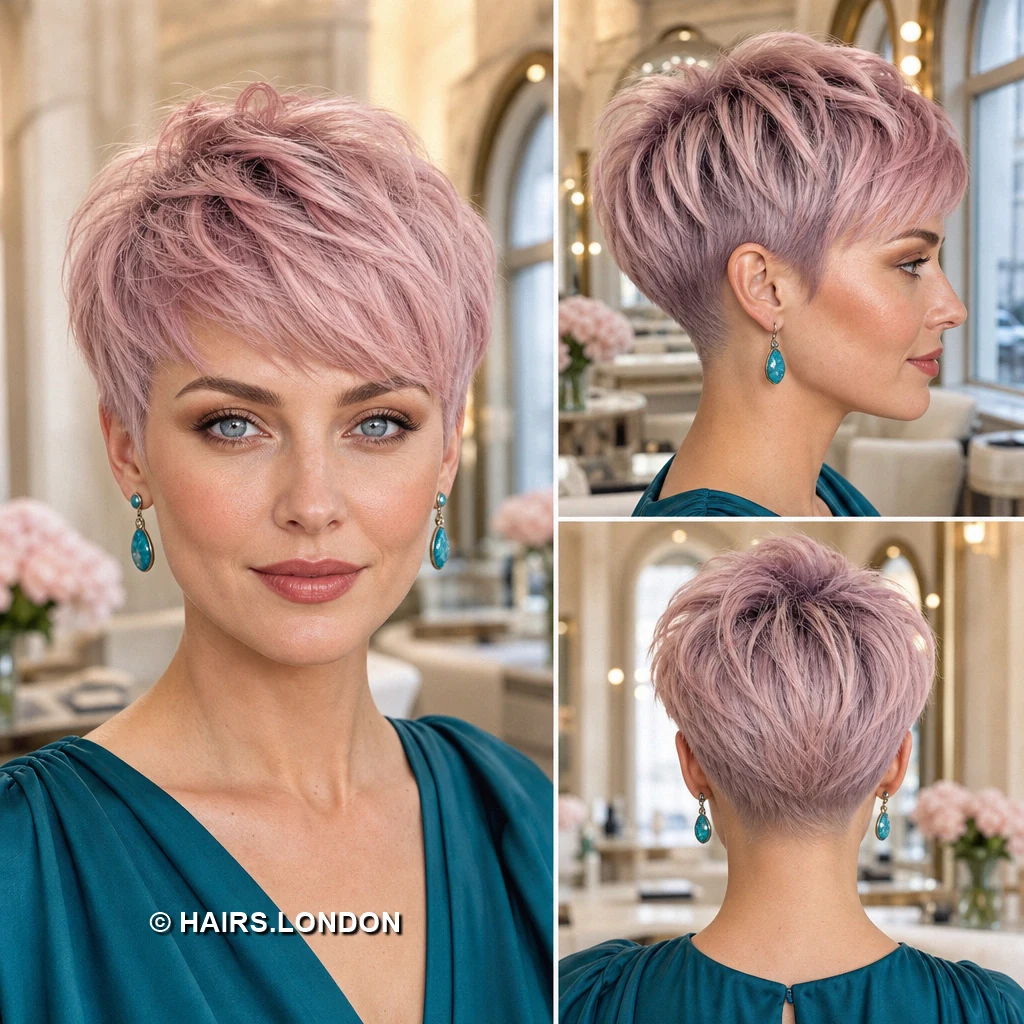
13. Spiky Lilac Pixie with a Short Fringe
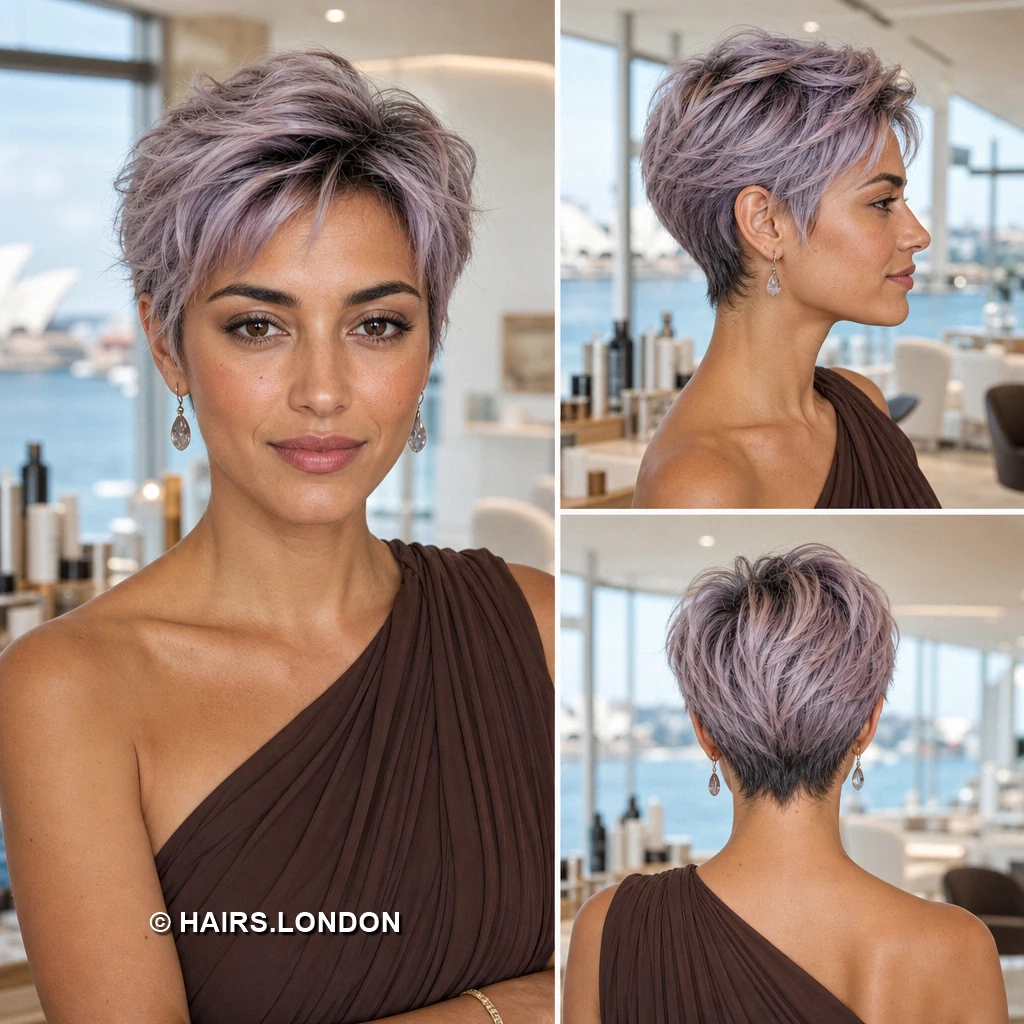
Spiky lilac pieces create an energetic crown with uneven height. The short fringe sits lightly against the upper forehead here. Closely shaped sides keep the lifted top as the focus. The back appears fuller above a small, tapered dark nape. Pale lavender strands separate clearly against their deeper root color. Ask for textured top layers without removing all their density. Dry the crown upward with fingers for flexible root lift. Touch small amounts of paste onto selected ends for definition. Leave the fringe softer than the peaks across the crown. Book trims when the sides start softening the compact silhouette.
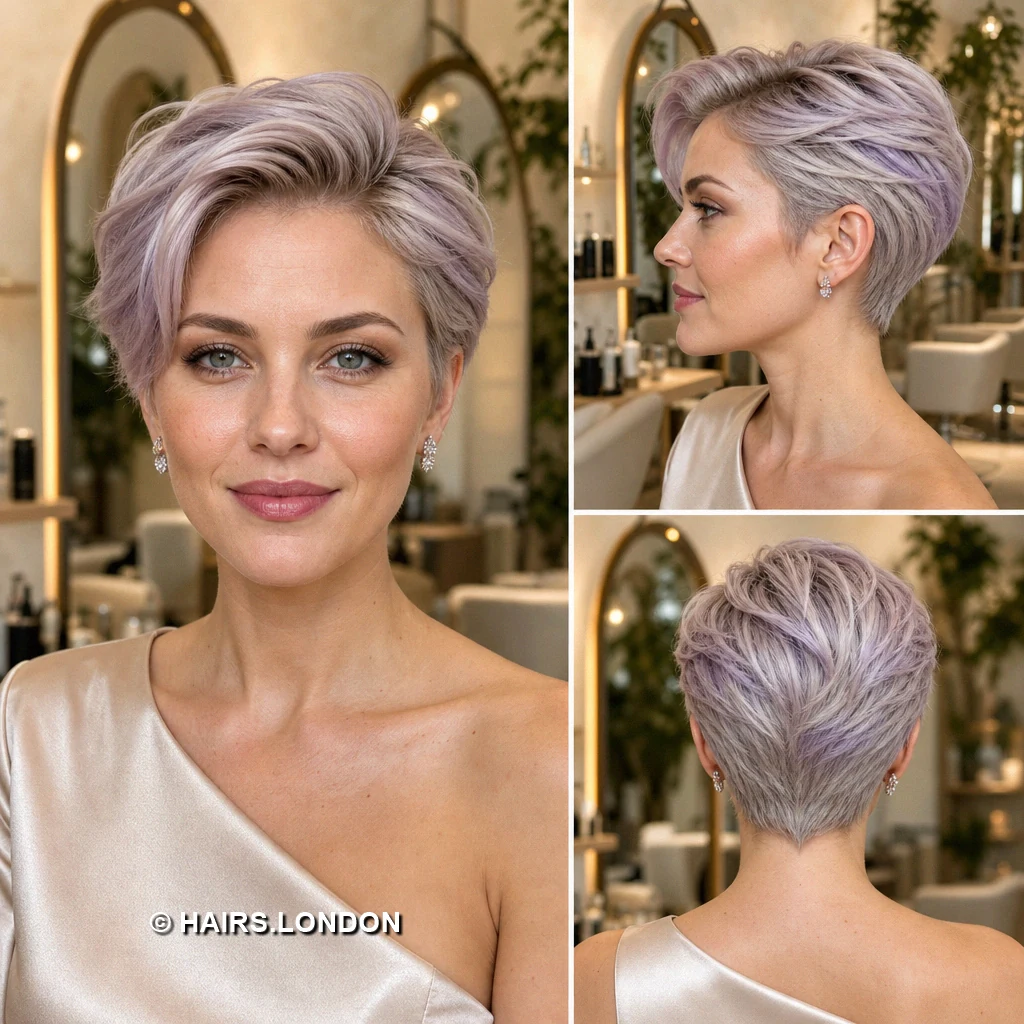
14. Mauve Pixie with a Sculpted Side Quiff
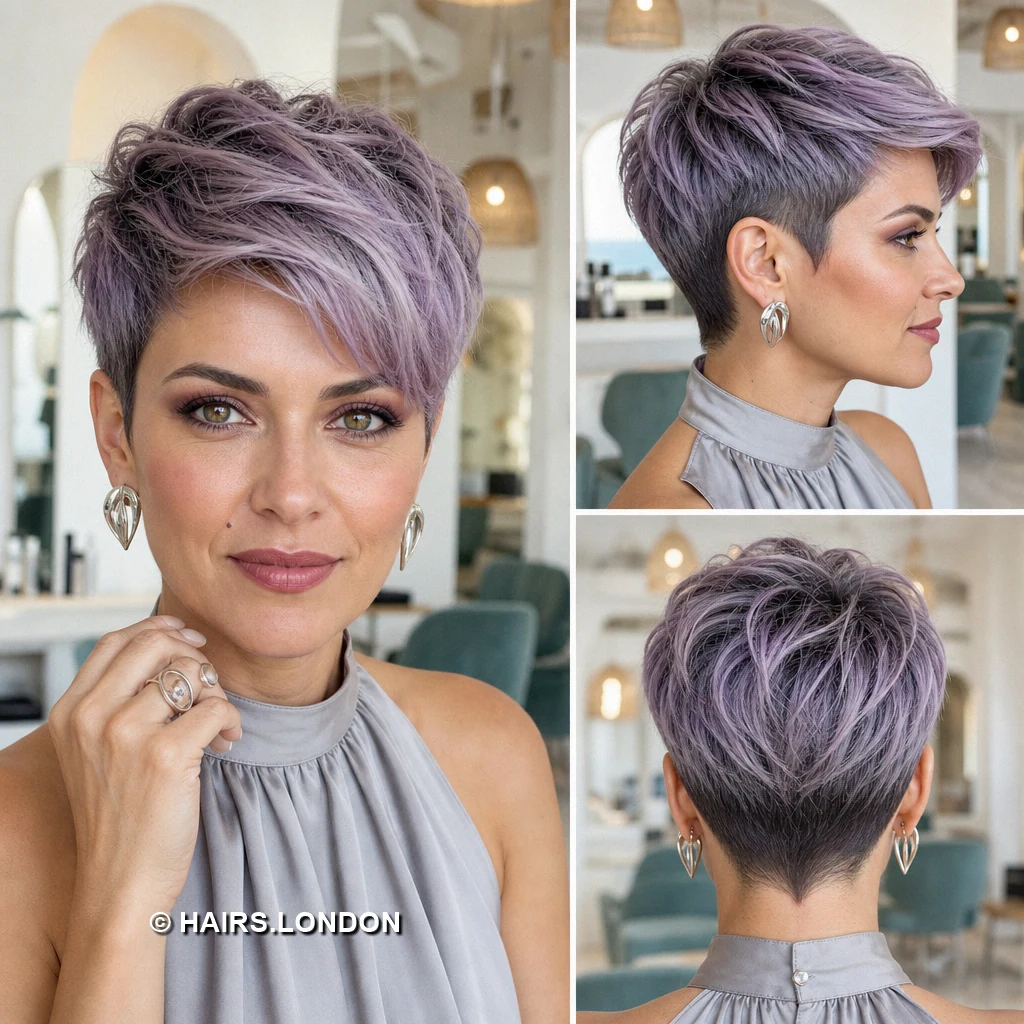
Muted mauve hair forms a broad quiff above one temple. Long front sections sweep sideways into a softly open fringe. The opposite side stays closely shaped around the visible ear. Smooth layers flow back toward a tapered, narrow nape shape. Pale highlights accentuate the curve through the raised front section. Ask for controlled graduation that supports height without hard lines. Blow dry the roots backward, then sweep the ends sideways. Use flexible hold to keep the quiff soft, not stiff. Brush the sides close while leaving the upper layers movable. Check that your stylist can maintain this deliberate length contrast.
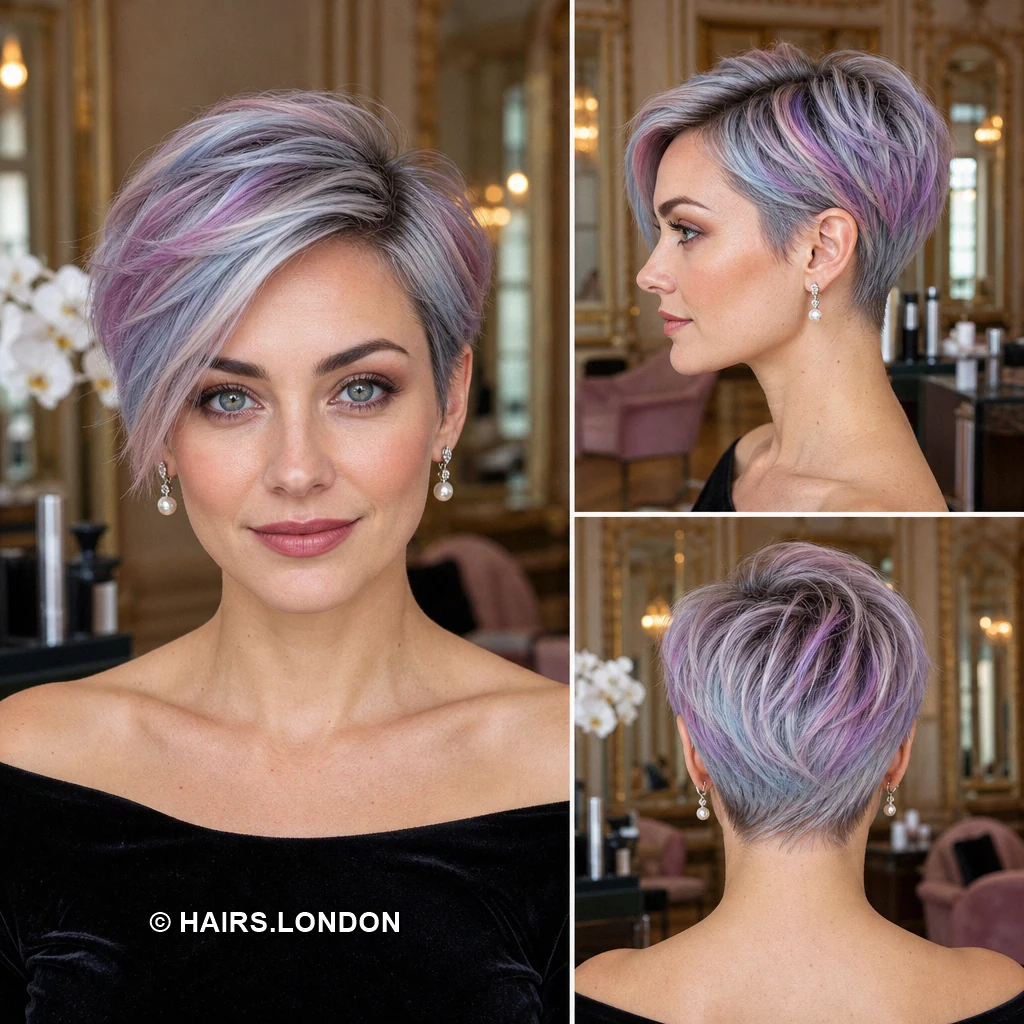
15. Multicolor Pixie with a Layered Side Fringe
Pastel blue, pink, and lavender weave through this layered pixie. A longer pale fringe crosses the forehead in curved sections. Shorter sides reveal the ears while the crown stays full. Behind, overlapping colored strands taper neatly toward the lower neckline. The shifting shades remain visible from front, side, and back. Ask where each color will appear after your preferred parting. Keep enough length on top to show distinct pastel ribbons. Dry gently and avoid rough brushing that hides their separation. A lightweight cream can tame flyaways without flattening the layers. Discuss realistic color refresh timing before committing to multiple shades.
16. Lavender Pixie with a Pale Sweeping Fringe
A pale fringe sweeps across a lavender and blue crown. The top retains soft height with longer, curved front sections. Closely trimmed sides create a defined outline around the ears. From behind, pink and violet threads cross the layered back. Darker hair at the nape grounds the airy upper shape. Ask your stylist to map the sweep around your part. Lift roots while drying, then direct the fringe across gently. Smooth only the ends if you want to preserve volume. Color placement matters when several shades share very short layers. Plan regular trims to prevent the side profile becoming heavy.
17. Smoky Lilac Pixie with a Lifted Front
Smoky lilac layers rise into a soft, sweeping front. The crown has ample movement without forming sharp, upright spikes. Short gray lilac sides sit close above the ears. At the back, wispy upper layers meet a tapered nape. Deeper roots show clearly beneath the lighter textured surface pieces. Ask for length through the front and texture through ends. Dry upward near the hairline before arranging the sweep sideways. Use minimal lightweight styling paste to keep individual crown strands visibly separated. Leave the sides smoother for contrast with the airy top. Refresh the cut when the nape begins losing its shape.
How to Choose a Pastel Pixie Haircut
Start with the silhouette you want to see from every angle. A longer fringe offers more styling options and a softer front view; a short fringe makes the crown and close sides more prominent. Compare the side profiles for crown height and the back views for nape shape. Also consider how much time you want to spend directing the front each morning.
Styling Pastel Pixies on Different Textures
Fine hair often benefits from lightweight mousse at the roots and careful blow drying for lift. If your hair is naturally wavy, scrunch a light product through the longer top and let its bends provide separation. Thicker or straighter hair may need more precise cutting through the crown, followed by a small amount of cream or paste on the ends. Keep product light on closely tapered sides.
Keeping Pastel Pixie Color Fresh
The lavender, pink, blue and silver tones shown here are delicate, so ask your colorist what fading to expect from your starting color. Follow their washing and toner recommendations, use color-safe products, and limit unnecessary heat. Multicolor placement deserves particular planning: a short trim can remove some of the most visible colored ends.
Maintaining the Pixie Shape
Watch the areas that define your chosen cut: the ear outline, the contrast between top and sides, and the nape. Those can change quickly as short hair grows. Arrange trims according to how crisp you want the silhouette to remain, and tell your stylist if you are growing out the fringe so they can adjust the surrounding layers rather than cutting everything evenly.
What to Discuss with Your Stylist
Bring the front, side and back views of your preferred image. Point out the exact fringe direction, crown height, side length and nape finish you like. Discuss your natural texture, usual part, daily styling time and color history. For pastel shades, ask what preparation your hair may need, how the proposed colors will be placed, and what the upkeep will involve.
Frequently Asked Questions
Which pastel pixie is easiest to style?
A softly layered shape with a relaxed fringe generally needs less precise styling than a tall quiff or sharply separated crown. Your natural growth pattern matters, so ask your stylist which image is closest to how your hair already falls.
Can I keep a longer fringe with close sides?
Yes. Several cuts shown pair a sweeping front with closely shaped sides. Ask your stylist to leave enough length for your preferred sweep while blending the crown into the shorter areas.
How do I add lift to a fine-haired pixie?
Apply a lightweight volumizing product near the roots, then dry the crown and front in the direction you want them to sit. Avoid loading the ends with heavy wax.
Will a textured crown work with naturally wavy hair?
It can. Have the stylist assess your wave pattern before setting the top length, then try scrunching and gentle drying to bring out the existing movement.
What should I request for a neat pixie nape?
Show the back view you prefer and specify whether you want a narrow point, a soft taper or a more rounded finish. Agree on how short the neckline should be.
How do I stop a long fringe from falling flat?
Dry its roots with some lift before directing the ends sideways. A little mousse or flexible spray can help without making the fringe look rigid.
Are pastel highlights visible in very short hair?
They can be, especially through longer fringe and crown layers. Ask your colorist to plan placement around the finished cut, since closely cropped sections show less length of each color.
How often will pastel color need refreshing?
It depends on the shades, your hair and your washing routine. Ask your colorist for a refresh plan based on the result they create rather than assuming every pastel fades alike.
Can I style the same pixie smoothly and tousled?
Many of the longer-topped cuts allow both finishes. Smooth the hair with a brush while drying, or use your fingers and a light texture product for more separation.
What if I want less contrast between the top and sides?
Choose a softer, rounded silhouette and ask for gradual blending around the temples. Show your stylist any profile where the sides look too close for your preference.
Should I choose the color or the cut first?
Plan them together, but agree on the cut shape before finalizing color placement. The fringe direction and finished layer lengths determine where pastel sections will show.
What should I bring to a salon consultation?
Bring your preferred front, side and back images, plus notes on the fringe, crown, sides and nape you want. Share your color history and describe how you normally style your hair.
Conclusion
The most useful reference is the one whose shape you like from the side and back as much as from the front. Once you have chosen a fringe, crown and nape, your stylist can help adapt the cut to your texture and plan pastel color that remains visible in the finished pixie.