


11. Champagne Blonde Pixie with an Asymmetric Fringe
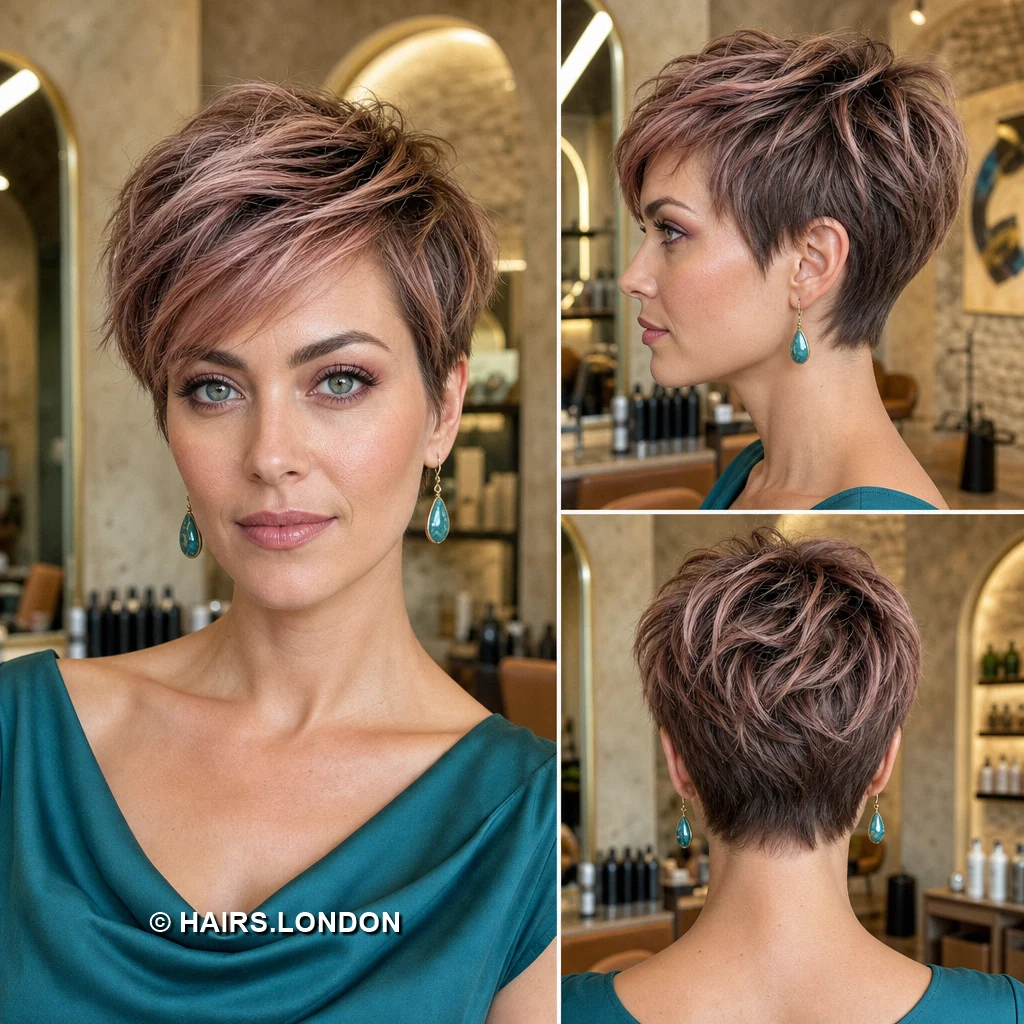
Champagne blonde strands sweep across this dramatic, asymmetric short cut. The crown rises into broad layers with visibly separated ends. An extended fringe covers one eyebrow and approaches the cheek. The opposite temple is cropped closely, exposing the ear completely. Behind, darker graduated layers taper cleanly down the narrow nape. Blonde and pink ribbons contrast with the cool brown underneath. Discuss fringe placement before cutting, especially if strands split naturally. Blow dry the top upward, guiding longer hair across diagonally. A small amount of wax separates ends without stiffening them. Trim shorter areas sooner than the fringe to preserve asymmetry.
How to Choose a Pastel Pixie Haircut
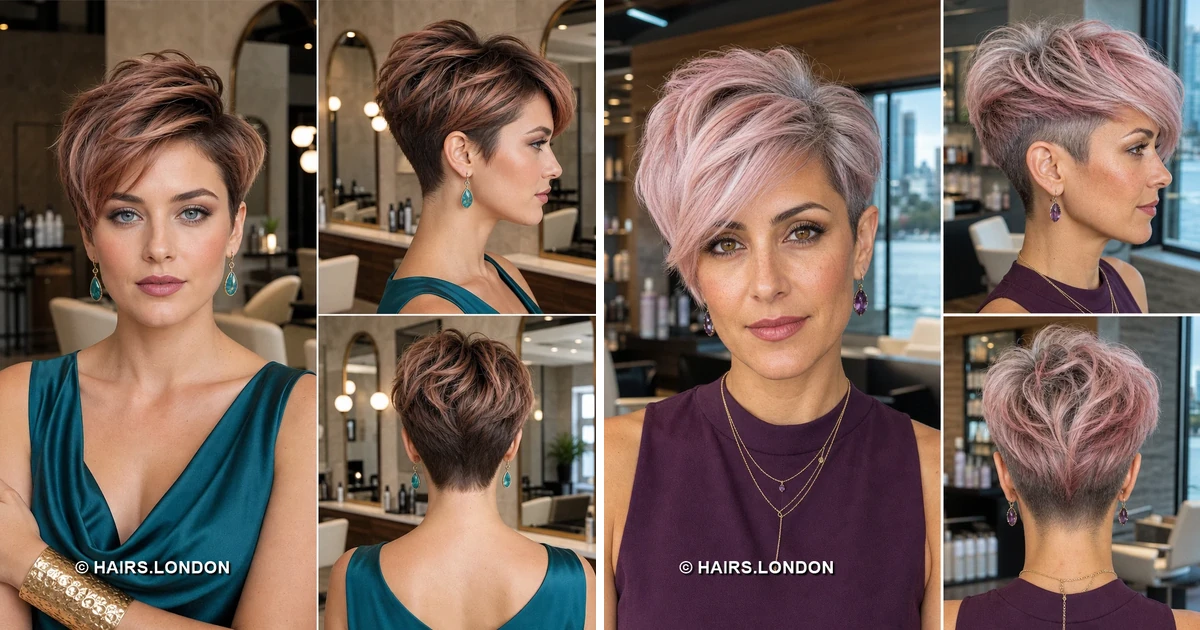
Start with the amount of length you want around your face. A long side fringe offers more styling options but may need daily direction, while a shorter, broken fringe stays clear of the eyes. Consider how much volume your hair naturally makes: the rounded, waved cuts need enough top length to bend, and the spiky version depends on shorter layers. Check the side and back views as carefully as the front, since a close taper changes the whole silhouette.
Styling Straight, Wavy and Curly Textures
For straighter hair, lift the crown at the roots while blow drying, then brush the fringe in its intended direction. Scrunch wavy hair with a light mousse and diffuse it before separating a few pieces by hand. For curls, apply curl cream to damp hair, diffuse gently and allow for shrinkage when choosing the top length. Start with a small amount of finishing product; too much can flatten the airy layers shown here.
Keeping Pastel Pixie Color Fresh
Pale pink, peach, mauve and silver tones can lose their clarity between appointments. Ask your colorist which gentle shampoo, conditioning routine and toning schedule suit the specific colors used. Wash with lukewarm rather than hot water when practical, and limit unnecessary heat styling. The darker roots and shorter sections visible in several cuts can be part of the color plan, so decide whether you want to maintain that contrast.
Maintaining the Tapered Pixie Shape
Short sides and napes reveal growth sooner than longer crowns. Plan a trim schedule around the sharpness you prefer, and ask whether the fringe can grow a little longer between visits. At home, dry the hair in its usual direction before assessing the shape; flattened bedhead can make layers look uneven. Avoid cutting into the fringe or neckline yourself if preserving the graduation and asymmetry matters to you.
What to Discuss with Your Stylist
Bring the front, side and back views of the cut you prefer. Point out the exact fringe length, crown height, ear exposure and nape finish you want. Discuss your natural wave or curl pattern, any strong growth patterns and how much time you can spend styling. For color, identify whether you prefer an allover pastel impression or lighter ribbons over a deeper base, and ask what preparation and upkeep your starting color requires.
Frequently Asked Questions
Which pastel pixie haircut gives the most fringe coverage?
The beige blonde, blush pink and champagne blonde versions have the longest side-swept fronts. Discuss the final length if you want the fringe to stay out of your eyes.
Can a pixie keep volume without looking spiky?
Yes. Rounded layers and root lift create fullness in the smoother and wavier examples, while light finishing products help keep the ends soft.
Which look has the shortest fringe?
The rose gold choppy pixie has a broken fringe that sits above the brows.
Are these cuts suitable for naturally curly hair?
The multicolored curly pixie visibly works with curls. Ask your stylist to account for shrinkage before setting the top and fringe lengths.
Do the sides have to be shaved?
No. Several cuts have short, graduated sides that expose the ears without a visibly shaved finish.
How do I style a long pixie fringe?
Direct it across the forehead while blow drying, lifting the roots first. Add a small amount of flexible product only if it needs hold.
What product helps define a choppy crown?
A little matte paste can separate and lift individual tips. Begin with less than you think you need.
How often should I trim a tapered nape?
Arrange trims according to how crisp you want it to look. A close nape will show growth sooner than the longer top.
Will pastel color show over dark hair?
Ask a colorist what preparation your starting shade needs to achieve the pale tones you want; the answer depends on your hair and color history.
Can I leave darker roots visible?
Yes. Several pictured cuts show darker roots or lower sections beneath lighter top layers. Agree on the placement with your colorist.
Which cut needs the least precise daily styling?
The softly tousled and wavy pixies allow more visible separation than the smooth, long-fringe versions, though their short outlines still need maintenance.
What photos should I bring to a consultation?
Bring front, side and back views. They help clarify the fringe, crown volume, side length and nape shape rather than showing only the face-framing result.
Conclusion
The most useful choice is the pixie whose fringe and crown work with your natural texture—and whose short sides and color fit the upkeep you want. Use the different views to settle those details with your stylist before committing to the cut.