


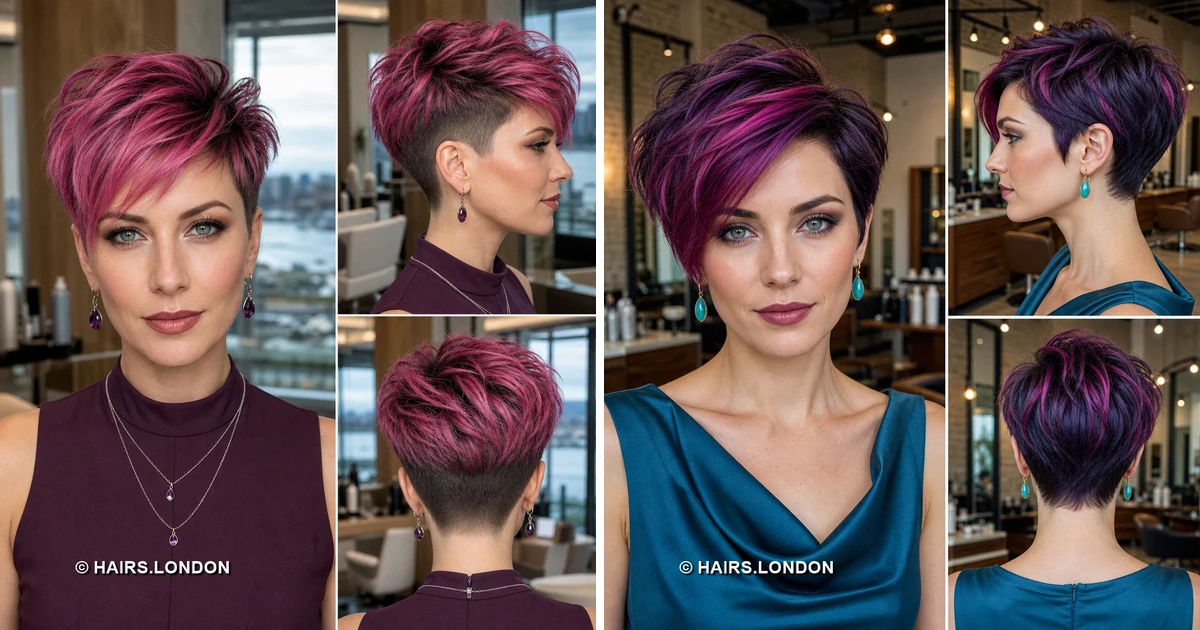
11. Rose-Plum Pixie with a Soft Front Quiff
Muted rose highlights trace waves through this lifted pixie top. The front curls upward, forming a soft, sculpted quiff shape. Loose crown bends add movement without making the shape spiky. Short dark sides reveal ears and anchor the fuller surface. The back tapers neatly beneath overlapping, gently curved layers above. Ask for sufficient front length to bend hair away comfortably. Shape waves with a small brush and low heat settings. Work light cream through dry ends to emphasize curved pieces. Trim the sides regularly while preserving volume through the front. Request rose toning only where the lighter strands need refreshing.
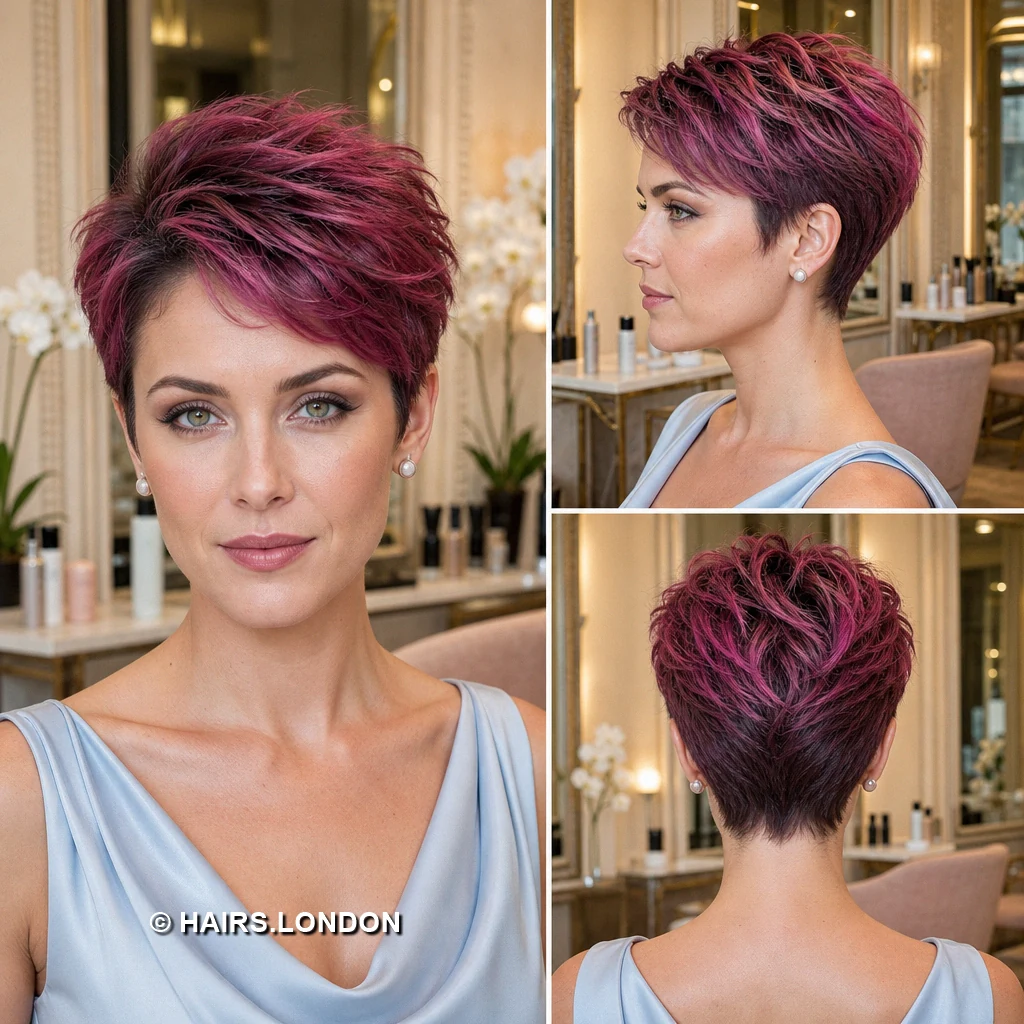
12. Dusty-Pink Pixie with a Broad Side Sweep
Dusty pink strands brighten this deep burgundy, side swept pixie. The longer crown lies in broad, slightly separated curved layers. A diagonal fringe softens one eyebrow without obscuring the eye. The short sides tuck cleanly around ears beneath longer sections. Back layers converge into a pointed, dark tapered neckline shape. Request extra front length if you enjoy changing fringe direction. Dry with a side part to keep the sweep controlled. Use lightweight serum on ends rather than coating the roots. Maintain the nape regularly while letting upper layers stay flexible. Discuss maintaining pink contrast against the darker burgundy foundation color.
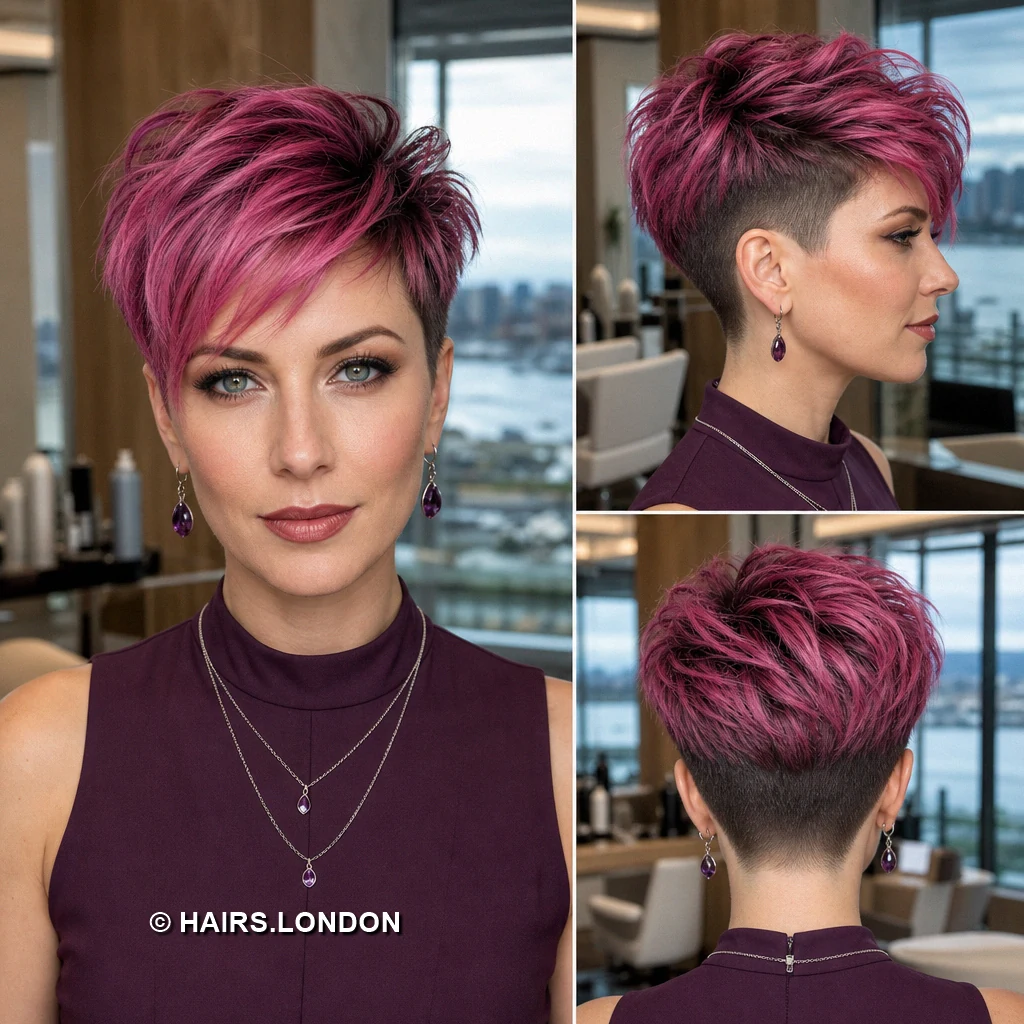
13. Dark Violet Pixie with a Long Sweeping Fringe
Violet ribbons weave through this dark, generously layered pixie cut. The crown forms a rounded silhouette with softly ruffled height. A sweeping fringe crosses the forehead, tapering toward one eye. Short dark sides expose ears beneath the longer violet surface. The back narrows sharply into a small, pointed neckline finish. Ask for long textured layers that keep the sweep substantial. Dry against your usual part for lift, then sweep across. Add minimal paste to highlight ribbons without dulling their shine. Book short perimeter trims to protect the pointed back detail. Ask about color depositing care if violet highlights fade quickly.
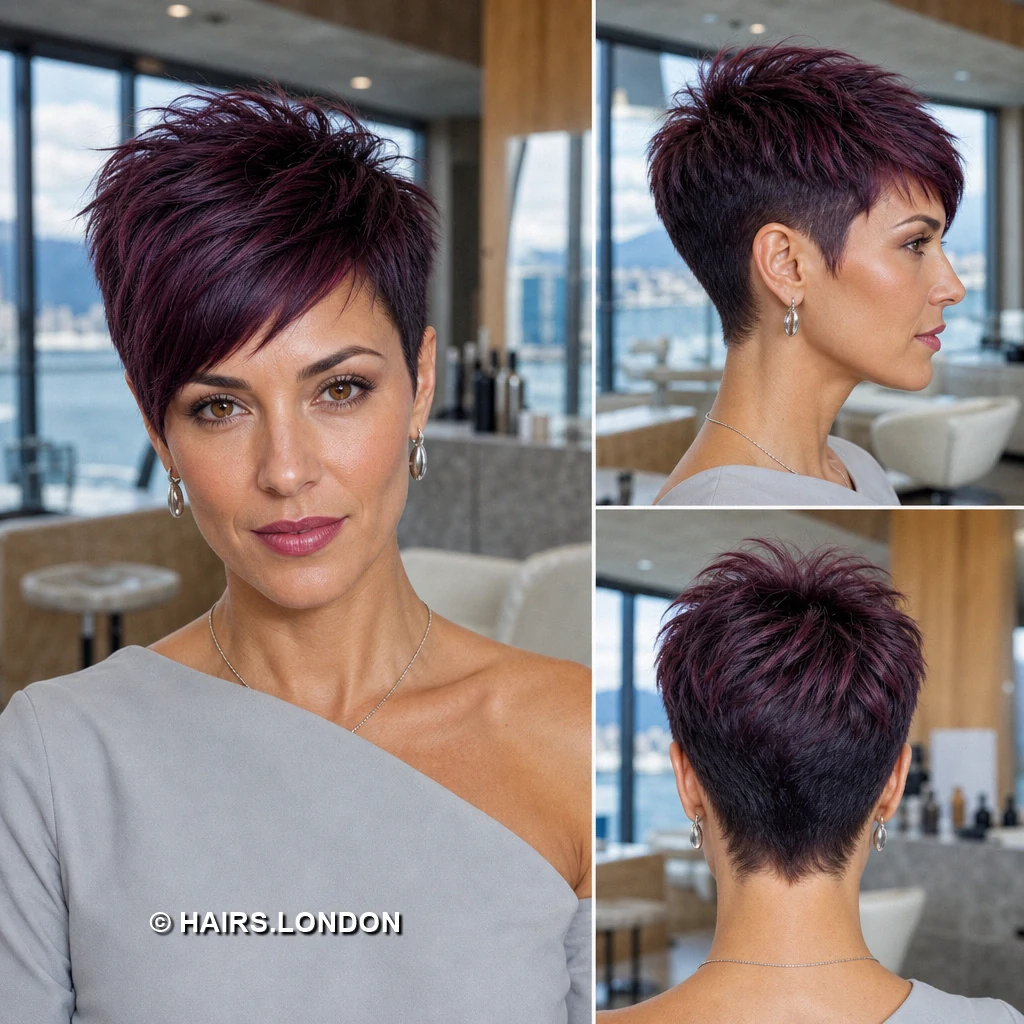
14. Dark Tapered Pixie with Burgundy Streaks
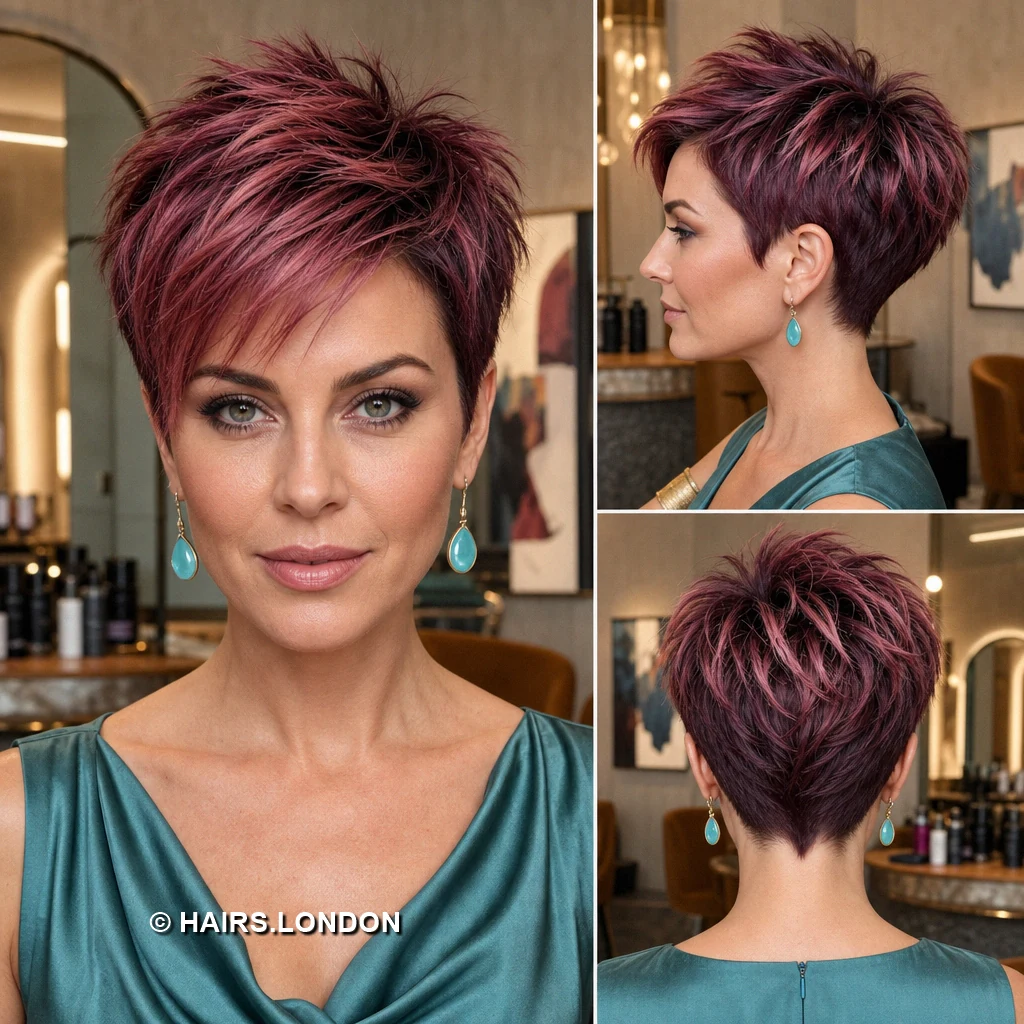
Subtle burgundy streaks warm this dark, closely tapered pixie cut. The textured crown rises slightly before sweeping across the forehead. A broken fringe ends above the brow in wispy sections. Closely cut sides hug the head and uncover the ears. The back tapers smoothly, finishing short against the neck below. Ask for crown texture that complements your natural growth pattern. Direct damp strands upward, then rake them gently sideways afterward. Pinch a few ends with matte paste for subtle definition. Frequent edge cleanups keep the close taper looking intentional longer. Discuss whether subtle color placement suits your preferred upkeep routine.
15. Wavy Violet Pixie with Magenta Accents
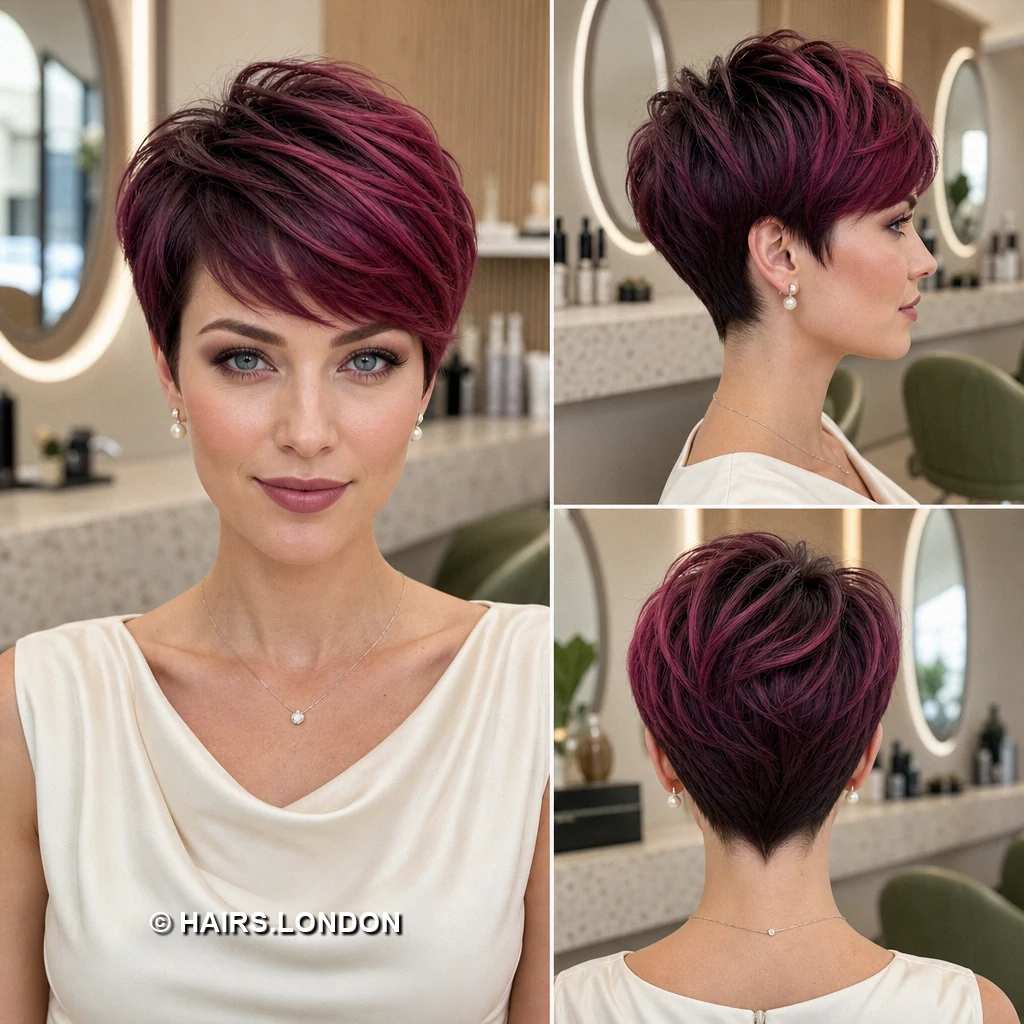
Violet and magenta accents thread through this lifted, wavy pixie. The crown carries broad, curved sections with generous airy volume. One sweeping front wave lifts away from the forehead entirely. Close, dark sides create contrast beneath the sculpted top layers. At the back, wavy layers narrow into a short nape. Request sufficient length above the part to shape visible waves. Use a diffuser or small brush to encourage front lift. Finish with flexible cream, preserving separation between curved strands above. Trim the sides while allowing upper waves ample room above. Check color placement before refreshing the brighter magenta ribbons again.
16. Curled Plum Pixie with a Sweeping Front
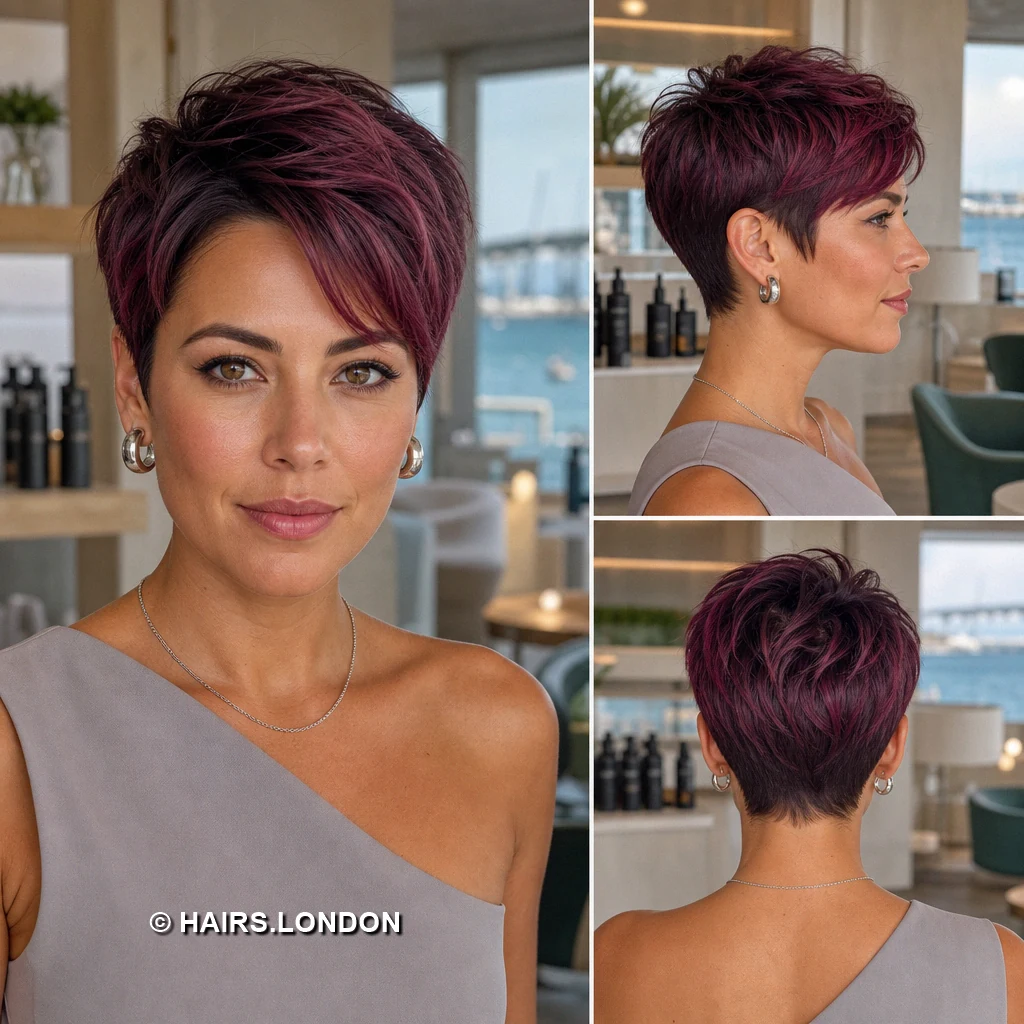
Plum, pink, and violet tones accent this softly curled pixie. The crown holds loose, defined waves with rounded overall fullness. A long front curl arcs diagonally across the forehead gently. Short dark sides sit beneath the more voluminous upper layers. The back shows curved texture before tapering neatly downward below. Ask for curl preserving layers instead of aggressive thinning techniques. Scrunch styling cream into damp strands and diffuse gently afterward. Keep hands off drying curls to avoid unwanted frizz later. Refresh the close sides when they start crowding the ears. Discuss low heat styling and preserving the layered color contrast.
17. Deep Violet Pixie with Fuchsia Fringe Ribbons
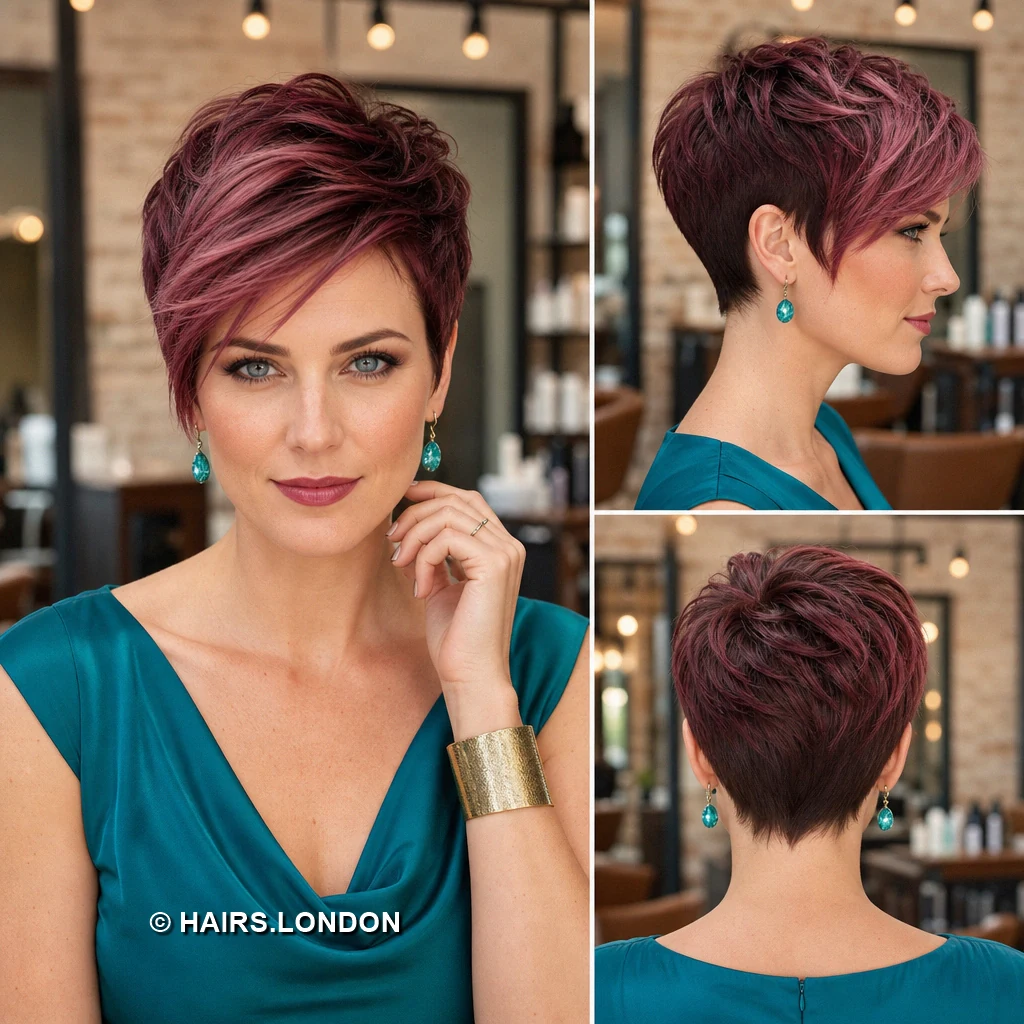
Bright fuchsia ribbons stand out against this deep violet pixie. The crown stays full, with directional layers swept sideways above. A thick angled fringe crosses one brow in defined strands. Shorter dark sides leave the ears clear below the top. The back remains rounded above a closely narrowed, pointed nape. Ask for strategic layers that emphasize the bold directional fringe. Blow dry sideways from the roots, lifting the crown gently. Define individual highlighted pieces with small amounts of styling paste. Keep the short nape tidy to preserve the rounded profile. Discuss fuchsia refreshes separately from your deeper violet base color.
How to Choose a Purple Pixie Haircut
Compare the silhouette from the side and back, not just the fringe in a front-view photo. A close taper creates stronger contrast with a long top but needs more frequent edge cleanups. A rounded, graduated cut gives you a softer transition. Decide whether you want hair across your forehead, swept away from it, or long enough to change direction. Your growth patterns, hair density and willingness to style the crown each morning should guide that choice.
Styling Straight, Wavy and Curly Textures
For straighter hair, lift damp roots with a brush or your fingers, then direct the fringe into place; a small amount of paste can separate the ends. On wavy hair, scrunch in a lightweight cream and diffuse gently to keep bends visible. If your hair curls more strongly, ask for enough length and curl-aware layering before cutting the top: curls can sit shorter when dry. Start with little product so the crown retains movement.
Keeping Purple Color Fresh
Magenta, berry and violet pieces can lose intensity between color appointments, especially when they sit over lighter sections. Wash with a color-safe cleanser, use lukewarm rather than hot water, and limit unnecessary heat styling. Ask your colorist whether a gloss or suitable color-depositing product will maintain your particular shade. The dark roots and sides visible in many of these cuts can also be part of an intentional color plan.
Maintaining the Pixie Shape
The close sides and tapered nape often look grown out before the longer crown does. Plan trims around the point at which the perimeter loses its shape, and tell your stylist if you want to keep growing the top. Fringe adjustments may be needed separately, particularly when a side sweep begins falling into your eyes. Bring front, side and back reference views to each appointment so the proportions remain consistent.
What to Discuss with Your Stylist
Point out the exact fringe length, crown height, side closeness and nape finish you like. Ask whether your natural texture will create the pictured volume or require daily blow drying. For color, discuss your starting shade, which sections would need lightening, where darker hair should remain visible, and how often you are comfortable returning for refreshes. A consultation can turn an appealing photo into a workable cut and color plan.
Frequently Asked Questions
What makes these purple pixie haircuts different from one another?
Their main differences are fringe length, crown volume, side closeness and nape shape. The color placement ranges from subtle burgundy streaks to brighter magenta and violet sections.
Which pixie is best if I want a longer fringe?
Look at the broad side sweeps and longer diagonal fringes, particularly the rounded and asymmetrical cuts. Show your stylist where you want the ends to fall when dry.
Can I keep dark roots with a purple pixie?
Yes. Several pictured cuts visibly pair brighter tops with dark roots, sides or napes. Discuss how much contrast you want and where the color should begin.
Will a close taper need frequent trims?
It generally needs more frequent perimeter attention than a softer, graduated outline. Book a cleanup when the sides or neckline stop looking as defined as you prefer.
How can I add lift to a straight-haired pixie?
Apply lightweight mousse at damp roots, dry the crown upward or against its usual direction, then use a little paste to define selected pieces.
How should I style a wavy pixie without flattening it?
Scrunch a small amount of flexible cream into damp hair and diffuse gently. Avoid loading the roots with heavy product.
Can naturally curly hair work with these shapes?
It can, but the top and fringe lengths should be planned around how your curls sit when dry. Ask for curl-aware layering rather than assuming the pictured lengths will fall identically.
How do I keep a side-swept fringe in place?
Direct it sideways while drying, starting at the roots. Finish with a small amount of flexible styling product rather than making it stiff.
What helps magenta and violet color last?
Gentle, color-safe washing and less heat exposure help preserve the tone. Your colorist can advise whether a gloss or color-depositing product suits your shade.
Should I choose an undercut or graduated sides?
Choose an undercut for a sharper contrast between the close sides and long top. Graduated sides create a softer transition and a more blended profile.
What should I bring to a salon consultation?
Bring images showing the front, side and back, plus notes on the fringe, nape and color placement you want. Explain how much daily styling and color maintenance suits you.
Can the top grow longer while the pixie stays neat?
Yes. Ask your stylist to trim the sides and nape while preserving crown and fringe length, then adjust the layers as the top grows.
Conclusion
The most useful reference is the one whose shape works from every angle and fits your styling routine. Whether you favor a smooth plum sweep, a close-sided magenta cut or a fuller violet crown, decide which lengths you want to preserve and which edges you are willing to maintain. Then plan the purple placement and refresh schedule with your stylist.