


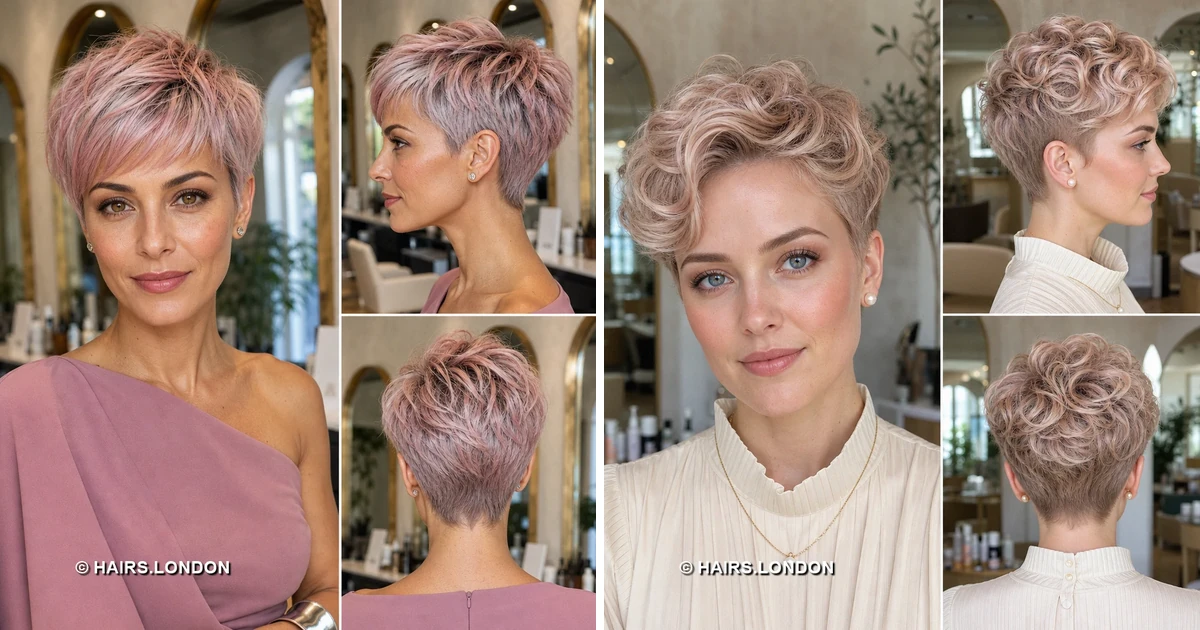
11. Rose Blonde Pixie with a Lifted, Separated Top
Rose blonde strands lift into loose ridges across the crown. Darker roots make the pale, separated pieces more apparent. The fringe remains short and irregular above the eyebrows. Close sides taper behind the ears into a narrow nape. Ask for enough top length to create distinct raised sections. Direct airflow toward the roots while lifting hair with fingers. Work a small amount of lightweight styling paste through the dry ends. Resist coating the roots if you want to preserve volume. Discuss how much darker base you are comfortable leaving visible. Keep side trims consistent so the upper texture stays prominent.
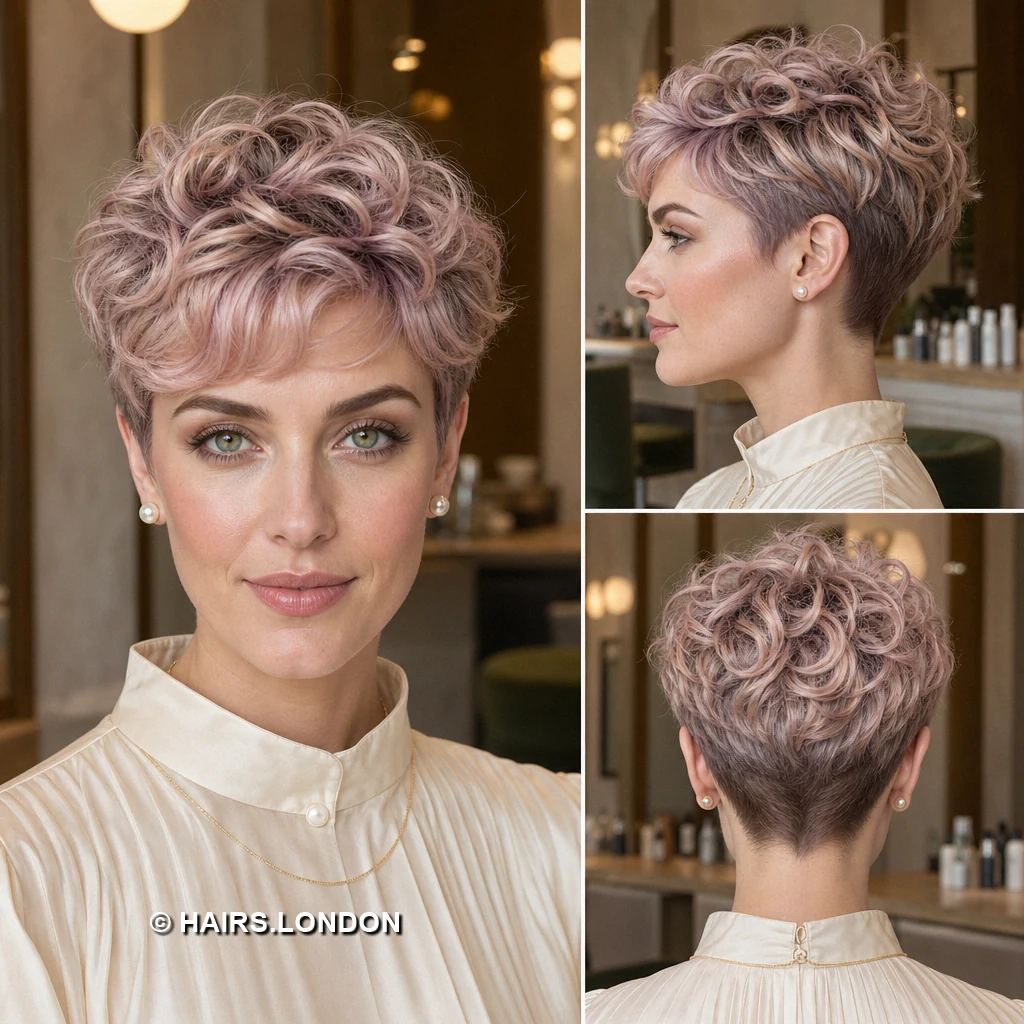
12. Blush Pink Pixie with a Short Feathered Front
Blush pink layers gather into a short, feathered front. Uneven tips create lift without forming a tall quiff. The sides sit close, exposing the ears and cheekbones. Crown texture continues downward into a softly tapered nape. Ask your stylist to keep the front light and flexible. Fine point cutting can prevent the short tips from looking blunt. Blow dry the front upward briefly, then gently settle strands with your fingers. Use a touch of paste to separate individual front pieces. Avoid heavy oils if you prefer the airy finish shown. Schedule trims when the feathered front starts losing its outline.
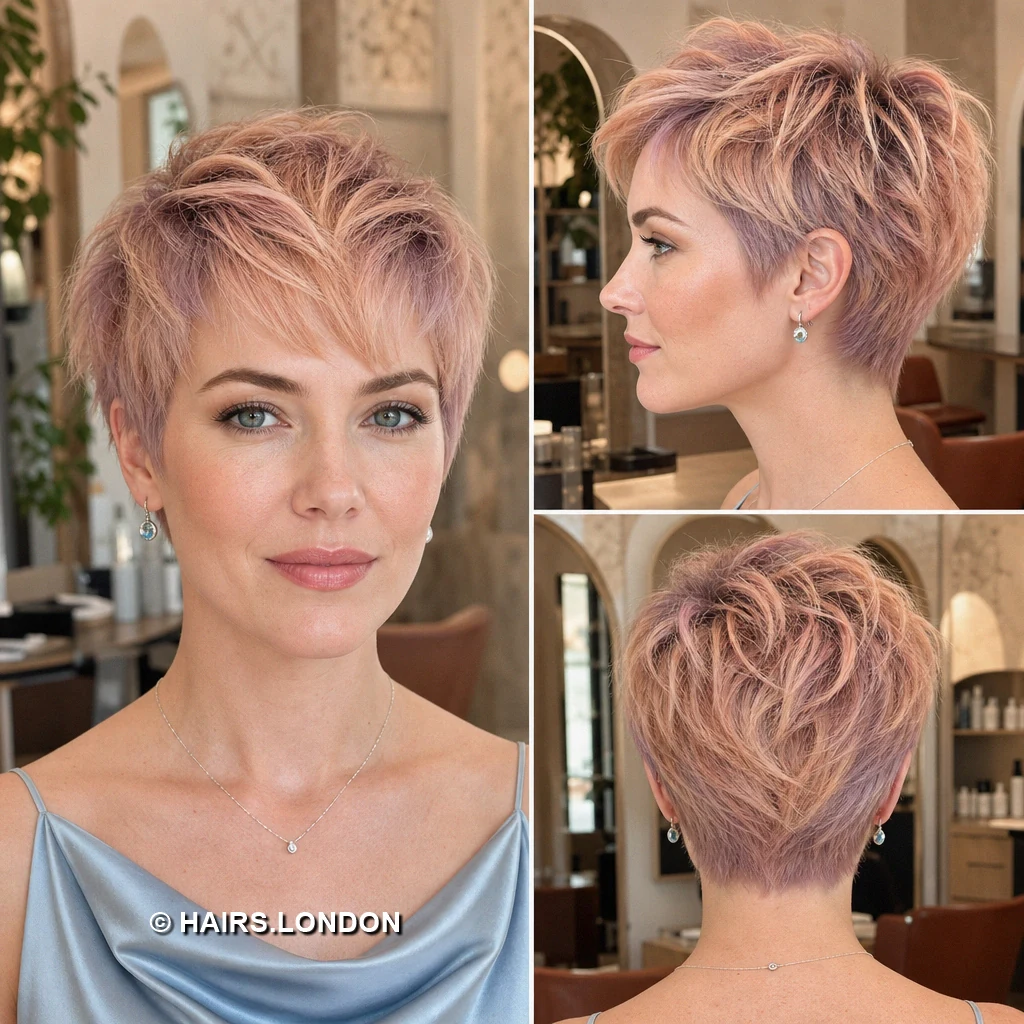
13. Peach Rose Pixie with a Windswept Top
Peach rose layers flow sideways in a broad, windswept shape. The longer top creates height before falling toward one temple. Shorter sides expose the ears beneath the sweeping upper strands. Darker tones show through the crown and tapered back. Ask for movement through the top without thinning every end. Blow dry from the opposite side to encourage natural lift. Shape the sweep with fingers for its loose, tousled finish. Add lightweight flexible spray only after the overall direction looks right. Expect the longer front to need occasional reshaping between cuts. Keep the nape neat to balance the airy upper silhouette.
How to Choose Your Pixie Shape
Start with the front: a short, open fringe needs less redirecting each morning, while a long diagonal sweep gives you more styling options but may need more frequent fringe trims. Then check the side and back views. These cuts pair fuller crowns with close sides and tapered napes, but the amount of contrast varies. If you have natural curls, allow room for shrinkage when choosing a top length.
Styling Different Hair Textures
For fine or straight hair, lift damp roots with a blow dryer and use a small amount of lightweight paste to separate the ends. For thicker hair, ask for internal texture so the crown can move without becoming bulky. For curls, apply curl cream while wet, scrunch gently, and diffuse on low heat or air dry. Shape finished hair with your fingers rather than repeatedly brushing through it.
Keeping Rose Pink Color Fresh
These looks range from pale blush to peach rose, often with lilac tones or deeper roots. Ask your colorist which parts of your chosen image they can reproduce on your starting color and what lightening may be involved. Wash with color-safe products and lukewarm or cooler water, and limit unnecessary hot-tool use. Discuss a suitable color-refresh schedule rather than assuming the pink and lilac sections will fade at the same rate.
Maintaining the Tapered Shape
The ears and nape provide useful checkpoints: once hair starts covering the ears or the nape loses its narrow outline, the cut may need tidying. Longer fringes may need a separate adjustment before the rest of the pixie does. Ask your stylist for a trim interval based on your growth rate, especially if you want to preserve a strong contrast between the short sides and fuller top.
What to Discuss with Your Stylist
Bring the front, side, and back views of the look you prefer. Point out the exact fringe length, crown height, ear exposure, and nape taper you want. Explain your natural texture, growth patterns, and how much time you will spend styling. For color, identify whether you prefer a peach, blush, or cooler rose result, and ask how visible you want the deeper roots or lilac sections to remain.
Frequently Asked Questions
What makes these rose pink pixies different from one another?
The main differences are fringe length, crown texture, and top volume. Some have smooth side sweeps or lifted fronts; others have separated pieces or defined curls.
Which shape keeps hair off the forehead?
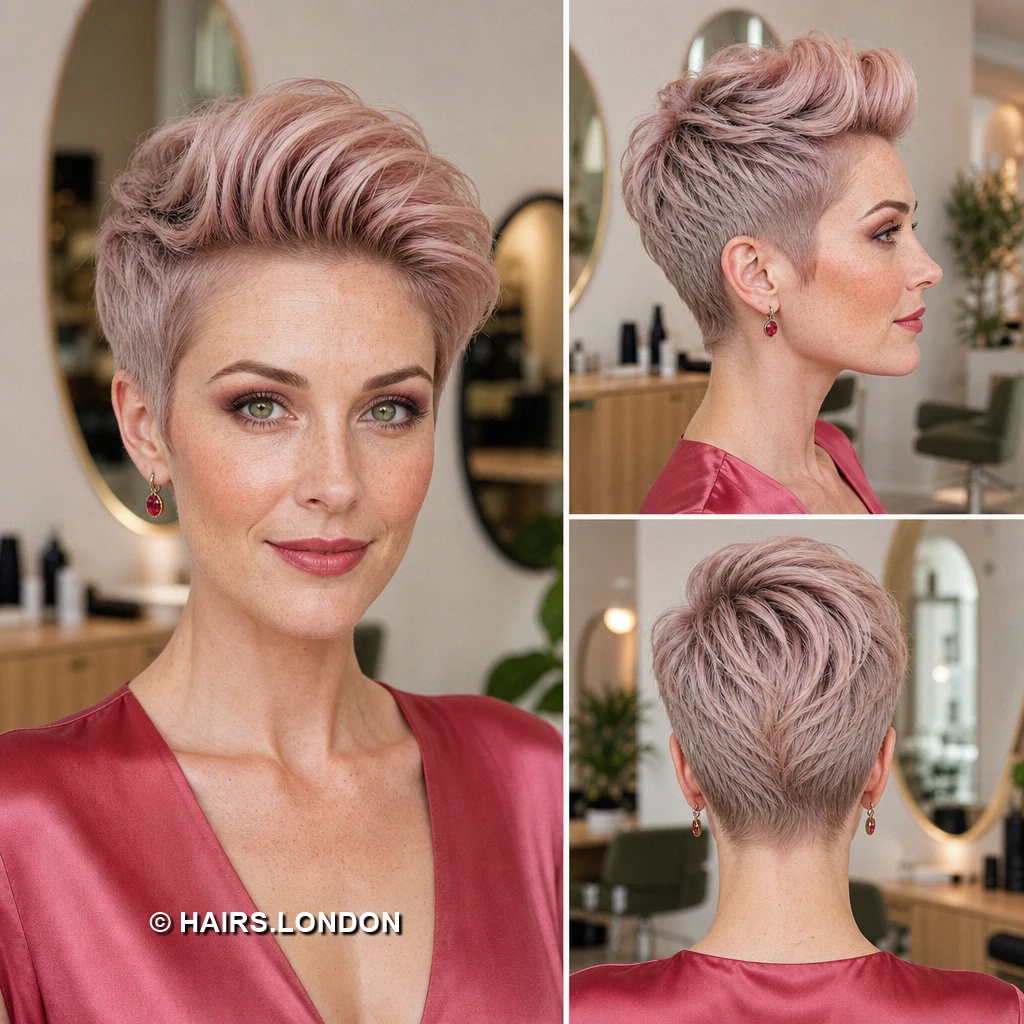
The sculpted quiff leaves the forehead most open. The lightly lifted peach rose pixie also keeps much of the front clear.
Can I wear a side-swept pixie without a long fringe?
Yes. A shorter diagonal fringe can still move sideways while staying above the eyes. Show your stylist where you want its ends to sit.
Which of these cuts works with natural curls?
The curled and rounded-curl pixies visibly accommodate curls on top. Ask your stylist to account for shrinkage before setting the length.
How do I add lift to a straight pixie?
Lift the roots as you blow dry, directing air against the hair’s usual fall. Finish with a small amount of lightweight styling product.
How can I keep a piecey top from looking greasy?
Start with very little paste, rub it between your fingertips, and apply it mainly to dry ends rather than coating the roots.
Do the sides have to be cut extremely short?
No. The images show close sides with softly blended edges. Discuss how much ear exposure and top-to-side contrast feels comfortable.
Why do some of these pixies show darker roots?
Darker areas are visible beneath several pale tops. If you like that contrast, show your colorist the specific image rather than requesting an even pink throughout.
Will rose pink hair need color upkeep?
Yes. Ask your colorist how your chosen pink and any lilac sections are likely to fade, and agree on a refresh plan that suits you.
When should I trim the fringe?
Trim it when it no longer falls where you intended, particularly if a longer sweep begins getting in your eyes.
How do I keep the nape looking tidy?
Have your stylist maintain the taper as it grows. The rear views are useful references for how narrow or soft you want the finish.
What should I bring to a salon appointment?
Bring your preferred image’s front, side, and back views, plus notes on fringe placement, styling time, and the rose tone you want.
Conclusion
The most useful choice is the one whose shape works with your texture and daily routine. Decide first whether you want a soft fringe, a prominent sweep, a lifted front, or curls on top; then use the side and back views to settle the taper. Once those details are clear, you and your stylist can plan a rose pink color and upkeep routine to match.