


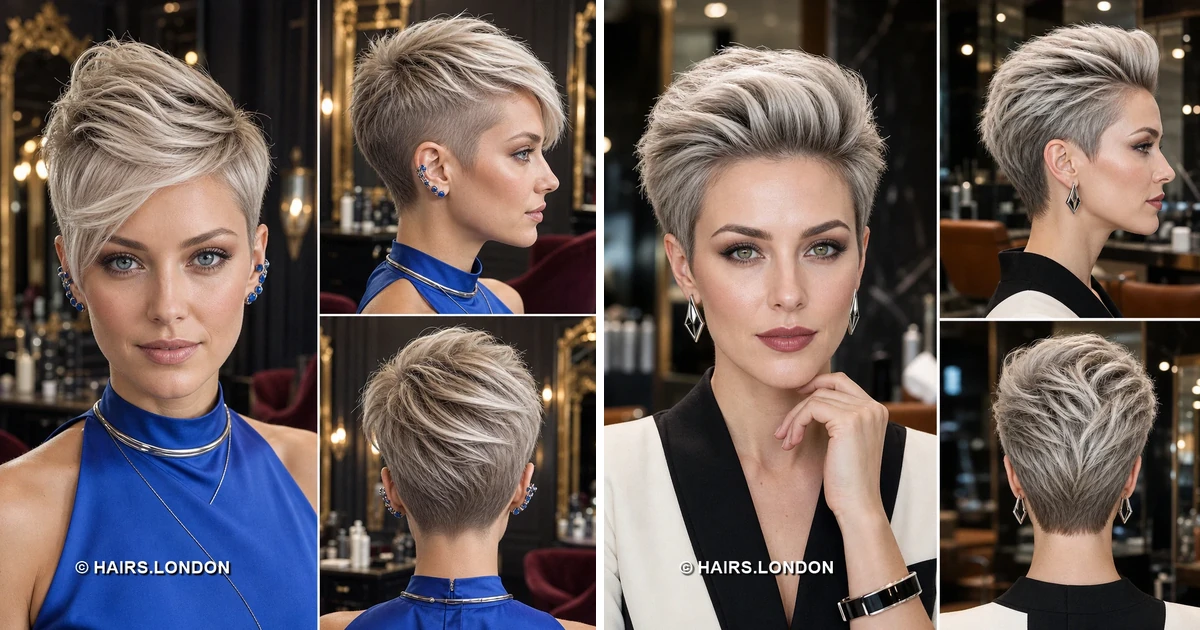
11. Pale Blonde Pixie With a High Textured Crest
Pale blonde pieces form a tall, textured crest above this pixie. Shorter front strands lift back, keeping the forehead entirely clear. The fuller crown breaks into individually defined, softly uneven sections. Close sides provide a clean contrast beside the exposed ears. Rear layers narrow quickly toward a short, pointed nape. Ask for graduated sides and varied lengths through the top. Dry from the roots upward before shaping the crest lightly. Rub matte paste between fingers, then touch only selected ends. Arrange regular trims to keep the short sides visibly distinct. Discuss a lower height option if daily styling time matters.
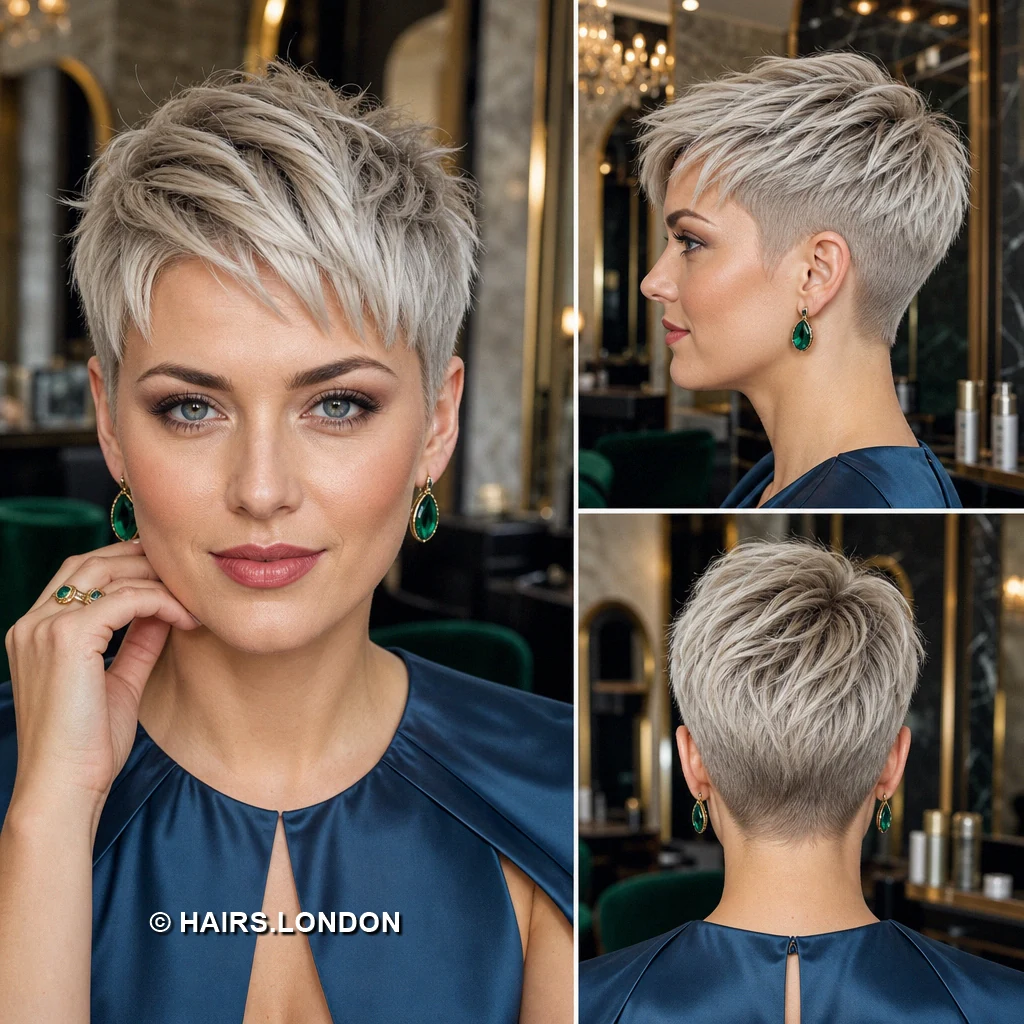
12. Champagne Blonde Pixie With a Sleek Side Fringe
Champagne blonde hair creates a smooth, dramatic side swept fringe. Its long front section curves diagonally across one eye level. The opposite side is cropped close around the visible ear. Crown layers retain gentle volume without the choppy finish elsewhere. Behind, darker lower hair tapers neatly into the nape. Ask your stylist to balance fringe length against visibility carefully. Blow dry across the forehead using a brush for control. Apply lightweight smoothing cream, concentrating on the ends rather than roots. Plan fringe trims before the sweep begins obstructing your vision. Discuss where the fringe should land when your hair dries.
13. Pale Blonde Pixie With a Full Asymmetric Sweep
Pale blonde layers sweep heavily across this asymmetric pixie’s forehead. A long fringe supplies fullness above one brow and temple. The contrasting side is closely tapered around the exposed ear. At the crown, shorter layers support the broad sideways shape. The raised back steps down softly into a clean, close nape. Request enough internal layering to prevent the fringe feeling bulky. Dry the longer section across with a brush for direction. Add light texture spray if you prefer separated surface strands. Maintain the short side before its contrast becomes less pronounced. Show your stylist both views to clarify the asymmetry.
14. Cream Blonde Pixie With Swept Back Volume
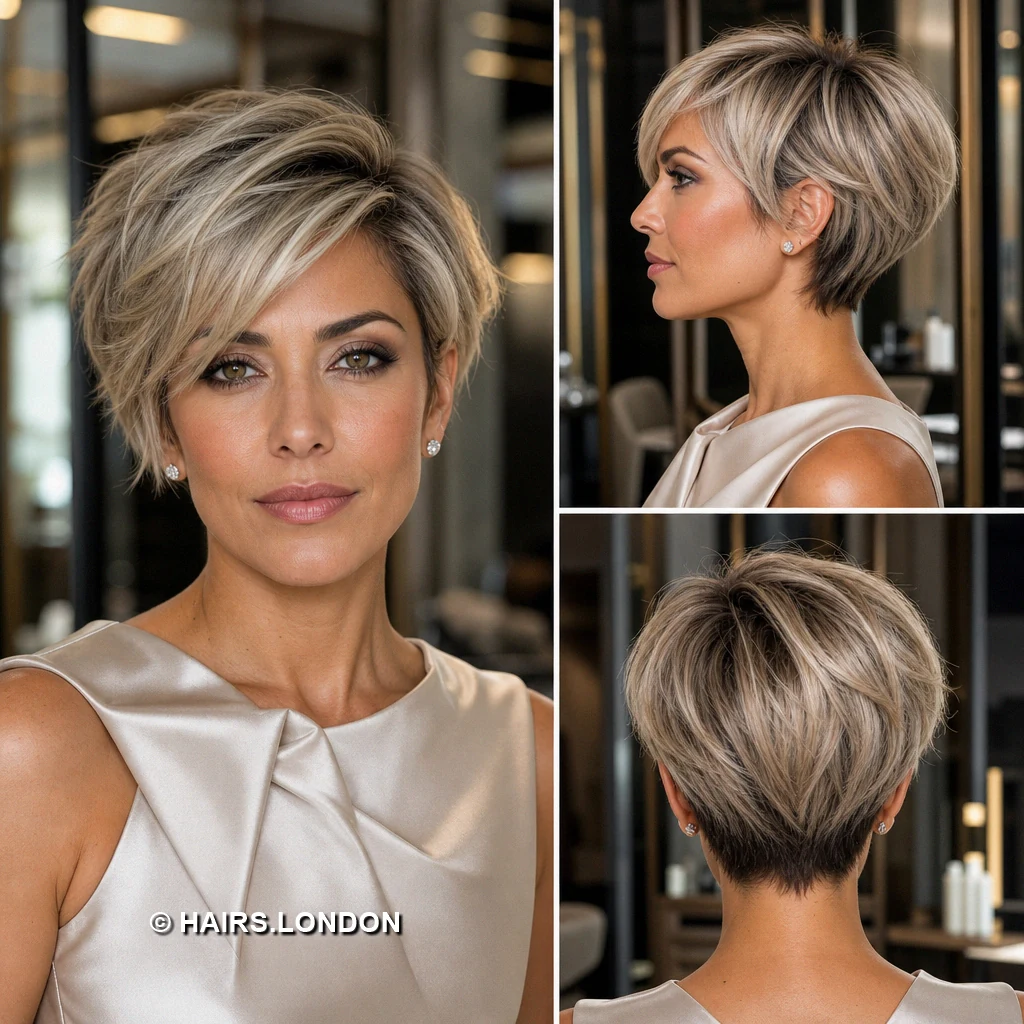
Cream blonde hair sweeps upward into a generous rounded top. The front lifts off the forehead with a smooth bend. Slightly textured crown layers carry volume toward the upper back. Close sides keep the outline narrow beside the exposed ears. Fine tapering at the nape grounds the fuller upper shape. Ask for length at the front without excess side weight. Dry the roots upward, then direct the ends backward gently. Use a flexible product that preserves the soft surface movement. Book side and nape trims to maintain the intended proportions. Explain how much daily lift you are willing to style.
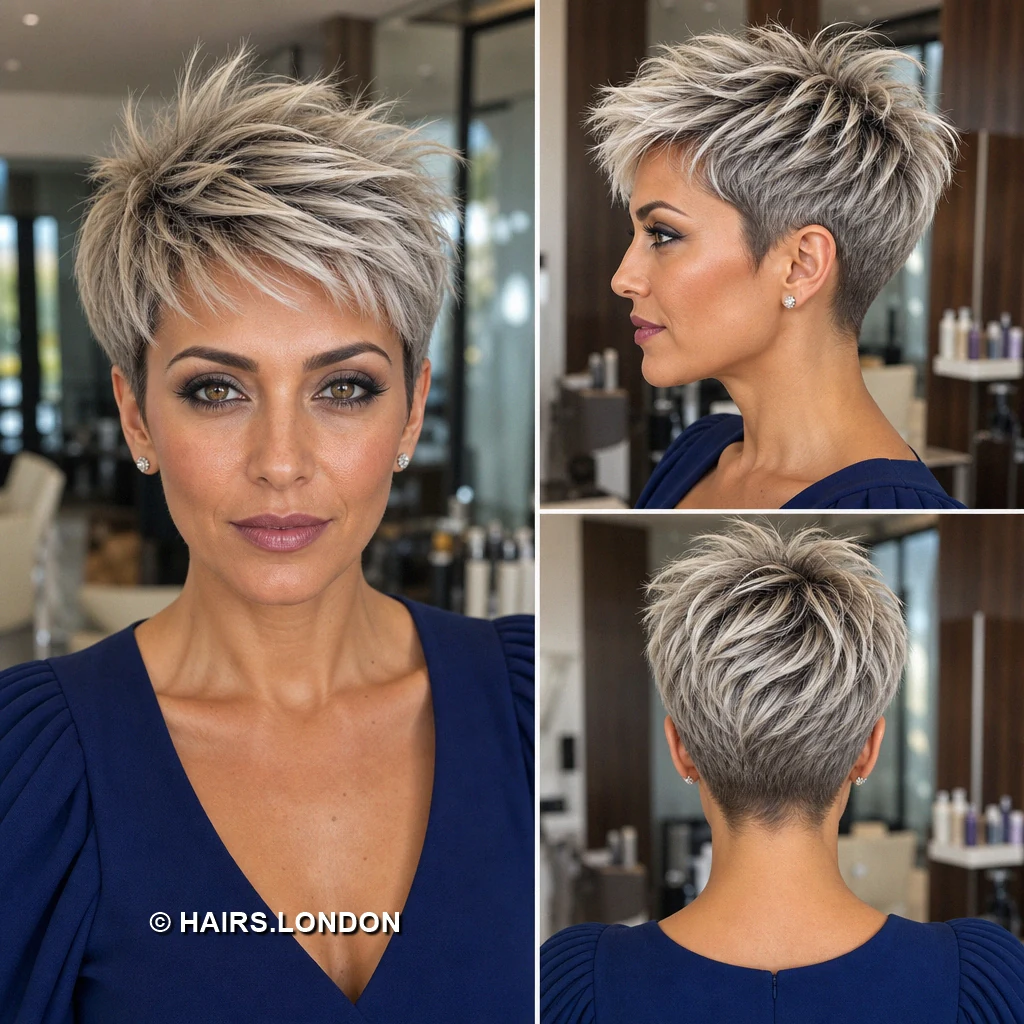
15. Silver Blonde Pixie With a Broken Fringe
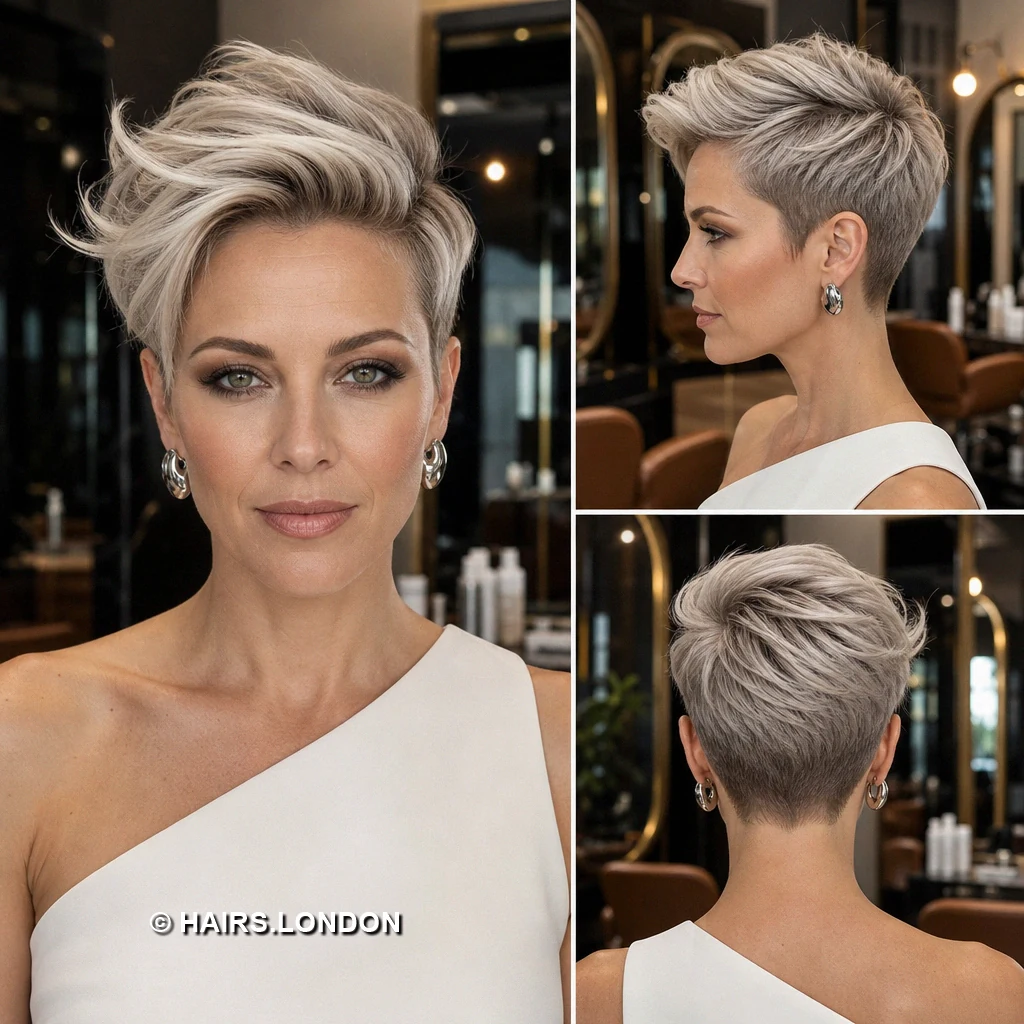
Silver blonde highlights brighten this short, loosely tousled pixie. An uneven fringe falls forward in narrow, separated pieces. Textured crown sections overlap without creating much vertical height. Close sides soften the line around the ears and temples. The darker, tapered nape forms a small point at the lower back. Request a broken fringe if blunt bangs feel too solid. Dry with fingers, changing direction to encourage natural piece separation. Apply a small dab of paste only where definition helps. Refresh the perimeter regularly, leaving the crown slightly longer between cuts. Ask how your natural growth pattern affects the fringe direction.
16. Sandy Blonde Pixie With Loose Curved Layers
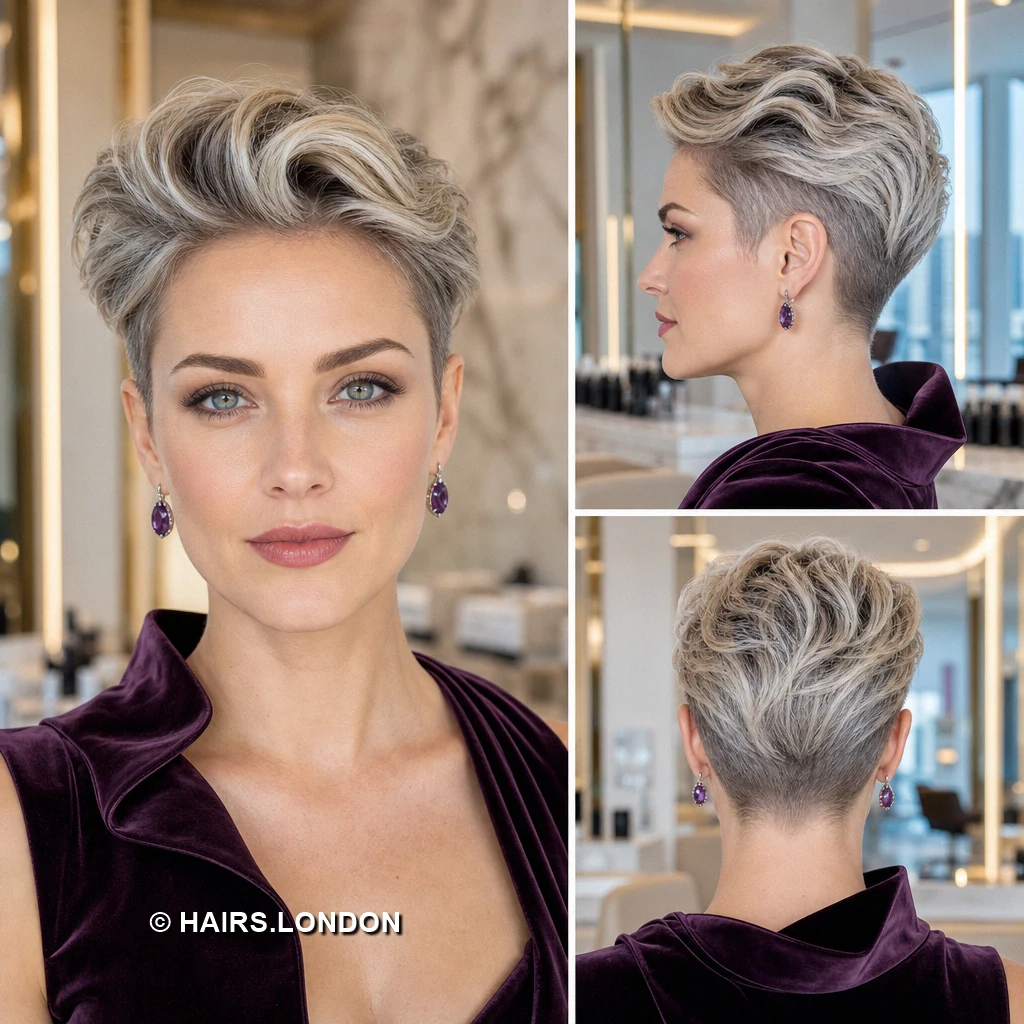
Sandy blonde highlights weave through this relaxed, textured pixie. Curved sections cross the forehead in a loose side fringe. The crown has airy lift rather than a uniform rounded finish. Closely tapered sides reveal the ears beneath fuller upper layers. At the back, tousled strands narrow into a short nape. Ask for soft layering that retains these natural looking curves. Dry with fingers, lifting roots while letting individual bends form. Scrunch in light styling cream to distinguish the upper sections. Trim the nape before it grows beyond the compact profile. Discuss whether your natural wave will produce similar curved movement.
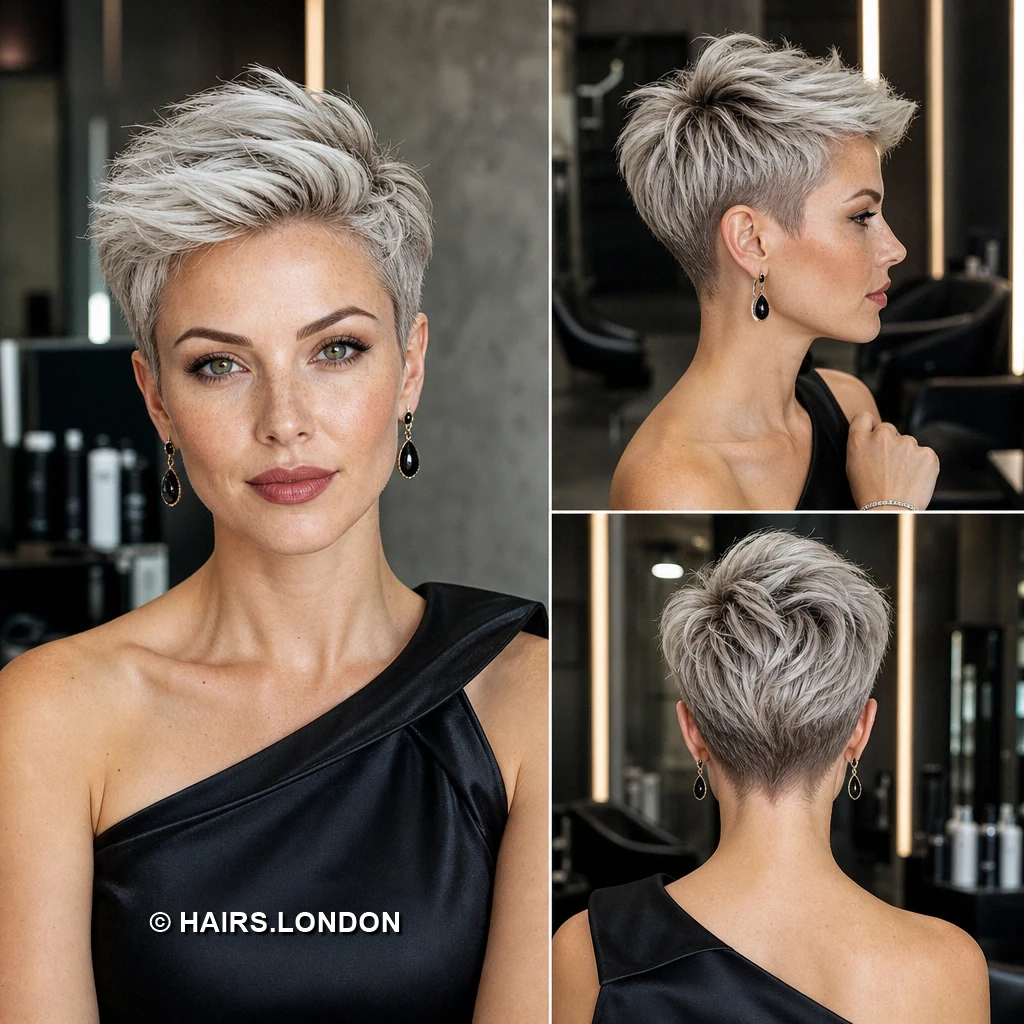
17. Ash Blonde Pixie With a Smooth Raised Front
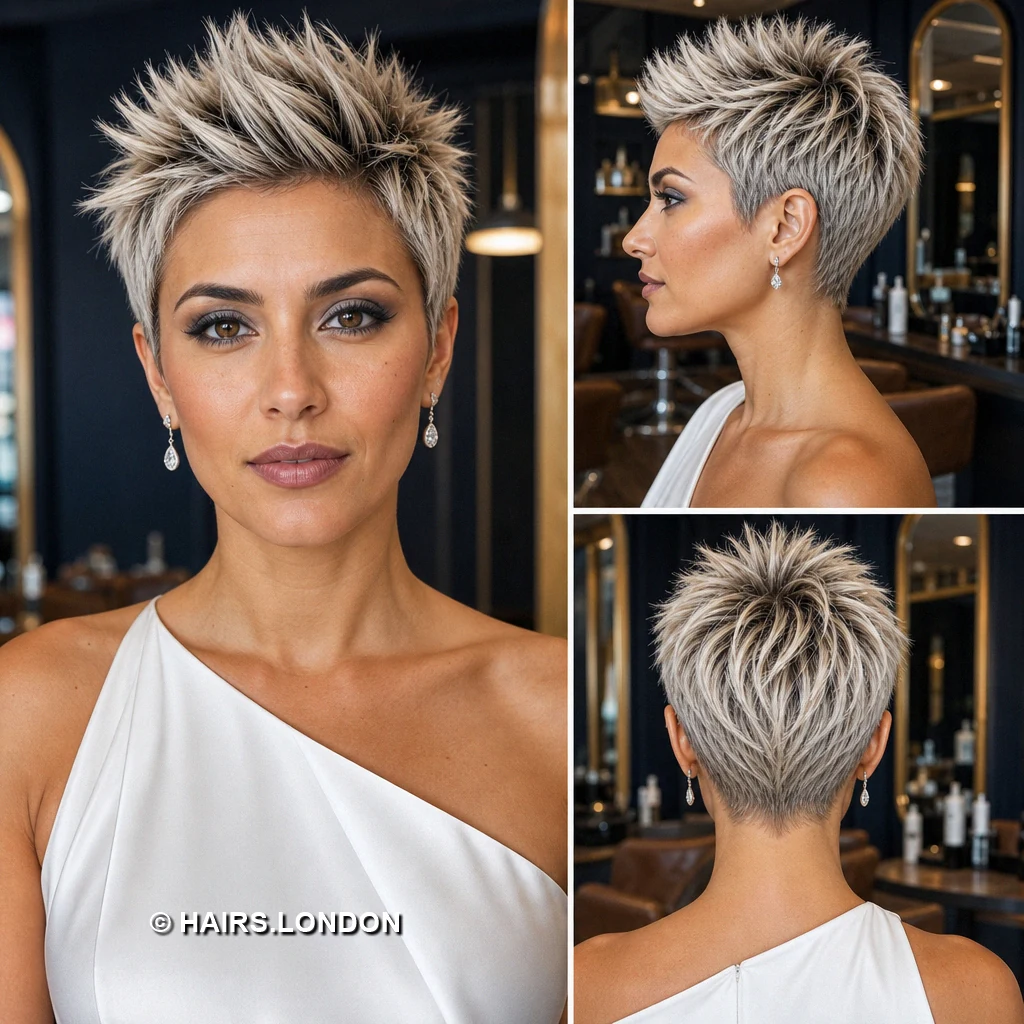
Ash blonde lengths rise into a broad, smooth front roll. The forehead stays clear beneath this polished, elevated pixie shape. Fine layered ridges carry the style smoothly over the rounded crown. Shorter sides taper closely beneath the fuller, brushed upper section. The back gradually narrows to a short, tidy nape. Ask for sufficient front length to create the rounded lift. Blow dry upward with a brush, then guide hair backward. Use flexible hold to preserve shape without a rigid surface. Arrange perimeter trims before the sides obscure the sculpted contrast. Have your stylist show where to direct the front roots.
18. Icy Blonde Pixie With a Soft Forward Sweep
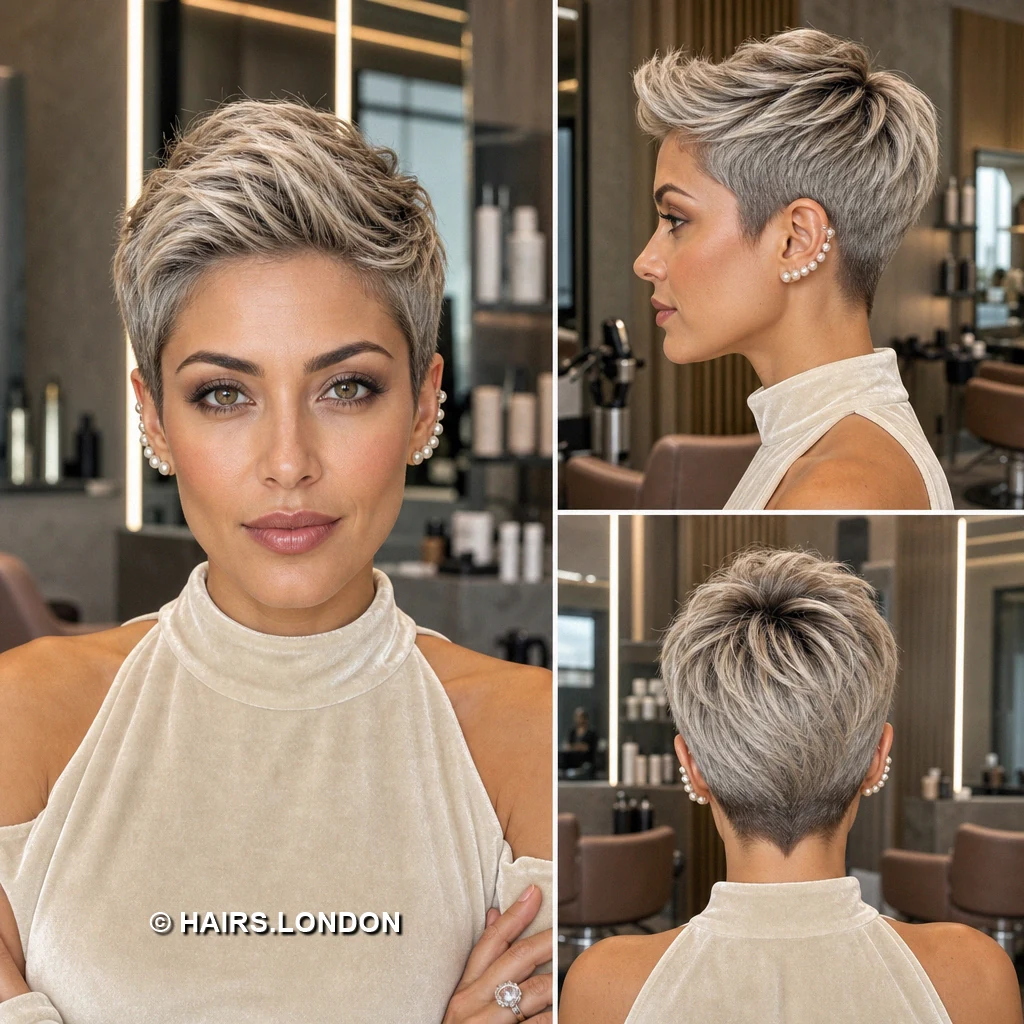
Icy blonde strands sweep forward across this neatly tapered pixie. The short, diagonal fringe softens the forehead without covering eyes. Gentle crown lift adds shape above the closely fitted sides. Fine texture remains visible through the top and upper back. A softly graduated nape finishes the compact silhouette from behind. Ask for light fringe ends that move without looking wispy. Dry the crown upward before guiding front strands diagonally downward. Touch a little paste onto tips for subtle, lasting separation. Maintain the sides and nape to preserve their close outline. Confirm your preferred fringe direction while the stylist checks growth.
How to Choose Your Pixie Shape
Start with the amount of forehead coverage you want. A long side sweep offers more coverage and needs room to bend, while a raised quiff keeps hair off the face. Then compare the side and back views: a close taper creates stronger contrast with the crown, whereas a longer perimeter gives a softer outline. Consider your hair density, growth patterns and how much time you want to spend lifting or directing the top each morning.
Styling Different Hair Textures
Fine hair often needs root lift and a small amount of lightweight paste; apply product gradually so the crown does not collapse. Thicker hair may benefit from internal weight removal and a smoothing cream on longer sweeps. If your hair has natural waves, encourage their bends with fingers while drying rather than brushing every section straight. For spikes or a high quiff, dry in the intended direction first, then add hold to selected pieces.
Keeping Pale Blonde Color Fresh
These images show pale blonde lengths with varying degrees of darker root and nape depth. Ask a colorist which level of lightness suits your hair’s condition and whether a shadowed root would make regrowth less noticeable. Use color-safe shampoo, follow the colorist’s guidance on toning products, and protect lightened hair from unnecessary heat. Arrange a color check when the tone shifts or the root contrast exceeds what you planned.
Maintaining the Pixie Shape
Short sides and tapered napes can change the silhouette quickly as they grow, even when the crown still looks good. Plan trims according to how crisp you want the perimeter, and mention if you are growing out the top or fringe so those sections are not shortened automatically. Between appointments, keep styling product light near the roots and adjust a long fringe before it obstructs your eyes.
What to Discuss with Your Stylist
Bring the front, side and back views of your favorite cut. Point out the exact fringe length, crown height, ear coverage and nape finish you like rather than asking for a pixie in general. Discuss your natural part, cowlicks, density and usual drying routine. If you also want blonde color, ask about lightening, tonal upkeep and how the visible root depth can be adapted to your starting color.
Frequently Asked Questions
What makes these cuts pixies rather than short bobs?
Their closely cut sides and tapered napes sit noticeably shorter than their layered tops. Even the longer side swept versions retain that compact back and side shape.
Which option offers the most forehead coverage?
The long side sweeps in images 6, 12 and 13 provide more coverage than the lifted quiffs or short, piecey fringes.
Which cuts keep hair most clearly off the face?
The raised styles in images 8, 10, 11, 14 and 17 lift the front away from the forehead, although they may need more deliberate drying.
Can fine hair hold a lifted pixie?
It may, depending on its density and growth pattern. Root directed blow drying and a lightweight hold product can help; ask your stylist to assess a realistic height.
What should I ask for if I dislike blunt bangs?
Request a point cut, separated fringe like the fronts in images 3, 15 or 18. Show where you want the shortest pieces to land.
How do I style a side swept fringe?
Dry the roots in the direction of the sweep, guide the lengths with a brush or fingers, and finish with a little lightweight product on the ends.
How do I define the spiky styles without making them stiff?
Dry the top upward first, then pinch a small amount of paste onto selected tips. Leave some strands untouched so the result retains movement.
Do I need to lighten every section to get this look?
Not necessarily. Several images show darker roots or lower layers beneath pale lengths. A colorist can explain which placement is achievable on your hair.
How often will a tapered nape need trimming?
It depends on your growth rate and how precise you want the outline. Arrange your next appointment before the nape loses the shape you chose.
Which views should I bring to a consultation?
Bring the front, profile and back views. Together, they show the fringe, side length, crown volume and nape more clearly than one portrait.
Will these cuts work with naturally wavy hair?
Natural waves can contribute movement to the layered tops, particularly the softer, curved styles. Your stylist should adjust the lengths for how your hair settles dry.
What if I want a softer grow out?
Consider a longer side sweep or a less closely cropped perimeter. Tell your stylist which sections you intend to keep growing at future appointments.
Conclusion
The most useful choice is not simply the palest blonde or the highest crown. Look at how each fringe meets the forehead, how closely the sides follow the ears, and where the back tapers at the neck. Choose the shape that suits your hair’s movement and your styling routine, then use its multiple views to make the cut and color plan clear at your appointment.