


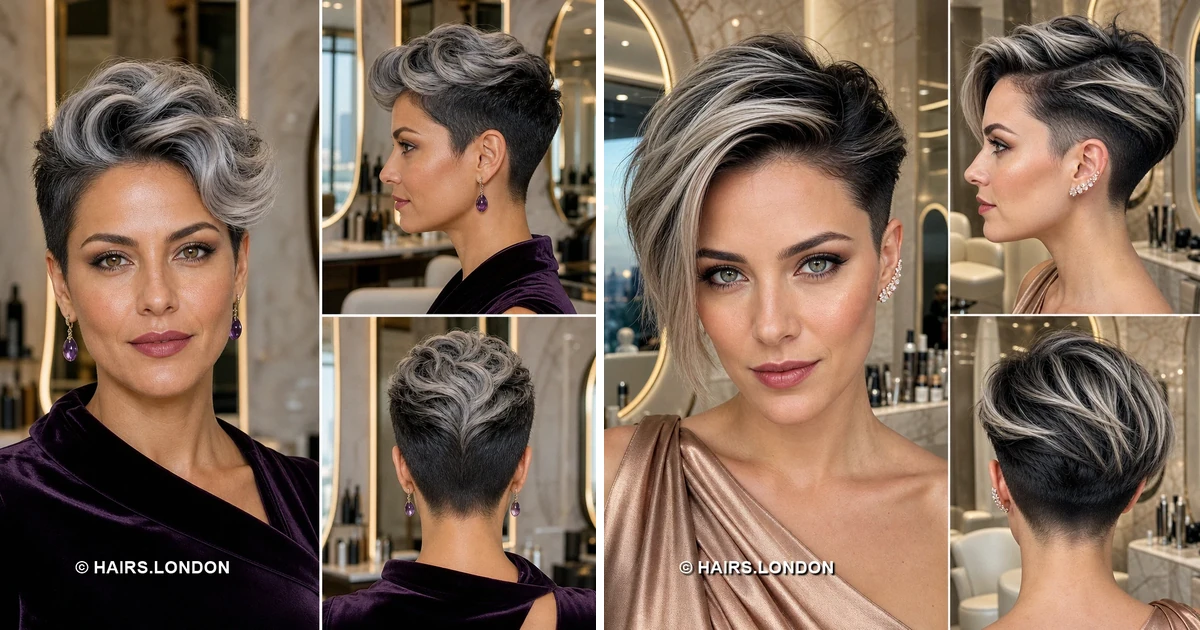
11. Pastel-Accented Pixie with Lifted Layers
Lavender, pink, and pale blue accents weave through textured layers. The airy front bends sideways, exposing much of the forehead. Shorter sides tuck around the ears beneath a lifted crown. At the back, pastel ribbons sit above a tapered nape. Request irregular top layers while keeping the perimeter comfortably close. Point cut select ends for movement without making them stringy. Air dry with mousse, then lift individual pieces using fingers. Pastel accents may fade; ask your colorist about refresh options. Limit hot tools and condition lightened hair to reduce dryness. Trim the tapered nape regularly while preserving upper layering softness.
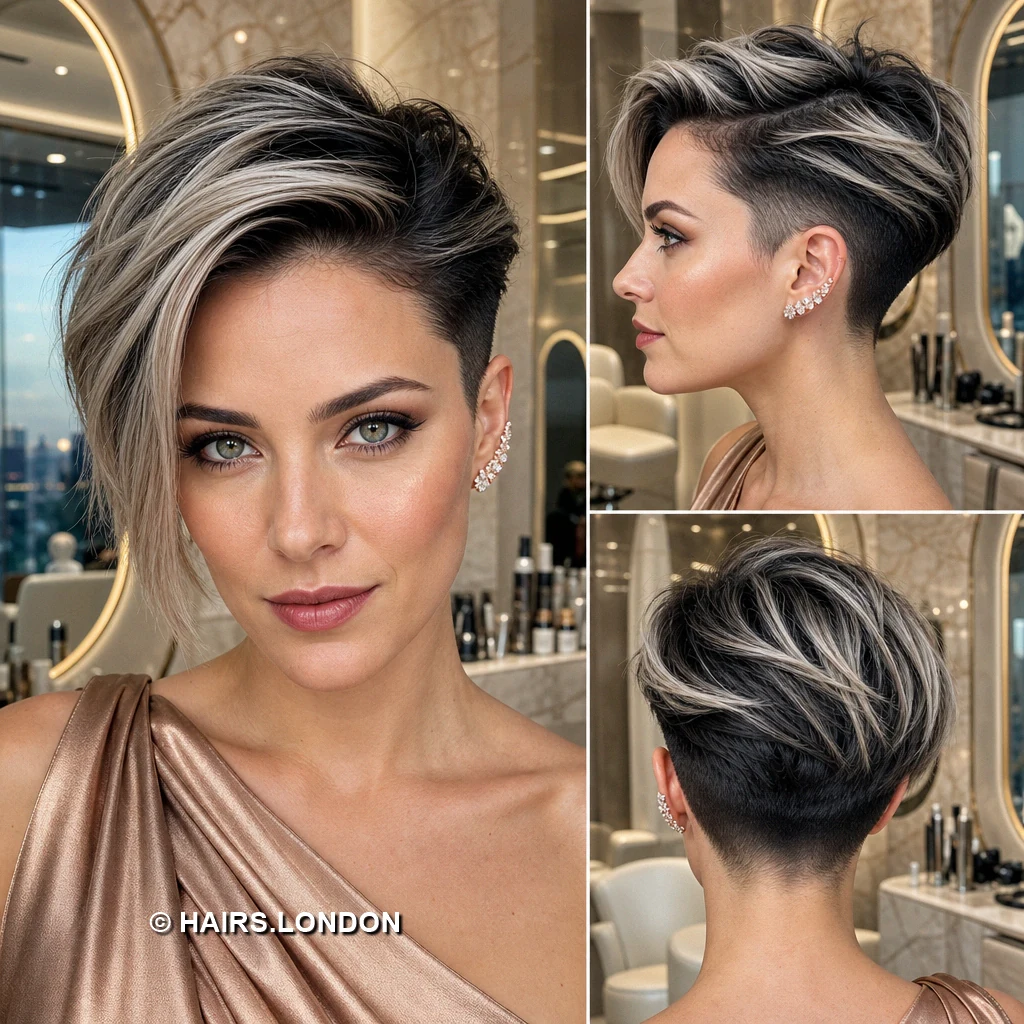
12. Peachy Blonde Pixie with a Rounded Crown
Peachy blonde layers form a rounded, tousled crown with lift. The longer front tips sweep sideways into a feathered fringe. Warm darker roots show beneath the softly separated surface pieces. The sides shorten around the ears, tapering toward the neckline. Ask for layered fullness above rather than excessive weight underneath. Have the nape refined gently so its edge remains soft. Apply mousse near damp roots and dry upward for volume. Rake a little paste through ends for loose, touchable definition. Keep peach tones gentle with colorist recommended cleansing and conditioning. Schedule regular trims before the rounded shape becomes overly heavy.
How to Choose a Short Pixie Haircut
Start with the feature you want to style each day. A long diagonal fringe gives you more hair to sweep or smooth, while a short, piecey fringe keeps the forehead more open. Consider the side and back views as carefully as the front: a close temple or narrow nape changes the outline and will show regrowth sooner. If you prefer less daily styling, ask which shape works with your natural growth direction.
Styling Short Pixies on Different Textures
On fine hair, apply a small amount of mousse at damp roots and dry against the growth direction for lift. On thicker hair, work in sections and use a brush to guide the fringe before adding a little paste to the ends. For naturally wavy or curly hair, let the texture settle before deciding where to separate pieces; a light cream can control frizz without erasing movement. Start with less product than you think you need.
Keeping Highlighted and Creative Color Fresh
Silver and pale blonde pieces may need toner when their tone shifts, while blue and pastel accents can require a different refresh plan. Ask your colorist which cleanser and conditioning routine suits the actual color used. Limit unnecessary hot-tool passes, use heat protection when styling, and check the lightened ends for dryness. A darker base can make new growth less conspicuous, but it does not replace color maintenance.
Maintaining the Pixie Shape
The shortest areas usually lose their definition first. Plan trims around the nape, ears, and exposed temple rather than waiting until the fringe is too long. If you like the length on top, ask for a perimeter cleanup while preserving crown and front sections. Bring photos of the cut from multiple angles so the taper and back shape are maintained alongside the face-framing details.
What to Discuss with Your Stylist
Show which image details matter most: fringe length, crown height, side closeness, nape shape, and the placement of light or vivid strands. Explain how much time you can spend styling and whether you want to expose an ear or forehead. Ask how your growth patterns might affect the sweep, what products will hold the shape, and how often both the cut and color will need attention.
Frequently Asked Questions
Which short pixie is easiest to style each morning?
A softly layered crop with a shorter fringe generally needs less directional blow drying than a tall crest or long asymmetric sweep. Your growth pattern still matters.
Will a long pixie fringe fall into my eyes?
It can, especially as it grows. Ask your stylist to set the fringe length where you are comfortable and show you how to dry it sideways.
How can I add height to a short pixie?
Work a little mousse into damp roots, dry them upward, and finish with a light paste or flexible spray. Avoid weighing down the crown with heavy oils.
What is the difference between a tapered side and an undercut?
A taper gradually shortens toward the edge. An undercut usually creates a more distinct separation between the shorter area and longer hair above it.
Can a pixie work with naturally wavy hair?
Yes. Ask the stylist to assess how your waves sit when dry and leave enough length where you want visible movement.
How should I style a piecey fringe?
Dry it in the intended direction, then separate a few ends with a tiny amount of paste or cream. Keep product away from the roots.
How often should I trim closely cropped sides?
That depends on how sharply you want them defined. Check the outline around the ears and nape and book a cleanup when it begins to lose its shape.
Do silver highlights always need purple shampoo?
No. Use toning products according to the hair’s current tone and your colorist’s advice; overuse may leave the light pieces looking dull.
How can I help blue accents last longer?
Follow your colorist’s washing recommendations, avoid unnecessary heat, and ask what kind of color refresh is appropriate for the blue used.
Are pastel accents high maintenance?
They can fade visibly. Discuss the starting shade, the condition of the lightened hair, and a realistic refresh schedule before coloring.
Can I keep the top long while trimming only the nape?
Yes. Ask for a perimeter cleanup and specify that you want to preserve the fringe and crown length.
What photos should I bring to a pixie consultation?
Bring front, side, and back views. Point out the exact fringe, crown, side, nape, and color details you want your stylist to assess.
Conclusion
The most useful pixie reference is one that shows its shape from every angle. Whether you favor a silver wave, a close-cropped side, vivid blue detail, or a softer peachy crown, choose the fringe and taper you will enjoy styling and maintaining. Then work with your stylist to adapt those details to your own hair.