


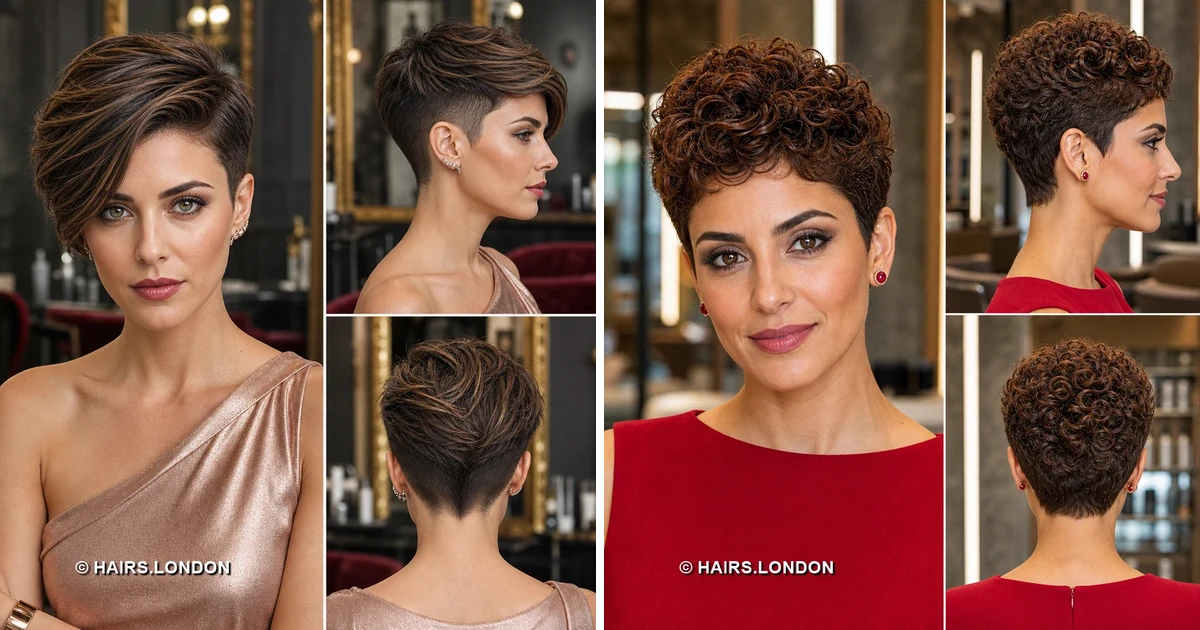
11. Brunette Pixie with Light, Slanting Bangs
Soft brunette layers create a softly rounded shape above fitted sides. A light slanting fringe skims across the upper forehead. Narrow highlighted strands catch light through the crown and back. Side layers sit neatly against the temples without looking shaved. The back remains textured before narrowing into a short nape. Ask for feathery fringe ends rather than a heavy edge. Dry the fringe first so it settles in its direction. Use a small amount of cream through midlengths and ends. Finger comb the crown to preserve its gently uneven surface. Trim the bangs when they begin crowding the brow area.
12. Lifted Brown Pixie with an Open Forehead
Layered brown hair sweeps upward to leave the forehead open. The front flows back into an airy, textured crown. Shorter sides frame the ears beneath the broader upper shape. Fine lighter strands follow the movement across the top layers. The rear crown narrows steadily into a close pointed nape. Request enough front length to brush upward without rigid spikes. Blow dry away from the face while lifting damp roots. Shape the finish with fingertips and a little flexible paste. Avoid heavy oil near the crown, where it could reduce height. Check the side profile when planning how short to trim.
13. Long Caramel Sweep with a Close-Cut Side
Caramel brown highlights emphasize the length of this dramatic sweep. The fringe curves subtly across one side of the forehead. Hair on the opposite side is cut markedly closer underneath. A fuller, softly textured crown connects the long front with textured back. The nape tapers cleanly below the rounded upper silhouette. Ask your stylist to show where the short section begins. Keep the sweeping front long enough to travel across comfortably. Dry from the roots, directing the fringe toward its destination. Smooth selected strands with light cream for visible separation. Plan frequent side trims if you want strong length contrast.
14. Side-Swept Brown Pixie with a Close Taper
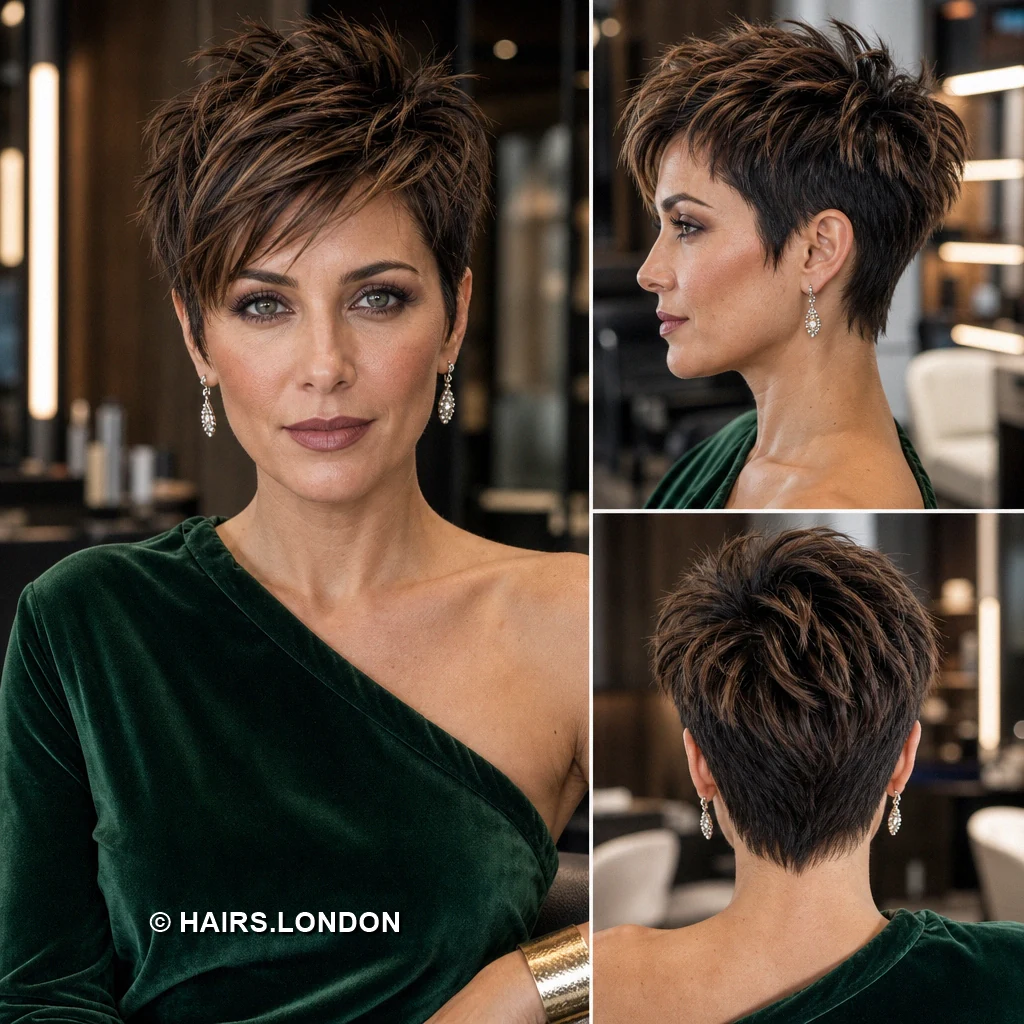
This brown pixie pairs a long, flowing fringe with close sides. Subtle warm strands trace the top as it moves sideways. A closely tapered temple makes the longer, layered crown more noticeable. The front rests diagonally without covering the entire brow. Rear layers retain texture above a clean, narrow neckline. Ask for a gradual transition above the short side section. Direct damp top layers sideways with a dryer and fingers. Pinch the ends with paste to create soft, separate ribbons. Keep product minimal around the temple to show its finish. Touch up the taper before it loses its crisp outline.
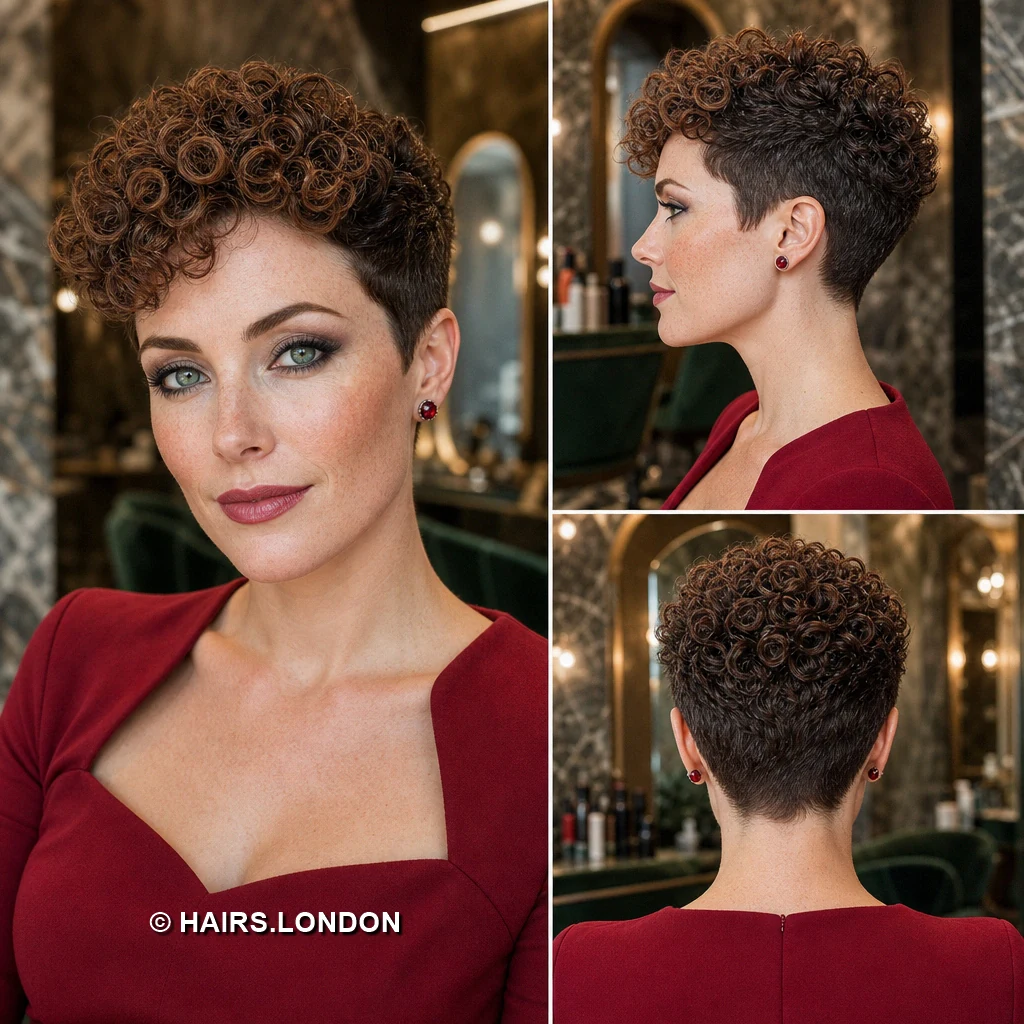
15. Copper-Brown Pixie with a Curly Crown
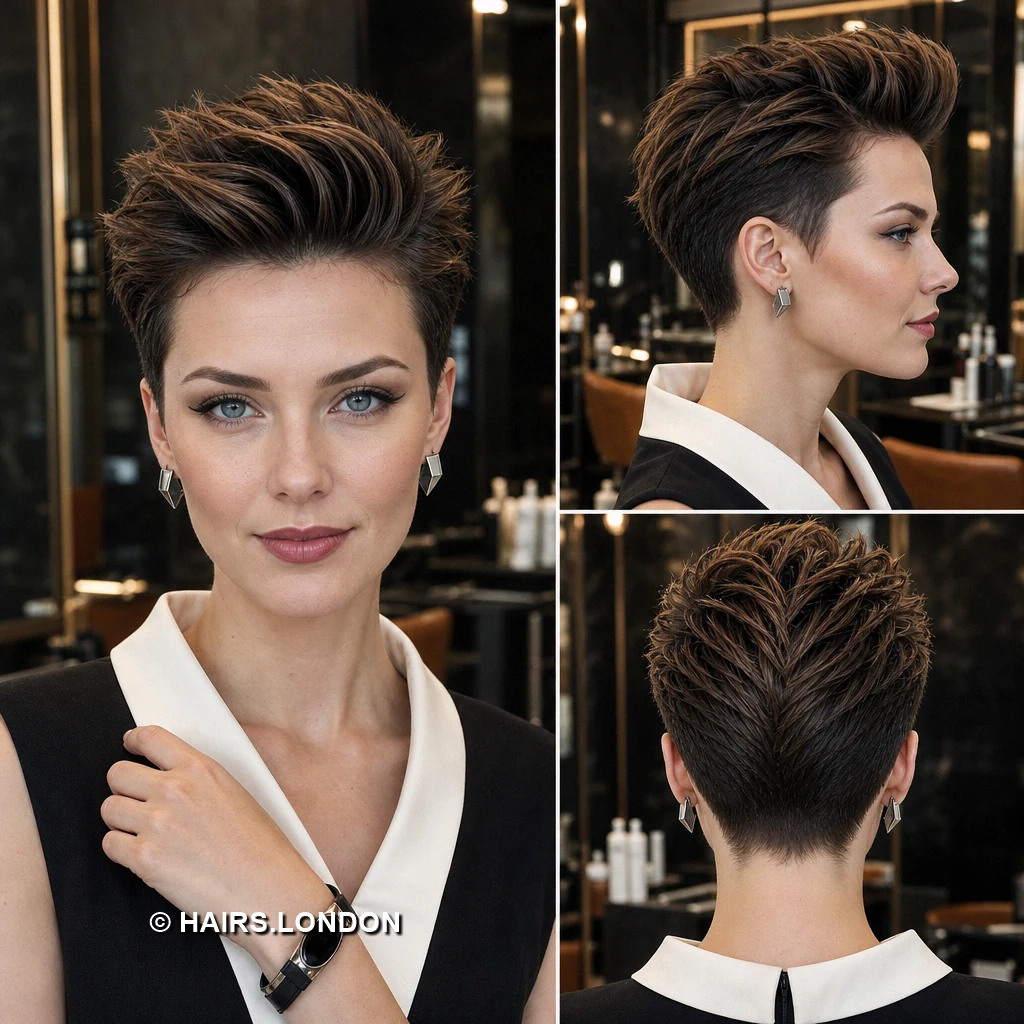
Copper brown curls form a dense, rounded pixie crown. Small ringlets reach forward to create a short, naturally curly fringe. Closely cut sides give the curls a defined outer edge. The texture continues across the back before gently tapering downward. A narrow nape keeps the lower outline tidy and light. Ask your stylist to allow for shrinkage when setting length. Shape around the ears without cutting into the curly top. Apply curl cream to damp sections and distribute it evenly. Dry without excessive touching to help preserve individual curl shapes. Refresh flattened ringlets with water between wash days as needed.
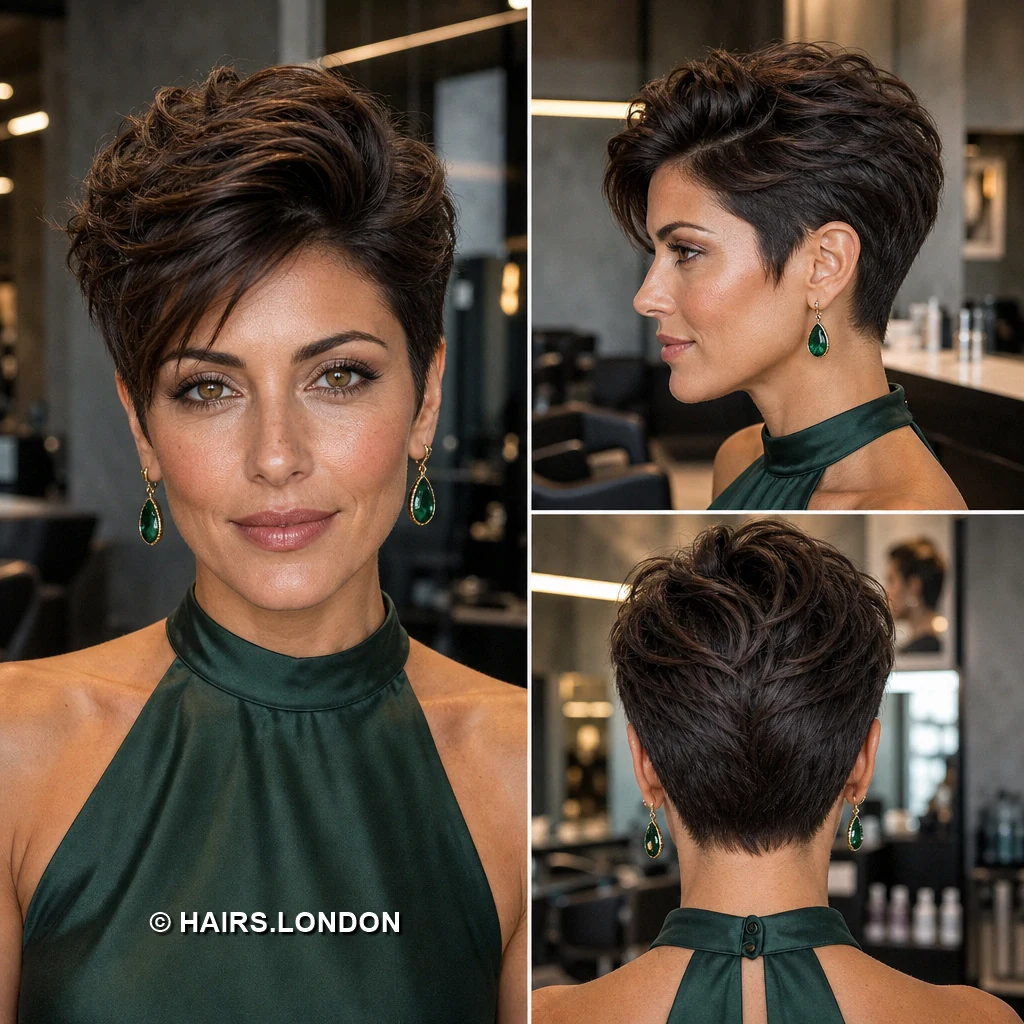
16. Spiky Brunette Pixie with a Raised Crown
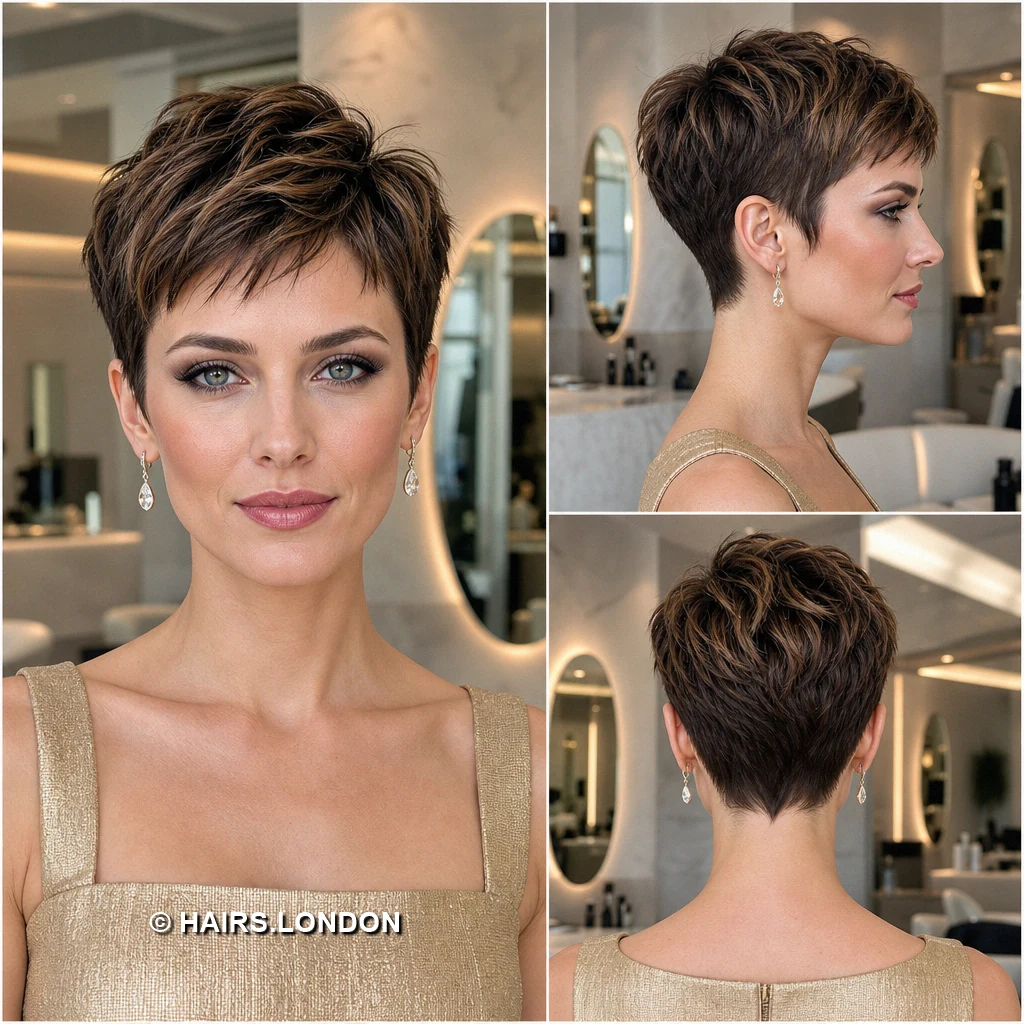
Dark brunette layers rise into loose, pointed crown texture. Warm brown strands make the lifted sections easier to distinguish. The front stands up and back, leaving the forehead clear. Shorter sides sit beneath the broad, high upper shape. At the rear, lightly textured layers taper toward a pointed neckline. Request enough top length to lift without stiffening every strand. Blow dry upward from the roots using fingers for control. Add matte paste sparingly, concentrating on the tips and crown. Let a few loose sections fall differently for a natural finish. Maintain the sides before they compete with the raised top.
17. Side-Swept Chestnut Pixie with an Undercut
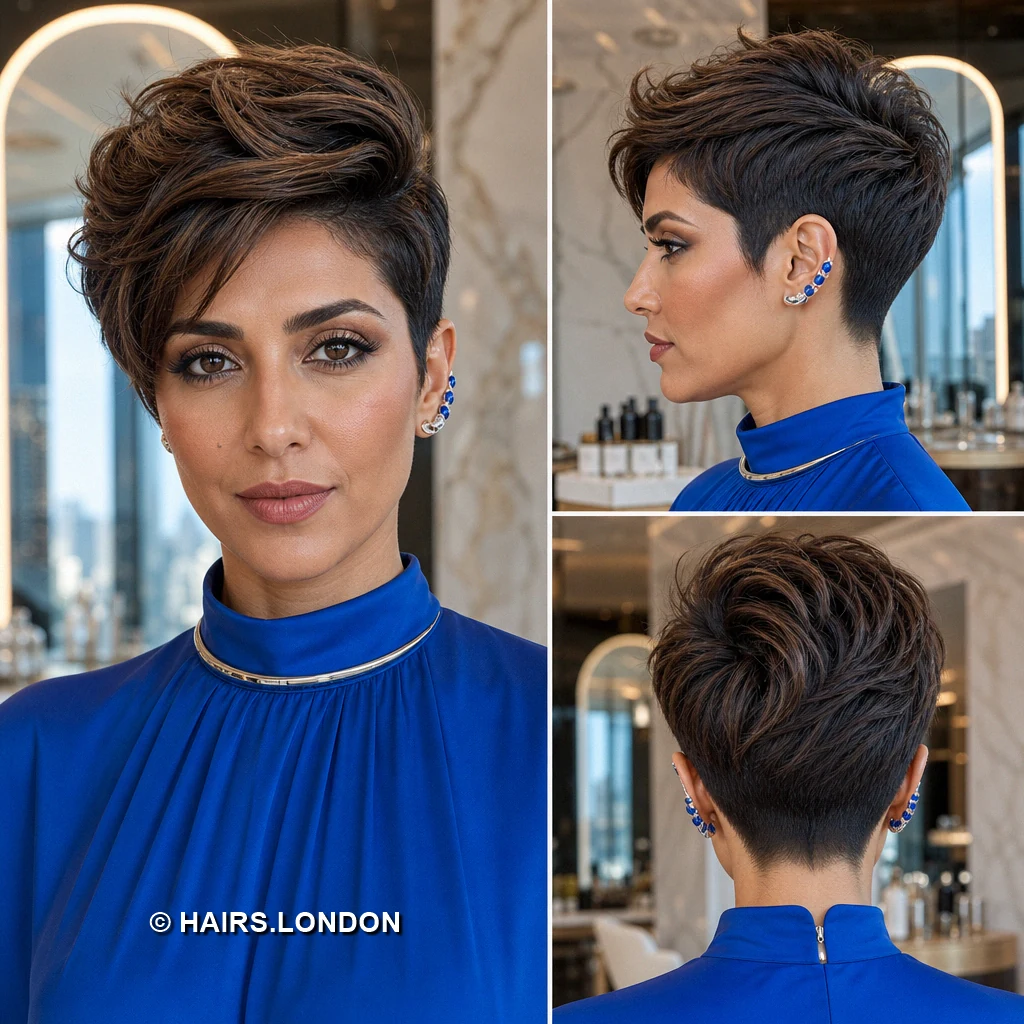
Long chestnut brown layers travel softly diagonally across the forehead. The opposite side sits very close beneath the sweeping top. Fine highlights draw attention to the smooth direction of movement. Behind the fringe, a rounded, gently lifted crown adds gentle height. The lower back tapers into a neat, narrow nape. Ask where the undercut should meet the longer upper section. Keep enough weight at the front for a cohesive sweep. Blow dry across, lifting roots before guiding the ends down. Use light cream for control without hiding the highlighted strands. Expect the close side to need trims before the fringe.
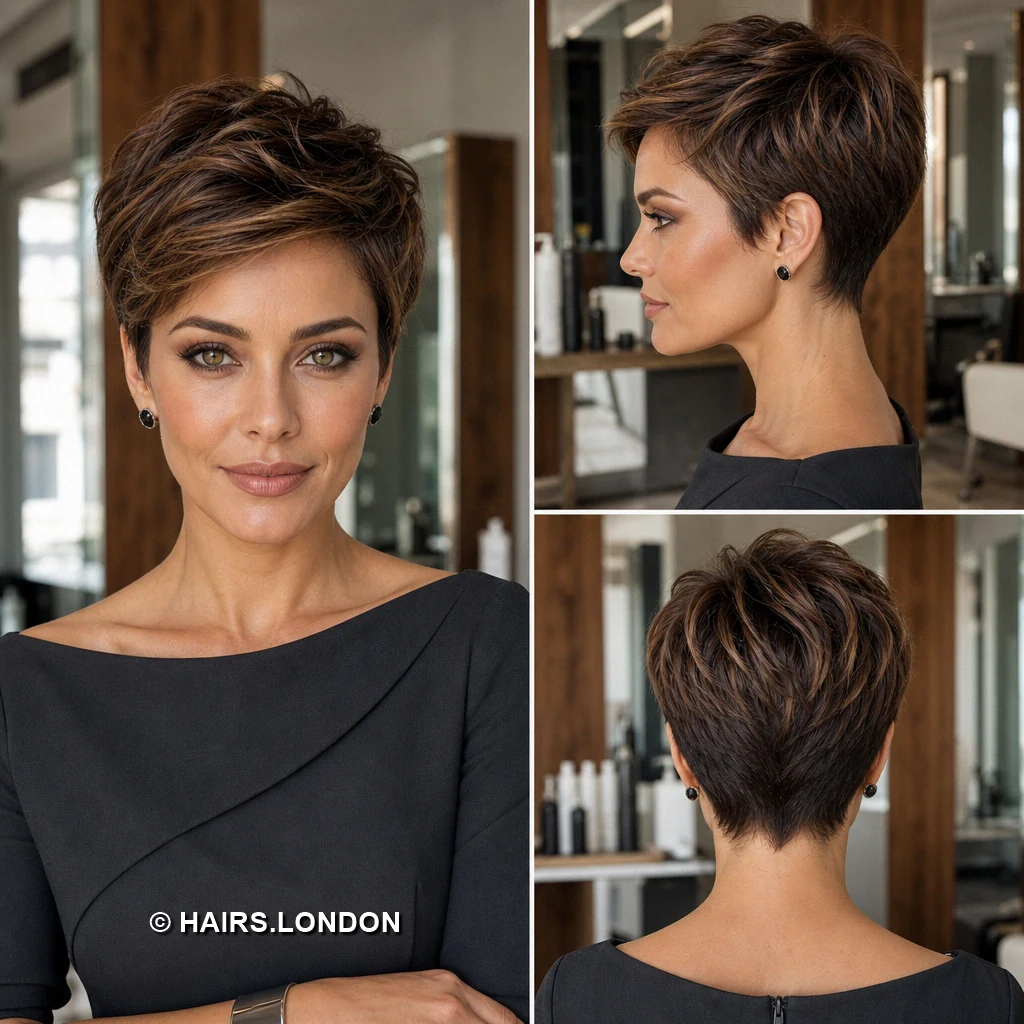
18. Deep Brunette Pixie with a Curved Side Fringe
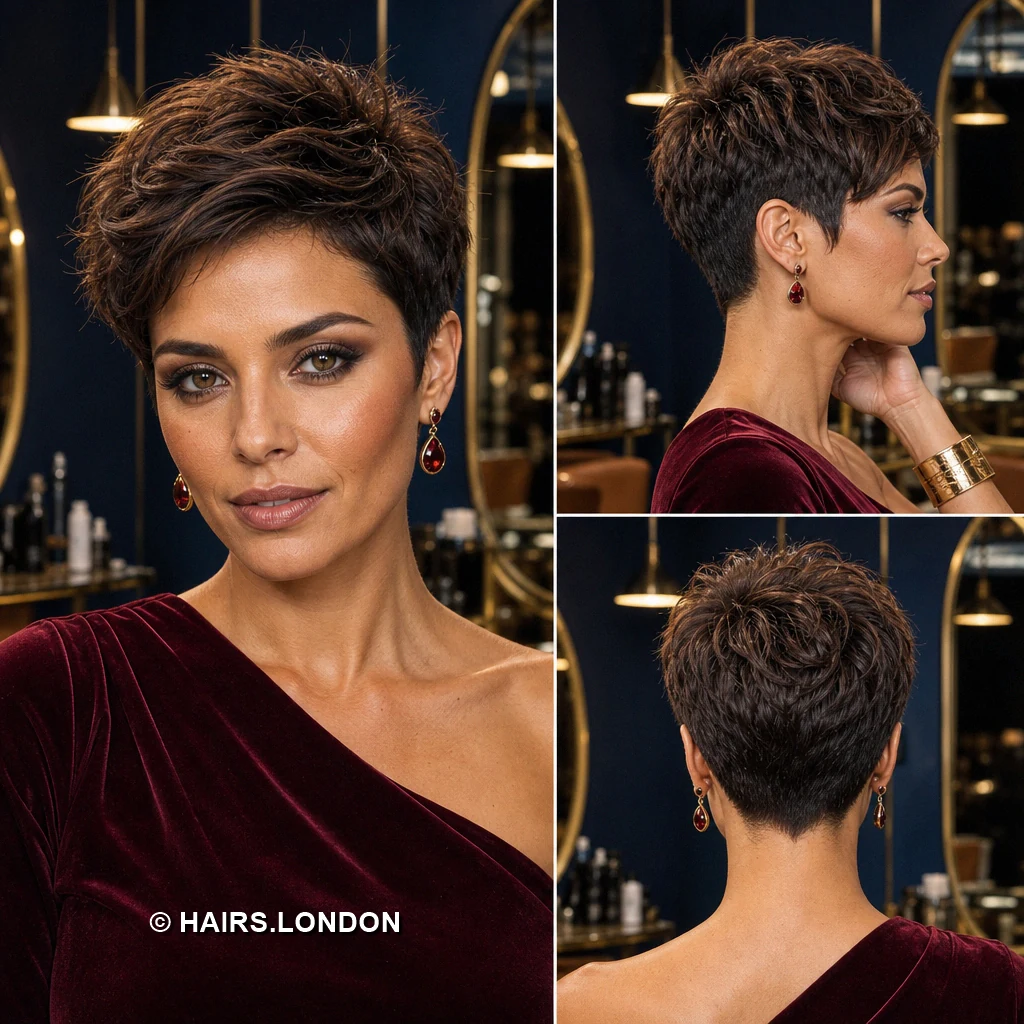
Deep brunette hair sweeps forward into a curved side fringe. Narrow warm brown strands add movement across the fuller top. One close side contrasts with the long, softly separated front. The crown remains rounded, with loose texture toward the back. A slim nape finishes the cut beneath that upper volume. Ask for a fringe that follows your preferred part naturally. Dry it sideways first, then lift sections at the crown. Smooth individual ends with a tiny amount of pliable cream. Avoid pressing the top flat while setting the side fringe. Refresh the short perimeter whenever its outline starts to soften.
How to Choose a Short Textured Pixie
Start with the amount of hair you want near your face. A long side sweep offers more coverage and styling options; a short fringe or brushed-up front leaves the forehead open. Then compare the side and back views: a close taper creates stronger contrast, while scissor-cut sides feel softer as they grow. Choose a crown shape your hair can support, whether that means rounded volume, separated layers, or natural curls.
Styling Straight, Wavy, and Curly Textures
For straight hair, lift damp roots with a dryer before directing the fringe; add a little paste only after the hair is dry. Wavy hair can be scrunched with light mousse and diffused for separation. For curls, distribute curl cream through damp hair, allow for shrinkage, and dry with minimal handling. Whatever your texture, start with less product than you think you need: short layers can lose movement quickly when overloaded.
Keeping Brunette Color Fresh
The visible shades range from deep brunette to brown with chestnut, caramel, or copper warmth. If you color your hair, ask which tones and techniques suit your starting shade and desired upkeep. Use a gentle shampoo suitable for colored hair, protect hair during heat styling, and discuss a gloss or highlight refresh when the lighter strands look dull. A small amount of added brightness can show clearly on a short top.
Maintaining the Pixie Shape
Short sides and pointed napes reveal growth sooner than longer crown layers. Plan a perimeter tidy-up when the ears or neckline lose definition, and a fuller cut when the fringe and crown no longer sit as intended. If you like a dramatic long sweep, tell your stylist not to shorten it automatically during a side trim. Curly pixies should be assessed with their spring and finished shape in mind.
What to Discuss with Your Stylist
Bring the front, side, and back views of the look you prefer. Point out the exact fringe length, crown height, amount of coverage around the ears, and whether you want a soft taper or a visibly close side. Explain how your hair behaves when air dried, where it parts, and how much daily styling you will do. Ask your stylist to adapt the shape to your density, curl pattern, and growth direction.
Frequently Asked Questions
What makes a pixie cut textured?
Layers, shaped ends, curls, or separated strands create visible movement instead of one smooth, solid surface.
Which style gives the most fringe coverage?
The long side sweeps in images 1, 13, and 17 cover more forehead than the short, broken fringes.
Can fine hair wear a lifted pixie?
Yes, but keep enough weight for support and use a light product at the roots. Your stylist can adjust the height to your density.
What should I ask for if my hair is curly?
Ask for the top to be shaped with your curl pattern and shrinkage in mind, with the sides and nape tapered to suit the finished silhouette.
How do I style a side-swept fringe?
Dry it in the intended direction from the roots, then use fingers and a small amount of flexible product to place the ends.
How can I lift the crown without making it stiff?
Create height while blow drying, then use minimal paste on selected sections rather than coating the entire top.
Are close sides required for a textured pixie?
No. Close sides emphasize contrast, but softly scissor-cut sides can also work with a layered crown.
How often will the nape need trimming?
Trim it when its outline stops looking intentional. A closely tapered or pointed nape usually shows growth sooner than the top.
Will highlights show on very short hair?
They can, especially through longer top layers. Discuss placement so the lighter strands remain visible within your chosen cut.
What product works for a piecey finish?
A small amount of pliable or matte paste can separate dry ends. Start sparingly and add more only where needed.
How do I keep curly pixie ringlets defined?
Apply curl product evenly to damp hair, scrunch gently, and avoid repeatedly touching the curls as they dry.
What photos should I take to a salon consultation?
Bring front, side, and back views, then identify which fringe, crown, side, and nape details you want to keep.
Conclusion
The best choice among these short textured pixie haircuts depends on how you want the fringe to fall, how much height your crown can hold, and how close you want the sides and nape. Use the different views as a starting point, then work with your stylist to make the shape practical for your hair.