


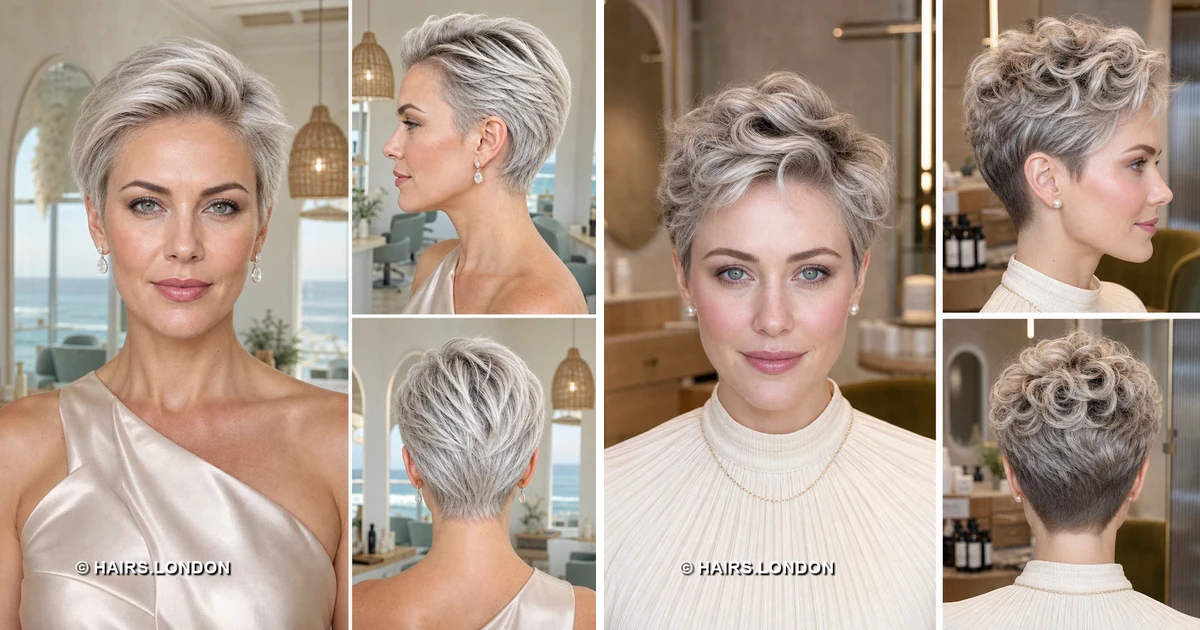
11. High Volume Ash Blonde Pixie
Ash blonde streaks brighten the darker sections of this pixie. Long top layers sweep upward into substantial, softly textured height. A loose front section curves across instead of forming bangs. The sides sit closely against the head beneath the volume. Back layers flow downward before tapering into a neat nape. Ask for crown length that supports lift and visible separation. Keep the sides graduated to balance their much fuller top. Apply lightweight mousse, then blow dry roots in several directions. Define the lifted ribbons with minimal paste on dry hair. Refresh the short neckline before it loses its clean shape.
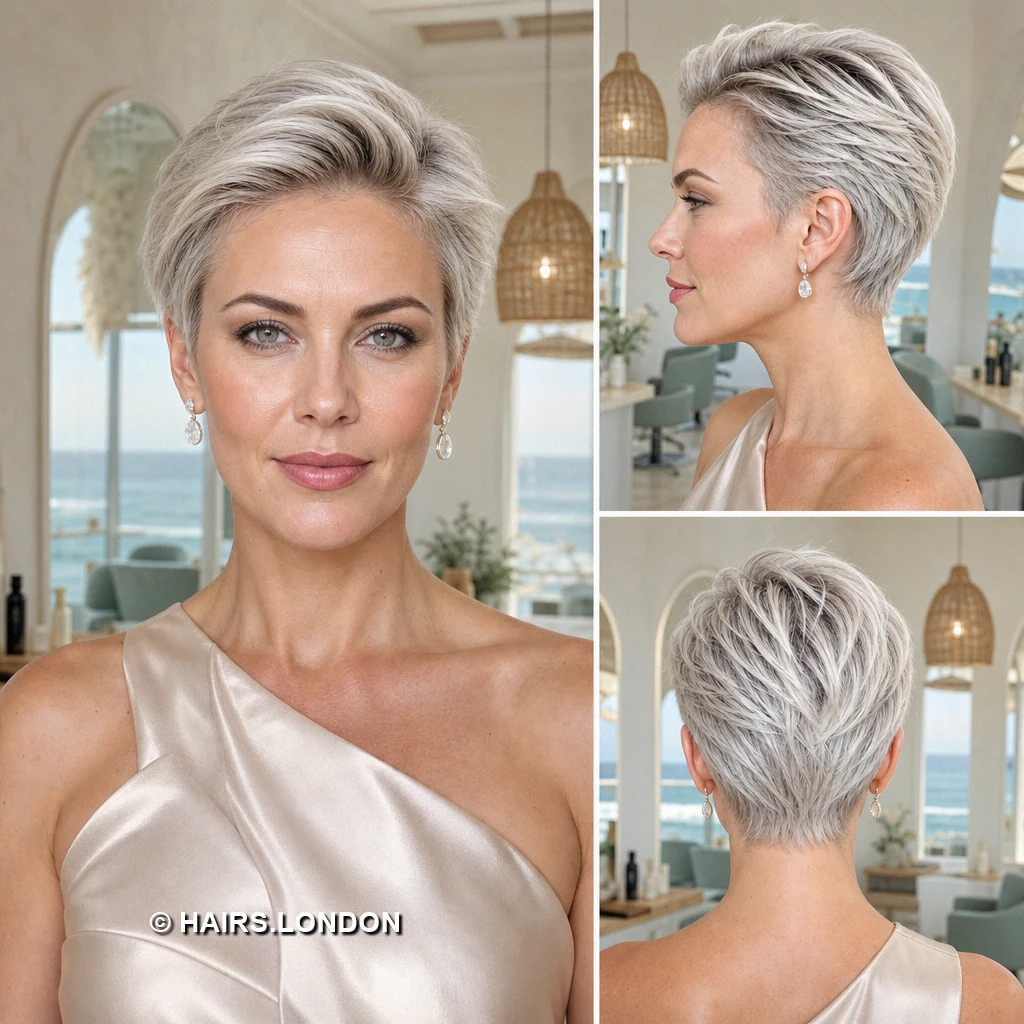
12. Soft Ash Blonde Pixie with Piecey Fringe
Muted ash blonde gives this softly layered pixie dimension. Short, separated fringe pieces brush the upper forehead very lightly. The crown looks full, with fine strands crossing in layers. Close sides follow the head without exposing a severe edge. At the back, textured layers narrow into a compact nape. Ask for piecey fringe rather than a blunt horizontal line. Maintain some weight above the occipital area for rounded fullness. Lift roots while drying, then guide the front gently forward. Use lightweight styling cream on selected ends to reveal their separation. Schedule trims to prevent the fringe merging into heavier sections.
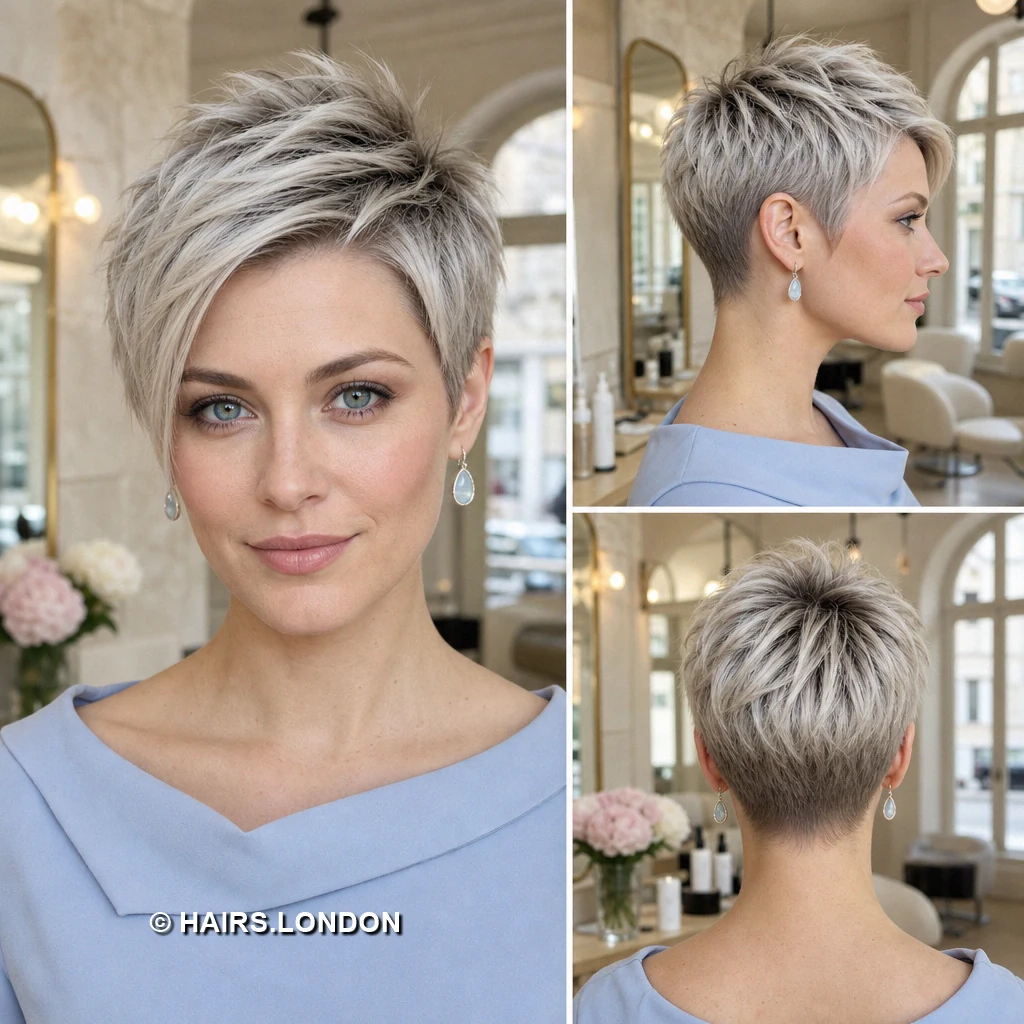
13. Compact Silver Blonde Layered Pixie
Cool silver blonde ribbons run across this compact layered pixie. The fine fringe angles gently over the forehead without bulk. Short crown layers give its smooth silhouette subtle surface movement. Neatly tapered sides reveal the ears and follow their contours. The back remains rounded above a closely shaped, pointed nape. Ask for controlled texture while preserving a comfortably full crown. Discuss fringe placement according to your parting and growth pattern. Blow dry across the head, lifting roots with your fingertips. Finish with light cream for separation and a soft feel. Keep the nape trimmed to maintain the compact overall shape.
14. Silver Pixie with a Sculpted Side Sweep
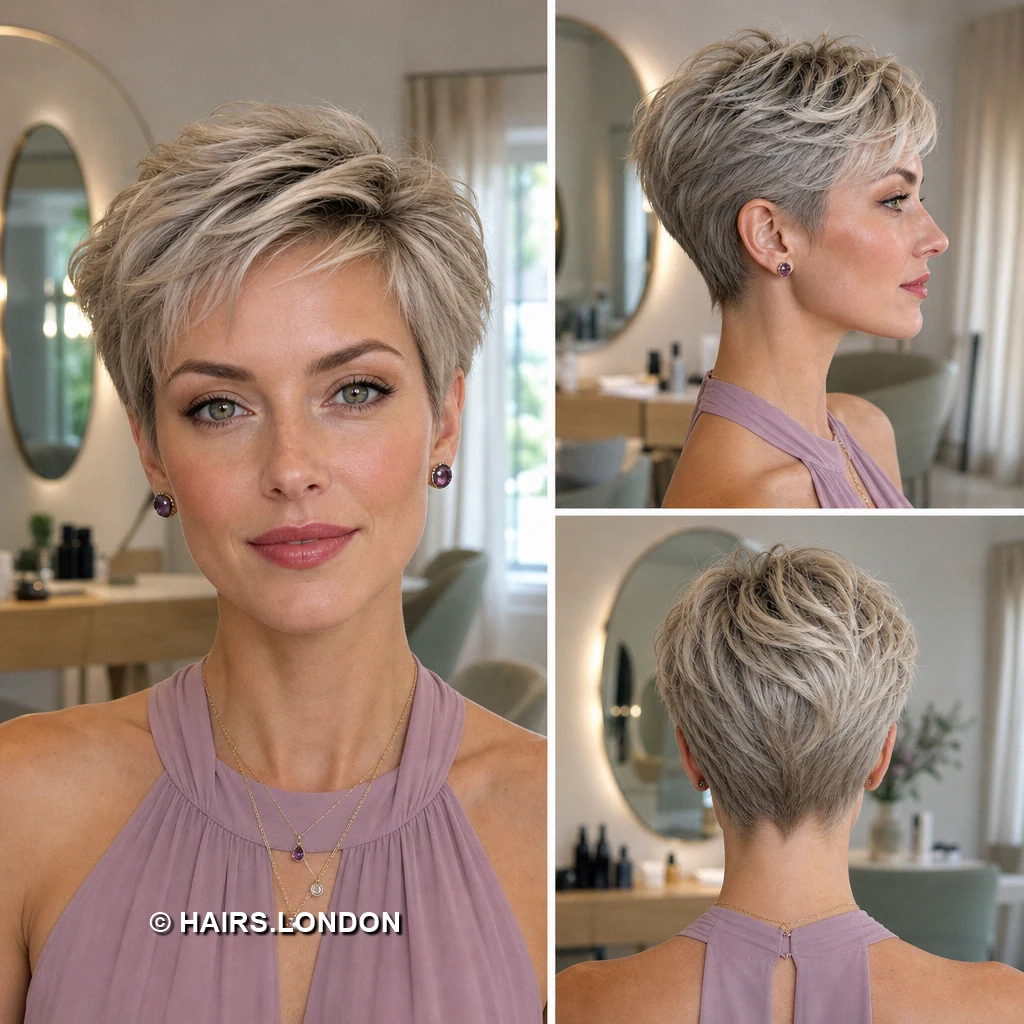
Pale silver hair forms a prominent sweep above the forehead. Curved front layers travel sideways into a softly raised tip. The crown stays rounded, while shorter sides reveal the ears. Fine back layers taper smoothly to a narrow, neat nape. Subtle darker shading between sections emphasizes the hair’s visible movement. Ask for front length that can hold this curved direction. Keep the sides close without removing support beneath the sweep. Blow dry upward and across, following with a flexible cream. Separate the tip lightly rather than setting it completely stiff. Trim the sides before their growth overwhelms the top shape.
15. Long Swept Silver Blonde Pixie
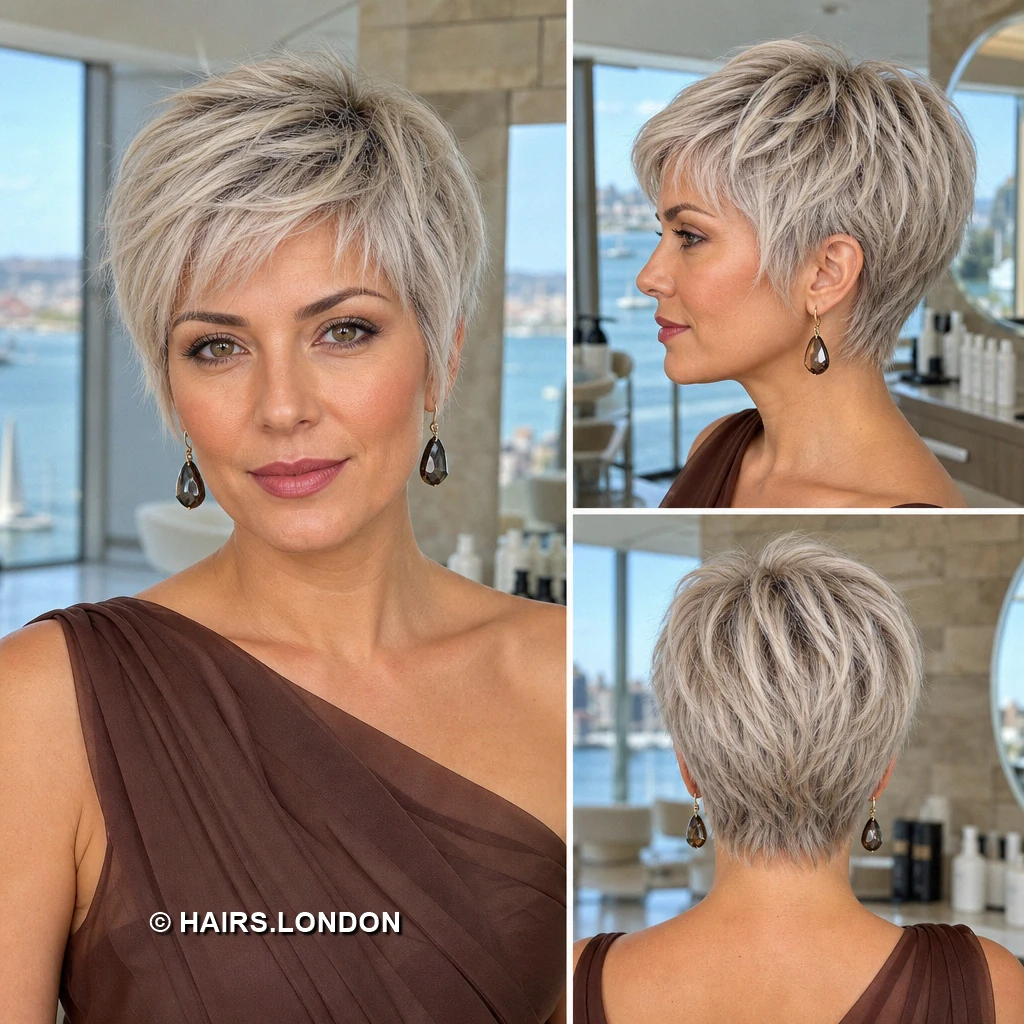
Silver blonde top layers sweep broadly across this longer pixie. The extended front curves beside the brow without heavy fringe. Smooth sides tuck close around the ears and temples. Crown layers overlap toward a softly tapered, darker looking nape. The back retains texture instead of ending in a blunt line. Ask your stylist to protect length through the sweeping front. Light internal layering can prevent that section from looking solid. Blow dry along its natural direction using a vent brush. Add flexible cream to keep the long surface strands together. Trim the neckline regularly while letting the front grow longer.
16. Silver Blonde Pixie with a Raised Wave
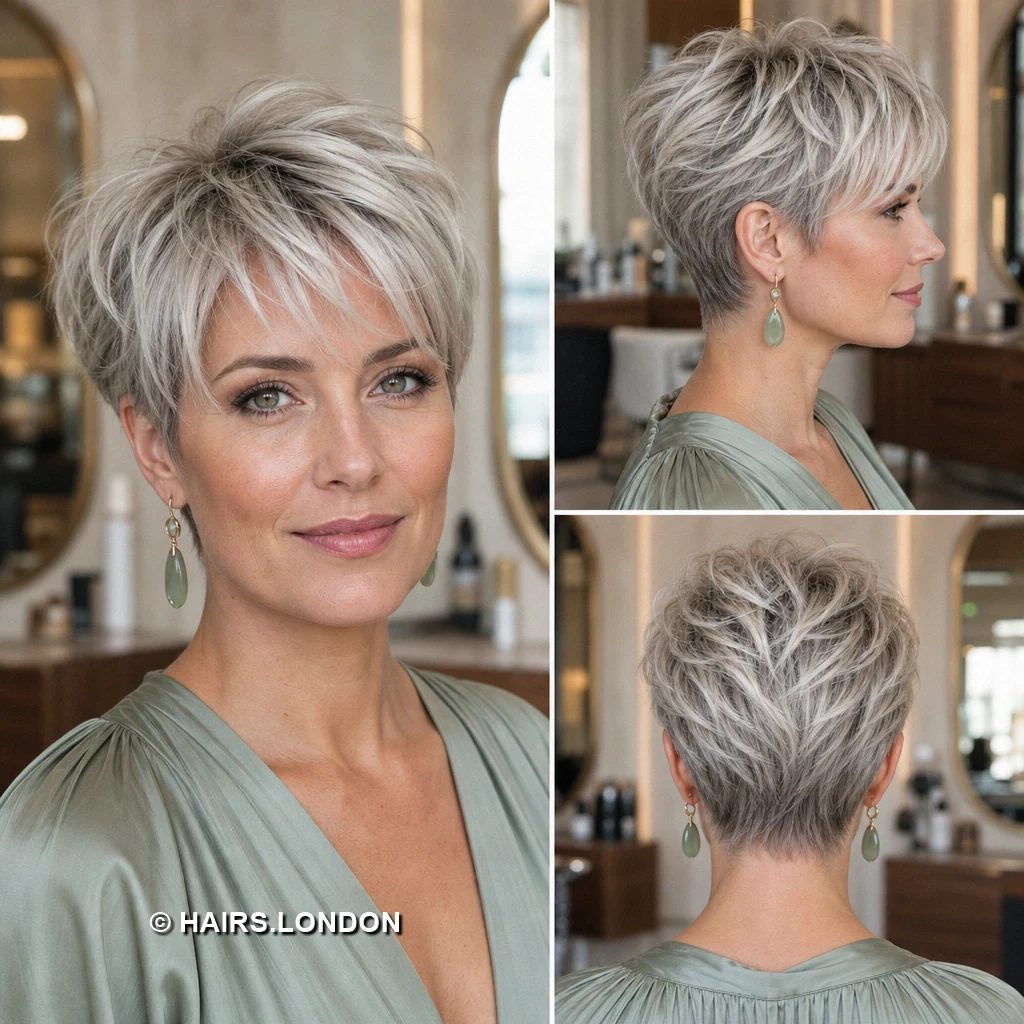
Cool silver blonde sits over darker shading near the roots. A substantial front wave rises high before flowing backward. The crown follows with combed, clearly separated layers. Close sides and a narrow nape emphasize the elevated top. Soft graduation keeps the change in length from looking abrupt. Ask for enough front length to shape a continuous, softly sculpted, flowing wave. Retain support at the roots instead of thinning them heavily. Blow dry upward with a brush, then direct hair backward. Use light hold product to preserve the wave’s curved finish. Maintain the sides frequently so the lifted proportion stays distinct.
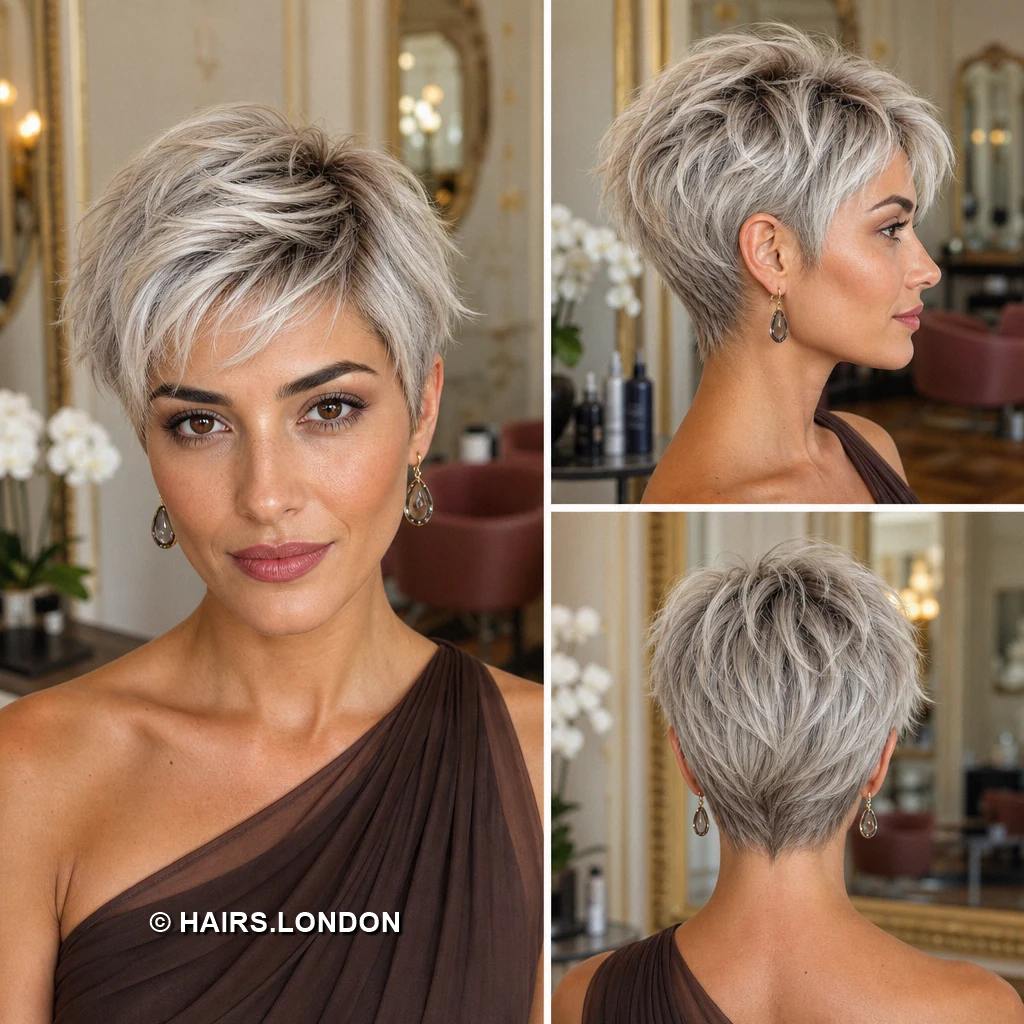
17. Textured Blonde Pixie with a Deep Sweep
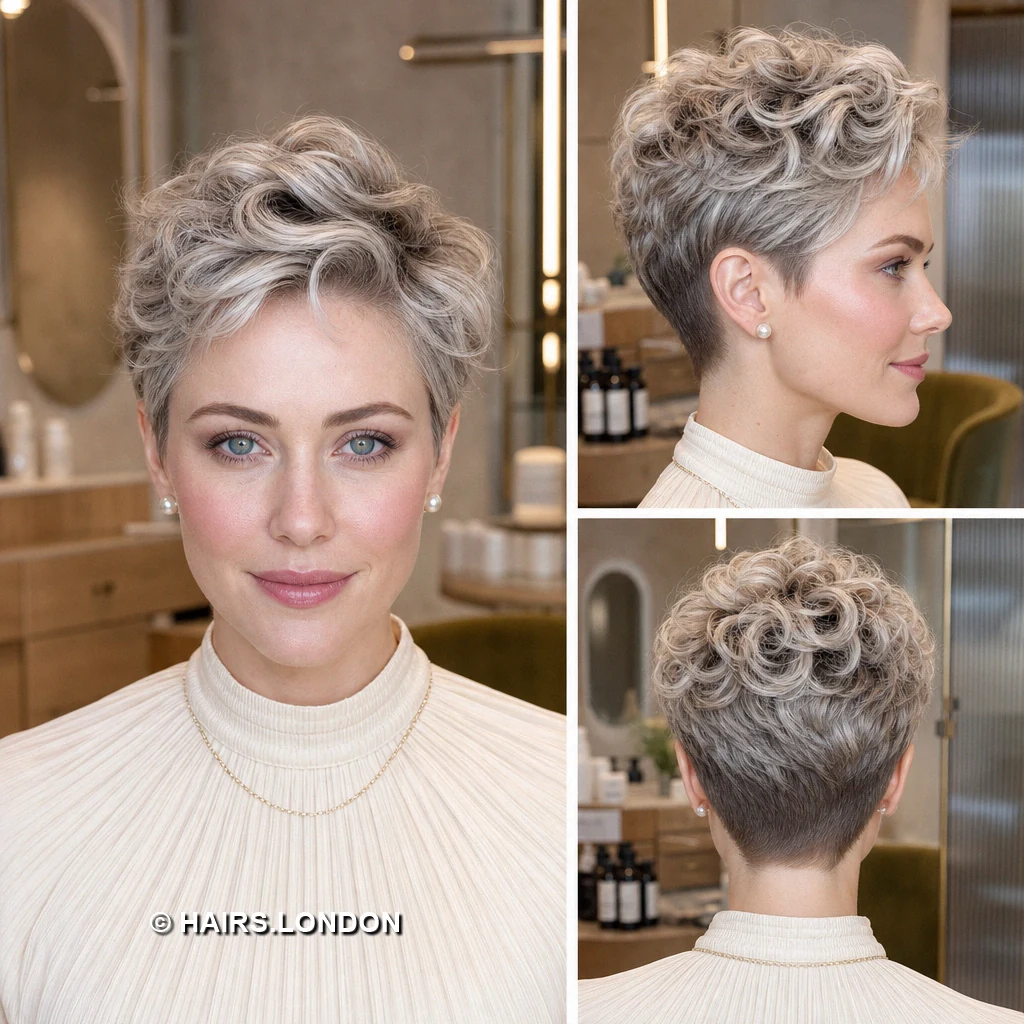
Blonde highlights streak through darker sections across this pixie. A deep side sweep rolls forward above one eyebrow. Tousled crown layers create generous height without a rigid finish. The sides narrow around the ears beneath those fuller layers. From behind, textured lengths descend into a short, tapered nape. Ask for enough front length to create that curved sweep. Keep crown layers flexible so they can lift and separate. Blow dry the front upward before directing it sideways. Pinch selected ends with paste for an intentionally loose, airy, slightly undone finish. Trim the neckline when its narrow outline begins to spread.
18. Wavy Silver Blonde Pixie
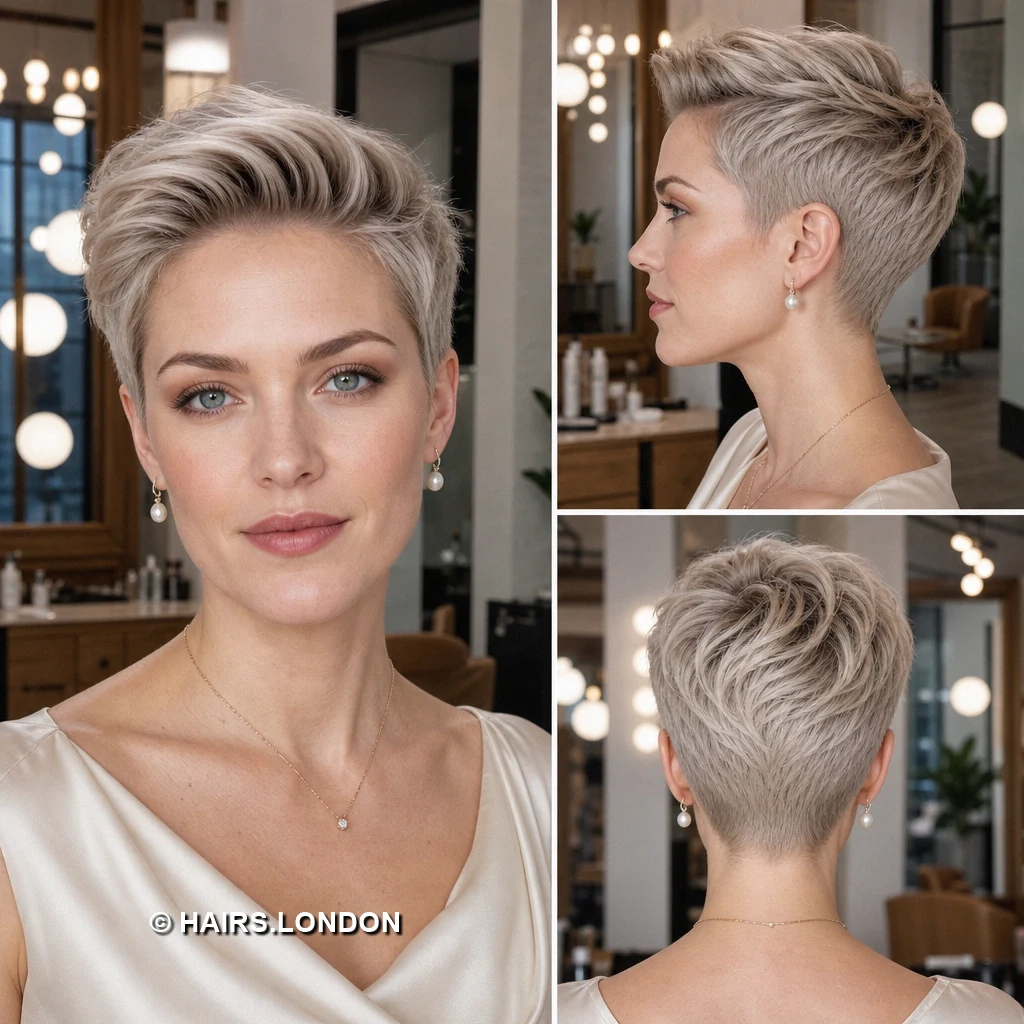
Pale silver blonde waves form the focus of this pixie. The long front bends sideways into a broad, rounded crest. Defined curves continue through the crown, creating soft, substantial, naturally flowing volume. Shorter sides sit close beneath the upper waves. At the back, looping layers taper toward a neat nape. Ask your stylist to leave room for your natural bend. Avoid excessive thinning where the front wave needs supporting weight. Scrunch mousse into damp hair and diffuse on gentle airflow. Shape stubborn pieces with a small tool and heat protection. Trim the sides while maintaining enough length for visible waves.
19. Blush Blonde Textured Pixie
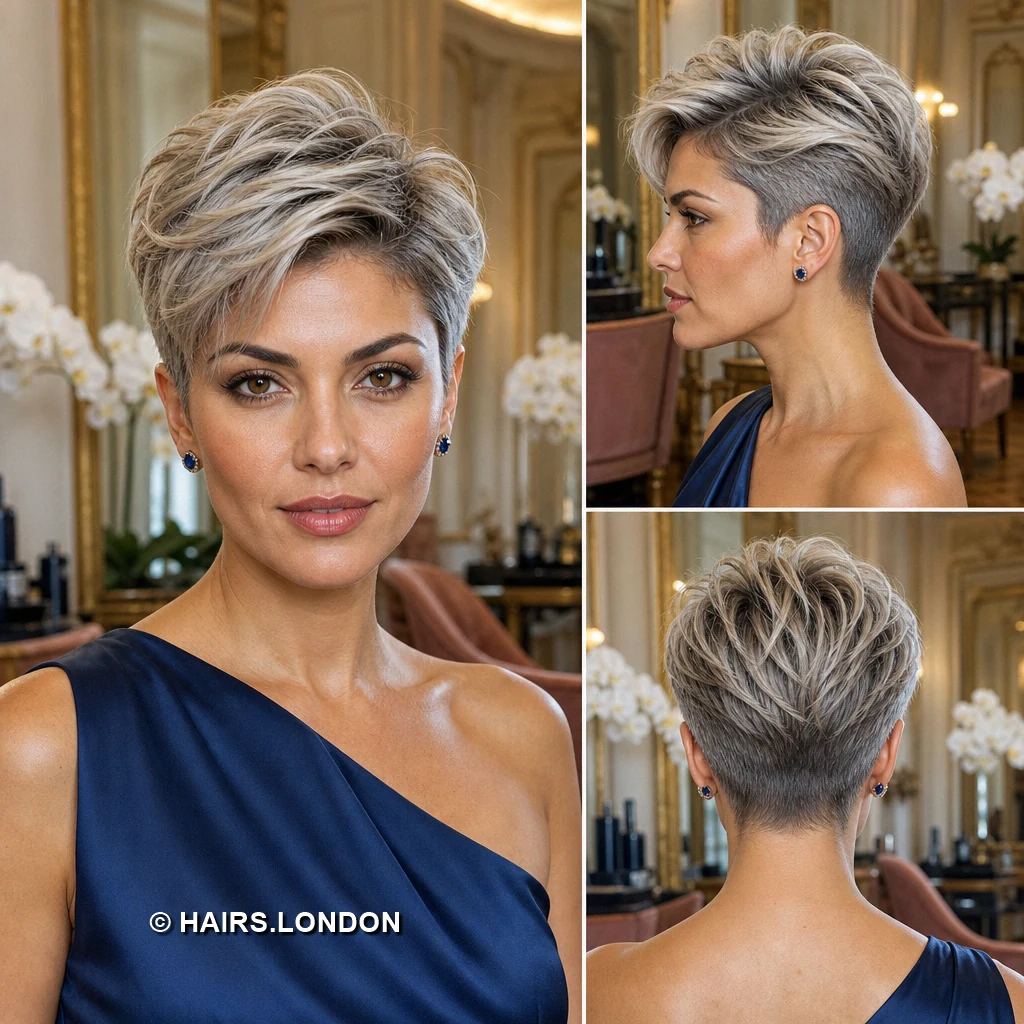
Blush blonde gives this layered pixie a soft pink cast. Short, wispy fringe pieces fall across the upper forehead. Tousled strands build a rounded, airy crown with visible separation. The sides sit close and leave the ears exposed. Back layers gradually narrow into a short, tidy, neatly tapered nape. Ask for light fringe ends and slightly fuller, softly textured crown layers. Discuss where your natural parting will let strands settle. Blow dry with your fingers to encourage relaxed, irregular movement. Add a little texture cream to distinguish selected surface pieces. Protect the delicate color and reshape the short outline regularly.
How to Choose Your Pixie Shape
Look first at the amount of length you want around your forehead. The compact cuts offer light fringe and a close outline; the longer sweeps need enough hair to bend across or away from the face. Compare the side and back views as carefully as the front. A close nape changes the silhouette and will show growth sooner, while a fuller crown leaves more room to vary the styling.
Styling Straight, Wavy, and Curly Textures
For straight hair, lift damp roots with a dryer before directing the longer top into place; use only a little cream or paste to separate the ends. On wavy hair, scrunch in lightweight mousse and diffuse gently to keep the bends visible. For curls, account for shrinkage, apply curl cream while damp, and avoid pulling the top straight as it dries. Use heat protection whenever you shape a sweep or wave with hot tools.
Keeping Silver Blonde and Blush Color Fresh
The images range from beige and ash blonde to icy silver and soft blush. Ask your colorist which cleansing and toning products suit your particular result rather than using a strong purple shampoo automatically. Wash with lukewarm water, limit unnecessary heat, and use a conditioner appropriate for lightened hair. Cool tones and pale pink can shift between appointments, so discuss a realistic gloss or toner schedule.
Maintaining the Short Pixie Shape
A short nape, tidy sides, and carefully placed fringe make these cuts distinctive. Check the outline as it grows: you may need a perimeter trim before the longer top needs reshaping. At each full haircut, review whether the crown still lifts easily and whether the fringe lands where you want it. Regular conditioning also helps the lightened, textured ends look smooth without coating them in heavy product.
What to Discuss with Your Stylist
Bring the front, side, and back view of the cut you prefer. Point out the exact fringe length, crown height, side coverage, and nape taper you want. Talk about your natural parting, cowlicks, density, wave or curl pattern, and the time you can spend styling. For color, ask what lightening your current hair would require, how much darker root you want to show, and how often you are willing to return for upkeep.
Frequently Asked Questions
What makes a pixie look fuller at the crown?
A longer, appropriately layered crown creates room for lift. Drying the roots upward and using a small amount of lightweight mousse can emphasize that shape.
Can I wear a silver blonde pixie without a long fringe?
Yes. Several cuts shown have short, fine fringe or a front brushed up and away from the forehead.
Which of these cuts offers the most styling flexibility?
A pixie with a longer top and front can be swept sideways, lifted, or styled with its natural wave. The close sides still keep the overall cut short.
Will a close nape need frequent trims?
It usually needs attention sooner than a longer neckline if you want to preserve its narrow, defined outline. Ask your stylist for a trim interval based on your growth.
How do I keep fine fringe from looking heavy?
Ask for light, separated ends and avoid applying too much product near the roots. Dry the fringe in the direction you want it to sit.
Can naturally curly hair work with a pixie like these?
Yes. The curled and wavy examples keep more length on top than at the sides. Your stylist should cut with your curl pattern and shrinkage in mind.
How can I style a raised front sweep?
Apply heat protection, lift the damp roots with a brush while blow drying, then direct the front backward or sideways. Finish with flexible hold.
Should the sides be cut as short as the nape?
Not necessarily. These images show softly graduated sides as well as closer ones. Choose the amount of ear and temple coverage you prefer.
How do I avoid weighing down a textured pixie?
Start with a small amount of lightweight styling product and add more only where needed. Concentrate paste or cream on selected ends rather than coating the whole crown.
Does silver blonde require toning?
It may need toning or glossing to maintain the cool result, but the right product and frequency depend on your hair and color service. Confirm a plan with your colorist.
What should I show my stylist besides the front photo?
Show the side and back views. They reveal the crown height, how closely the sides are cut, and the shape of the nape.
How can I try a subtle version of the blush pixie?
Discuss a soft pink cast over a suitable light blonde base rather than asking for a vivid pink. Your colorist can explain what is achievable on your hair.
Conclusion
The best choice among these pixies is the one whose fringe, crown, and neckline fit your hair as well as your routine. Save the views that show those details clearly, then decide with your stylist where to keep length, where to taper, and how you will maintain the color.