


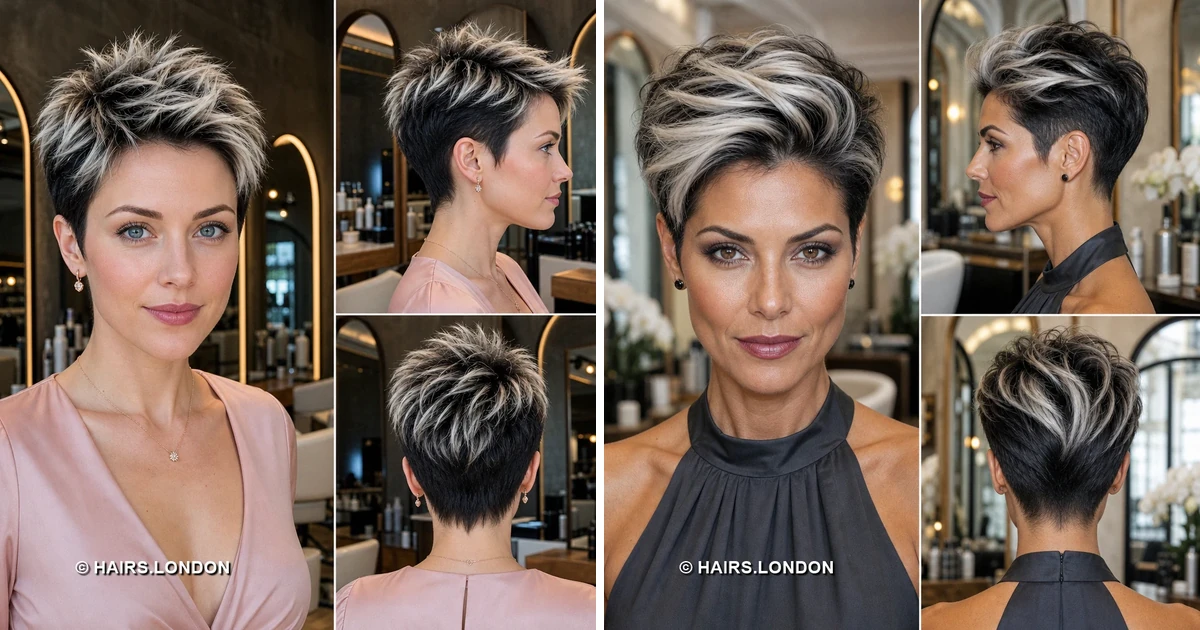
11. Icy Side Fringe Over a Dark Pixie Taper
An icy, nearly white fringe stretches across the forehead diagonally. The darker opposite side makes that pale section more noticeable. Crown layers lift loosely, with fine ends pointing outward slightly. Short sides frame the ears and keep the silhouette compact. The back shows dark layers tapering toward a pointed nape. Ask for fringe length that clears your eye comfortably daily. Blowdry the front sideways before shaping its feathered ends. Use lightweight paste sparingly to retain the delicate texture. Discuss root contrast if you want to maintain this placement. Trim the nape without unnecessarily shortening the pale fringe at future appointments.
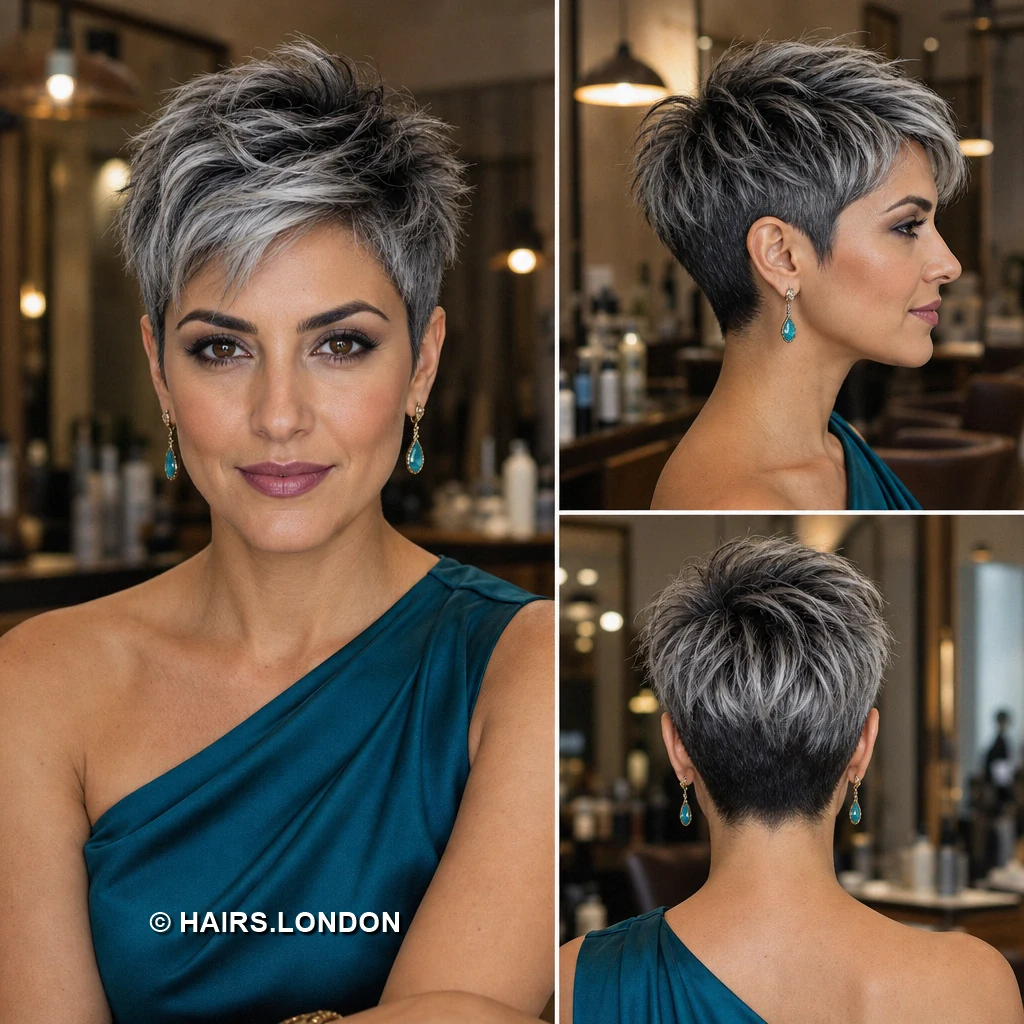
12. Voluminous Platinum Sweep With Dark Undersides
Platinum lengths roll over the front in a generous sweep. Darker roots and undersides emphasize the brighter curved top section. The crown remains long enough for broad, separated waves. Close dark sides keep the fullness concentrated above the ears. A short nape balances the height and flowing front. Show your stylist how far the pale fringe should fall. Build lift at the roots using mousse and directed airflow. Shape the front with a brush, then loosen with fingers. Avoid excessive paste, which can make these long pieces heavy. Keep the taper fresh while protecting length through the longer flowing front.
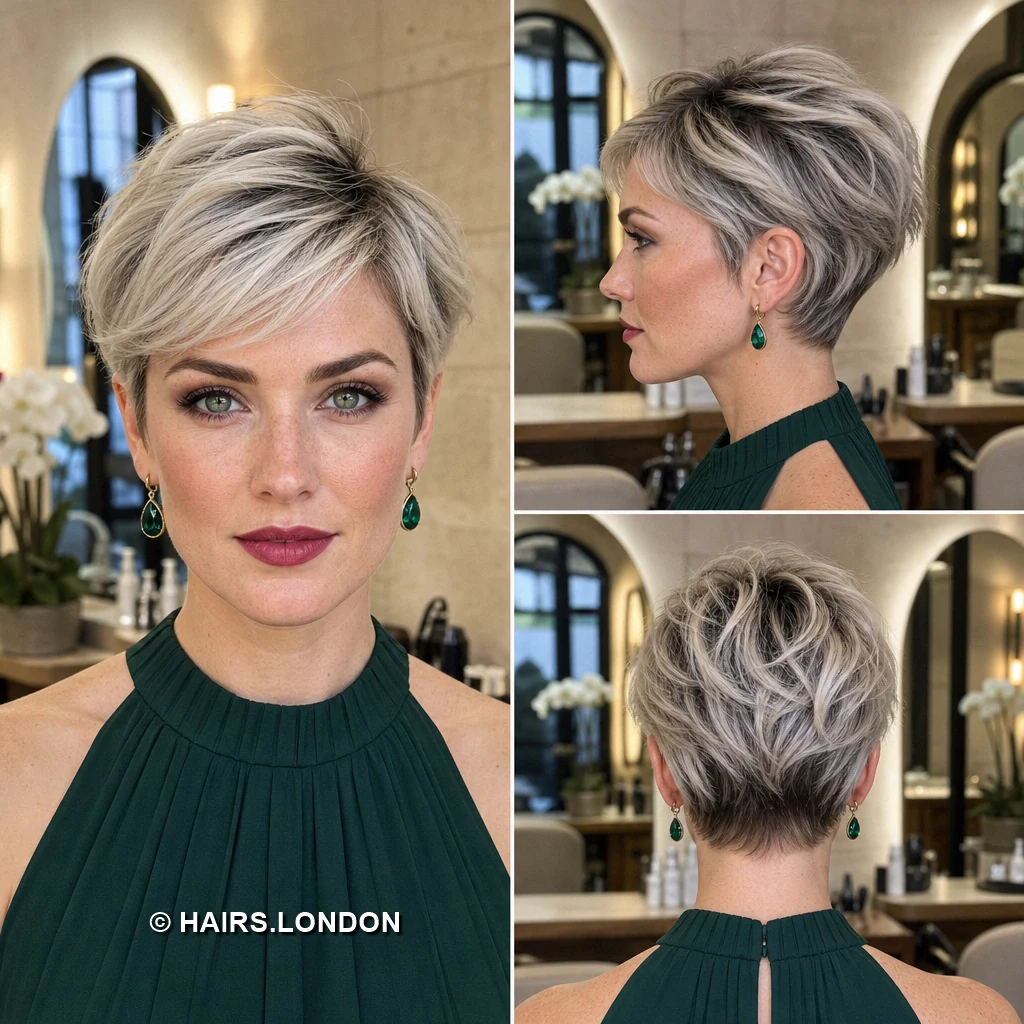
13. Silver-Ribbon Pixie With a Low Side Fringe
Narrow silver ribbons cross dark layers on the rounded top. A longer side fringe slopes down toward one eyebrow softly. Textured crown pieces add volume without forming pronounced upright spikes. The sides fit closely around the ears and upper neck. At the back, lighter strands sit above a dark taper. Ask for a fringe that remains easy to redirect sideways. Dry the roots upward, then guide the ends forward. Define selected ribbons with a small amount of styling cream. Keep the color placement visible when planning future crown trims. Refresh the nape as its closely fitted shape grows outward noticeably.
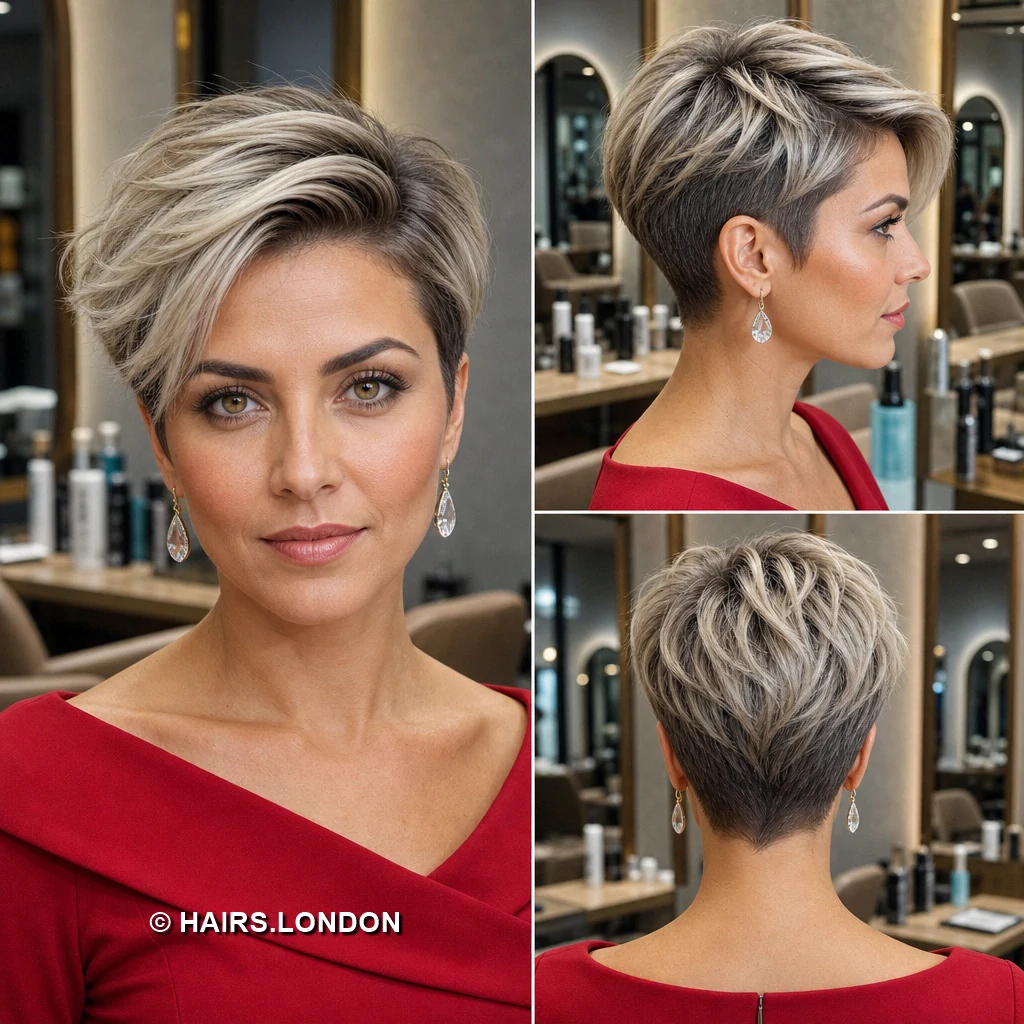
14. Dark Rounded Pixie With a Silver Front Wave
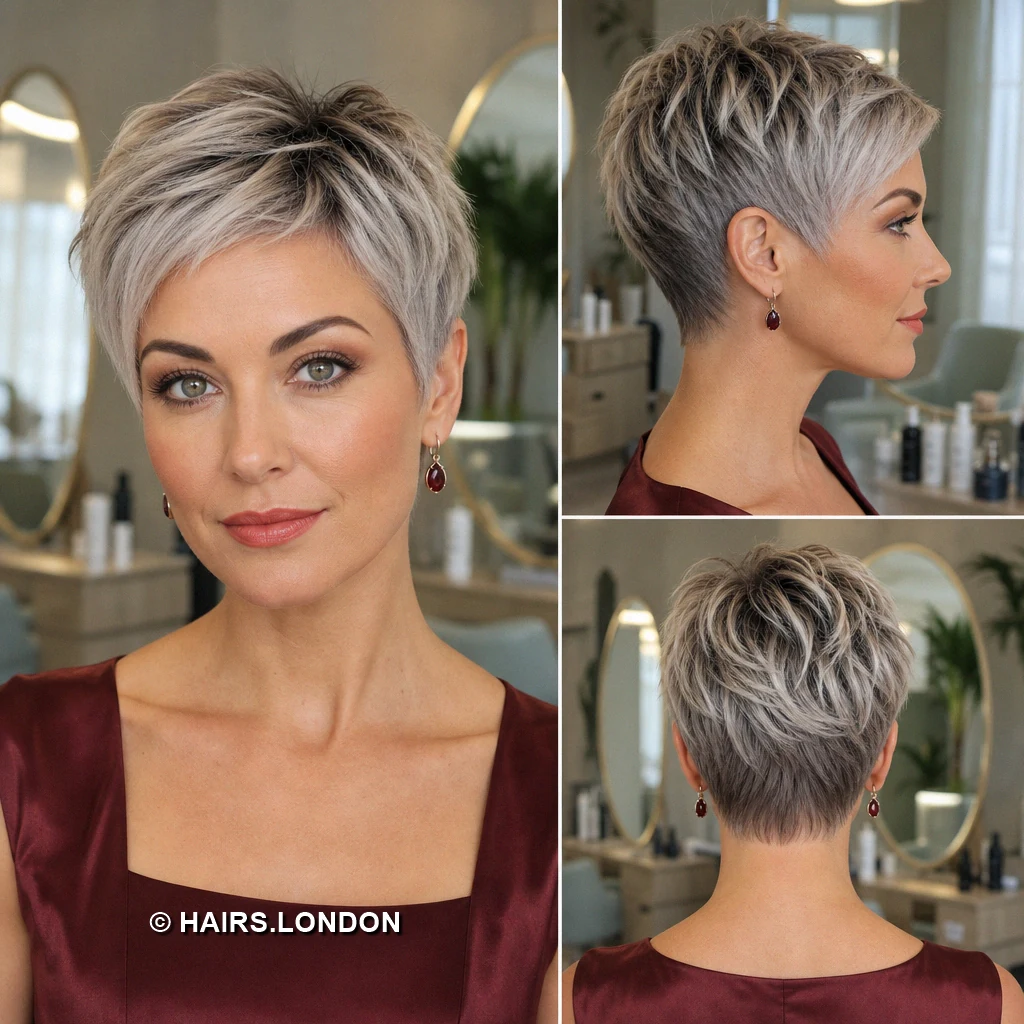
Dark layers form a rounded base beneath silver front pieces. The fringe rises into a soft wave before sweeping sideways. Fine highlights continue through the crown, adding visible separation there. Close sides outline the ears without looking heavily cropped overall. The short back tapers gently to a narrow nape point. Ask for enough front length to shape the curved wave. Blowdry upward at the roots, then direct hair across. Separate a few silver ends with flexible, lightweight styling paste. Keep the darker base visible if contrast is your priority. Regular perimeter trims help preserve its compact, balanced outline over time.
How to Choose a Silver Highlighted Pixie Cut
Start with the length you want around your ears and nape: a close taper needs more frequent tidying than a softer perimeter. Then choose where to keep length. A longer front can sweep or curl; shorter layers give a piecey crown. Consider your natural growth pattern, especially at the fringe and crown, and choose a highlight placement that remains visible when you style your hair normally.
Styling Different Hair Textures
Fine hair often needs light mousse at the roots and minimal finishing product to hold lift. For dense hair, ask about removing internal weight so the top separates without becoming bulky. Natural waves can be encouraged with a small amount of cream and gentle finger drying; straighter hair may need a brush and directed airflow to create the pictured bends. Work with your growth pattern rather than forcing every piece into place.
Keeping Silver Highlight Color Fresh
Ask your colorist how much lightening your starting color needs and whether a toner is appropriate. Use color-safe products, limit unnecessary heat and follow your colorist’s guidance on purple shampoo; overuse can alter the tone. Dark roots and undersides are part of many looks here, so clarify which sections you want to remain dark when planning a refresh.
Maintaining the Pixie Shape
The sides and nape usually reveal growth before the longer top does. Arrange trims around how closely you want those areas fitted, and tell your stylist if you are growing out the fringe. Between visits, change the direction of your blowdry or product placement rather than cutting protruding crown pieces yourself.
What to Discuss with Your Stylist
Bring the front, side and back views of your preferred image. Point out the exact fringe length, crown height, ear coverage and nape outline you like. Discuss your hair’s density, growth patterns, daily styling time and color history. If you want silver highlights, ask where the light pieces will sit once the hair is cut and what upkeep the proposed color requires.
Frequently Asked Questions
What is a silver highlighted pixie cut?
It is a short, layered cut with silver-toned pieces placed through selected sections, often over darker roots or sides.
Which version keeps the most styling flexibility?
A pixie with a longer front and crown offers more room to sweep, lift or reshape the top.
Can fine hair wear a lifted pixie?
Yes. Light root mousse, careful blowdrying and a cut that avoids excessive weight can help create lift.
What should I request for a piecey crown?
Ask for layered top sections with enough length to separate, rather than a uniformly short crown.
How do I keep a side fringe out of my eyes?
Agree on its finished length with your stylist, then dry it in the direction you want it to sit.
Are the sides shaved in these examples?
The visible sides are closely tapered, but the images do not establish that they are shaved.
How often should I trim the sides and nape?
Trim when their outline loses the shape you want; closely fitted sides generally show growth sooner than a longer top.
Will silver highlights show over dark hair?
They show clearly in these high-contrast examples. Ask a colorist what lightening and toning your hair would require.
How can I avoid flattening the top?
Concentrate lightweight product near the roots when styling, and apply finishing paste sparingly to the ends.
Can I style these cuts without heat?
Some natural textures will settle into a soft, piecey shape with finger styling, though pronounced lift or a rolled front may need blowdrying.
How do I maintain cool-looking highlights?
Use a color-safe routine and follow your colorist’s advice on toner, washing frequency and any purple shampoo.
What photos should I bring to a consultation?
Bring front, side and back views so your stylist can see the fringe, crown, sides and nape you mean.
Conclusion
The strongest choice is the one that works from every angle, not just the front. Decide how close you want the taper, how much length you need for your preferred styling and where you want the silver to show. Those details will make your salon conversation far more useful than asking for a pixie alone.