


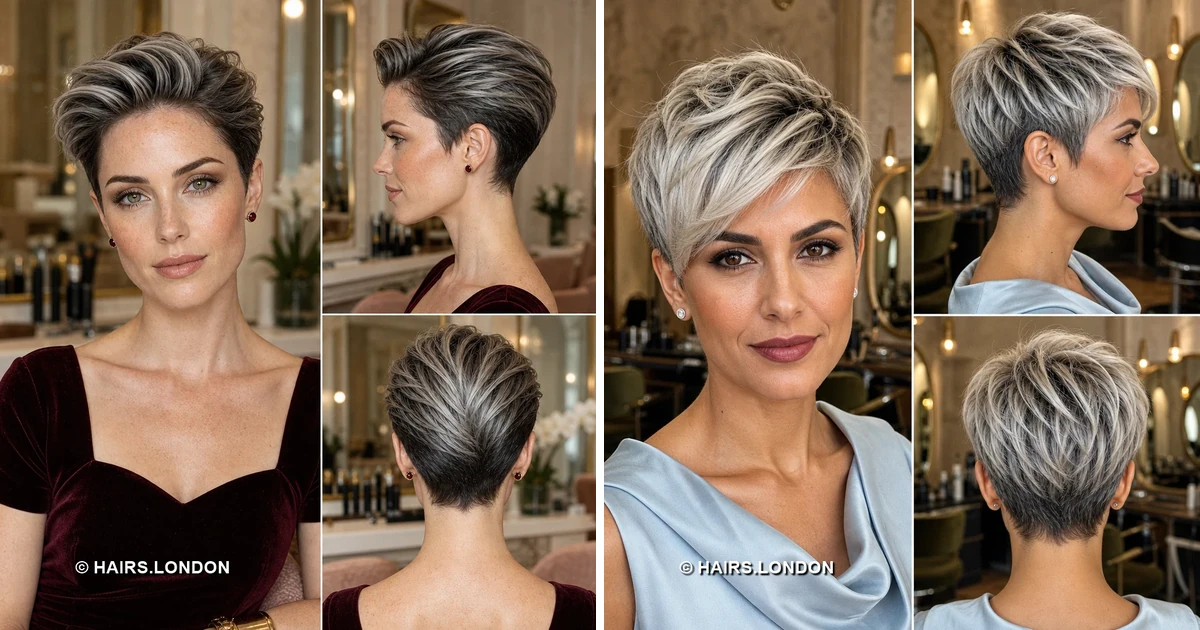
11. Short Spiky Pixie With a Silver Front Streak
Dark brunette sides frame a short, sharply textured crown here. A pale silver front streak falls diagonally across forehead softly. Upright pieces create irregular height toward the central top section. Both ears remain visible beneath closely shaped side hair panels. Behind, dark hair narrows to a pointed tapered nape finish. Request short crown layers that still allow controlled lift daily. Push damp roots upward with fingertips while blow drying gently. Use matte paste sparingly to keep bright streaks distinct visually. Ask about toning if the silver begins appearing yellow later. Trim closely cut sides before they obscure the silhouette shape.
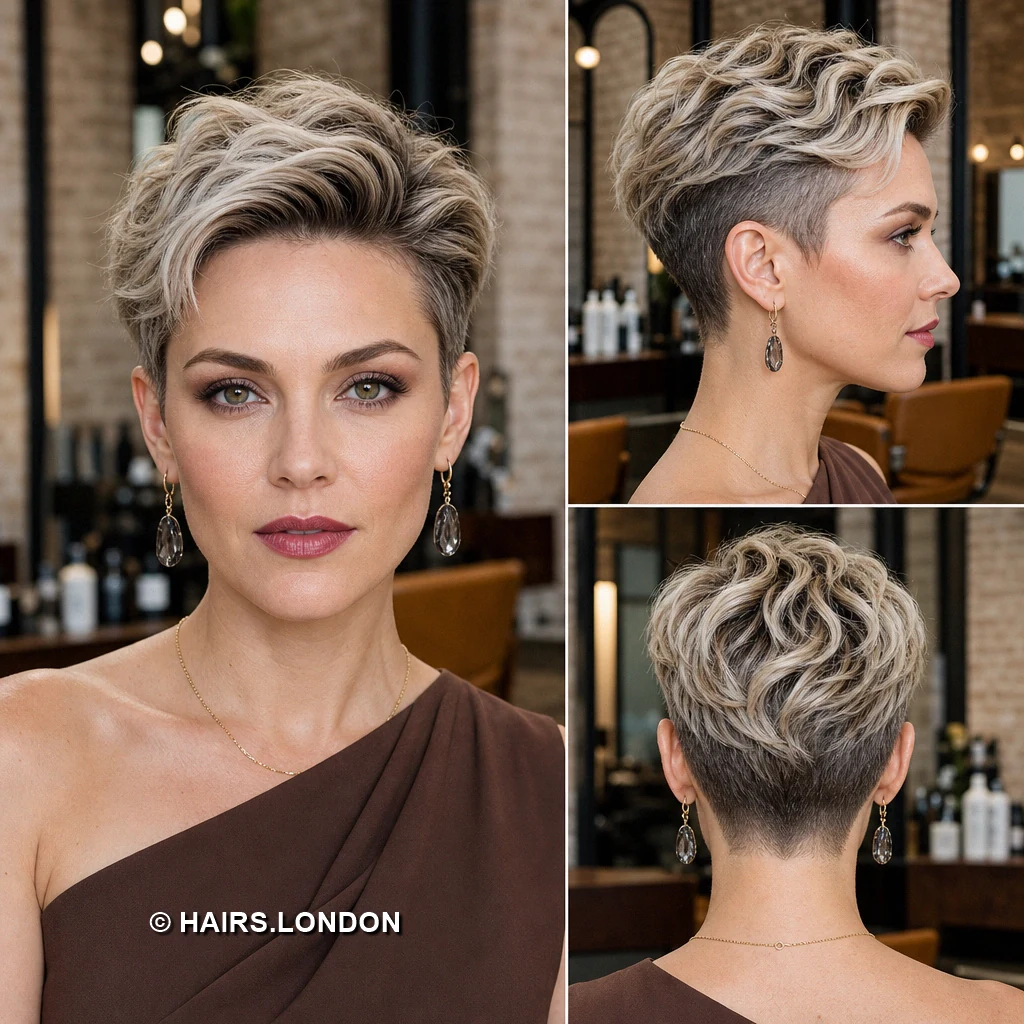
12. Curved Silver Sweep on a Dark Pixie
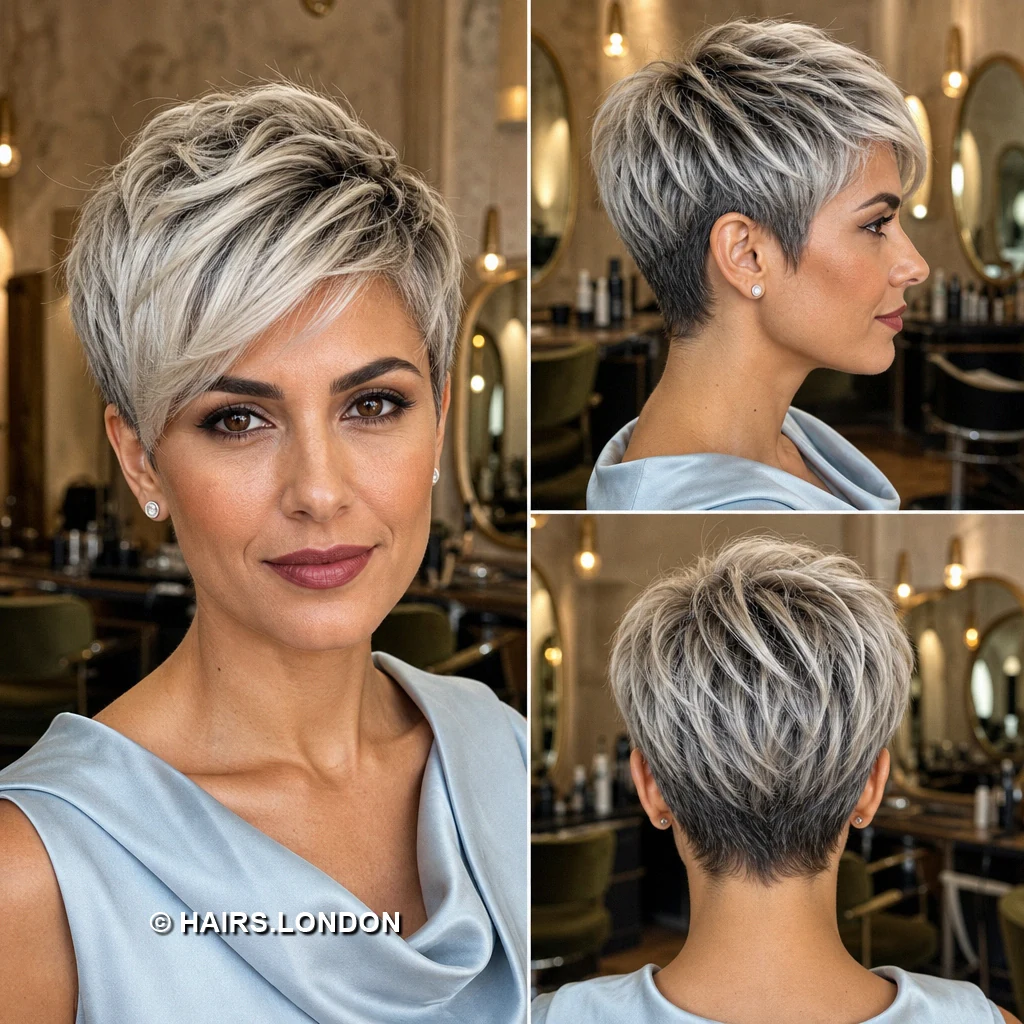
Deep brunette layers carry wide silver streaks across front sections. The long fringe sweeps diagonally, skimming one eyebrow and temple. Smooth curved strands build gentle volume above the forehead here. One close side hugs the head around the visible ear. Behind, textured crown layers taper into a dark nape below. Ask for substantial front length with softly blended upper layers. Blow dry the fringe diagonally using a small round brush. Smooth styling cream over ends to emphasize the curved sweep. Refresh silver toning gently while keeping lightened hair conditioned regularly. Schedule short back trims to preserve the neat profile shape.
How to Choose Your Pixie Shape
Start with the fringe: a long diagonal sweep gives you more styling options, while a lifted front keeps the forehead clear. Next, compare the profiles. A close side creates stronger contrast with a full crown; softly layered sides make the transition less abrupt. Consider how your hair grows at the hairline and nape, since those patterns affect whether a fringe falls sideways or a neckline stays tidy.
Styling Different Hair Textures
For straight hair, direct damp roots upward with a brush or fingers, then add a small amount of paste where you want separation. Naturally wavy hair can be scrunched with mousse and diffused to preserve its bends. If your hair is fine, start with lightweight products so the crown stays lifted. For dense hair, ask your stylist to remove weight internally rather than thinning the visible fringe too much.
Keeping Silver Highlighted Color Fresh
The images show light streaks against darker roots, a contrast that benefits from conditioning as much as toning. Use a gentle cleanser and protect lightened sections from excessive heat. If the pale pieces turn yellow, ask your colorist whether a toner or occasional purple shampoo suits your particular shade. Avoid using a strong toning product at every wash unless your colorist recommends it.
Maintaining the Pixie Shape
Close sides and tapered napes show growth quickly, so plan trims around how crisp you want those edges to look. Ask whether a brief neckline cleanup between full appointments is worthwhile. At home, dry the fringe in its intended direction before it sets, and use only enough finishing product to hold the texture without flattening it.
What to Discuss With Your Stylist
Bring the image showing your preferred front, side and back shape rather than discussing highlights alone. Point out your desired fringe length, crown height, clipper contrast and nape finish. Explain how often you can return for trims and color appointments. Your stylist can then adjust the light placement and layering to work with your hair’s density, texture and growth patterns.
Frequently Asked Questions
What makes silver highlights stand out in a pixie cut?
Light pieces are especially visible when they cross a darker fringe or crown, as they do in these images.
Do I need an undercut for this look?
No. Several pictured cuts have softly tapered sides; an especially close side simply creates stronger contrast.
Which fringe is easiest to change day to day?
A longer side fringe offers room to brush it across the forehead or lift it away, provided your hairline allows both.
How can I keep a lifted crown from falling flat?
Dry the roots upward first, then use a lightweight styling product and flexible hold rather than coating the hair with heavy wax.
Can naturally wavy hair wear these shapes?
Yes. Keep enough length on top for bends to form, and diffuse rather than brushing out the wave.
Will silver highlights require bleaching?
Achieving pale silver on dark hair typically requires lightening first; ask a colorist to assess your hair before committing.
How do I prevent silver pieces from looking yellow?
Ask your colorist about appropriate toning and use heat protection. A purple shampoo may help, but its frequency depends on your color.
How often should I trim a tapered pixie?
Book a trim when the sides and nape stop holding the outline you want; closely cropped sections usually need attention sooner than the top.
What should I request for a soft, rounded result?
Ask for longer surface layers, gentle crown texture and a blended transition into the sides instead of sharply spiked ends.
What creates the piecey finish in the spikier cuts?
Short, textured layers provide the shape. A little paste pinched through selected ends makes the separation more visible.
Should the dark roots be covered?
Not necessarily. Dark roots provide much of the visible contrast in these cuts; discuss how much regrowth you want to show.
What should I bring to a salon consultation?
Bring front, profile and back references, and identify the exact fringe, side length, nape shape and highlight placement you prefer.
Conclusion
The most useful choice is the one whose silhouette works from every angle, not just the front. Decide whether you prefer a soft sweep, natural wave or lifted texture, then discuss how short the sides should be and how much color upkeep you want. Those details will help your stylist turn a silver highlighted pixie into a cut you can style confidently.