


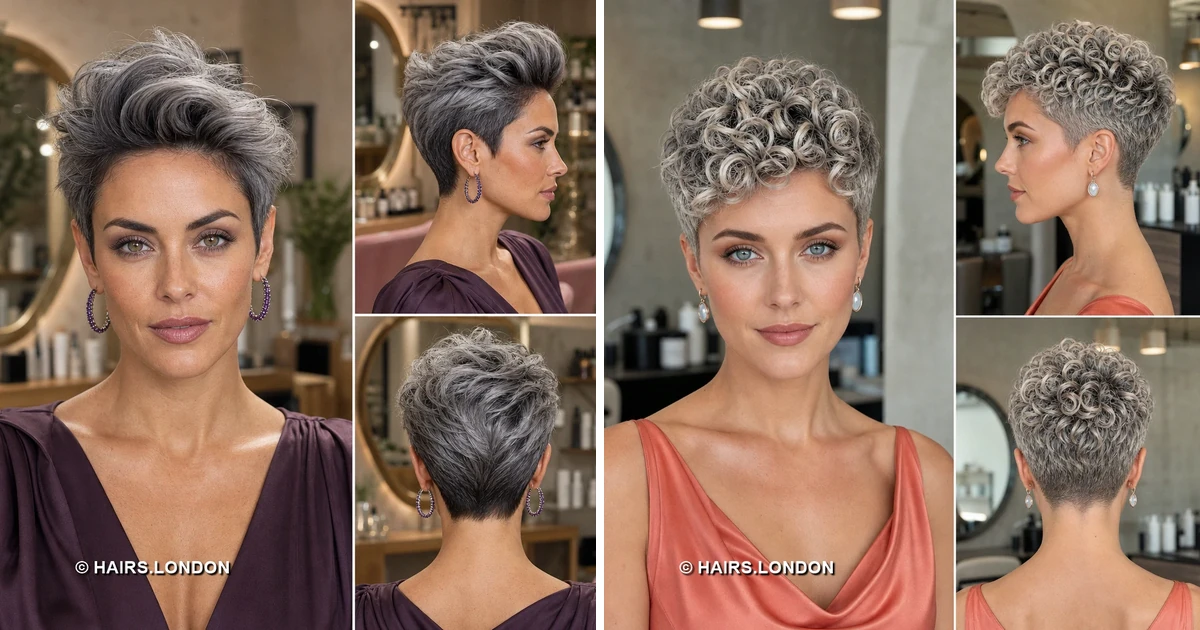
11. Silver Blonde Pixie With Wispy Forward Layers
Silver blonde strands fan forward from an elevated crown area. Deep charcoal roots make the pale separated sections prominent throughout. Fine wispy bangs graze the forehead without heavy coverage below. The sides sit close while maintaining a soft texture overall. Feathered back layers taper down toward a pointed nape below. Request choppy surface layering without removing essential crown weight underneath. Blow-dry against growth briefly for lift, then redirect forward gently. Separate a few ends using a pea-sized matte paste sparingly. Leave the nape neat to highlight the airy top layers. Consider root blending when dark regrowth changes the contrast noticeably.
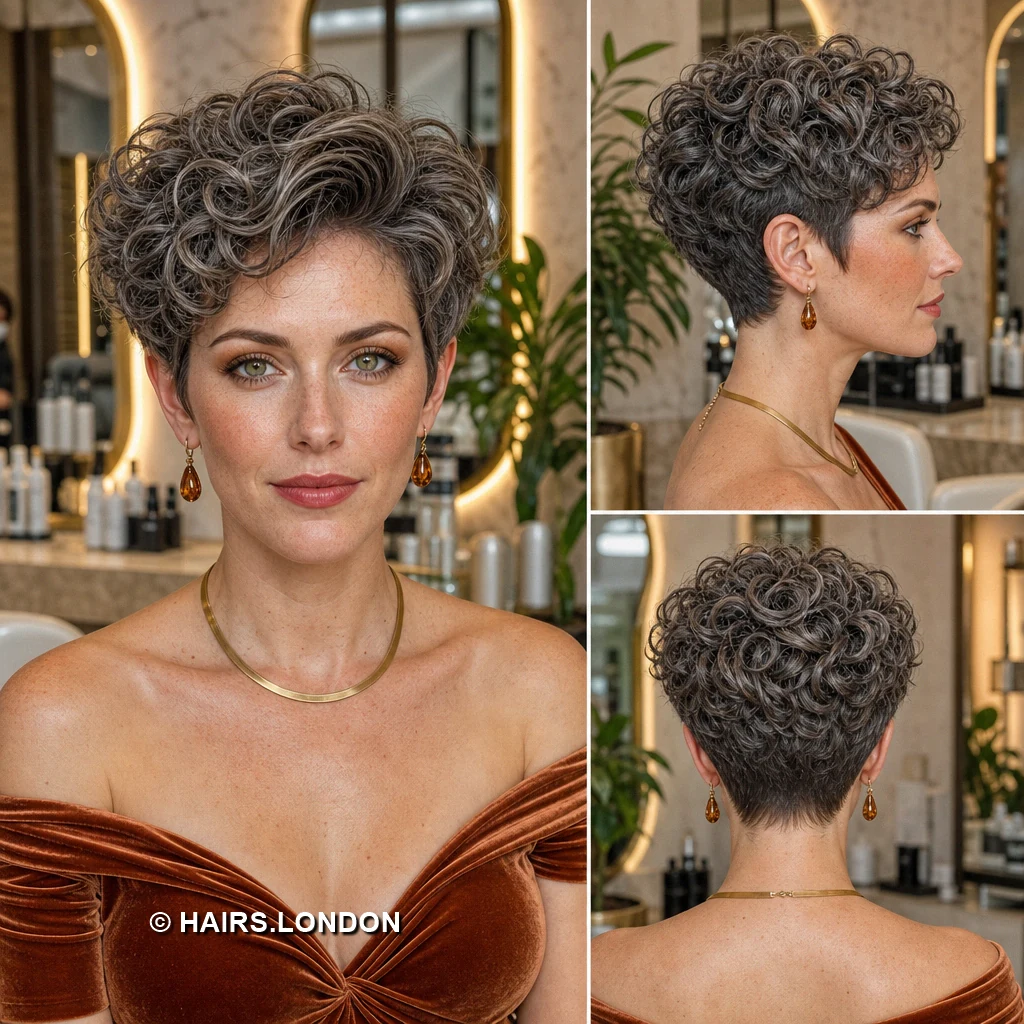
12. Platinum Pixie With a Deep Asymmetric Fringe
Cool platinum lengths sweep across an otherwise short pixie cut. Dark ash roots deepen the parting and textured crown area. The heavy fringe drapes diagonally toward one eyebrow in front. A closely tapered side reveals the ear completely here clearly. The crown stays full while the back narrows gradually below. Ask for enough front length to maintain this sweep easily. Remove bulk beneath the fringe rather than at ends alone. Blow-dry roots upward, then direct longer hair across forehead diagonally. Smooth flyaways with minimal serum, avoiding the shorter sides entirely. Trim the taper frequently to preserve its angled silhouette cleanly.
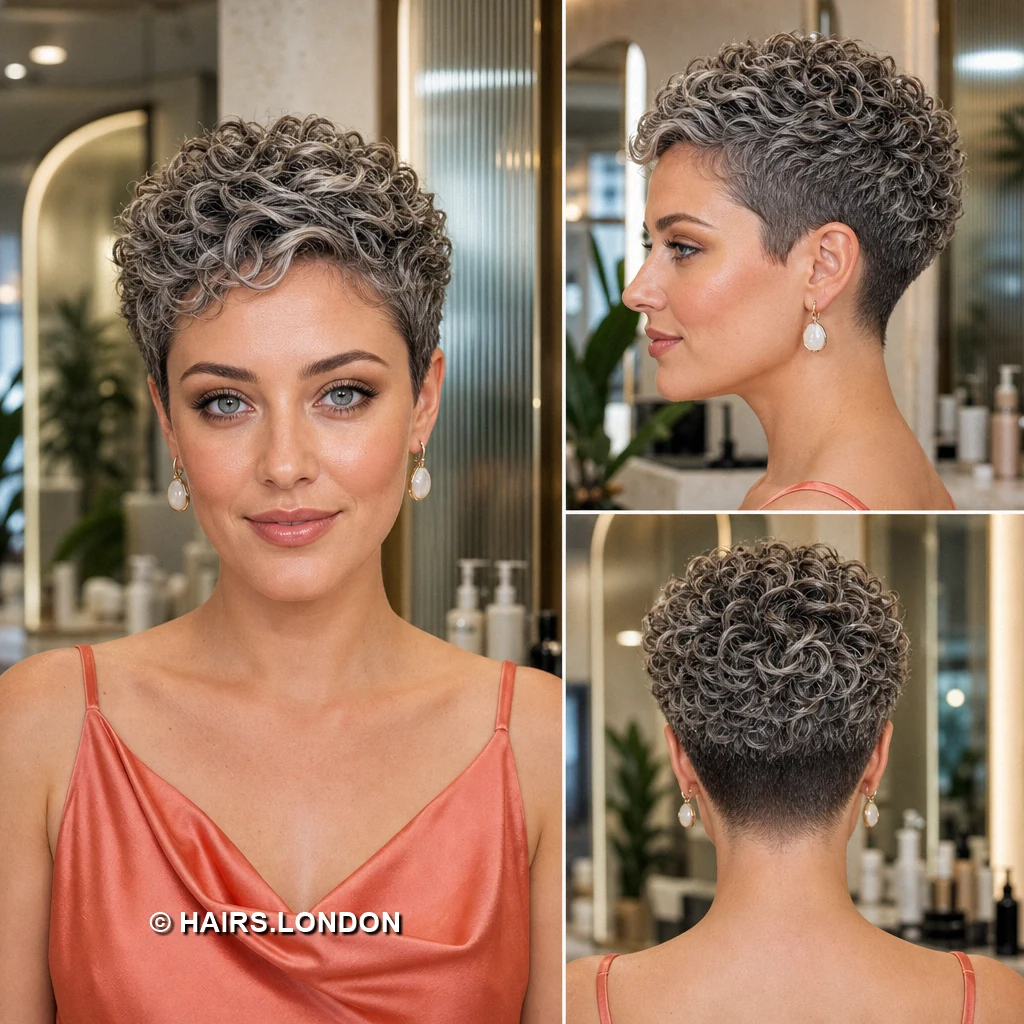
13. Creamy Platinum Pixie With a Sculpted Swoop
Creamy platinum fringe swoops across a softly sculpted pixie cut. Darker roots add depth beneath the sleek blonde ribbons throughout. The front curves over the forehead toward one cheek softly. One temple sits snugly underneath the longer top section above. Back layers overlap smoothly before tapering into the neckline below. Request a softly undercut side without harsh disconnected lines showing. Preserve weight at the front for this curved finish daily. Brush hair across while blow-drying for controlled, rounded lift above. Use a small dab of cream to tame flyaways gently. Refresh the tapered side when regrowth softens the outline noticeably.
14. White Silver Pixie With a Dark Taper
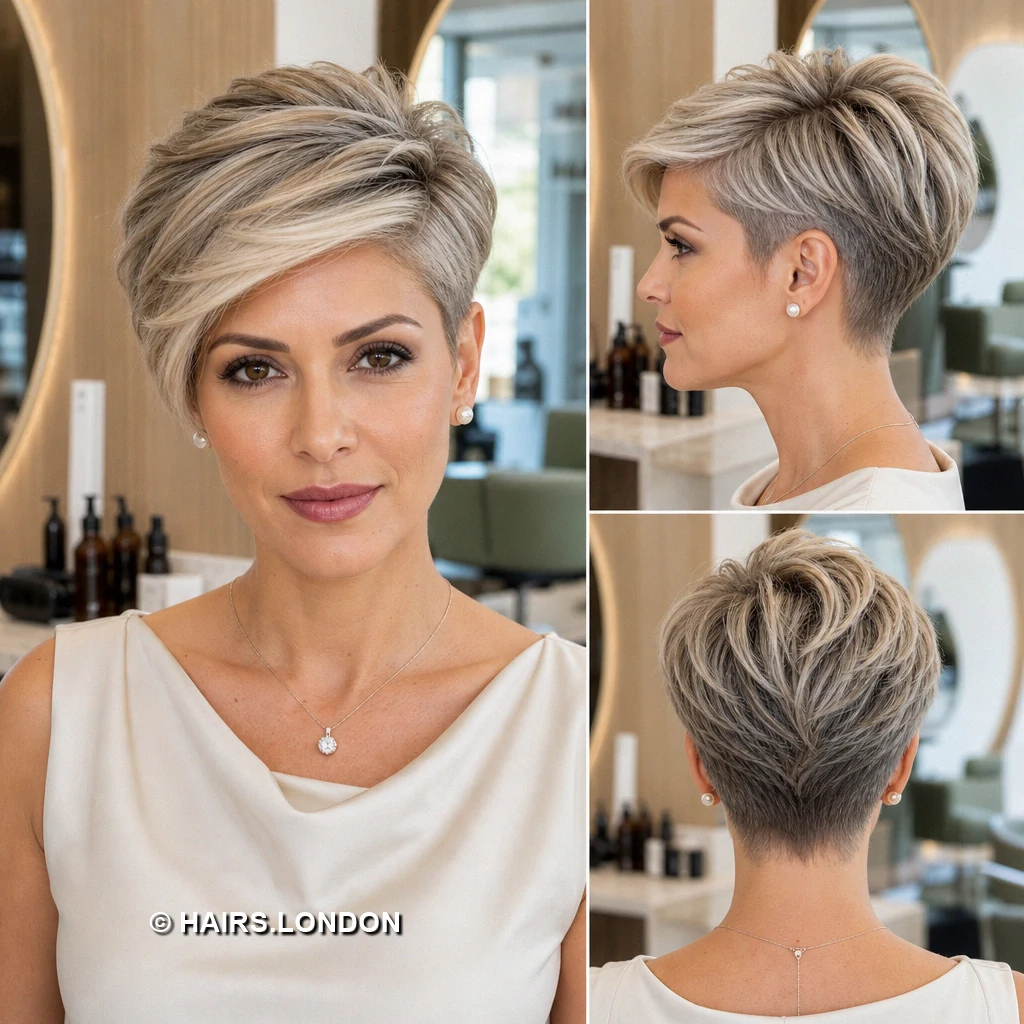
White silver fringe falls across one side in layers softly. Near black roots give the pale sweep bold contrast throughout. The opposite side stays short and closely fitted above ears. Textured crown strands lift lightly before flowing toward front again. The darker back tapers to a narrow pointed nape below. Ask for a deep asymmetrical fringe with feathered ends throughout. Keep crown layers long enough to cross the part naturally. Blow-dry pale strands forward using gentle root lift first throughout. Add light pomade only where separation needs extra definition visibly. Schedule trims when the dark side begins losing precision visibly.
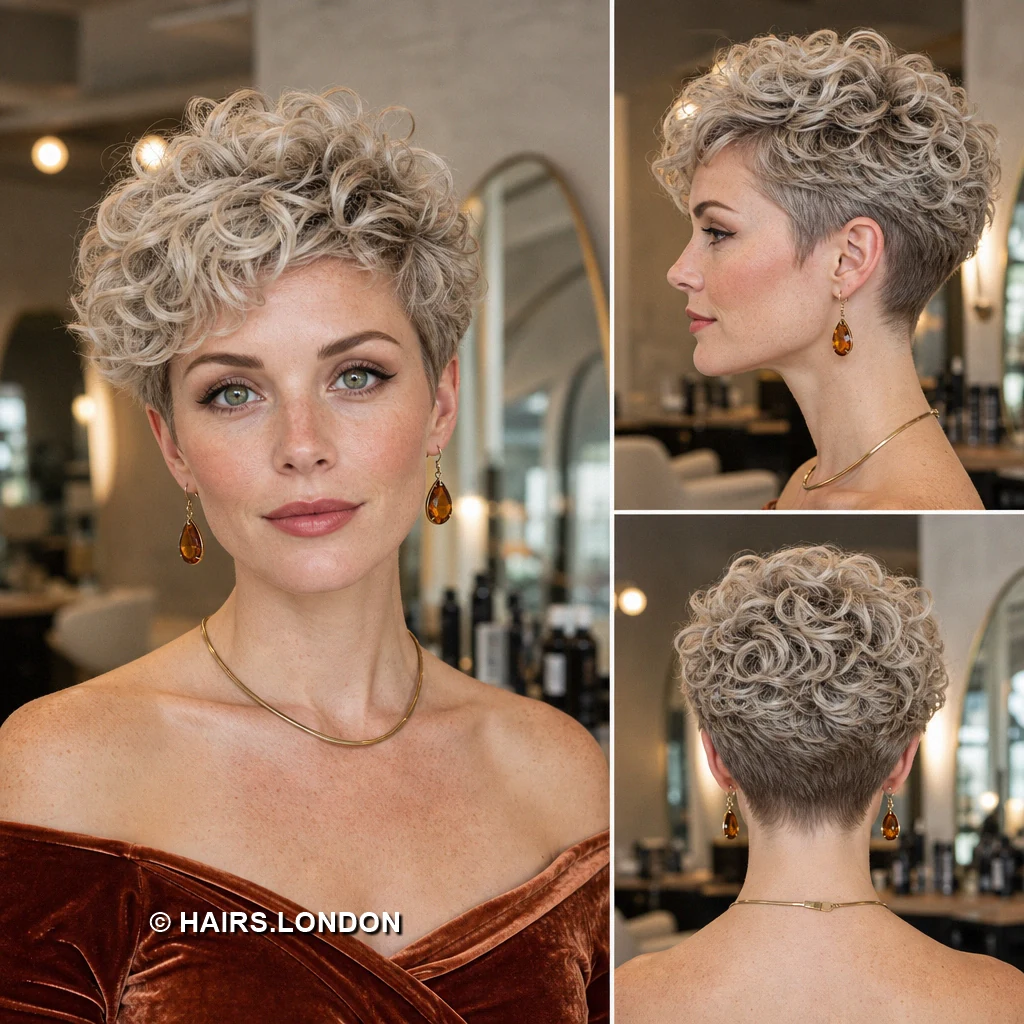
15. Silvery Blonde Pixie With a Sweeping Undercut
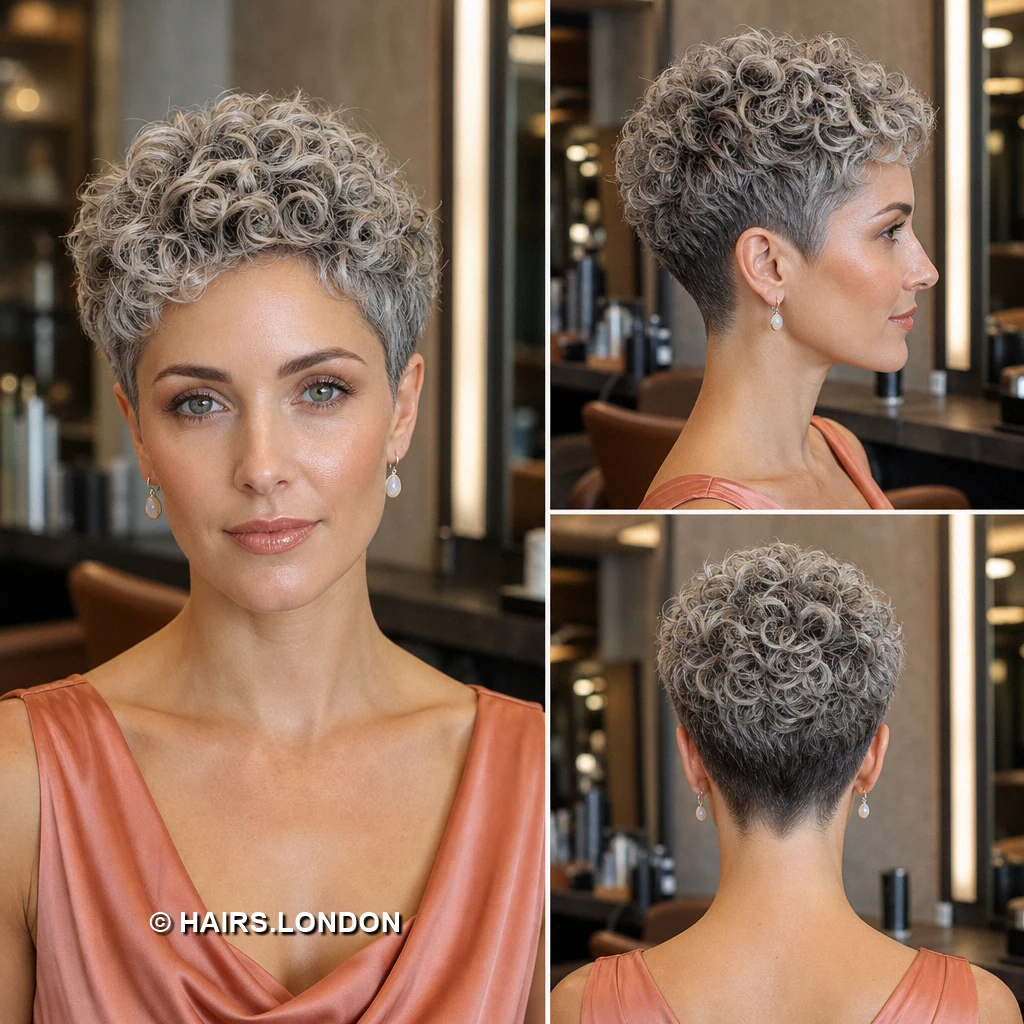
Silvery blonde lengths sweep dramatically across a dark undercut side. The long fringe travels diagonally, skimming one eyebrow lightly below. Brighter ribbons highlight movement over the shadowed crown base underneath. Short sides keep the ear exposed beneath longer layers above. The close dark nape tapers cleanly below rounded volume above. Request a disconnected length contrast while keeping edges soft enough. Maintain substantial fringe length if you prefer side styling options. Dry the longer top across using a flat brush gently. Finish with flexible spray rather than weighing down ends unnecessarily. Touch up the undercut before regrowth obscures its contrast completely.
How to Choose a Silver Pixie Cut
Start with the part of the cut you want to notice most. A long diagonal fringe needs enough front length to cross the forehead, while a lifted crest needs crown length and shorter sides for contrast. Curly versions depend on leaving room for ringlets to spring up after drying. Compare the side and back views as closely as the front: a snug temple, softly tapered nape, and closely cut undercut will grow out differently. Choose a shape that works with your natural texture and the amount of daily styling you want to do.
Styling Straight, Wavy, and Curly Textures
For straighter hair, direct the roots upward with a dryer before brushing the fringe across; finish with a little flexible paste to separate the ends. On wavy hair, use a light cream and shape the bends with your fingers rather than brushing them flat. For curls, apply mousse or curl cream while damp, scrunch, and air-dry or diffuse gently. Avoid working heavy products through the crown, especially when the cut relies on airy height.
Keeping Silver and Blonde Color Fresh
The images range from naturally silver-looking curls to pale blonde lengths over darker roots. If your color is lightened, ask your colorist how to limit dryness and how often the roots or toner will need attention. Wash with products suited to color-treated hair, reduce unnecessary heat, and use heat protection when blow-drying. A toning shampoo may help with unwanted warmth, but follow your colorist’s guidance rather than using it at every wash. Visible darker roots can be part of the intended contrast.
Maintaining the Pixie Shape
Short sides and napes reveal growth quickly, particularly beside a long fringe or full curly crown. Check the outline in profile and from the back when deciding whether it is time for a trim. At appointments, preserve the length responsible for the style’s movement while tidying the perimeter and removing only the bulk that has changed the shape. Curly cuts may benefit from being assessed dry so the stylist can see where each coil rests.
What to Discuss With Your Stylist
Bring the image that shows your preferred fringe along with its side and back views. Point out exactly where you want the front to fall, how closely the sides should fit around your ears, and whether the nape should look soft or sharply defined. Discuss your natural curl pattern, cowlicks, styling time, and whether you want darker roots to remain visible. If you are considering lightening, ask what is realistic for your hair’s current condition and what upkeep the result will require.
Frequently Asked Questions
What distinguishes these silver pixie cuts from one another?
The main differences are fringe length, crown volume, curl definition, and how closely the sides and nape are tapered.
Can a pixie keep a long side-swept fringe?
Yes. Several cuts pair a longer diagonal fringe with short sides and a tapered back.
Which pictured shapes suit naturally curly hair?
The rounded ringlet crops and lifted curly crowns make use of visible curl rather than requiring it to be straightened.
Should curly pixie cuts be shaped dry?
A dry assessment helps the stylist see how the curls spring and where the finished fringe and crown will sit.
How can I add height to a short crown?
Dry the roots upward, then shape the longer top with your fingers and a small amount of flexible product.
How do I keep a sweeping fringe from looking flat?
Lift its roots while blow-drying, direct it across the forehead, and avoid applying heavy product near the base.
Are dark roots necessary for a silver pixie?
No. They provide visible depth in many of these looks, but your colorist can discuss a softer root transition.
Will toning shampoo keep pale hair from looking warm?
It may help manage unwanted warmth. Ask your colorist which formula and frequency suit your particular color.
How often does a tapered pixie need trimming?
That depends on growth and the outline you prefer. Book a trim when the sides or nape begin to lose their intended shape.
What product works for separated, piecey layers?
A small amount of pliable paste or cream can define the tips without making the crown stiff.
How can I protect lightened curls?
Handle them gently, limit high heat, choose moisturizing products suited to your hair, and discuss further lightening with your colorist.
What should I bring to a pixie consultation?
Bring front, side, and back reference views, and identify the fringe length, side tightness, nape shape, and color contrast you want.
Conclusion
The most useful reference is the one whose shape works for your hair, not just the one whose color catches your eye. Compare the fringe, crown, sides, and nape across these silver pixie cuts, then take your preferred views to a stylist who can adapt those details to your texture and upkeep preferences.