


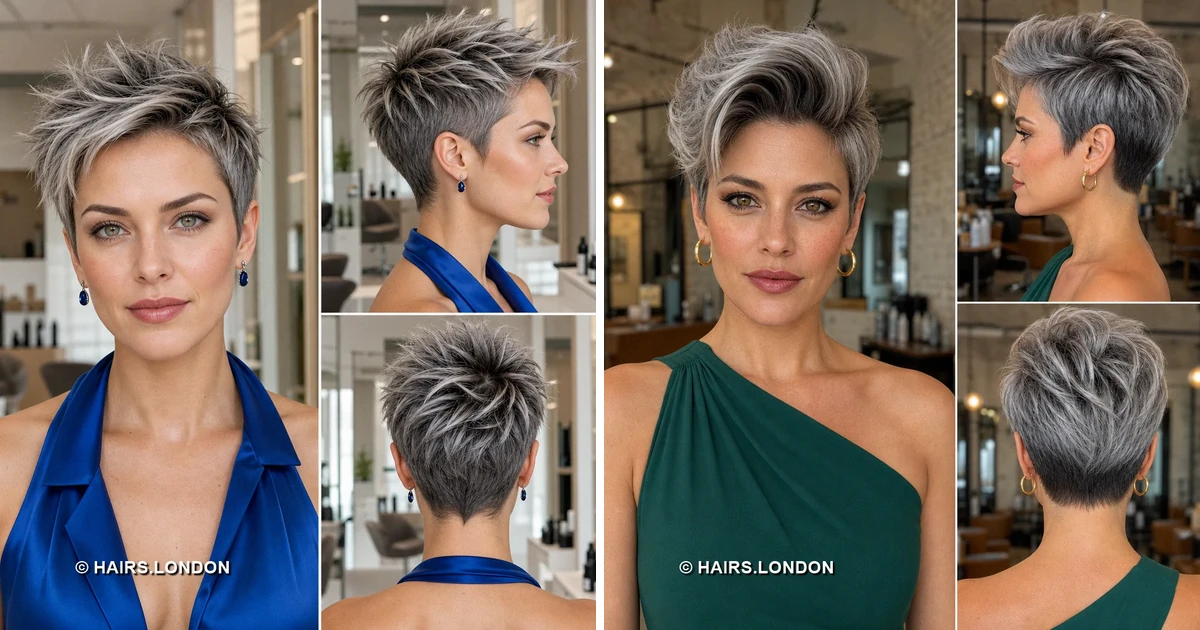
11. Sculpted Silver Wave Pixie
A sculpted silver wave rises above the front hairline. Dark roots emphasize each bend through the lifted top sections. The sides sit short and smooth beneath the fuller crown. Soft waves continue around the back before narrowing toward the nape. The front needs length to bend without falling flat. Ask for connected layers that support rather than interrupt waves. Lift roots while drying, guiding the longest section backward slightly. Shape the wave with fingers and a modest amount of cream. Finish with flexible spray if the front loses height quickly. Keep the side taper crisp to maintain this balanced profile.
12. Airy Silver Draped Fringe
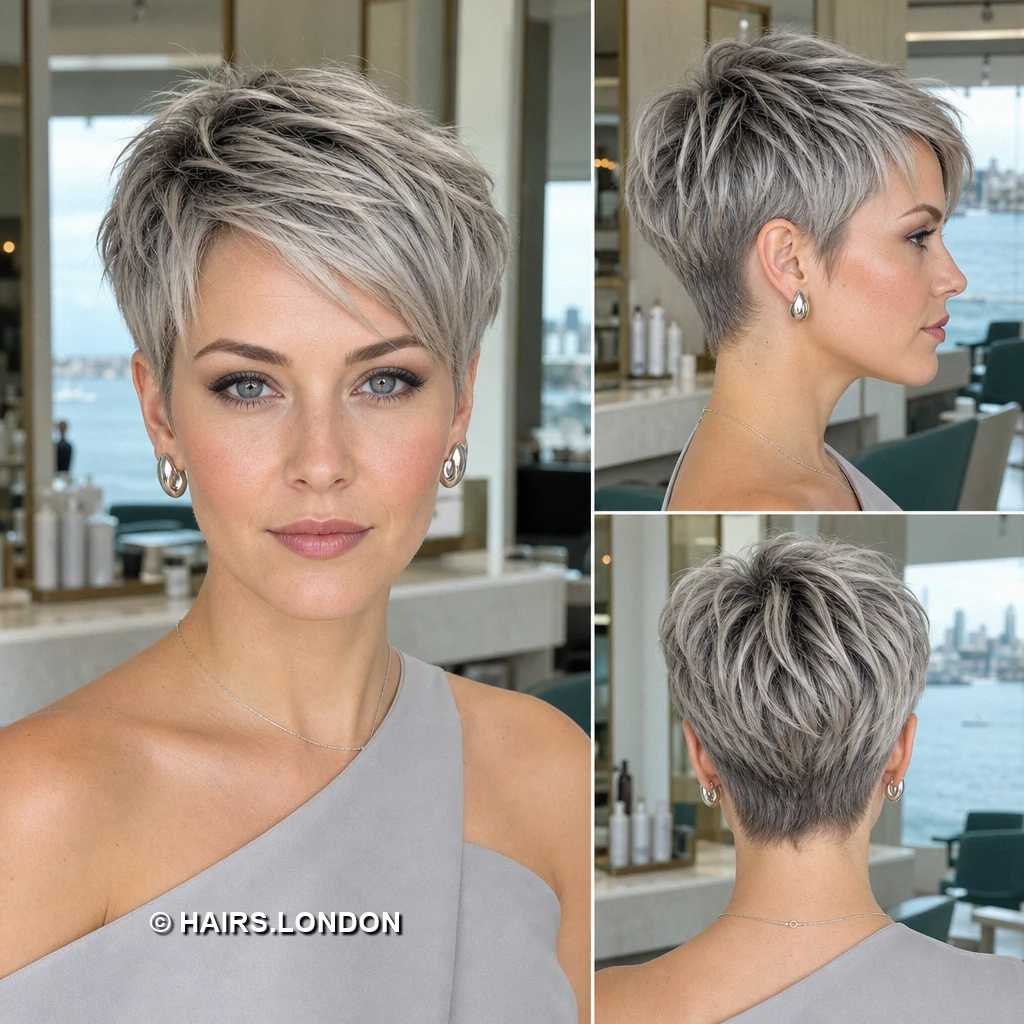
Soft pale silver pieces drape across a darker, layered pixie. The long fringe sits low, skimming one brow softly. Shorter sides expose the ears and frame the face cleanly. A gently lifted, airy crown settles into a close, dark tapered nape. The visible contrast comes from both color and varied length. Ask for finely cut ends that preserve the fringe movement. Dry the front across, lifting underneath to prevent flatness. Use light paste sparingly along the outermost silver strands only. Tuck or redirect the fringe whenever it crosses your eyes. Recut the front regularly if you prefer this precise placement.
13. Charcoal and Silver Tousled Pixie
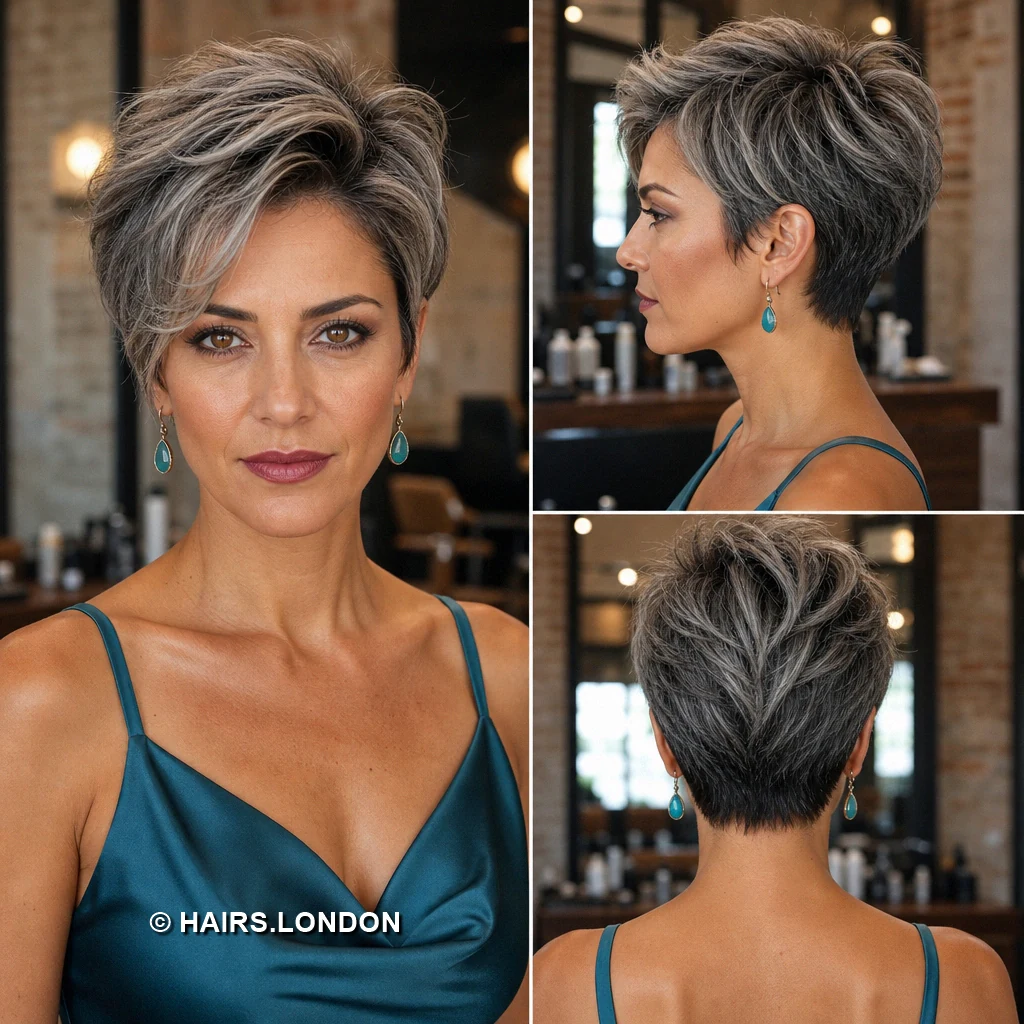
Charcoal roots and silver threads mingle across a softly tousled crown. A short, piecey fringe slants over the upper forehead. The sides stay closely fitted, especially around the visible ear. Textured back layers taper into a small, tidy nape. Compared with longer sweeps, this fringe requires less directional styling. Request point cut layers that leave some natural surface irregularity. Rough dry with fingertips, lifting the crown in several directions. Add matte paste selectively to the ends, not the scalp. Let individual strands fall differently for an intentionally relaxed, wearable finish. Trim the outline once the sides begin looking noticeably bulky.
14. Silver Fringe With Close Undercut
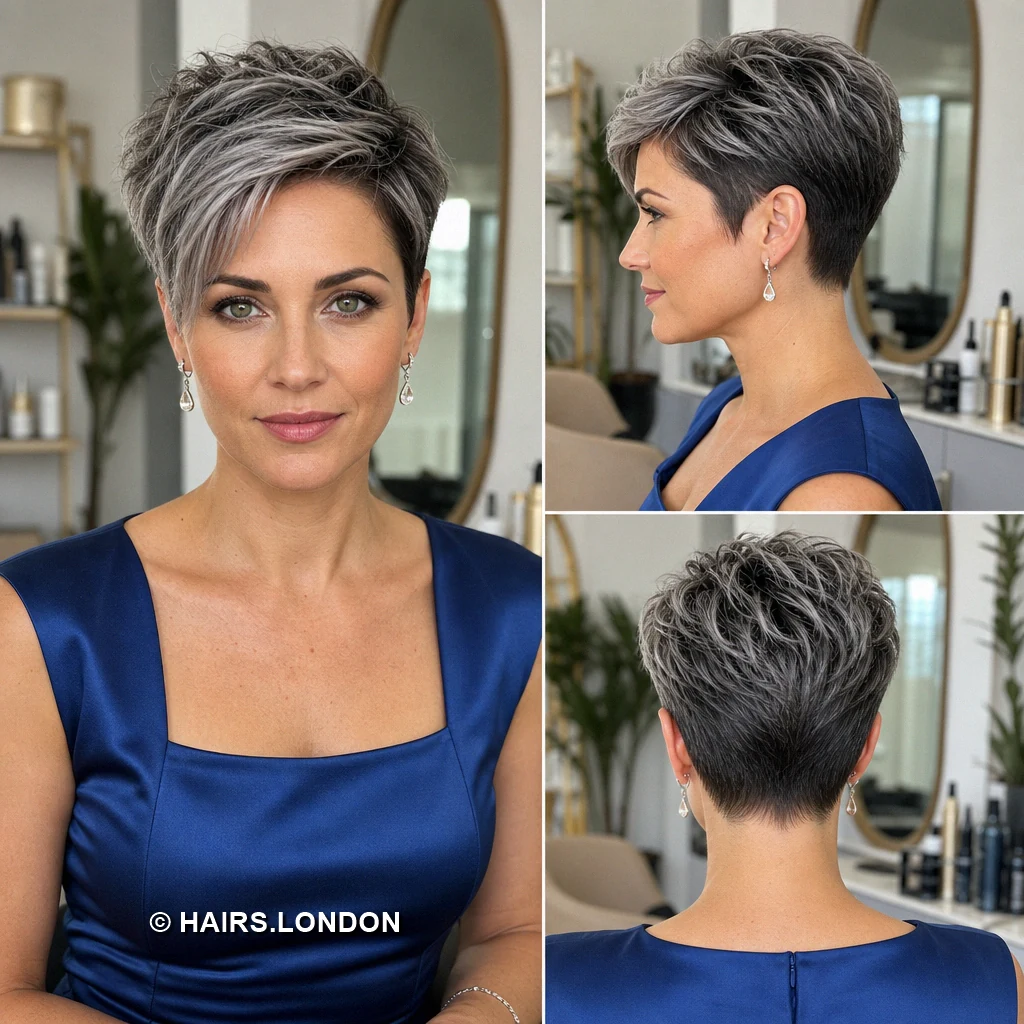
A long silver fringe arcs above a closely cropped side. The darker undercut is visible over the ear and temple. Fuller top layers sweep forward, then fall diagonally across. Textured volume continues through the crown above a tapered back. This strong visual contrast depends on keeping the side distinctly short. Ask how high the close section should extend before cutting. Blow dry the longer hair away from its natural part. Shape the fringe with cream, leaving its ends softly separated. Check the undercut frequently if you want a sharp contrast. Protect the pale front from excessive heat during daily styling.
15. Silver Brushed-Up Quiff
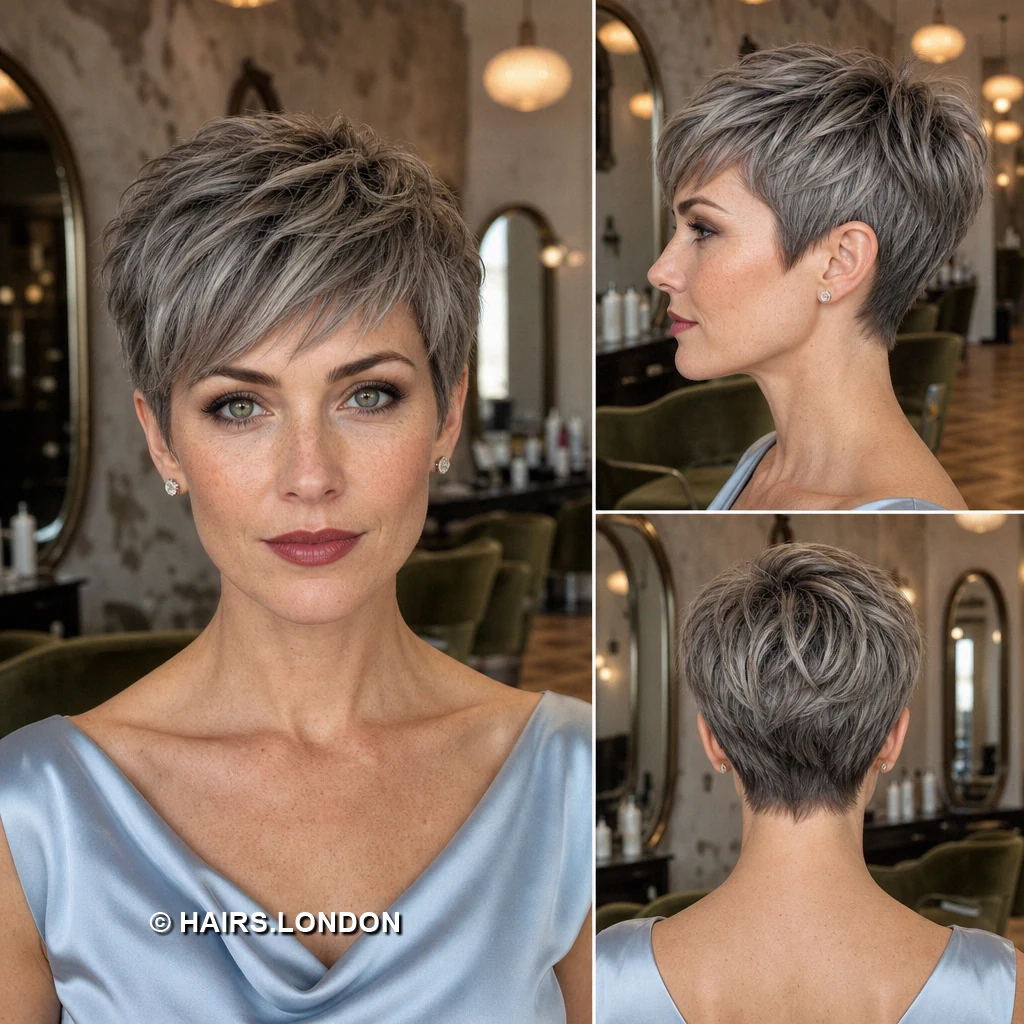
Silver front layers rise into a broad, softly curved quiff. Darker roots show beneath the height and through the crown. The sides remain short, drawing attention toward the elevated front. Back layers follow the head closely toward a tapered nape. Enough front length is essential for this gentle rolling shape. Request supportive crown layers without removing too much front weight. Direct dryer airflow upward while lifting roots with your fingers. Work pliable paste through the tips to control the curve. Use flexible hairspray only where the quiff needs extra hold. Refresh short sides before they compete with the fuller top.
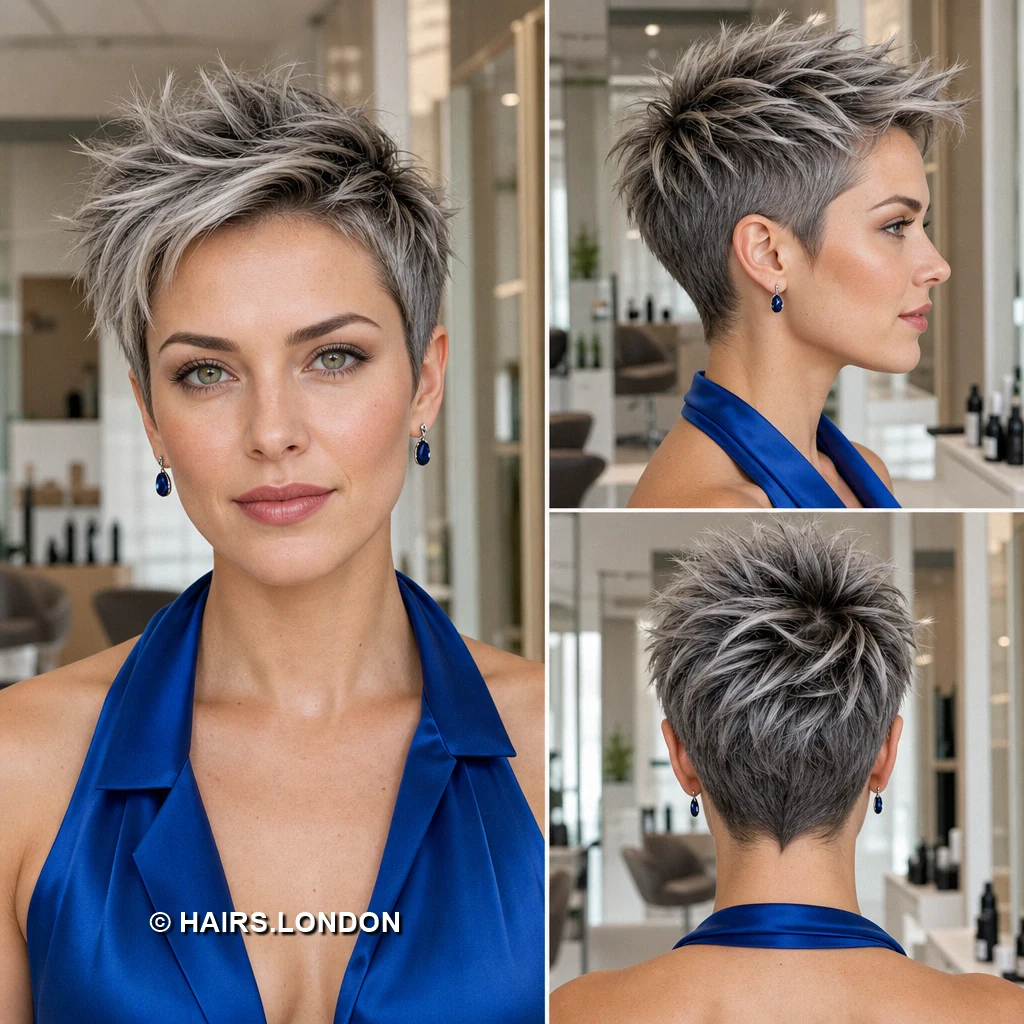
16. Spiky Ash-Silver Pixie
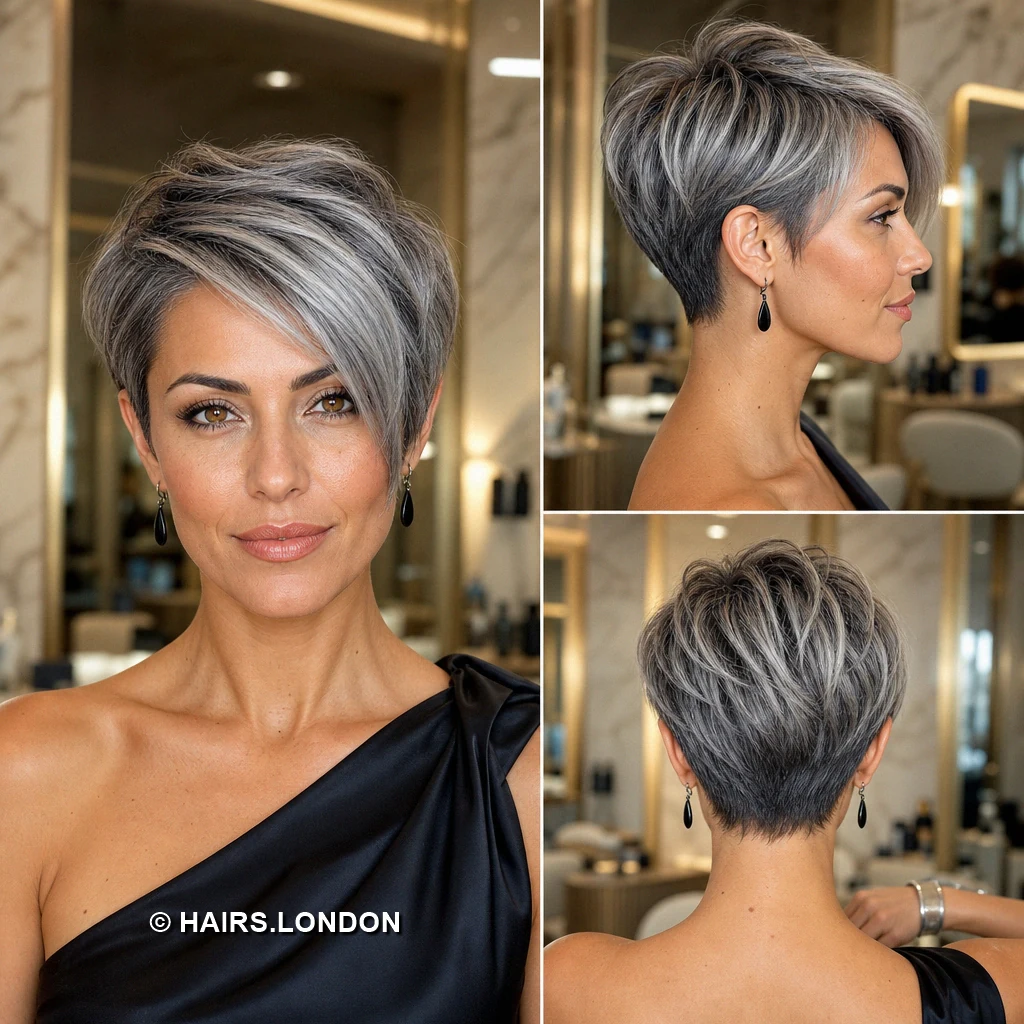
Pointed ash silver strands stand upright across this textured top. Dark roots make the separated tips especially easy to distinguish. The fringe lifts away, leaving the forehead mostly uncovered here. Close sides transition into a short, tapered back and nape. The crown needs internal layers to create distinct, movable points. Ask for texture that works with your natural growth direction. Dry upward from the roots, changing direction across the crown. Pinch tiny sections with matte paste for deliberate, airy spikes. Avoid applying excess product, which will pull finer hair downward. Keep the neckline neat so the lifted shape stays balanced.
17. Silver Side-Swept Micro Layers
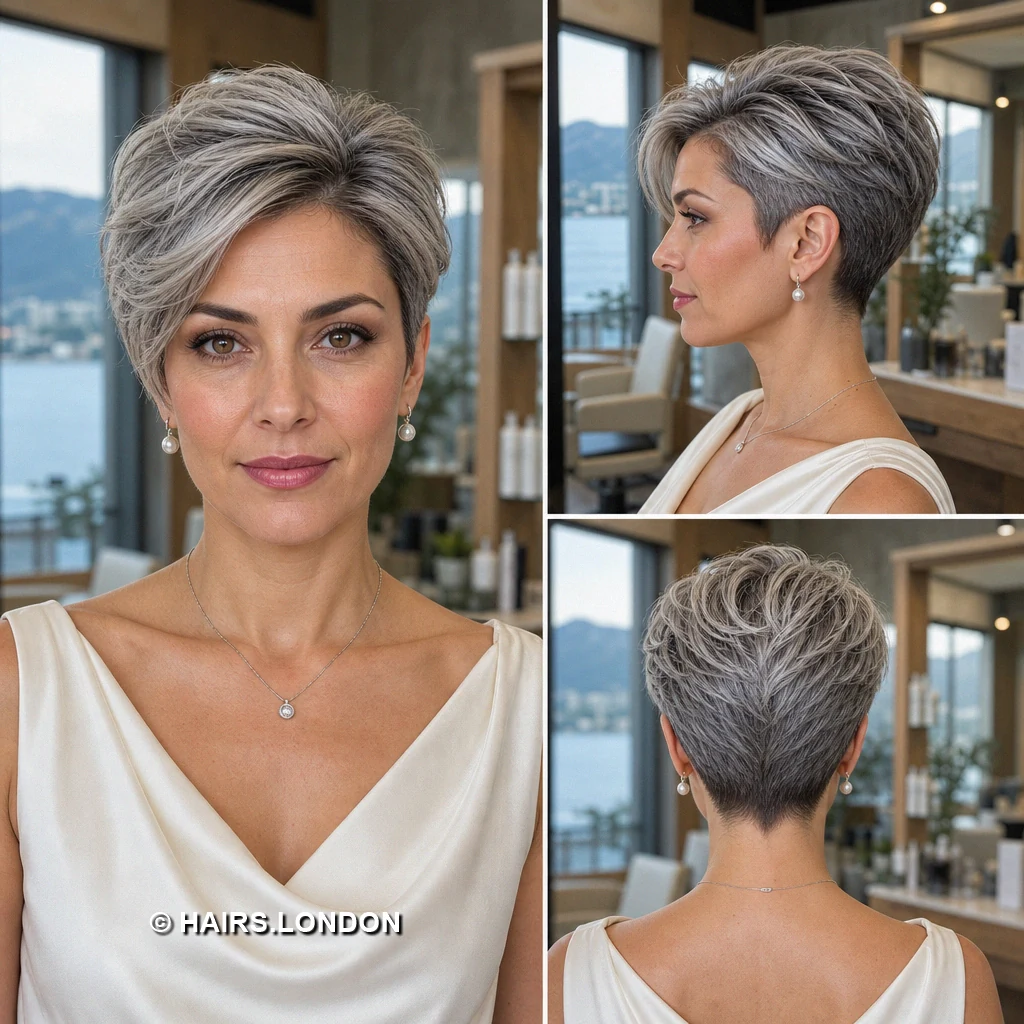
Fine silver layers sweep sideways over a softly uneven fringe. Dark roots create depth beneath the pale surface and crown. The sides taper neatly around the ears without abrupt disconnection. Slightly longer back layers narrow into a compact, dark nape. This modest fringe offers movement while keeping the eyes clear. Ask for small, varied layers instead of a solid edge. Dry across the forehead using fingers for a relaxed result. Touch the tips with light paste to enhance their separation. Avoid flattening the crown when smoothing the side swept pieces. Rebalance the fringe whenever it begins falling too far forward.
18. Charcoal Curly Crown Crop
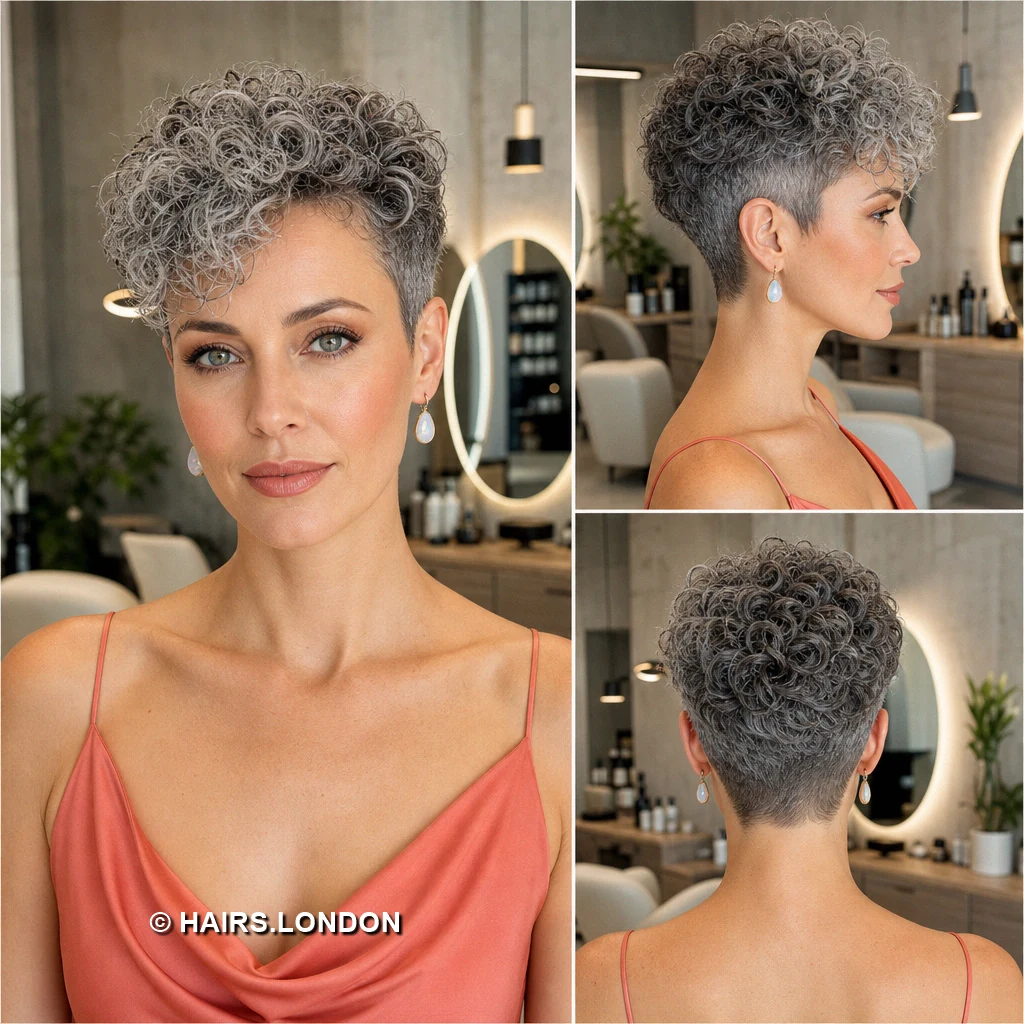
Charcoal curls fill the crown with rounded, springy, clearly defined texture. Scattered silver strands highlight individual loops near the front. A loose curl fringe sits above the forehead and temple. Shorter sides and a narrow nape contain the fuller top. The back shows closely packed curls above its tapered neckline. Ask for curl aware shaping that preserves the top volume. Apply a light curl styler to evenly damp hair first. Diffuse gently or allow curls to dry without constant handling. Lift at the roots after drying if more height appeals. Maintain the short perimeter without trimming curls into blunt edges.
19. Silver-Front Asymmetric Pixie
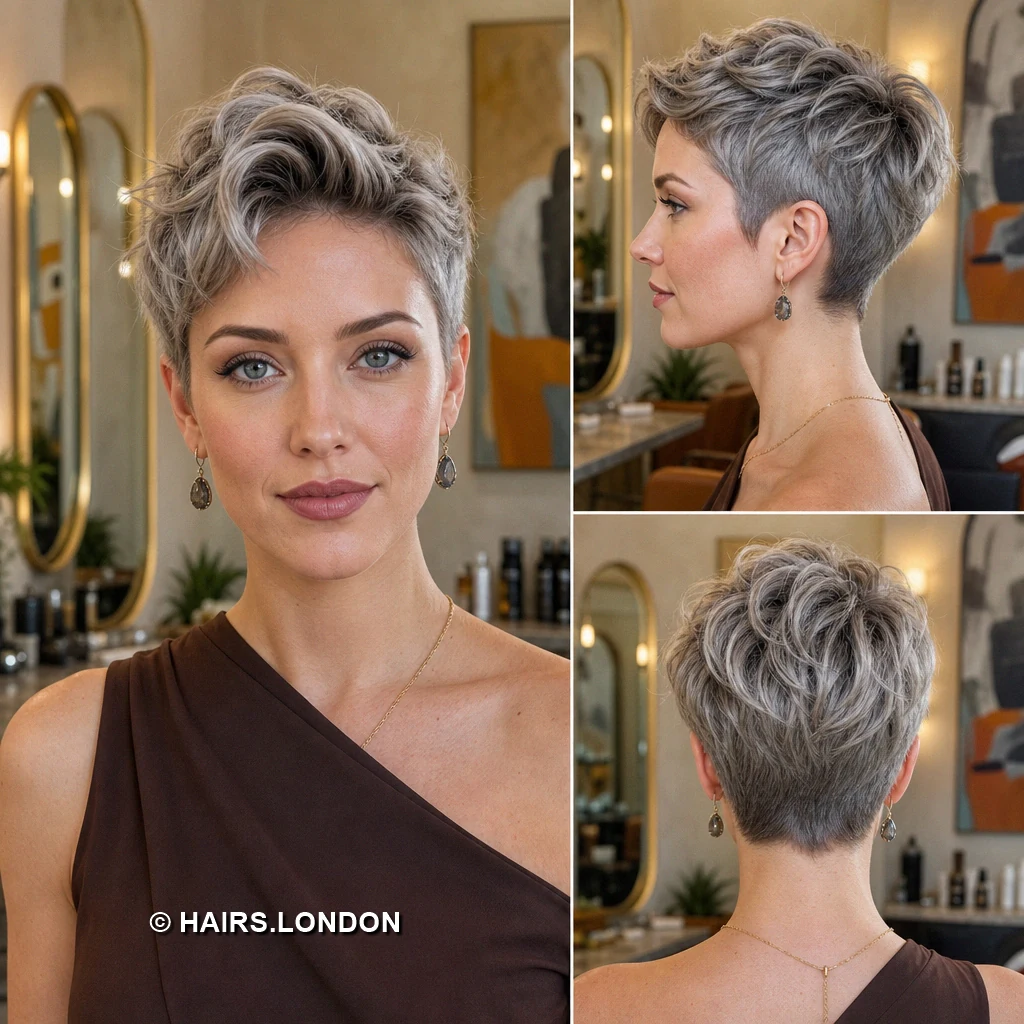
A long, pale silver front section sweeps across one eyebrow. Deeper charcoal roots run through the loosely raised, textured crown. The opposite side stays close, exposing the ear and cheek. Behind, fuller layers taper toward a narrow, dark, tapered nape. The longer fringe gives this short cut noticeable visual asymmetry. Ask for a front length that remains comfortable around eyes. Dry the fringe diagonally while lifting its roots for volume. Add cream to the light ends to reduce flyaways gently. Keep the darker side trimmed so the contrast remains distinct. Discuss color placement before lightening only the most visible strands.
20. Polished Silver Side-Swept Pixie
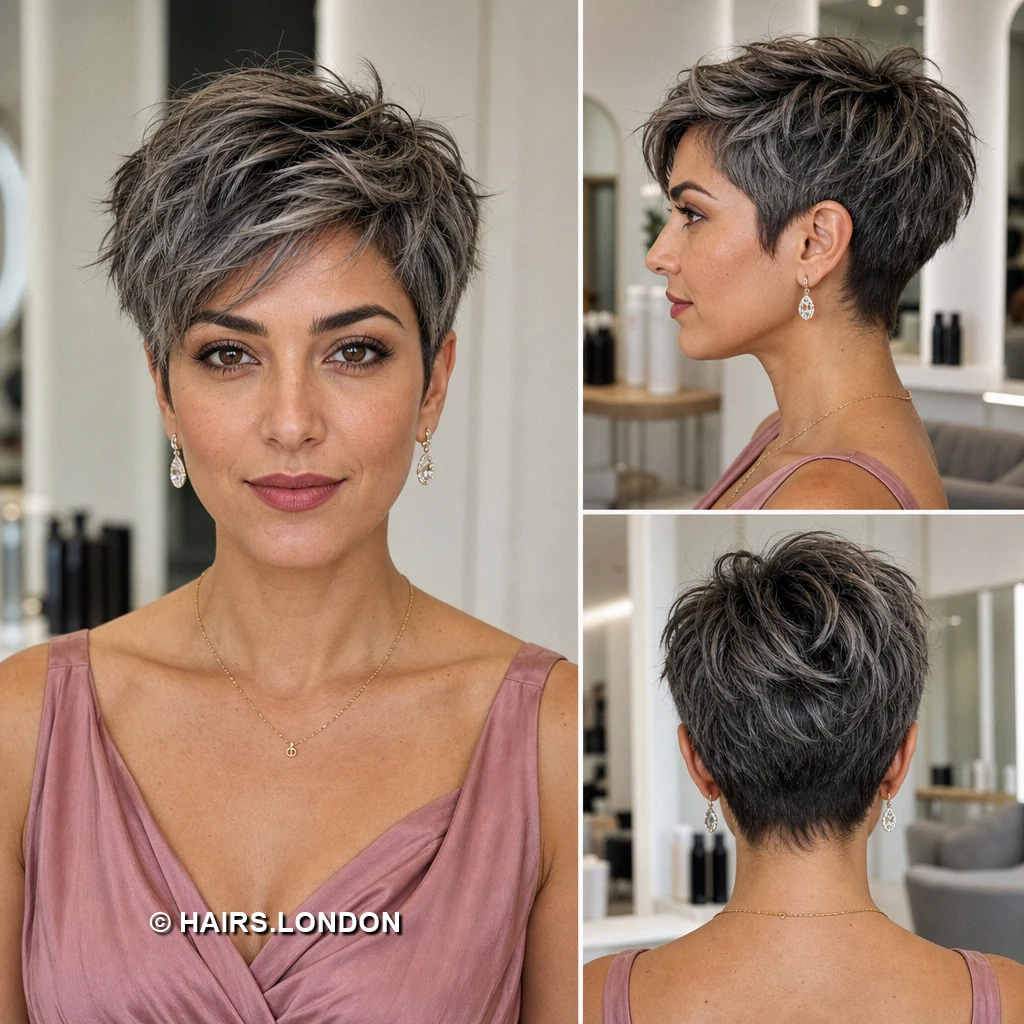
Cool silver strands glide across this pixie in layered ribbons. The fringe falls diagonally, resting near the upper brow. Dark roots deepen the lifted crown and closely tapered sides. Behind the ear, the back narrows into a neat nape. Soft, subtle separation keeps the polished sweep from looking completely flat. Ask for enough layering to let the front move freely. Dry the fringe across with a brush for smoother control. Finish with a small amount of cream on stray ends. Avoid saturating the roots if you want to retain height. Keep regular appointments to preserve the crisp side and neckline.
How to Choose Your Silver Pixie Shape
Start with the feature you want to manage each day. A short, forward fringe generally needs less styling than a long diagonal sweep, while a quiff needs enough front length to lift. Look at the side and back views as carefully as the front: these examples range from softly tapered ears to a distinctly close undercut. Consider your hair density and growth patterns before choosing crown height or fringe direction.
Styling Straight, Wavy and Curly Textures
On straight hair, lift damp roots with a dryer, then use a small amount of paste to separate the ends. For waves, guide the front into place without brushing away every bend. On curls, apply styler while damp and diffuse gently or air dry; ask your stylist to account for shrinkage when setting the top length. Begin with little product, adding more only where the shape needs it.
Keeping Silver Color Fresh
The images show pale silver sections against deeper roots, but the amount and placement of light color vary. Ask your colorist what lightening and toning your starting hair would require. Follow their guidance on a color-safe routine and use any purple-toning product sparingly to avoid an unwanted cast. Reduce unnecessary heat, and plan root or toner appointments around the contrast you prefer.
Maintaining the Pixie Shape
Short sides and napes make growth noticeable, even when the top remains easy to style. Arrange trims according to how quickly your own outline loses its shape. A long fringe may need attention before the rest of the cut, particularly if it starts reaching your eyes. At each visit, check whether the crown still has enough length for your preferred sweep, wave or curl.
What to Discuss with Your Stylist
Bring the front, side and back views of the image you like. Point out the exact fringe length, crown height, area around the ear and nape finish you want. Explain how much time you spend styling and whether you prefer a soft taper or a stronger undercut. For silver color, discuss your current shade, hair condition, desired root contrast and the upkeep you can comfortably maintain.
Frequently Asked Questions
Can a silver pixie keep naturally dark roots?
Yes. These looks show darker roots alongside silver lengths. A colorist can discuss how much contrast to retain or create based on your starting color.
Which fringe is easiest to keep out of my eyes?
A short, piecey or lifted fringe is less likely to cross your eyes than the longest diagonal sweeps shown here.
Do I need thick hair for a lifted pixie?
Not necessarily. The appropriate layers and styling depend on density and growth patterns, so ask your stylist whether your hair can support the height you want.
Will a curly pixie need different cutting advice?
Yes. Curl shrinkage and the way the curls sit around the crown, ears and nape should guide the finished lengths.
How do I style a side-swept pixie?
Direct damp hair across the forehead while drying, lift the roots if needed, and use a small amount of flexible product on the ends.
How can I make pixie layers look piecey?
Start with well-placed texturizing in the cut, then pinch a little paste into selected dry ends rather than coating the whole top.
What is the difference between a taper and an undercut here?
A taper gradually narrows toward the ears and nape. The undercut shown has a more distinct short section beneath longer hair.
How often should I trim a silver pixie?
Book a trim when the sides, nape or fringe stop sitting where you want them. Your growth rate and chosen outline determine the interval.
Can I wear a silver pixie without spikes or a quiff?
Absolutely. Several images show rounded crowns, soft diagonal fringes and gently feathered tops instead of upright styling.
Will purple shampoo keep silver hair bright?
A toning product may help when used as your colorist recommends, but it does not replace the toning or color appointments your shade may require.
What should I tell my stylist about the nape?
Show the back view and specify whether you prefer a narrow, closely trimmed nape or a slightly softer transition from the crown.
Which photo should I bring to a salon appointment?
Bring the full set of front, side and back views for your favorite cut, and explain which details you want to keep or change.
Conclusion
The strongest choice is the silver pixie whose front, sides and nape all suit the way you want to wear your hair. Save a complete set of views, decide how much root contrast and styling you prefer, and use those details to guide a practical salon conversation.