


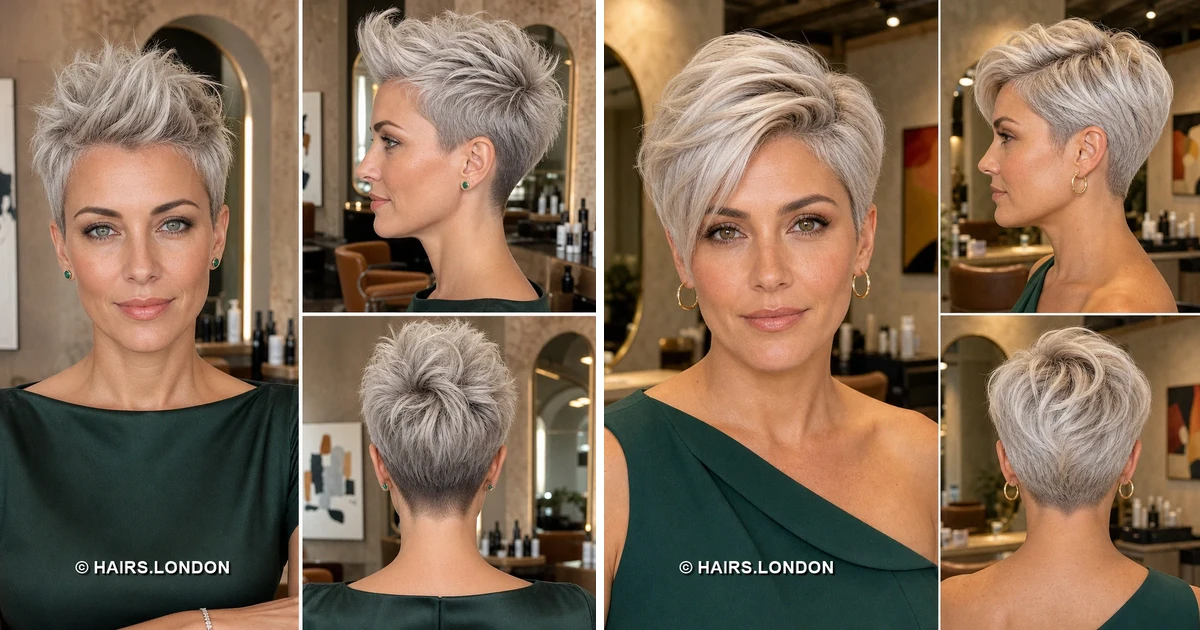
11. Silver Pixie with a Full Side-Swept Fringe
A substantial silver fringe sweeps sideways across the upper forehead. The crown rises behind it in loosely separated, pale layers. Darker ash roots lend definition throughout the rounded top shape. Sides remain compact, exposing the ears beneath their shorter strands. At the back, the hair closes into a tidy taper. Ask for sufficient front weight to retain this generous sweep. Blowdry across the face, lifting underneath before refining the surface. Finish with light hairspray if the fringe slips during wear. Avoid overthinning; sparse ends would change its softly full outline. Regular trims keep both the fringe and nape in proportion.
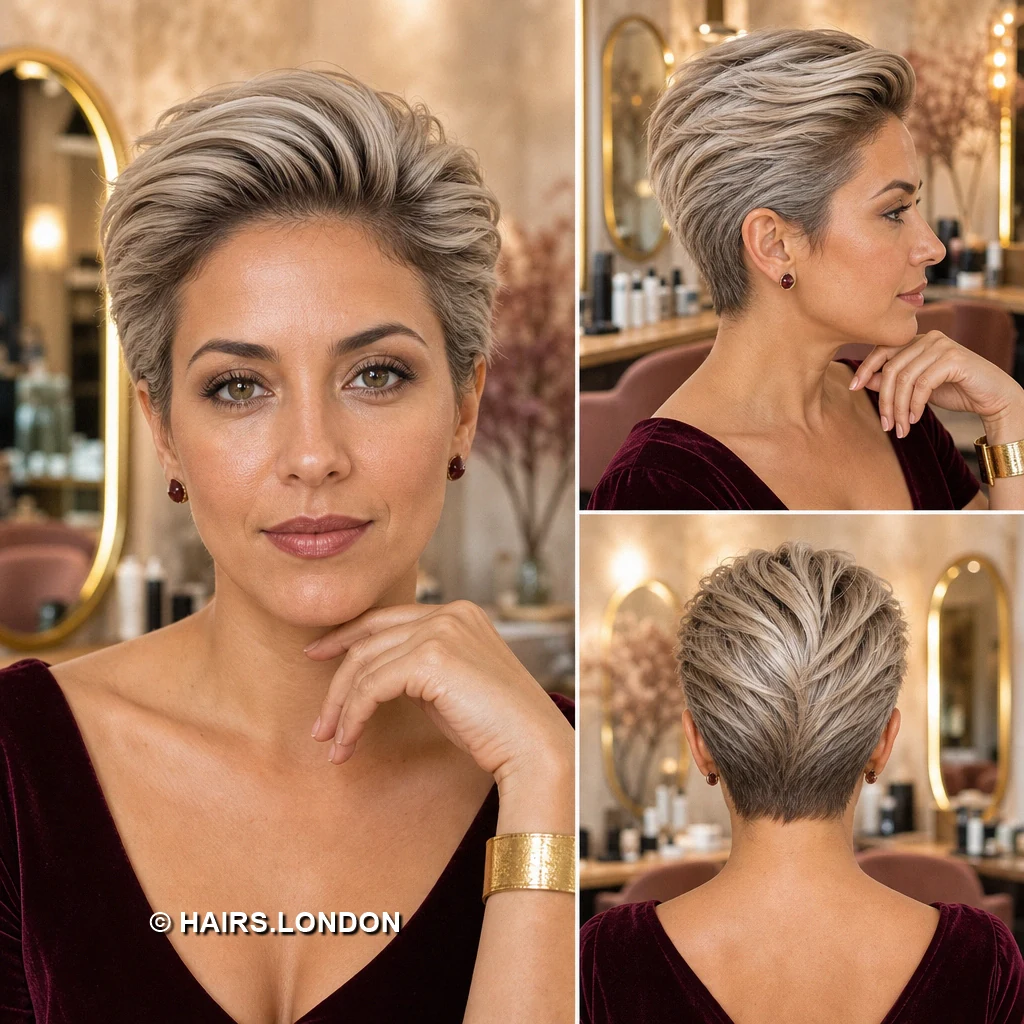
12. Silver Pixie with a Polished Swept-Back Top
Silver strands sweep backward in broad, polished sections from forehead. Their gentle lift creates volume without an upright, spiky finish. The shorter sides blend smoothly beneath the fuller upper shape. Fine hair at the nape tapers closely against the neck. Darker ash tones appear between the brighter, backward flowing strands. Ask for front length that can comfortably reach this direction. Work lightweight mousse through damp roots before brushing hair back. Add flexible spray rather than heavy gel for natural movement. Tone only as needed to keep unwanted yellowing under control. Maintain the nape so its precise outline stays visibly balanced.
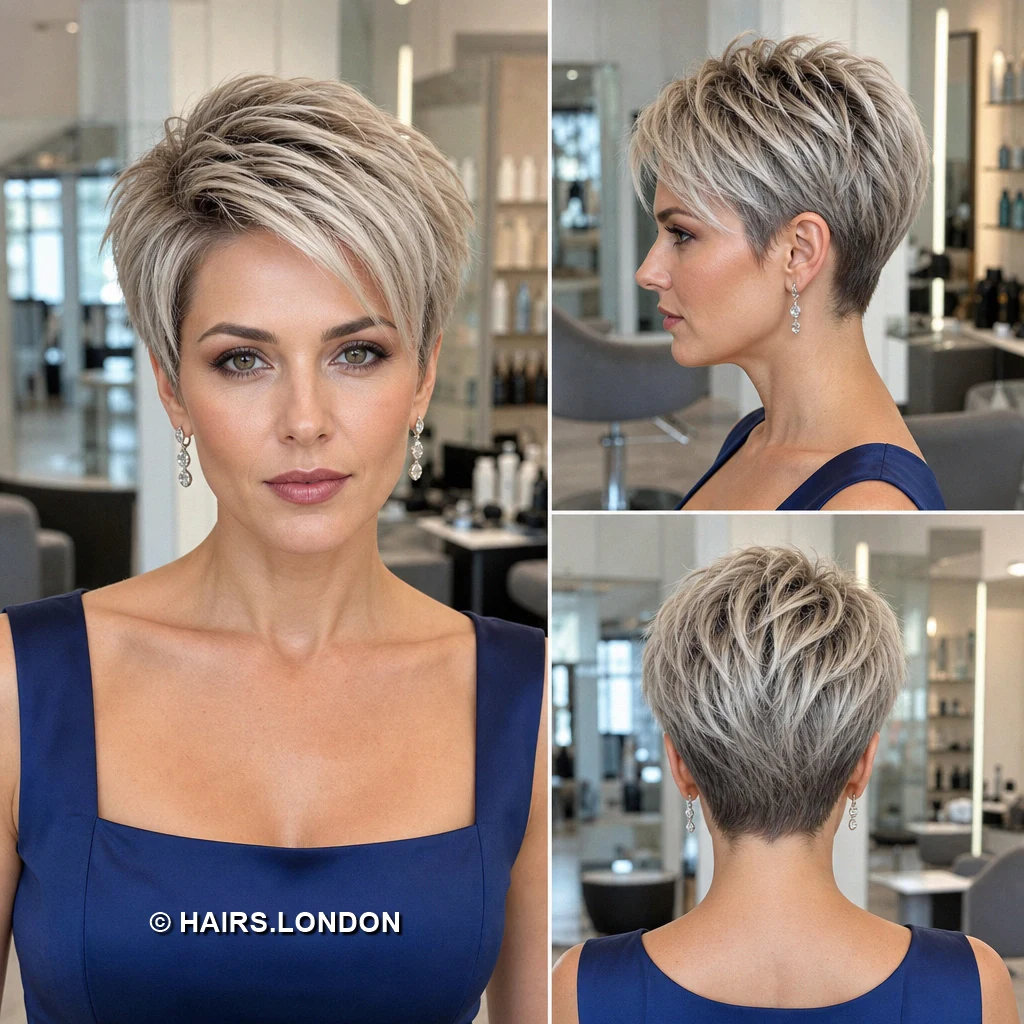
13. Cool Silver Pixie with a Longer Angled Front
A longer silver front falls diagonally beside one eyebrow here. Behind it, layered crown pieces flow toward the opposite side. The temple and ear area remain short and carefully tapered. At the back, airy strands gather above a narrow nape. Darker roots show clearly beneath the cool, light surface. Ask your stylist to map the fringe around your natural parting. Blowdry from the roots toward your intended sweeping direction first. Use a tiny amount of smoothing cream through longer ends. Trim the front before it interferes with comfortable daily vision. Gentle toning helps preserve the cool appearance of these lengths.
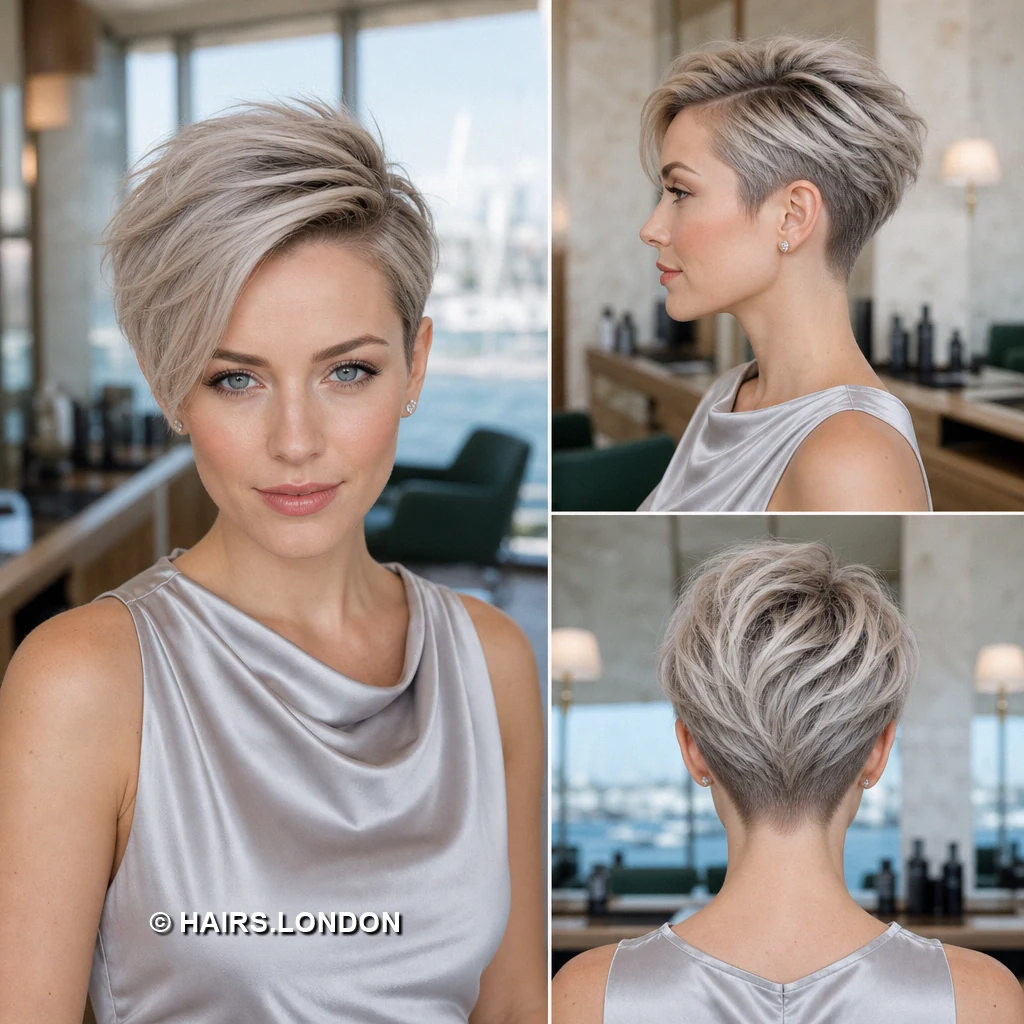
14. Soft Silver Pixie with a Feathered Crown
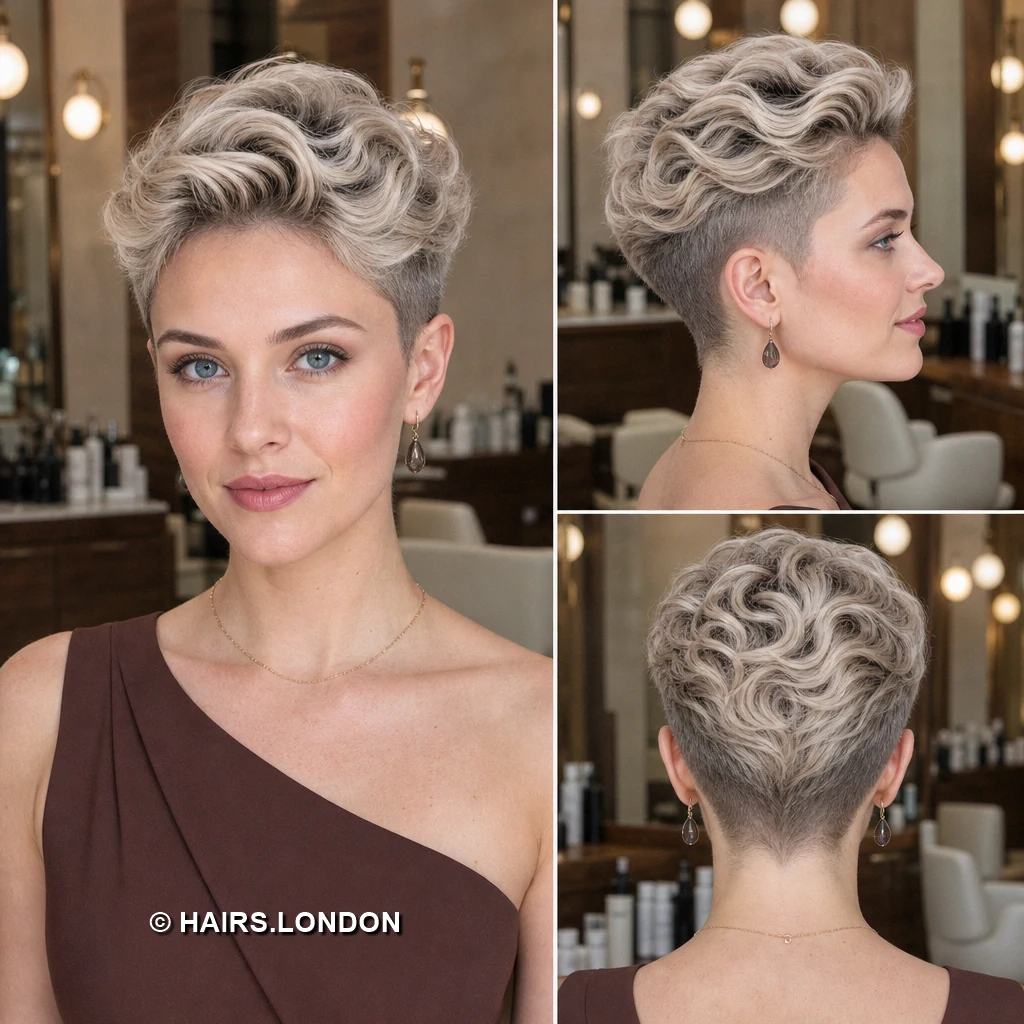
Soft silver layers fan sideways across a full, feathered crown. The front remains shorter than a long eye covering fringe. At each temple, smooth sections sit neatly above the ears. The back gathers into a small point at the nape. Ash shaded roots add depth beneath the lightly separated surface. Request soft graduation to keep the silhouette rounded but light. Blowdry roots upward, then brush the top diagonally across gently. Separate a few ends with cream for a feathery finish. Ask about toning frequency if your silver starts looking warmer. Routine nape trims will preserve the pointed shape behind you.
15. Ash Silver Pixie with a Piecey Side Fringe
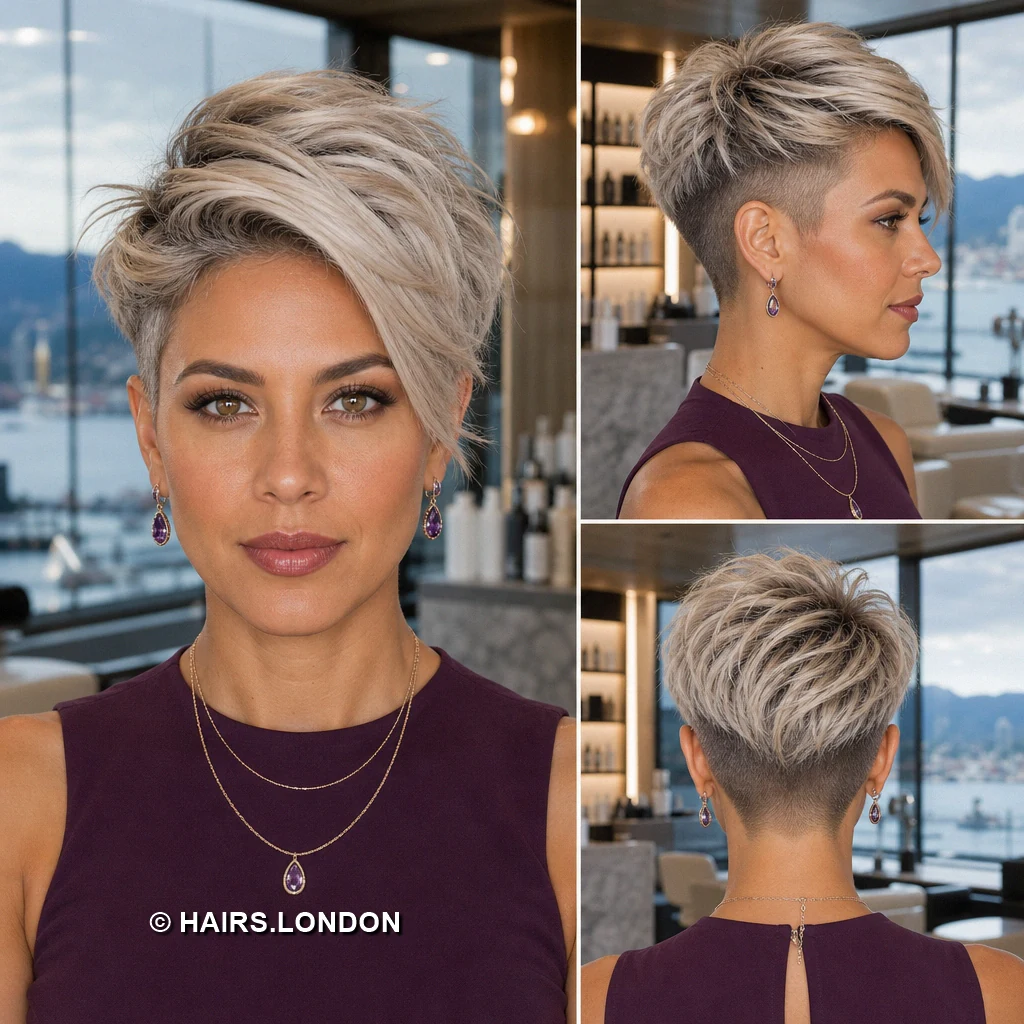
Piecey ash silver layers give this pixie a tousled finish. The light fringe angles across the forehead in narrow strands. Its crown has gentle lift, while the sides stay compact. Darker tones near the roots emphasize the cut’s separated texture. A tapered nape keeps the otherwise airy shape carefully contained. Ask for point cut ends instead of uniformly blunt edges. Finger dry the crown while steering the fringe across sideways. Rub a small amount of paste between hands before applying. Concentrate product on ends so roots remain light and lifted. Schedule trims when the side and back outlines lose definition.
16. Icy Silver Pixie with an Upright Front
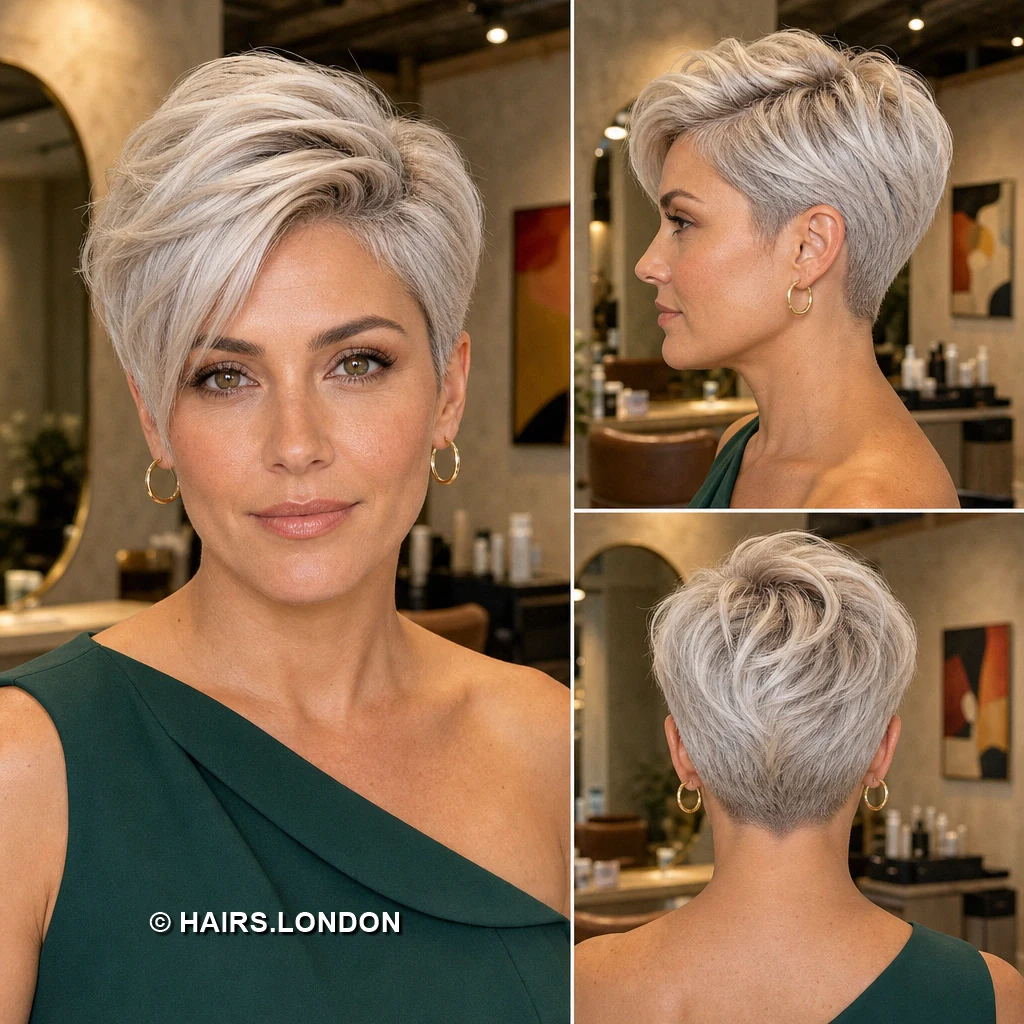
Icy silver lengths stand upward through the front and crown. Short sides hug the temples beneath the boldly raised top. At the back, textured pieces taper closely into the neckline. Darker roots appear between the pale strands, adding visible dimension. The lifted front leaves the forehead clear of heavy fringe. Ask for enough upper length to create height without collapse. Dry upward from the roots with fingers or narrow brush. Add matte paste to selected tips, leaving other pieces softer. Cool toned color may need periodic glossing as warmth develops. Keep the sides trimmed to preserve their sharper cropped outline.
17. Ash Silver Pixie with an Asymmetric Fringe
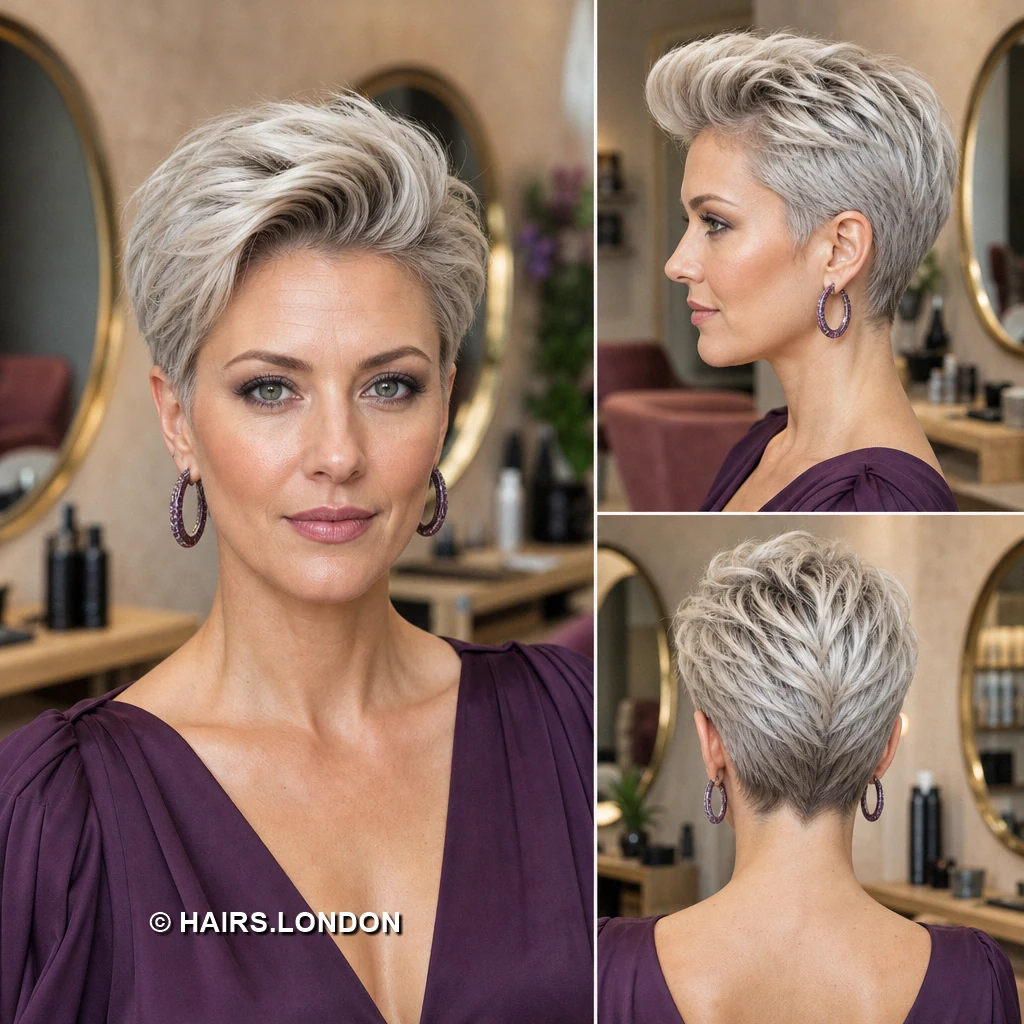
One longer ash silver section falls toward the eyebrow here. Across the crown, textured layers sweep into that asymmetric front. The opposite side stays short, exposing a neat ear outline. A darker underlayer contrasts with pale strands along the top. At the back, fine layers narrow into a tidy, close taper. Ask where the longest fringe point should finish before cutting. Blowdry the top diagonally, directing shorter pieces beneath it. Smooth only the front ends if you prefer defined separation. Arrange fringe trims when growth begins changing its intended angle. Gentle conditioning keeps the longer pale section flexible while styling.
18. Beige Silver Pixie with a Soft Diagonal Sweep
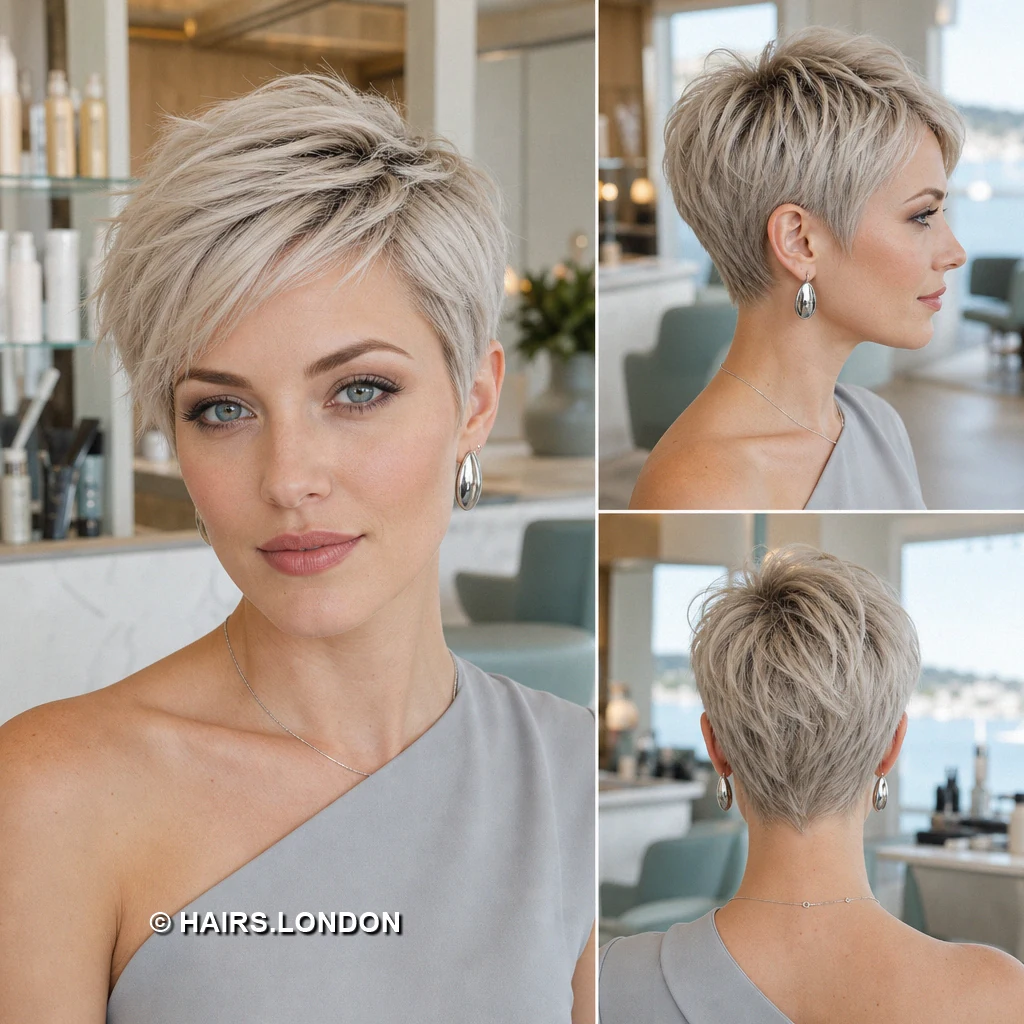
Beige silver strands sweep diagonally over this softly rounded pixie. The fringe crosses the forehead without extending below the eyes. Fuller crown layers add height above the closely shaped sides. A darker underlayer continues into the short, tapered nape. Fine, separated ends keep the front from looking too solid. Request a soft blend between the longer top and sides. Blowdry across the parting while gently lifting the crown roots. Use light cream to settle flyaways without flattening the shape. Discuss whether beige or cooler toner best matches your preference. Recut the perimeter regularly so its clean side profile remains apparent.
How to Choose a Silver Pixie Haircut
Start with the part you want to style every day. An upright front keeps hair off the forehead, while a long side fringe offers more coverage but needs more frequent adjustment. Compare the side and back views as carefully as the front: a close taper changes the overall silhouette, even when the crown is full. Choose a reference whose fringe length and crown volume suit your hair’s density and growth direction.
Styling Silver Pixies on Different Textures
Fine hair often benefits from lightweight mousse at the roots and a gentle blowdry for lift. On thicker hair, ask for internal weight removal so a sweeping top can move without becoming bulky. Natural waves can be enhanced with foam and gentle scrunching, while straighter hair may need a brush to form the rolled shapes shown here. Apply paste sparingly to dry ends; too much can flatten a short cut quickly.
Keeping Silver Color Fresh
These images show pale silver, ash, and beige-silver finishes, often with darker roots. Ask your colorist which tone you want to maintain rather than assuming every silver needs the same toner. Use a color-safe wash routine, condition lightened lengths, and introduce purple shampoo when unwanted yellow warmth appears rather than at every wash. Follow your colorist’s guidance on gloss appointments and limit unnecessary heat.
Maintaining the Pixie Shape
Short sides and tapered napes reveal growth sooner than longer crowns. Many pixies benefit from a shape check roughly every four to six weeks, although your preferred outline and growth rate should set the schedule. A longer fringe may need a small trim between full appointments. Photograph the cut when it sits just right so your stylist can reproduce the balance of top, sides, and nape.
What to Discuss with Your Stylist
Bring the front, side, and back views of your preferred cut. Point out the exact fringe endpoint, desired crown height, and how closely you want the hair cut around the ears and neckline. Explain your natural texture, parting, and how much time you spend styling. For color, discuss your starting shade, the visible darker-root effect, the tone you prefer, and the appointments needed to maintain it.
Frequently Asked Questions
What distinguishes these silver pixie haircuts from one another?
The main differences are fringe length, crown styling, and how closely the sides and nape are tapered. Some have upright fronts; others have long diagonal sweeps or shaped waves.
Which cut keeps hair off the forehead?
The lifted-spike, upright-front, brushed-back, and rolled-quiff options leave most or all of the forehead uncovered.
Which option has the longest visible fringe?
The pale silver pixie with a long draped fringe has the most pronounced front section in this collection.
Can fine hair wear a full-looking pixie?
Yes, but the cut and styling should preserve useful density. Ask about root lift and soft layering rather than removing too much weight.
How can I style a side-swept pixie?
Lift damp roots first, then direct the longer hair across the forehead with a brush or your fingers. Finish with a small amount of flexible product.
How do I keep an upright pixie from looking stiff?
Use lightweight mousse for lift and apply matte paste only to selected dry ends, leaving some strands free to move.
Do the pictured pixies all have shaved sides?
No. Several have short, blended sides; a few show a more pronounced contrast between closely cropped sides and a longer top.
How often should I trim a tapered nape?
A check about every four to six weeks is a useful starting point, but book according to how quickly your neckline loses its preferred shape.
Will purple shampoo make every silver shade look better?
Not necessarily. Use it when unwanted yellow warmth appears, and ask your colorist how often it suits your particular silver or beige-silver tone.
Are darker roots visible in these styles?
Yes. Many images show darker ash tones beneath the pale surface, especially through the crown and tapered back.
What should I tell my stylist about the fringe?
Show where you want it to end, which way it should fall, and whether you prefer a light, piecey edge or a fuller sweep.
Which reference views should I bring to an appointment?
Bring front, side, and back views when possible. Together, they show the fringe, ear area, crown volume, and nape taper.
Conclusion
The best reference is the one whose shape works from every angle, not just the front. Decide whether you want a raised or sweeping fringe, then check how its crown, sides, and nape fit your styling routine. With those details settled, you and your stylist can adapt a silver pixie to your hair and preferred color upkeep.