


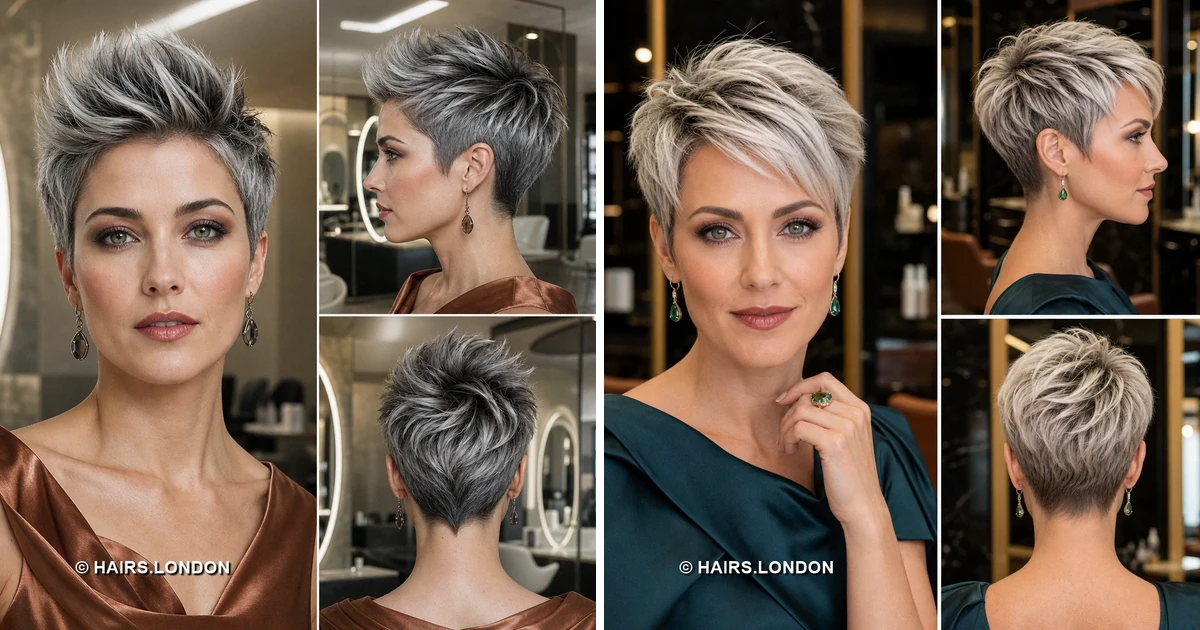
11. Ash-Silver Pixie With a Forward Fringe
This ash silver pixie carries its texture toward the face. Wispy fringe pieces angle across the forehead in uneven lengths. The crown remains lifted, while short sides fit around ears. Lighter ribbons trace the direction of the overlapping top layers. Behind, the fuller crown narrows into a closely tapered nape. Ask for a soft fringe edge rather than blunt bangs. Blow dry forward first, then loosen pieces with your fingers. A small dab of cream defines texture without stiffening it. Keep the sides close to retain the cut’s neat profile. Recut the fringe when it begins falling into your eyes.
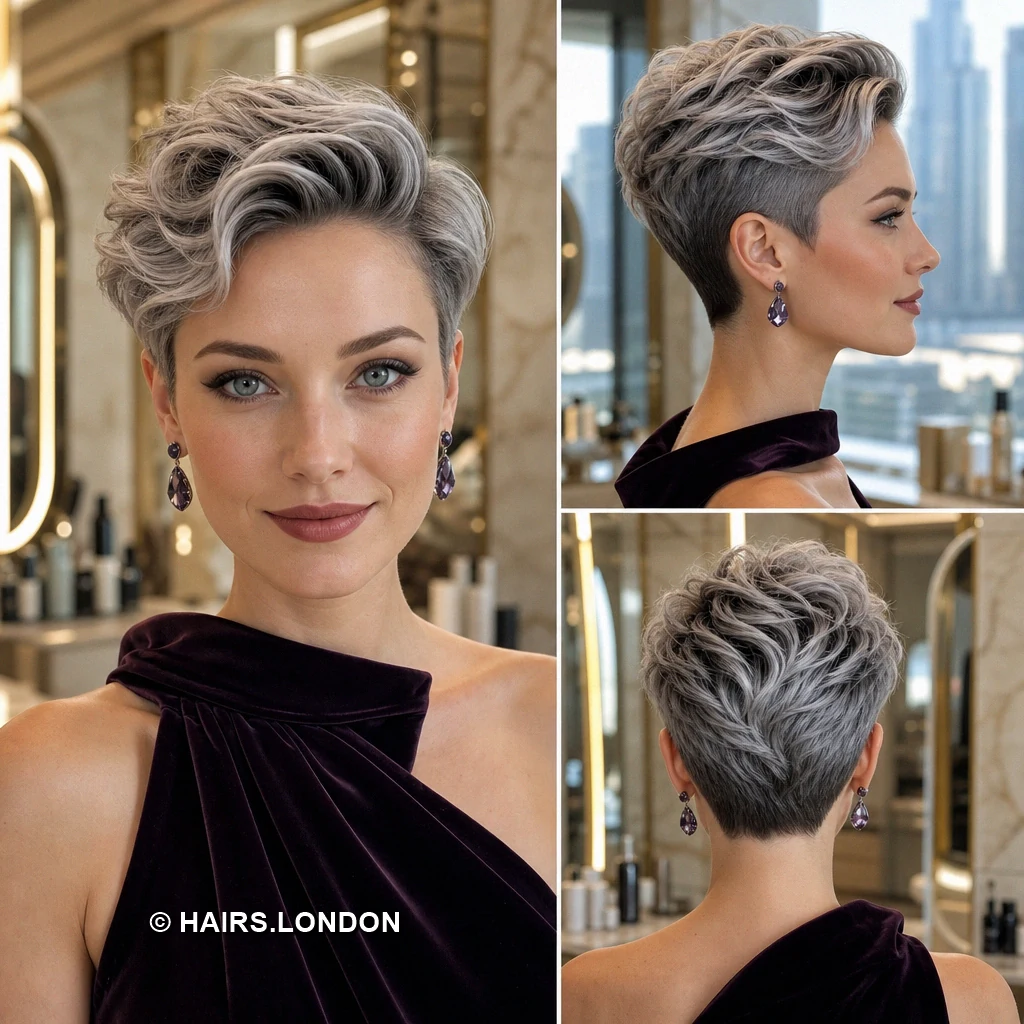
12. Silver Pixie With a Long Side Fringe
A long side fringe makes this silver pixie distinctly asymmetric. Its lightest strands sweep across one side of the forehead. The opposite side stays shorter and neatly shaped around the ear. Layered crown volume continues backward over a darker underlayer below. At the nape, close graduation keeps the outline clean. Ask your stylist where the fringe should meet your eyebrow. Direct airflow sideways to establish the sweep before applying product. Smooth cream over the surface, then separate a few ends. Keep the darker underlayer visible if you like this contrast. Fringe maintenance matters when the front grows noticeably longer overall.
13. Pale Silver Asymmetric Pixie
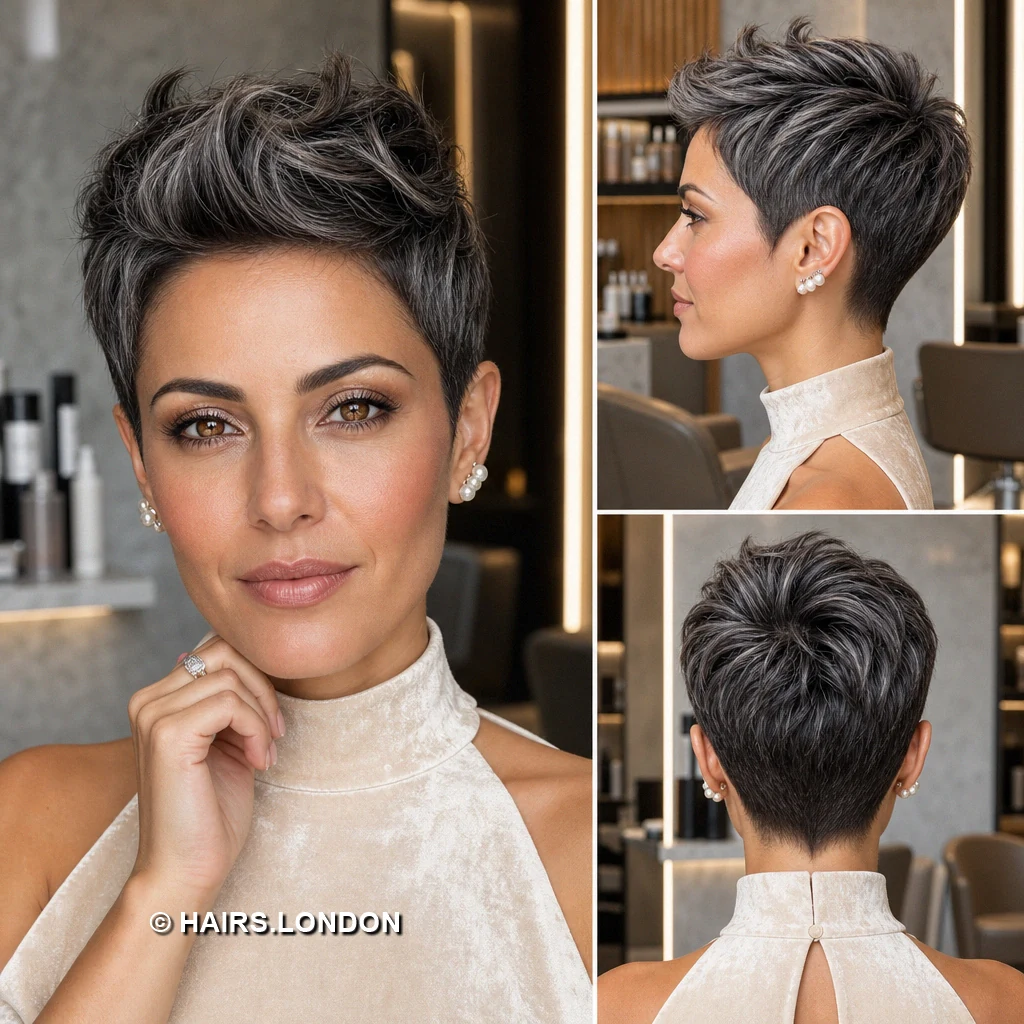
One extended front section defines this pale silver asymmetric pixie. It falls diagonally beside the eye, creating a sweeping fringe. The other side is cropped close and exposes the ear. Layered crown hair supports the longer section without excessive height. The back blends downward into a short, dark tapered nape. Discuss exactly how much fringe length feels practical for you. Blow dry the front across its intended direction for control. Use a light smoothing product to limit unwanted separation there. Avoid cutting the long side too short during routine trims. Maintain close sides to keep the asymmetry immediately apparent visually.
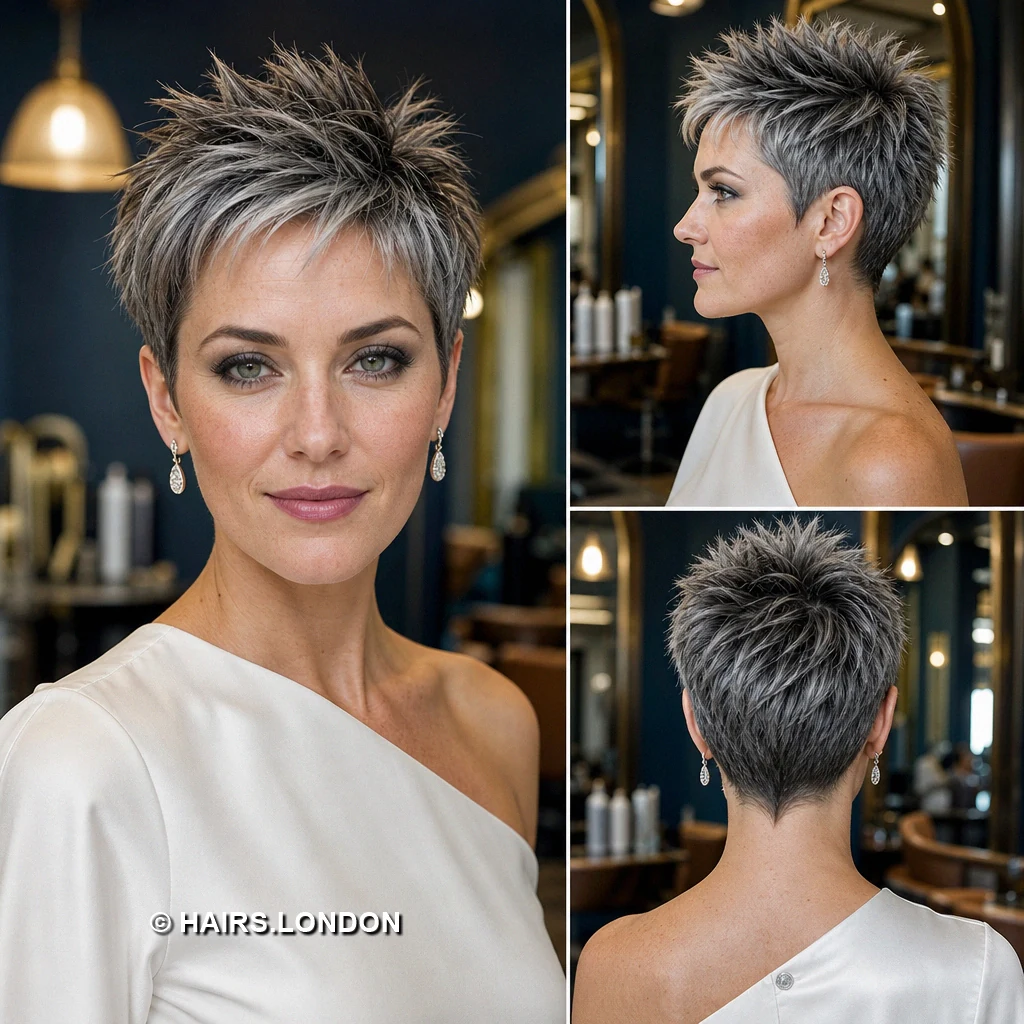
14. Silver Pixie With a Spiky Halo
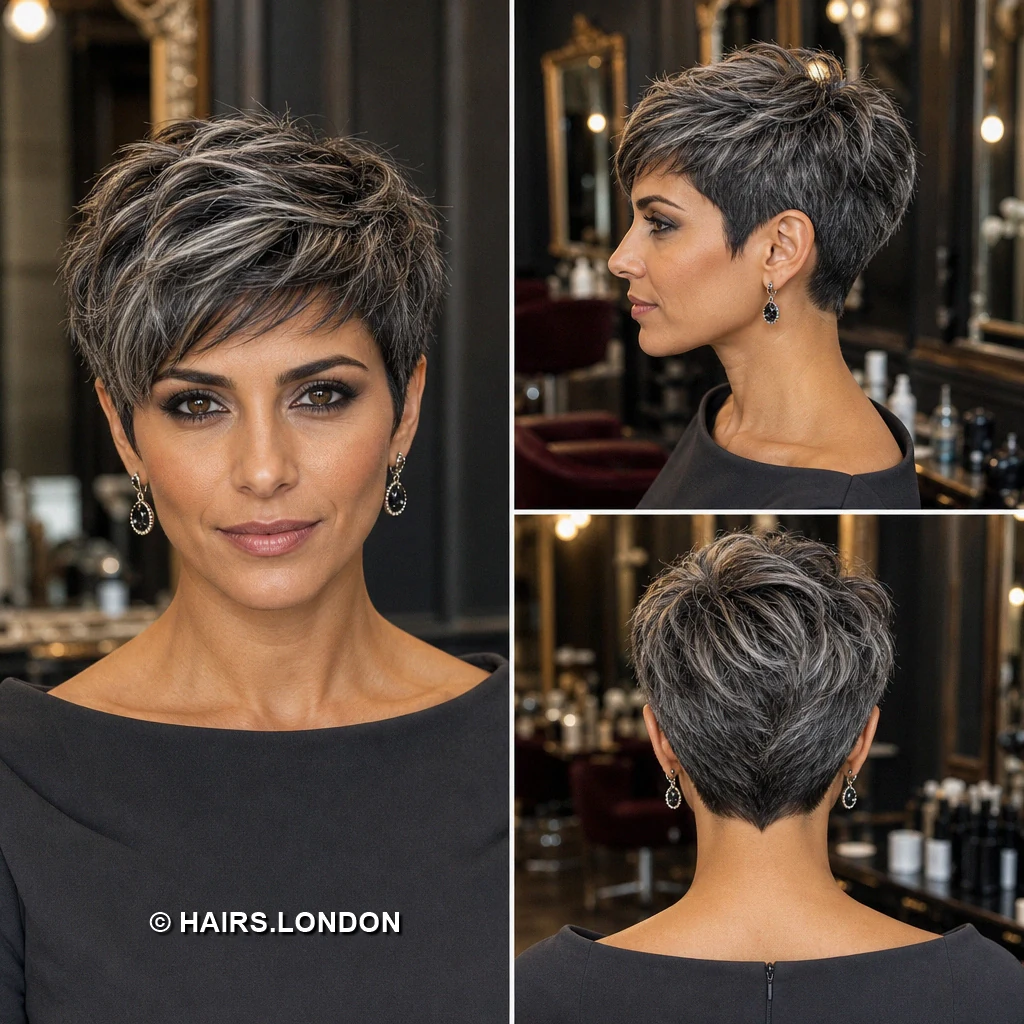
Fine spikes spread outward across this silver pixie’s entire crown. The raised texture gives the short cut a wide outline. A small fringe angles forward above the mostly open forehead. Closely cut sides sit beneath the longer, pale pointed layers. At the rear, spikes soften into a darker tapered nape. Ask for textured ends that can separate without looking sparse. Dry upward from different directions to encourage the scattered shape. Pinch individual tips with a tiny amount of firm paste. Leave the lower sides comparatively smooth for a defined contrast. Frequent trims prevent the spiked crown becoming heavy and rounded.
15. Creamy Silver Pixie With Soft Height
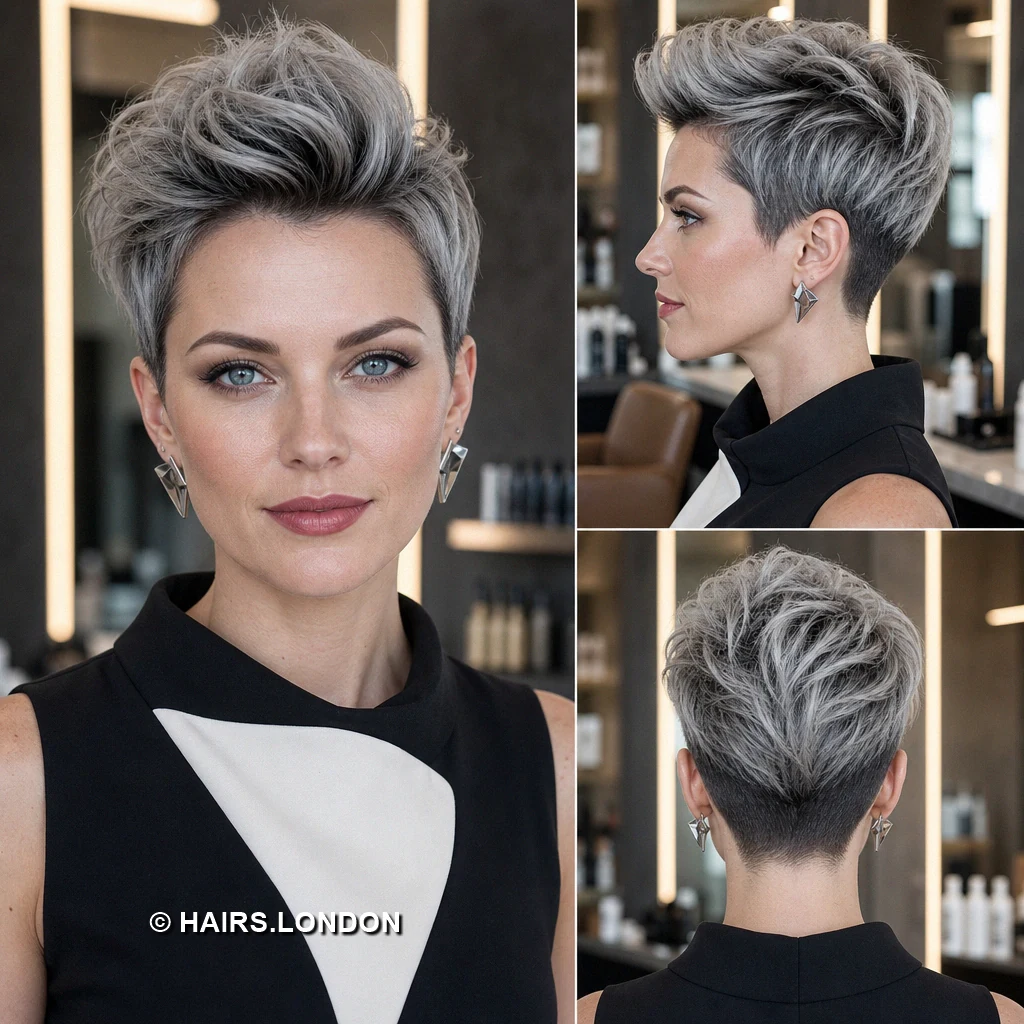
Creamy silver lengths give this pixie a softer color contrast. The front lifts gently before curving across the upper forehead. Rounded layering adds fullness through the crown and upper sides. Shorter hair stays close near the ears and lower back. The nape narrows beneath overlapping strands with subtle root depth. Ask to retain enough length for an easy sideways sweep. Blow dry with fingers for volume, then refine the front. A lightweight cream keeps the airy layers from looking stiff. Discuss whether warmer or cooler toner suits your desired finish. Refresh the shorter perimeter as it grows beyond the ears.
16. Icy Blue Pixie With Layered Fringe
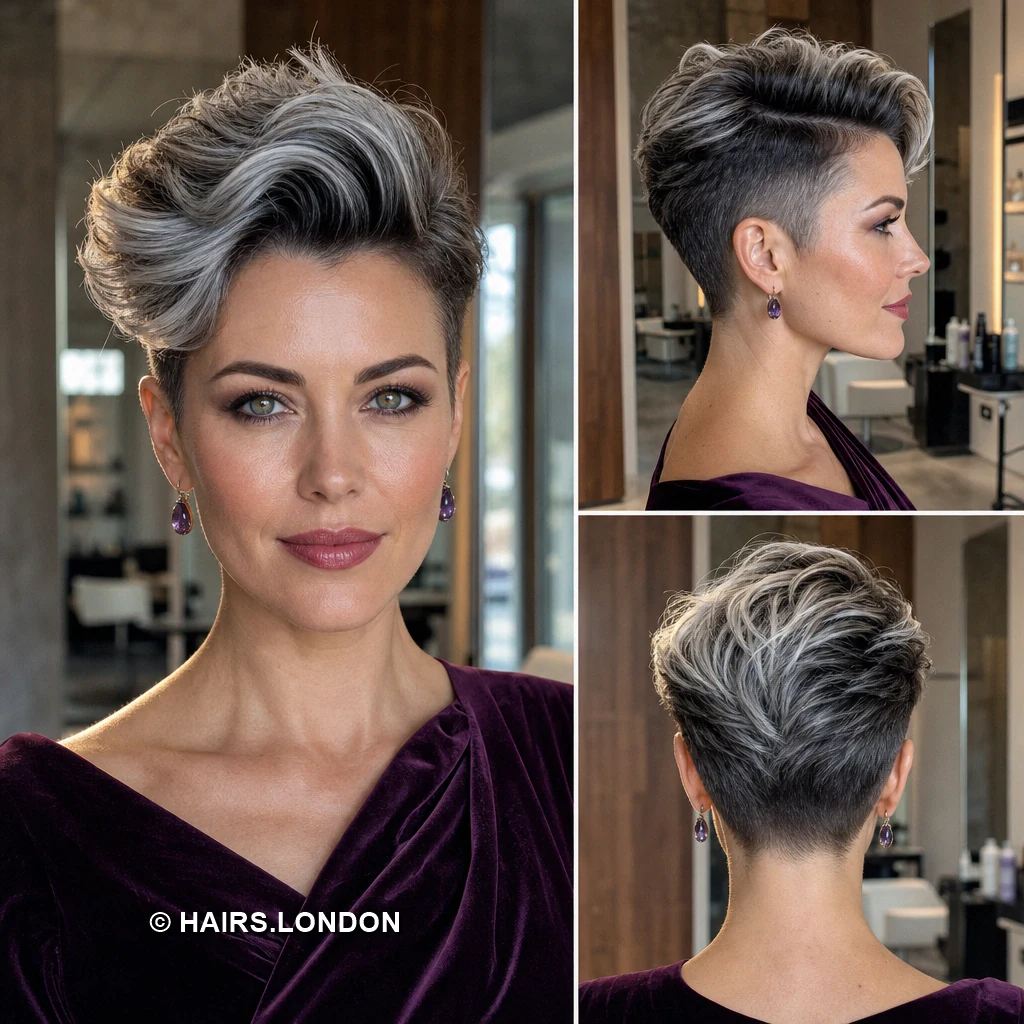
Pale icy blue threads through this softly layered silver pixie. Longer top pieces sweep forward into a light, irregular fringe. The crown stays rounded, with visible separation between colored strands. Short sides reveal the ears above a darker lower section. From behind, the blue tones continue over a tapered nape. Ask your colorist how the blue will change between visits. Dry the fringe forward, then shift selected ends slightly sideways. Apply light styling cream sparingly to retain the feathery finish. Cool water and gentle cleansing can help limit color fading. Trim the nape while preserving the longer colored crown layers.
17. Pastel Silver Pixie With Wispy Texture
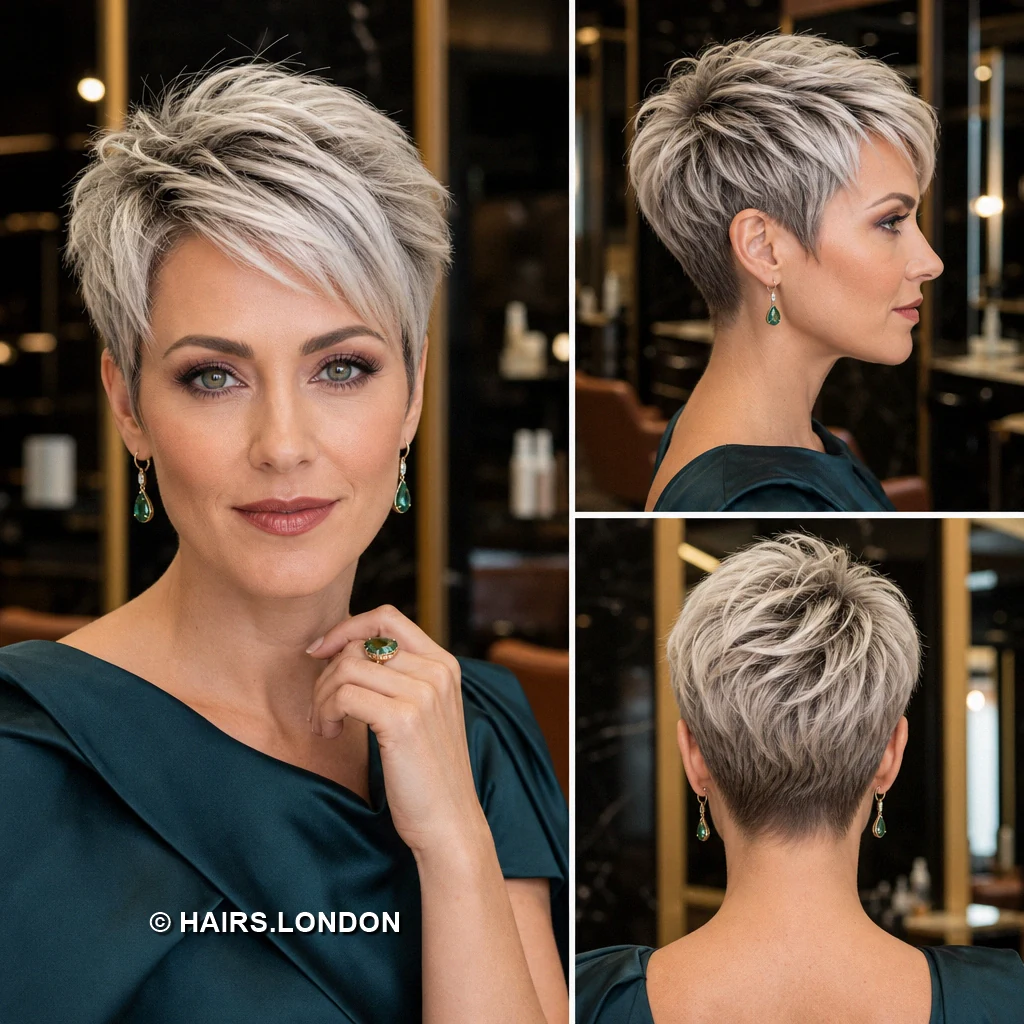
Soft mint and pink accents tint this pale silver pixie. Wispy front layers sweep diagonally across the forehead and temple. The airy crown shows individual strands rather than smooth uniformity. Short sides and a tapered nape anchor the fuller top. From behind, pastel ribbons remain visible throughout overlapping crown layers. Ask for color placement that remains noticeable when hair moves. Finger dry in several directions to encourage a loose finish. Use minimal paste on ends to avoid dulling pale tones. Discuss how often the delicate pastel shades need refreshing afterward. Keep the close perimeter trimmed without sacrificing textured top length.
How to Choose Your Pixie Shape
Start with the front length: a sweeping fringe needs room to move, while a lifted quiff keeps the forehead open. Then compare the side and back views. Closely cropped sides create stronger contrast with a full crown; softer graduation makes the change in length less abrupt. Consider whether you prefer the top falling naturally sideways or are happy to style it upward each morning.
Styling Fine, Thick, and Naturally Textured Hair
For fine hair, apply a small amount of light volumizing product at the roots and dry in the direction you want the fringe or quiff to sit. Thick hair may need controlled layering and a little pliable cream to keep the silhouette from expanding at the sides. If your hair has a natural wave or curl, ask your stylist to account for its dry shape before cutting; scrunching rather than brushing may preserve that movement. Use paste on selected ends instead of coating the whole crown.
Keeping Silver and Pastel Color Fresh
The images range from dark-rooted silver to pale platinum, icy blue, and faint pastel accents. Ask your colorist which result is realistic for your current hair and how often it will need refreshing. A color-safe cleanser and a toning product recommended for your specific shade can help manage unwanted warmth, but overusing toner may alter the finish. Pastel accents can change quickly, so discuss a refresh plan before committing.
Maintaining the Short Shape
A pixie’s sides and nape usually reveal growth sooner than its longer top. Check the outline around your ears and neckline when deciding whether it is time for a trim. At each appointment, distinguish between areas you want tightened and lengths you want to retain, especially around an asymmetric fringe or tall quiff. Keeping that distinction clear helps prevent the top from becoming shorter with every visit.
What to Discuss with Your Stylist
Bring the front, profile, and back views of your favorite image. Point out the exact fringe length, crown height, closeness around the ears, and nape shape you want. Discuss your natural parting, growth patterns, hair density, daily styling time, and color history. Ask your stylist to show you how to dry the cut into its intended shape and which single finishing product would be most useful.
Frequently Asked Questions
What distinguishes a sweeping pixie from a quiff?
A sweeping pixie directs its longer front sideways, often across the forehead. A quiff lifts the front up and back, leaving more of the forehead open.
Which of these cuts keeps the most fringe length?
The pale silver asymmetric pixie and the silver pixie with a long side fringe keep notably extended front sections.
Can fine hair wear a raised silver pixie?
Yes, although the result depends on density and growth patterns. Ask for supportive layering, use a light root product, and avoid heavy wax.
What should I request for a softer pixie silhouette?
Point to the gently rolled, feathered, or rounded examples and ask for connected layers rather than sharply separated lengths.
How do I style a side-swept fringe?
Dry it toward the side you want it to fall, lifting at the roots first. Finish with a small amount of flexible cream or paste on the ends.
How do I keep pixie spikes separated?
Dry the top upward, then pinch small groups of ends with a little paste. Adding product gradually helps prevent the spikes clumping together.
Will the darker roots shown in these images remain visible?
That depends on your starting color and the coloring method. Show your colorist the amount of root contrast you want in the reference image.
How often should I trim a pixie?
Trim when the sides, nape, or fringe stop holding the intended shape. The interval varies with growth rate and how crisp you want the outline.
Can naturally wavy hair wear these shapes?
Yes, but its wave may change the fringe direction and crown height. Have your stylist assess the hair dry as well as damp before deciding on lengths.
What is the easiest way to maintain a pale silver tone?
Follow a colorist-recommended cleansing and toning routine, and ask when a salon toner refresh will be needed. The right schedule depends on your shade and hair.
Are the blue and pastel accents permanent?
Their longevity depends on the color product, hair condition, and washing routine. Ask your colorist how they expect the particular shades to fade.
Which image views should I take to a consultation?
Take the front, side, and back views together. They show details a single portrait misses, particularly the ear area, crown volume, and nape.
Conclusion
The most useful choice is the pixie whose front, sides, and back all suit how you want to wear your hair—not just the one with your favorite color. Save the complete set of views for your preferred cut, then agree on its key lengths, styling routine, and color upkeep with your stylist.